


Design
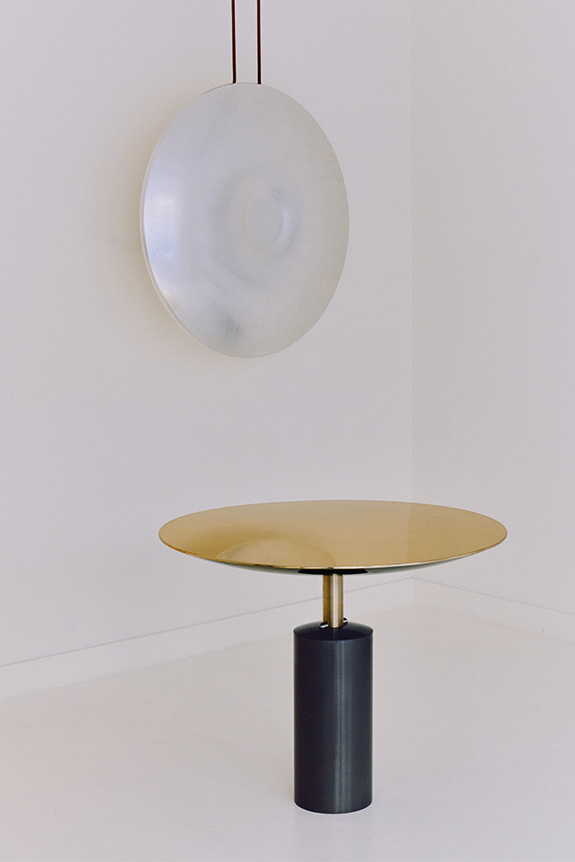
Jusqu’au 10 octobre, le duo Marie et Alexandre présente à la galerie signé l’exposition « Under Pressure », dans laquelle la pression est explorée sous plusieurs aspects : dans les techniques et les matières employées, mais aussi, plus largement, dans leur rapport à la création.
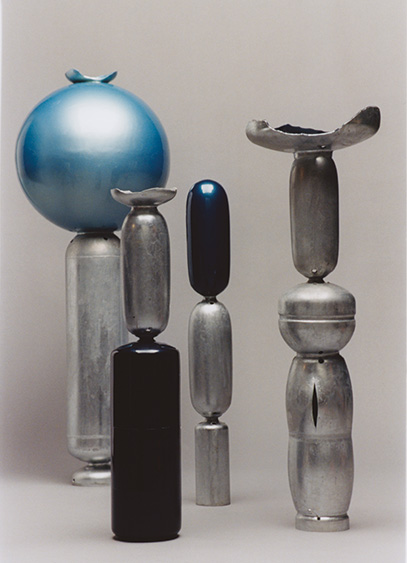
« L’idée derrière cette exposition était de travailler la pression un peu différemment, en utilisant des techniques diverses, avec cette idée d’explosion rapide, et de réussir à les allier toutes ensemble. » Pour cette exposition, le duo de designers formé en 2018 a choisi de faire de la pression son point de départ. Le titre, « Under Pressure », fait notamment référence à l’hydroformage, un procédé industriel dans lequel la pression de l’eau permet de donner forme au métal. Au sein de la galerie, Marie et Alexandre présentent ainsi des pièces façonnées par différentes forces et contraintes, réalisées en collaboration avec plusieurs artisans spécialisés. Mais la pression ne désigne pas seulement ici une technique de façonnage. Elle devient également une condition de création, exercée par la matière, par le temps, le doute, les choix parfois irréversibles ou encore la volonté de faire apparaître quelque chose qui n’existe pas encore.
Allier techniques et savoir-faire
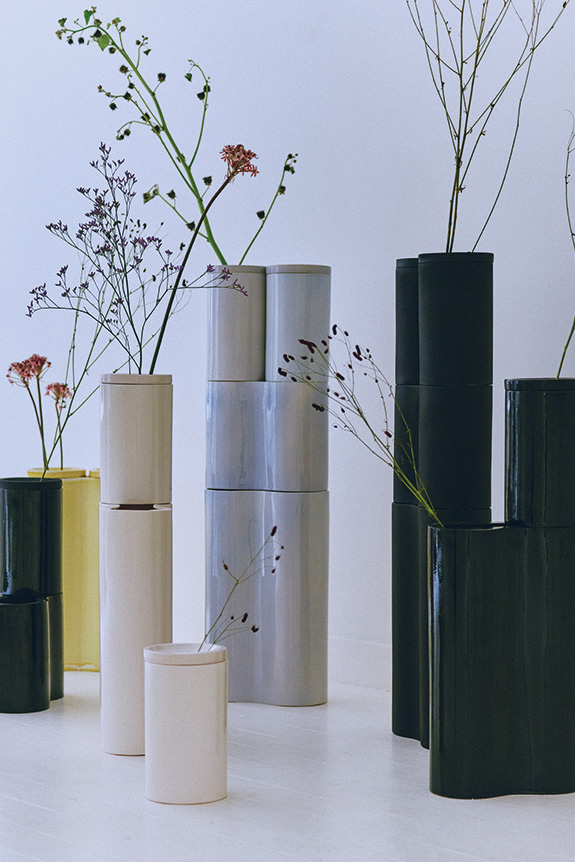
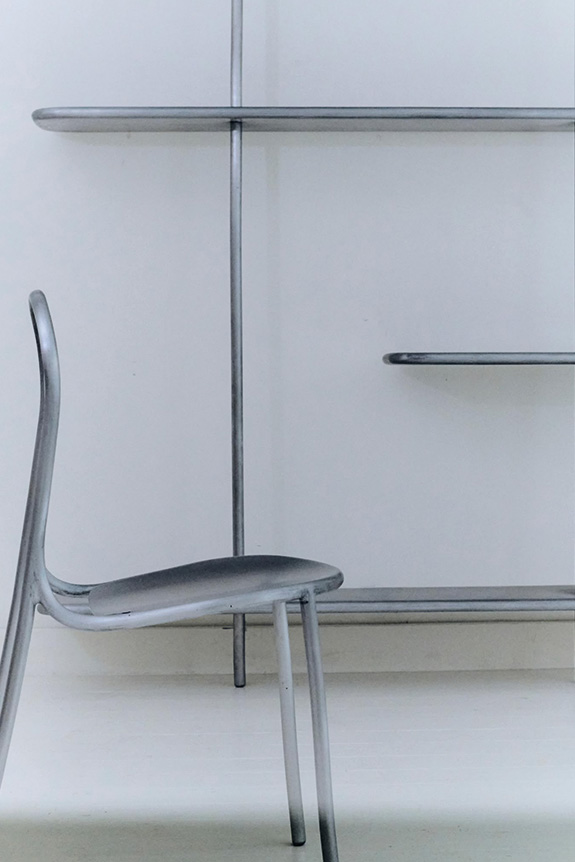
Au sein de l’exposition, qui réunit une dizaine de pièces, les designers se sont associés à différents artisans pour explorer la pression sous toutes ses formes. Avec Antoine Giret, ils présentent ainsi une console, un système d’étagères et une chaise autour d’un travail de l'aluminium fondé notamment sur la vibration de la matière et la création de systèmes. Accompagnés par Jean-Marie Foubert, ils ont imaginé une collection de vases en céramique, déclinés en versions simple et double ainsi qu’en différents formats. Avec le verrier Simon Rio, ils sont allés vers un autre registre en imaginant une table basse dont le plateau est en verre thermoformé. Enfin, avec l’atelier Blam - notamment connu pour avoir participé à la réalisation du cheval mécanique apparu lors de la cérémonie d’ouverture des Jeux olympiques de Paris 2024 -, ils ont imaginé une table sur piston ainsi qu’un médaillon en métal et feuille d'argent dont la forme naît directement de la contrainte exercée sur la matière. Ce dernier sera ensuite destiné à rejoindre la Cité du design de Saint-Etienne, récemment inaugurée.
À travers cette exposition, Marie et Alexandre semblent faire évoluer leur langage formel vers davantage de retenue. Les formes se resserrent et les moyens se réduisent, sans pour autant perdre leur fonction et leur intensité. Un moyen finalement pour le duo de questionner son propre processus créatif.
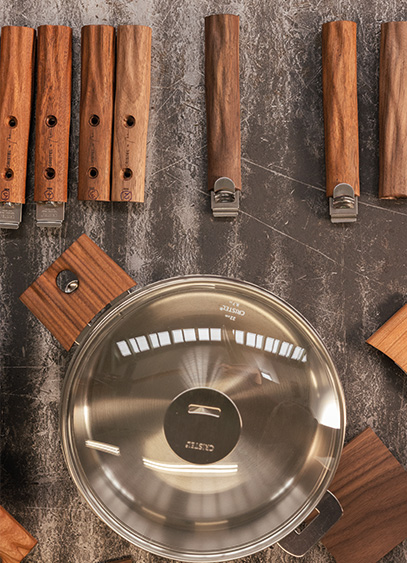
À l’occasion de ses 200 ans, Cristel s’associe pour la première fois à un designer. Avec Noé Duchaufour-Lawrance, la marque revisite son emblématique poignée amovible dans une édition limitée en bois, intitulée Racines.
Depuis sa création, en 1826, la manufacture française Cristel a bâti sa réputation sur un savoir-faire et des innovations qui la caractérisent, à l’image du système de poignées amovibles Cook & Serve imaginé par Paul Dodane en 1984. Si jusqu’ici, l’élaboration d’aucun produit n’avait jamais été confiée à un designer extérieur, cet anniversaire est l’occasion pour la marque d’ouvrir un nouveau chapitre en faisant appel à Noé Duchaufour-Lawrance, dont le travail explore depuis de nombreuses années les liens entre territoire, artisanat et matériaux.
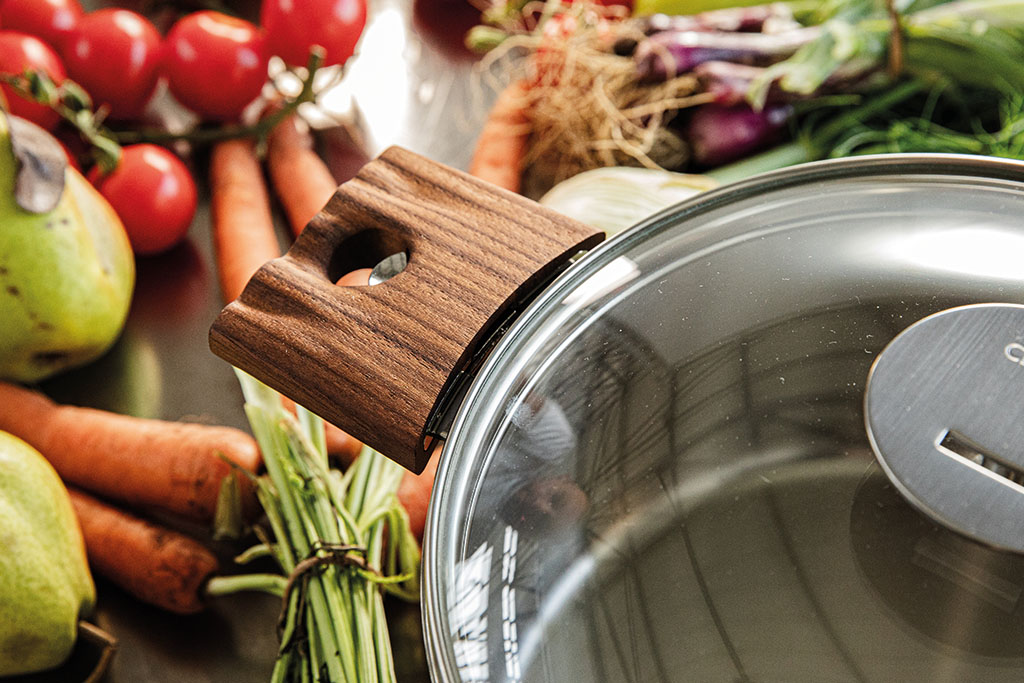
Une poignée inspirée de la nature
Baptisée Racines, cette nouvelle poignée ne cherche pas à réinventer le système imaginé par Cristel mais à lui offrir une nouvelle expression. Réalisée en bois et éditée en série limitée, sa forme s’inspire directement de l’écorce des arbres. Son veinage sculpté en relief confère à l’objet une dimension à la fois tactile et sensible, comme un rappel du lien instinctif à la matière brute. « Cuisiner, c’est transformer une matière brute. La poignée est l’interface entre la main et cette transformation. À travers cette poignée, j’ai cherché à exprimer la rencontre entre nature et usage », raconte Noé Duchaufour-Lawrance.
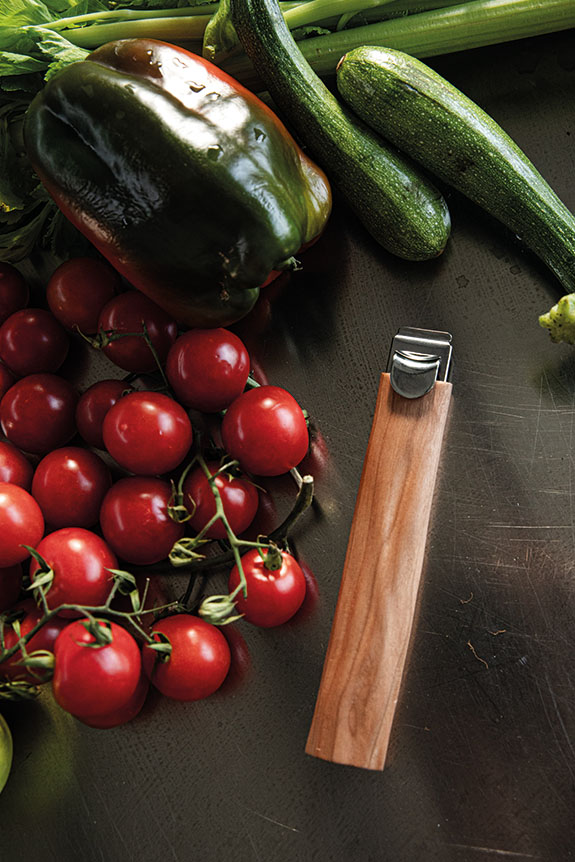
Au-delà de l’objet, cette collaboration confronte pour la première fois le savoir-faire industriel de Cristel à la vision d’un designer, sans pour autant renoncer à l’identité qui fait son succès depuis deux siècles. « Racines s’inscrit dans l’univers amovible qui a fait la réputation de Cristel, tout en marquant une étape inédite : celle d’une grande maison qui s’ouvre à un regard extérieur. Noé Duchaufour-Lawrance nous a semblé proche de nos valeurs et être celui qui pouvait apporter de l’émotion à notre savoir-faire », confie Damien Dodane, directeur général délégué de Cristel. Une manière de célébrer deux cents ans d’innovation en rappelant que le design peut aussi raconter une histoire, celle du lien entre l’homme, la matière et l’usage.
Pour en savoir plus sur l'univers Cristel et ses collections c'est ICI.
Since 1993, the City of Paris Grand Prix for Creation has supported new generations of designers in the fields of fashion, design, and fine crafts. Here are the eight winners of this 33rd edition.
Established thirty-three years ago, the Grand Prix for Creation is part of the City of Paris's policy to support the fashion, design, and fine crafts sectors. Organized by the Bureau of Design, Fashion and Fine Crafts (BDMMA), this year’s awards recognize eight professionals, each receiving a grant of 18,000 euros. It is a modest contribution considering the 350 applications received by the juries, chaired this year by Ionna Vautrin for design, Lisa Gachet for fashion, and Jeremy Maxwell Wintrebert for fine crafts.
Design Revelation Award: behagelfoiny
Antoine Behaghel and Alexis Foiny met while studying at the Arts Déco. Gradually inspired by the ready-made, they began developing projects centered on exploring the materials at their disposal. This approach led them to found their studio in 2020, based on a practice inspired by neo-craftsmanship. "We act as a connection point between different trades, which allows us to reclaim the creation and production of objects by implementing innovative methods. This is our DNA, even as we expand our expertise into other fields like scenography. This approach leads us to address issues related to environmental awareness and childhood." Their approach has already caught the attention of galleries and institutions, such as Le French Design, which included them in its FD100 list, and the Mobilier National, which acquired their Alupié bookcase in 2026.
Design Commitment Award: Marie et Alexandre
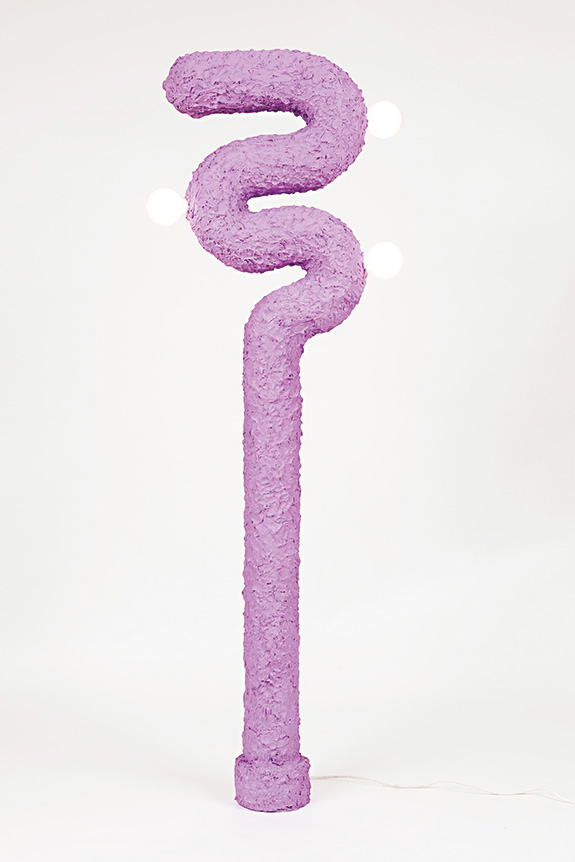
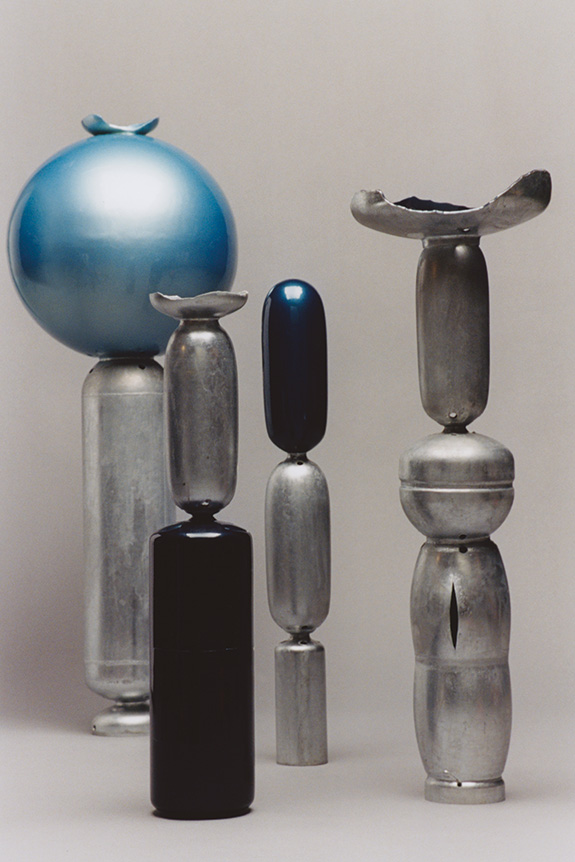
Represented by the Signé gallery on Rue Jacob in Paris, Marie and Alexandre are currently presenting "Under Pressure," an exhibition of objects shaped by pressure. The project effectively summarizes their work, which began five years ago after meeting at the Villa Noailles during the Design Parade. Marie, who studied at HEAD in Geneva and ECAL in Lausanne, and Alexandre, who trained at ENSCI – Les Ateliers and later at the California College of the Arts in San Francisco during a university exchange, share a curiosity for craftsmanship that drives them to adopt an itinerant practice. Between factory visits and field experiments, the duo collaborates with brands such as Glas Italia, Dryade, and Petite Friture. "Our creations for galleries allow us to conduct free research, which we then use as a foundation for more industrial projects."
Fashion Revelation Award: Anthony Calydon
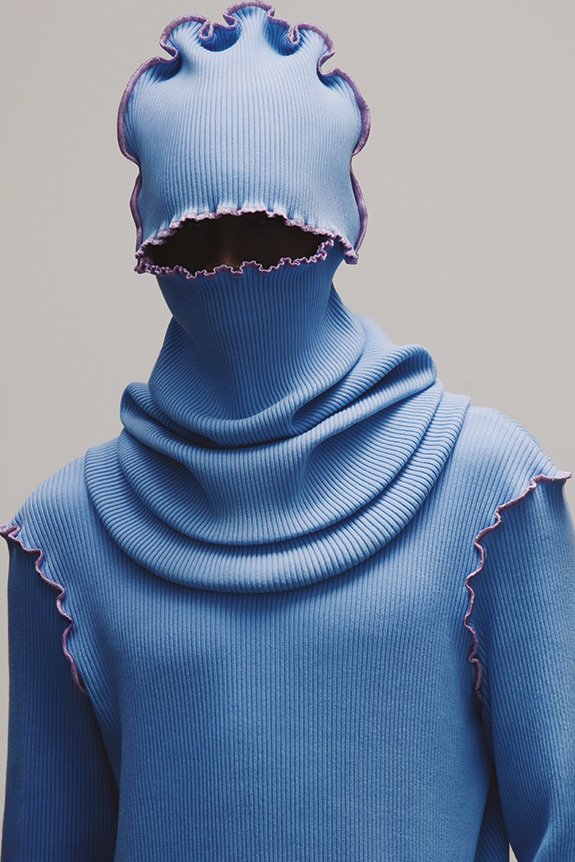
Sewing. An activity that has occupied Anthony Calydon’s mind for twelve years. He started by making his own clothes, had a brief stint at ESMOD, and then decided to continue as a self-taught designer. His career began quietly thanks to Instagram. Alongside his work dressing artists, he works as a pattern maker for emerging labels. But he is in no rush to move too quickly until he has found his style—one that will be recognizable at a single glance. "I have always been inspired by Japanese designers. I wanted to offer something strong, without a logo. I wanted people to see my pieces and think: that’s Anthony Calydon. And, little by little, I made ribbing and overlock stitching my signature." A world and a body of work rooted in their time, driven by a deep attention to craftsmanship.
Fashion Commitment Award: Collectivo
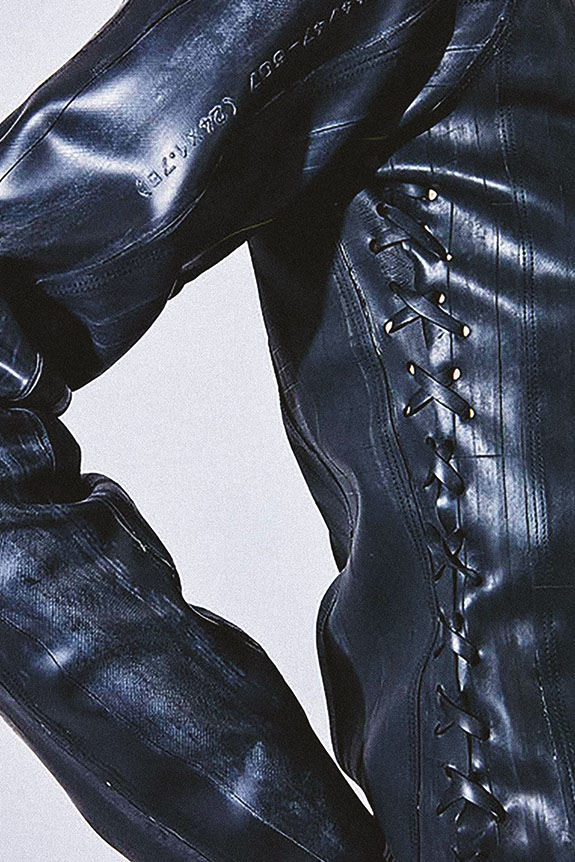
A chemical engineer from INSA with a master’s degree from HEC, Samia Boukbir spent five years in marketing and international makeup development before joining a collective dedicated to upcycled fashion. Her professional path then transformed into a journey. "In 2016, I went to Cuba and my professional life changed forever," recalls Samia Boukbir. I discovered a company entirely based on reclamation, having spent nearly seven years in the industry at L’Oréal and Dior. It really made me question things. When I returned, I quit my job… and ended up at the Saint-Ouen flea market!” It was in this historic cradle of the circular economy in Paris that Samia established Collectivo, which officially launched in 2022. The collective has since collaborated with 22 designers. Each new collection is an opportunity to open the circle to new talent through open calls for projects. “Everything starts with our selection of materials to upcycle: we build the plans for our three collections around them, focusing on reinvented officewear, sports, and innovation.”
Fashion Accessories Award: Luca Colosimo — 10.03.53
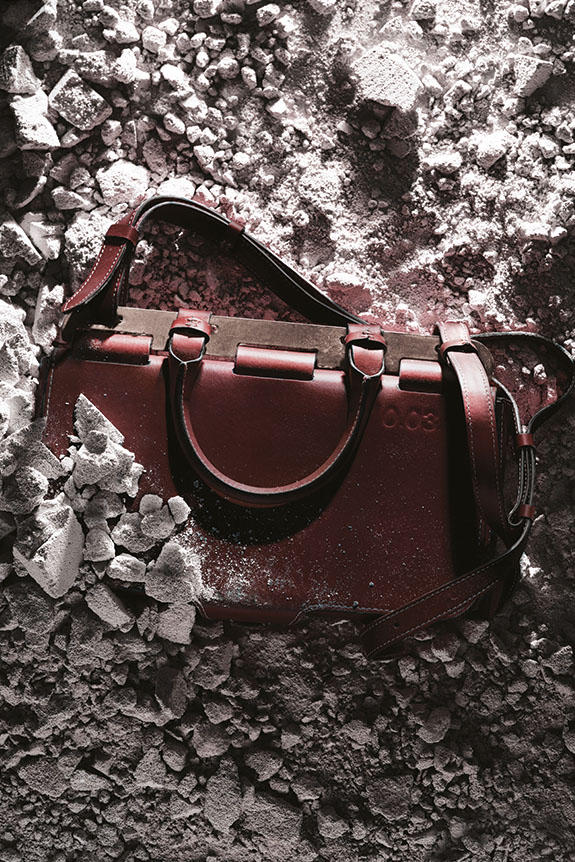
The story begins with the purchase of a huge orange bag. That first purchase sparked a realization. “It was an act of emancipation. For my dad, a bag was a forbidden object for a man. But I was fascinated by it!” However, it would be a while before Luca Colosimo dedicated himself to this accessory. After studying industrial pattern-making for ready-to-wear—which he hated—receiving a scholarship to train in leather goods prototyping, and gaining experience at Gucci, Isabel Marant, and Paco Rabanne, he had a breakthrough in 2020. He then launched his own brand, naming it after his father’s birth date: 10.03.53. From there, he began creating sensual designs with classic shapes, with a particular interest in innovative materials. “Today, we make bags out of paper, reinforced concrete, untreated leather… We’re having fun!”
Fashion Jewelry Accessories Award: Sarah Madeleine Bru
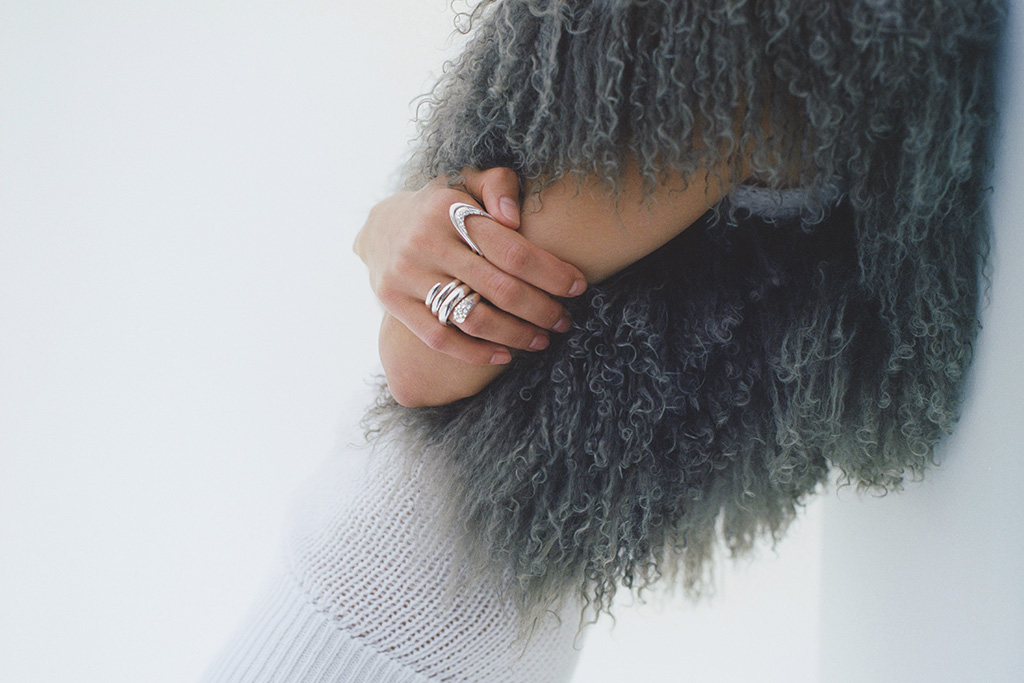
Trained at a design school in Nantes, Sarah Madeleine Bru quickly realized she was passionate about craftsmanship. She took on numerous internships and freelance assignments while still a student, before joining the Creative Academy, the Richemont Group’s school in Milan, which provides training in design for the jewelry, watchmaking, and accessories sectors. “That allowed me to join the brand Dunhill, which is little-known in France but is a bit like the Hermès of menswear.” She stayed there for a year, during the time Kim Jones was the artistic director, before being scouted by Louis Vuitton. Then, in 2012, she went solo. “At the beginning, I mainly sold my silver jewelry to my friends. Then I got some press, I was recognized, and I evolved my designs. Today, high jewelry and custom orders have taken over.”
Artistic Crafts Revelation Award: Chloé Valorso
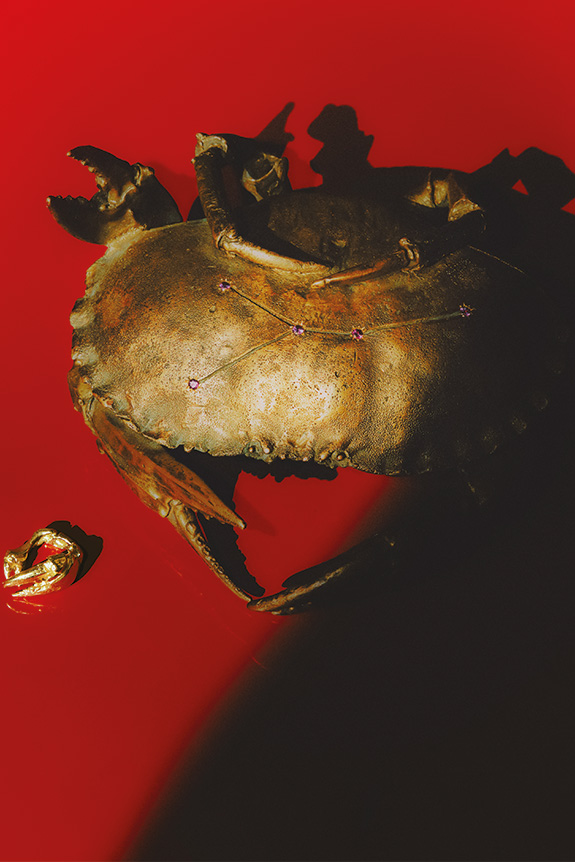
A sculptor, bronze caster, and jeweler, Chloé Valorso discovered the lost-wax casting technique during her studies in London, first at Central Saint Martins and then at the Royal College of Art. “I wanted to learn the technique from A to Z. Normally, artists go to outside foundries or learn just a few steps. I wanted to master everything so I could innovate.” Inspired by anthropology seminars and works on new materialism and eco-feminism, the designer works through collage, giving birth to objects akin to "exquisite corpses of stories and mythologies", opening up the imagination. "I mostly work with materials imbued with life: snakeskins transmuted into bronze, flowers I immortalize using a direct casting technique I developed. I just finished some candle holders, combining roots, snake vertebrae, and flowers gathered from Parisian gardens."
Craftsmanship Commitment Award: Les Ateliers Victor Bert
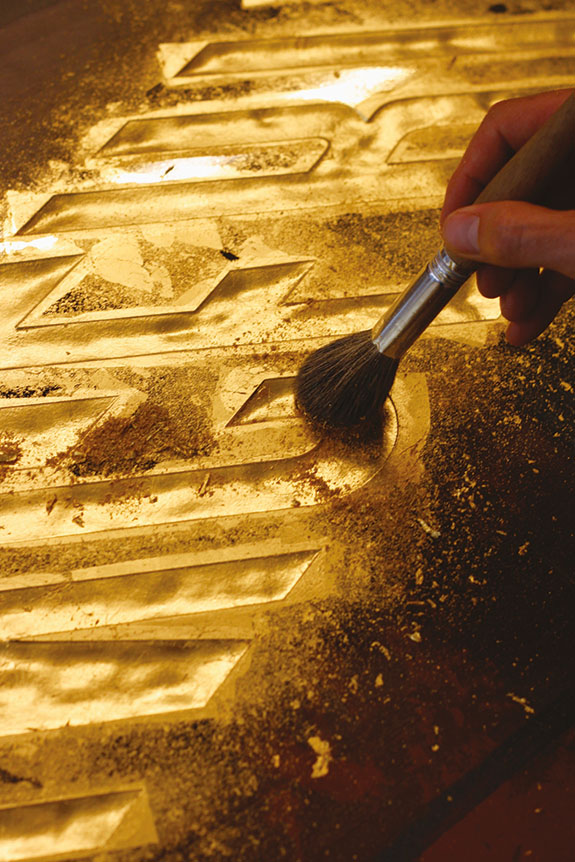
Giving visibility to an endangered craft: this is what drove Victor Bert, a sign painter, to enter the City of Paris Grands Prix de la Création. Always fascinated by historical monuments, Victor trained as a stonemason in Amiens. It was there that he discovered stone engraving and quickly developed a passion for lettering. With his vocational certificate in hand, he moved to Paris, working while supplementing his training with courses in typography and calligraphy. "I always knew that lettering went beyond stone carving, that I needed to explore a multitude of mediums. I have never stopped enriching my practice. That’s how I discovered a documentary on American sign painting in 2015 and decided to get started."
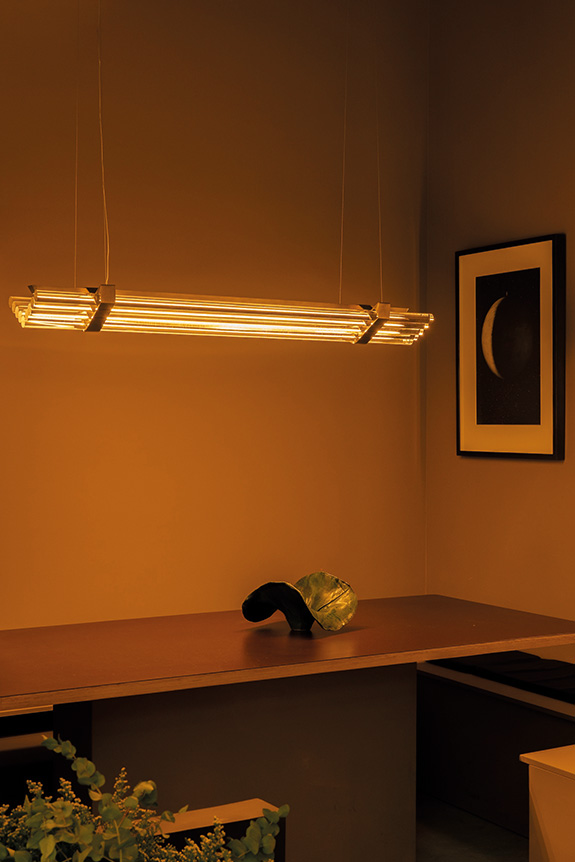
Conceived by Thierry Dreyfus for DCW éditions, the Seagull collection is expanding with a new 160 cm pendant lamp. A change in scale that maintains the luminaire's founding principle: to reveal the light rather than the lamp itself.
Making light a presence without letting the fixture dominate the space: this is the philosophy behind Seagull, imagined by Thierry Dreyfus. To design it, the designer drew inspiration from Frank Lloyd Wright's Johnson Wax Building, built in the late 1930s, where glass tubes diffuse exterior light into the interior. Thierry Dreyfus transposes this sensation to a domestic scale through a succession of horizontally arranged light tubes, in a composition with Art Deco accents.
New proportions, new possibilities
Already available in a 120 cm version, Seagull now comes in a 160 cm format, designed to complement larger tables. Ideally suspended between 80 cm and 1 m above the tabletop, the fixture stretches the light rather than concentrating it, creating a "roof of light," to use the words of Frédéric Winkler, president and founder of DCW éditions. A new scale that also opens Seagull up to other uses, because more than just a simple light source, the pendant can become a true line in space, capable of following architecture and guiding the eye. An approach that extends the research of Thierry Dreyfus, known for his light installations and collaborations with Comme des Garçons, Raf Simons, and Peter Marino. The goal is to stage the light, here in a version designed for everyday life.
For this new edition of Paris Design Week, the Intramuros team slipped through the capital's arteries to discover the season's latest exhibitions and new releases. Here is a look back at the ones you shouldn't have missed.
From September 10th to 19th, design once again took over the streets of Paris, much to our delight! Whether industrial or collectible, the creative sector made headlines again, both through new collections and new gatherings. It was an opportunity to rediscover certain profiles and meet new minds driven by innovative concepts. Among all the installations we discovered, here are the ones that particularly caught our attention.
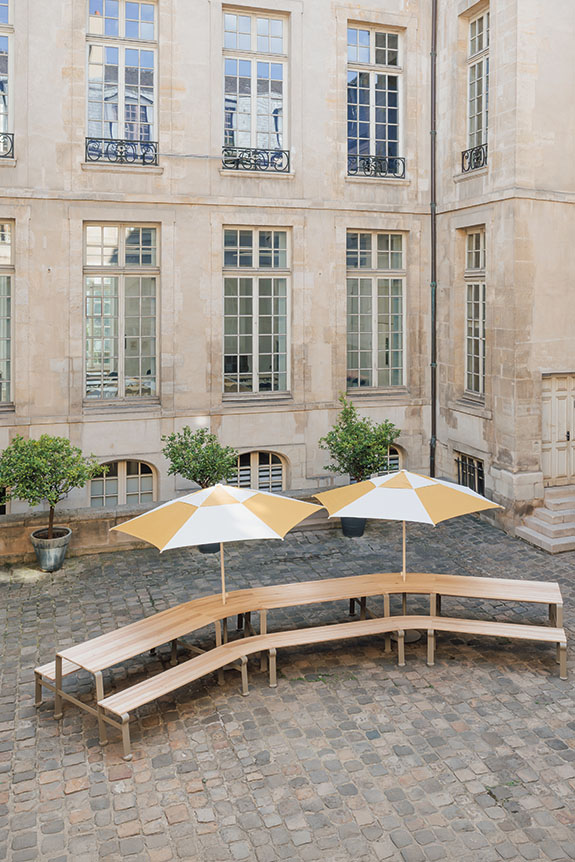
Picnic by Cluzel / Pluchon: an invitation to lunch
Following Marianna Ladreyt last year, designers Cluzel / Pluchon took over the courtyard of the Hôtel d’Albret to present the Picnic installation, created in collaboration with manufacturer Guyon Mobilier Urbain. Conceived as an invitation to share and wander, Picnic was unveiled as a life-sized picnic table over seven meters long. Continuing the Gier duo's well-known collection, it combined locust wood slats with a powder-coated steel structure, drawing a generous curve to create a dialogue between urban furniture and conviviality.
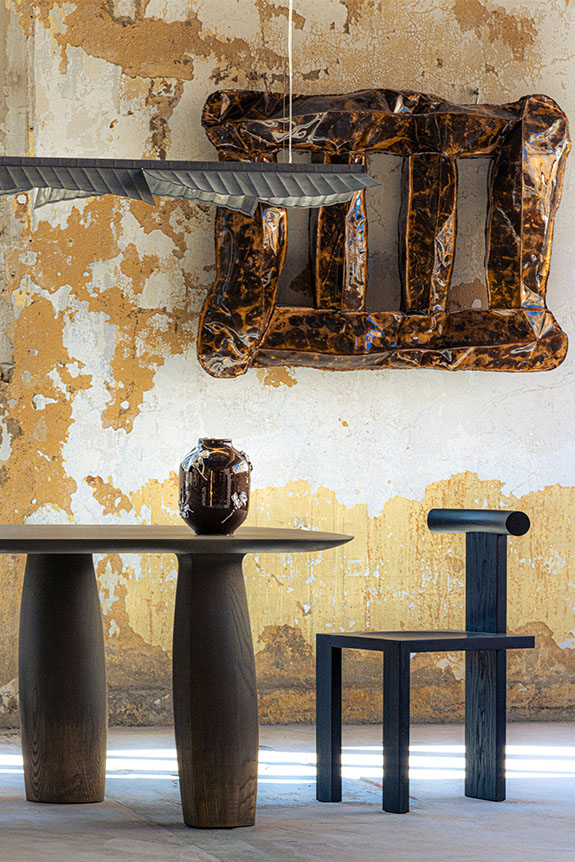
GOOD SELECTION by Lucas Zito and Marika Caputo: new scenes
Organized by Lucas Zito and Marika Caputo, the second edition of GOOD SELECTION was held this year in the heart of the Fondation Fiminco in Romainville. Now disused, the former pharmaceutical factory—reminiscent of some of the most surprising Milanese venues chosen by Alcova—was taken over for the occasion by 47 international designers. Favoring dialogue between creations rather than formal classification, the exhibition offered various living spaces. A combination of styles and atmospheres provided visitors with a new, more embodied perspective on this so-called "collectible" design.
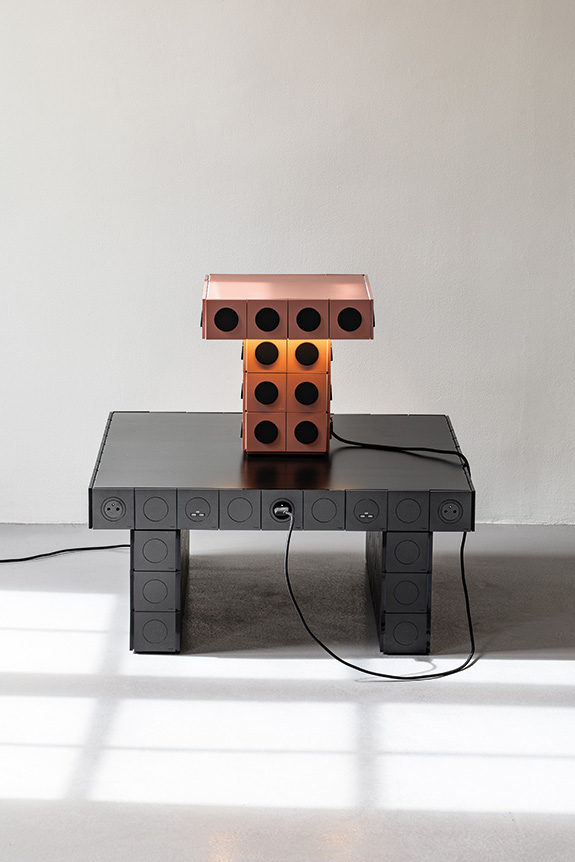
Volt Face by Studio 5.5 and Schneider Electric: high-voltage collection
Studio 5.5 teamed up with Schneider Electric to imagine the Volt Face lighting and furniture collection, designed using the Odace range and presented at the Galerie Joseph on Rue des Minimes. Faithful to their taste for repurposing everyday objects, Vincent Baranger and Anthony Lebossé chose to make the socket and switch the main element of their creation, rather than an afterthought. Developed as wall lights, pendants, lamps, tables, and even nightstands, each piece plays with the repetition and assembly of the modules. Conceived as a true creative palette, the Odace range thus becomes a material to be composed, but also to be touched and operated, making these pieces playful and offering a fresh look at these familiar yet often undervalued objects.
Tout est Chaos by PLI Office: ordering the desirable
After initiating "Pour que tu m’aimes encore" in 2024 and "Design Disco Club" the following year, Christopher Dessus returned this year with "Tout est chaos." Presented at the Gaîté Lyrique, the exhibition brought together a body of work that acts as a vector for surprise. A feeling conveyed by the material or the form, but also and above all by a freer consideration of usage. It is a counterpoint to modernist design, which is generally serial and fundamentally utilitarian, here abandoned in favor of narrative. It was an opportunity to see very personal research collide, such as the non-linear or even random work of the series, the reinterpretation of industrial archetypes reworked by hand, or new explorations blending industry and craftsmanship. Driven by a nearly free participation, the 66 selected designers delivered a specific idea of design, claimed by 10 of them through installations and even a projection imagined as a manifesto.
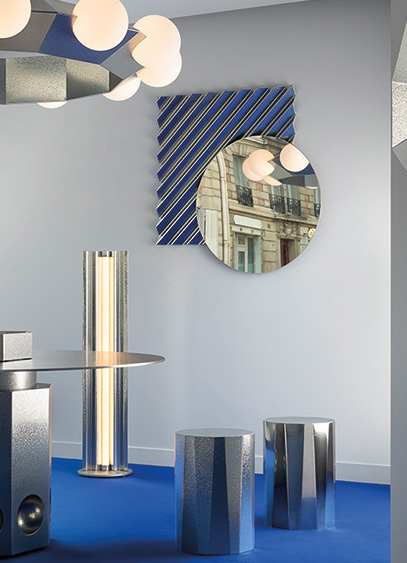
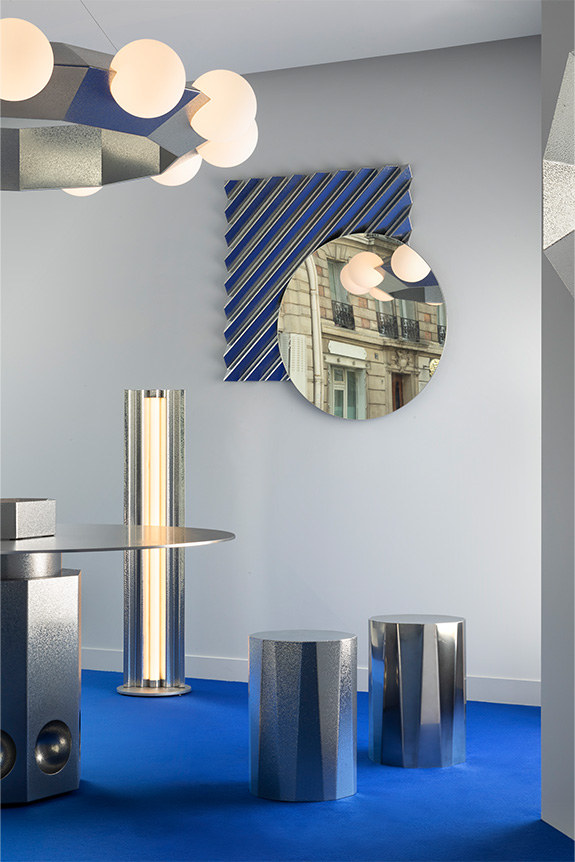
Victoria Wilmotte: Stainless Steel Collection
For this year's Paris Design Week, Victoria Wilmotte unveiled nearly a dozen pieces. Whether brand new or reimagined existing typologies, this collection continues to explore a world defined by geometry and a distinct industrial spirit. Crafted from stainless steel—sometimes featuring textures that evoke the technique of hammering—the various objects diffused light, along with the signature blue hue championed by the designer.
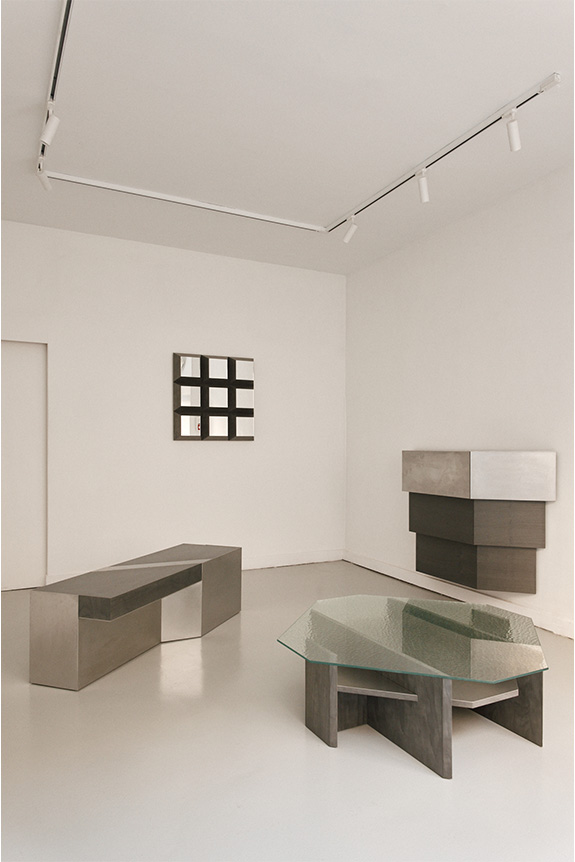
Opus by Studio CHHO: A New Trajectory
Launched a decade ago, the interior architecture firm Hoch unveiled Studio CHHO, the creative force behind Opus. This debut furniture collection, whose name suggests both a first chapter and a technical term for stone masonry, consists of five pieces. Developed over a year and a half, it highlights taut lines and 90° and 45° angles, delivering a bold aesthetic language with generous forms. Enhanced by a restrained palette of three materials—stained birch veneer, hammered glass, and vibrated stainless steel—the pieces were conceived as "objects of presence." This term, unique to the studio, reflects creations made in the south of France that embody the firm's sober yet characterful DNA.
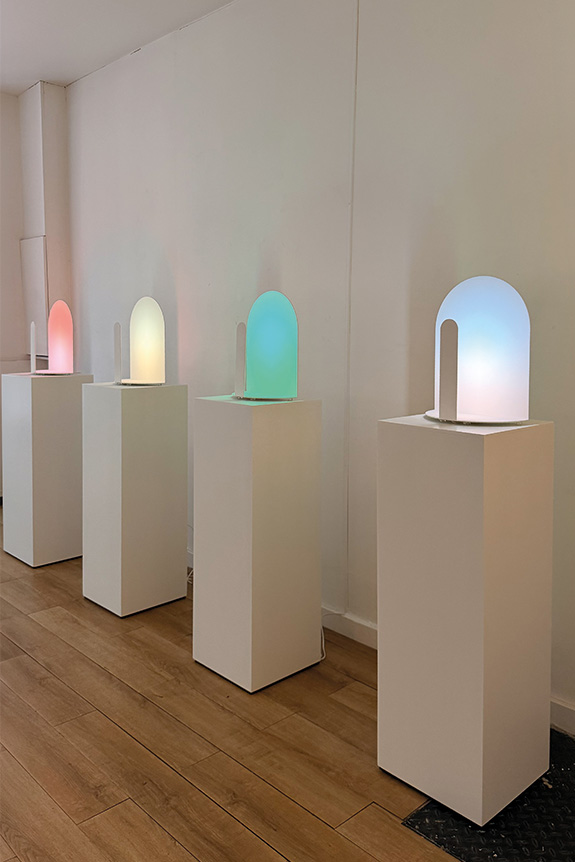
"The Light Library" by Studio Meaningfull: Coloring Light
Continuing their research into color, which began with the Agora du Design grant they won in 2021, Studio Meaningfull—comprising Marine Rouit-Leduc, Galilée Al Rifaï, and Nicolas Rouit-Leduc—presented "The Light Library" at Galerie Ideal Place. The exhibition showcased nearly four years of experimentation with the color of light, conceived not as a material, but as a means of interaction. Each shade was developed with reference to natural phenomena, such as the aurora borealis, dawn, and twilight, to achieve a realistic and natural effect. The trio displayed several light-based objects and sculptures, including the Milan lamp, which recently joined the Mobilier National collections. The exhibition was designed to engage the senses and emotions while establishing new chromatic references for light, through an approach that is both sculptural and architectural.
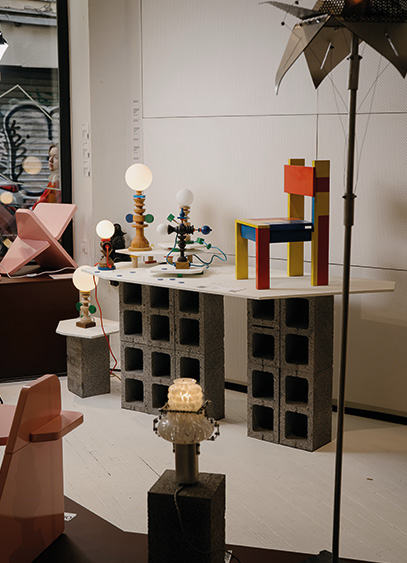
Following an initial event in June, Frgmnt decided to repeat the experience for Paris Design Week by presenting its first exhibition, titled "Edition 01." On view until September 19, the show aims to put "the materials no one looks at" in the spotlight.
For its first participation in Paris Design Week, Frgmnt selected 43 designers and 11 material manufacturers, brought together to showcase a process and pieces imagined from forgotten or discarded industrial materials, scraps, and waste. Initiated by Meryl Benitah, the Frgmnt project began as a creative challenge launched last June. Over 48 hours, groups of designers, paired up for the occasion, imagined pieces using mediums often considered "undesirable". From wood to metal, the project also incorporated new materials, such as the one designed by Etnisi from windshields, or the Tissium developed by the company Maximum. "It was a bit like a hackathon format, but dedicated to design. We started with materials that were either salvaged or upcycled to show that reuse or even a second life can be desirable. Even though the participants didn't know each other, a certain creative synergy quickly emerged, and groups formed rapidly, managing to produce pieces in just two days", says Meryl Benitah.
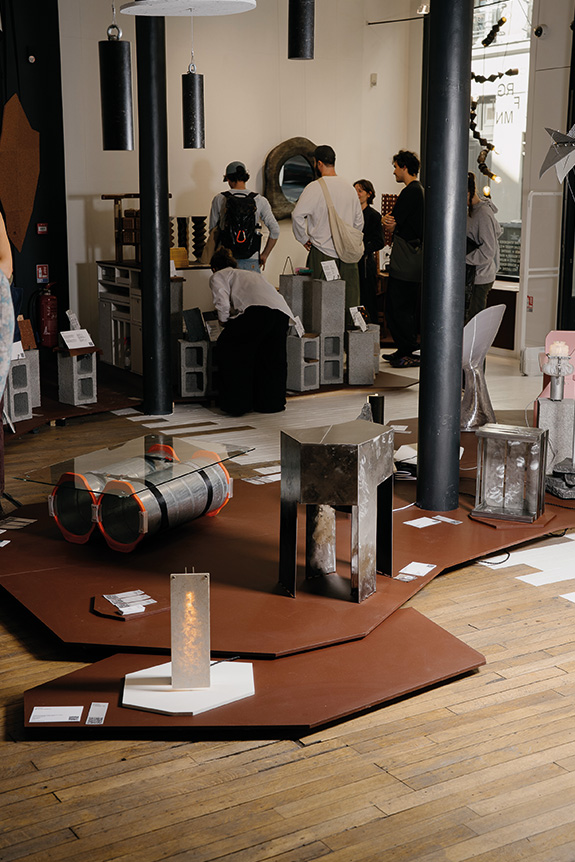
This initiative caught the attention of Sabrina Piperno, manager of the Heureux les Curieux space, who wanted to support the project by inviting Frgmnt to exhibit during Paris Design Week in September. "For this edition, the idea was to invite other material manufacturer partners to create, on one hand, this material library, and on the other, to bring in designers with the same approach. Whether through the material itself or the design manufacturing process", continues Meryl Benitah.
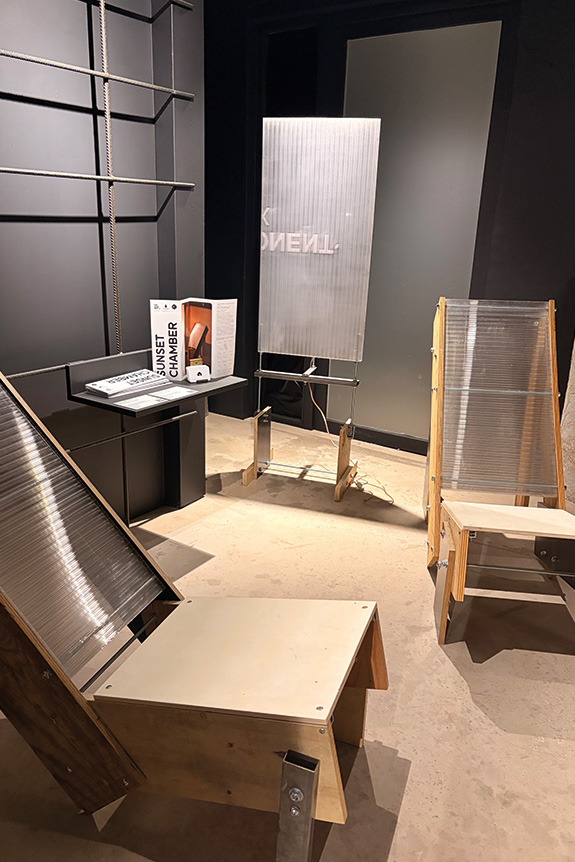
A new way of thinking about material
Spread over two floors, the exhibition presents unique worlds, united by a single ambition: to create from what already exists or to explore the potential of new materials. "There are many ways to make a well-designed object that meets market needs. Some use reuse, others respond through the material, while some do it through function. But they all tell a story through a piece, always asking how to create objects that are desirable in the long term." This inquiry led designers to partner with manufacturers, such as hors-studio, whose Caretta Caretta lamp was made from Celullio, a material developed in collaboration with Matériaux Urbains. The latter is also the creator of Paperio, a new medium that Atelier Alcova used to bring Tecto to life. Meanwhile, other creators are presenting original pieces born from their own unique processes. Notable examples include Atelier Perret, creator of the Séléné pendant light made from coffee grounds; the T65 vase designed from bread by studio Copain; and Emma Batsheva Cohen’s concept focused on optimizing vegetable leather.
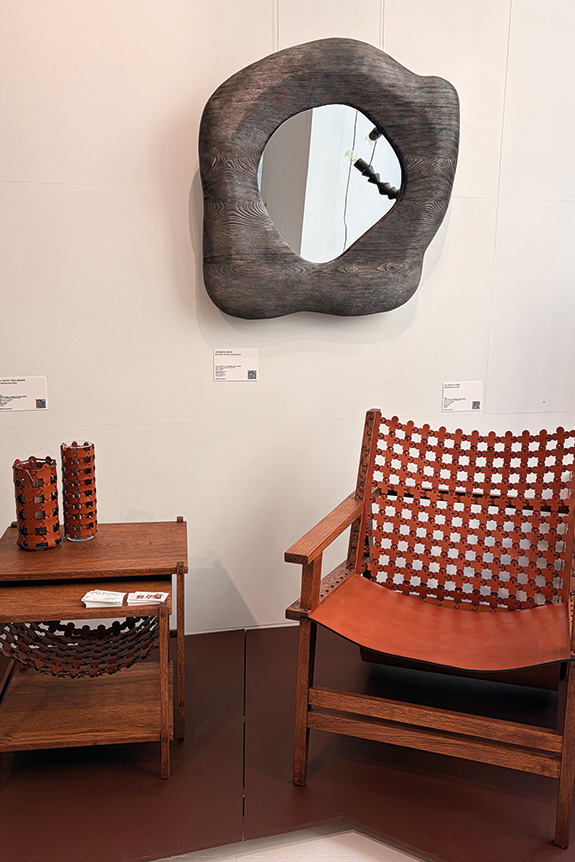
Fostering connections
These diverse profiles and explored avenues aim to demonstrate that materials, initially overlooked, can become desirable once design takes hold of them. "My personal goal is to foster this link between manufacturers, designers, and specifiers by creating a beautiful ecosystem that will encourage them to collaborate and allow these pieces to find their way into hotels, restaurants, and support their development on a larger scale." With this exhibition, Meryl Benitah intends to build new bridges between key sectors of the design industry.
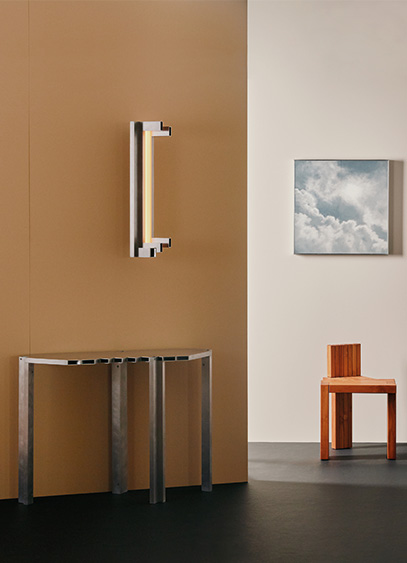
Triode recently opened 28, a new Parisian space designed as a creative playground for designers. To kick things off, Jean and Oliver Pelle, founders of the American studio Pelle, are presenting "Metallic Reverie," an exhibition featuring ten original pieces centered on metal and light.
Neither a gallery nor a showroom, 28—located at 28 rue Jacob in the 6th arrondissement—aims to offer a new exhibition format. Conceived by Jacques Barret, founder of Triode, this new space invites the designers represented by the firm to go beyond simply showcasing their collections. For each exhibition, they are given carte blanche to reveal a more personal side of their creative world. For this inaugural invitation, Triode reunites with Jean & Oliver Pelle, four years after their first joint exhibition in Paris.
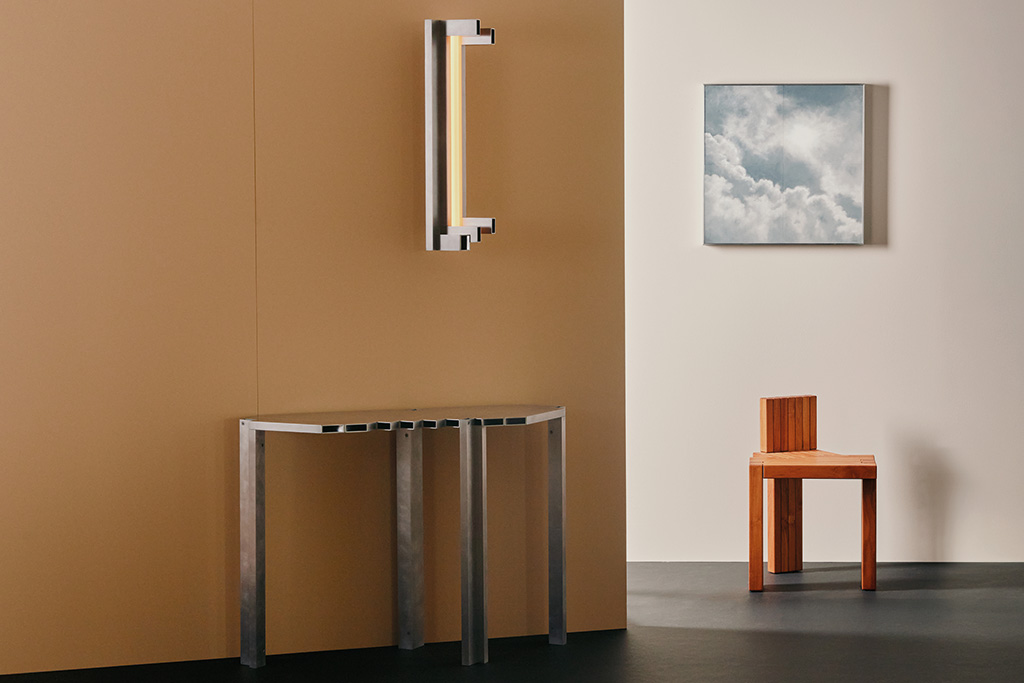
Two perspectives on material and light
Architects by training and based in Brooklyn, Jean and Oliver Pelle have developed a practice that sits at the intersection of architecture, craftsmanship, and experimentation. For the "Metallic Reverie "exhibition, the duo created ten works specifically for 28, all united by a single material: metal. Jean Pelle presents her Fountain lighting series, inspired by memories and landscapes observed in Korea and along the American coast, while Oliver Pelle explores the intersection of light, material, and space through his Light Objects. Two distinct styles, yet united by a shared focus on materiality. It is a fitting way to inaugurate 28 by showcasing exactly what this new venue aims to reveal: the intimate personality of the designers.
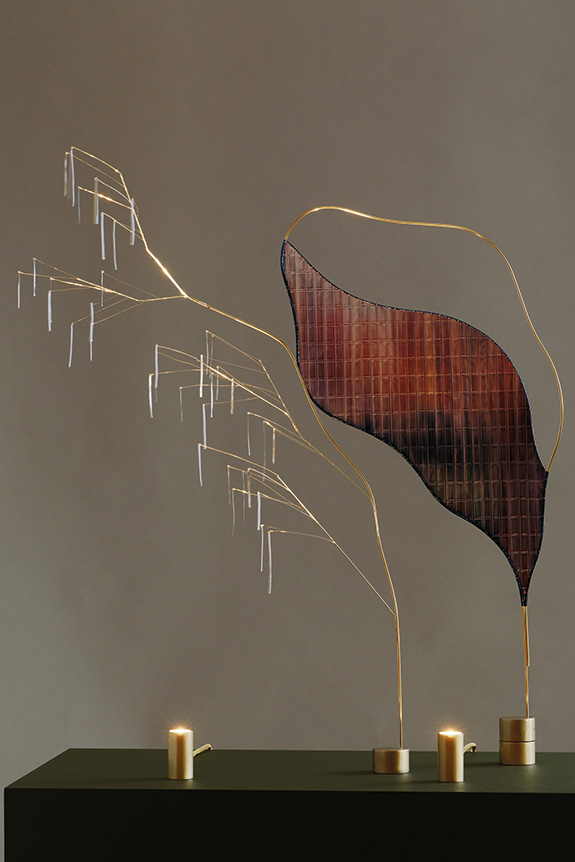
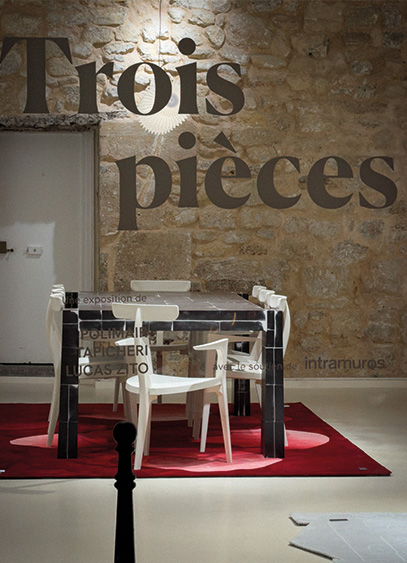
For Paris Design Week, Polimair, Tapicheri, and Lucas Zito came together for a joint exhibition titled "Trois-Pièces" (Three Rooms). Presented at 52 rue Charlot from September 10 to 13, the exhibition was conceived as an interior where furniture, lighting, and textiles explore new ways of producing and living.
Set along a path imagined as an apartment—complete with a hallway, dining room, and living room—Polimair, Lucas Zito, and Tapicheri presented the aptly named "Trois-Pièces" exhibition. More than just a succession of objects, the exhibition plays on the dialogue between them and the complementarity of practices that pay special attention to materials and manufacturing processes. "The starting point for Trois-Pièces was the idea of bringing together three Parisian designers with very different yet complementary practices, following a 'curated ensemble' logic where we present a bench, a rug, and a light fixture—the fundamental elements of a welcoming space." says Arthur Gaudenz, co-founder of Polimair.
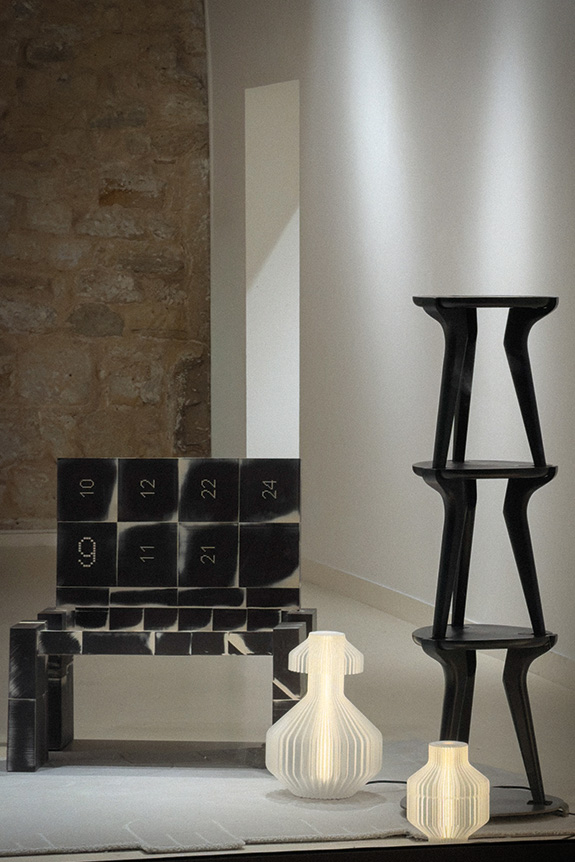
Three rooms, three worlds, three interpretations of material
For this exhibition, the designers offered new pieces from their respective worlds. First, Polimair presented its Baiji bench, a continuation of the stool of the same name introduced a few months earlier. The bench, developed in collaboration with Gabriel Fabrics, is a modular system with limitless configuration and assembly possibilities. Lucas Zito continued his experiments with 3D printing through his Patch collection, unveiling a large 240cm-long table in the dining room area, displayed alongside his Buoy lamps. Finally, the French rug design house Tapicheri, founded by Camille de Villartay, revealed the La Cité Perdue wool rug collection, designed specifically for the exhibition, with a 350 × 210 cm model as the centerpiece. "The biggest challenge of the exhibition was bringing together these three sets of ideas that are difficult to combine. On one hand, there's us, doing mass production; Camille from Tapicheri does bespoke work; and Lucas is focused on collectible, one-off pieces. So, these are projects that don't usually coexist," continues Arthur Gaudenz.
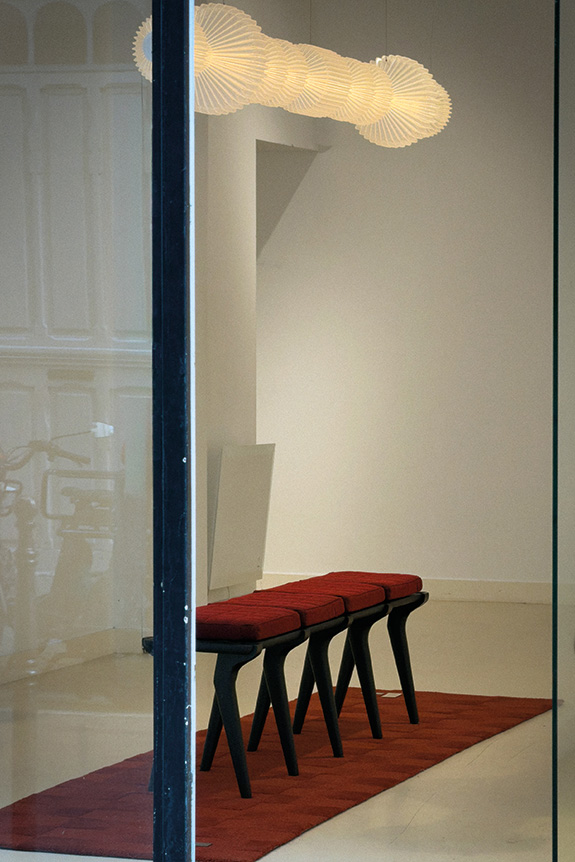
Pieces from very distinct worlds, then, but ones that, once brought together, assemble with perfect coherence. The "Trois-Pièces" exhibition successfully brought industry, technology, and craftsmanship together to offer a shared vision of contemporary living, while championing a design approach where innovation lies as much in the form as in the production method.
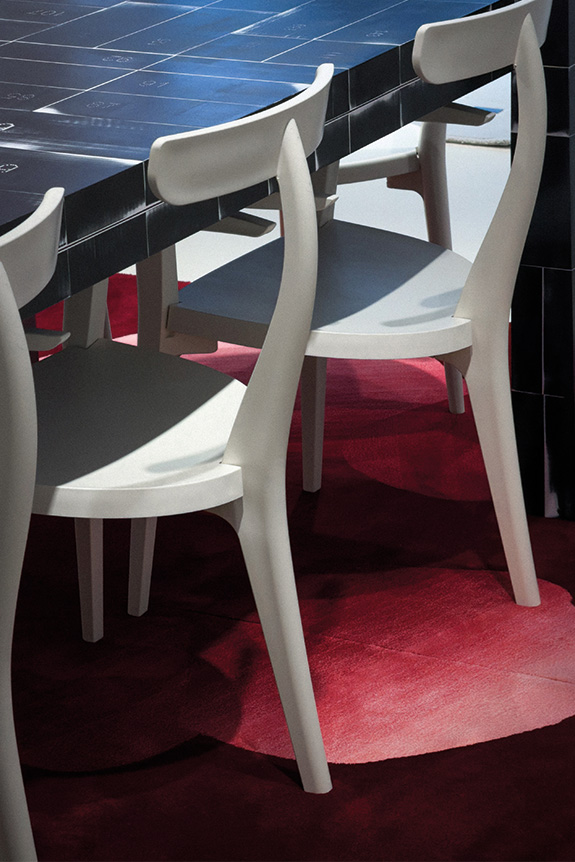
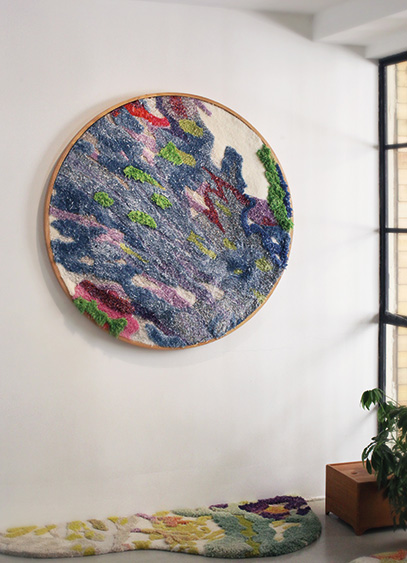
For Paris Design Week, the Chinese creative scene is taking over several venues across the capital. From the Palais-Royal to the Marais, three events showcase a movement in flux, bridging cultural heritage, experimentation, and new applications.
Long associated primarily with manufacturing, China is now carving out a new position in the international design landscape. During Paris Design Week, designers, artists, architects, and publishers are unveiling three spaces in Paris that offer diverse approaches. Far from a single aesthetic, they are united by a shared focus on craftsmanship, materials, and the dialogue between heritage and contemporary creation.
Wu Bin gives shape to time
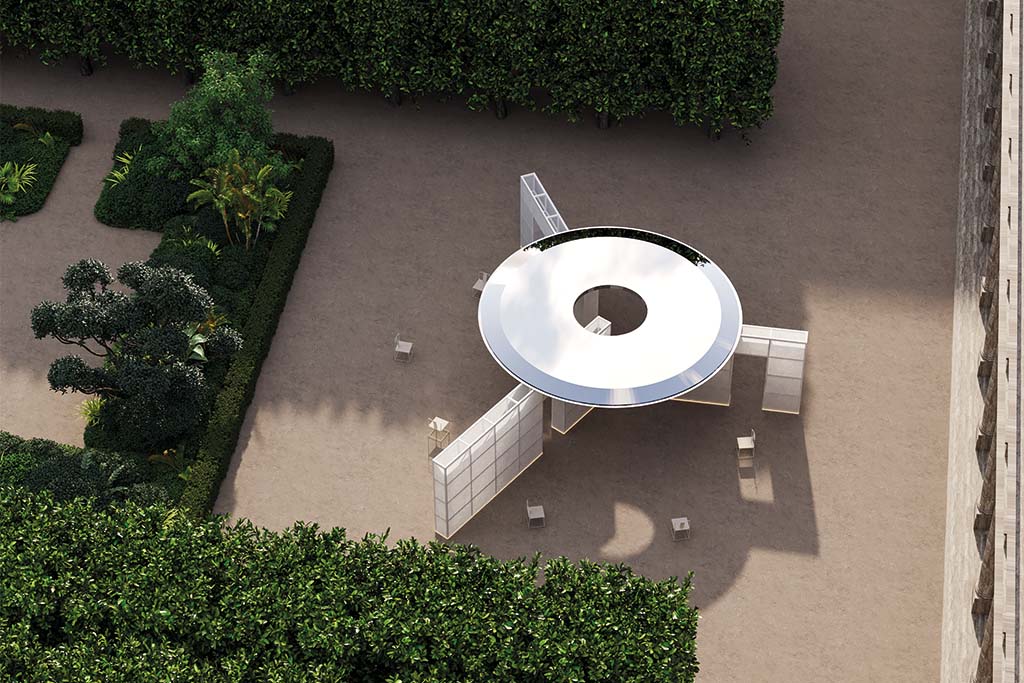
In the heart of the Palais-Royal gardens, the signature style of designer and interior architect Wu Bin is showcased through The Pavilion of Time, from September 9 to 17. Crafted from mirror-polished stainless steel and wrapped in a membrane inspired by Xuan paper, the structure evolves with the light and movement of its surroundings. Divided into three segments, the pavilion transforms throughout the day into a contemporary sundial, blurring the lines between art, design, and architecture.
"Good taste" according to Chinese design
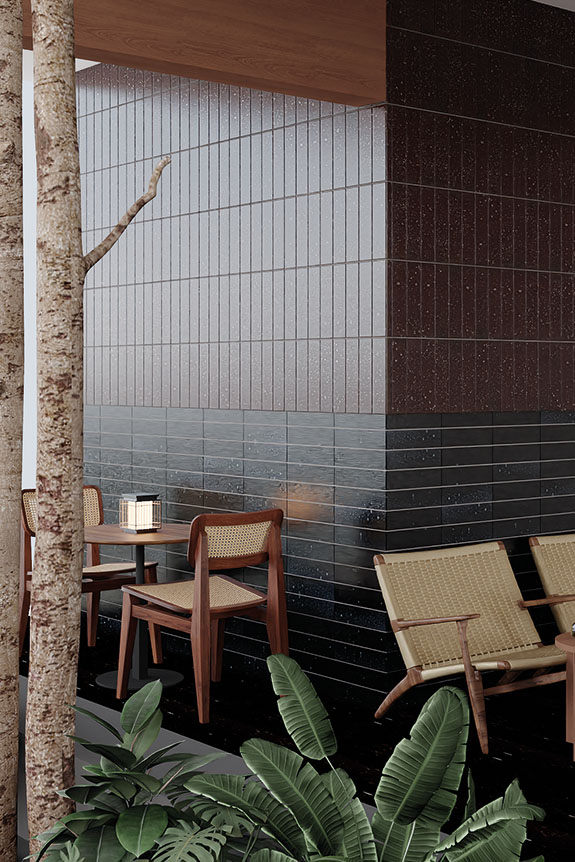
From September 10 to 14, the China Creative Pavilion brings together around twenty brands and talents at the Paris Design Week Factory. Under the theme " Good Taste!, the exhibition explores the relationship between aesthetics, sensory experience, and utility. Among the featured projects, Anta has partnered with artist Liu Tong for a paper installation inspired by its ANTA FOLD technology, while SDCC transforms discarded ceramics from Jingdezhen into architectural cladding, blending porcelain craftsmanship with a circular economy.
When art meets everyday life
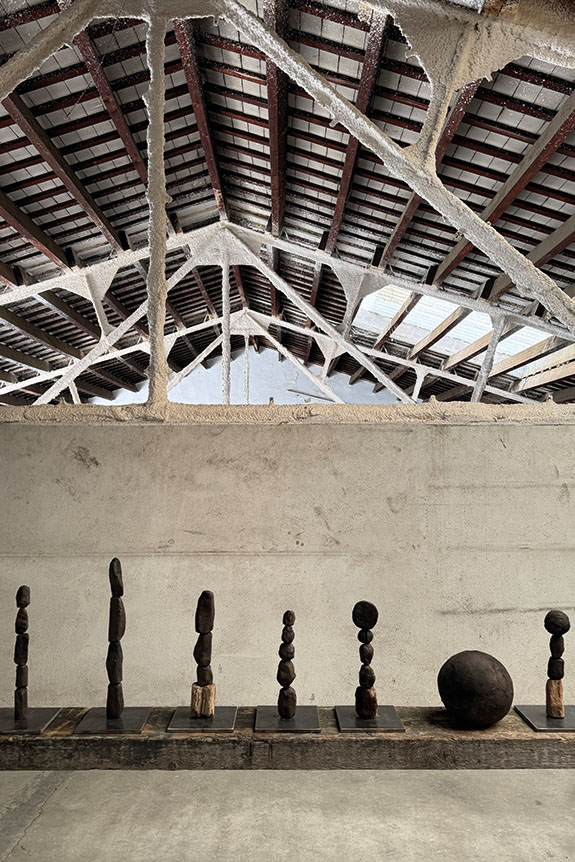
Finally, the "Form Before Form" exhibition, presented at Espace AUBE from September 9 to 19, marks the European debut of YUAN, a project founded in Beijing by Song Tao. Ceramics, painting, floral art, and organic installations converge here, reflecting a vision of design as an extension of artistic research and a way of living. Notably, ceramicist Du Qinfen presents the YUAN Collection 01, which translates her artistic vocabulary into everyday objects.
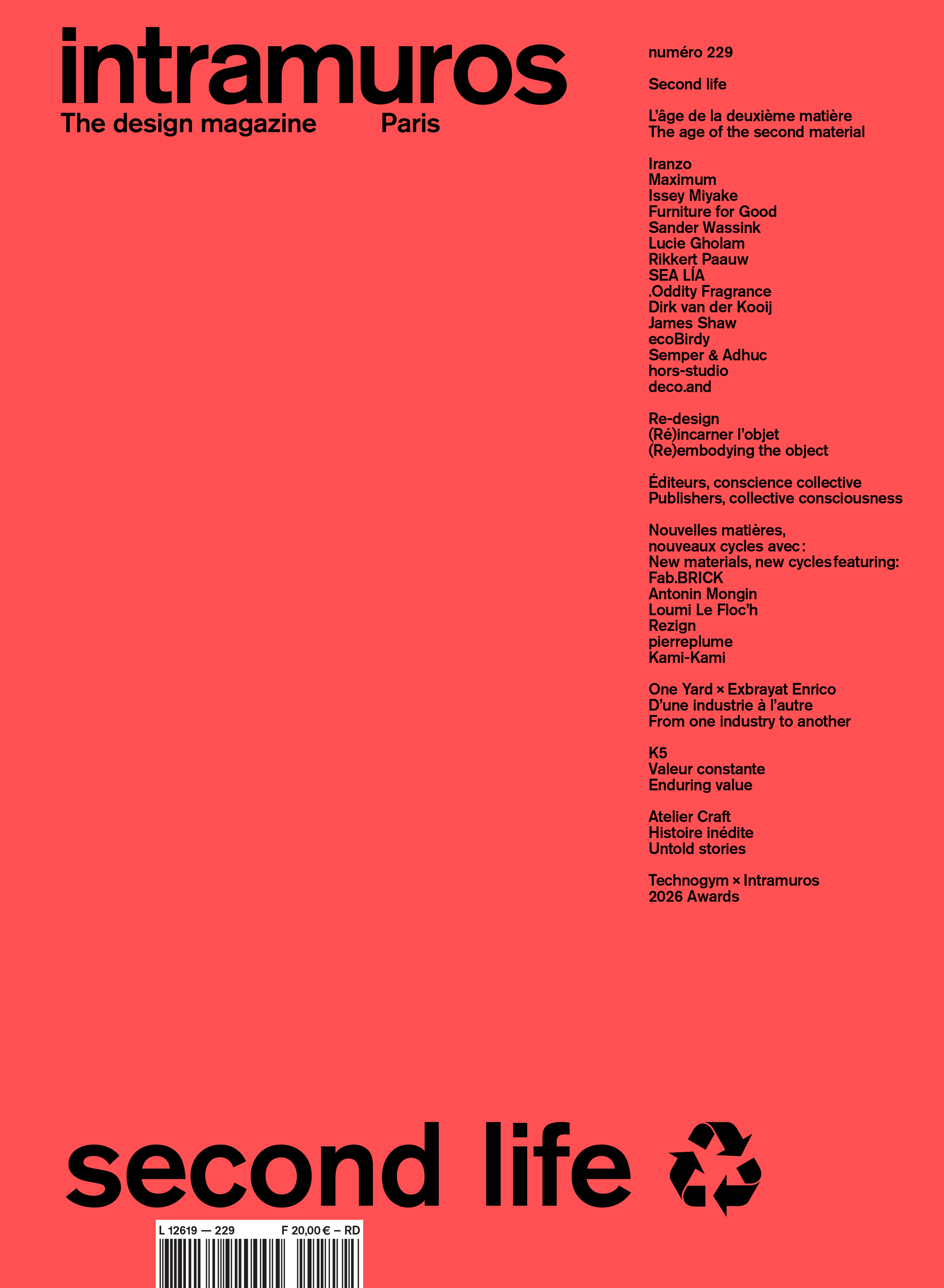
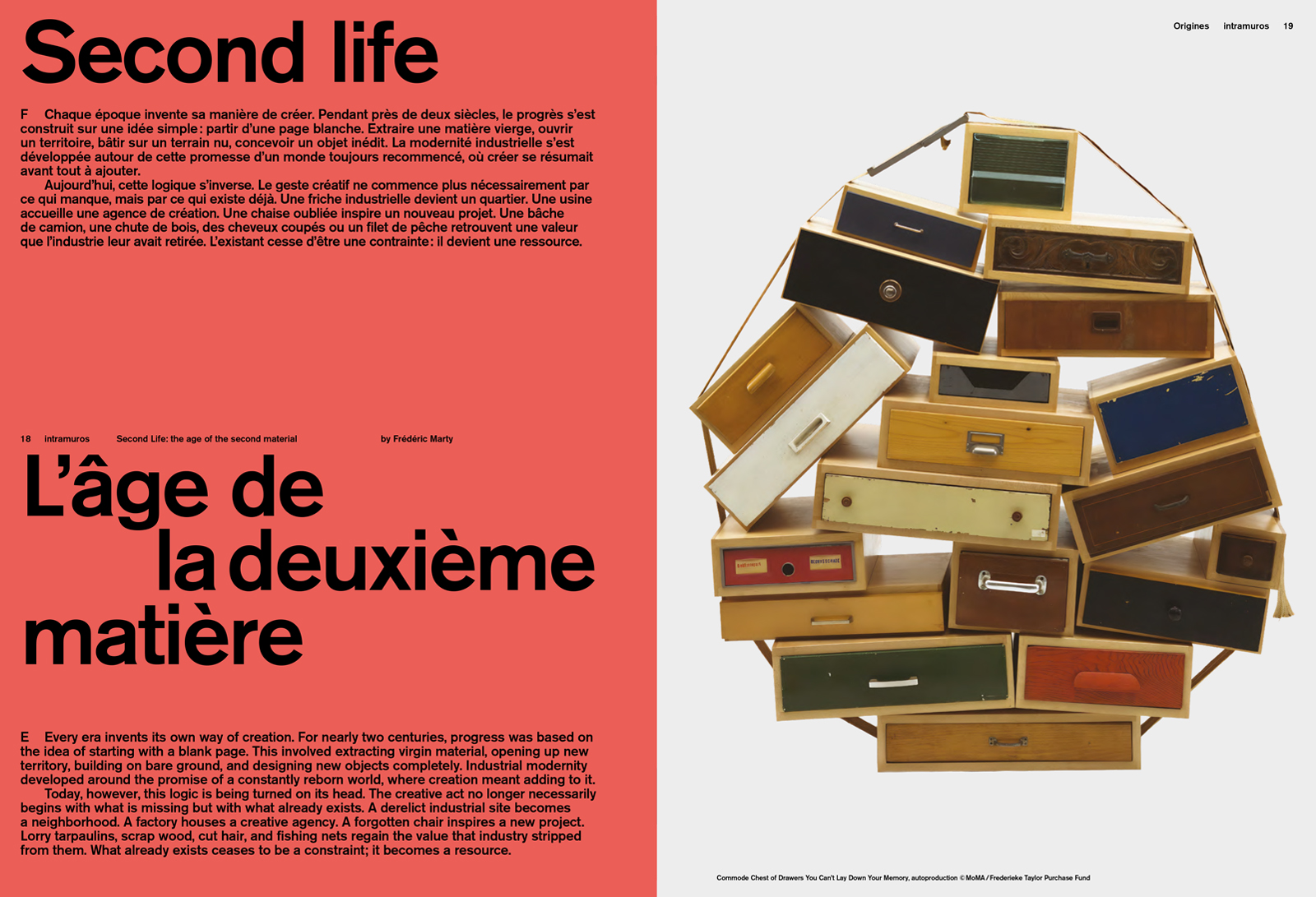
For a long time, we have confused novelty with progress. As if moving forward necessarily meant replacing. As if an object, a material, or a building lost all value the moment it had been used. This logic has shaped our interiors as much as our economy: produce, entice, sell, forget. Then start over. Again and again. Now, reality forces us to look at what already exists in a new light. It is not about giving up on creation, and certainly not about giving in to nostalgia.
On the contrary, it is about expanding the scope of design. Repairing, transforming, reusing, reconditioning, repurposing. All these actions require as much intelligence as creating from scratch. Perhaps even more. Because working with what exists imposes constraints, a history, and, sometimes, scars. The designer no longer starts with a blank page. Today, they are writing the next chapter.
Contents
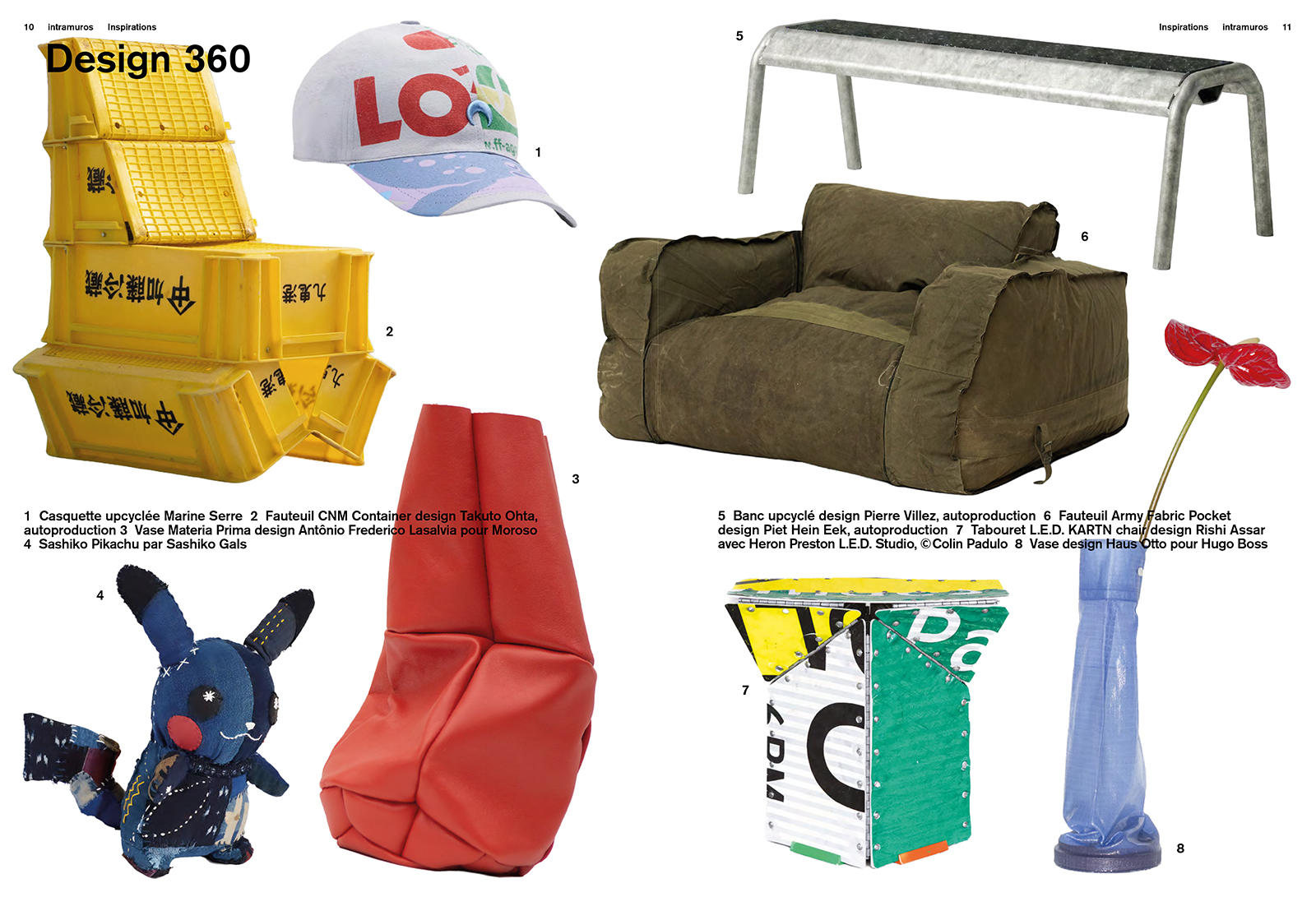
Design 360
Design Story
Second life, The age of secondary materials
In the meshes of Iranzo
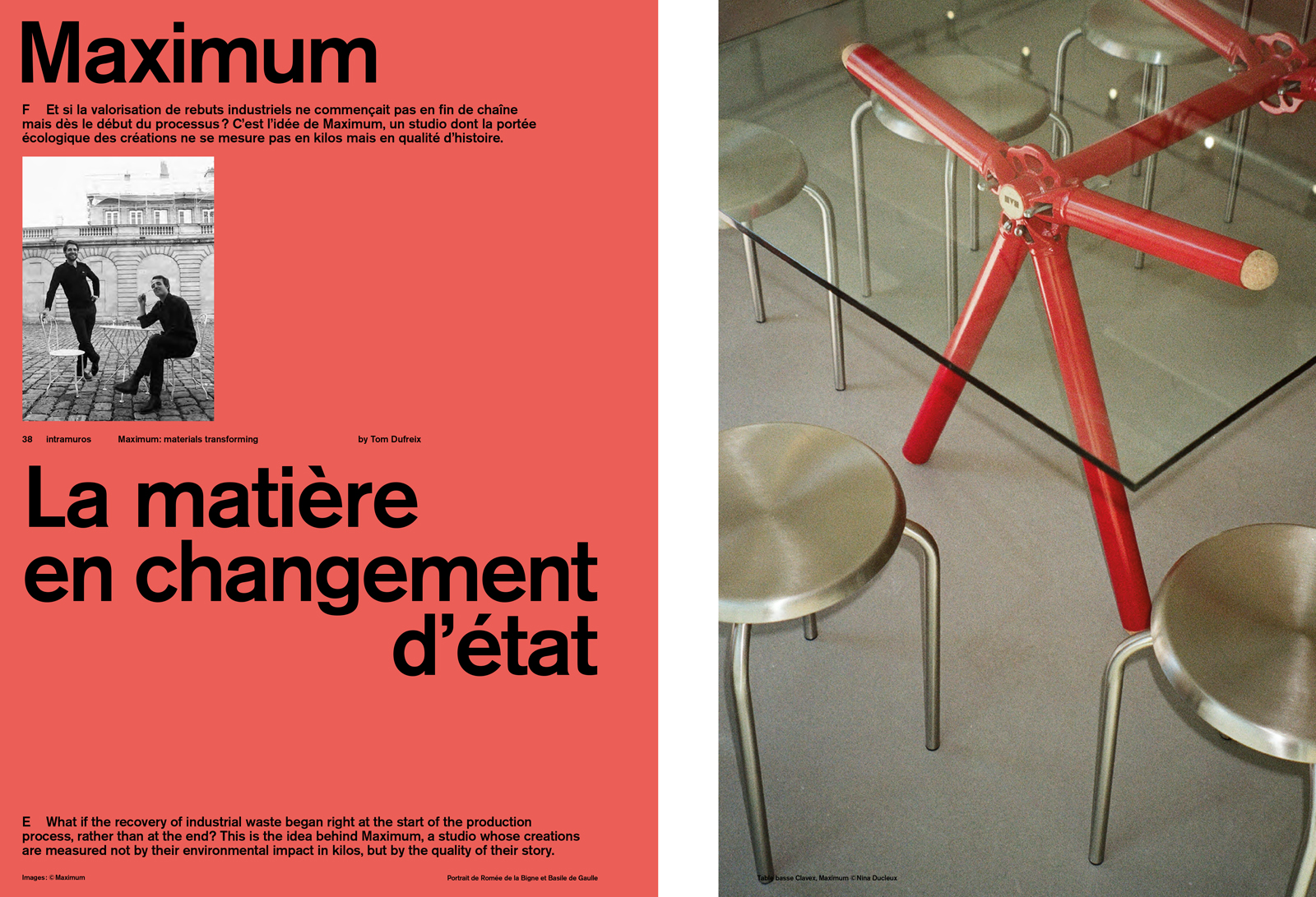
Maximum, matter in a state of change
James Shaw: Colorful aggregates
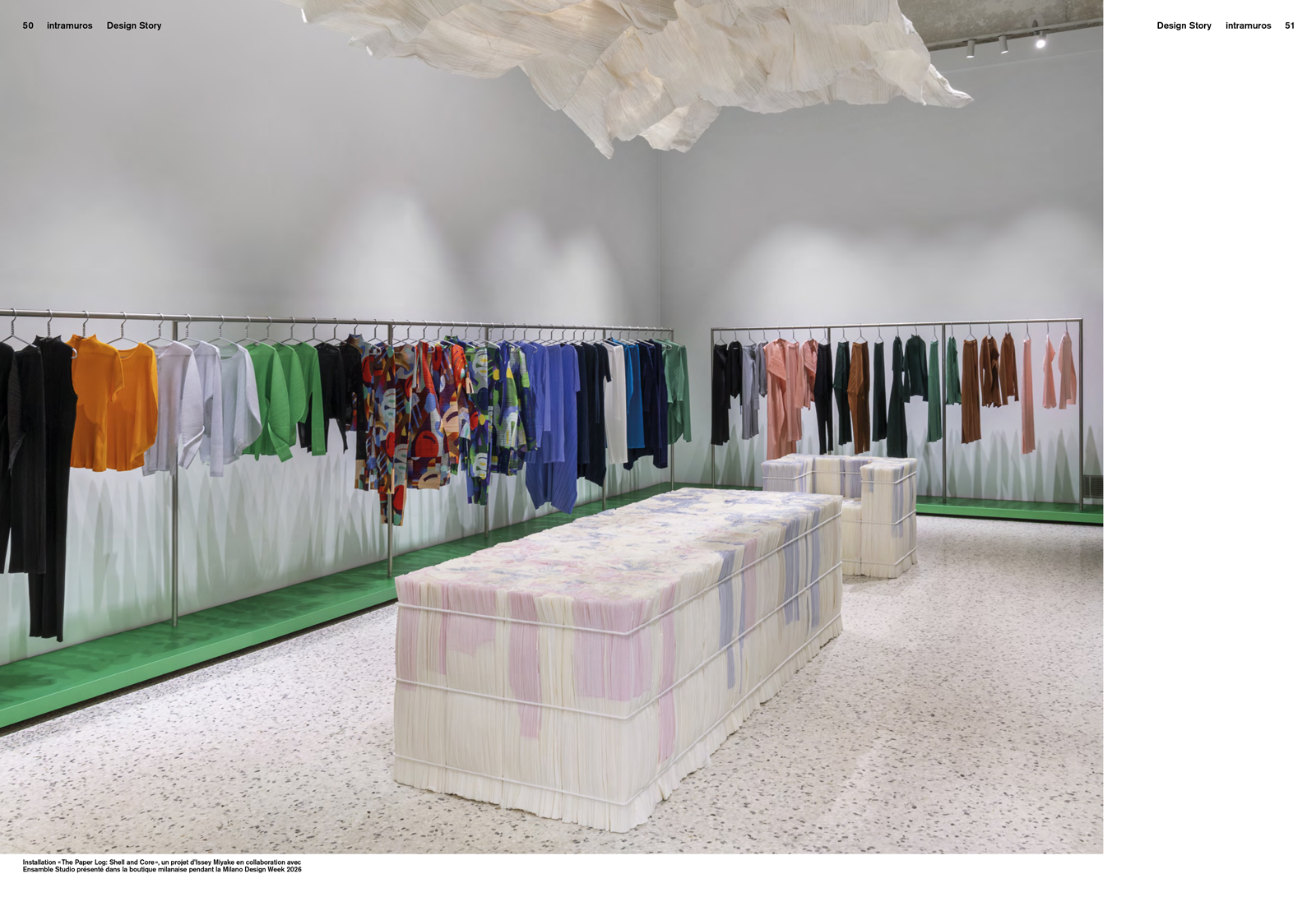
Issey Miyake, biophilic experience
Furniture for Good: matter takes shape again
Sander Wassink, making do
Lucie Gholam, reconstructing a narrative
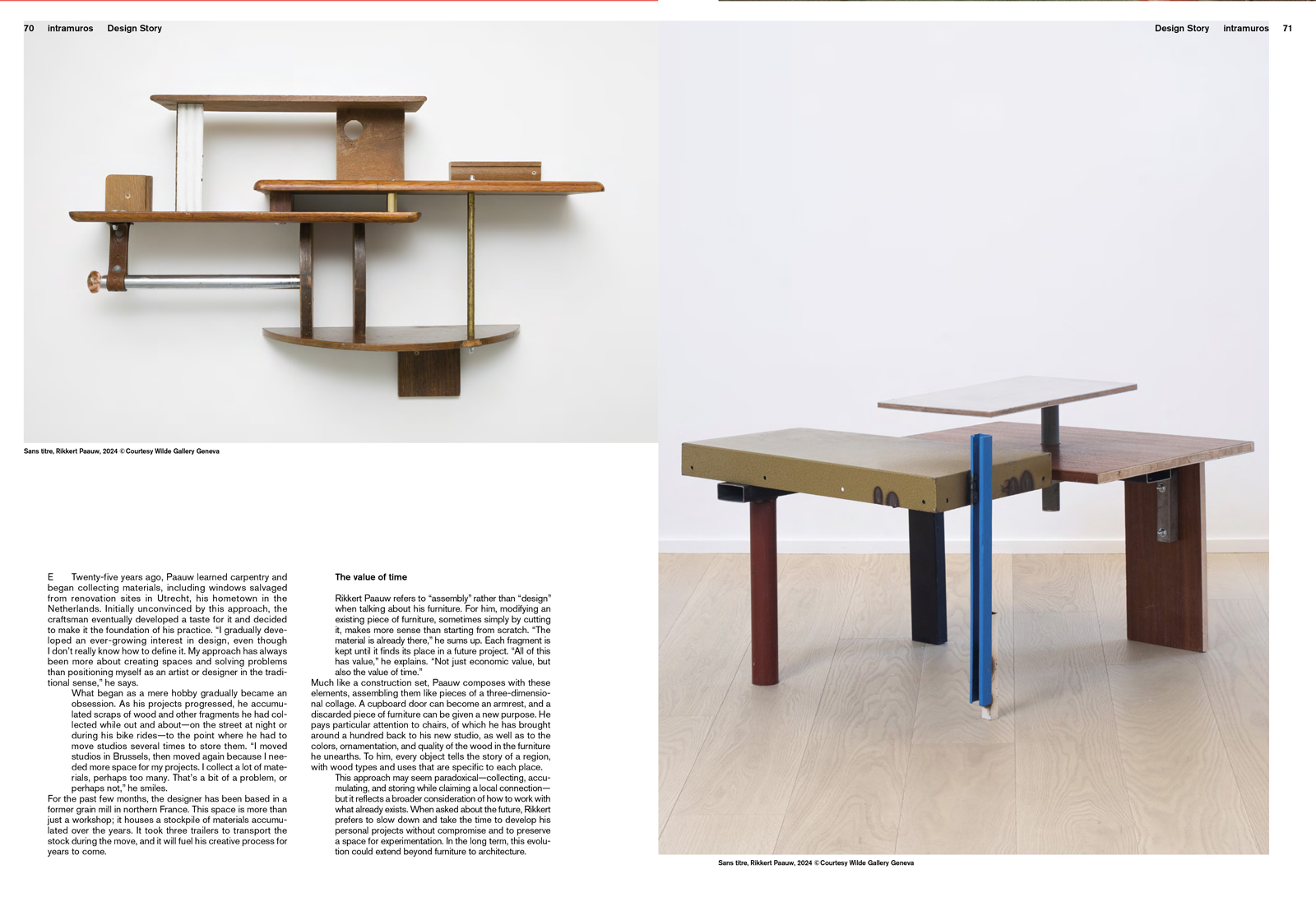
Rikkert Paauw, composing with the existing
SEA LÍA: plastic surgery
.Oddity Fragrance, scented design
Dirk van der Kooij, the memory of plastic
ecoBirdy: at a child's height
Semper & Adhuc, time reclaimed
hors-studio, raw materials
deco.and, extravagant silence
Redesign, (Re)embodying the object
Publishers, collective consciousness
Materials
Fab.BRICK, rebuilding the wall
Antonin Mongin, the design fiber
Loumi Le Floc’h, summer light
Rezign, textiles reinvented
pierreplume, the fibers of reuse
Kami-Kami, when materials change status
In-situ
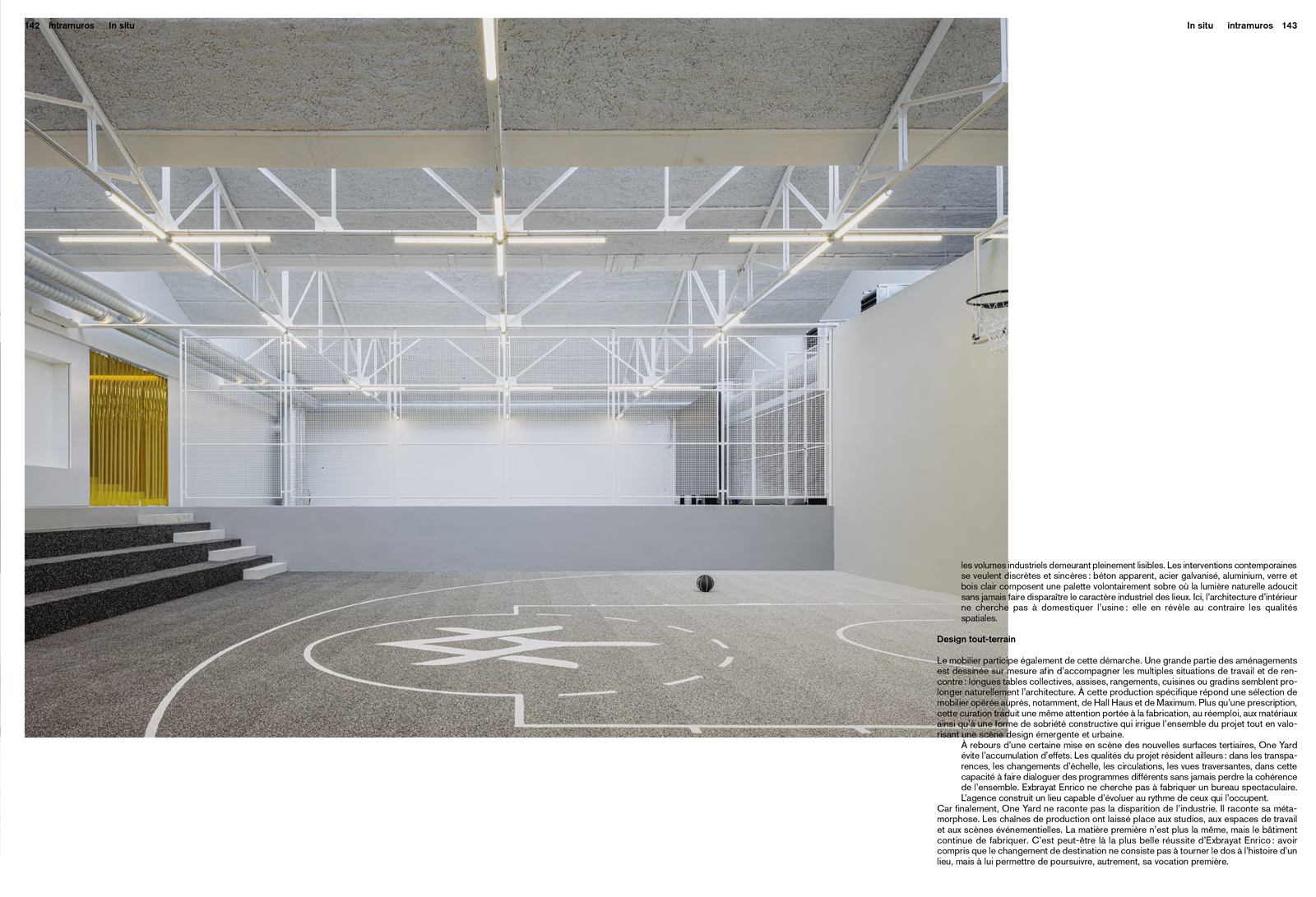
What is already thereOne Yard, from one industry to another
K5: Constant value
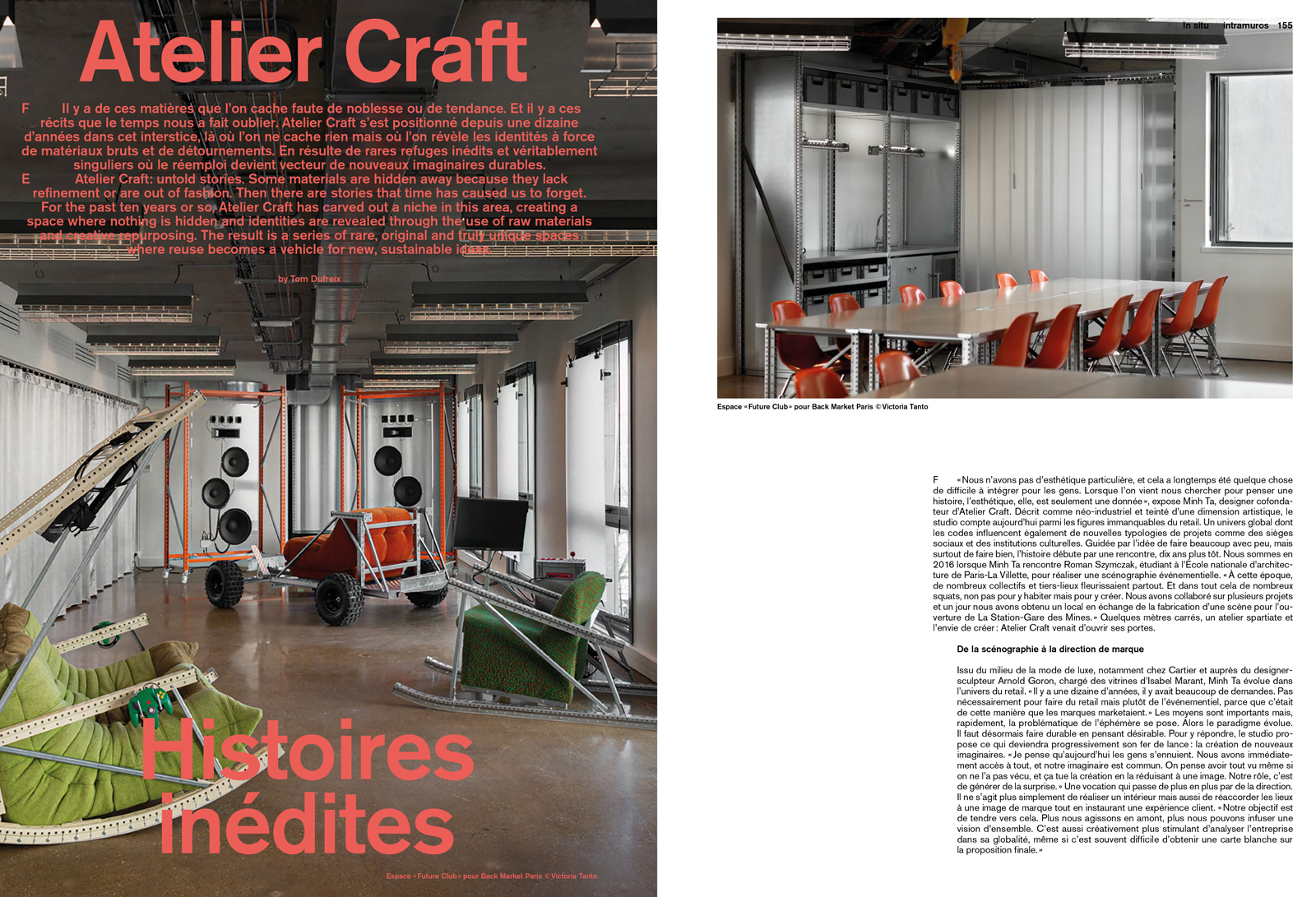
Atelier Craft, untold stories
Experimenta
Sustainable Practices Laboratory: when material reshapes the project
In the Air
Artisans of Excellence Fair: spotlight on materials
Technogym x Intramuros Competition: winners of the second edition
Hyline: blurring the boundaries
Studio MTX: embroidery on a grand scale
EquipHotel: highlights from the 2026 edition
Events
Find this issue on newsstands or directly on our online shop.
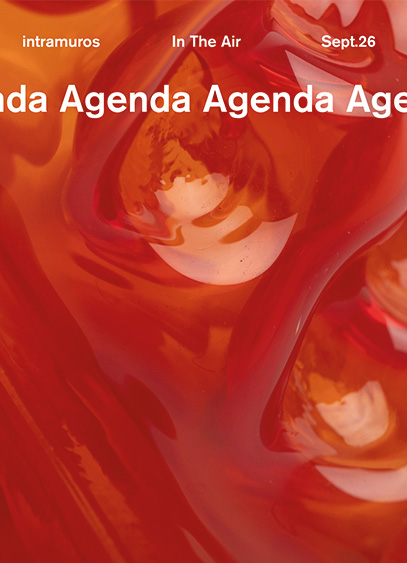
Paris Design Week returns to the capital from September 10 to 19 to celebrate design in all its forms. Here is a look at the must-see exhibitions for this year's edition.
September 5-7 : Shoppe Object Paris Trade Show, Paris Expo Porte de Versailles, 75015 Paris
September 8-27 : "Contrepoint" exhibition by Anthony Guerrée, Musée Bourdelle, 16, rue Antoine-Bourdelle, 75015 Paris
September 9 and 10 : "Trames" exhibition by Heju Studio at Tarkett, 43 Rue de Saintonge, 75003 Paris
September 9-13 : "The Light Library" exhibition by Studio Meaningful, Ideal Place Gallery, 38, rue des Gravilliers, 75003 Paris
September 9-19 : "Sotto Voce" exhibition, 3 rue Paul Bert, 75011 Paris
featuring: Clément Pasquier, Justine Ménard, Florie Berger, Mélissa Wago-Lala, Mathilde Martin and Sòler Paris
September 9-20 : The "Re-prise de la Bastille" by studio 5.5, Place de la Bastille, 75004 Paris
September 10-13 : "Trois Pièces" exhibition with Polimair, Lucas Zito and Tapicheri, 52 rue Charlot, 75003 Paris
September 11-13 : "Take one just in case" exhibition, 10 rue Tesson, 75010 Paris initiated by Pierre Castignola and Alexandre Delasalle
featuring: Augustin Puzio, Atelier Burrata, made by ASTRONAUTS, Lana Arih, Jules Barton, Tin Alaya, Pierre Castignola, Laura Casañas Maya, Alice Clermont, Alexandre Delasalle, Laura Dominici x Basil Schu, Lewis Duckworth, e8 Tableware, Tim Teven, Diego Faivre, Lucas Muñoz Muñoz, Helene Falgayrette, Olga Flor, Lino Gasparitch, LS Gomma, Ebba Studio, Flora Lechner, Anna McAllister, Mark Malecki, Johanna Pichlbauer, Jovien Panné, Sacha Lefèvre, Sigurd Schelde, Marie Verdeil
September 10-14 : Paris Design Week Factory:
Espace Commines: 17, rue Commines, 75003 Paris
Galerie Joseph: 116, rue de Turenne, 75003 Paris
Galerie Joseph: 16, rue des Minimes, 75003 Paris
Galerie Ellia: 10, rue de Turenne, 75003 Paris
September 11 and 12 : IKEA "Home of the Year", 4 rue François Miron, 75004 Paris
September 10 to 19 : PICNIC installation by Cluzel / Pluchon, Hôtel d’Albret, 31 rue des Francs Bourgeois, 75004 Paris
September 10 to 19 : "Bar Stool" Exhibition, Espace Brownstone, 26 rue Saint-Gilles, 75003 Paris, initiated by Athime de Crécy and Quentin Frichet
featuring: AC/AL, Antonin Fassio, Arthur Desmet, CPRV, Athime de Crécy, Camille Donias, Claire Lavabre, Cluzel & Pluchon, Denise Merlette, Formel Studio, François Lafortune, Guillaume Bloget, Guillaume Gindrat, Gini Moynier, Giuseppe Formica, Hugo Chaffiotte, Marine Quéré, Meta, Paul Tubiana, Quentin Frichet, Romain Sillon & Clara Ormières, Sacha Parent & Valentine Tiraboschi, Sara Decampos, Théo Leclercq & Camille Viallet, Thelonious Goupil, Tobias Brunner, and Wint Design Lab.
September 10 to 19 : Frgmnt Design Week at Heureux les curieux, 23 rue du Pont aux Choux, 75003 Paris
featuring: Alexandre Veillon, Alicia Bonnard, Amalgame Studio, Ariane Ronot, Atelier Anova, Atelier Apara, Atelier Perret, Benoit Porte-Proust, Claire Buet, Clémence Birot, Clémence Lucchini, Clément Thevenot, Céline Proust, David Jacquinot, Emma Batsheva Cohen, Faustine Perret, Florence Boujnah, Judith Chauvel-Levy, Kr.Atelier, Louis Daigre, Mahée Billères, Marine Gaillard, Marion Gaudino, Maxime Wan Meenen, Mickaël Gayet, Mileno Guillorel-Obregón, Nessim Kaufmann, Nicolas Guillamot, Olive®, Post Industrial Crafts, Richard Rondelez, Sarah Remy, Studio CoPain, Studio Évaporer, Studio Jumel, Tancrède de Beaumont, Théo Laverne, Valentin Bony, Vincent Cassat, Yohan Thomas in collaboration with Etnisi, La Tête Dans Les Nuages, La Fabrique Materia, Matériaux Urbains, NaturLoop, Pierre Plume, Reed Material, Renature Materials and Tissium
September 10 to 27 : Paris Design Week at BHV Marais, 52 rue de Rivoli, 75004 Paris
featuring: Jean-Baptiste Durand and Simon Geringer, Théo Charasse with Vous pouvez dormir dans la grange, Gaspard Fleury-Dugy, Laure Philippe with studio BrichetZiegler, Gregory Lacoua and BehaghelFoiny
September 10 to October 3 : "Multiples" Exhibition, Galerie des Ateliers de Paris, 30 rue du Faubourg Saint-Antoine, 75012 Paris
featuring: Camille Viallet & Théo Leclercq, Cluzel / Pluchon, CPRV, Jules Levasseur, Julie Richoz, Kevin Lebouvier - Klaes studio, Laure Philippe, Lila Guédin, Lucien Icard, Nicolas Verschaeve, Selah Creative Office, Studio Poirier Bailay, Valentine Tiraboschi & Sacha Parent, Thelonious Goupil and Unknown Untitled
September 10 to October 4 : "La Tempête" Exhibition by Jérémy Pradier-Jeauneau with Fermob, Arc de Triomphe, Place Charles de Gaulle, 75008 Paris
September 10 to October 10 : "Under Pressure" Exhibition by Marie and Alexandre, Galerie Signé, 33 Rue Bonaparte, 75006 Paris
September 11 to October 31 : "Petals" exhibition by Patrick Jouin, Galerie de Sèvres, 4 place André Malraux, 75001 Paris
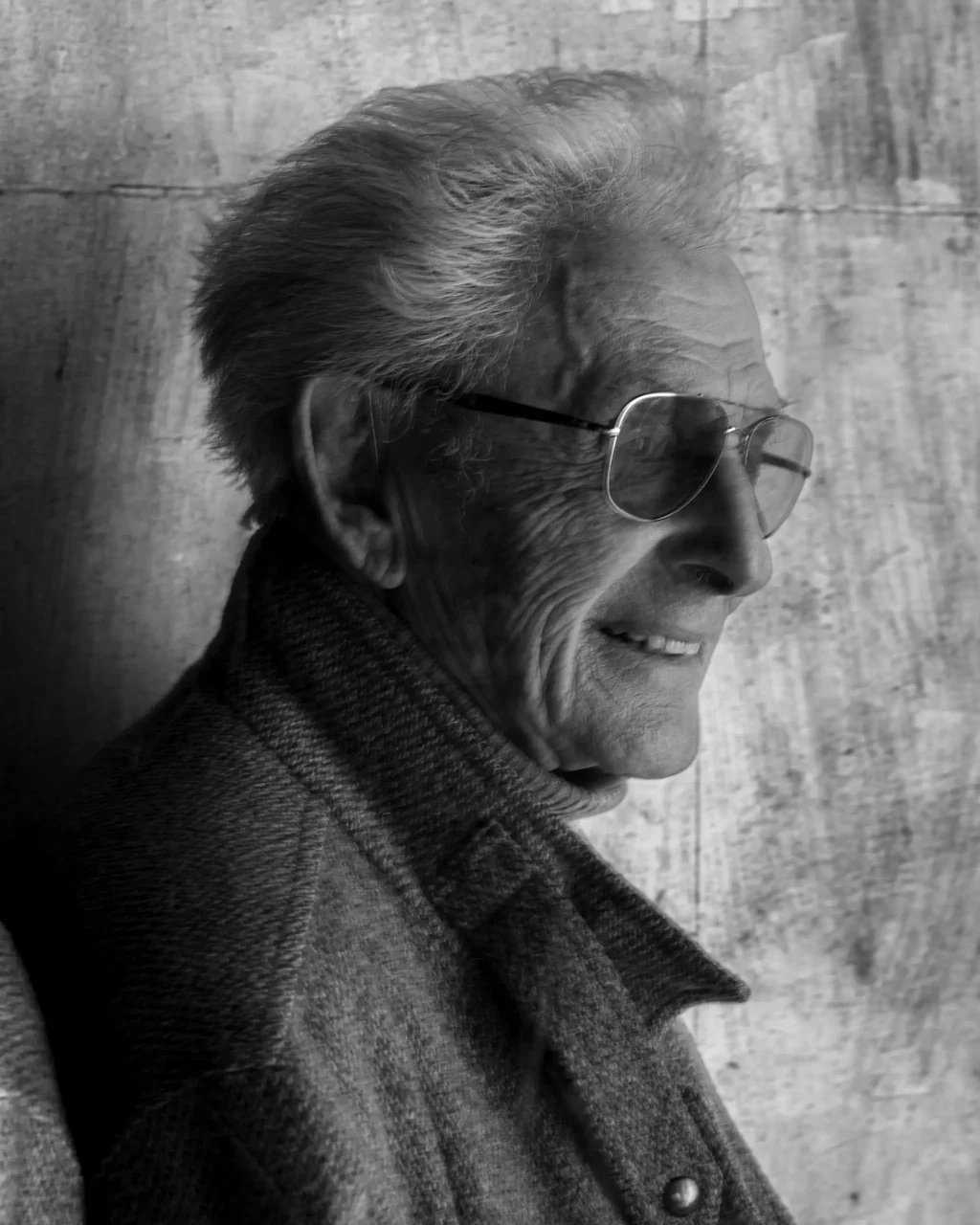
Designer, architect, and photographer Marc Held passed away on July 27 at the age of 93. His passing marks the loss of one of the most unique figures in post-war French design—a creator whose work, long kept out of the spotlight, has steadily gained recognition over the decades.
A self-taught talent, Marc Held never sought to align himself with any specific school or movement. His perspective was shaped at the intersection of photography, architecture, and industrial design, driven by a singular standard: to harmonize functional intelligence, formal freedom, and the poetry of everyday life. This approach gave rise to several iconic pieces, most notably the famous Culbuto chair (1967), whose playful silhouette and rocking motion continue to inspire generations of designers.
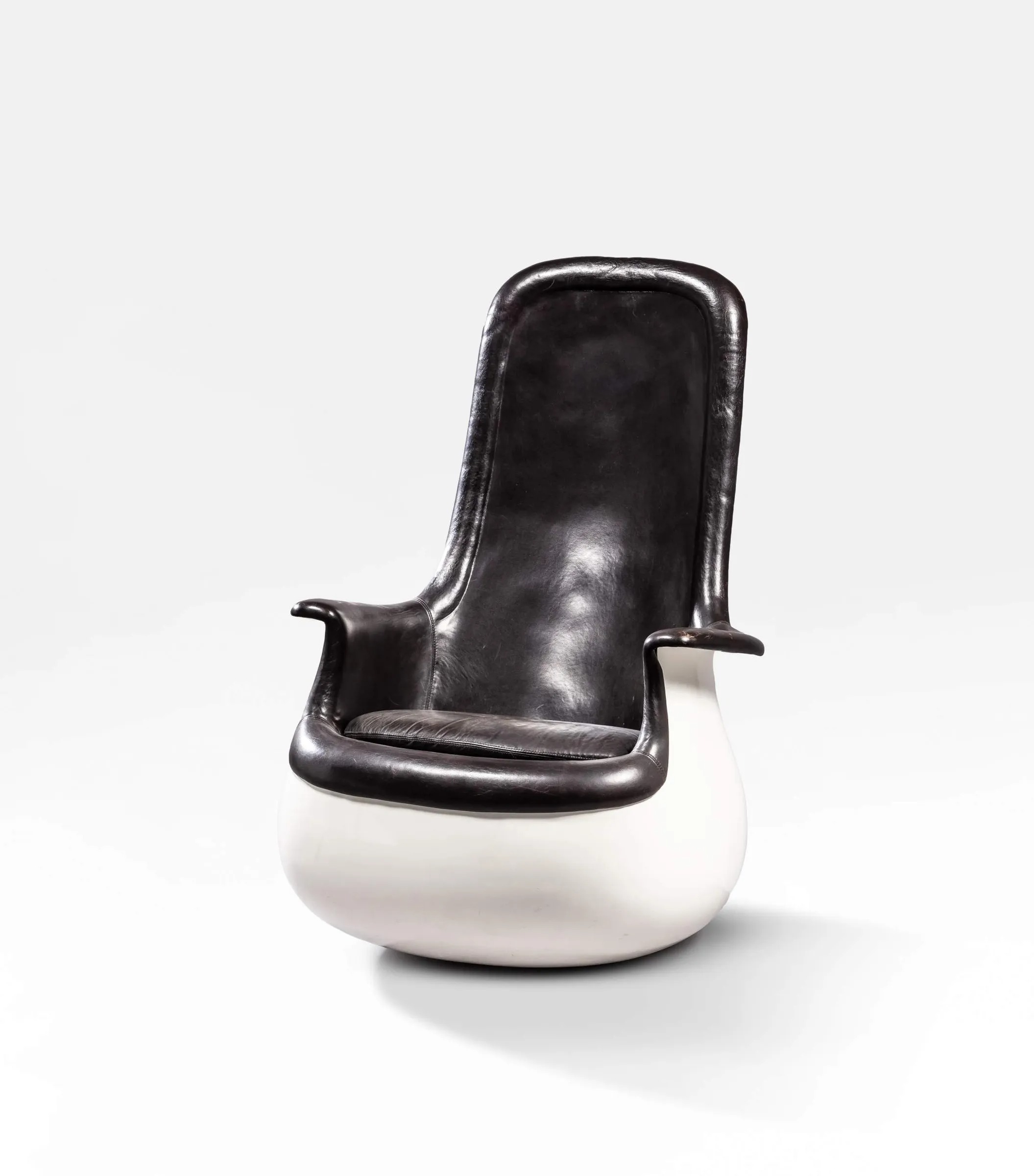
This desire to bring modernity into daily life found one of its most powerful expressions in his 1966 collaboration with Prisunic. For the retailer, Marc Held designed a collection of fiberglass furniture—beds, tables, desks, and chairs—featuring enveloping and strikingly new forms. Beyond their aesthetic, which is now emblematic of the 1960s, these pieces carried a deeply political ambition: to make contemporary furniture, previously reserved for a select few, accessible to the masses. Marc Held himself summarized this promise with a famous phrase: offering "beauty at the price of the ugly." It was an industrial utopia that did not achieve the widespread distribution hoped for, but it remains a major chapter in the story of Prisunic and the democratization of design in France.
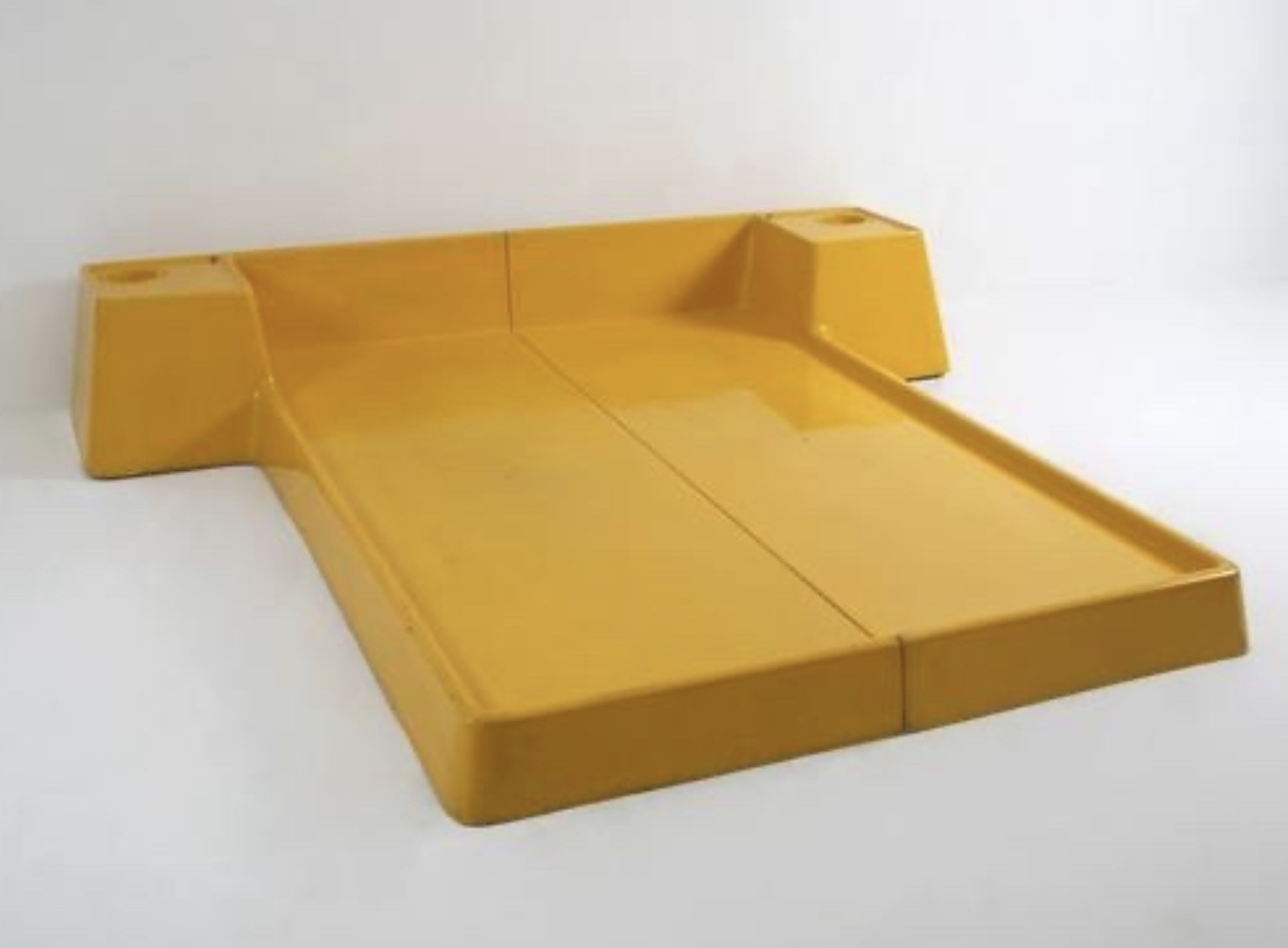
However, to reduce Marc Held to the Culbuto and his Prisunic creations would be to overlook the breadth of his career. Spanning furniture, architecture, photography, and urban planning, his work reflects a rare curiosity and a constant drive to rethink lifestyles as much as forms. This intellectual freedom was likely rooted in his extraordinary personal journey: a hidden child during the Second World War who joined the Resistance at a very young age, he maintained an uncommon independence of thought throughout his life.

Long celebrated more by connoisseurs than the general public, Marc Held ultimately saw his work reclaim its rightful place. Reissues, exhibitions, publications, and renewed interest from collectors have confirmed the relevance of a body of work that never chased trends, preferring the intelligence of utility over stylistic posturing.
The editorial team at Intramuros extends its deepest sympathies to his family, friends, and all those whose paths he crossed.
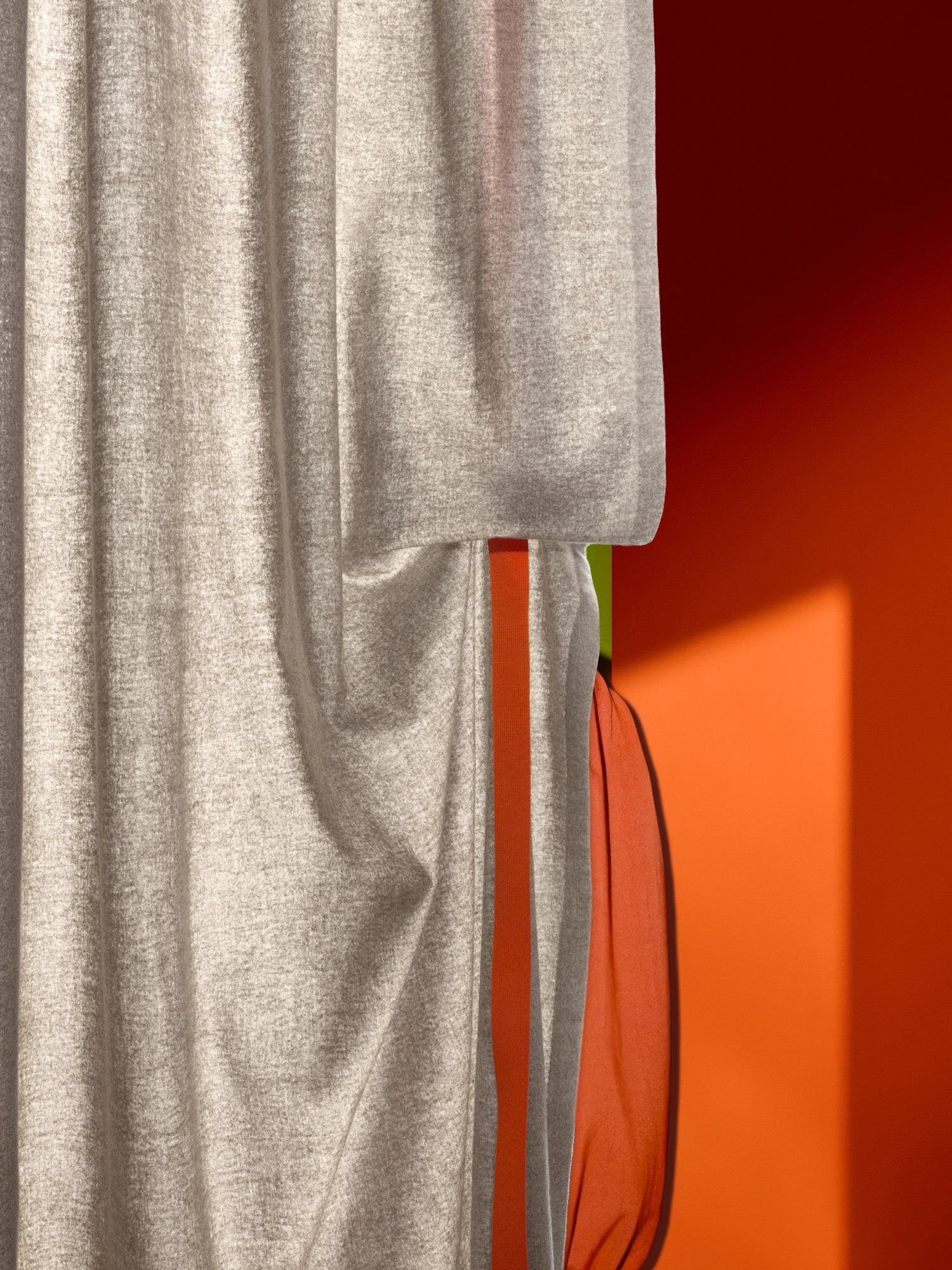
With THREE, its new residential curtain collection, and Loux, a series of lyocell rugs, Kvadrat continues a mission it began over half a century ago: transforming textiles from mere architectural accents into materials capable of reshaping architecture itself.
At Kvadrat, a curtain is never just a curtain. It filters light, alters the perception of a volume, and defines a boundary without enclosing it. It can even become a form—almost a presence. The Danish brand could have rested on the comfortable reputation it has built since its founding in 1968, thanks to the quality of its textiles, the precision of its colors, and its collaborations with some of the greatest names in contemporary design. Instead, it has chosen to treat every new collection as a field for research.
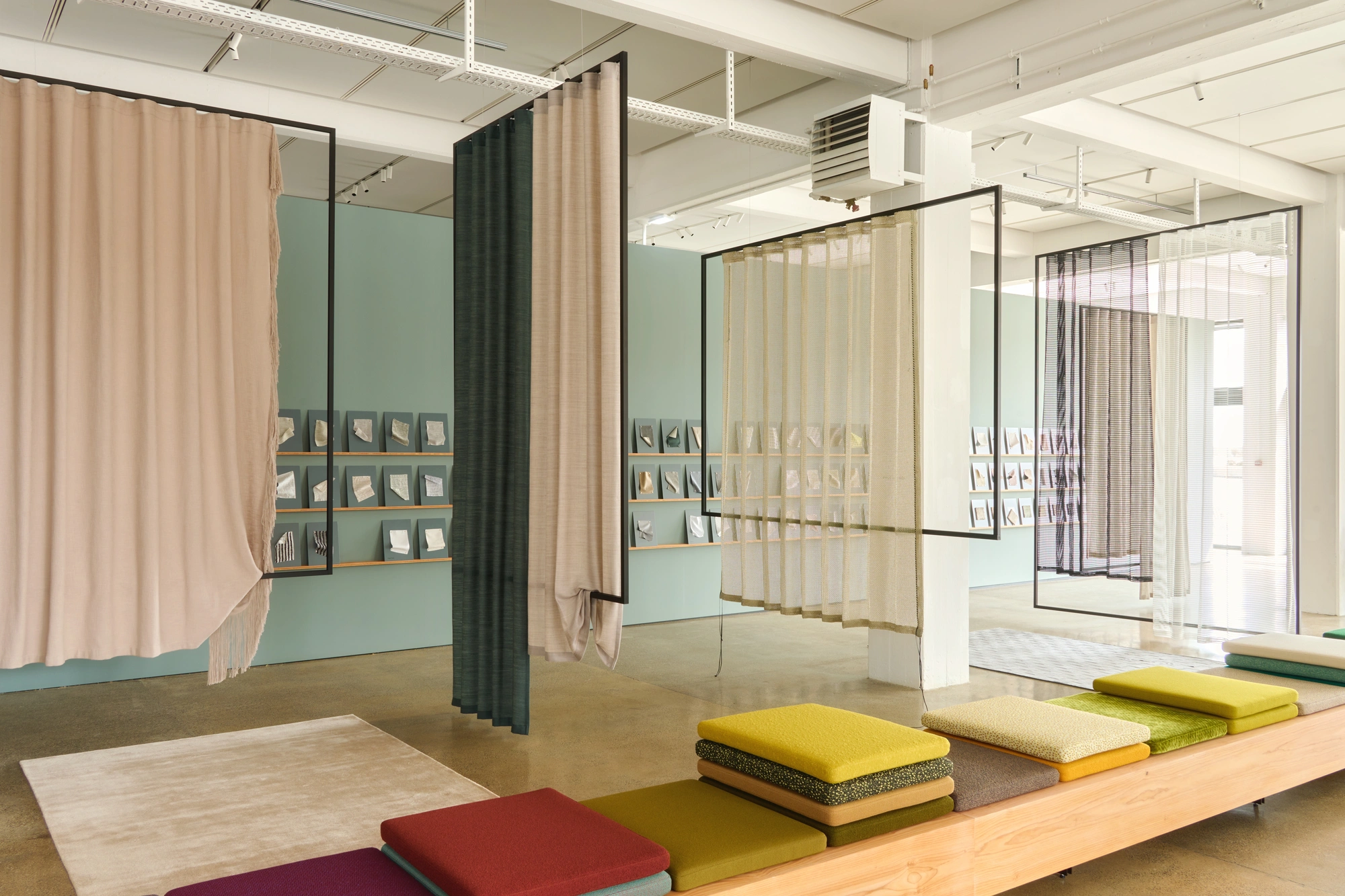
At Kvadrat, technique does not follow an idea to give it substance; it participates in its birth. It is an intention. And even a form. Isa Glink, Design Director at Kvadrat Residential, summarizes this method, where design, fiber, weaving, surface treatments, color, light, performance, and circularity all belong to the same process. What she calls "material intelligence" is precisely the act of looking at a textile deeply enough to understand what it can still become.
FROM SURFACE TO VOLUME
Presented in Copenhagen during 3daysofdesign 2026, the THREE collection carries this approach right into its title. Its starting point is a surface; its true subject is how that surface acquires a third dimension. Draped, folded, stretched, or framed, the curtains are not displayed as mere samples, but as flexible sculptures capable of defining and activating space. The collection explores hemp, wool, organic cotton, and linen, as well as technical fibers chosen for their performance, by drawing out the inherent qualities of each material rather than trying to conceal them.
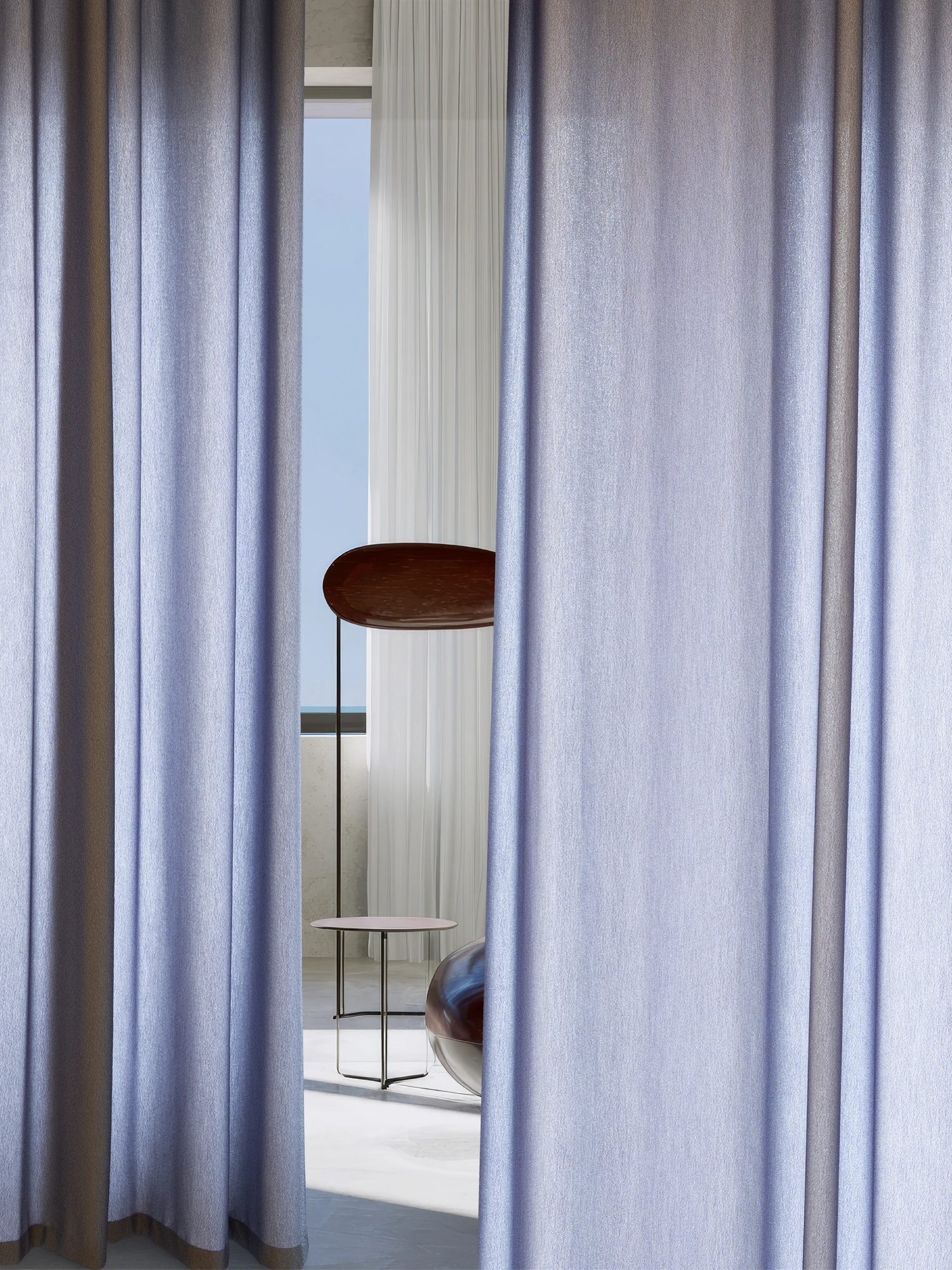
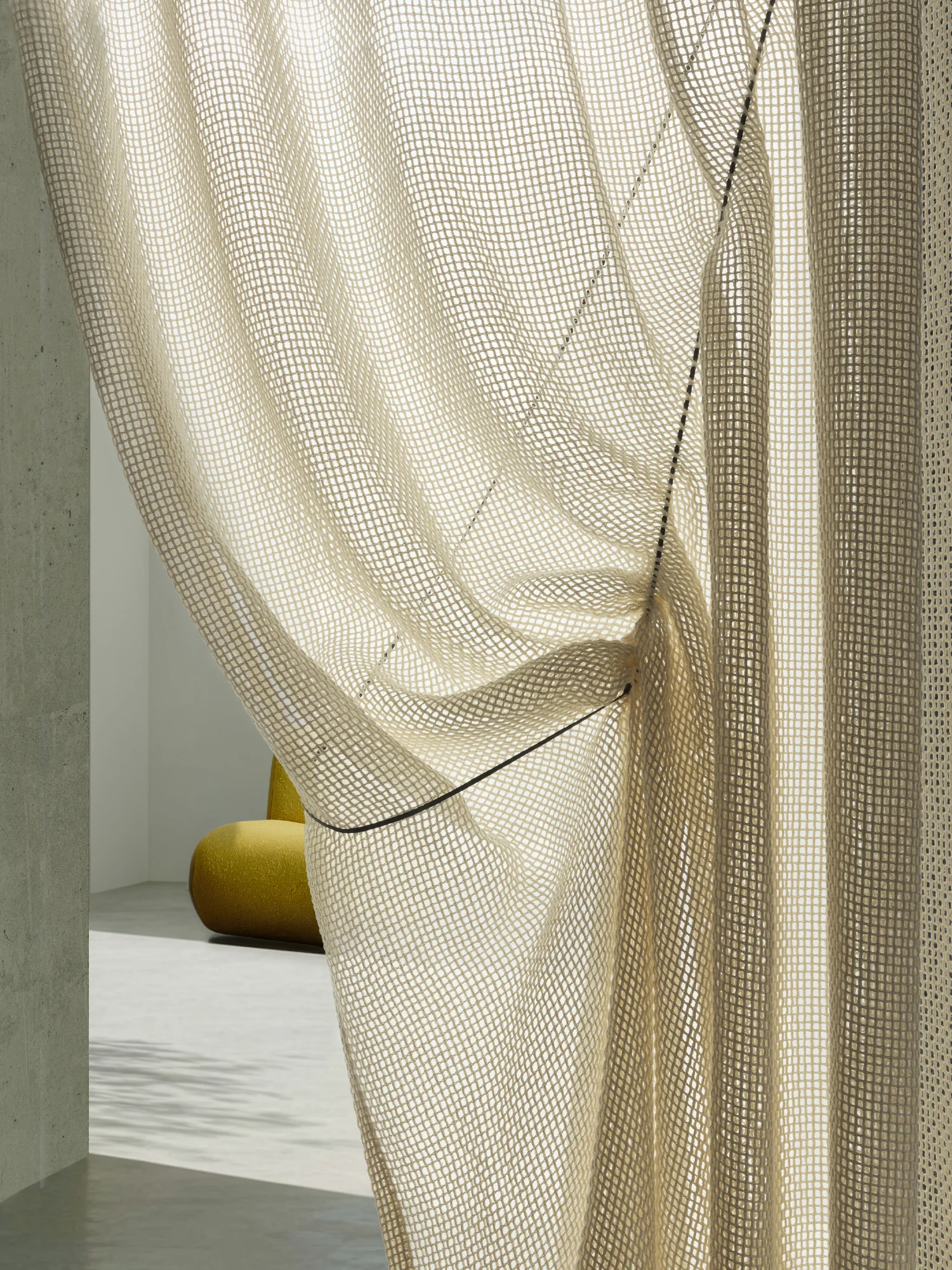
The craftsmanship involved is celebrated and showcased rather than hidden. A traditional fold is scaled up until it becomes an architectural feature. A topstitch, a fastening, or a tension point is no longer a decorative detail, but a way to build rhythm, depth, and a new way of suspending fabric. The influence of fashion is perceptible, yet Kvadrat avoids its seasonal, ephemeral logic. The goal is not to produce an effect destined to be replaced, but to invent a vocabulary meant to last.
This research is evident in Tetra, whose open-weave structure and densely felted wool yarns create a form that is both airy and three-dimensional. It is also present in Sky Cloud, a blend of hemp, cotton, and wool with a texture reminiscent of paper. Or in Kajak and Stream Line, which translate the movement of water and the intermittent appearance of lines under the influence of light. The palette itself oscillates between mineral tones (salt, driftwood, volcanic rock) and bolder, almost electric colors. Color is never applied to the material; it is born with it.
CRAFTSMANSHIP WITHOUT OSTENTATION
With Loux, Kvadrat approaches flooring with a different logic, yet with the same attention to the relationship between material, light, and movement. The six rugs in the series are made entirely of lyocell, a regenerated cellulose fiber with a fineness that evokes silk. Their density (2.7 million threads per square meter) creates a remarkably soft surface, with reflections that shift depending on the viewing angle. Three constructions are offered: a uniform cut pile, a linear alternation of loops and pile, and a hand-sculpted relief. Luxury here lies not in patterns or excess, but in the richness of the tactile experience.
This way of starting from the material rather than the image says a great deal about Kvadrat’s philosophy. Circularity is not treated as a recognizable aesthetic, nor as a virtuous add-on applied after the product is designed. It becomes a design parameter like any other: choosing mono-materials whenever possible, re-engineering existing references, using recycled materials, and focusing on repairability and extended product lifespans. The brand’s strategy thus combines environmental innovation, maintenance, and service models designed to keep products in use for longer.
Because a sustainable textile is not just one with a reassuring composition. It is also a textile that one desires to keep. Because it possesses a presence, an intelligence, and an ability to continue a dialogue with its space. In this, Kvadrat defends a rare position: that of a deeply technical company that never separates performance from emotion, research from usage, or material from design.
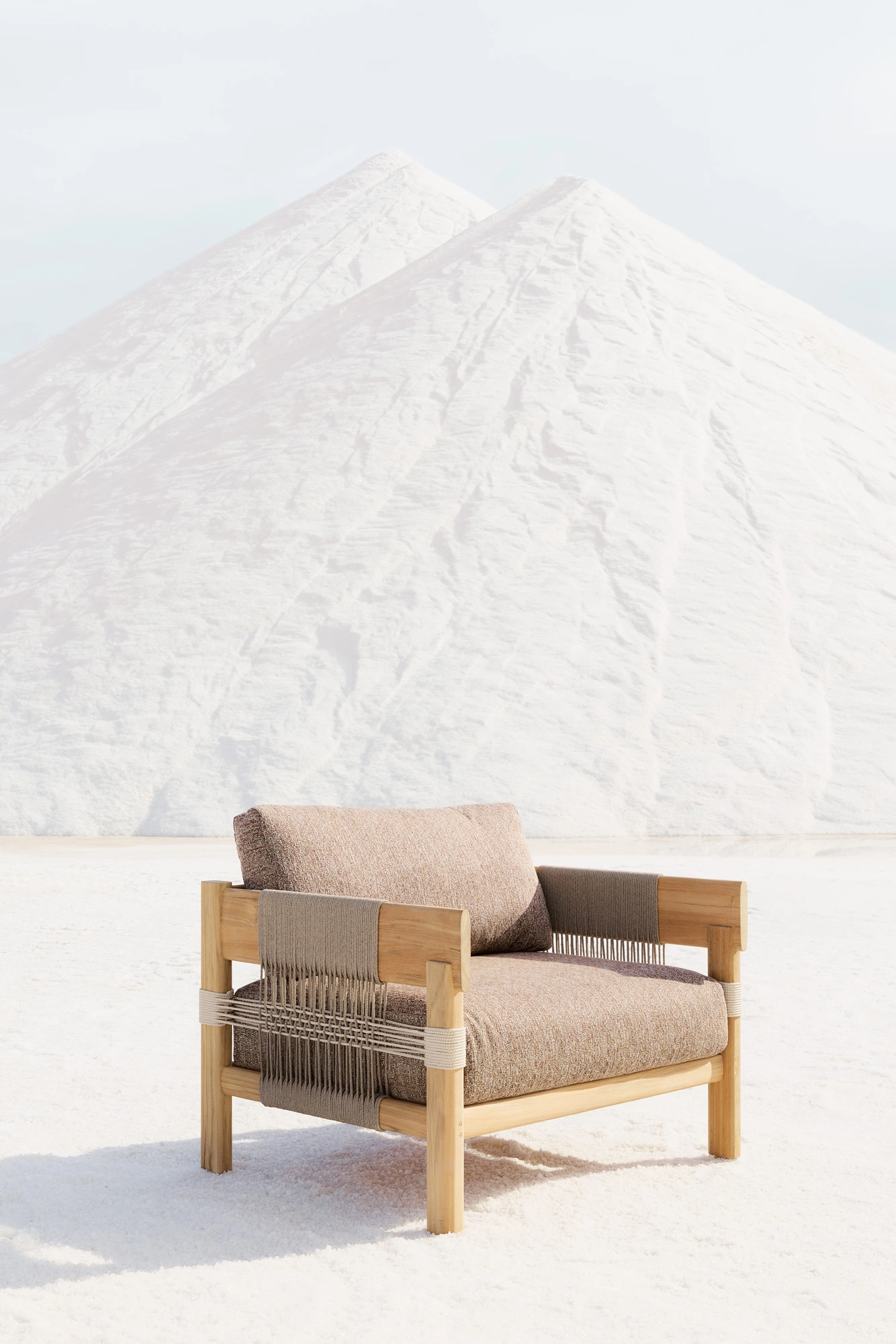
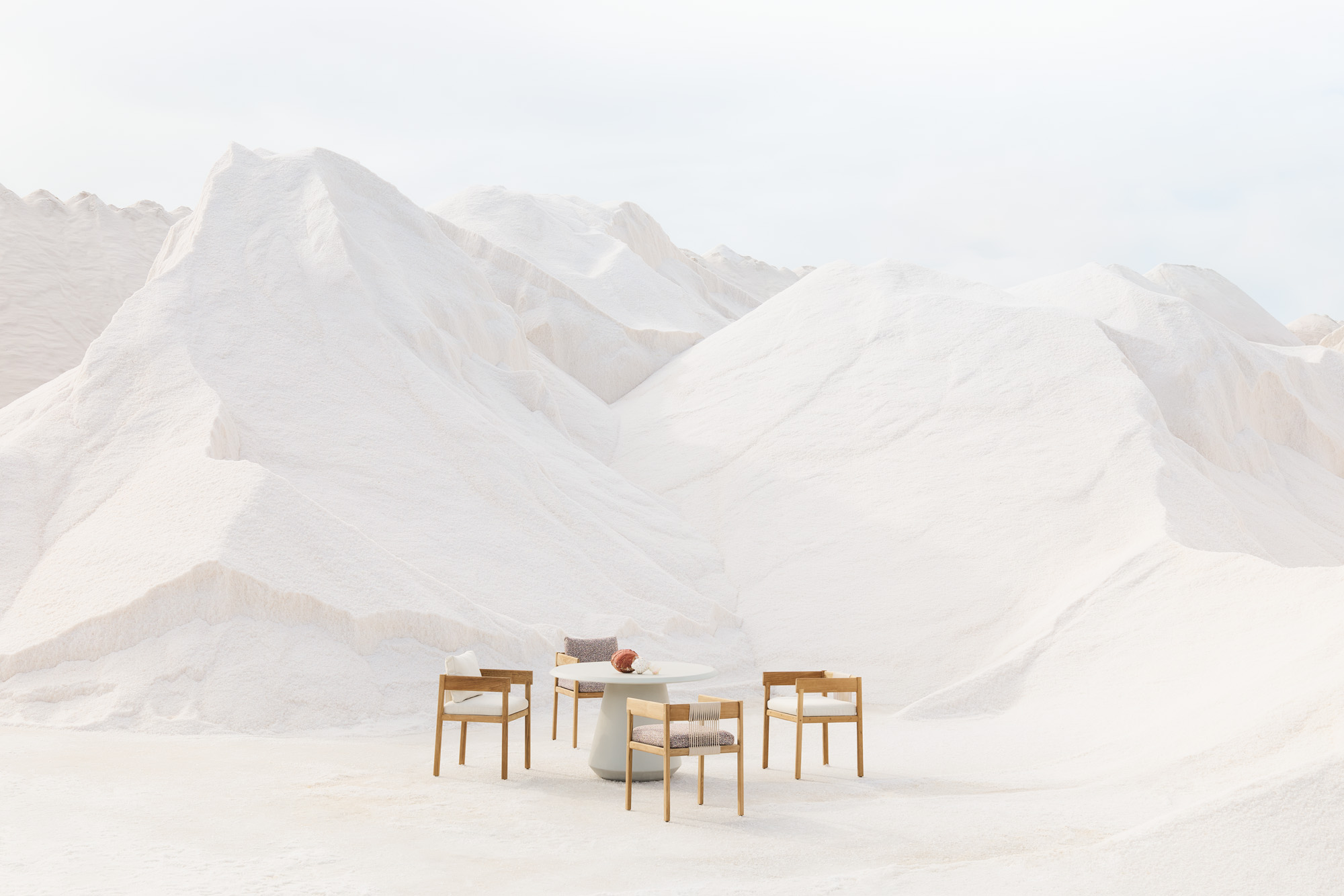
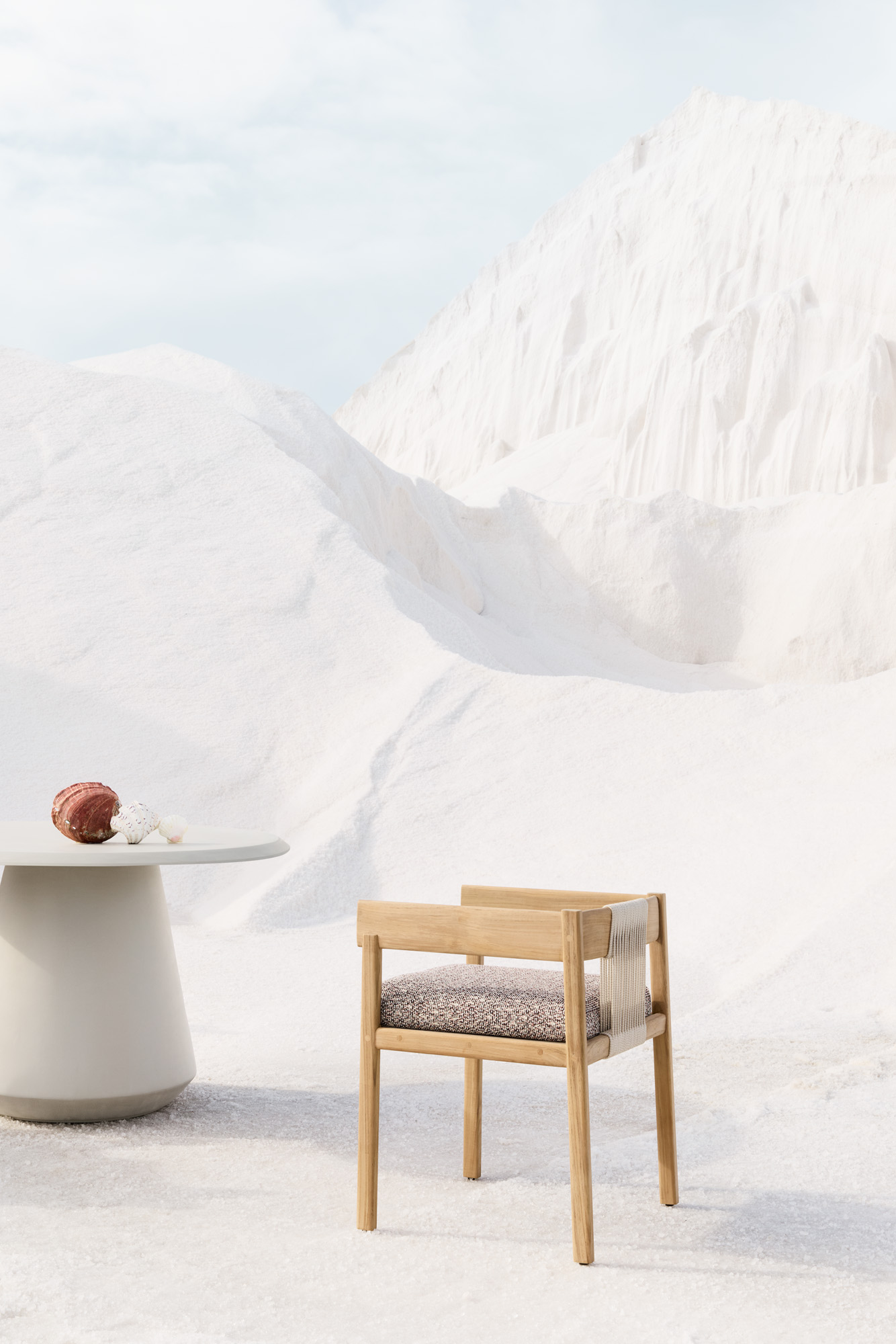
Unveiled in Milan at the latest Salone del Mobile, CORA marks the first collaboration between Unopiù and Federica Biasi. It is a complete collection where teak, rope, and generous volumes create a domestic landscape designed to slow down time.
In Milan, outdoor furniture once again sought to blur the lines between the home and the garden. With CORA, however, Unopiù does not simply transpose indoor living room codes to the outdoors. The Italian brand prefers to view the terrace as a fully-fledged living space, with its own materials, uses, and unique relationship with time.
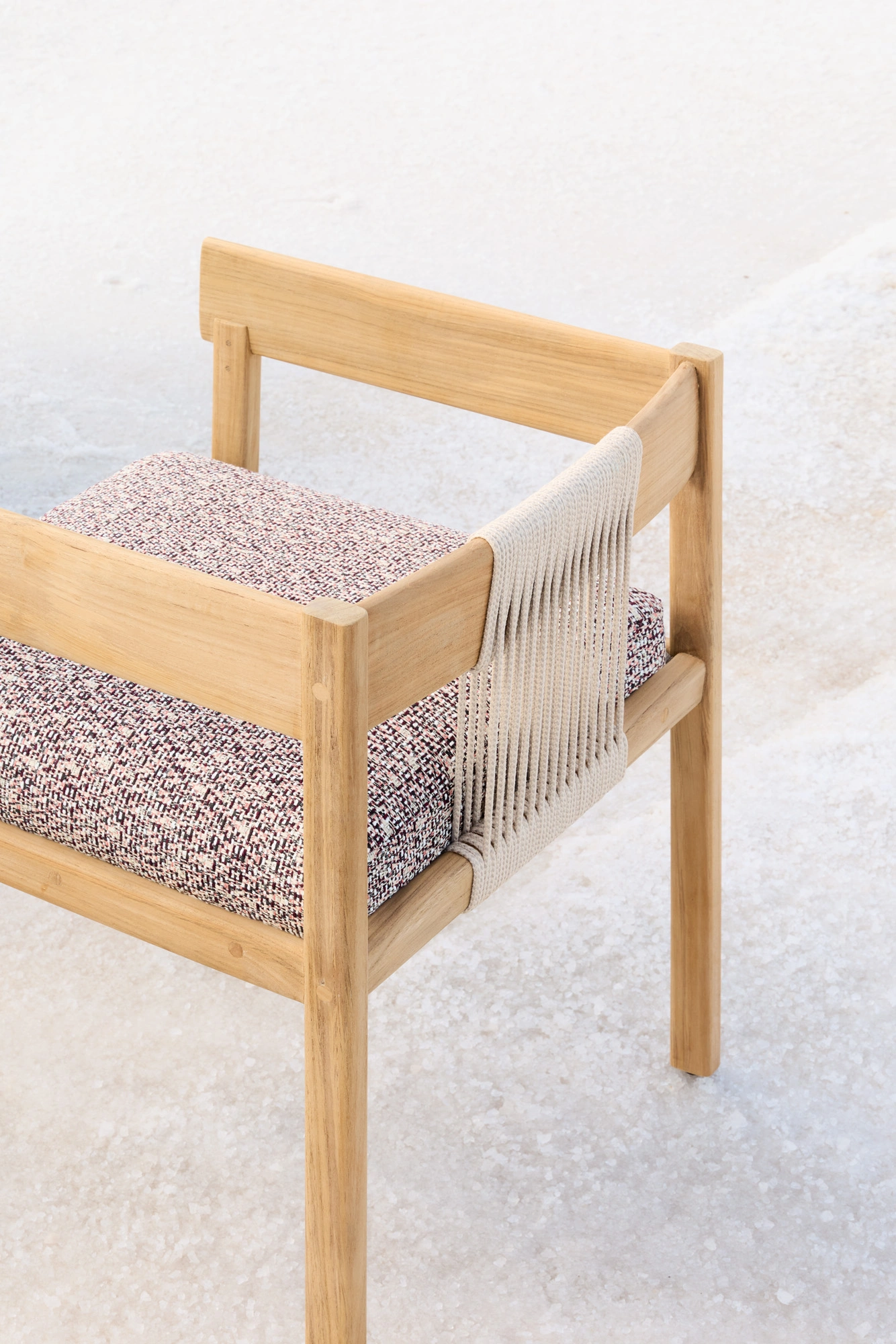
Entrusted to Federica Biasi, the new collection is based on a balance the designer has cultivated since her debut: combining the precision of industrial production with the sensitivity of artisanal craftsmanship. The teak structure creates a sober, almost understated architecture, while the polypropylene rope weaving softens the lines. One builds, the other connects. Their meeting gives rise to a collection whose identity lies less in a formal effect than in the accuracy of its proportions.
THE FABRIC OF COMFORT
The merit of CORA is precisely that it does not confuse generosity with heaviness. Armchairs and sofas feature deep seats, accompanied by cushions in natural tones, yet they retain a certain visual lightness. The weaving allows for breathability within the structure, while the horizontal lines establish a calm presence in the landscape.
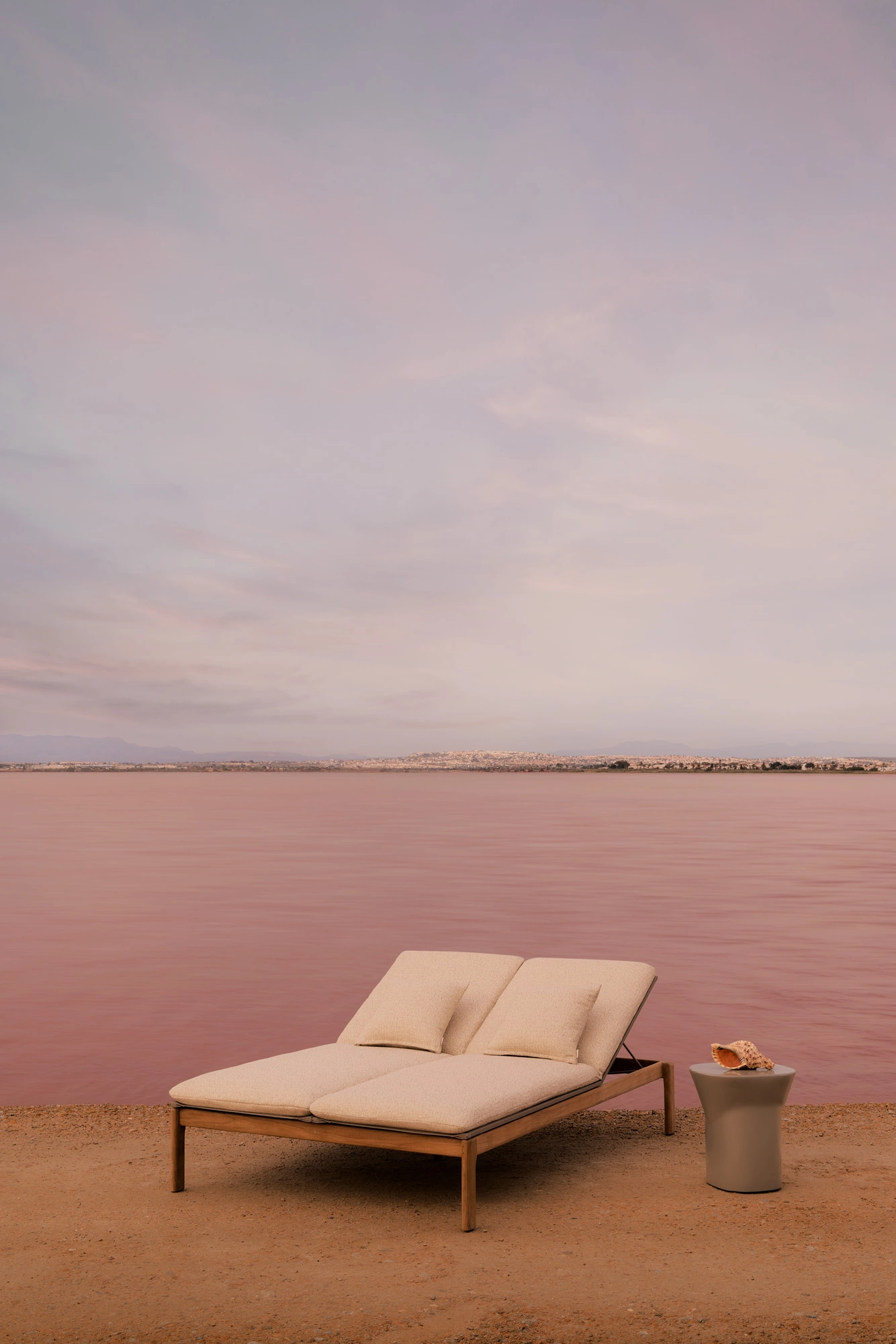
This pursuit of enveloping comfort is expressed through a chair and a round table for dining, an armchair, a two-seater sofa, a single or double sun lounger, and a sunbathing island. More than just a succession of typologies, CORA composes a true vocabulary for accompanying the different moments of the day: eating, entertaining, reading, or simply doing nothing. The collection is thus aimed at both residential spaces and hospitality projects, where outdoor furniture must now combine hospitality, durability, and architectural coherence.
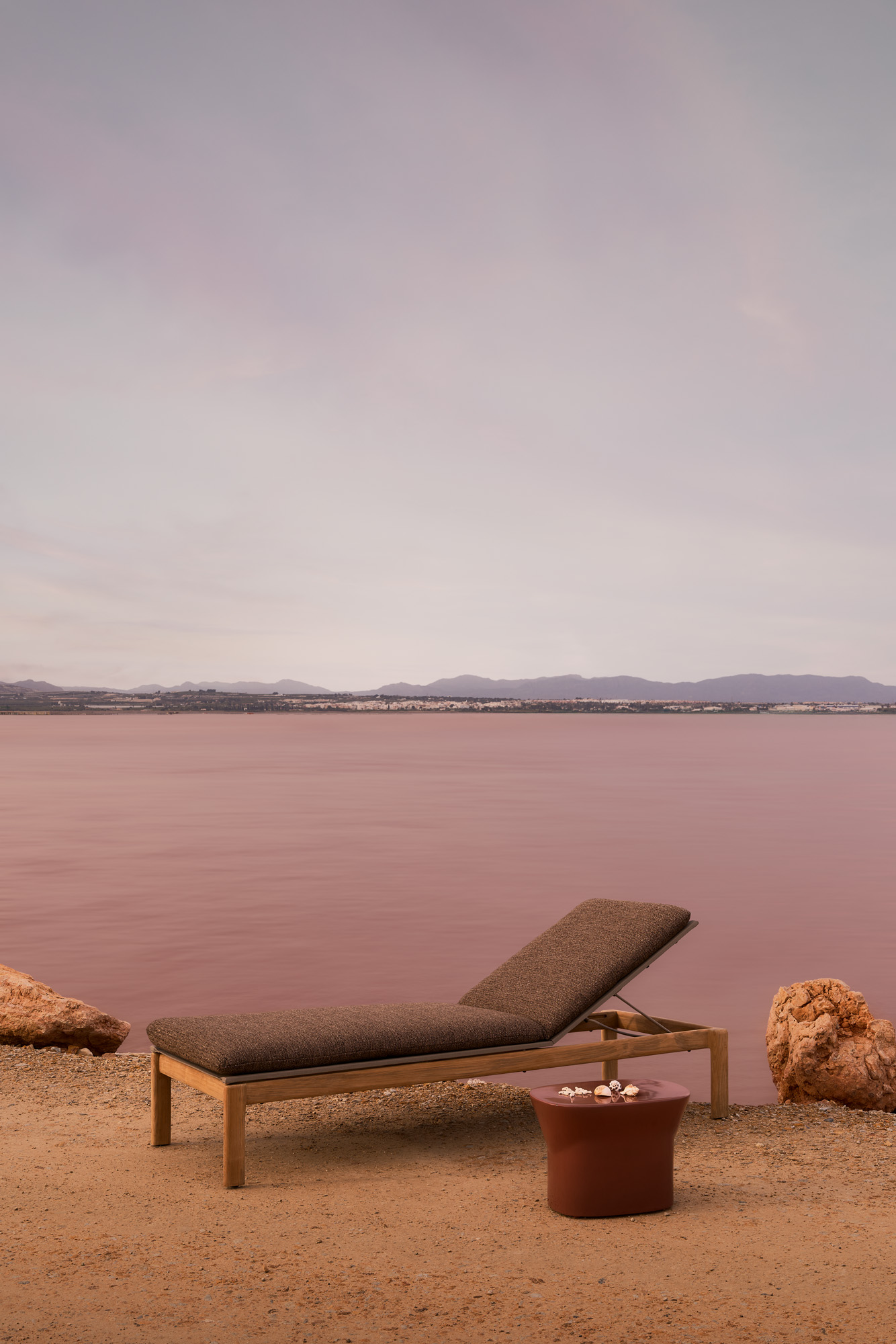
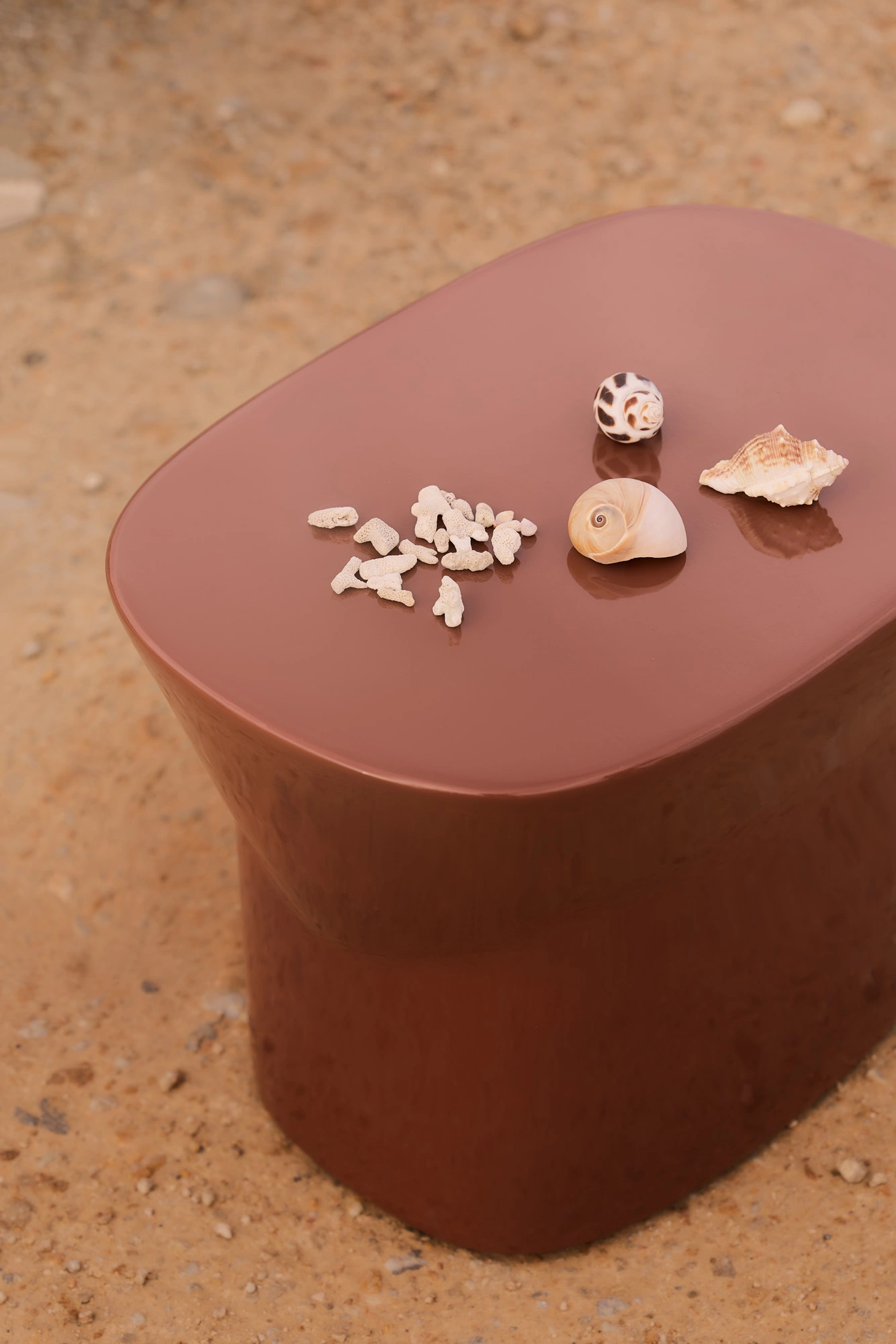
CORA is part of a broader collective project presented by Unopiù in Milan, conceived as a "Travel Journal" in which several designers are invited to take a personal look at the publisher's heritage. Federica Biasi delivers a restrained and tactile interpretation, faithful to her taste for vernacular craftsmanship as well as the brand's Mediterranean culture. It is a way of reminding us that outdoor furniture does not necessarily need to impose itself to take its place in the landscape.
.jpg)
Nicolas%20Anetson%2012%201%401x.webp)
In La Baule, nothing is ever quite neutral. Over time, the villas, institutions, and customs have created such a powerful image that any attempt to evoke it risks overdoing it. Giving a new hotel a local identity without disguising it as an old seaside house is, in essence, the challenge that Dorothée Delaye has met with intelligence and subtlety.
In La Baule-les-Pins, Les Cimes Bleues has just opened in a seven-story contemporary building with curved facades designed by ASA Gimbert, an agency founded in 1982 by Joël Gimbert. As the first address for La French Collection, the hotel brand of Groupe Giboire, the establishment features 101 rooms, a spa, a bar, and the Scapa restaurant. It is a scale large enough that the decor cannot rely on mere gimmicks.
Dorothée Delaye is not from La Baule. This is undoubtedly what allowed her to observe the resort with the right amount of distance, avoiding both postcard clichés and indifference to the location. She focuses less on its most obvious signs and more on what truly structures its lifestyle: sports, clubs, show jumping, sailing, tennis, and golf. These are codes familiar to both locals and visitors, transformed into a vocabulary rather than decorative accessories. "Sport chic" serves as the project's common thread, yet each space offers its own interpretation.
La Baule in the background
MAELLE%20LE%20MEN-01%201%401x.webp)
In the lobby, the social heart of Les Cimes Bleues, the interior designer creates the atmosphere of a contemporary La Baule clubhouse. The plant-filled atrium softens the height of the space, while the curves of the furniture, leather-wrapped columns, stone, glass paste, and bronze tables, and Pierre Frey and Élitis textiles compose a dense, yet never ostentatious, landscape. Golf ball motifs, stripes, and a few marine evocations (including a monumental chandelier punctuated with mooring buoys) are present enough to tell the story of La Baule, yet quirky enough to never mimic it.
This same grammar changes its accent at Scapa. Originally conceived as an extension of the clubhouse, the restaurant took on a more Italian tone as its menu was finalized. Dorothée Delaye envisioned a sort of Milanese-Bauloise brasserie, inspired by the Italy of the 1970s and Carlo Scarpa. Terracotta, chocolate tones, wood, ceramic, and almost kinetic patterns warm up a building that could have felt cold due to its large windows. The space is enveloping, fragmented into different perspectives and banquettes, so that one quickly forgets its actual dimensions.
Nicolas%20Anetson%2025%201%401x.webp)
In the rooms, the sports theme becomes more graphic. Wimbledon green, Atlantic blue, and clay-court orange distinguish the different atmospheres. The headboards, lighting, tables, and storage units were all designed specifically for the project. The closet doors evoke the lines of a tennis court, while some shelves freely mimic the shape of greens. The process could have become systematic, yet it remains light, held together by a subtly charming palette and the precision of custom craftsmanship.
MAELLE%20LE%20MEN-12%201%401x.webp)
Because almost everything here was designed specifically for the space. Dorothée Delaye relies on three designers within her studio to draw chairs, banquettes, headboards, and lampshades. This dedicated production certainly meets the economic realities of the hotel industry, but above all, it serves as a tool for uniqueness: the pieces created for Les Cimes Bleues will not be moved to another address six months later.
Finally, at the Alaena spa, the narrative moves away from sports fields to reconnect with nature. Inspired by the "golden hour," the space combines stone, natural fibers, bronze, golden yellow, and pink in intentionally flattering light. Here, Dorothée Delaye takes the opposite approach to the clinical white spa, creating a transition zone—a warm bubble where the experience begins even before the treatment.
Nicolas%20Anetson%201%401x.webp)
While Les Cimes Bleues will welcome vacationers, families, and seminar groups all year round, as well as locals coming for a drink or dinner, its main strength is that it never presents this hybrid nature as a forced program. The hotel already feels lived-in.
By giving each space its own story without ever over-explaining the scenario, Dorothée Delaye succeeds in anchoring a new building in local culture. Not by reconstructing La Baule, but by giving it a new, must-visit address.
MAELLE%20LE%20MEN-02%201%401x.webp)
Nicolas%20Anetson%2038%201%401x.webp)
Nicolas%20Anetson%2033%201%401x.webp)
Nicolas%20Anetson%2034%201%401x.webp)
Nicolas%20Anetson%20%201%401x.webp)

From September 18 to 30, the seventh edition of France Design Week will take place across the country under the theme "D for Design, D for Defi" (Challenge). Hundreds of events will showcase how design can go beyond the mere aesthetics of an object to support the major transformations of our time.
The "D" for design is perhaps only meaningful today if it accepts the challenge it faces. Whether climatic, technological, demographic, or social, our era is not lacking in problems to solve or systems to rethink. Faced with their complexity, design can no longer be considered the final aesthetic layer added to a finished product. It now intervenes upstream, where uses, services, spaces, and, more broadly, the conditions of our collective life are defined.
It is precisely this evolution that the seventh edition of France Design Week, organized from September 18 to 30 around the theme "D for Design, D for Challenge," aims to highlight. Exhibitions, conferences, workshops, installations, tours, and meetings will make up a program widely accessible to the public, driven by designers, as well as companies, schools, local authorities, cultural institutions, and research stakeholders. Design as a method
Ecological transition, artificial intelligence, health, an aging population, inclusion, the evolution of work, or the transformation of territories: design is now venturing far beyond the historical scope of the object. Not that it is abandoning form, material, or beauty—these remain the means by which a solution becomes understandable, accessible, and desirable—but because it embeds them in a broader reflection.
Designing a public service, a patient's experience, a user's journey, a recycling system, or a neighborhood requires looking simultaneously at technical constraints, behaviors, the project's economics, and its long-term consequences. The designer no longer just draws what we use: they help organize the way we live.
This ambition will be a recurring theme throughout the 2026 edition. In Chalon-sur-Saône, a foresight workshop will imagine the patient experience in 2040 in a hospital where artificial intelligence is omnipresent. In Marseille, the design of technologies that influence our behavior will be the subject of critical reflection. Elsewhere, projects will address well-being, education, biomaterials, reuse, circular design, and the transformation of public space. The France of designs
One of the strengths of France Design Week lies precisely in its decentralized organization. French design is not limited to Paris. It is fueled by the industrial, cultural, and geographical realities specific to each region.
From Grenoble to Mont-Saint-Michel, from Nantes to Marseille, the program draws a new map of French creation. Near Grenoble, the UGA Design Factory will show how design, research, and local action can support ecological and social transitions. At Mont-Saint-Michel, a monumental exhibition will examine changing landscapes. Other initiatives will focus on local resources, expertise, the graphic identities of cities, or new forms of creative entrepreneurship. Here, the territory is no longer just a backdrop for design; it becomes its raw material: a set of constraints, resources, narratives, and uses from which to imagine necessarily localized solutions.
Ionna Vautrin, design at the service of the user
As the patron of this edition, Ionna Vautrin perfectly embodies this concept of design that is sensitive, accessible, and useful.
The tour organized at Notre-Dame de Paris, featuring the new furniture she helped create, will be one of the highlights of the national opening on September 18. Within the cathedral, the design cannot simply be the work of an individual author. It must harmonize with heritage, ritual, daily use, the presence of millions of visitors, and the integration of pieces into a timeline that far exceeds that of an industrial product. It is a perfect demonstration of what it means to design under constraint—and how that constraint can become fruitful. Measuring impact
September 18 will also host the ceremony for the second France Design Impact Award. As the only French prize entirely dedicated to positive-impact design projects, it recognizes initiatives that provide concrete solutions to environmental, social, economic, or territorial challenges.
The forty finalist projects will be presented beforehand from September 10 to 14 at Maison&Objet. Whether products, services, collective systems, digital tools, or new organizational models, their diversity serves as a reminder that the impact of design cannot be reduced to choosing a more virtuous material. It is also measured by transformed habits, saved resources, created activities, and a project's ability to sustainably improve the lives of those it serves. The winners will be announced on September 18 in Paris. Through this seventh edition, France Design Week does not just seek to celebrate a discipline; it intends to demonstrate its necessity. For while design cannot solve all contemporary challenges on its own, it possesses a quality that has become rare: the ability to connect vision to reality, innovation to use, and transformation to desire. In other words, to make change not only possible but livable.


.svg)


.svg)