

Design Miami Paris 2026: Alternating Currents
For its fifth edition, Design Miami Paris has invited thirty galleries to take over the Hôtel de Maisons. It is an opportunity to bring together French decorative arts, modernist design, and collectible pieces during this art-filled week. Jen Roberts, the event's CEO, tells us about this convergence of worlds.
In recent years, October has become the annual meeting point for collectors and art enthusiasts. Running alongside Art Basel, Design Miami Paris opens this Tuesday, October 20, for a five-day run. Located within the Hôtel de Maisons, behind the high walls at 51 rue de l’Université, this fifth edition is centered on the theme "Design for Presence." This presence is embodied by various artistic movements. Here, the modernist lines of jewelry designed by Pierre Charreau and furniture by Jean Prouvé stand in contrast to the generous forms and ornamental techniques presented by a body of international galleries. Jen Roberts, CEO of Design Miami since 2015, sheds light on this contrasted approach to creation.
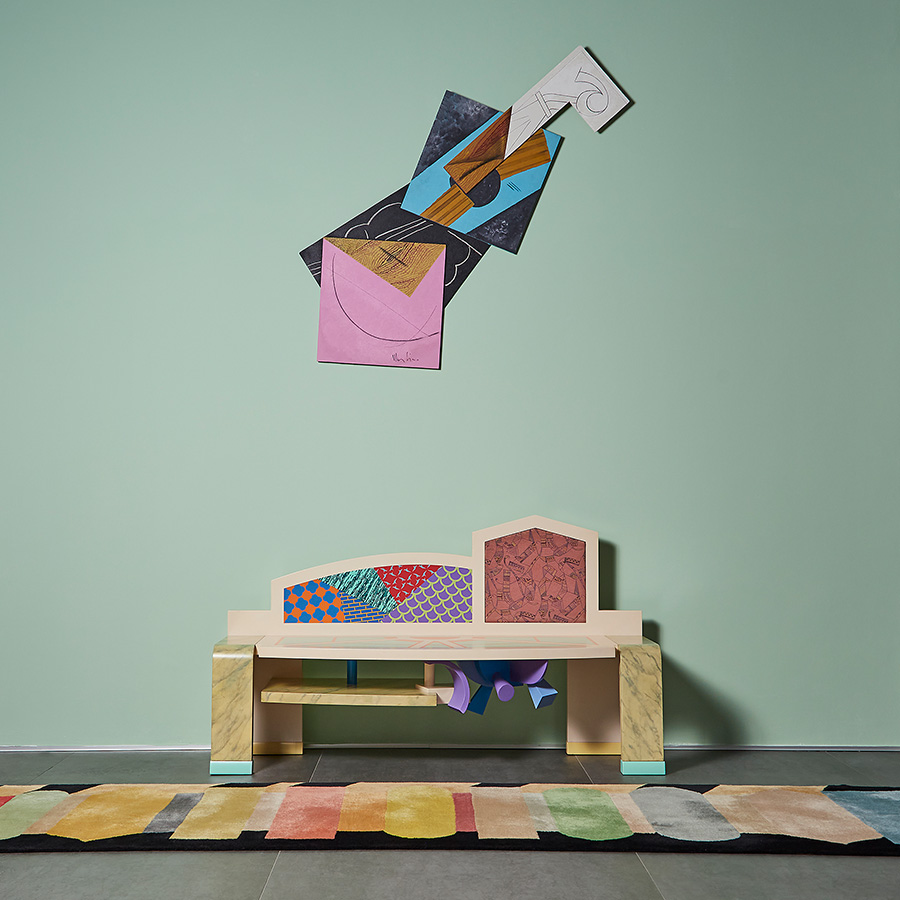
This year, historic French design and the decorative arts are in the spotlight. Why this choice?
Paris is where a large part of the history of French design and decorative arts was written, and it is where it remains very much alive today. The city is home to an exceptional concentration of specialized galleries, workshops, and collectors who have a deep understanding of these periods. Here, historical works are understood and actively collected. It is therefore logical that our Parisian edition gives them more space than our Miami event.
This dynamic is felt throughout the fair. Galerie Maxime Flatry brings together a rare collection of French modernist works from the 1930s, centered on a major ensemble by Robert Mallet-Stevens and presented alongside works by Pierre Chareau, Eileen Gray, and Pierre Legrain. Laffanour | Galerie Downtown presents works by Le Corbusier, Pierre Jeanneret, and Charlotte Perriand. Mitterrand exhibits works by Claude and François-Xavier Lalanne, including an exceptional pair of "Singes Attentifs" (Attentive Monkeys) and a "Pomme de Londres" (London Apple) dating from 2007. And in the gardens, as part of "Design at Large," visitors will be able to discover "Le Très Grand Ours" (The Very Big Bear) by François-Xavier Lalanne, a three-meter-tall bronze bear.
How will the selection for Design Miami Paris—which focuses primarily on collectible pieces—fit into this historical theme?
There is a natural link between the historical theme and the fair's focus on collectible design. The fair brings together historical and contemporary works, allowing visitors to follow the evolution of design ideas over time. Each piece is vetted by independent experts. Historical works capture a specific moment, whether marked by a technical breakthrough, an artistic movement, or a social or political shift. They offer today's designers a history to build upon and allow collectors to place contemporary works in context. Often, the most interesting moments occur where the two meet. Galerie kreo pairs 20th-century French and Italian lighting with limited editions by designers such as Jasper Morrison and Virgil Abloh. This juxtaposition makes the relationship between eras visible. Salon 94 Design from New York and SIDE Gallery from Barcelona also bring perspectives from beyond France to the fair.
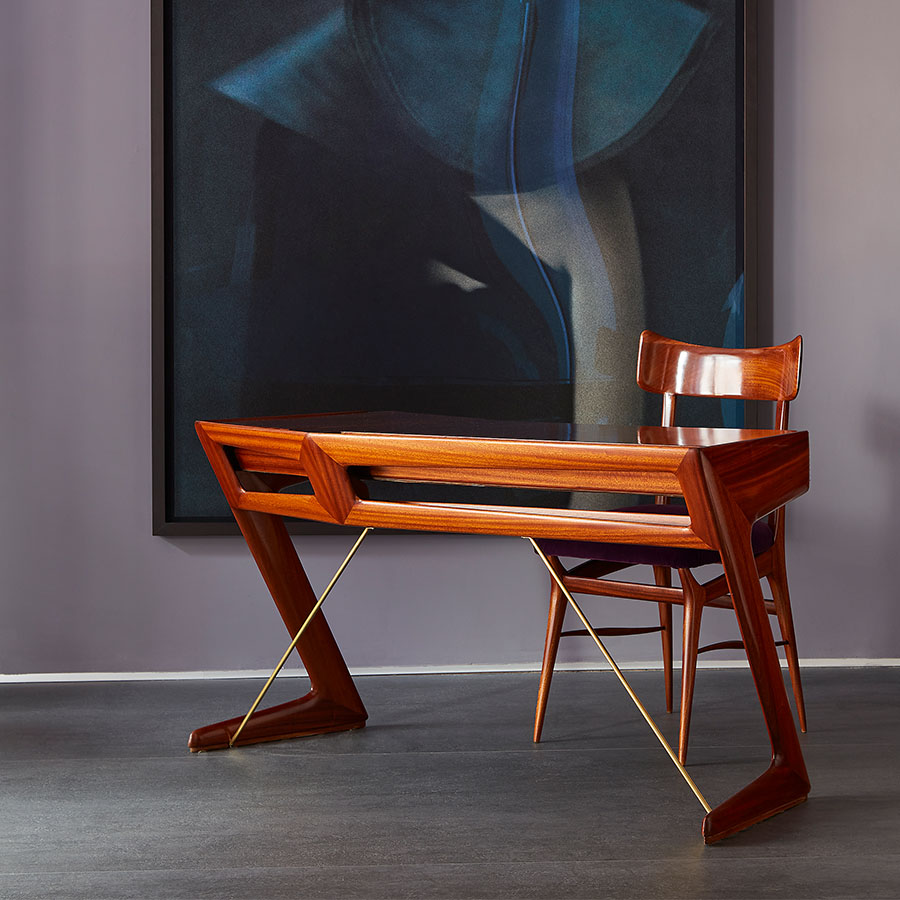
Should we expect visual links between these worlds, or a deliberate anachronism?
Both visual links and deliberate contrasts are part of the pleasure of this fair. In just a few steps, you can move from a piece of furniture from the 1930s to one finished this spring. Sometimes the link is explicit. At Galerie SCÈNE OUVERTE, the exhibition "Around a Desk: A Contemporary Vision of Decorative Arts" brings together the desk and German silver totem by Studio Lugo, as well as the sofa by Studio KRJST, designed around a one-of-a-kind tapestry. Both works clearly dialogue with the French tradition of decorative arts. Elsewhere, it is the contrast that gives the exhibition its strength. In the gardens, Jean Prouvé’s 1944 prefabricated house stands near a bronze swing by Irene Cattaneo, created this year.
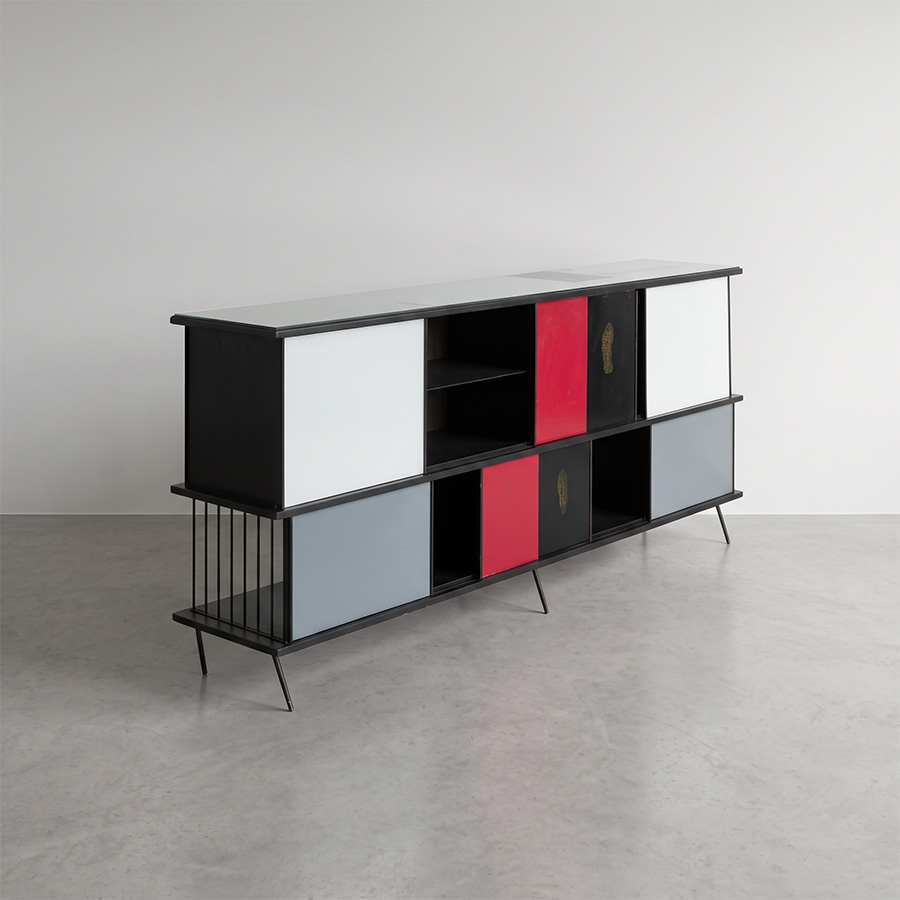
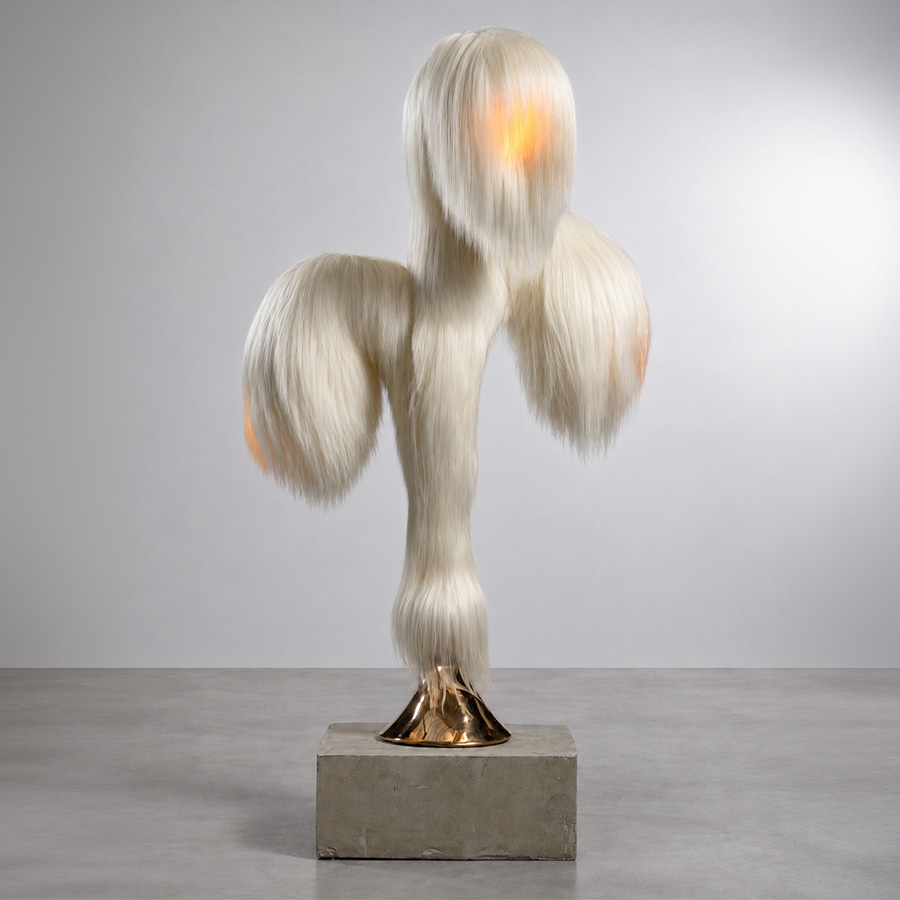
New exhibitors are also broadening the debate geographically. The A/P Room gallery, based in Dubai, presents mid-century Brazilian works by Joaquim Tenreiro, Abraham Palatnik, and Branco e Preto, alongside "Originform," a new series of sculptural lighting by Rogan Gregory, as well as objects by Lebanese architect and ceramicist Zein Daouk. The connections are established more through form and material than by date, and historical and contemporary pieces occupy an equal footing.
Whether the focus is on modern or contemporary design, does the architectural setting of the Hôtel de Maisons influence your artistic selection in any way?
Absolutely. This is our fourth edition at the Hôtel de Maisons, and the setting matters. The venue is a home, not an exhibition hall. Furniture and objects are therefore discovered on a domestic scale, in rooms bathed in natural light and steeped in history. Many galleries adapt their presentations to suit the house. Galleria Rossella Colombari, for example, evokes the atmosphere of a typical Italian home.
Outside, the courtyard and gardens provide the space we need for "Design at Large," our program of large-scale works that could not be exhibited indoors. Cyryl Zakrzewski designed his birch plywood bench for the Craftica Gallery specifically for this outdoor environment, and Abel Macias, a former SCAD student, created a padded floor covering for the house's original 18th-century staircase.
Among the new talents featured in this issue, could you name one or two who you think might stand out in the coming years?
As organizers, it is not our place to pick favorites, but I invite visitors to discover Galerie SCÈNE OUVERTE, where Adélie Ducasse is exhibiting her first Murano glass lamp, as well as Studio Lugo, which is presenting a desk and bookcase in German silver in a limited edition of eight, the result of a first collaboration with the gallery. Both belong to a generation of designers deeply committed to materials and the tradition of the decorative arts.
I would also recommend that visitors check out the four designers selected for "Designers of Tomorrow," our program in partnership with Apple. This year's theme, "Design for Presence," explores how design can help us slow down and create connections. Their creations will be unveiled during the fair.
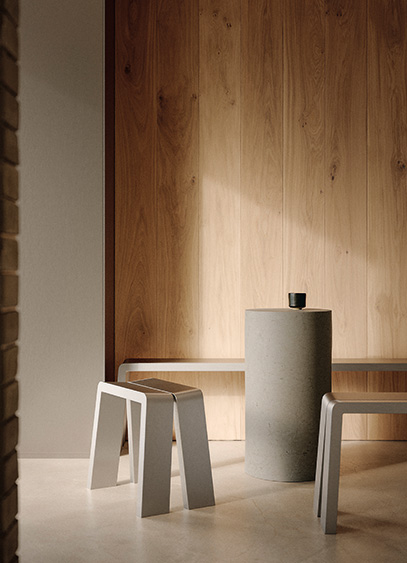
Below, visuals from the A/P Room gallery: Arte Viva bookcase and Upholstered floor lamp