


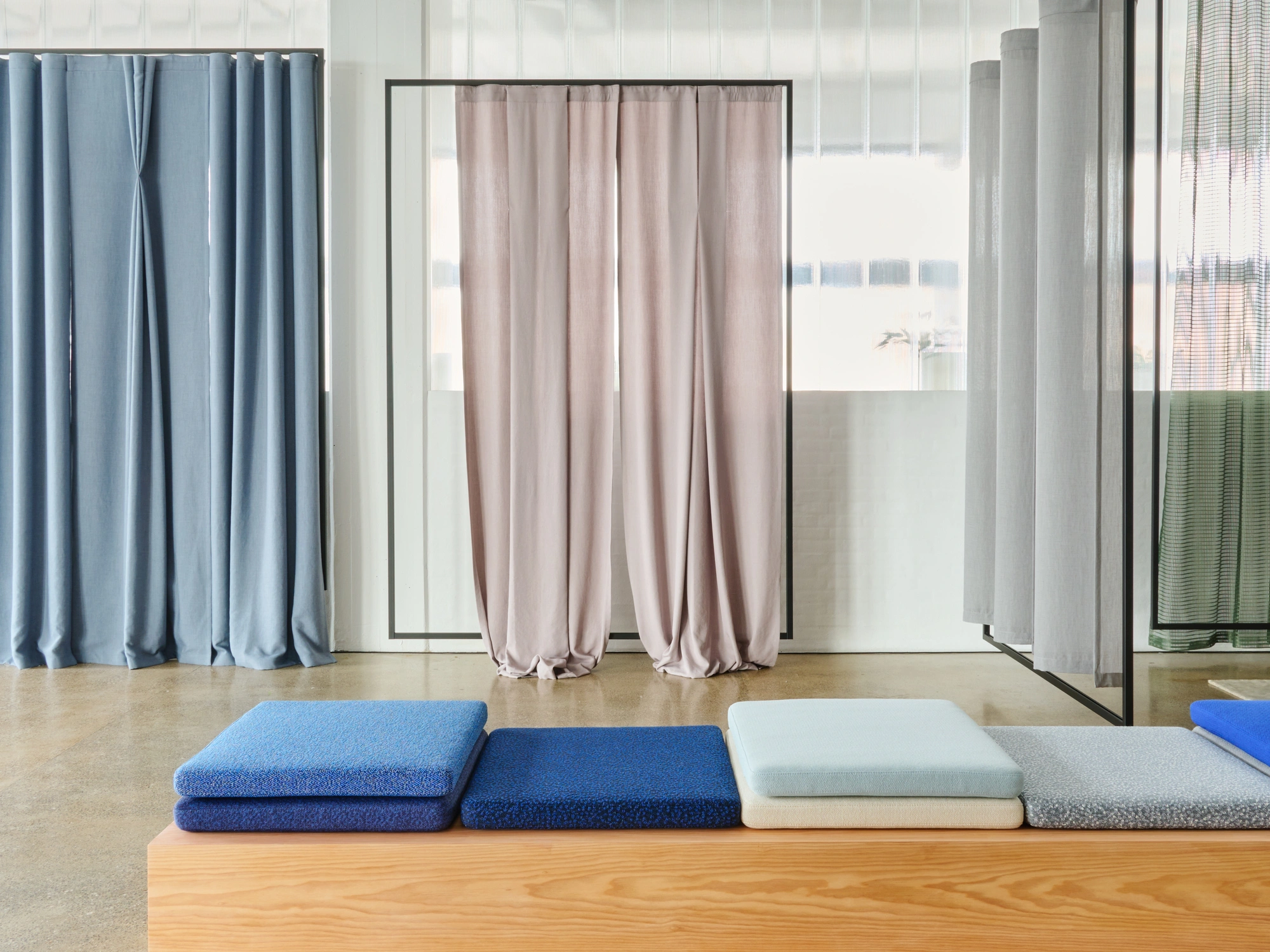


KVADRAT, the intelligence of material
With THREE, its new residential curtain collection, and Loux, a series of lyocell rugs, Kvadrat continues a mission it began over half a century ago: transforming textiles from mere architectural accents into materials capable of reshaping architecture itself.
At Kvadrat, a curtain is never just a curtain. It filters light, alters the perception of a volume, and defines a boundary without enclosing it. It can even become a form—almost a presence. The Danish brand could have rested on the comfortable reputation it has built since its founding in 1968, thanks to the quality of its textiles, the precision of its colors, and its collaborations with some of the greatest names in contemporary design. Instead, it has chosen to treat every new collection as a field for research.
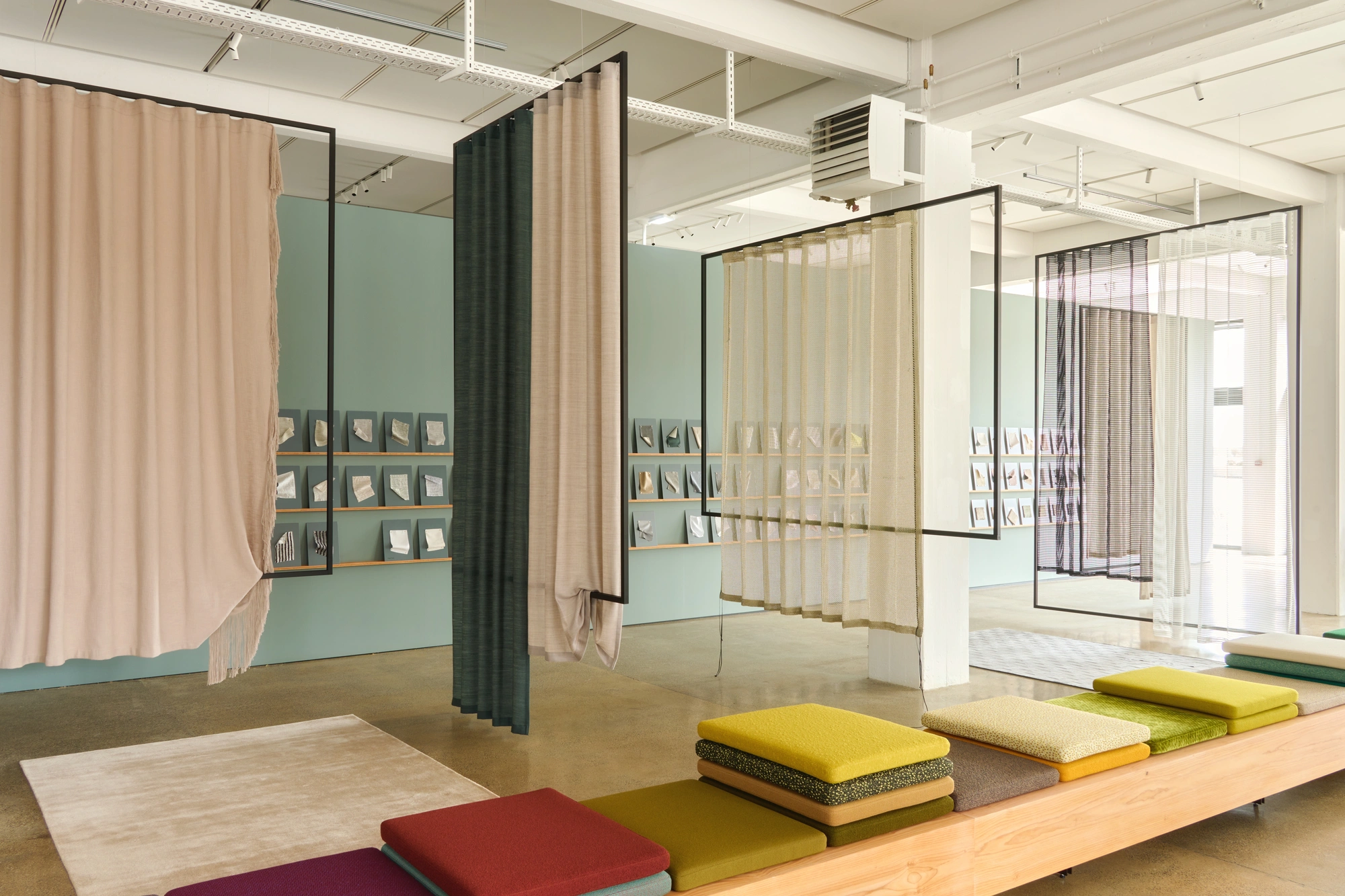
At Kvadrat, technique does not follow an idea to give it substance; it participates in its birth. It is an intention. And even a form. Isa Glink, Design Director at Kvadrat Residential, summarizes this method, where design, fiber, weaving, surface treatments, color, light, performance, and circularity all belong to the same process. What she calls "material intelligence" is precisely the act of looking at a textile deeply enough to understand what it can still become.
FROM SURFACE TO VOLUME
Presented in Copenhagen during 3daysofdesign 2026, the THREE collection carries this approach right into its title. Its starting point is a surface; its true subject is how that surface acquires a third dimension. Draped, folded, stretched, or framed, the curtains are not displayed as mere samples, but as flexible sculptures capable of defining and activating space. The collection explores hemp, wool, organic cotton, and linen, as well as technical fibers chosen for their performance, by drawing out the inherent qualities of each material rather than trying to conceal them.
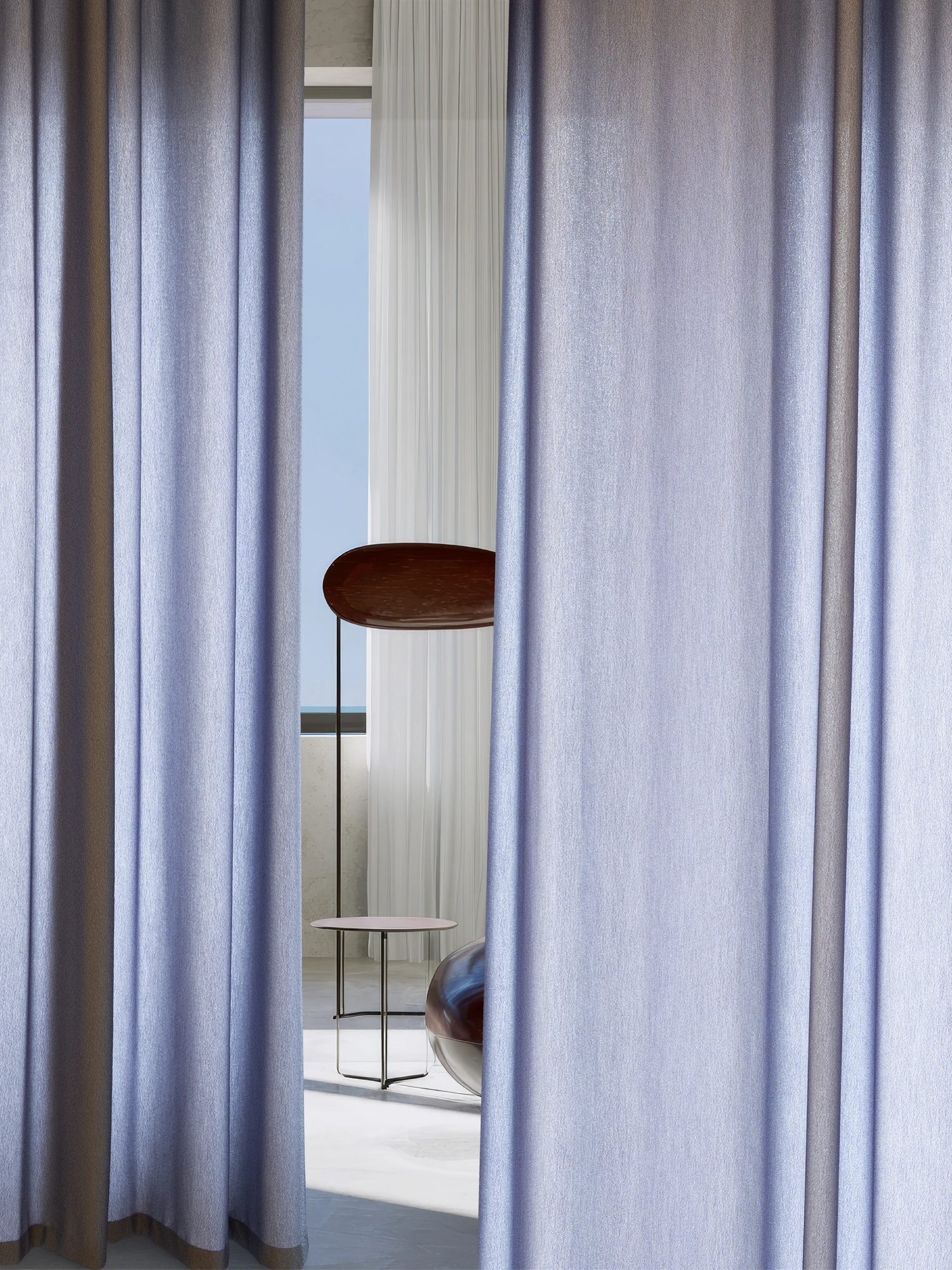
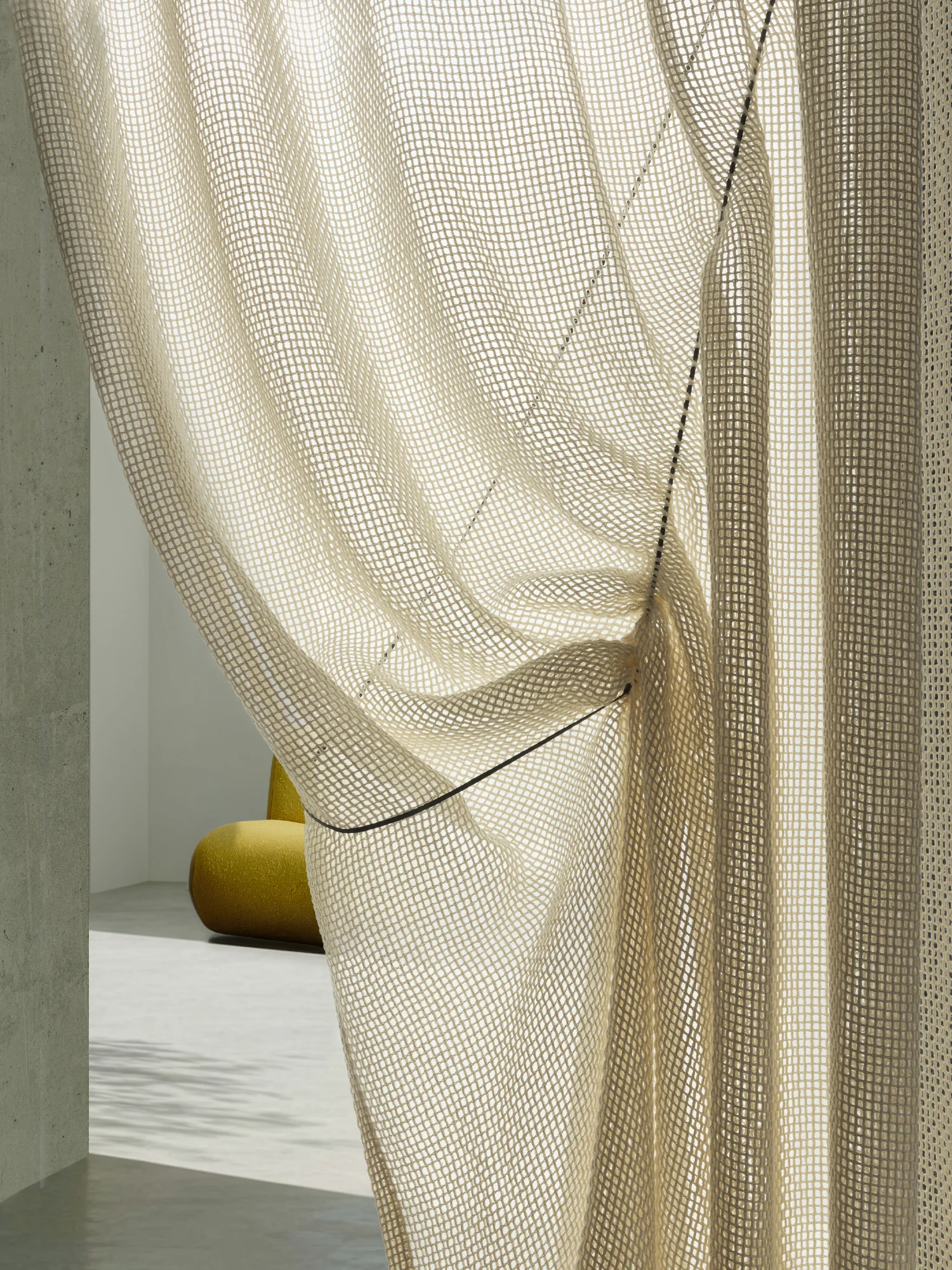
The craftsmanship involved is celebrated and showcased rather than hidden. A traditional fold is scaled up until it becomes an architectural feature. A topstitch, a fastening, or a tension point is no longer a decorative detail, but a way to build rhythm, depth, and a new way of suspending fabric. The influence of fashion is perceptible, yet Kvadrat avoids its seasonal, ephemeral logic. The goal is not to produce an effect destined to be replaced, but to invent a vocabulary meant to last.
This research is evident in Tetra, whose open-weave structure and densely felted wool yarns create a form that is both airy and three-dimensional. It is also present in Sky Cloud, a blend of hemp, cotton, and wool with a texture reminiscent of paper. Or in Kajak and Stream Line, which translate the movement of water and the intermittent appearance of lines under the influence of light. The palette itself oscillates between mineral tones (salt, driftwood, volcanic rock) and bolder, almost electric colors. Color is never applied to the material; it is born with it.
CRAFTSMANSHIP WITHOUT OSTENTATION
With Loux, Kvadrat approaches flooring with a different logic, yet with the same attention to the relationship between material, light, and movement. The six rugs in the series are made entirely of lyocell, a regenerated cellulose fiber with a fineness that evokes silk. Their density (2.7 million threads per square meter) creates a remarkably soft surface, with reflections that shift depending on the viewing angle. Three constructions are offered: a uniform cut pile, a linear alternation of loops and pile, and a hand-sculpted relief. Luxury here lies not in patterns or excess, but in the richness of the tactile experience.
This way of starting from the material rather than the image says a great deal about Kvadrat’s philosophy. Circularity is not treated as a recognizable aesthetic, nor as a virtuous add-on applied after the product is designed. It becomes a design parameter like any other: choosing mono-materials whenever possible, re-engineering existing references, using recycled materials, and focusing on repairability and extended product lifespans. The brand’s strategy thus combines environmental innovation, maintenance, and service models designed to keep products in use for longer.
Because a sustainable textile is not just one with a reassuring composition. It is also a textile that one desires to keep. Because it possesses a presence, an intelligence, and an ability to continue a dialogue with its space. In this, Kvadrat defends a rare position: that of a deeply technical company that never separates performance from emotion, research from usage, or material from design.

.svg)


.svg)