Les Roches in Le Lavandou: the Mediterranean as raw material
In Le Lavandou, Jean-Baptiste Pietri has rebuilt a historic hotel that is both spectacular and discreet, reconnecting with the very essence of the Mediterranean landscape. While some hotels look out at the sea, others seem to have been carved from it. Rebuilt under the direction of architect Jean-Baptiste Pietri, Hôtel Les Roches does not seek to dominate the landscape. Instead, it recedes into it, to the point of feeling as though it has always been there.
Clinging to the Aiguebelle cliff, facing the Hyères islands, this iconic hotel on the Var coast has long held a special place in the Mediterranean imagination. Created in the 1930s, it was one of those establishments whose reputation was built less on ostentatious luxury than on a privileged relationship with the sea, the light, and the landscape. Over the decades, however, successive extensions and disparate interventions had gradually eroded the site's coherence.
When the time came for its rebirth, Jean-Baptiste Pietri chose not to restore what existed, but to rebuild in order to rediscover the site's original spirit. This was achieved with the intelligence, vision, and patience required for the 13 years it took to complete this complex, ambitious project—one that is at once monumental and almost discreet. It is an approach that might seem paradoxical, yet it is undoubtedly the key to understanding the project: recovering a lost sense of obviousness.

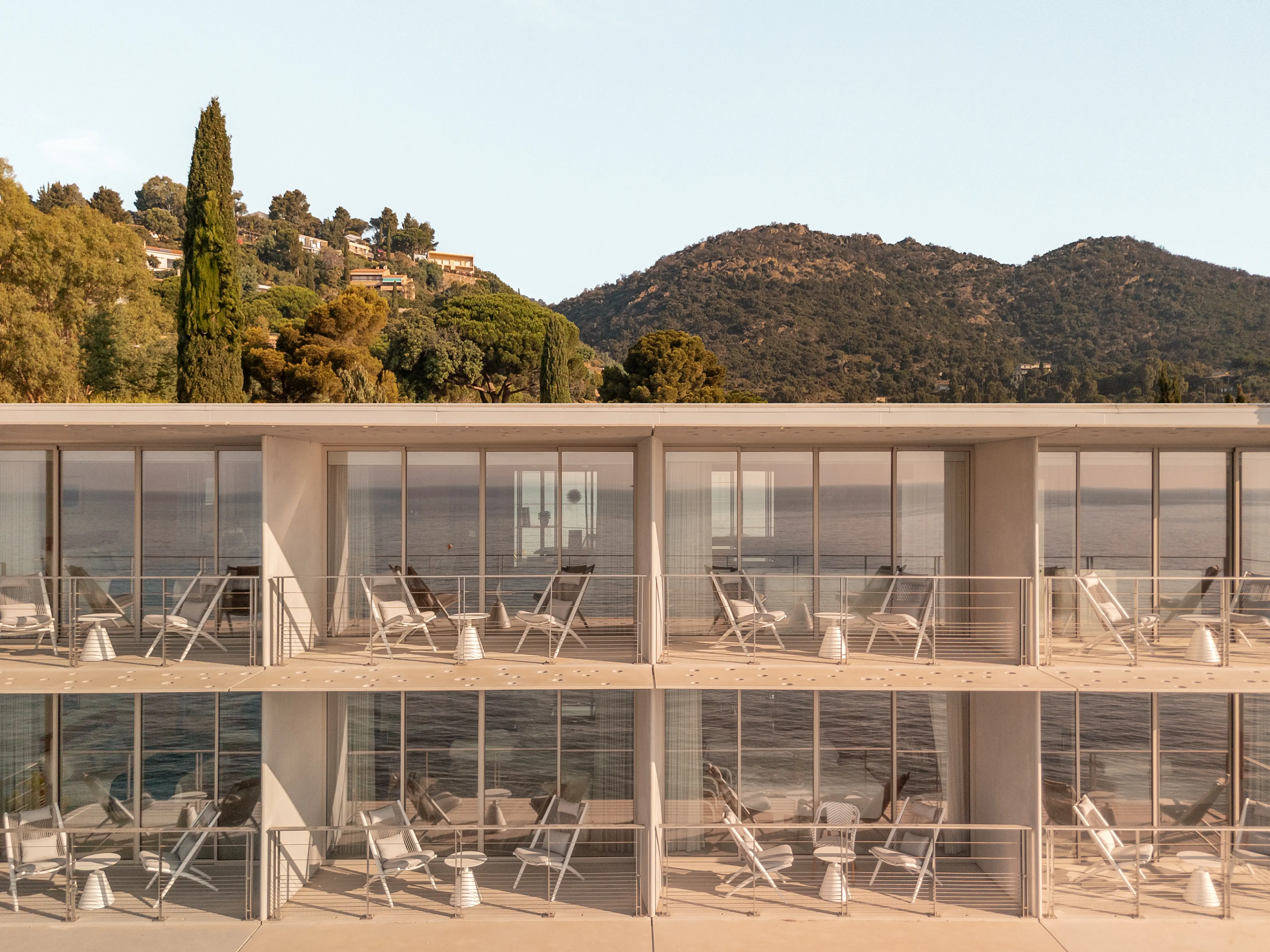
A sedentary ship
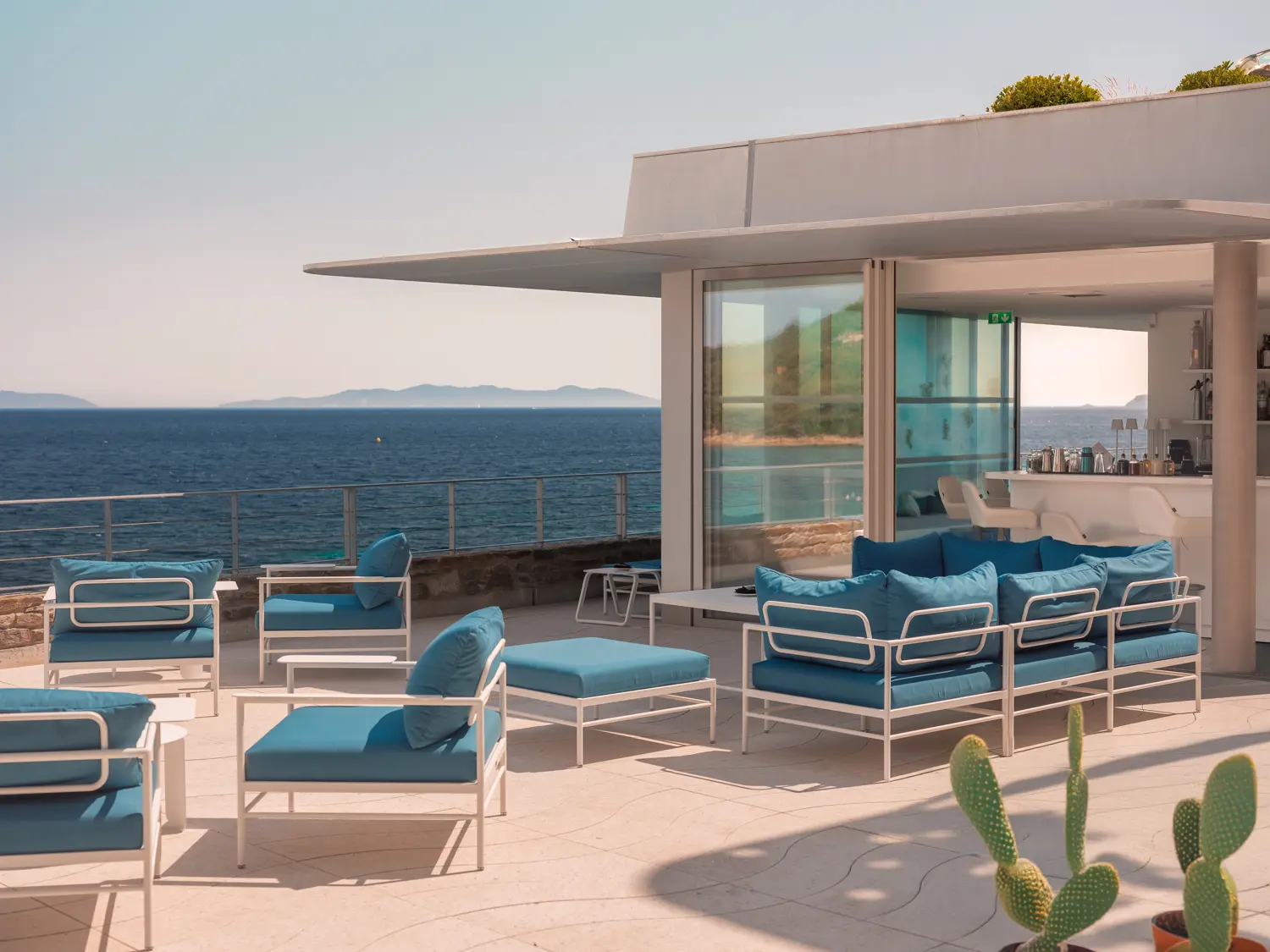
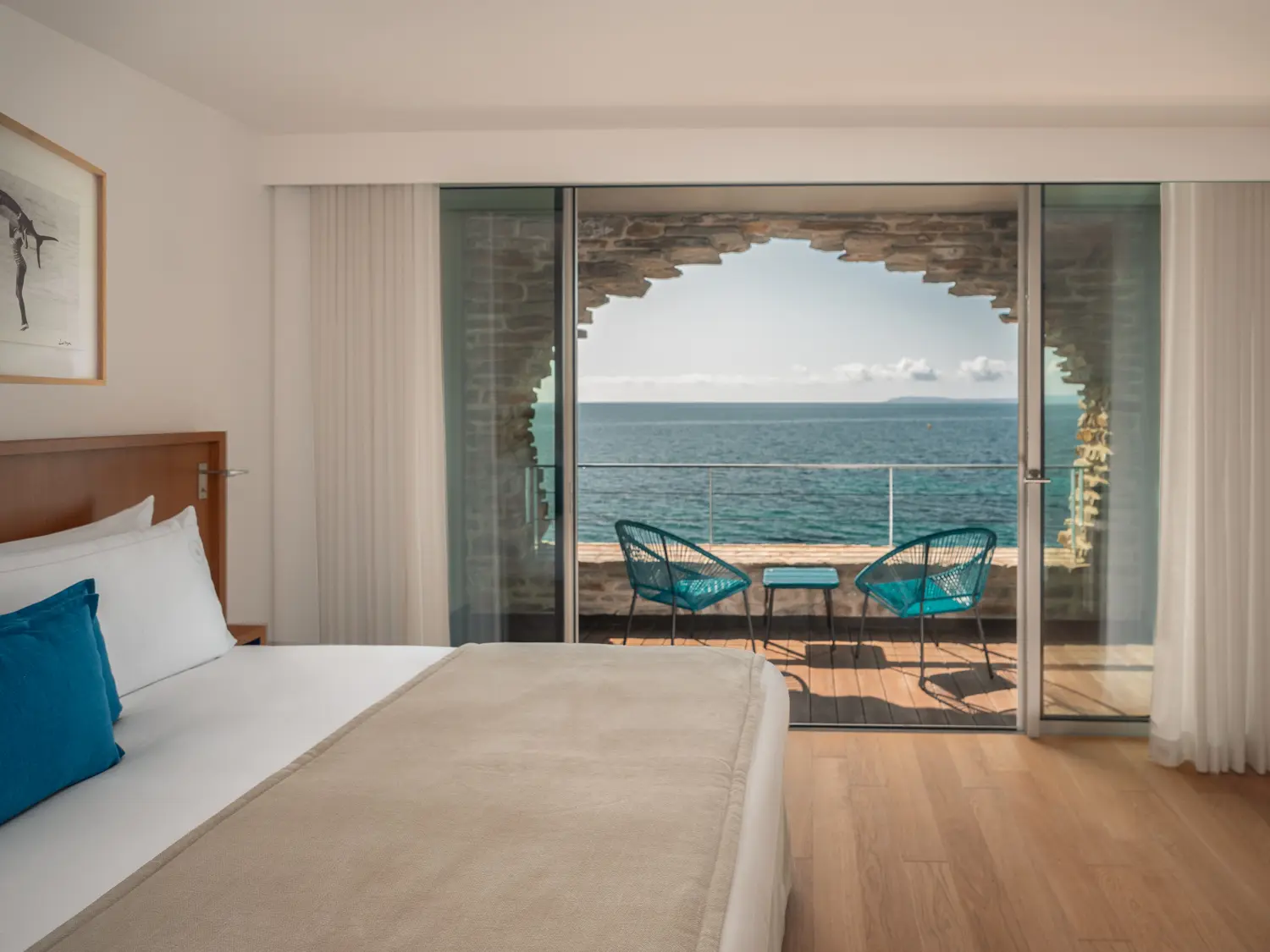
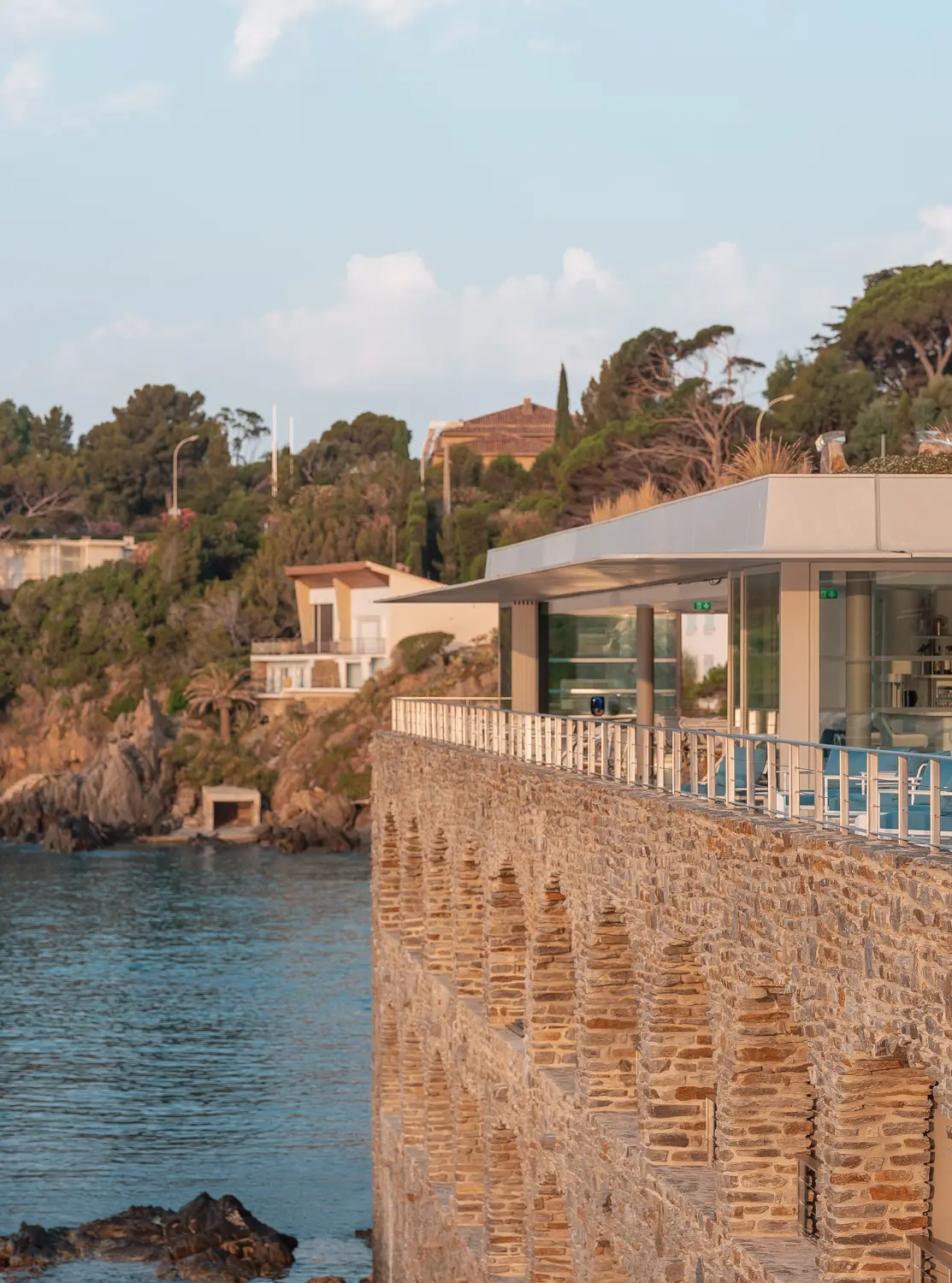
The primary merit of Les Roches is that it never seeks to dominate its environment. Rather than a single volume facing the Mediterranean, the architect envisioned a succession of buildings that follow the natural topography. The hotel is fragmented, carved out, and follows the contours of the terrain. The various building blocks are inserted into the slope like mineral strata between the rock and the sky. This fragmentation produces a remarkable effect: the project is never revealed in a single glance. It unfolds gradually through outdoor pathways, stairs, terraces, and visual openings. At every level, the sea appears differently. The architecture becomes an experience of movement rather than an object to be contemplated. One is struck by the project's ability to produce a succession of almost cinematic sequences. Here, a terrace suspended above the water. There, a stone wall framing the horizon. Further on, a landscaped crevice that lets in the light. Each movement alters one's perception of the landscape.
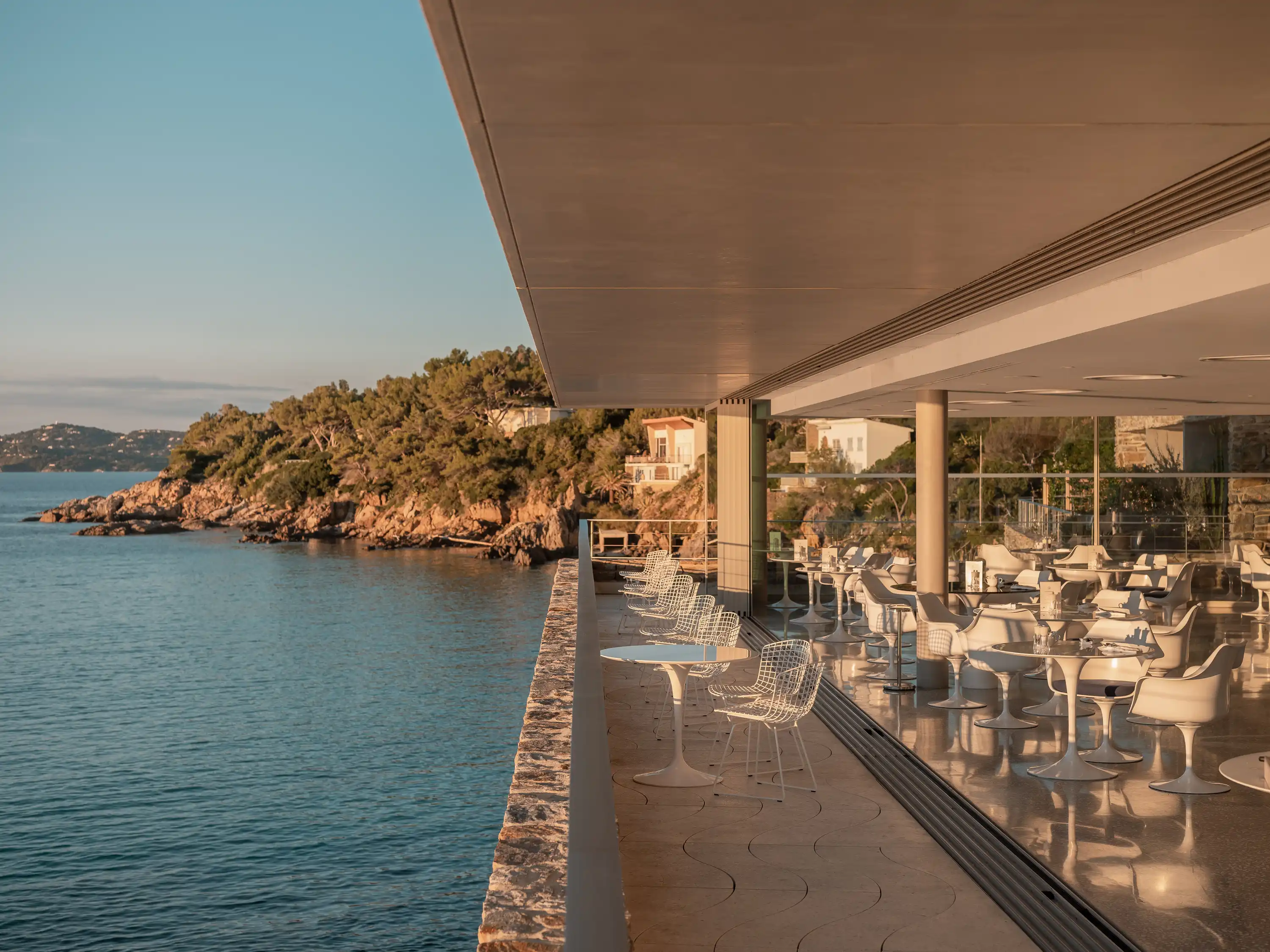
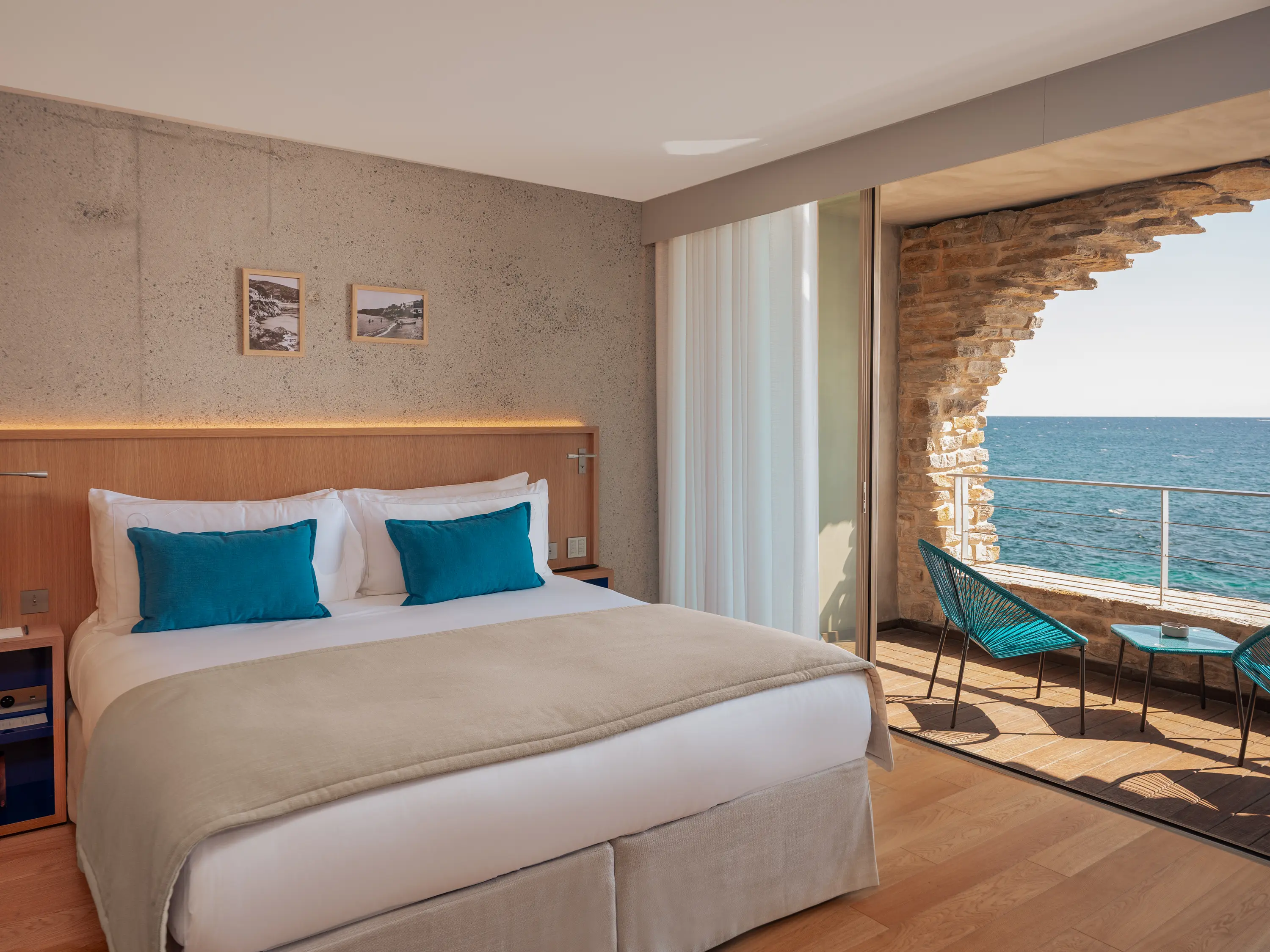
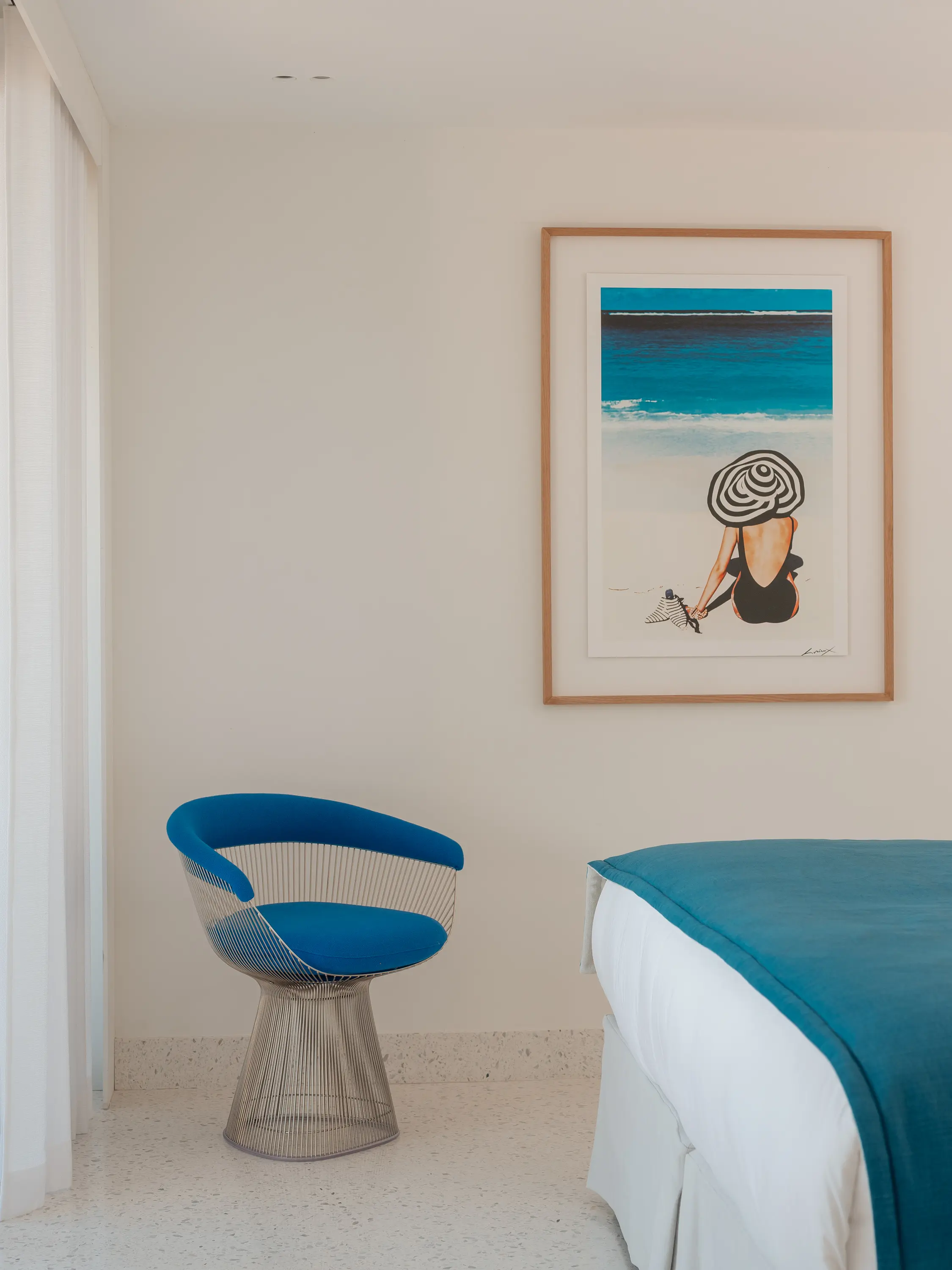
At Les Roches, the Mediterranean is never just a backdrop; it literally irrigates the project. First, in the design of the outdoor spaces: the terrazzo, with its omnipresent variations, undulates like waves, symbolically extending the movement of the water into the architecture of the main deck. This detail, which might go unnoticed, summarizes part of the project's great intelligence: bringing the landscape into the building rather than merely framing it, much like the subtle Klein blue thread running through the interior. The maritime reference also appears in the treatment of the terraces and slab overhangs. Pierced with circular patterns, these ultra-high-performance fiber-reinforced concrete elements filter the Mediterranean light while subtly evoking the world of naval design. Seen from the lower levels, their silhouette sometimes recalls a hull suspended over the void. This evocation is no mere anecdote, as the forty rooms and suites have also been designed as cabins opening onto the horizon. Because here, the decor is, above all else, the sea.
Mediterranean materials
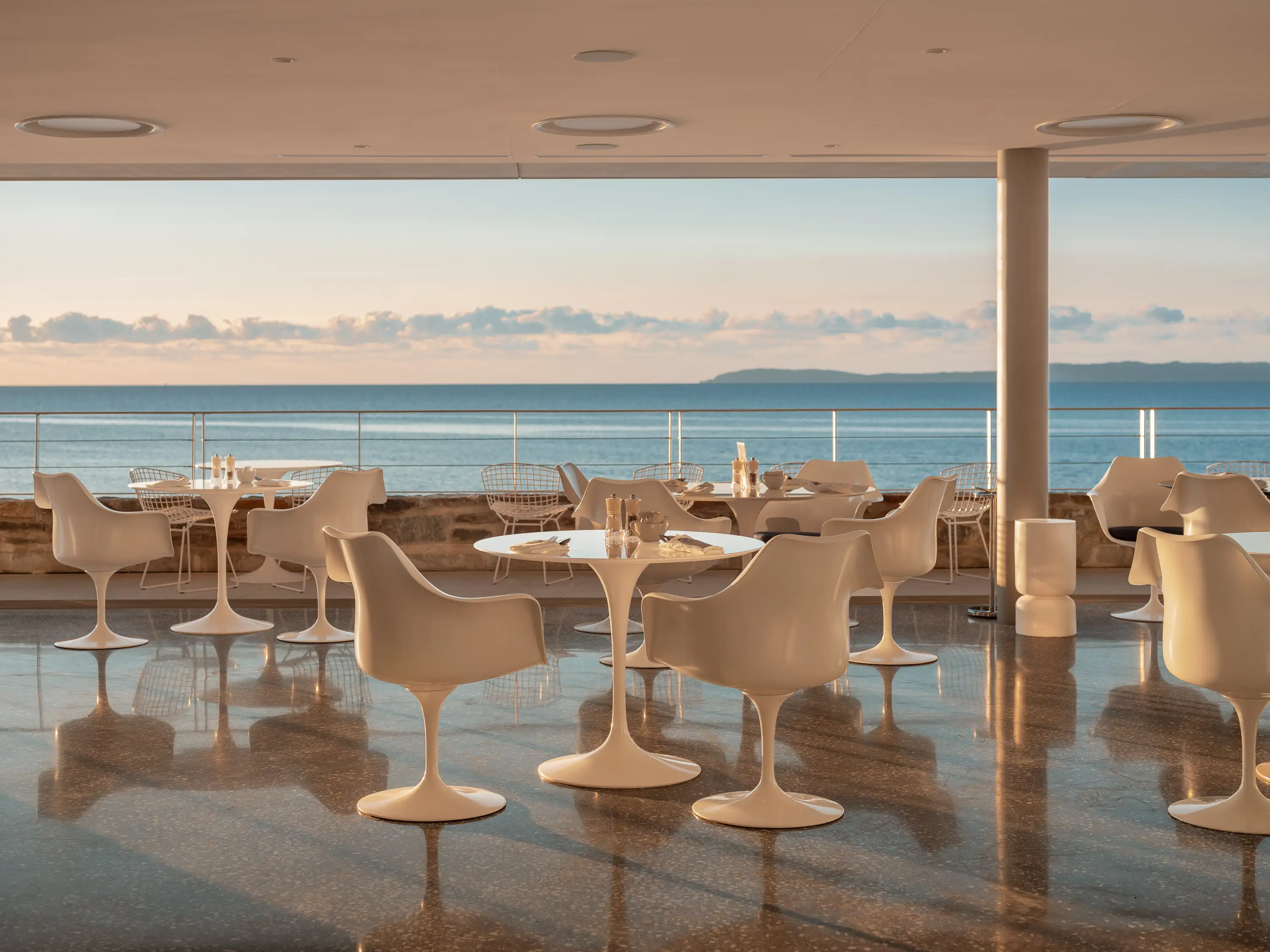
As in many of his projects, Jean-Baptiste Pietri pays particular attention to materiality. The project is based on a constant dialogue between two registers. On one hand, the Bormes stone—massive, rough, and deeply rooted in the Var region. On the other, more abstract, white, and luminous mineral surfaces that capture the variations of the Mediterranean sun. Glass also plays a role, notably in the Michelin-starred restaurant L’Oursin (run by Antoine Gras and Benoit Gornard), with Harry Bertoia chairs (outdoors) and Aarne Saarinen chairs (indoors) leaning toward the sea and bathed in 360-degree sunlight.
This confrontation prevents the site from falling into regionalist pastiche or decontextualized international minimalism. Les Roches belongs sincerely to its territory without seeking to reproduce a folkloric image of the Mediterranean.
The architecture seems to have been sculpted rather than built. The walls emerge from the slope. The terraces extend the rocky strata. The vegetation complements the volumes rather than masking them. Everything works to blur the boundary between architecture and landscape.
The luxury of restraint
This is arguably where one of the project's greatest successes lies. For a long time, prestigious establishments sought to establish themselves as self-contained destinations, detached from their immediate surroundings. Conversely, Les Roches builds its identity from the site itself. The rock, the vegetation, the slope, the views, and the light become the true elements of luxury. This approach aligns with a broader reflection on how to intervene today in territories as sensitive as the Mediterranean coastline. How can we build without erasing? How can we transform without distorting?
Jean-Baptiste Pietri’s project provides a measured response to these questions. A response that favors integration over demonstration, and dialogue with the landscape over the pursuit of an iconic gesture. It is a form of clarity that contemporary architecture sometimes forgets: when faced with certain landscapes, the most beautiful gesture is often to step back.
https://www.hotellesroches.com
https://www.pietriarchitectes.com/categories/projets