

Maison & Objet: "Japan Wood x Craftsmanship," a booth dedicated to Japanese craftsmanship
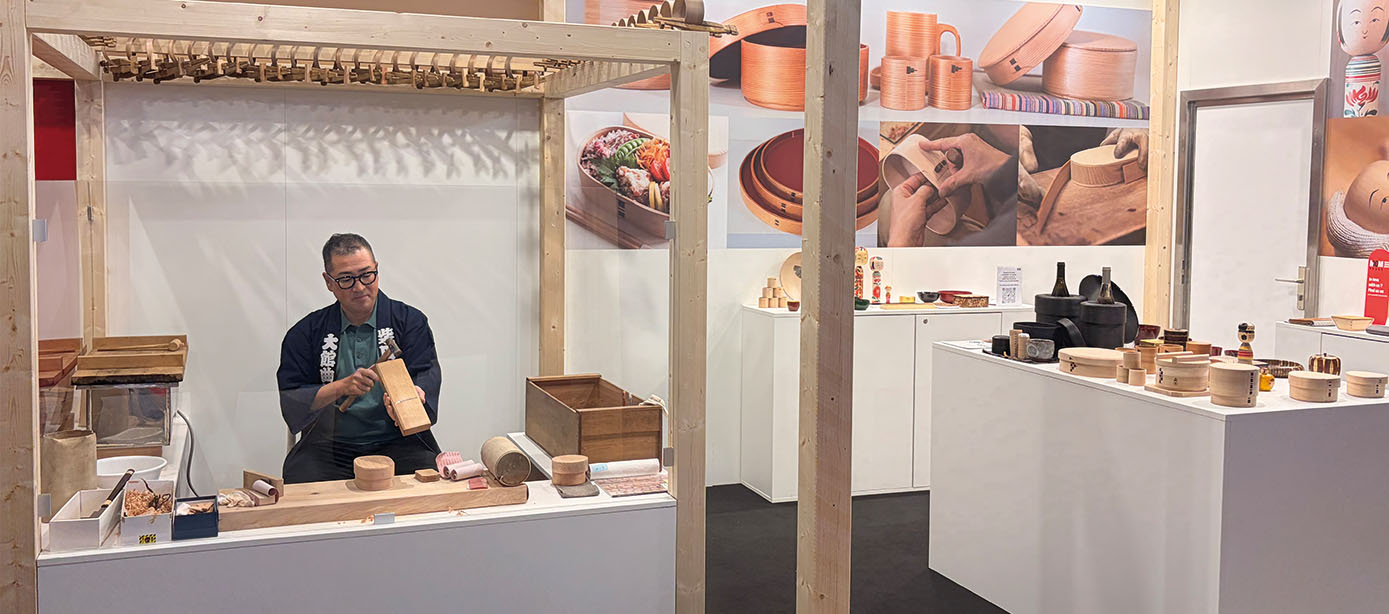
At the Maison & Objet trade fair in September, traditional Japanese woodworking skills were showcased at the "Japan Wood x Craftsmanship" booth. It was an opportunity to highlight traditional techniques, some centuries old, that bear witness to a meticulous, precise craftsmanship deeply rooted in Japanese culture.
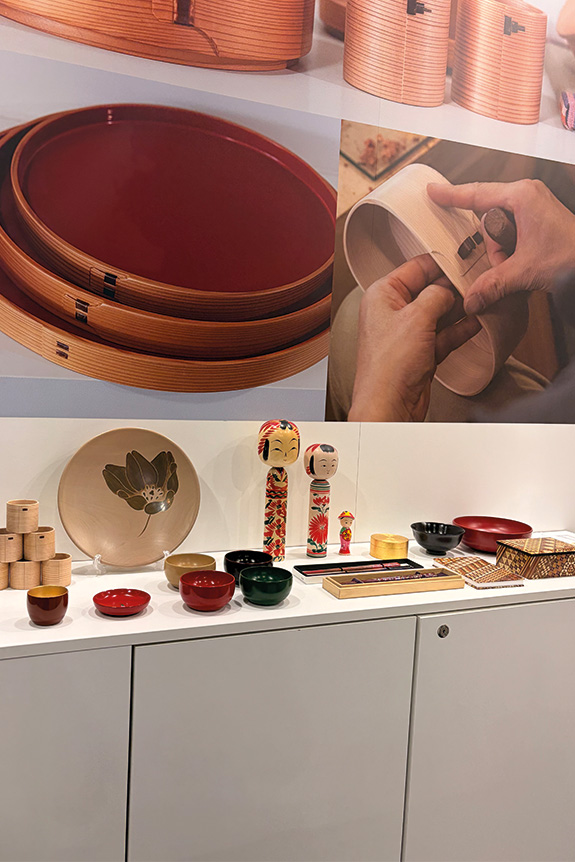
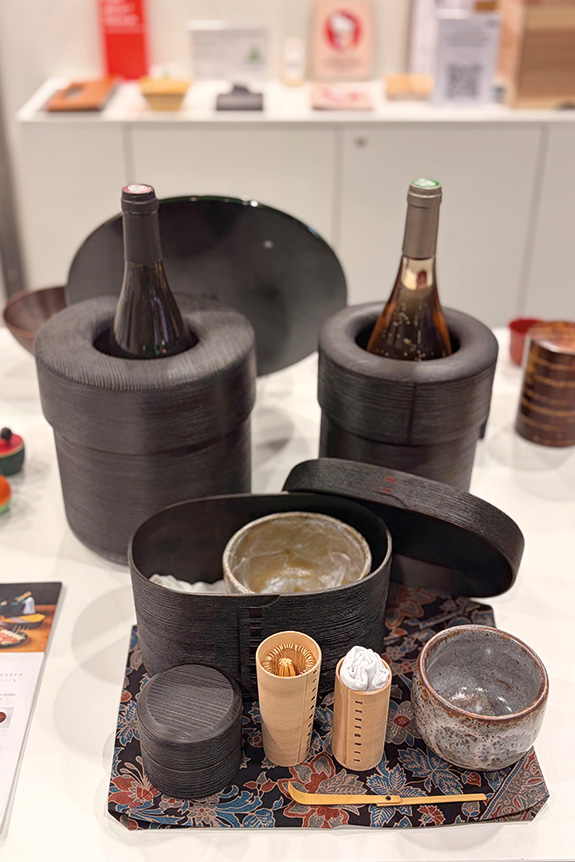
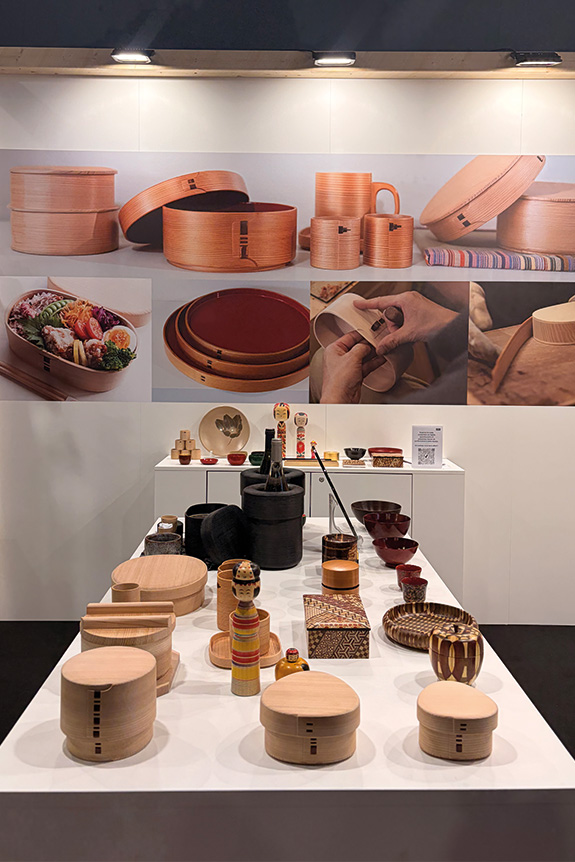
"Our main goal in coming to France is to show the integrity of Japanese woodworking and to promote these skills. We also wanted to highlight the sustainable nature of the wood we cultivate ," explained Yohei Kato, the booth manager. A true symbol of Japanese culture, wood plays an important role in daily life in Japan. For its first time at the fair, the booth had a clear mission: to promote Japanese woodworking skills through traditional manufacturing techniques, as well as the objects that result from them. From the iconic bento box to champagne buckets, bowls, and even kokeshi dolls, the booth presented a wide variety of objects and accessories.
Promoting traditional skills
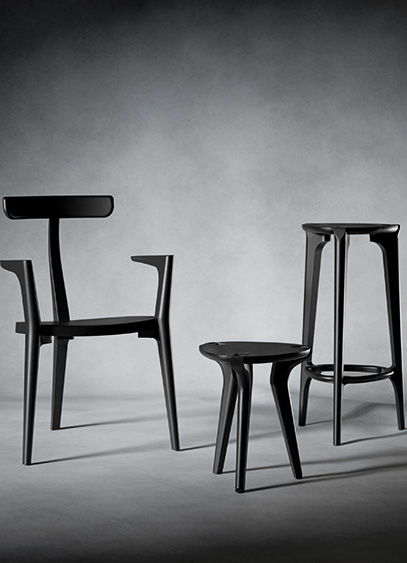
Beyond the material itself and the objects on offer, the focus was primarily on the skills and techniques associated with wood, most of which have been passed down from generation to generation. Several of these crafts were represented at the booth, each associated with a specific region of Japan: Odate Magewappa—a wood-bending technique—from Akita; Hakone Yosegi-Zaiku—a wood marquetry technique—from Kanagawa; lacquerware from Ishikawa; and kokeshi dolls from the Tohoku region. The booth also featured more contemporary creations, including furniture such as chairs and stools, demonstrating the current applications of wood in design.
On-site, artisan Yoshimasa Shibata invited visitors to discover the wood-bending technique firsthand by demonstrating several stages in the making of a bento box. Yoshimasa Shibata is one of only 16 artisans in Japan certified as a "Traditional Craftsman" specializing in magewappa, these small bentwood boxes. This certification requires at least twelve years of practical manufacturing experience. Developed as a craft about 400 years ago and passed down from generation to generation using locally grown Akita cedar, magewappa is defined above all by its bending technique. The natural Akita cedar is softened in water heated to over 80°C, then bent in a single continuous motion, guided solely by the artisan's touch and expertise.
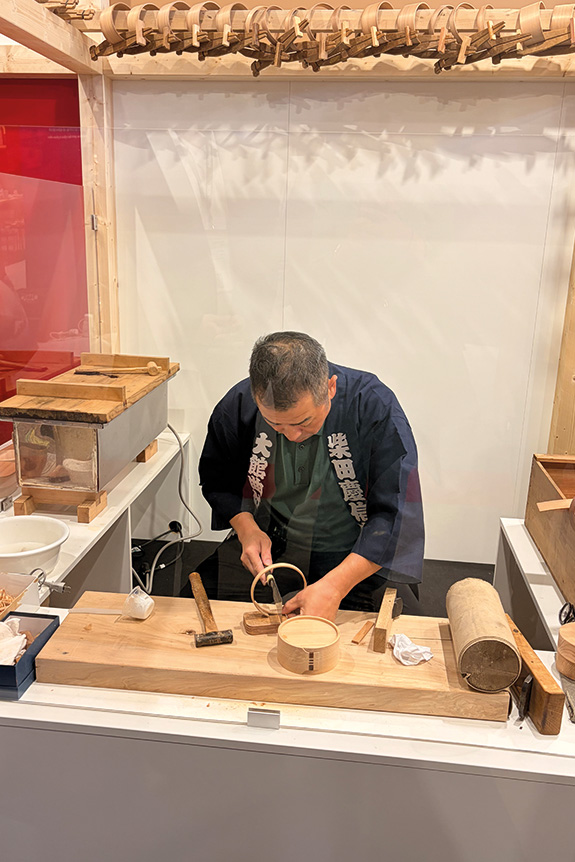
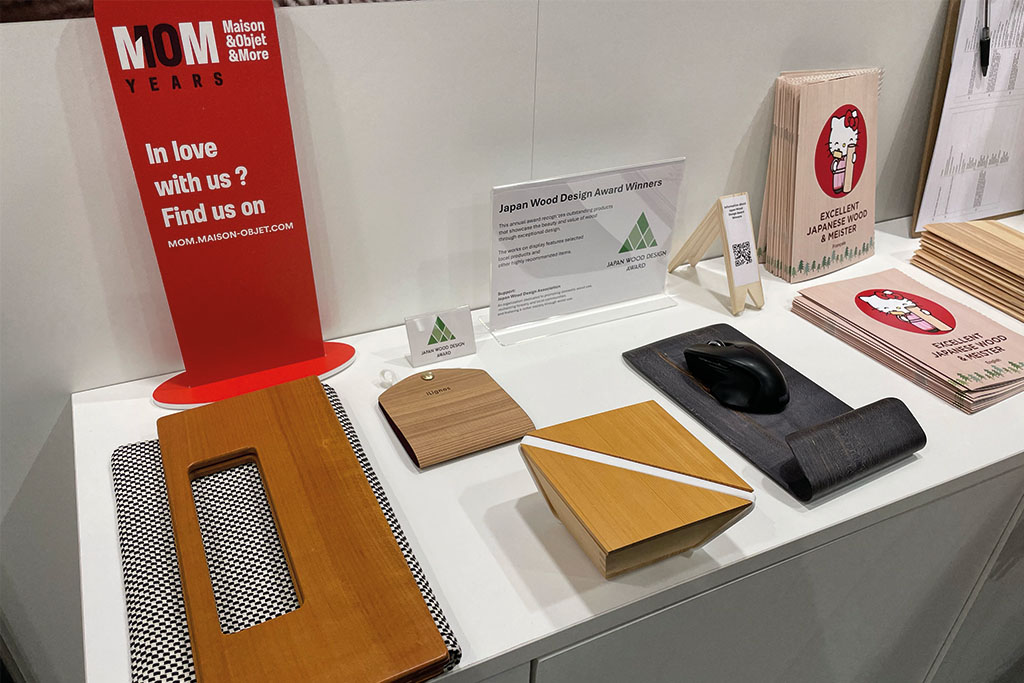
It was a way to introduce the public to these still relatively unknown skills. More broadly, the initiative aimed to encourage dialogue and foster potential partnerships with European stakeholders, focusing on both existing products and new pieces adapted for more contemporary uses. The booth also showcased products recognized by the Wood Design Award, which honors creations that highlight the qualities and appeal of wood, thus demonstrating how Japanese techniques are being transposed into contemporary design today. "The goal of our participation is to foster exchanges and meetings that could lead to partnerships with European companies, among others. We are also open to the possibility of exporting Japanese wood", added Yohei Kato.
Developing wood culture in Japan
Beyond promoting these skills, the booth also sought to highlight Japan's relationship with its forests and how they are managed. Nearly 70% of Japan's land area is covered by forests, about 40% of which are planted forests. These account for 8% of the world's total planted forest area, placing Japan at a particularly high level internationally. This situation reflects a long tradition of reforestation, with trees being replanted after harvesting to renew forest resources. Wood is thus part of a circular logic: it absorbs CO₂ as it grows, requires relatively little energy to process, and continues to store carbon once it becomes a finished product.
This environmental approach is closely linked to the skills presented at the fair. The natural qualities of the material, including its scent, its thermal regulation and moisture absorption capabilities, and its antibacterial properties, also pave the way for new uses. Between the preservation of age-old techniques, responsible resource management, and contemporary applications, the booth championed an approach to wood where craftsmanship and sustainability go hand in hand.