

The "Trois-Pièces" exhibition brings Polimair, Lucas Zito, and Tapicheri into dialogue
For Paris Design Week, Polimair, Tapicheri, and Lucas Zito came together for a joint exhibition titled "Trois-Pièces" (Three Rooms). Presented at 52 rue Charlot from September 10 to 13, the exhibition was conceived as an interior where furniture, lighting, and textiles explore new ways of producing and living.
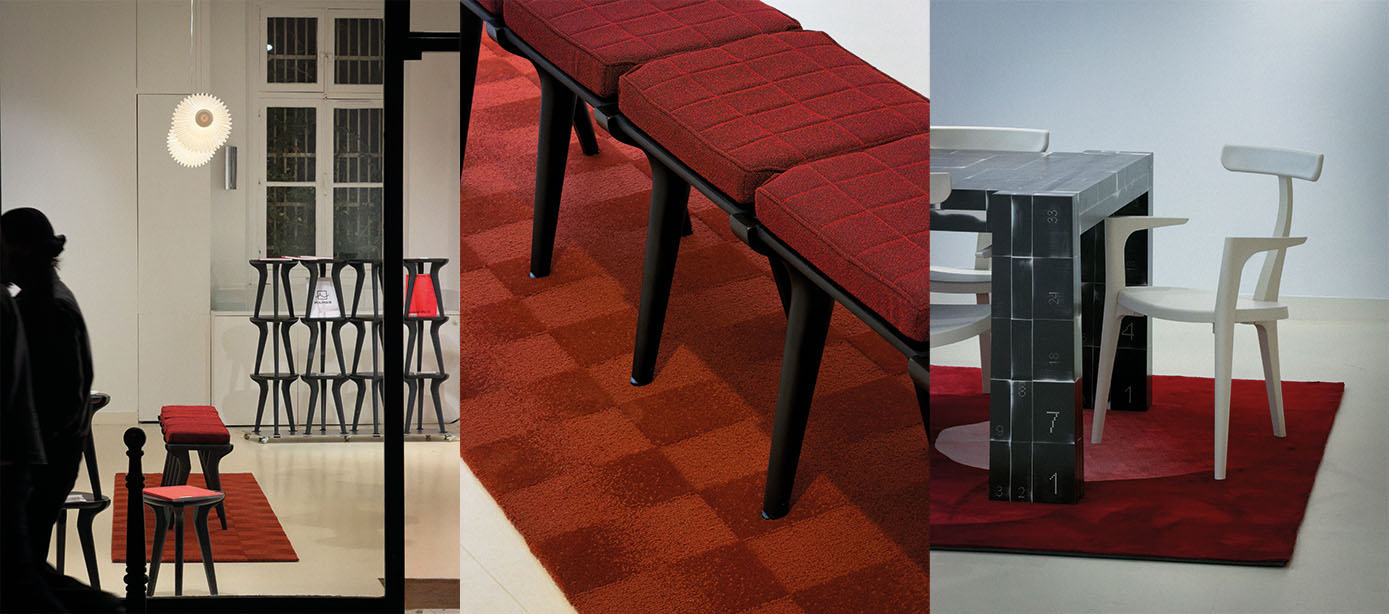
Set along a path imagined as an apartment—complete with a hallway, dining room, and living room—Polimair, Lucas Zito, and Tapicheri presented the aptly named "Trois-Pièces" exhibition. More than just a succession of objects, the exhibition plays on the dialogue between them and the complementarity of practices that pay special attention to materials and manufacturing processes. "The starting point for Trois-Pièces was the idea of bringing together three Parisian designers with very different yet complementary practices, following a 'curated ensemble' logic where we present a bench, a rug, and a light fixture—the fundamental elements of a welcoming space." says Arthur Gaudenz, co-founder of Polimair.
Three rooms, three worlds, three interpretations of material
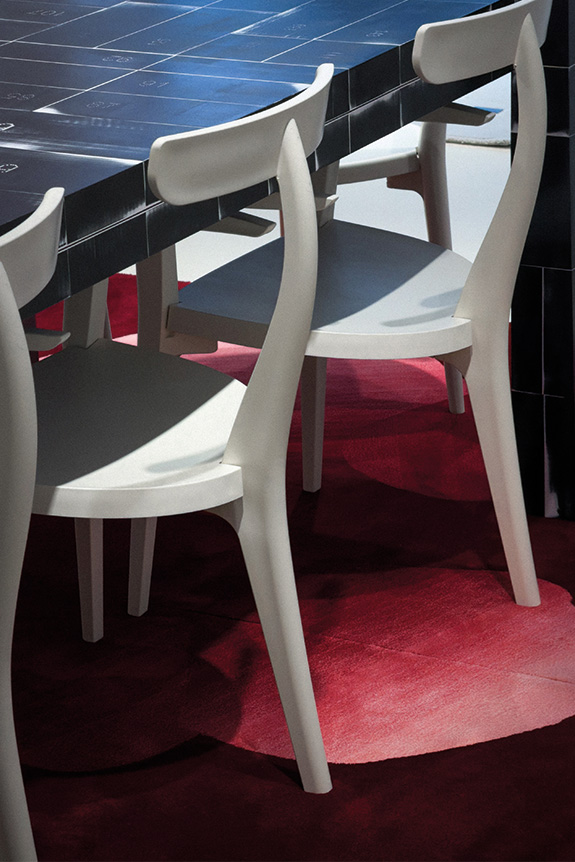
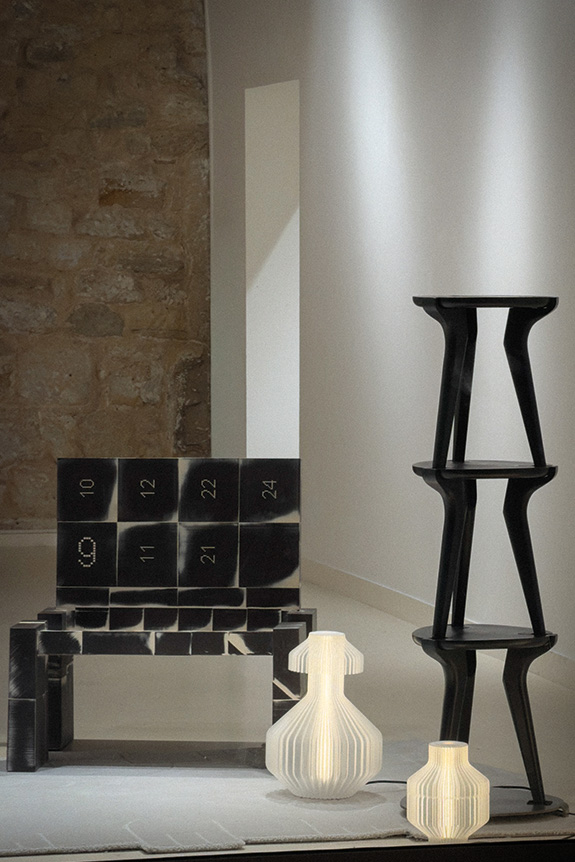
For this exhibition, the designers offered new pieces from their respective worlds. First, Polimair presented its Baiji bench, a continuation of the stool of the same name introduced a few months earlier. The bench, developed in collaboration with Gabriel Fabrics, is a modular system with limitless configuration and assembly possibilities. Lucas Zito continued his experiments with 3D printing through his Patch collection, unveiling a large 240cm-long table in the dining room area, displayed alongside his Buoy lamps. Finally, the French rug design house Tapicheri, founded by Camille de Villartay, revealed the La Cité Perdue wool rug collection, designed specifically for the exhibition, with a 350 × 210 cm model as the centerpiece. "The biggest challenge of the exhibition was bringing together these three sets of ideas that are difficult to combine. On one hand, there's us, doing mass production; Camille from Tapicheri does bespoke work; and Lucas is focused on collectible, one-off pieces. So, these are projects that don't usually coexist," continues Arthur Gaudenz.
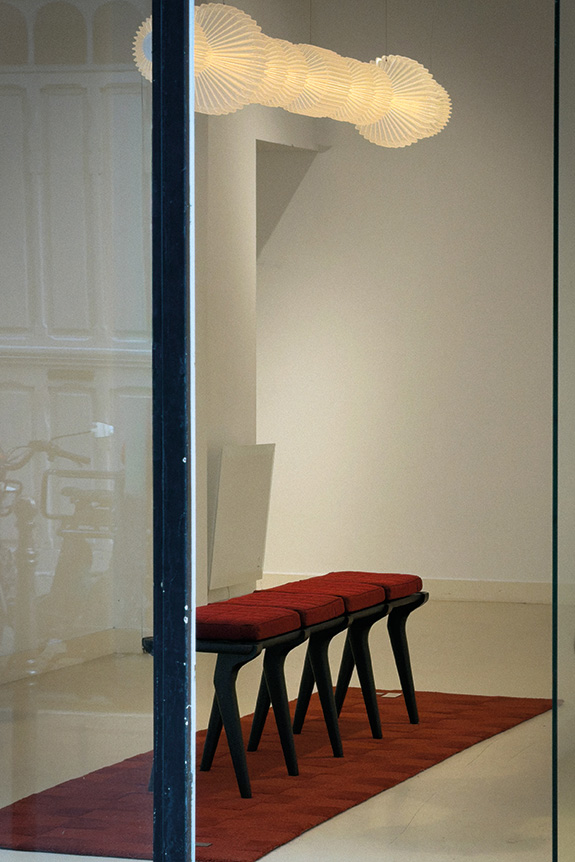
Pieces from very distinct worlds, then, but ones that, once brought together, assemble with perfect coherence. The "Trois-Pièces" exhibition successfully brought industry, technology, and craftsmanship together to offer a shared vision of contemporary living, while championing a design approach where innovation lies as much in the form as in the production method.