




Design Parade 2026: contemporary thought rewarded
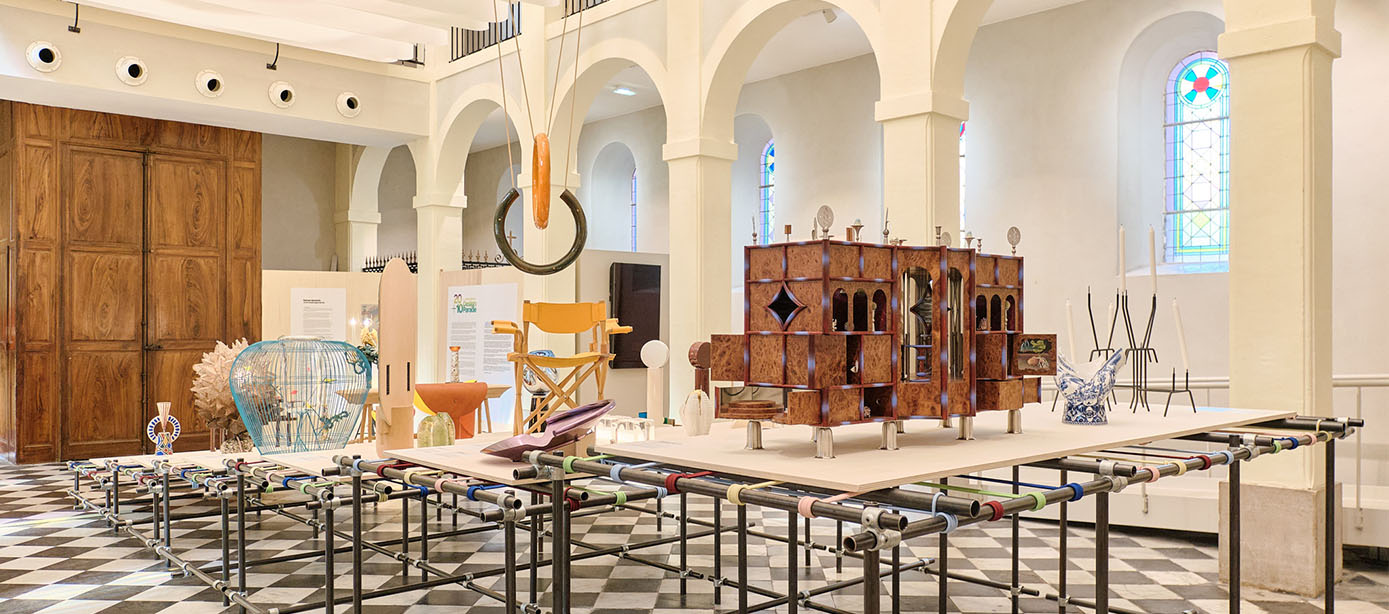
This year, Design Parade celebrates its 20th anniversary at Villa Noailles and its 10th edition in Toulon. Open since June 25th and running until August 30th, both events have delivered their usual share of surprises in the fields of object and interior design. Here is a look back at the seven winners of the 2026 edition.
Born from a desire to discover, share, and promote design over the course of a summer, Design Parade has become an essential event for revealing new talent to a wide audience. For this anniversary edition, marking 20 years in Hyères and 10 years of its Toulon branch, seven creators were rewarded for the inventiveness they displayed at the heart of Villa Noailles. The design jury, chaired this year by Sofia Lagerkvist and Anna Lindgren, included Anne-France Berthelon, Stanislas Colodiet, Clara Krzentowski, Hervé Lemoine, and Simon Dupety, who won last year’s Grand Prix du Jury for objects. Meanwhile, Laura Gonzalez led a second jury—composed of Stéphane Parmentier, Rodolphe Parente, Raphaella Pron, Anne-Sophie von Claer, and Thomas Takada—tasked with selecting the winners for interior design projects. Here is a look at the 2026 award winners.
Object Finalists
The National Manufactures Prize - Mobilier National: Lundja Medjoub & Matisse Vrignaud
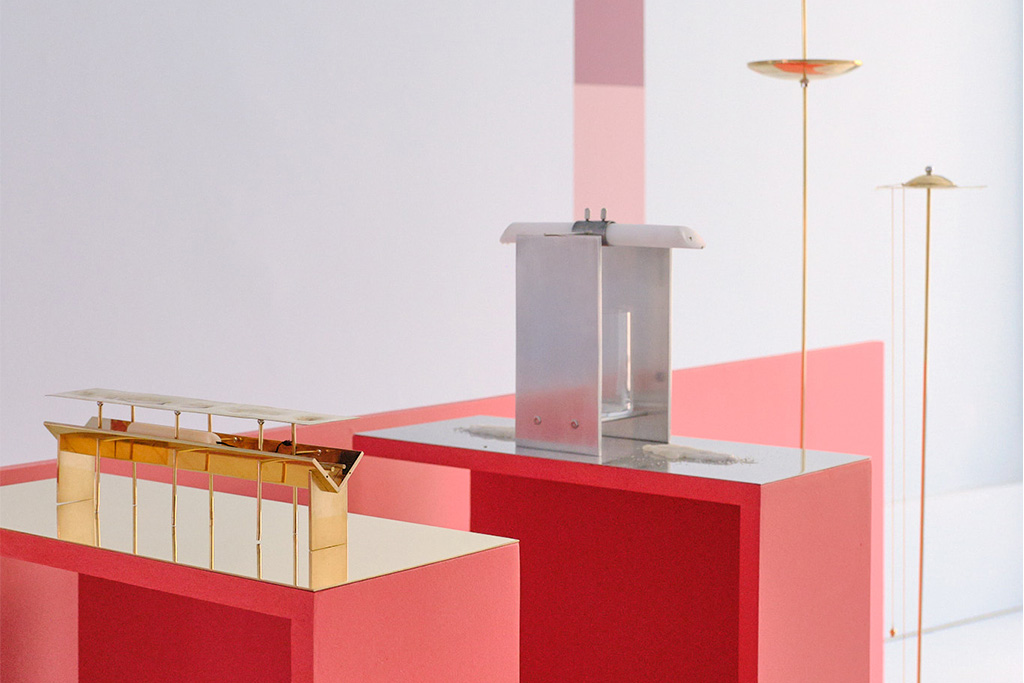
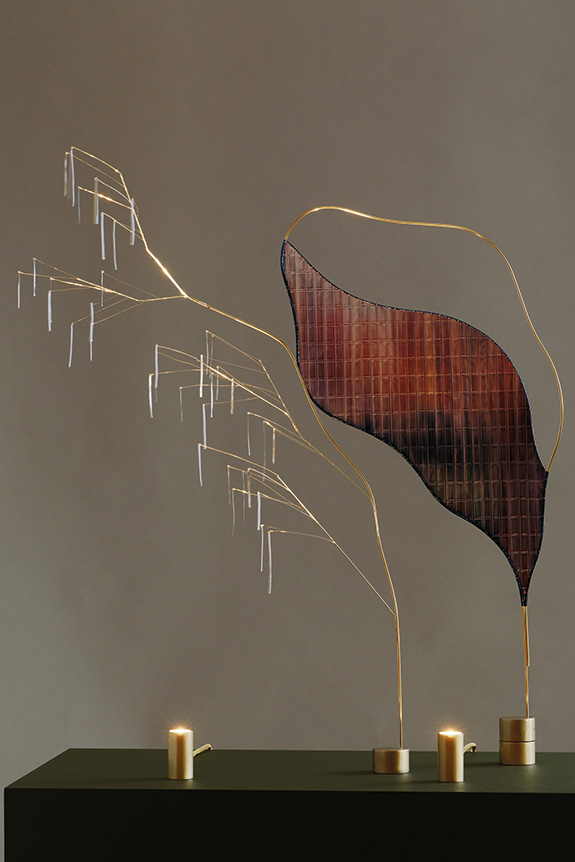
With Les Horloges à Feu (Fire Clocks), Lundja Medjoub and Matisse Vrignaud explore the concept of time by reinterpreting medieval measuring instruments. "It seemed to us that time was a notion too rarely explored in design, even though it is an essential concept in our contemporary societies. Returning to the foundations of how it is measured felt indispensable to us," the duo explains. Centered on three iconic measuring objects, the designers link their practice to the notions of time, sound, and movement. "These three objects embody three ways of considering time through three sonic principles: the gong depicts a singular, punctual event; the hourglass symbolizes duration; the metronome refers to repetition and cyclicity. In their presence, it is their sound that materializes time and brings it back to our attention." The three pieces are made of brass, sourced from scraps from a brass foundry. A material chosen as much for its link to watchmaking as for its acoustic qualities, particularly its musicality.
The Design Parade Grand Prix du Jury: Tin Ayala
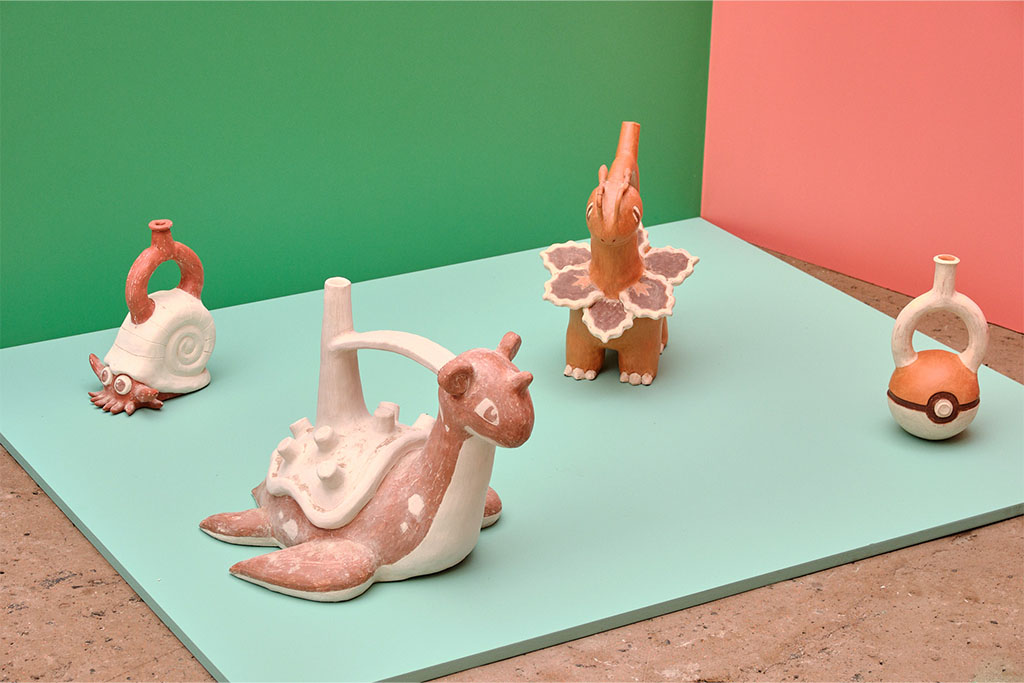
Huacos is a project based on the coexistence of cultural references that are often opposed, yet here brought together within a single object. "The series of ceramics I am presenting at Villa Noailles is conceived as a superposition of ancestry and globalization, archaeological past and contemporary pop culture, pre-colonial local knowledge and capitalist market products," explains Tin Ayala. Taking the form of ceramics similar to those created by the Moche, Nazca, Chimú, or Inca societies, the Ecuadorian designer also questions the "extirpation of idolatries" implemented during the Spanish colonization of the Andes. "This erasure from the past leads us today to conceive of pre-colonial material culture as something incomplete, missing, and broken, which we must restore with the help of archaeological studies and academic knowledge." Inspired by a 2023 residency at the Larco Archaeological Museum in Lima, the creator places mixtures, fusions, and combinations at the heart of his practice. "That is why, while studying design in the Netherlands, I place pre-Columbian art and contemporary design on the same cultural level." Beyond aesthetics, these hybridizations question colonial binaries: ancestral and contemporary, local and global, or nature and culture. The result of a design methodology known as "Abigarramiento" (variegated), the objects superimpose heterogeneous temporalities and epistemologies. "I do not believe in the myth of the tabula rasa (creating from nothing). As designers, we are always part of a social context, and it is important to create from these realities and work with these references." This work was carried out during a residency at the Fondation d’entreprise Martell in Cognac between November 2025 and January 2026.
Public Prize: Edouardo Altamirano
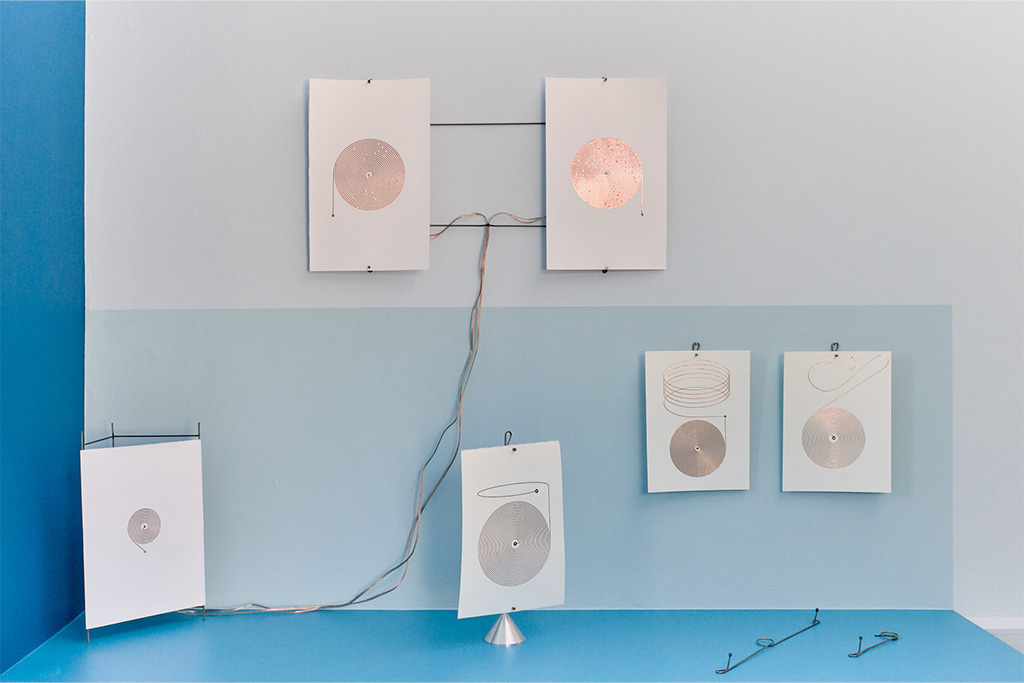
Edouardo Altamirano’s project, titled Sonido Material, explores sound as a physical phenomenon. “This project was born from an interest in exploring our relationship with sound and the objects that produce it. It challenges technology-based products, such as speakers, by asking whether they can become more raw, more open, and more experience-oriented.” For this project, the designer deconstructed the speaker down to its most essential components, thereby questioning the conventional boundaries between object, material, and sound. “I am exploring the possibility of rethinking the speaker as an open system. The object is no longer constrained by a physical boundary or enclosed in a casing: it becomes visible and exposed. This challenges our preconceived notions about materials by proposing a solution that uses something as simple as paper, a material not typically associated with sound.” This project is notably influenced by drawing, which holds a central place in his practice. It allows him to explore a graphic language and use it as a means of expression. “Drawing directly influences the sound quality, resonance, and overall functionality of the work, thus introducing a particularly interesting experimental dimension”, he concludes.
Architect Finalists
Visual Merchandising Prize awarded by Chanel: Blanche Mijonnet
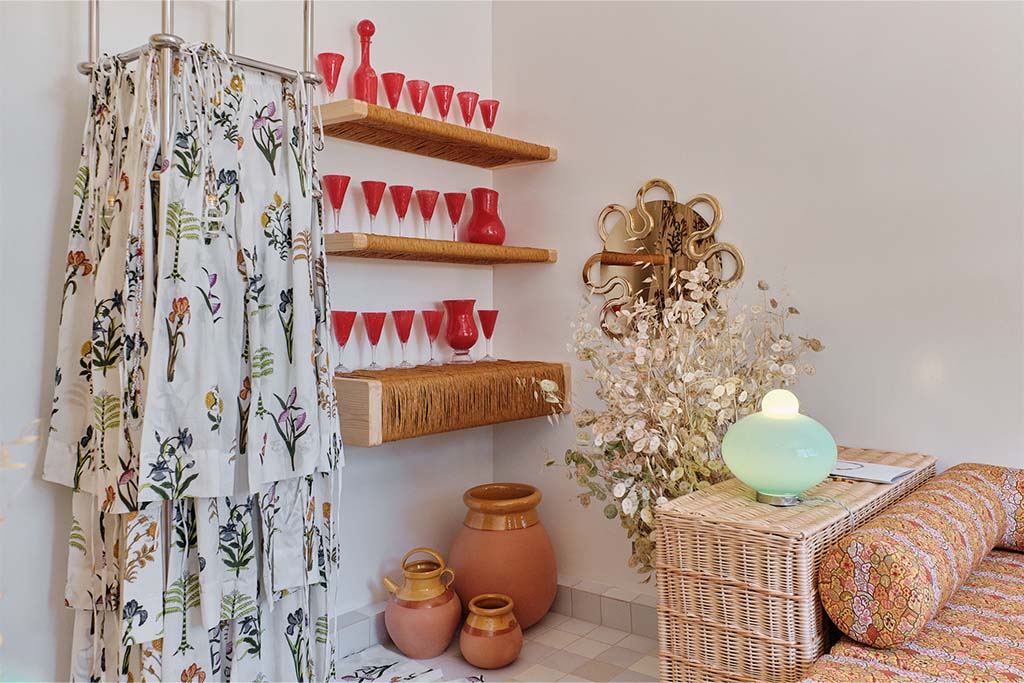
Alongside her spatial project titled Pyjama Party, which examines Provençal identity, the award-winning project Soleil Soleil deeply questions material, color, and the very notion of a window display. “Everything stems from the material and immerses us in its texture. The light is not hidden: it emanates from its core and invites us to look closer. Soleil Soleil reinterprets the light of the South of France, drawing inspiration from the boldness of Coco Chanel, who elevated yellow to the status of luxury. In a quest for the absolute yellow, the most ordinary flower of all reveals its magic by drawing on the delicate craftsmanship of the plumassiers at Maison Lemarié: the dandelion. This flower regains its poetry by revealing its two states in a delicate, luminous diorama.” An ambitious achievement that notably required sixteen hours of petal picking to compose the sun and its shades. More broadly, this project allows the designer to explore material and gesture in an intuitive and experimental way, in order to reveal all their poetry.
Public Prize: Simon Searle and Victoire Lesthevenon
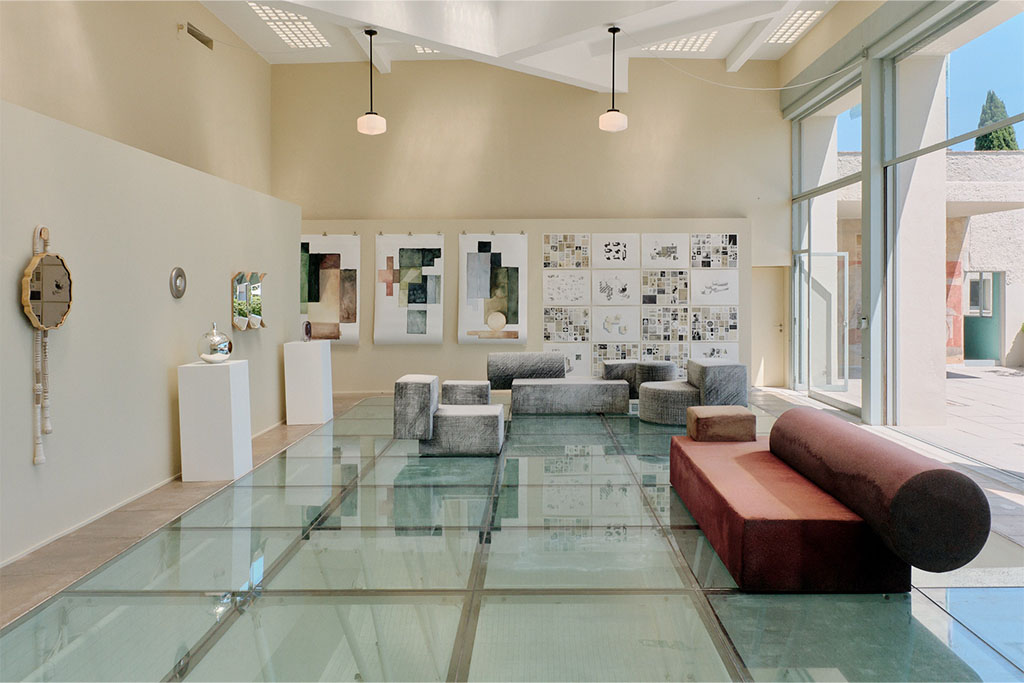
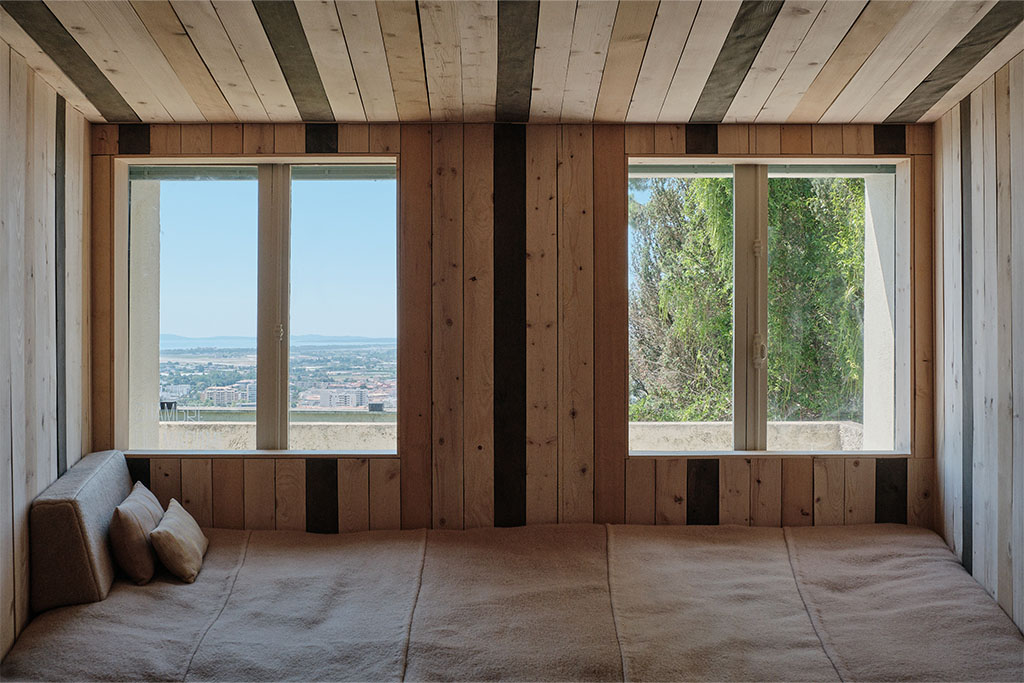
TheObservatory by Simon Searle and Victoire Lesthevenon, opening onto the Villa Noailles, blurs the boundaries between interior and exterior. "We designed this space to draw the eye outward. The floor is raised, and the wooden structure enhances the perspective toward the windows, providing a better vantage point of the landscape. Materials like cork insulate the space, allowing for total immersion in the sounds of nature. We wanted to create a place outside of time, away from distractions, and that is how we define comfort." The choice of materials and colors is rooted in the palette of the Var region, while evolving over time and with the light. "We developed all the colors ourselves using local plants, which will change when exposed to light. This allows us to establish a different relationship with these objects and embrace their transformation." Designed to the scale of the Villa Noailles, the project takes this logic to its proportions, which were determined using geographical and meteorological data from the Var. It is a way to further strengthen its connection to the landscape that hosts it.
The Design Parade Van Cleef & Arpels Grand Prix: Valentin Bayoud
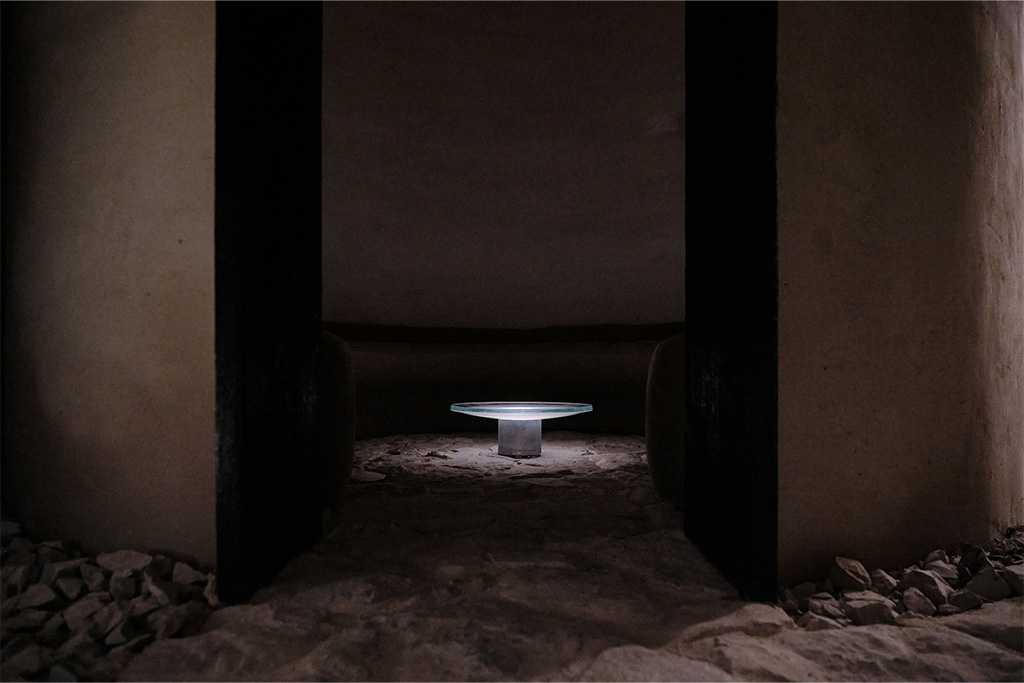
"Fire has long accompanied the rise of humanity. Today, more than ever, it has been replaced by another precious resource at the heart of many challenges: water." It is around this element that designer and architect Valentin Bayoud has built his world. "Through Aqua primitiva, I sought to create spatial experiences that put visitors in the right frame of mind to engage in dialogue and reflect on contemporary issues." Echoing gatherings around a fire, the designer imagined a circular form that invites everyone to position themselves at an equal distance from the resource. "I am interested in spatial archetypes—those forms and structures that transcend cultures and eras because they meet fundamental needs. It is not about reproducing the past, but about confronting it with the present." A temporal shift that results in timeless spaces. Rooted in a phenomenological approach, the project engages the senses and invites the public to take a reflective pause. It is an experience anchored in the context of Hyères and highlighted by traditional craftsmanship and natural materials such as charred wood, undyed linen, thermoformed and molded glass, recycled cast aluminum, and dry-laid stone from the Var.
The Manufactures Nationales - Mobilier National Prize: Carlotta Lagazzi & Yohann Hubert
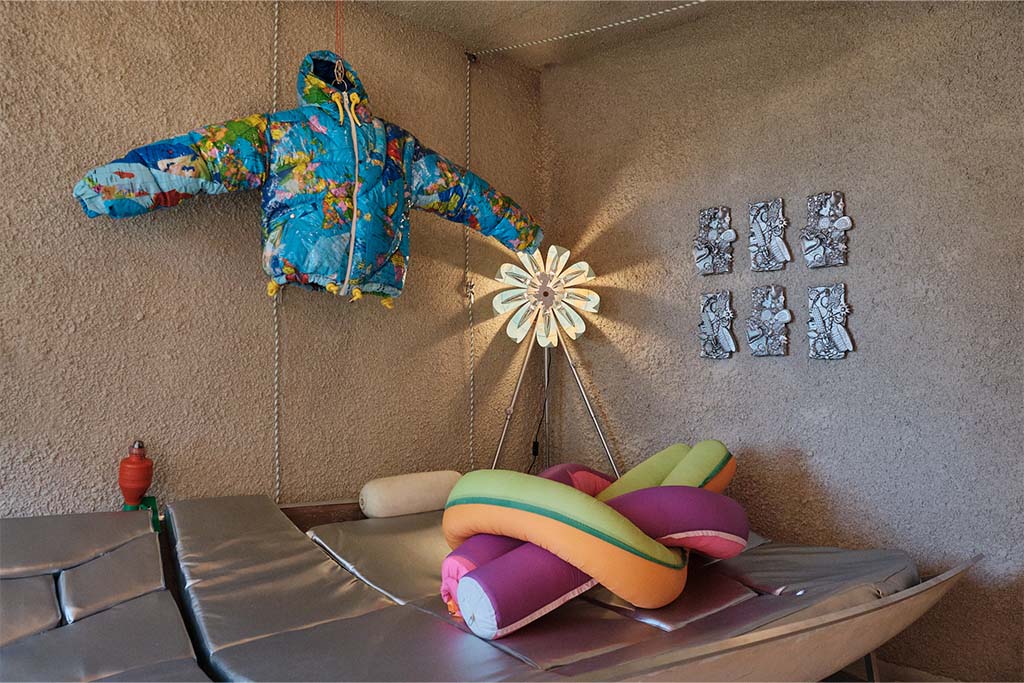
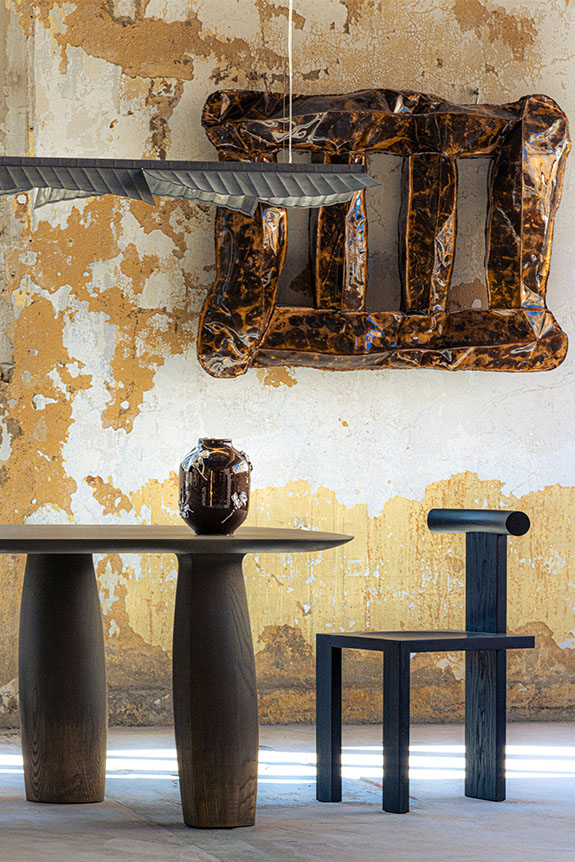
A lounge area on the Mallet-Stevens ocean liner. Conceived from the waste stream of recreational boating, the installation by Carlotta Lagazzi and Yohann Hubert is rooted in the idea of creating without generating new objects. "A conceptual as well as ecological gesture, challenging the linear logic of production and consumption." Based on upcycling, Overflowed reinterprets a number of materials that already carry a history. "We have long been drawn to Roland Barthes' idea that an object is much more than a simple functional entity; it is charged with memory, symbols, and cultural associations." Committed to the idea of creating new meanings, the duo views mediums "as constantly evolving rather than as fixed or immutable entities ." A philosophy and sense of value that generally results in a form of ambiguity. "We like that it is sometimes difficult to tell whether things are natural or artificial, animate or inanimate. " It is in this sense that the designers have cut up and dismantled the hulls and parts of abandoned boats to reassemble them into forms that are "softer, more organic, and curiously more familiar," evoking the imagination. A transformation through which a symbolic shift occurs, from maritime object to living room piece. On the reimagined daybed and beneath the ceiling light made of luminous scales, only the assembly techniques (knots, fittings, tension and restraint systems, textures, and technical textiles) serve as a bridge between two worlds.

.svg)


.svg)