Paris Design Week: The Intramuros Eye
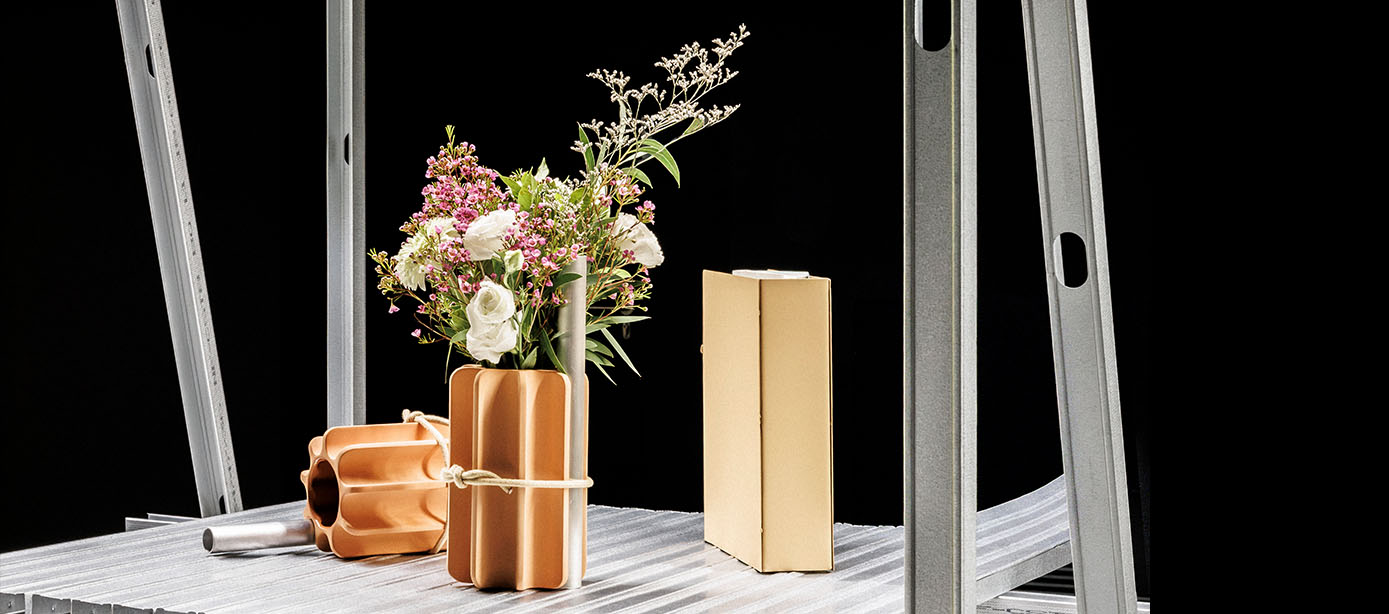
"Tout est Chaos" exhibition by Pli Office © Florent Michel

Paris Design Week: The Intramuros Eye

For this new edition of Paris Design Week, the Intramuros team slipped through the capital's arteries to discover the season's latest exhibitions and new releases. Here is a look back at the ones you shouldn't have missed.

‍

From September 10th to 19th, design once again took over the streets of Paris, much to our delight! Whether industrial or collectible, the creative sector made headlines again, both through new collections and new gatherings. It was an opportunity to rediscover certain profiles and meet new minds driven by innovative concepts. Among all the installations we discovered, here are the ones that particularly caught our attention.

Picnic by Cluzel / Pluchon: an invitation to lunch

Following Marianna Ladreyt last year, designers Cluzel / Pluchon took over the courtyard of the Hôtel d’Albret to present the Picnic installation, created in collaboration with manufacturer Guyon Mobilier Urbain. Conceived as an invitation to share and wander, Picnic was unveiled as a life-sized picnic table over seven meters long. Continuing the Gier duo's well-known collection, it combined locust wood slats with a powder-coated steel structure, drawing a generous curve to create a dialogue between urban furniture and conviviality.
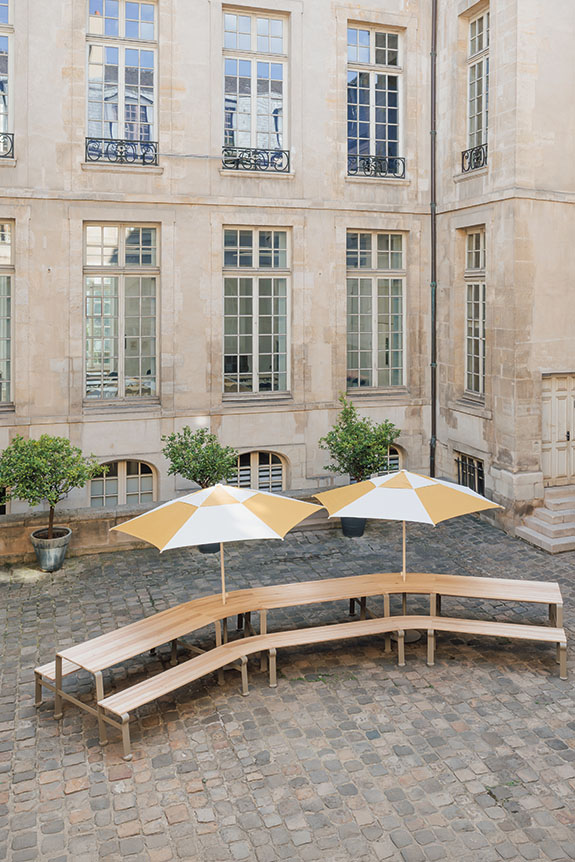
Picnic installation by Cluzel / Pluchon at the Hôtel D'Albret © Charlotte Bommelaer

‍GOOD SELECTION by Lucas Zito and Marika Caputo: new scenes

‍Organized by Lucas Zito and Marika Caputo, the second edition of GOOD SELECTION was held this year in the heart of the Fondation Fiminco in Romainville. Now disused, the former pharmaceutical factory—reminiscent of some of the most surprising Milanese venues chosen by Alcova—was taken over for the occasion by 47 international designers. Favoring dialogue between creations rather than formal classification, the exhibition offered various living spaces. A combination of styles and atmospheres provided visitors with a new, more embodied perspective on this so-called "collectible" design.
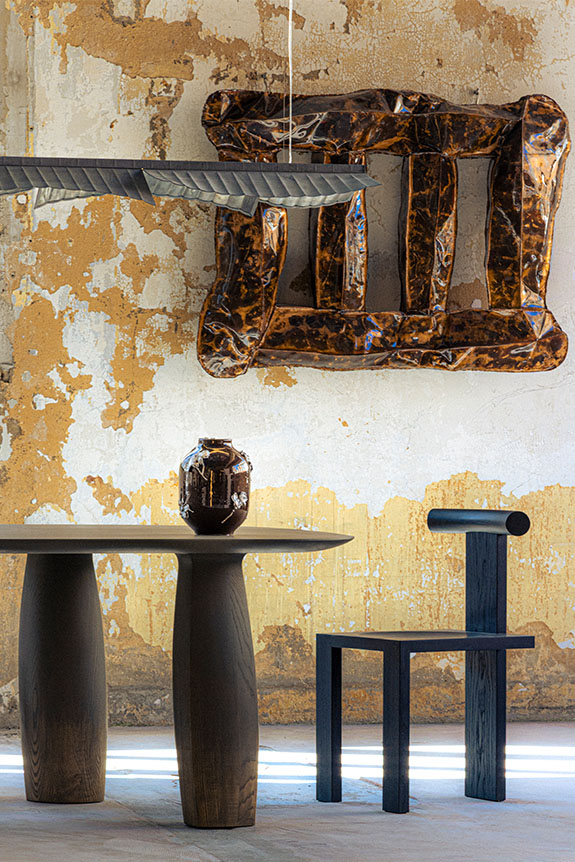
© Good Selection

Volt Face by Studio 5.5 and Schneider Electric: high-voltage collection

Studio 5.5 teamed up with Schneider Electric to imagine the Volt Face lighting and furniture collection, designed using the Odace range and presented at the Galerie Joseph on Rue des Minimes. Faithful to their taste for repurposing everyday objects, Vincent Baranger and Anthony Lebossé chose to make the socket and switch the main element of their creation, rather than an afterthought. Developed as wall lights, pendants, lamps, tables, and even nightstands, each piece plays with the repetition and assembly of the modules. Conceived as a true creative palette, the Odace range thus becomes a material to be composed, but also to be touched and operated, making these pieces playful and offering a fresh look at these familiar yet often undervalued objects.
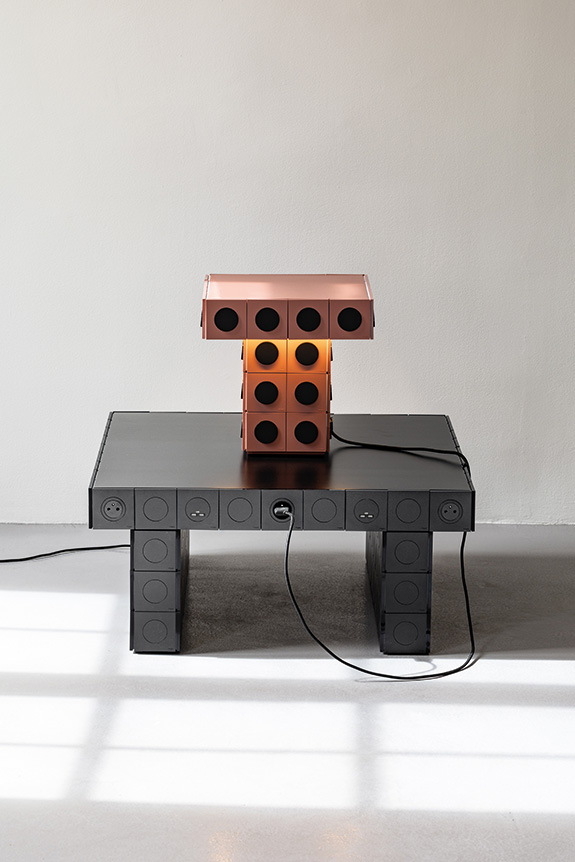
Volt Face collection, Studio 5.5 x Schneider Electric © Vincent Baranger

‍Tout est Chaos by PLI Office: ordering the desirable

‍After initiating "Pour que tu m’aimes encore" in 2024 and "Design Disco Club" the following year, Christopher Dessus returned this year with "Tout est chaos." Presented at the Gaîté Lyrique, the exhibition brought together a body of work that acts as a vector for surprise. A feeling conveyed by the material or the form, but also and above all by a freer consideration of usage. It is a counterpoint to modernist design, which is generally serial and fundamentally utilitarian, here abandoned in favor of narrative. It was an opportunity to see very personal research collide, such as the non-linear or even random work of the series, the reinterpretation of industrial archetypes reworked by hand, or new explorations blending industry and craftsmanship. Driven by a nearly free participation, the 66 selected designers delivered a specific idea of design, claimed by 10 of them through installations and even a projection imagined as a manifesto.
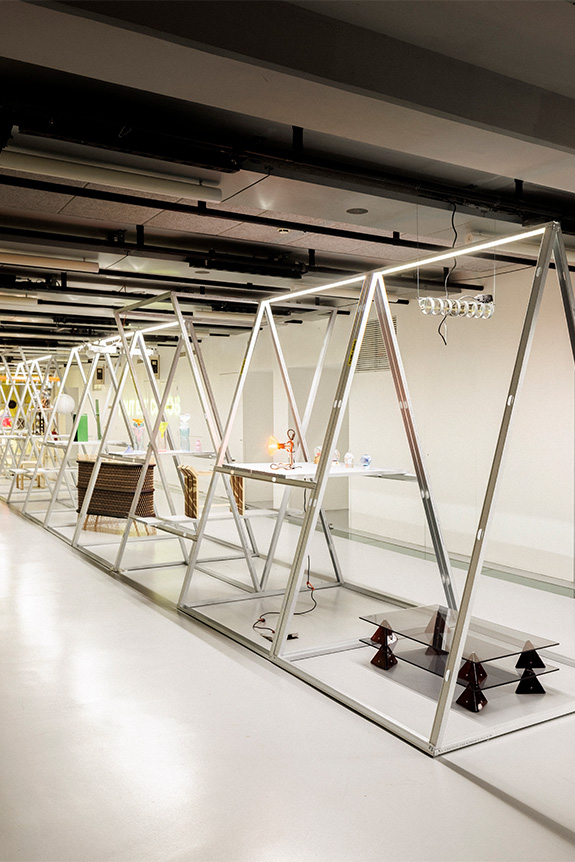
"Tout est Chaos" exhibition by Pli Office at the Gaîté Lyrique © Florent Michel

‍Victoria Wilmotte: Stainless Steel Collection

‍For this year's Paris Design Week, Victoria Wilmotte unveiled nearly a dozen pieces. Whether brand new or reimagined existing typologies, this collection continues to explore a world defined by geometry and a distinct industrial spirit. Crafted from stainless steel—sometimes featuring textures that evoke the technique of hammering—the various objects diffused light, along with the signature blue hue championed by the designer.
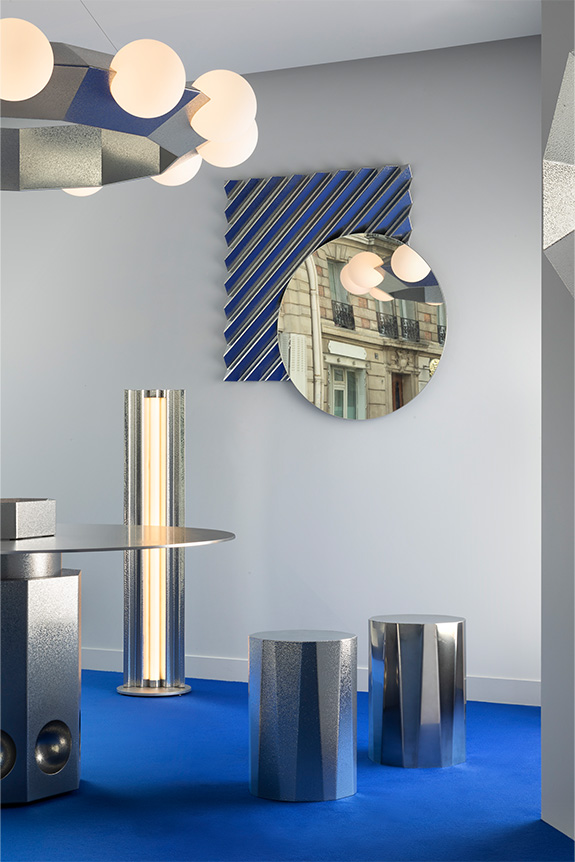
Blue Chrome Collection, Victoria Wilmotte © Jean-Pierre Vaillancourt

‍Opus by Studio CHHO: A New Trajectory

‍Launched a decade ago, the interior architecture firm Hoch unveiled Studio CHHO, the creative force behind Opus. This debut furniture collection, whose name suggests both a first chapter and a technical term for stone masonry, consists of five pieces. Developed over a year and a half, it highlights taut lines and 90° and 45° angles, delivering a bold aesthetic language with generous forms. Enhanced by a restrained palette of three materials—stained birch veneer, hammered glass, and vibrated stainless steel—the pieces were conceived as "objects of presence." This term, unique to the studio, reflects creations made in the south of France that embody the firm's sober yet characterful DNA.
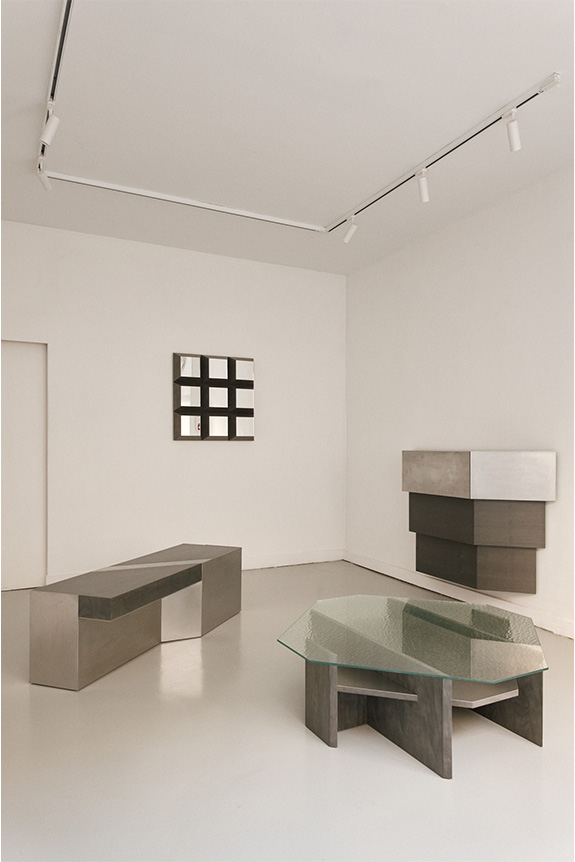
Opus Collection, Studio CHHO © Oracle Paris

‍"The Light Library" by Studio Meaningfull: Coloring Light

Continuing their research into color, which began with the Agora du Design grant they won in 2021, Studio Meaningfull—comprising Marine Rouit-Leduc, Galilée Al Rifaï, and Nicolas Rouit-Leduc—presented "The Light Library" at Galerie Ideal Place. The exhibition showcased nearly four years of experimentation with the color of light, conceived not as a material, but as a means of interaction. Each shade was developed with reference to natural phenomena, such as the aurora borealis, dawn, and twilight, to achieve a realistic and natural effect. The trio displayed several light-based objects and sculptures, including the Milan lamp, which recently joined the Mobilier National collections. The exhibition was designed to engage the senses and emotions while establishing new chromatic references for light, through an approach that is both sculptural and architectural.
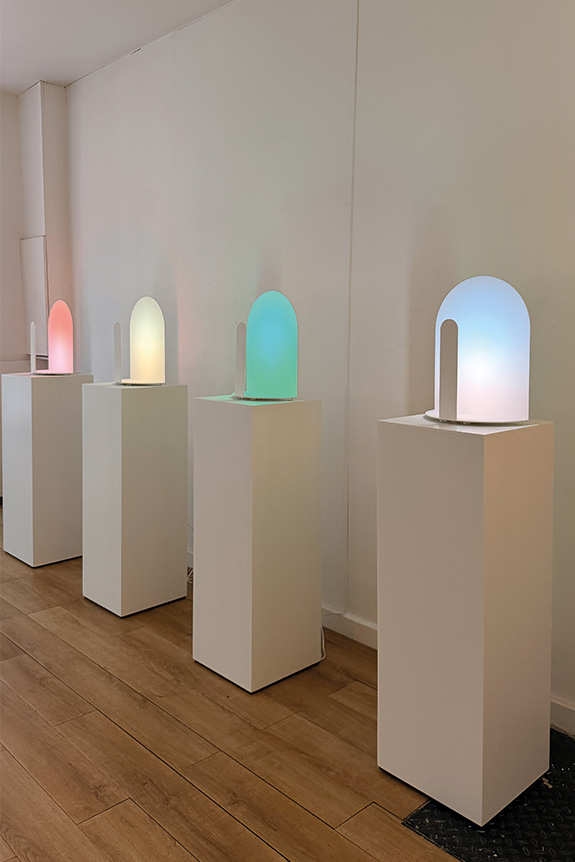
"The Light Library" exhibition, Studio Meaningfull
Rédigé par 
Maïa Pois et Tom Dufreix

Vous aimerez aussi

Temps de lecture
13/10/2026
Orange et Bang & Olufsen réinventent le home cinéma

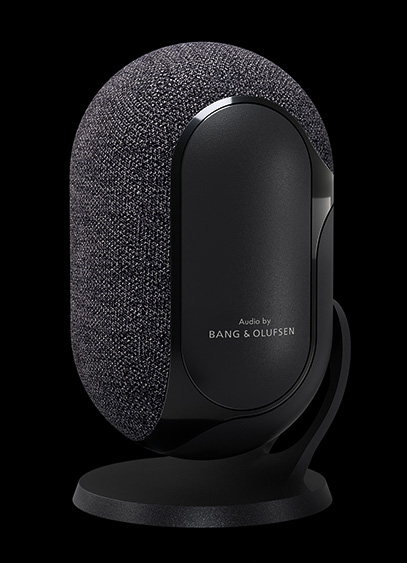
Avec son nouveau Décodeur Home Cinema, Orange entend repenser l’expérience audiovisuelle à domicile. Un équipement compact, développé avec Bang & Olufsen, qui associe qualité sonore, technologies immersives et simplicité d’utilisation.

Transformer son salon en salle de cinéma, sans multiplier les équipements, c’est toute l’ambition d’Orange avec son nouveau Décodeur Home Cinema. Développé avec l’expertise acoustique de Bang & Olufsen et le savoir-faire industriel de Sagemcom, ce nouvel appareil tout-en-un intègre quatre haut-parleurs : un woofer pour les basses, deux haut-parleurs latéraux pour spatialiser le son et une voie centrale dédiée aux dialogues. Une configuration qui permet de profiter d’une expérience sonore immersive, renforcée par la technologie Dolby Atmos, sans nécessiter d’installation supplémentaire. Côté image, le décodeur prend également en charge la 4K, le HDR10+ et le Dolby Vision, avec les équipements et contenus compatibles.

Un équipement compact pensé pour tous les intérieurs

Au-delà de ses performances techniques, Orange a souhaité concevoir un appareil facile à intégrer dans tous les espaces de vie. Son format compact lui permet de trouver sa place devant un téléviseur, tandis que son installation ne nécessite qu’un seul câble HDMI et une connexion wifi. Pour renforcer l’immersion, deux enceintes sans fil peuvent être ajoutées en option. Elles se calibrent automatiquement selon la configuration de la pièce, sans contrainte particulière de placement. Également pensé dans une démarche d’écoconception, le décodeur et ses enceintes sont fabriqués à partir de plastiques et de tissus 100 % recyclés et recyclables.

Temps de lecture
12/10/2026
Areo, la polyvalence selon Alessandro Stabile

Le designer italien Alessandro Stabile dévoile, Areo en collaboration avec Kristalia. Une collection d'assises en métal pensée pour s'adapter aussi bien aux espaces intérieurs qu'extérieurs.

‍

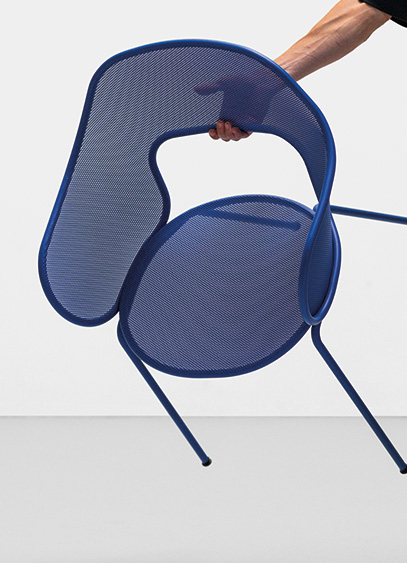
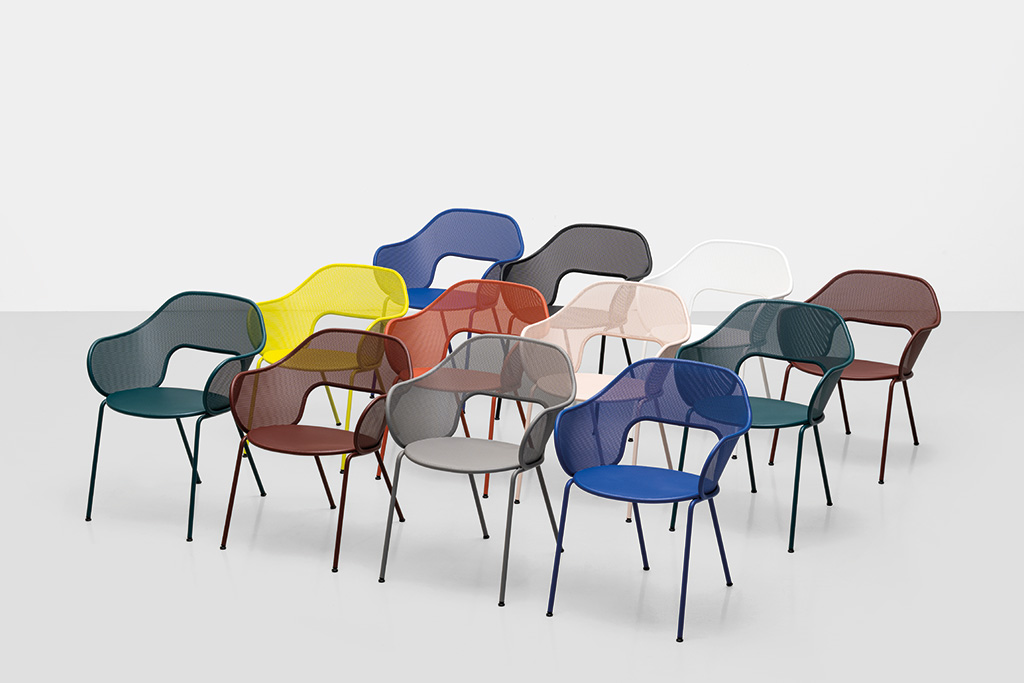
Pour sa première collaboration avec l’éditeur italien Kristalia, Alessandro Stabile a imaginé Areo, une collection de sièges dont la conception repose sur l'utilisation de la tôle perforée. Un choix technique et esthétique qui dévoile des assises aux lignes fluides et élégantes, où le métal semble épouser les formes à la manière d'un tissu. Constituée d'une structure en tubes d'acier et d'une enveloppe en tôle perforée, la collection se décline en plusieurs versions, avec ou sans accoudoirs, toutes empilables grâce à un travail minutieux sur la forme des dossiers et la disposition des pieds.

© Matteo Girola

Une collection, plusieurs usages

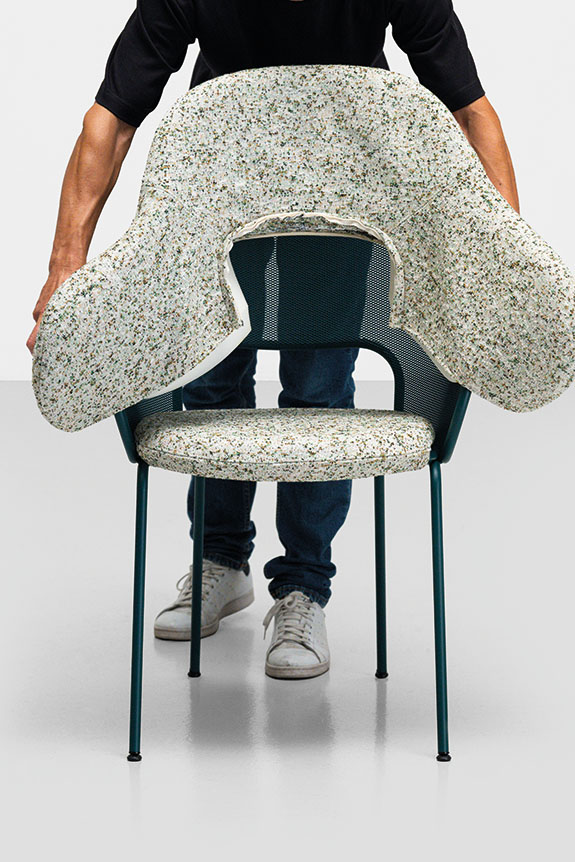
Au-delà de son esthétique, Areo se distingue par une conception pensée pour simplifier les processus de fabrication. Les courbures bi-dimensionnelles de la tôle permettent notamment de supprimer l'étape d'emboutissage, réduisant ainsi les investissements, le temps et l'énergie nécessaires à la production. Autre particularité : sa capacité à passer de l'extérieur à l'intérieur grâce à un système de housses rembourrées, qui peuvent recouvrir partiellement ou entièrement la structure métallique. Une modularité pensée dès les premières étapes du projet, permettant à chaque version de conserver son identité propre. À travers la collection Areo, Alessandro Stabile propose ainsi une collection polyvalente, où recherche technique, confort et esthétique se répondent.

© Matteo Girola
Temps de lecture
6/10/2026
La Résidence, une semaine dédiée à l’éco-conception

Éco Impact lance la Résidence, une semaine intensive d'éco-conception mobilier réservée à 12 designers, au Domaine des Escaunes (Gard), du 4 au 11 avril 2027. Un programme 100% financé pour les artistes-auteurs (AFDAS) et les dirigeants de TPE/PME (subvention ADEME).

‍

Au programme : une immersion complète dans les outils d'analyse de cycle de vie et d'éco-conception, avec des experts pointus — Christophe Lemaire (Consiliom, pitch et argumentaire projet), David Legouix (FCBA, matériaux et innovation), Grégoire Gérard et Camille Cousté (Eco Impact) — et un grand témoin d'exception : Anthony Lebossé, cofondateur de Studio 5.5, lors d'un dîner-conférence.

À l'issue de la résidence, les participants présenteront leur projet devant un jury de professionnels reconnus : Carine Faure (Petite Friture), Alice Viault (Groupe Roset), Marie Carcassonne (Dynamo) et Martin Hallegouët (Bluedigo).

Temps de lecture
6/10/2026
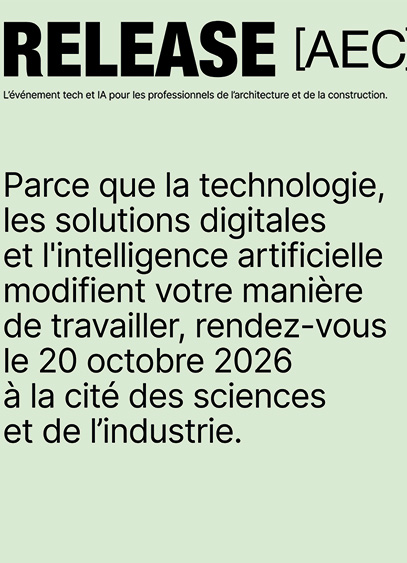
RELEASE [AEC] change de dimension pour sa 2e édition

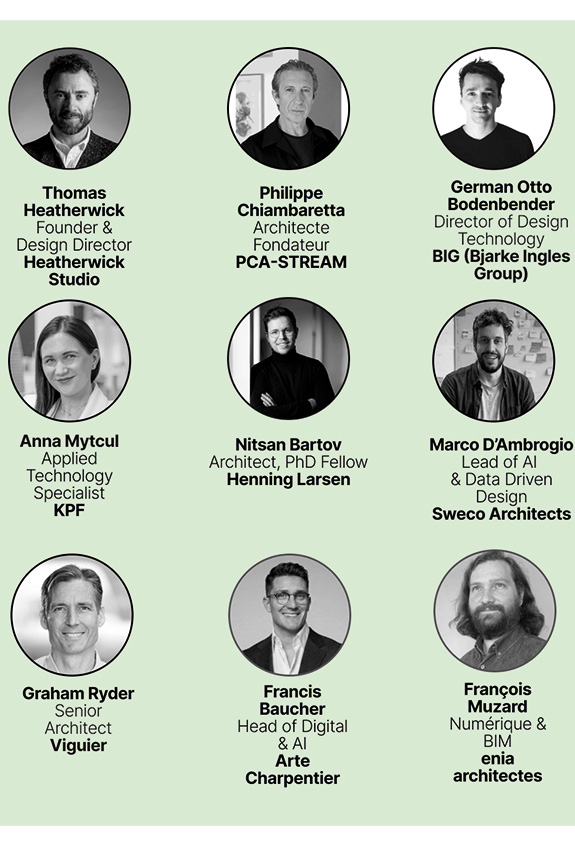
Pour sa 2e édition organisée le 20 octobre prochain, RELEASE [AEC] change de dimension : 25 agences d'architecture internationales viennent partager leurs retours d'expérience concrets sur l'IA et les nouvelles technologies et plus de 40 éditeurs de solutions dédiées.

Le rendez-vous est donné le 20 octobre à la Cité des Sciences et de l'Industrie à Paris. Parmi les intervenants de cette 2e édition figurent notamment Anna Mytcul (KPF), Nitsan Bartov (Henning Larsen), Marco D'Ambrogio (Sweco Architects), Ami Nigam (Benoy), German Otto Bodenbender (BIG – Bjarke Ingels Group), Francis Baucher (Arte Charpentier), Philippe Chiambaretta et Adrien Pointeau (PCA-STREAM), François Muzard (enia architectes), Graham Ryder et Farouk Taoulilit (Viguier), Carlos Bañón (FORMAS.AI), George Guida (xFigura), Ismail Seleit (Gendo), Délhio Gaudé (Arquiz), Jean-Baptiste Nicolas (Unibail Rodamco Westfield), Amir Hossein Noori (Narva), Axel Wohlin (Arkyv) et Jens Majdal Kaarsholm (Motif), ainsi que Heatherwick St

Fidèle à son parti pris depuis la première édition, RELEASE [AEC] privilégie toujours les démonstrations concrètes, loin des simples présentations : chacun repart avec une vision claire de ce que ces solutions permettent de faire, dès aujourd'hui.

Les technologies, les solutions digitales et, bien entendu, l'intelligence artificielle transforment en profondeur la manière de travailler des professionnels de l'architecture et de la construction. C'est précisément ce mouvement que RELEASE [AEC] entend accompagner, en donnant à voir très concrètement ce qui est déjà à l'œuvre dans les agences les plus en pointe.

Pour plus d'informations et s'inscrire c'est ici : https://www.release-aec.com/fr/participer#register

Inscrivez-vous à notre newsletter pour recevoir chaque semaine l’actualité du design.