


Festival des Cabanes: refuge architecture
Behind the walls of the Villa Medici, the historic gardens of the French Academy in Rome have, every summer since 2022, become the stage for a unique experience: architecture that no longer seeks to dominate the landscape, but to engage in a dialogue with it. For its fifth edition, the Festival des Cabanes reaffirms this ambition more than ever.
Conceived by Sam Stourdzé, director of the French Academy in Rome – Villa Medici, the festival was born from a paradox. How can one intervene in the heart of one of Italy’s most sensitive heritage sites (protected, archaeological, and virtually unbuildable) without further freezing the site in time? How can architecture be introduced into the gardens without turning them into an exhibition backdrop? The answer takes the form of an almost childlike word: the cabin.
"The cabin is a way of thinking," explains Sam Stourdzé. "You can think in a cabin, live in a cabin; it shifts the perspective and re-examines the fundamentals." Behind this apparent simplicity lies an extremely contemporary reflection on architecture: architecture that is light, reversible, and non-invasive, designed not against its environment, but with it.
Here, constraints become a theoretical manifesto: it is impossible to dig more than thirty centimeters into this archaeological subsoil, and equally impossible to make these constructions permanent. The invited teams have a few months to build, use, and then dismantle their projects. This short, almost fragile temporality radically reverses the logic inherited from the 20th century. Monumentality is replaced by attentiveness, and authoritarian gestures by a form of listening to the living world.
IT: On the lightness of being and building
This year, six international proposals are taking over the Renaissance gardens. Some are experimental manifestos, while others take a more sensory or climatic approach. However, they all explore the same idea: a habitat capable of harmonizing with its environment.
Perhaps the most spectacular project is Il Duomo Invertito by the Belgian studio Bento Architecture. Suspended between sky and vegetation, this wireframe dome made of wood and mycelium subverts the Roman monumental archetype, transforming it into an almost immaterial structure. Its thousands of organic elements—destined to be simply crushed and returned to dust once the festival ends—form a literally biodegradable architecture.
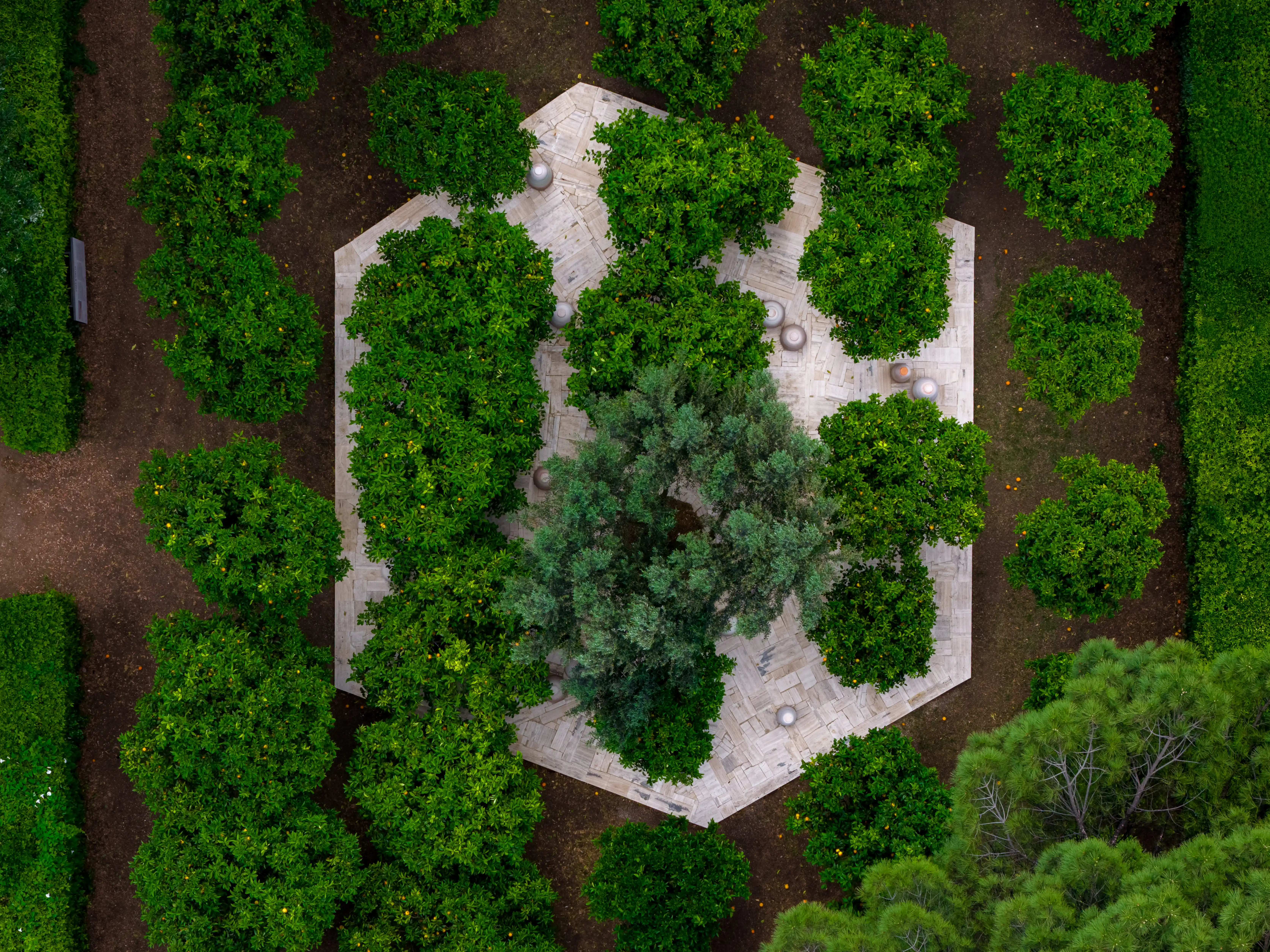
A few meters away, Aquifère, designed by the studios PRÌA and VELIA, explores other forms of sobriety. Travertine and terracotta jars create a passive cooling system based on natural evaporation. More than just an installation, the project acts as a micro-climatic infrastructure, an attempt to reintroduce ancestral knowledge into the overheated cities of the present.

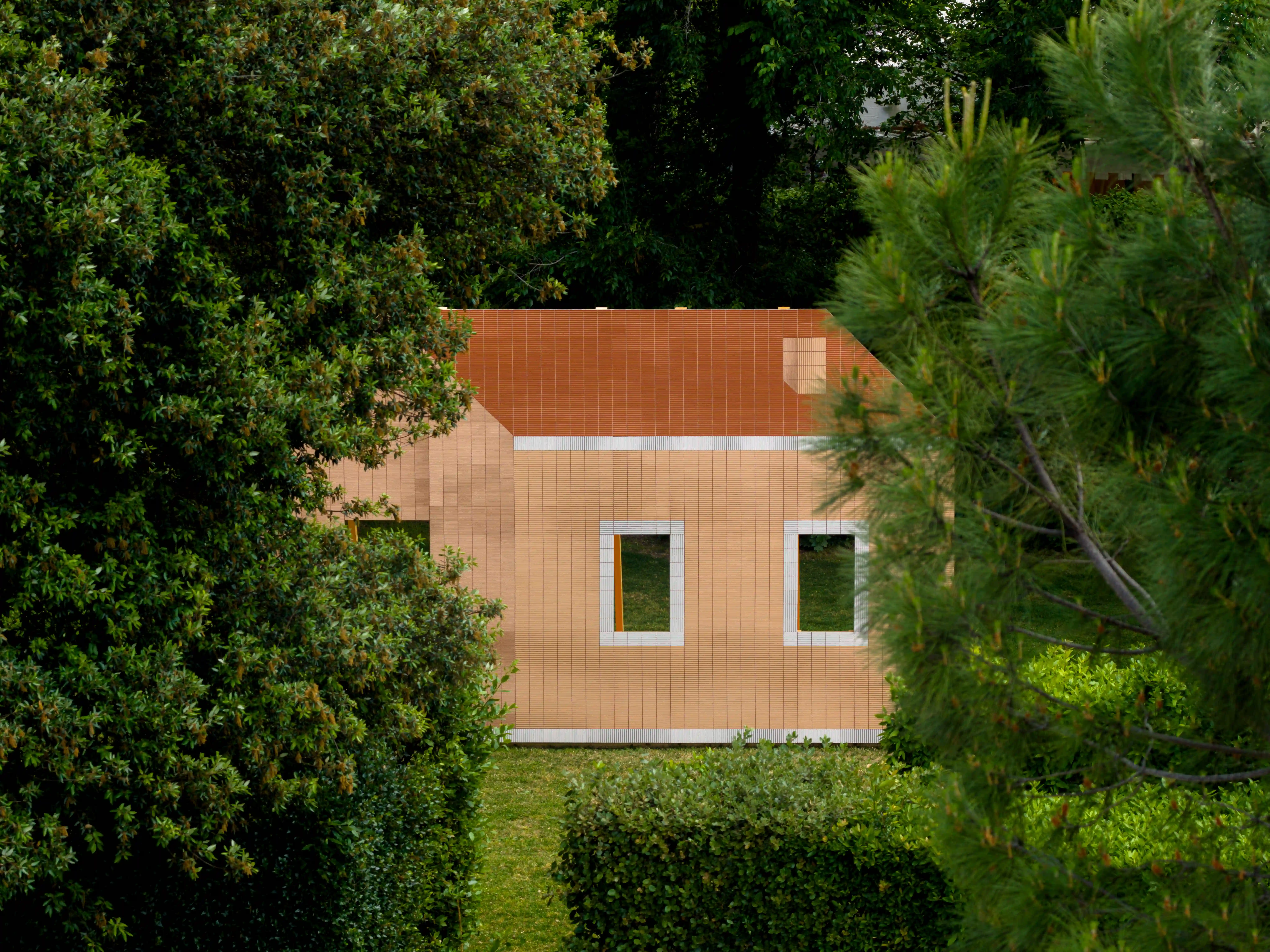
More conceptual, the proposal developed by ECAL with Mutina, under the guidance of Ronan Bouroullec, plays with trompe-l’œil and perception. A simple facade becomes architecture, with surface turning into depth. Here again, the festival rejects rigid categories: some cabins are refuges, others are theoretical devices, and still others are spaces for contemplation.
This is undoubtedly what profoundly distinguishes the Festival des Cabanes from a classic architecture exhibition. Here, the projects do not seek to demonstrate formal or technological power. On the contrary, they embrace a form of incompleteness and open-ended research. "We are not in a commercial logic, but in a cultural one," reminds Sam Stourdzé. The time spent experimenting thus becomes as important as the built object itself.
This philosophy also transforms the public's relationship with the Villa Medici. Long accessible only via guided tours, the gardens are now freely open throughout the festival thanks to a subtle scenographic design by Studio Marc Aurel, which we featured in an article in Intramuros 224. In five years, the institution has nearly doubled its attendance, reaching nearly 150,000 annual visitors. More than just an architectural event, the festival has become a tool for reclaiming the space, both by Romans and by the international public.
This 2026 edition finally confirms the project's gradual expansion into a broader cultural platform. Surrounding the cabins are now a pop-up bookstore designed with Librairie 7L, as well as conferences, workshops, readings, performances, and concerts gathered under the Habiter Demainprogram.
On June 25, the Nuit des Cabanes will transform the gardens into a living landscape where architects, artists, writers, and musicians will activate the installations well into the night.
As climate crises call into question the construction models inherited from the last century, the Festival des Cabanes appears less like a summer interlude and more like a full-scale laboratory. It serves as a reminder that inhabiting the world may no longer be about building ever more, but about learning, once again, how to occupy it with lightness.
https://villamedici.it/programme/festival-des-cabanes




.svg)


.svg)