


News
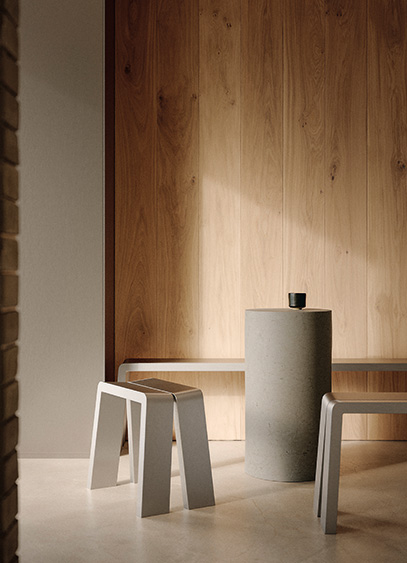
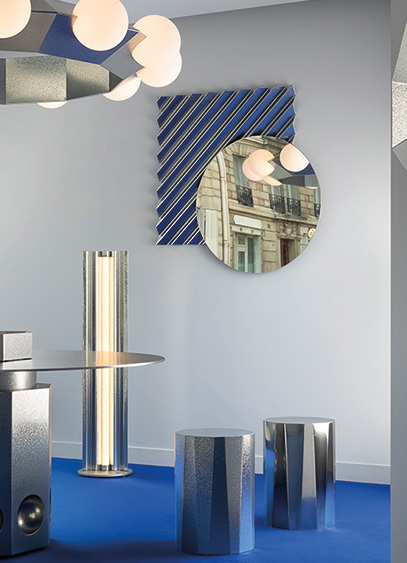
Specializing in the design and manufacture of stainless steel products for over 30 years, the Basque brand Didheya is opening a new chapter in its history with Urban Furniture. This new line of furniture, developed in collaboration with Iratzoki Studio, consists of five collections designed for both public and private spaces.
Founded in 1994 in Irun, in the Spanish Basque Country, Didheya has built its expertise around working with stainless steel. Initially specializing in hardware and architectural accessories, the brand gradually diversified into the transport sector, notably developing equipment for trains, subways, and buses. Today, it aims to apply this industrial expertise to furniture through Urban Furniture, a line conceived in collaboration with Iratzoki Studio that marks a new stage in its development.
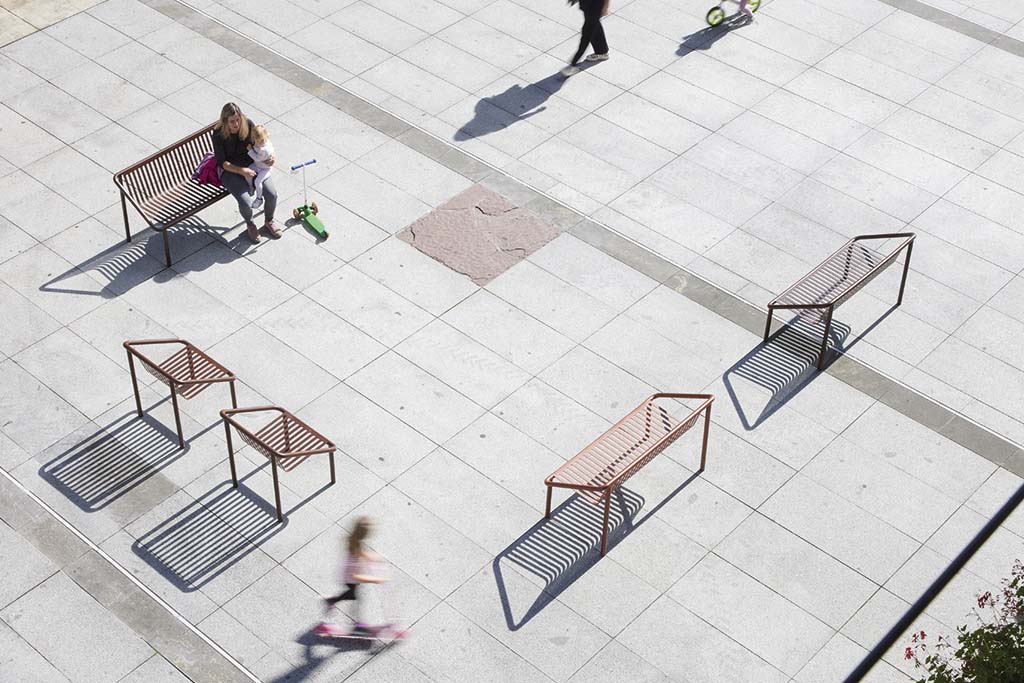
Five collections at the crossroads of design and industry
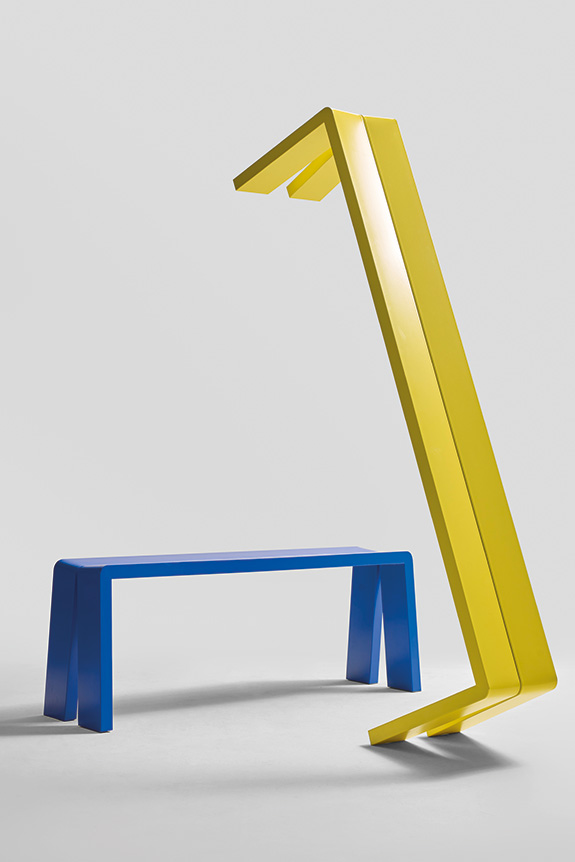
The result of a long-standing relationship between Didheya and Basque designer Jean-Louis Iratzoki, this collaboration is unveiled through five collections titled Hanka, Hodi, Aroa, Ingude, and Luze. Beyond the design of the pieces, the project is based on a shared reflection on materials, manufacturing processes, and usage, with the aim of offering furniture that is functional, durable, and capable of integrating into various environments.
Stainless steel, Didheya's material of choice, serves as the common thread throughout the collections, sometimes combined with solid wood, concrete, or stone. "Our work focused on stainless steel, with an opening toward outdoor furniture intended for both public and private spaces. We sought to design durable, resistant, easy-to-maintain, and environmentally friendly products,"explains the designer.
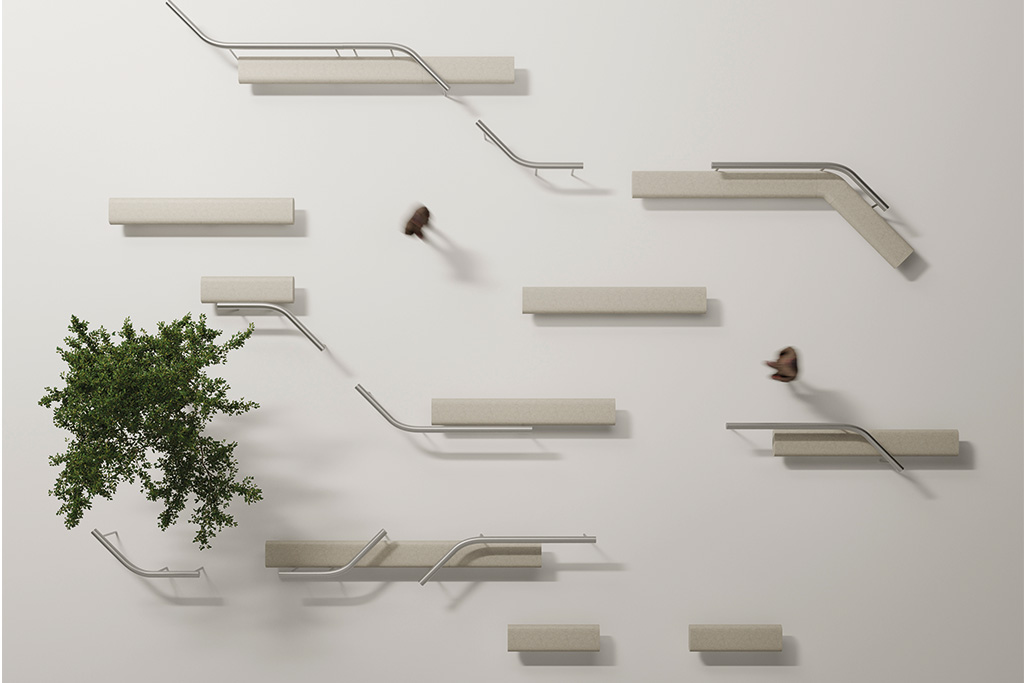
Initially conceived for outdoor use, these collections stand out for their versatility and the diversity of their finishes, allowing them to also find their place in interior spaces. From urban squares to university campuses and hotel common areas, they demonstrate a desire to go beyond the mere function of furniture to make it an integral part of the architecture of a space.
Captions: left, Ingude collection, design: Iratzoki Studio © Didheya / right: Hodi collection, design: Iratzoki Studio © Didheya
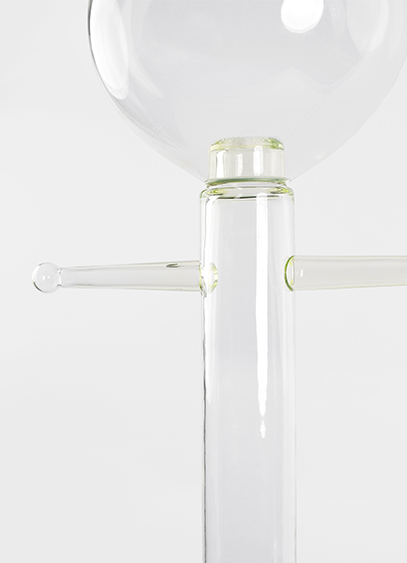
Through December 23, the London-based collective JAM is presenting Lampposts at Galerie kreo. The exhibition features a collection of glass street lamps created in collaboration with the Cirva in Marseille.
The result of a two-year collaboration between the London-based collective JAM and the Cirva in Marseille, Lampposts is now on display at Galerie kreo. Comprising five street lamps, the collection defies gravity. Distant cousins of their urban archetypes, these totemic compositions push the structural limits of glass, whether molded or blown. Standing between 2.2 and 3.5 meters tall, these colorful giants invite visitors to contemplate them in the dim light of 31 rue Dauphine in Paris. It is a striking assembly, on view until December 23, which we discussed with its creators: Joe Halligan, Dan Waterstone, and Adam Willis.
Can you tell us about your two years spent at Cirva and the research that led to the "Lampposts" project?
To be honest, we arrived at Cirva with a fairly open brief. As architects, we are interested in how things are made, how materials behave, and how we can push familiar processes into unknown territory. Cirva is an extraordinary place to explore these questions because it is designed for experimentation rather than the simple production of a predetermined object. So, the beginning was exploratory. We started by discovering the different qualities of glass and the processes available to us. There was blowing, molding, cutting, as well as assembly and material reuse. Several different projects emerged from this research—some more successful than others—but the street lamps gradually became the most ambitious project. What was particularly exciting was the relationship with the glassblowers. We developed a process of creating plaster molds that the glassblowers used to produce the individual glass cylinders that make up the lamps. It was a very direct collaboration between us and the artisans at Cirva. That is also what allowed the design to evolve throughout the manufacturing process, through trials and adjustments.
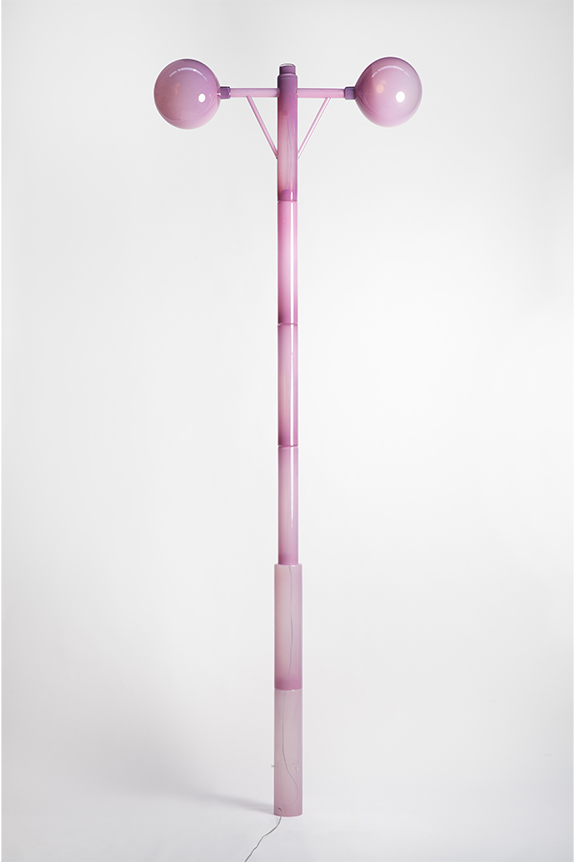
At what point did this very "linear" drawing style become the main characteristic of your colorful structures?
Street lamps often have a very simple graphic aesthetic: a pole, an arm, and a globe. For our part, we liked the idea of reducing these familiar objects to their most basic lines. Glass offered an interesting way to achieve this, as it has a physical presence while also being able to almost disappear. The transparent tubes thus outline the object without giving it the solidity one would normally expect. As for the color, that was another discovery. Where the glass overlaps, where its thickness increases, the color becomes more intense. So, what seems quite simple from a distance becomes much richer and more complex as you move around it. Furthermore, there is a tension between the precision of the overall design and the irregularity of the handmade glass. And we really appreciate that relationship.
The notion of scale and the "improbable" nature of creating such tall lighting fixtures were at the heart of your approach. Why is that?
We wanted to create something at a scale that didn't seem entirely reasonable for this material. Glass is generally associated with relatively small and delicate objects, whereas a street lamp is a piece of robust urban infrastructure. Bringing these two elements together results in a slightly absurd proposition. Scale also changes how one perceives an object. A classic table lamp fits into a room like a piece of furniture, but at two or three meters high, these street lamps take on an architectural dimension. They occupy space differently and become almost like characters with whom you share the room. There was also something exciting about attempting a project that we weren't entirely sure we could pull off. The technical difficulties became an integral part of the research, rather than just problems to be eliminated. Working at this scale pushed us, as well as the Cirva team, to develop new methods for manufacturing and assembling the pieces.
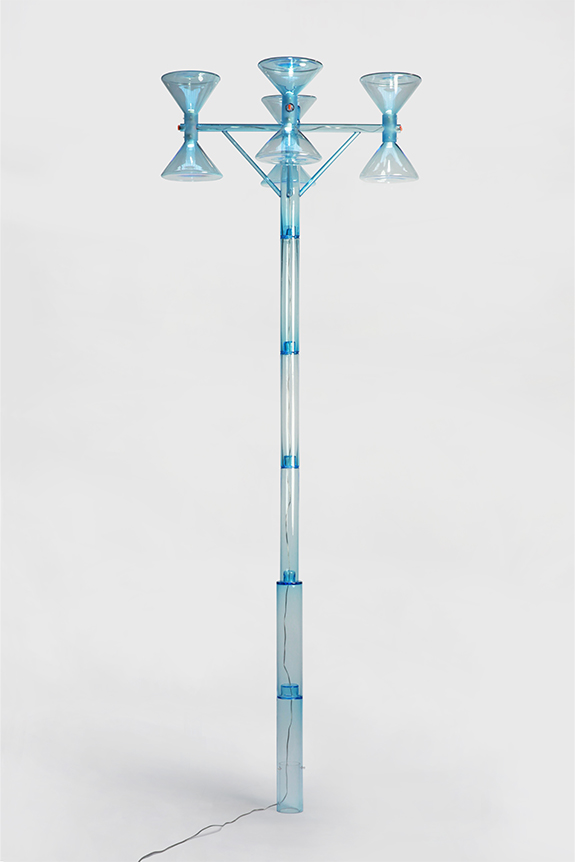
You speak of an "element of urban infrastructure." What is your relationship with the city and the elements that compose it?
We are interested in the ordinary elements that give a city its unique character and atmosphere. Street lamps, railings, bollards, benches, and other pieces of street furniture are often overlooked, but taken together, they contribute enormously to our perception of a place. This is particularly evident in cinema, where an element as simple as a street lamp can immediately define the location, the era, or the mood of a scene. Think of the iconic street lamps of Paris or New York. These objects are an integral part of our collective image of a city, almost as if they were characters in their own right.
You say you work with your glass street lamps "because it is the wrong material." What do you mean by that?
A street lamp is supposed to be solid, durable, economical, and resistant to the elements and everything else that might happen to it in a city. Glass is almost the exact opposite. It is fragile, difficult to work with, and in this specific case, its manufacture requires a considerable amount of labor. This contradiction was really the starting point. We liked the idea of taking something associated with solidity and permanence and reinventing it in a material that seems delicate and vulnerable. There is something interesting about using a material against its usual logic. It forces you to rethink the object, but also to explore qualities of the material that might otherwise go unnoticed.
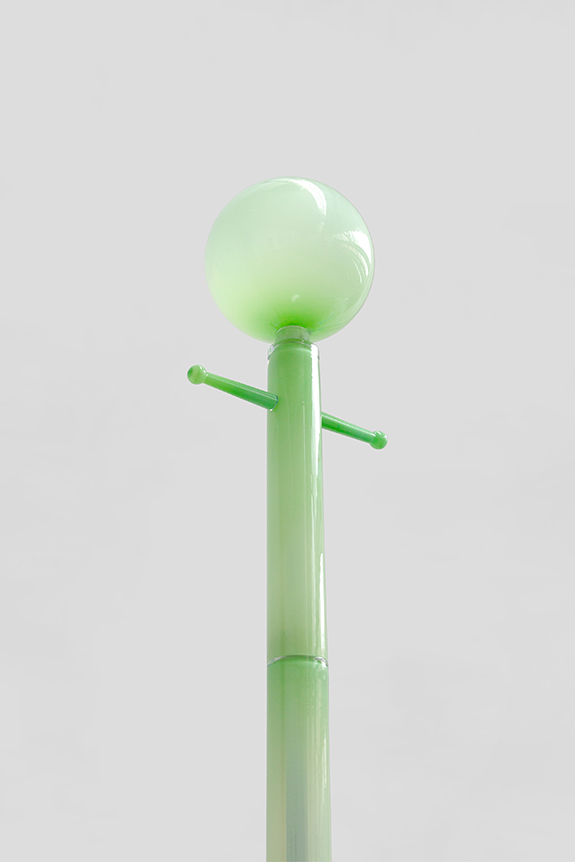
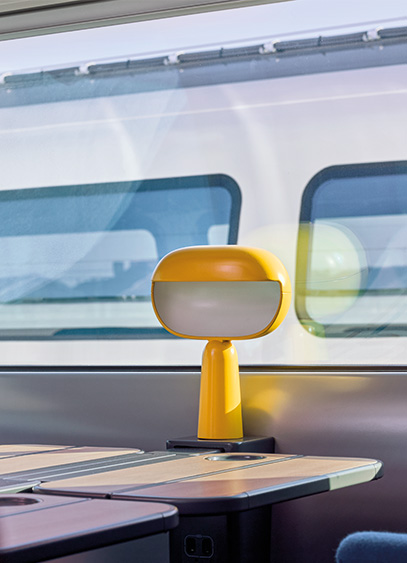
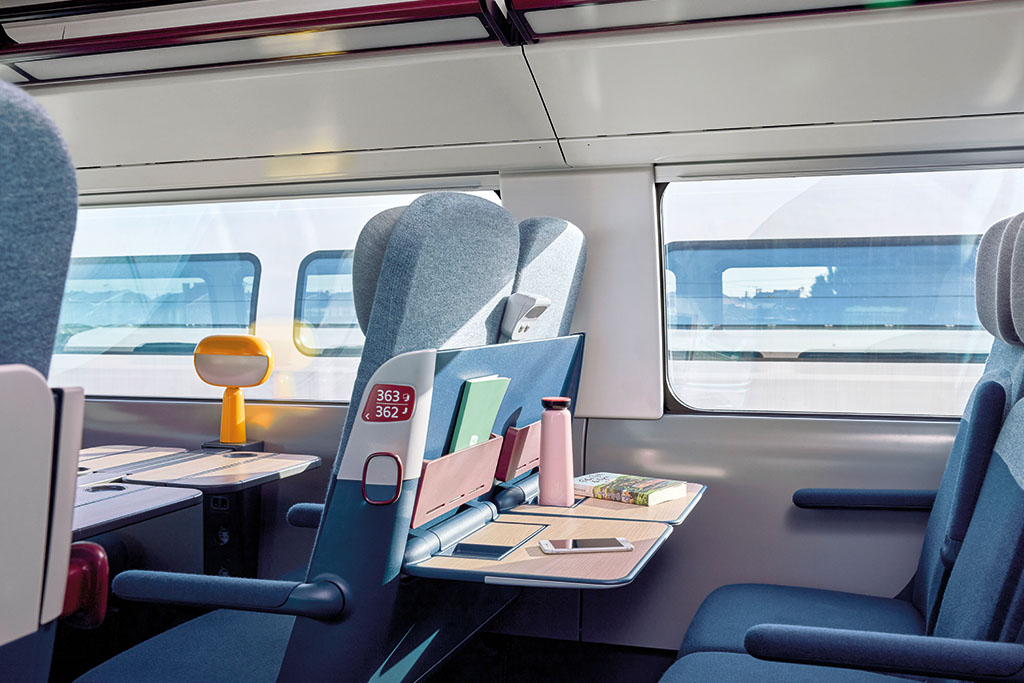
Unveiled on November 6, SNCF’s next-generation TGV features interior designs reimagined by the agency AREP and the Japanese studio Nendo. From furniture and lighting to the layout of the spaces, this new version aims to evolve the train travel experience.
After several years of development, the next-generation TGV, formerly known as TGV M, has just been unveiled. To design its new interior, SNCF Voyageurs partnered with AREP, an agency specializing in mobility projects, and the Japanese studio Nendo, founded by Oki Sato. Together, they worked on a new interior identity with the goal of offering spaces that are more comfortable and better suited to passengers' needs.
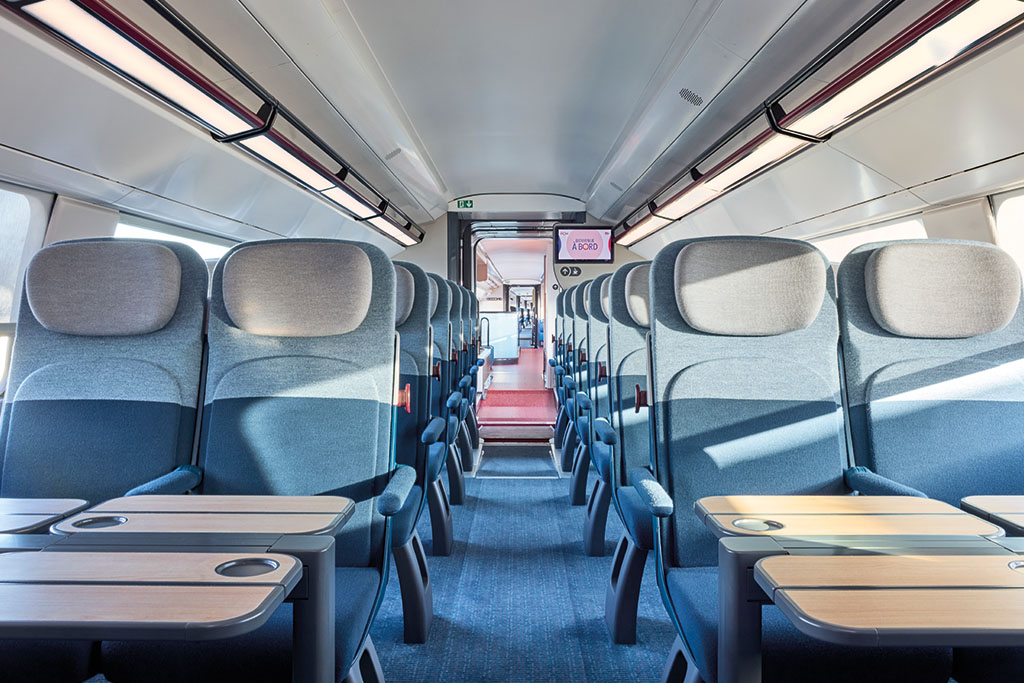
Spaces reimagined around user needs
From furniture and circulation areas to materials, colors, and lighting, the entire train interior has been overhauled to create a warmer atmosphere while accounting for the constraints of rail travel. The new seats have been redesigned in terms of both shape and materials. Upholstered in a 3D-knitted fabric, they feature a structure designed to better support the back. In first class, the seats have been widened and include tables inspired by secretary desks, while in second class, the thinner backrests provide more legroom. Common areas have also evolved, with the addition of benches and relaxation zones, while the windows have been enlarged to bring more natural light into the carriages.
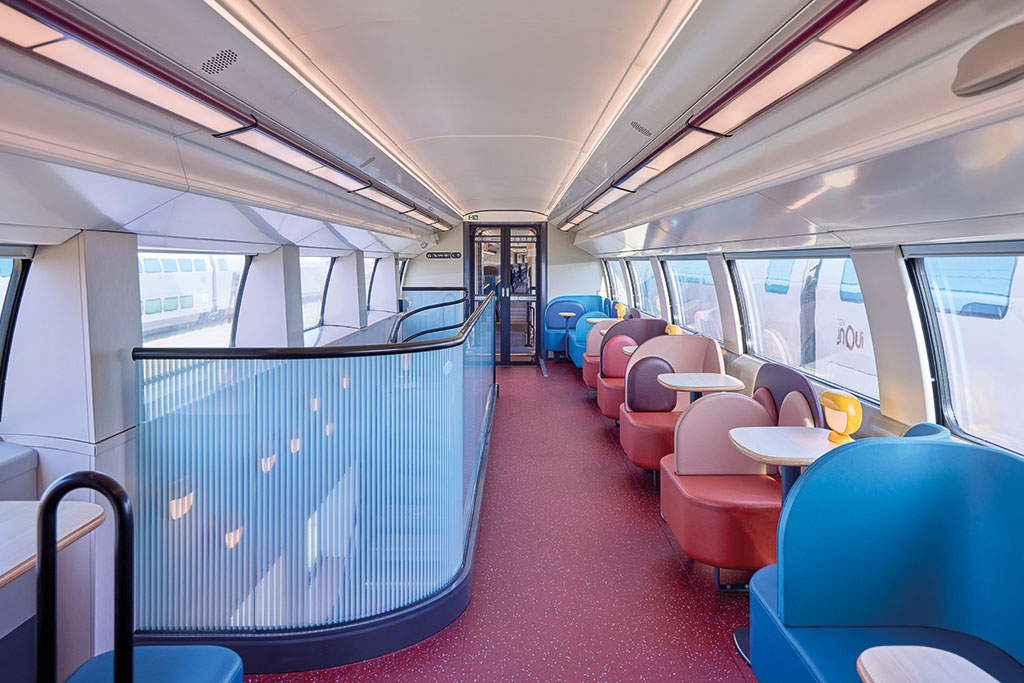
Light at the heart of the project
Among the other major innovations is a table lamp designed by AREP and Nendo, which revisits an object that has been present since the first generations of TGV. Recognizable by its rounded shape and yellow color, it was developed with the manufacturer Brossier Saderne, which also offers it to the public in its catalog in three colors: yellow, red, and blue. The general lighting has also been rethought, with an LED system that automatically adapts to the different stages of the journey. Brighter in the station, it dims by half during the trip to create a more subdued ambiance. This attention to light is part of the overall approach for this new version of the TGV, where every element contributes to the train's interior design.
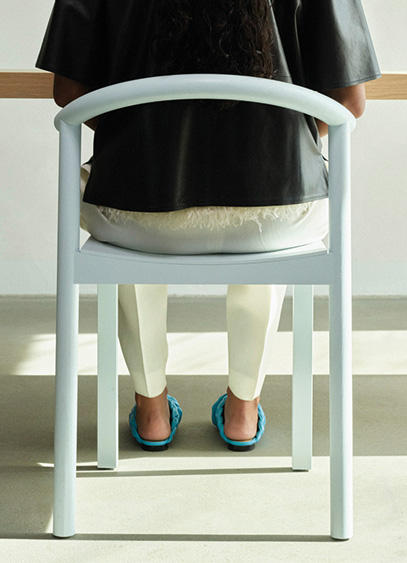
Founded by Ruben Hutschemaekers and designer Sebastian Schönheit, the German furniture brand ARWENN launched in September with an initial collection of over 40 products, ranging from furniture and lighting to accessories and small objects. The brand aims to make design accessible in every sense.
After several weeks of social media teasers, the Berlin-based furniture brand ARWENN finally debuted in early September with an initial collection featuring a wide variety of product types, some of which were created in collaboration with international designers. These include Maria Jeglińska-Adamczewska, Studio Œ, Jörg Schellmann, and Unknown, Untitled. ARWENN aims to offer simple yet thoughtful design without neglecting the customer experience, which is central to its approach. Founders Ruben Hutschemaekers and Sebastian Schönheit share their vision.
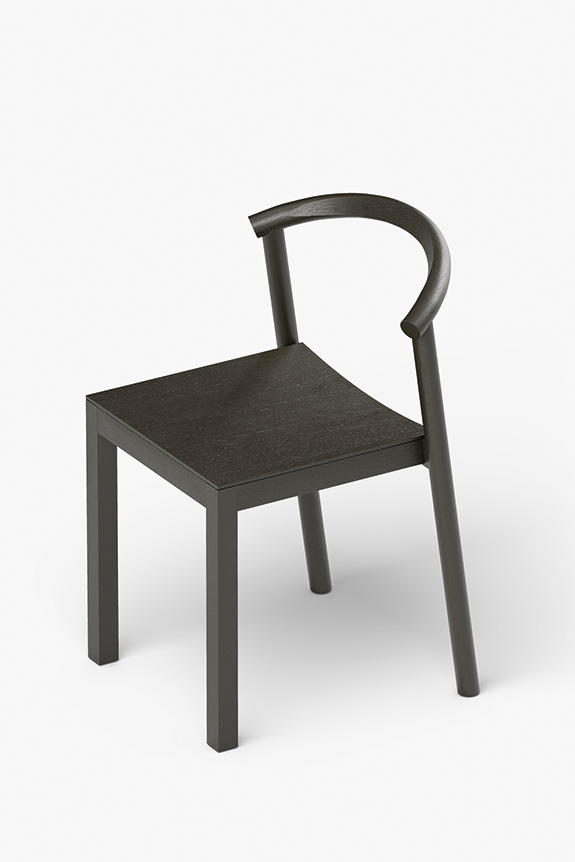
How did the idea for ARWENN come about?
ARWENN was born from a desire to meet the expectations of today's consumers. We believe that good design should combine a strong brand identity, affordable prices, uncompromising quality, and immediate availability. Too often, customers have to choose between these criteria. With ARWENN, we wanted to bring them all together.
You launched ARWENN in September, unveiling a collection of over 60 products. What were the main challenges in launching a new design brand? How long did it take to bring this project to life?
It took almost two years from the initial idea to where we are today. We started almost from scratch, as we had to build the brand identity, the supply chain, the business structure, and, of course, the collections themselves. Bringing all these elements together in such a short time was a real challenge. But having the right people around us from the start made a huge difference.
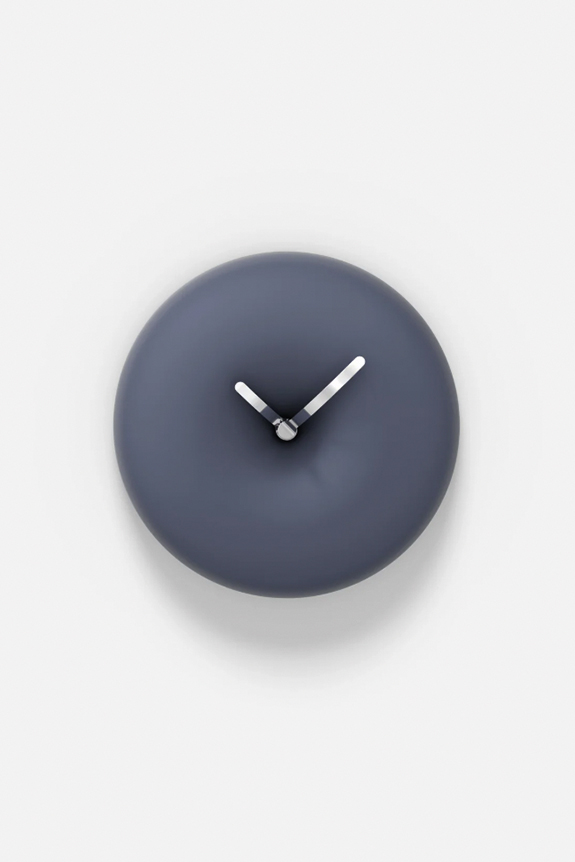
If you had to summarize the identity and DNA of ARWENN in a few words, what would you say? What vision of design do you want to convey through the brand?
"Simplicity with a twist." That probably sums up ARWENN best. This idea applies as much to our products as it does to the overall experience we want to offer our customers. We stand for simple, thoughtful design, but always with an unexpected element that gives it character. Ultimately, nothing too complicated, but never anything mundane.
For this first collection, you collaborated with several international designers. How did you select them?
From the start, we made a promise to ourselves: to work only with people we enjoy collaborating with. Obviously, talent and creativity are essential, but mindset, work ethic, and a shared desire to create something meaningful are just as important. Over the years, we have had the opportunity to meet many inspiring people whose work and personality we admire. It is particularly rewarding to see some of these relationships take shape within the ARWENN collections today. Each designer brings a different perspective, but we all share a common vision of what we want to develop.
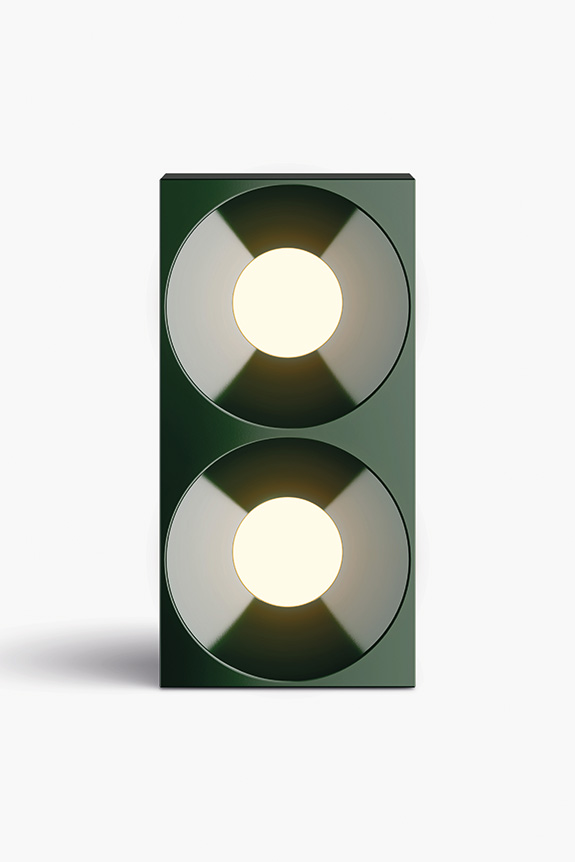
ARWENN also has its own in-house design team. How does it work and what role does it play in the development of the collections?
Design and product development are at the heart of what we love to do. It was therefore natural for us to keep this creative energy within the brand. We enjoy collaborating with external designers, but some projects also start with a very specific idea from the beginning. Sometimes, the challenge is less about exploring a new creative direction and more about finding the smartest and most efficient way to design a good product. In those cases, our internal team takes over, which allows us to approach design from different angles while staying close to the realities of production, pricing, and product availability.
How is the production of your pieces organized and where are they manufactured?
All of our furniture is manufactured in Europe, with industrial partners located in Denmark, Germany, and Slovakia. Our lighting collection is produced in China, where we found a particularly high level of technical expertise and industrial development. The production capabilities there are impressive, especially regarding innovative manufacturing processes. For all our collections, we place great importance on optimizing packaging and transport. "Flat-pack" solutions play an important role in this approach, as they allow us to reduce transport volumes and, ultimately, make the products more accessible.
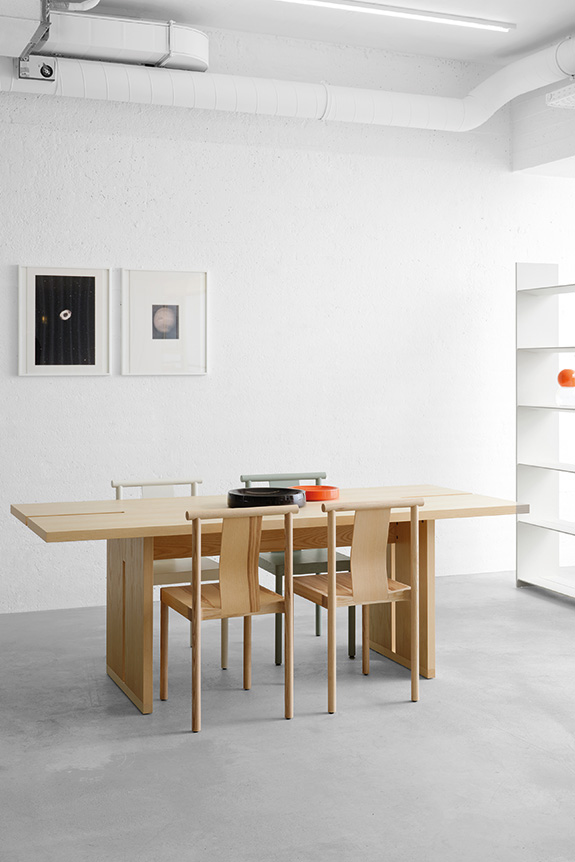
You opened your first boutique in Berlin at the end of October. What does this new milestone represent for ARWENN?
Opening our first boutique in Berlin marks a significant milestone, as it brings the entire ARWENN universe together in one place. It is a space where the brand, our collections, and the customer experience truly come to life. We view physical retail locations as an essential component of our approach. It is not just about displaying products, but about creating an experience that differs from what consumers are typically accustomed to. Berlin is our starting point, and we are excited about the prospect of expanding this concept to other cities.
You advocate for making design more accessible, both in terms of price and product availability. How have you integrated this ambition into the development of your collections? And how do you manage to reconcile accessibility, quality, and craftsmanship?
This is probably our greatest challenge, but also one of the most important principles upon which ARWENN is built. Offering accessible prices, quality products, authentic materials, efficient inventory management, and a great customer experience is far from simple. It requires looking at every decision from multiple angles. For us, accessibility is not something added at the end of the design process: it must be integrated from the very beginning. Every product must be consistent on creative, technical, commercial, and logistical levels. This philosophy is reflected in every product in our first collection. There are certainly still areas where we can improve, but we have laid a solid foundation. And that is precisely what makes this process so interesting: constantly seeking solutions to make design more accessible without losing what makes it unique.
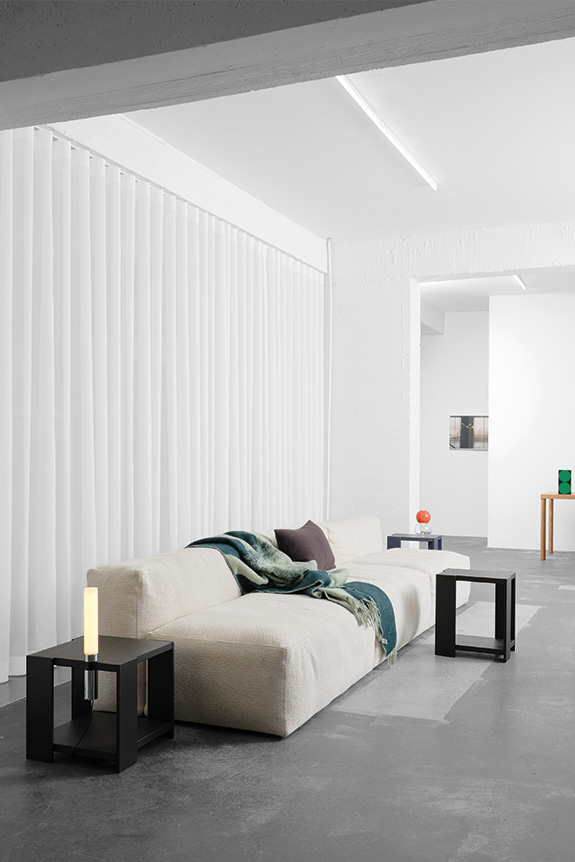
Bottom left: DADO shelf, design: Unknown Untitled © ARWENN
Bottom right: BASE sofa, design: ARWENN © ARWENN

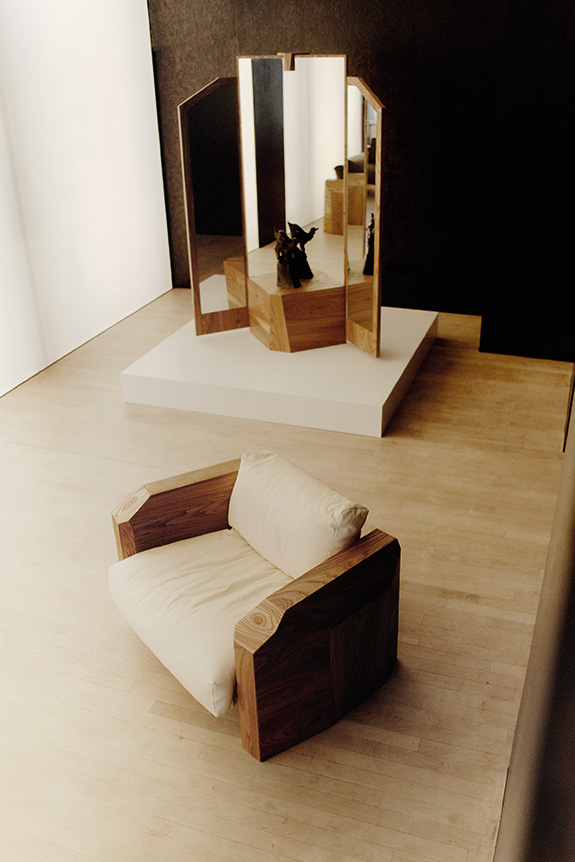
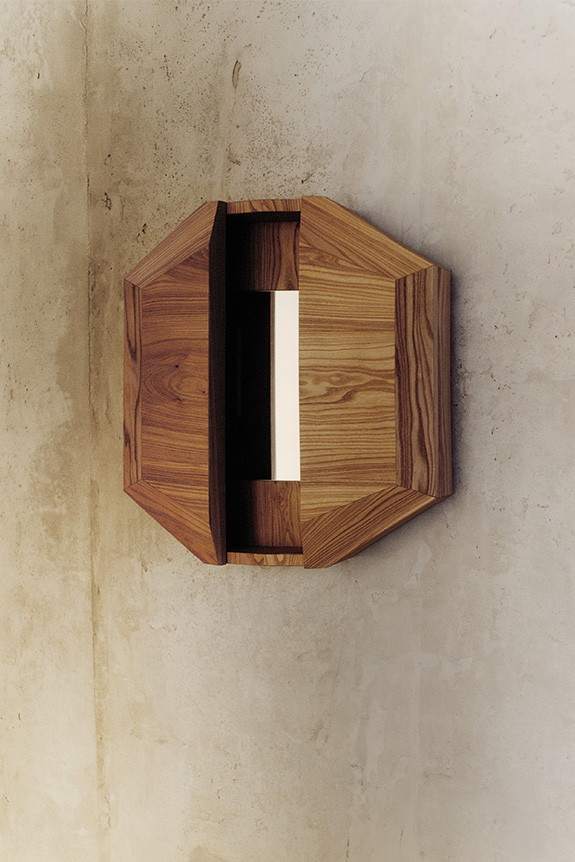
For La Chance, the duo Bernal & Semerciyan drew inspiration from the principle of the cut angle to conceive the Ether collection, consisting of four pieces—an armchair, a sofa, a wall mirror, and a floor mirror—all crafted from elm wood.
Founded by Camillo Bernal and Graziella Semerciyan, the Bernal & Semerciyan studio develops a design approach informed by architecture, art history, and artisanal craftsmanship. For their first collaboration with the publisher La Chance, the two creators imagined Ether, a collection based on the principle of the cut angle. Here, the geometric element is not limited to a simple aesthetic intention, but becomes the starting point for the construction of each piece. The collection is also inspired by the work of several 20th-century architects, such as Goethe, Frank Lloyd Wright, and Rudolf Steiner. "They had a principle of starting with an architectural element and carrying it throughout the interior. For our part, we wanted to start from anthroposophy, which is also based on an architectural element, while giving a prominent place to the material. We chose to work with elm, which has a very striking grain that is quite remarkable, and which is interesting in terms of patina and aging," explains Graziella Semerciyan.
Material as a construction element
The choice of elm is by no means trivial, as it was selected for its pronounced grain and natural color. The volumes are created from several assembled layers of wood, with the joints intentionally left visible to highlight the manufacturing techniques. "Camillo is an interior architect and has always had this attention to the architect's gestures. As for me, I have seen a lot of historical furniture and I always try to be precise about what we can bring to something that we already know, because we know that we aren't inventing anything." With Ether, La Chance continues its exploration of expressive furniture at the crossroads of functional object and sculpture, where craftsmanship and material become inseparable from the design.
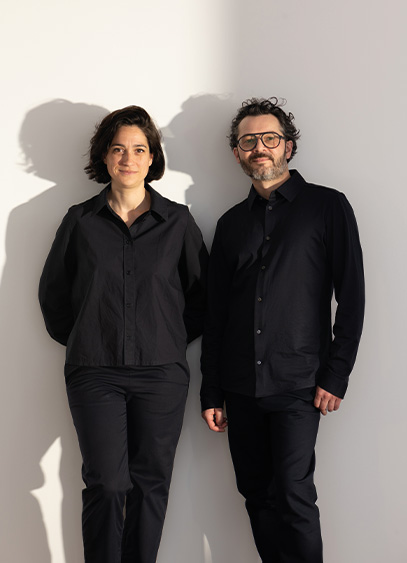
Since 2010, the BrichetZiegler studio has explored design as a constant field of experimentation. Working between Paris and the Haute-Savoie region, the duo has developed a free-spirited practice where drawing, self-production, and collaborations with manufacturers feed into one another.
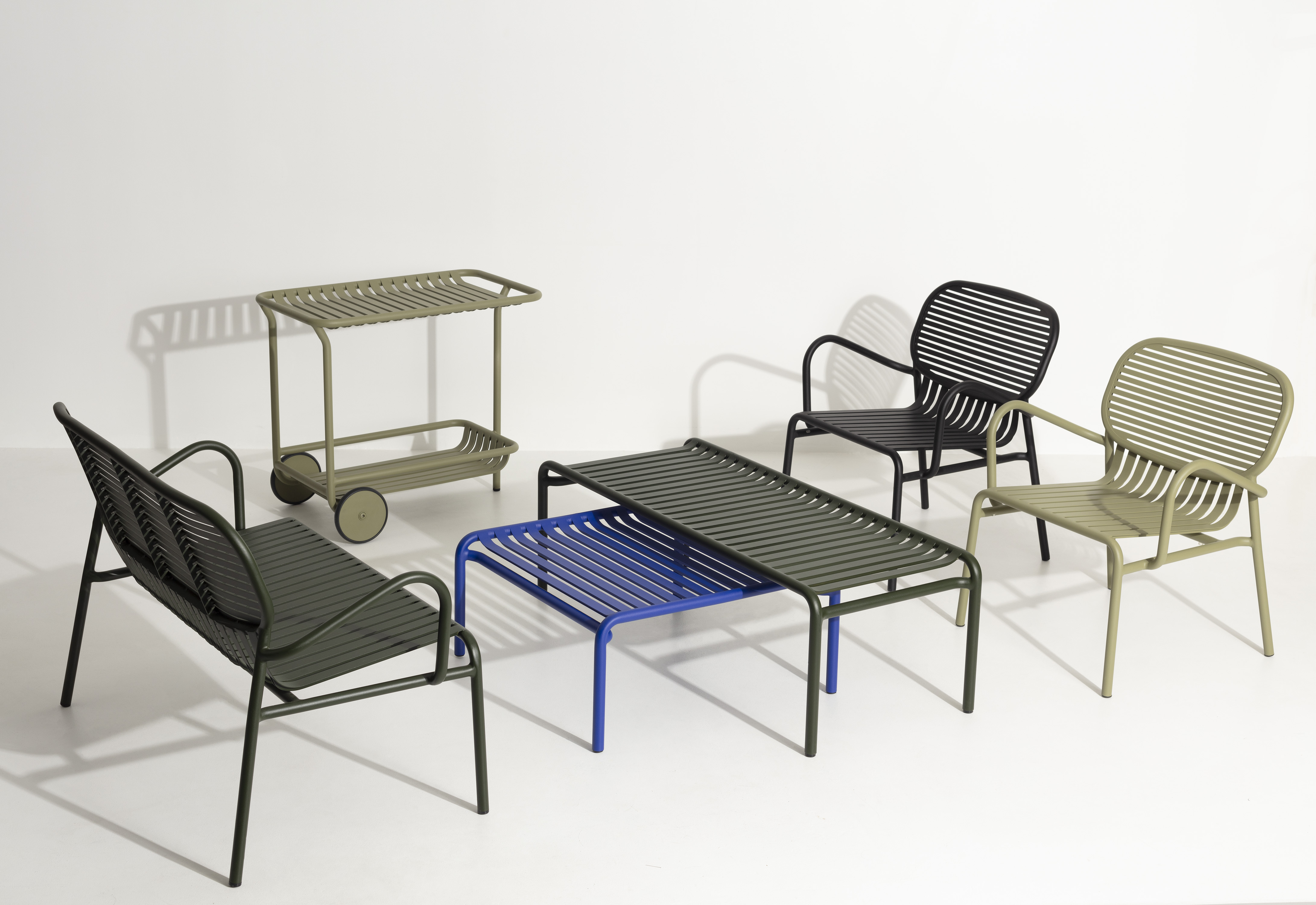
Pierre Brichet and Caroline Ziegler met in 2006 through the design collective Dito, where they worked on elaborate exhibition projects "with as many hands as there were people", alongside their agency work. They soon began meeting outside the collective: "Very quickly, we started getting together from time to time to draw. We had absolutely no idea where it would lead; there was no clear vision. It started simply, spontaneously." This spontaneity and complementary approach to ideas eventually convinced them to launch their own studio in 2010, following the development of their first flagship collection: the Week-end outdoor range, which was first produced by Oxyo in 2012 before being taken over by Petite Friture in 2017.
Creating with freedom
Beyond the purely design-focused aspect, the duo feels a deep need for creative freedom, fueled by the synergy between the two designers, who conceive all their projects together from the first sketch to the final product. "We love having that blank-page feeling at the start of a project, where we allow ourselves real freedom. We show each other what we’re doing, we discuss it, and that’s usually what breaks the deadlock. Often, we’re the ones who trigger that spark." A spark that can be born from a sketch, an image, or a simple sentence, but also through a model or a prototype. Because crafting and bringing objects to life isn't just the next step—it is an integral part of the process. This is why, in the heart of the Haute-Savoie, within a family workshop turned laboratory, the designers test, model, and prototype most of their pieces, alongside their work in their Parisian studio. It is a dual approach through which each project feeds the next and opens up a unique field of experimentation.
Between self-production and manufacturing
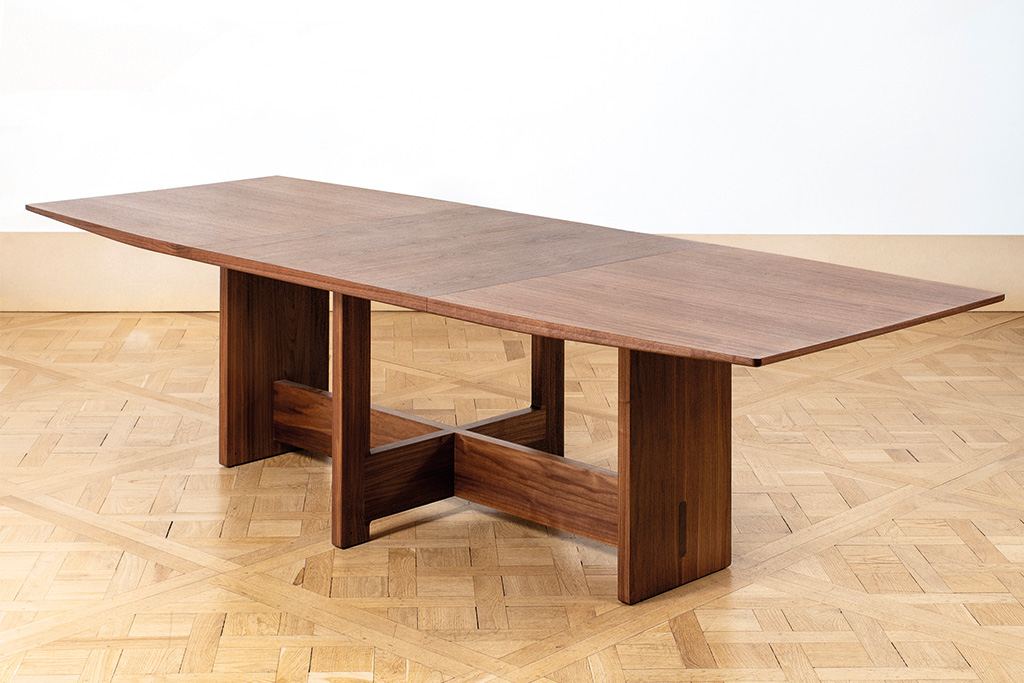
In 2015, they decided to take the process even further with the By Hands project, a collection of self-produced, limited-edition objects that allowed them to showcase the breadth of their expertise and sparked several collaborations. The Ombre Portée lamp was spotted by DCW Éditions and became Niwaki in 2023—the very same lamp installed on President Macron’s desk. The wooden Feuilles Volantes shelves were reinterpreted in ceramic by the manufacturer Moustache under the name Isola, while Pulpo took on the Fine Lame chair, which became the Cut chair. "Manufacturing in the workshop allows us to have the product quickly and without frustration. We can test the comfort, see what works, and identify weak points directly." Passionate about chairs, they presented a completely different project during Paris Design Week 2023: "The Wild Chairs," an exhibition of ten prototypes born from their experiments. The series was later installed at Le Labo during Milan Design Week in 2024, before being acquired by the CNAP.
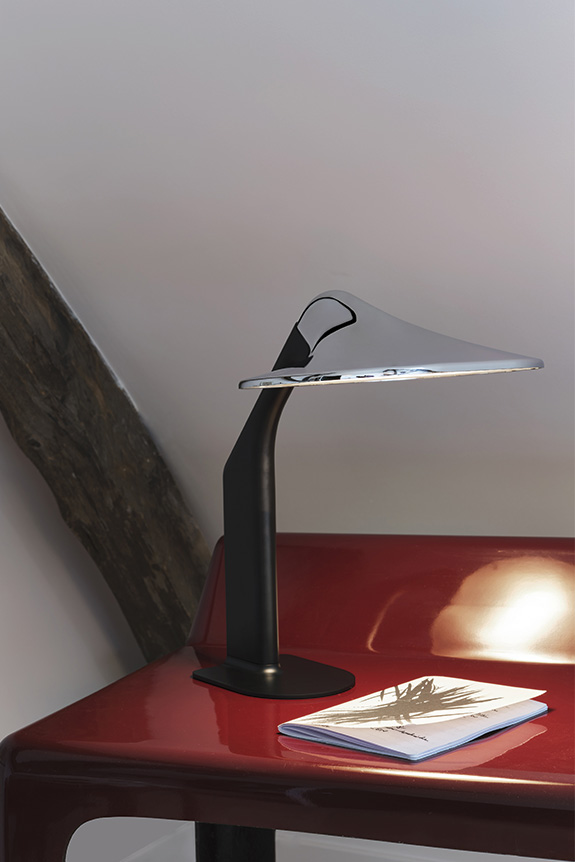
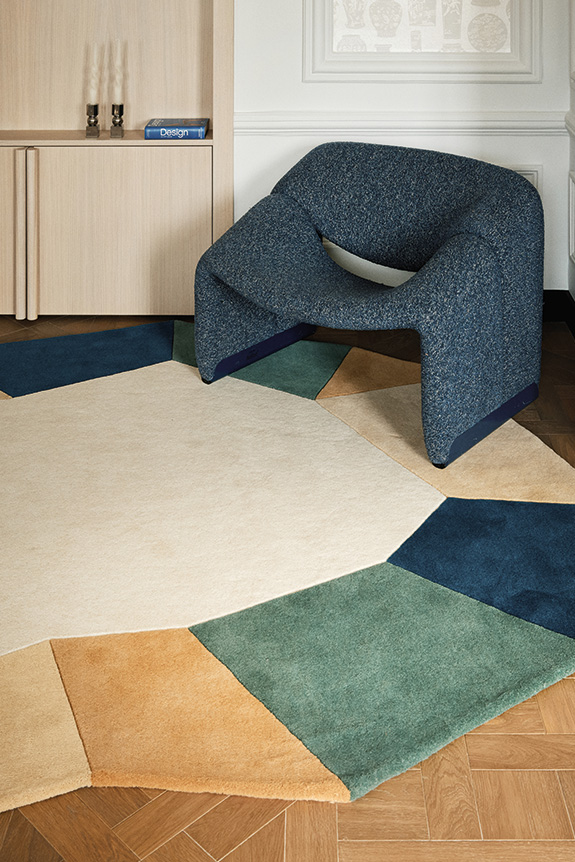
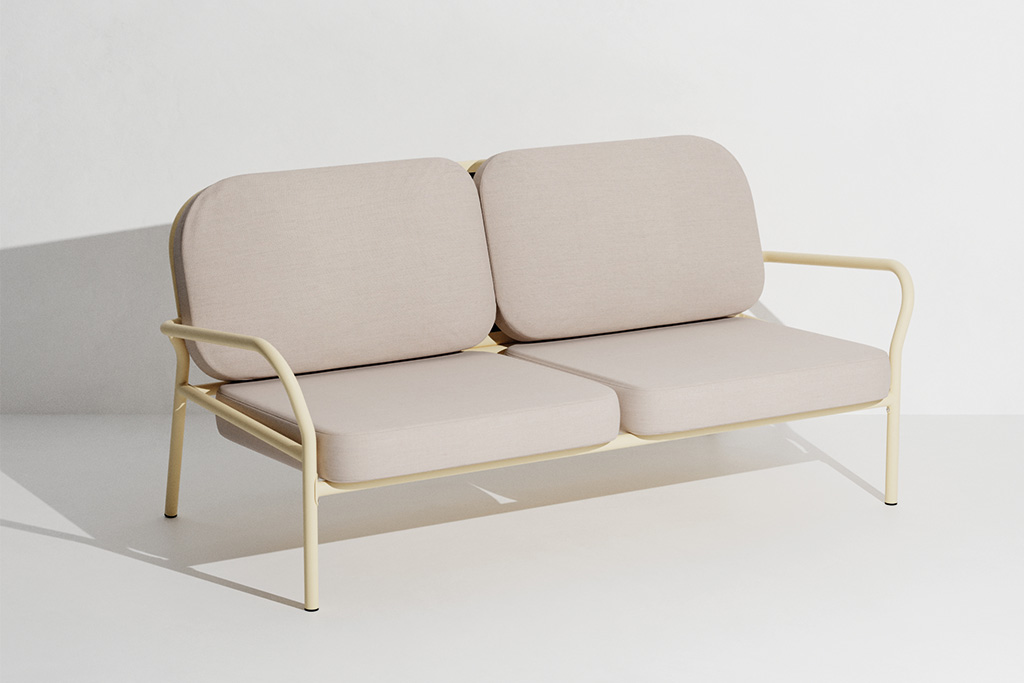
In terms of manufacturing, the duo has numerous collaborations to their name, notably with Habitat on the Torii table, Toulemonde Bochart with the Brindilles, Eventail, and Facette rugs, and Maison Drucker with the Valmy chair, to name but a few. Meanwhile, the studio continues its collaboration with Petite Friture on the Week-end range, with an outdoor sofa version scheduled for early 2027. At the end of 2025, they presented the solid wood Drift chair with Theoreme Editions, featuring raw lines and a gallery-piece aesthetic that remains entirely functional, while the table was unveiled this past March.
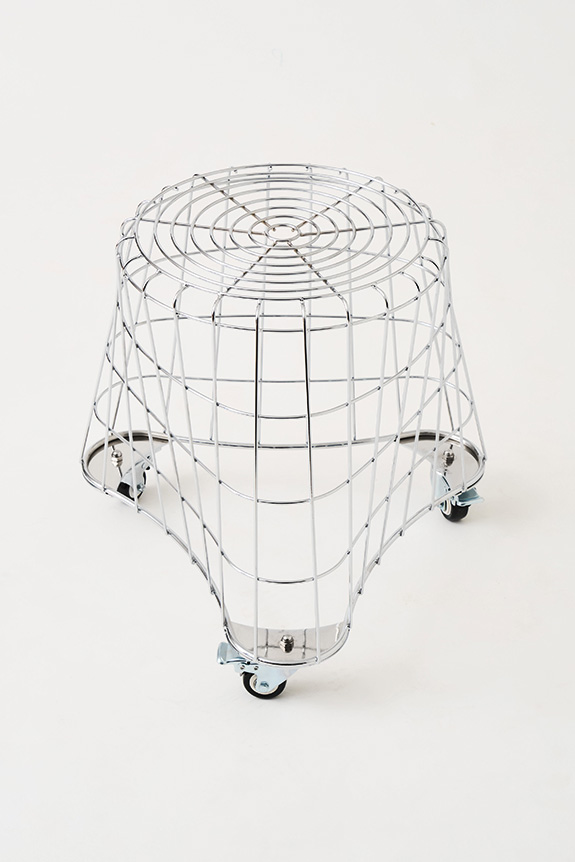
In early January 2026, at the Maison&Objet trade fair, they unveiled the all-terrain Grid rolling stool with 13Desserts, as well as the Cut chair, from the Industrial Art series, with Pulpo. As for upcoming collaborations, the duo has several projects in the works, including a sideboard for Kann Design expected to be revealed in January, and new lamps for DCW, scheduled for the spring.
Leaving a mark
"We have never sought to have a recognizable style from one product to the next. We prefer to design sculptural and expressive forms. We like to imagine objects that are different from what already exists, because they tell a different story." More than the pursuit of a formal identity, there is first and foremost a desire to create pieces that make an impact—"UFOs," as they like to call them—much like the Mezzadro stool by the Castiglioni brothers and the Zig Zag chair by Gerrit Thomas Rietveld, which they readily cite as references. "It takes a lot of patience and resilience, but, deep down, we are primarily looking to design objects that have a certain strength and can fit in anywhere, transcending trends to stand the test of time."
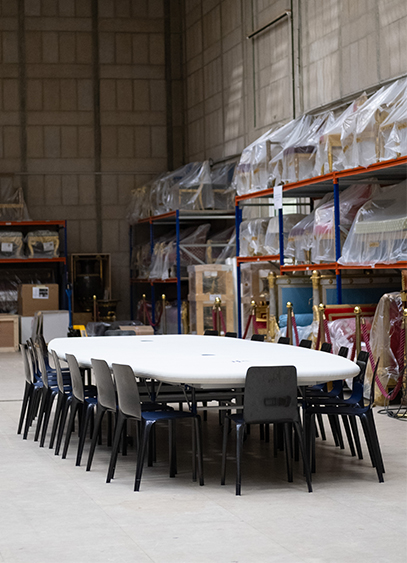
Winner of a special prize in the Mobilier National’s Young Creation competition, the L.I. table and chairs designed for the Council of Ministers offer new approaches to contemporary design through the use of Drop Stitch technology and recycled carbon.
L.I., two letters for lightness and innovation. Found "a bit at the last minute", the name of the table and chairs designed by Yanis Bontemps, Paul Seiller, and Victor Galineau favors the factual over the lyrical. This lack of flourish echoes the approach of the trio, who formed during their final year of studies at Ensaama to respond to the Mobilier National’s Young Creation Prize call for projects. The challenge? To propose a set of furniture that is easy to install and can be stored on a freight elevator for the Élysée Palace’s Council of Ministers room. The three designers worked on this dual constraint for several years with the ARC. Delivered for the 2026 Heritage Days, the project had already been recognized in 2020 with a special prize created specifically for it.
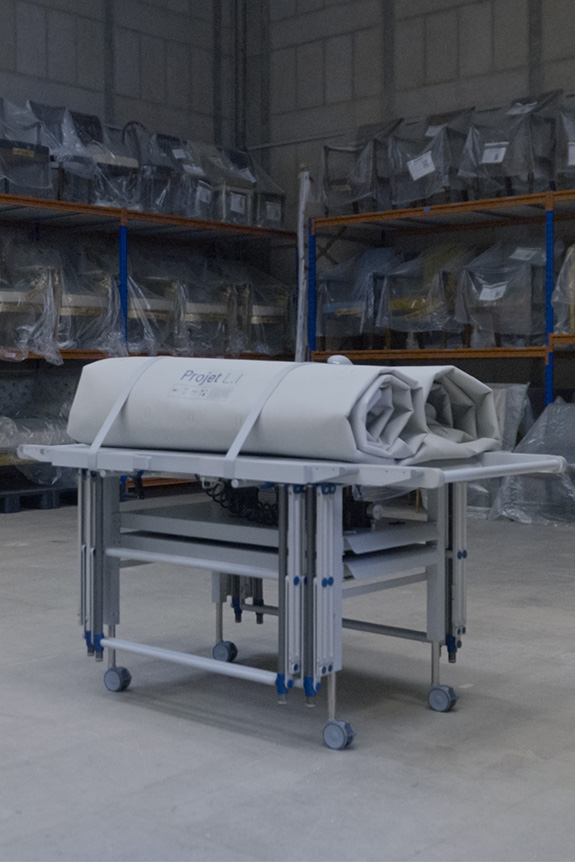
An inflatable table
"The initial concept for the table was to make it inflatable so that it could be deployed quickly", explains Yanis Bontemps. The idea led the three students at the time to take an interest in the Drop Stitch material manufactured by the company Musthane. "To put it simply, it is an inflatable membrane where the two walls, top and bottom, are connected by sewn nylon threads. Through a physical phenomenon, the structure becomes tensioned when inflated, offering something very rigid with just one bar of pressure." Used in some paddleboards, this technology is now primarily found in the military sector, notably in the form of cushions for repairing aircraft wings.
Self-supporting, the Drop Stitch led the studio to imagine a table in which the freight elevator is not just a transport tool, but becomes a structural element. Used as a central base, the cart is equipped with a foldable structure featuring eight aluminum legs upon which the elliptical tabletop unfolds. "This project was guided more by semantic constraints than by technology. At first, we had imagined a round table, but it was difficult to fold and didn't fit the usual codes. So we let ourselves be guided by existing conventions" says Paul Seiller.
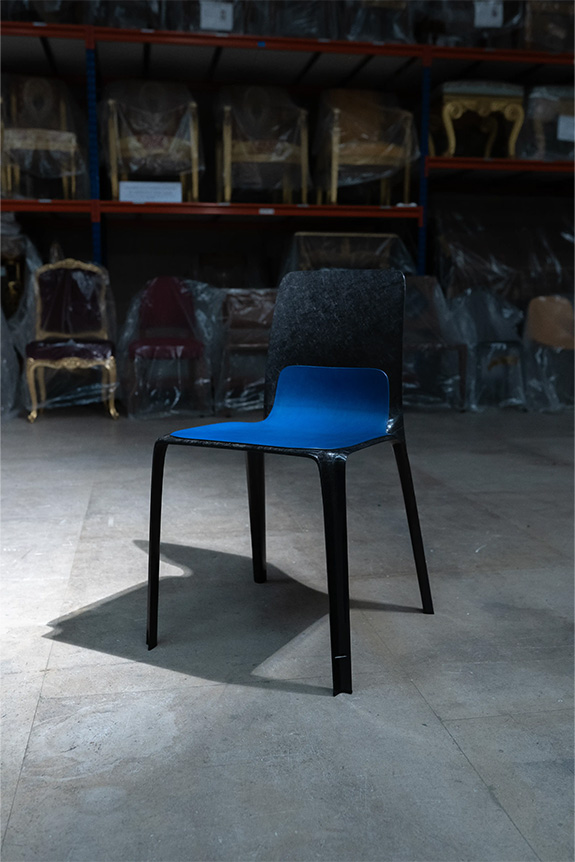
Letting the raw material speak
To accompany this table, the three designers drew sixteen chairs. Made from 56% bio-based resin sourced from plant-based channels and an epoxy foam, they also provided an opportunity to work with recycled carbon. "For the chair to be in line with the practicality of the table, we started with this lightweight material. But it led us to wonder how to use a material that is far from 'eco-friendly' in a responsible way." The designers then turned to Workshape. "By heating waste from various industries, such as automotive, to very high temperatures, this company manages to separate the components, including carbon. By working with them, we were able to recover the carbon in the form of felt, which we then molded and baked." A recycling technique that gives rise to seat shells with sleek, aerodynamic lines. "We wanted to let the raw material speak for itself. To convey an industrial language through exceptional furniture. It was a relatively exploratory process, especially since neither of the two companies approached had ever made furniture before." Beyond anodizing and leatherwork, this project brings together technologies applied for the first time to the contemporary design sector. These new approaches, fueled by the ideas of the three designers and the innovation of the ARC, expand the range of French techniques and expertise.
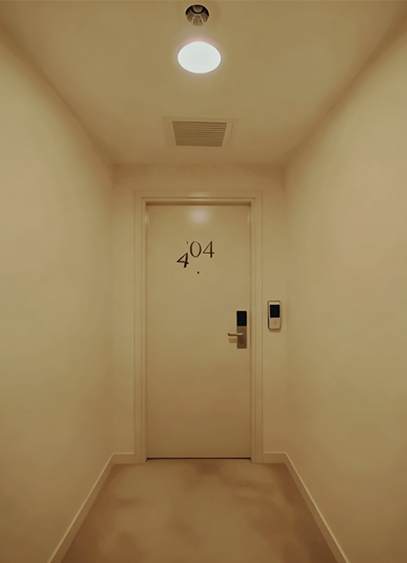
For its fourth edition, taking place at Porte de Versailles from November 21 to 24, the EspritContract trade show is presenting "The Room Gone Wrong." This exhibition, supported by Figurz, CHHO Studio, and Malvaux Interior, showcases recurring flaws in hotel design.
They say you learn from your mistakes. In architecture, it’s a bit more complicated. From leveling issues to problems with consistency or operations, the variety of defects is endless. This challenge is in the spotlight at EspritContract this year. For its fourth edition, the Parisian trade show—held from November 21 to 24 at Porte de Versailles—will unveil a humorous installation titled "The Room Gone Wrong." Designed as a capsule to raise awareness about the obstacles faced by interior fit-out professionals, the exhibition was conceived by three industry players. Initiated by the design office Figurz, creator of an FF&E/OS&E budgeting application for hotel projects, the project was realized in partnership with the interior design studio CHHO and the fit-out firm Malvaux Interior.
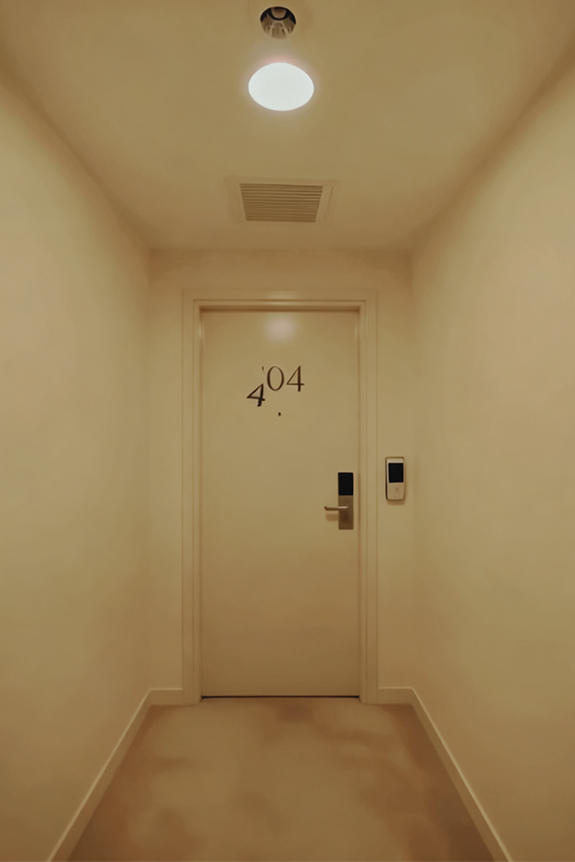
The mysteries of the yellow room
Located just a stone's throw from "the village square" where the talks will take place, the 42-square-meter room was designed based on a standard hotel room layout, minus the bathroom. Visitors will discover a bed, bedside tables, and a large wardrobe. The space was imagined by the three companies, who are often confronted with the lack of foresight or the oversights that plague the contract sector. "We work together regularly, but this project, which is a bit unique, was an opportunity to sit down and list the errors we see and recreate them on purpose," explains Martin Bretecher, founder of Figurz. From a bed that is too wide, requiring two mattresses, to a last-minute electrical outlet that clashes with the others, "The Room Gone Wrong" is full of aesthetic and functional missteps. "What we are showing might seem amusing in this context, but it’s important to understand that every flaw has consequences for the establishment's management, whether in terms of maintenance or cost." An exhibition that is almost a manifesto, intentionally designed to be the opposite of a stylistic statement. Completely smoothed over by a monochrome yellow, the space doesn't appeal to taste, but rather invites reflection on how errors can be avoided. "The hotel embodies the fine line between the prosaic and the poetic; the conceptual and the practical", summarizes Martin Bretecher. A complex environment in which every stakeholder must be able to contribute their expertise and language to serve beauty, but above all, a certain operational logic.
Founded in 2006 by Jean-Marc Gady, the eponymous studio has cultivated a cross-disciplinary approach to design from the very beginning, spanning objects, spaces, furniture, and merchandising. Now led by Émilie André, the studio continues this vision with a single guiding principle: placing emotion and experience at the heart of every project.
Celebrating its 20th anniversary this year, Studio Jean-Marc Gady has spent two decades developing an eclectic approach to design where the user and their emotions take center stage. Émilie André, who joined in 2011, became creative director following Jean-Marc Gady’s move to the United States. Today, the studio remains true to its original DNA while evolving under her guidance. "Over the years, a form of mutual trust has built up with Jean-Marc and the team, but above all, a shared creative vision. Generally, we agree on 90% of our vision, and there’s 10% where we don’t always see eye to eye. But in the end, that generates more creative stimulation than friction."

Communicating through emotion
"We aren't in a binary profession where things are just right or wrong. There comes a point where you need to find coherence and have a dialogue,"says Émilie André. More than just objects or spaces, the studio’s projects tell a story—a meeting, a moment in life. "There are several pillars that drive us, but one stands out in particular: emotion. Through the projects we imagine, whether in design, space, or architecture, we systematically seek a way to touch the user, because we believe that emotion is precious and that it’s what makes something memorable." This philosophy is reflected in all their work, whether it’s furniture designed to find its place in a home and in the user's daily life, or window display projects, for which the team always strives to bring that "extra soul" that makes them truly unique.
This approach also relies on constant curiosity and a desire to fuel creativity beyond the boundaries of design disciplines alone. "We are always open, listening, and exchanging ideas, which allows us to constantly nourish our creativity. But beyond materials and craftsmanship, it’s important to draw from things outside our field. It’s good to know what’s happening in design and architecture, but that’s the best way to only ever do what already exists. It’s important to take the time to do things other than our job because I feel that’s also how we bring back meaning and emotion."
Fostering collective creation
Within the studio, the creative process is, above all, a collective one. "The concept of collective work is very important. It’s not one person’s creation; it’s the creation of the studio and a group of people. I fundamentally advocate for this notion of quality and the value of collective work." For every project, the entire team—comprising designers, interior architects, and graphic designers—participates in the brainstorming and cross-pollination of ideas. This collective stimulation allows them to compare perspectives, share experiences, and spark new solutions to sometimes very different challenges.
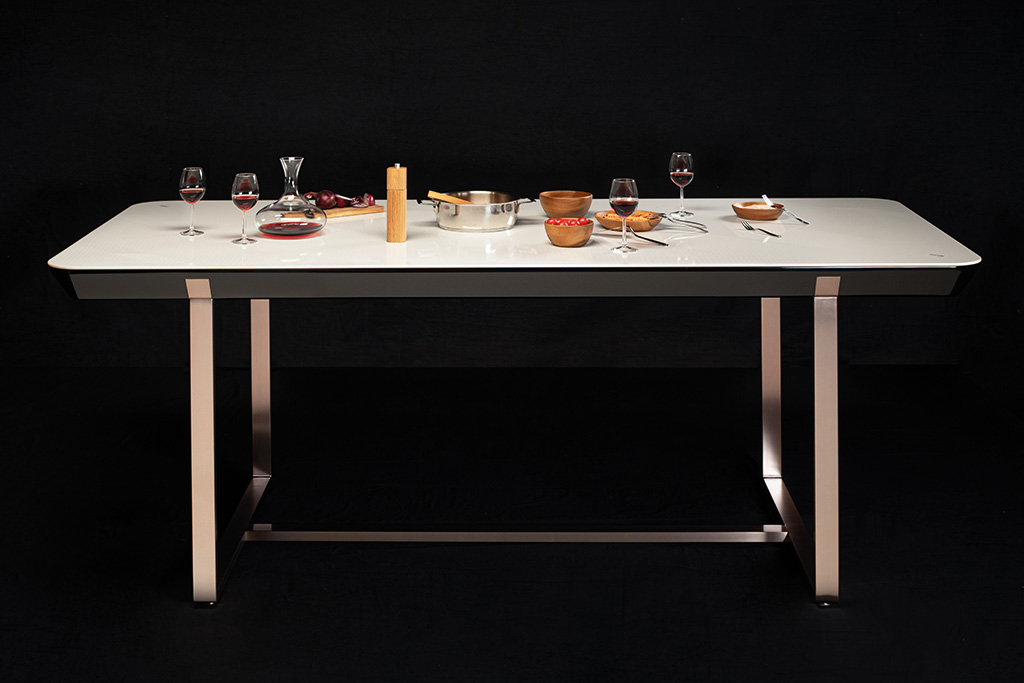
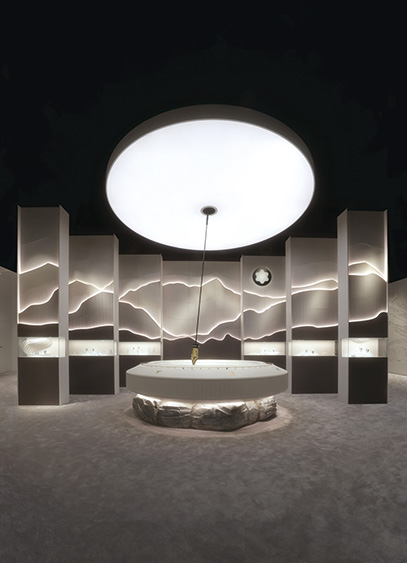
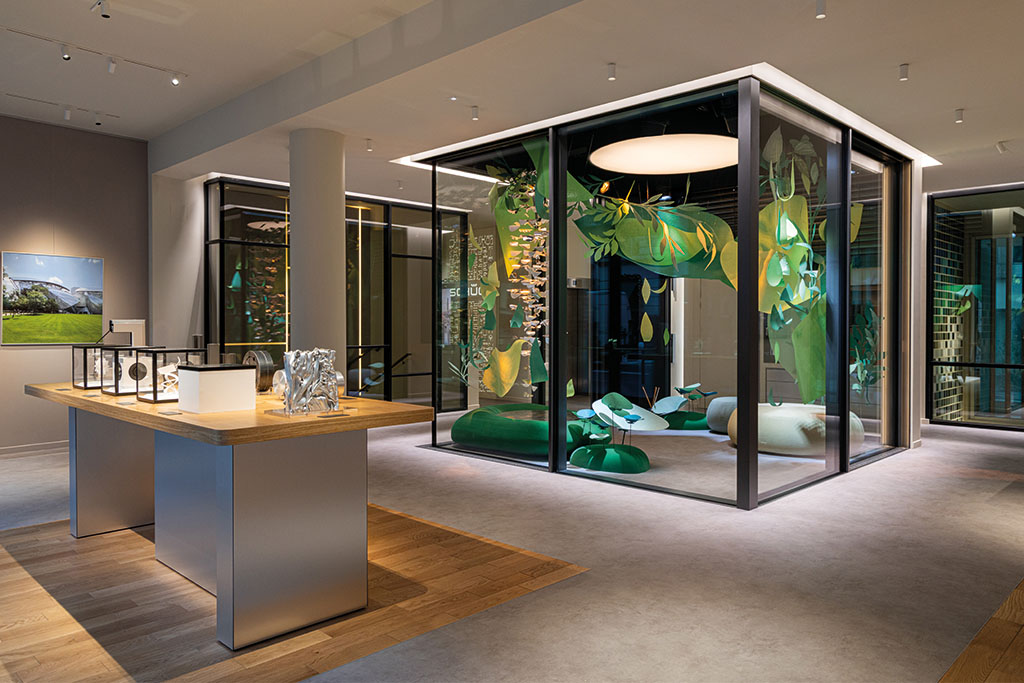
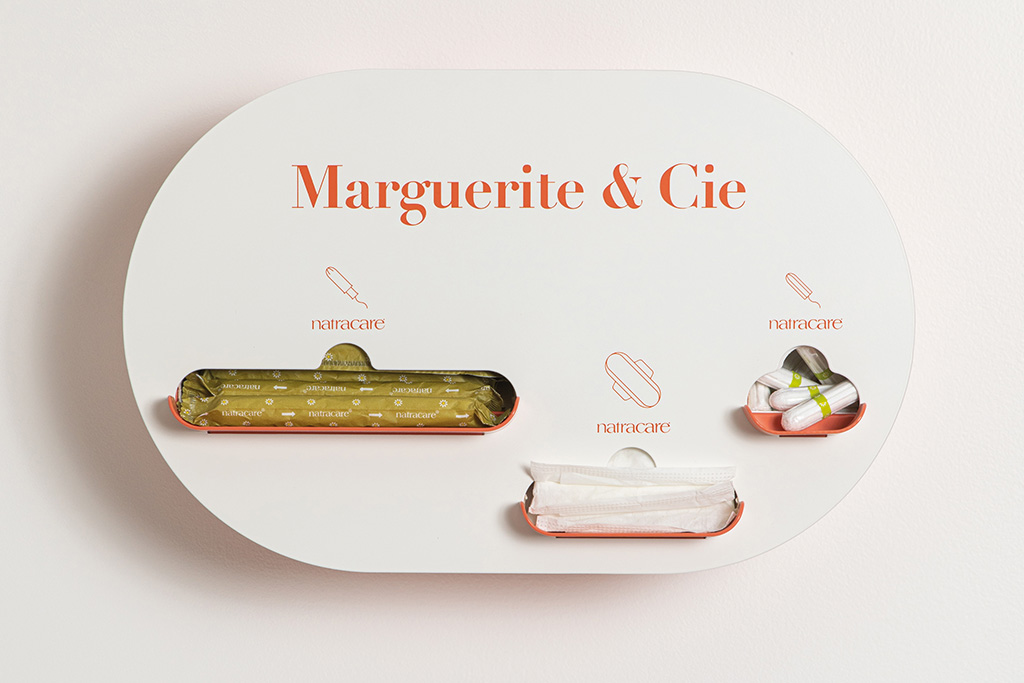
From Diptyque to Schüco, as well as Evian, Montblanc, and more recently Cartier for the Watches & Wonders exhibition in Switzerland, these collaborations demonstrate the diversity of the studio’s creative playground. Twenty years later, it is difficult to single out just one project given the sheer number of achievements. Some, however, stand out for their social or technological impact, such as the collaboration with Marguerite & Co to create an eco-designed, French-made menstrual product dispenser. In terms of innovation, the Smart Platform induction table, developed with EuroKera, illustrates this desire to explore new uses by combining the functions of a coffee table with those of an induction cooktop, with no fixed placement for cookware.
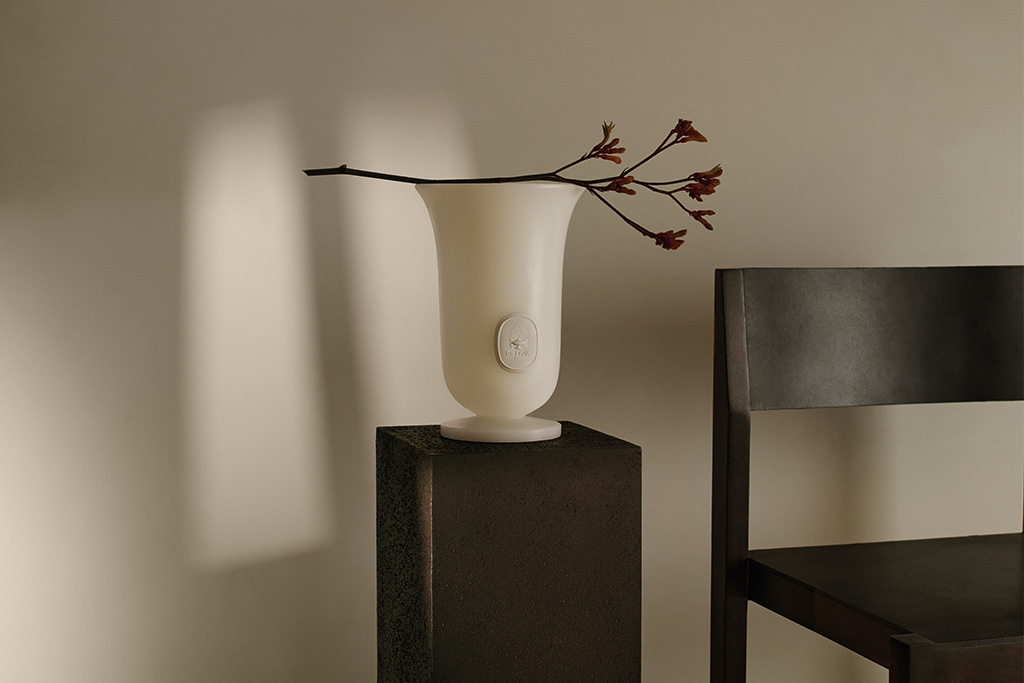
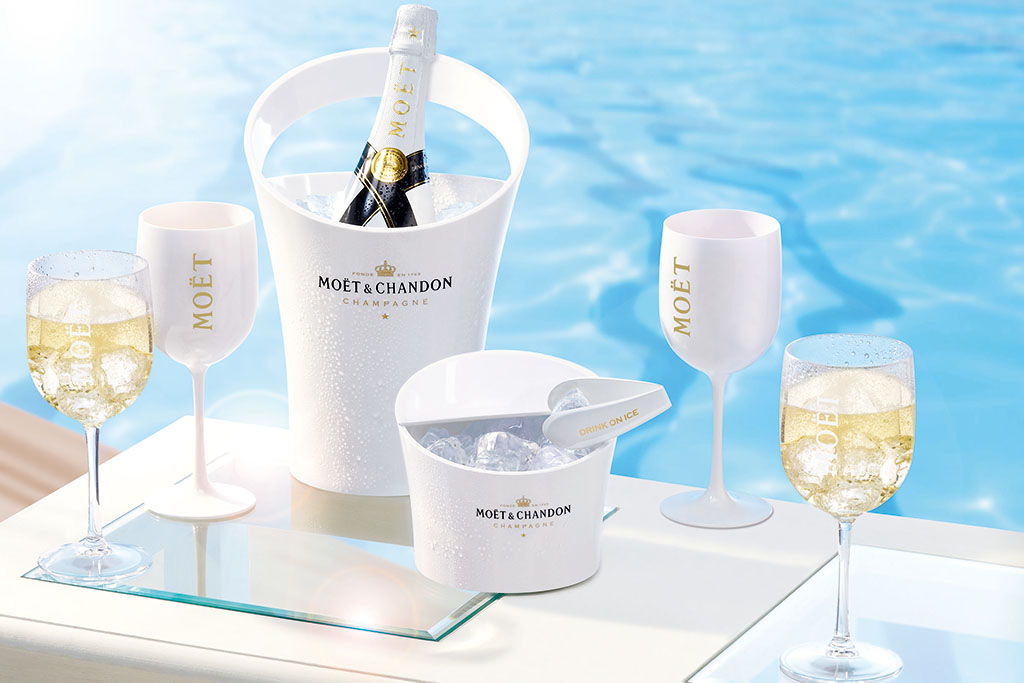
Bringing different areas of expertise into dialogue is also a way of showcasing them, as evidenced by the creation of the Lady Crinoline chandelier for Baccarat and a champagne service for Moët & Chandon. While these projects represent only a tiny fraction of what has been imagined over the past twenty years, they all reflect the same ambition: to explore new possibilities, bridge disciplines, and never set limits for ourselves.
The desire to go further
While projects have multiplied over the years, Studio Jean-Marc Gady intends to continue exploring new creative territories. This ambition has recently taken shape with the launch of MéMo, a furniture design house created in collaboration with the manufacturer MA’AM, which specializes in bespoke upholstery. "We chose the name Mémo because it’s memorable and it’s a furniture design house. The idea behind this brand is the dialogue between the eye and the hand—succeeding in blending perspectives and working together rather than against one another," says Émilie André.
Several pieces have already been brought to life, such as the Hug and Teckel armchairs and the Kago lounge chair, with new creations currently in the works. This new adventure ultimately extends the philosophy the studio has championed since its inception: making design a space for connection, experimentation, and sharing, where emotion remains the guiding thread.
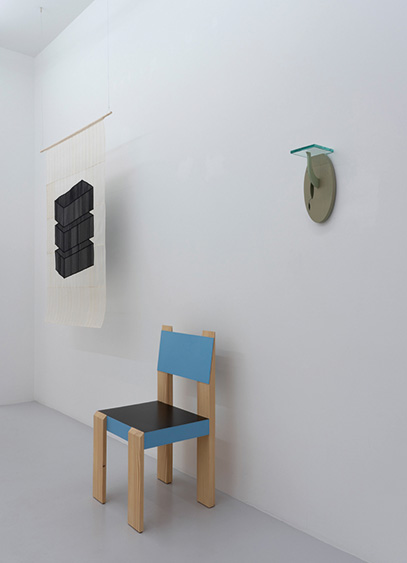
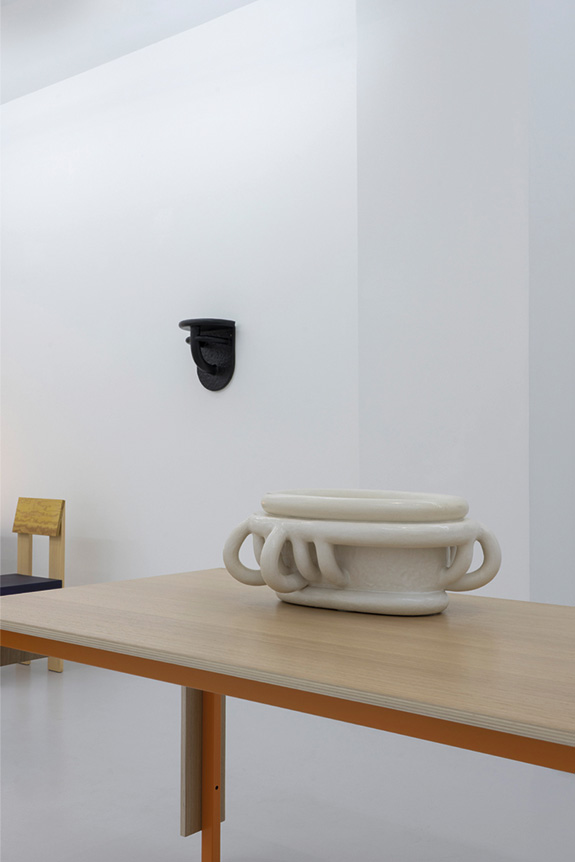
From October 21 to 25, the Parisian gallery A1043 hosted the "This is Not a Fair" exhibition, which brought together four galleries to showcase a selection of design and contemporary art pieces. It was a human-scale initiative designed to reaffirm the role of gallerists in discovering and promoting creators.
At a time when art and design fairs are proliferating, the A1043 gallery chose to take a different approach with "This is Not a Fair." Held in parallel with Paris Art Week, the exhibition brought four galleries together across two spaces totaling 100 m², united by a shared conviction: the essential role of the gallerist in building and disseminating contemporary creation.
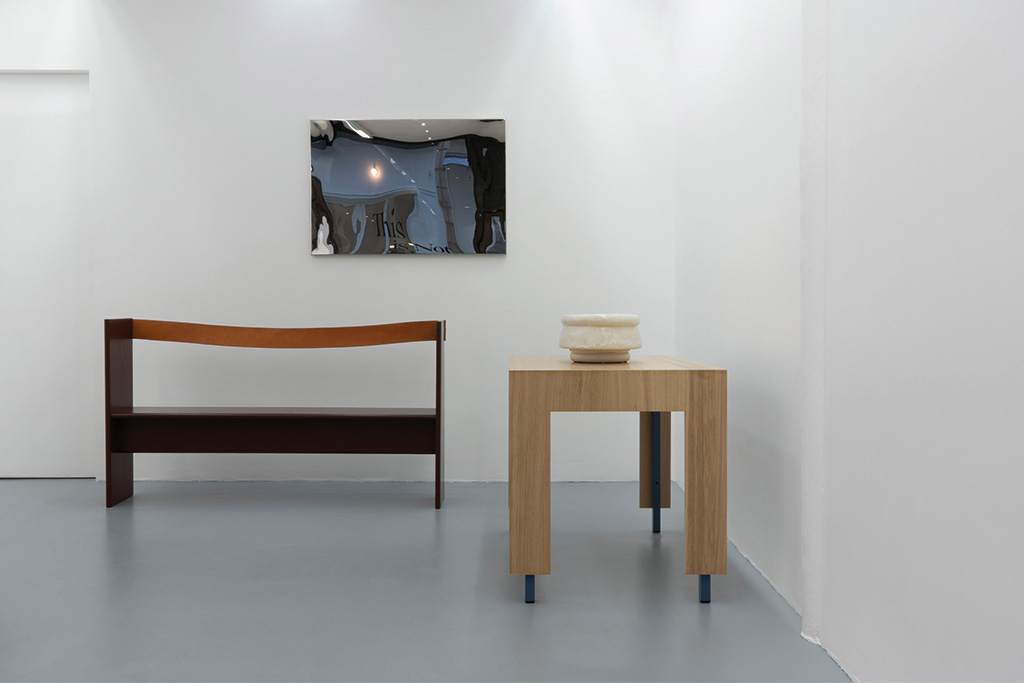
Plural visions of design
Alongside A1043, three other galleries were invited to share their worlds. Established at the Puces de Saint-Ouen since 2016, Aurélien Gendras presented a collection focused on ceramics, blending contemporary discoveries with historical pieces. Founded by Amaryllis Jacobs and Kwinten Lavigne, the Brussels-based gallery Maniera explored the boundaries between art, architecture, and design through works that question the relationship between form and function. Finally, the Dutch gallery Vivid, created by Aad Krol and Saskia Copper, unveiled pieces reflecting their interest in experimental approaches and unique objects.
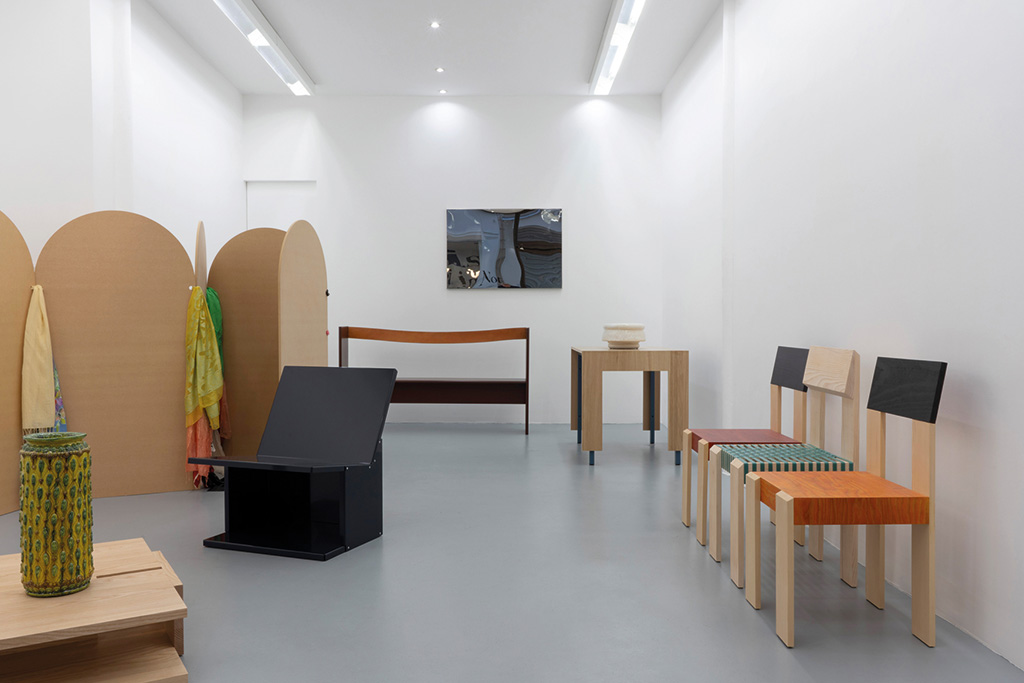
Throughout the visit, pieces by François Bauchet, Didier Faustino, and Matt Paweski were displayed at A1043, alongside ceramics by Laurent Dufour and Clémentine Dupré at Aurélien Gendras, as well as works by Stéphane Barbier-Bouvet, Anouck Morlon, Aldo Bakker, and Sigrid Calon. This diversity of offerings highlighted the unique perspectives and sensibilities of each participant. More than just a fair, "This is Not a Fair" aimed to place the choice, commitment, and passion that drive the gallerist's profession back at the heart of the contemporary scene.
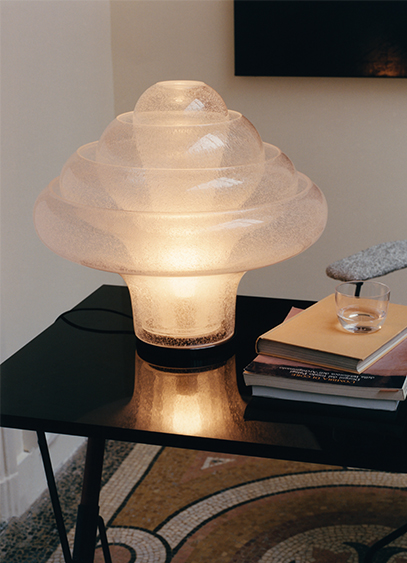
Italian designer Carlo Nason, who passed away last May, leaves behind a multitude of glass creations. Among them is the Lotus lamp, designed in 1969 and reissued by GUBI.
LT305. A somewhat cryptic name that probably doesn't mean much to you. Yet, behind this reference lies the Lotus Table Lamp. Nicknamed as such by collectors due to its shape, the model created in 1969 is now being reissued by GUBI. It serves as a tribute to its designer, Carlo Nason, who passed away in May at the age of 91. Born in Murano into a family of glassmakers, the creator left behind a vast array of objects, including vases, some of which were acquired by the Corning Museum of Glass in New York as early as 1959. These decorative typologies were quickly set aside in favor of lighting, which the Italian designer pursued in collaboration with the Murano-based specialist AV Mazzega, led by his longtime friend Gianni Mazzega. This partnership left a lasting mark on the designer's career, which was punctuated by successes including the Lotus model.
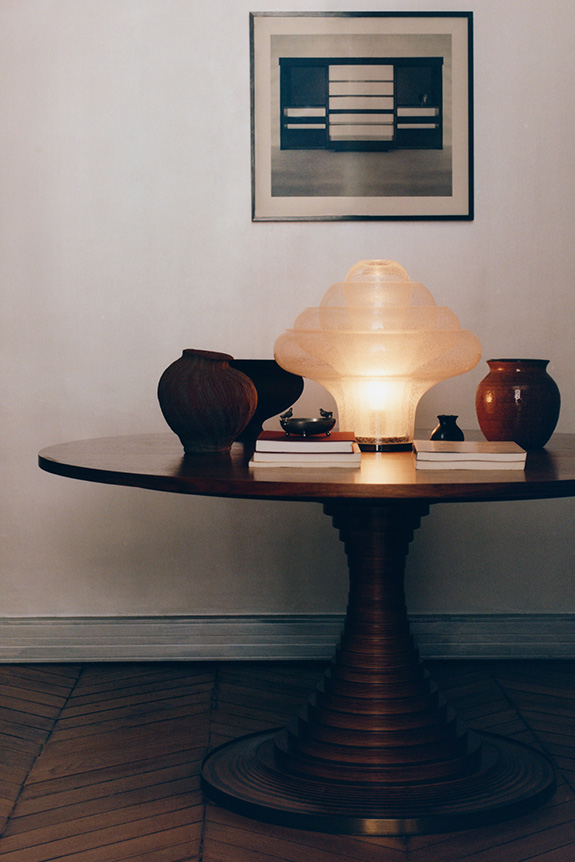
Eternal flower
Inspired by Northern European modernism and the futuristic curves of the Space Age, Carlo Nason quickly instilled an experimental dimension into his practice of blown glass. From this fusion, the LT305 was born—an iconic model driven by a new formal language. A true geometric architecture, the design combines four diffusers nested within one another. Assembled around a steel structure—now in black chrome—the globes play with light and translucency thanks to the pulegoso technique. Developed in the 1920s, this process involves trapping small air bubbles within the material. It is a technique that Carlo Nason re-employed here to create an evanescent flower.
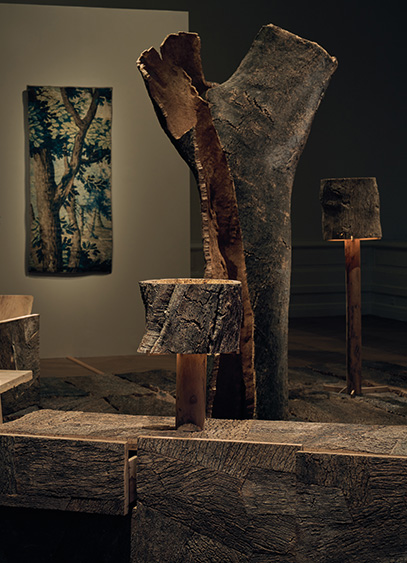
In partnership with the Mobilier national, designer Noé Duchaufour-Lawrance is presenting the "Made in Situ" exhibition at the Galerie des Gobelins in Paris until November 29. This monograph traces seven years of creative exploration and the various projects he has led in Portugal.
Seven projects in a single exhibition. That is the concept behind "Made In Situ," a monograph on display at the Galerie des Gobelins in Paris until November 29. Having moved to Portugal with the goal of rediscovering folk crafts and local expertise he felt had been lost in France, Noé Duchaufour-Lawrance ended up staying for seven years. This long-term relocation was driven by a loss of purpose and a desire to restore concrete value and a tangible origin to materials. The approach, initially inspired by gastronomy and an awareness of the local, of the connection to the land, gave rise to "situated design, or situational design ." A concept brought to life through seven collections of objects and furniture where ancestral techniques meet sophisticated organic lines. It is a way of elevating vernacular manufacturing into a new territory for artistic exploration.
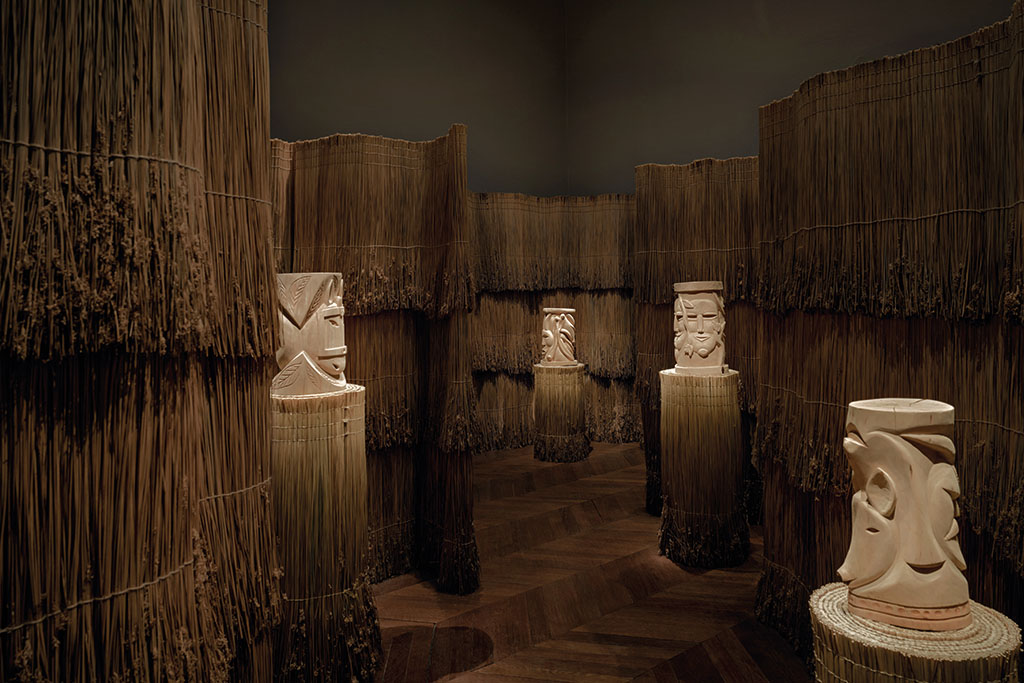
A journey into new lands
Conceived as a brief journey into the traditions of this Iberian Peninsula nation, the exhibition unfolds in a series of vignettes. Each project is presented in a setting where the finished product sits alongside the raw material. It is a way to subtly evoke the artisan's touch, explained by discreet labels where sketches and photographs reveal the secrets of production to those who wish to learn. Whether it is *soenga*—a traditional method of firing ceramics directly in the ground—or the crafting of cork, a wood resilient to the fires that regularly threaten the Portuguese landscape, *Made in Situ* is also the story of a country.
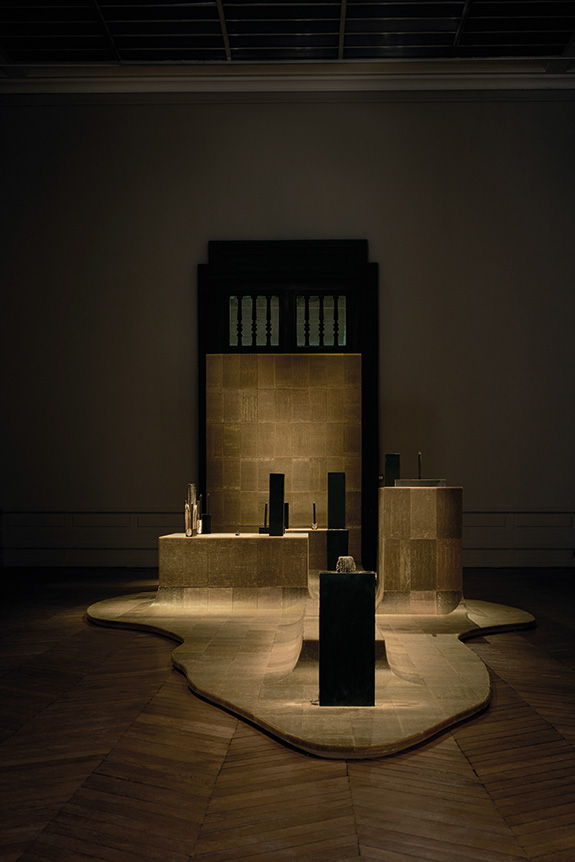
Rich in tradition and having become a favored manufacturing hub for the design sector over the decades, Portugal is seen throughout the exhibition, but it is also felt thanks to the scenography by Clémence Farrell. A specialist in immersive experiences, she has created a journey enhanced by scents and soundscapes by Luis Clara Gomes and Vany Fox. It is a beautiful retrospective in which the object becomes a storyteller and a transmitter of local craftsmanship.
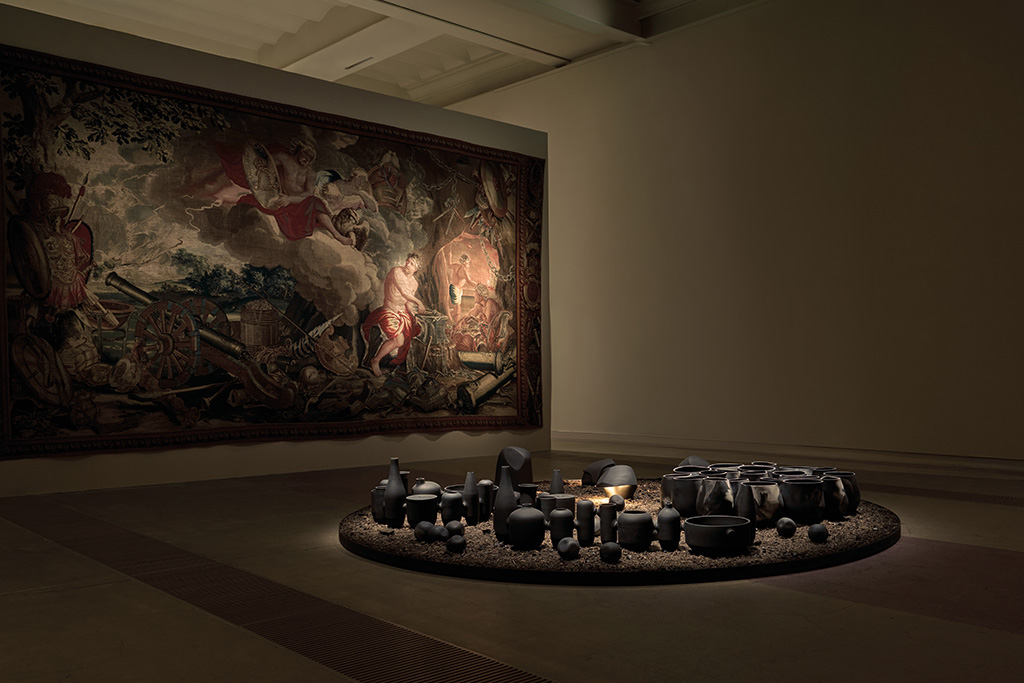
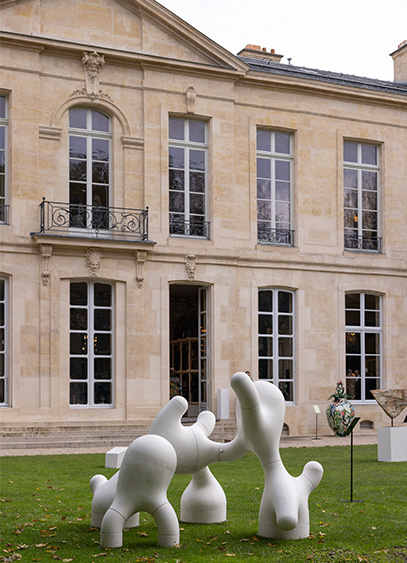
For its fifth edition, Design Miami Paris has invited thirty galleries to take over the Hôtel de Maisons. It is an opportunity to bring together French decorative arts, modernist design, and collectible pieces during this art-filled week. Jen Roberts, the event's CEO, tells us about this convergence of worlds.
In recent years, October has become the annual meeting point for collectors and art enthusiasts. Running alongside Art Basel, Design Miami Paris opens this Tuesday, October 20, for a five-day run. Located within the Hôtel de Maisons, behind the high walls at 51 rue de l’Université, this fifth edition is centered on the theme "Design for Presence." This presence is embodied by various artistic movements. Here, the modernist lines of jewelry designed by Pierre Charreau and furniture by Jean Prouvé stand in contrast to the generous forms and ornamental techniques presented by a body of international galleries. Jen Roberts, CEO of Design Miami since 2015, sheds light on this contrasted approach to creation.
This year, historic French design and the decorative arts are in the spotlight. Why this choice?
Paris is where a large part of the history of French design and decorative arts was written, and it is where it remains very much alive today. The city is home to an exceptional concentration of specialized galleries, workshops, and collectors who have a deep understanding of these periods. Here, historical works are understood and actively collected. It is therefore logical that our Parisian edition gives them more space than our Miami event.
This dynamic is felt throughout the fair. Galerie Maxime Flatry brings together a rare collection of French modernist works from the 1930s, centered on a major ensemble by Robert Mallet-Stevens and presented alongside works by Pierre Chareau, Eileen Gray, and Pierre Legrain. Laffanour | Galerie Downtown presents works by Le Corbusier, Pierre Jeanneret, and Charlotte Perriand. Mitterrand exhibits works by Claude and François-Xavier Lalanne, including an exceptional pair of "Singes Attentifs" (Attentive Monkeys) and a "Pomme de Londres" (London Apple) dating from 2007. And in the gardens, as part of "Design at Large," visitors will be able to discover "Le Très Grand Ours" (The Very Big Bear) by François-Xavier Lalanne, a three-meter-tall bronze bear.
How will the selection for Design Miami Paris—which focuses primarily on collectible pieces—fit into this historical theme?
There is a natural link between the historical theme and the fair's focus on collectible design. The fair brings together historical and contemporary works, allowing visitors to follow the evolution of design ideas over time. Each piece is vetted by independent experts. Historical works capture a specific moment, whether marked by a technical breakthrough, an artistic movement, or a social or political shift. They offer today's designers a history to build upon and allow collectors to place contemporary works in context. Often, the most interesting moments occur where the two meet. Galerie kreo pairs 20th-century French and Italian lighting with limited editions by designers such as Jasper Morrison and Virgil Abloh. This juxtaposition makes the relationship between eras visible. Salon 94 Design from New York and SIDE Gallery from Barcelona also bring perspectives from beyond France to the fair.
Should we expect visual links between these worlds, or a deliberate anachronism?
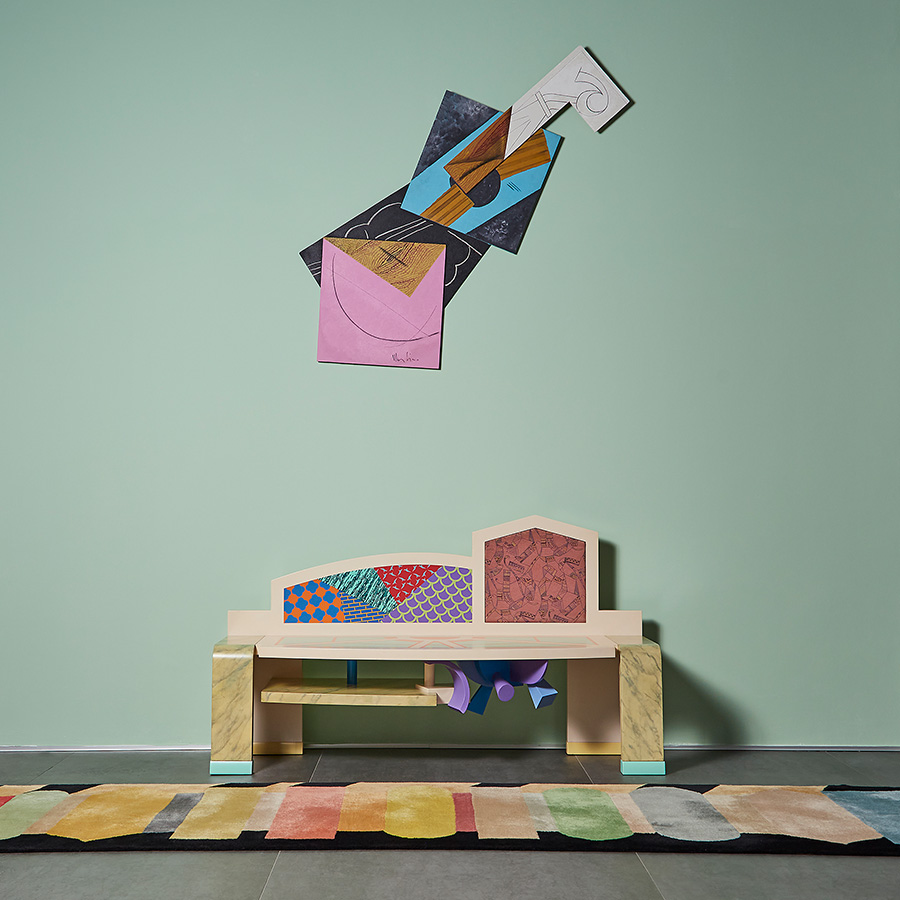
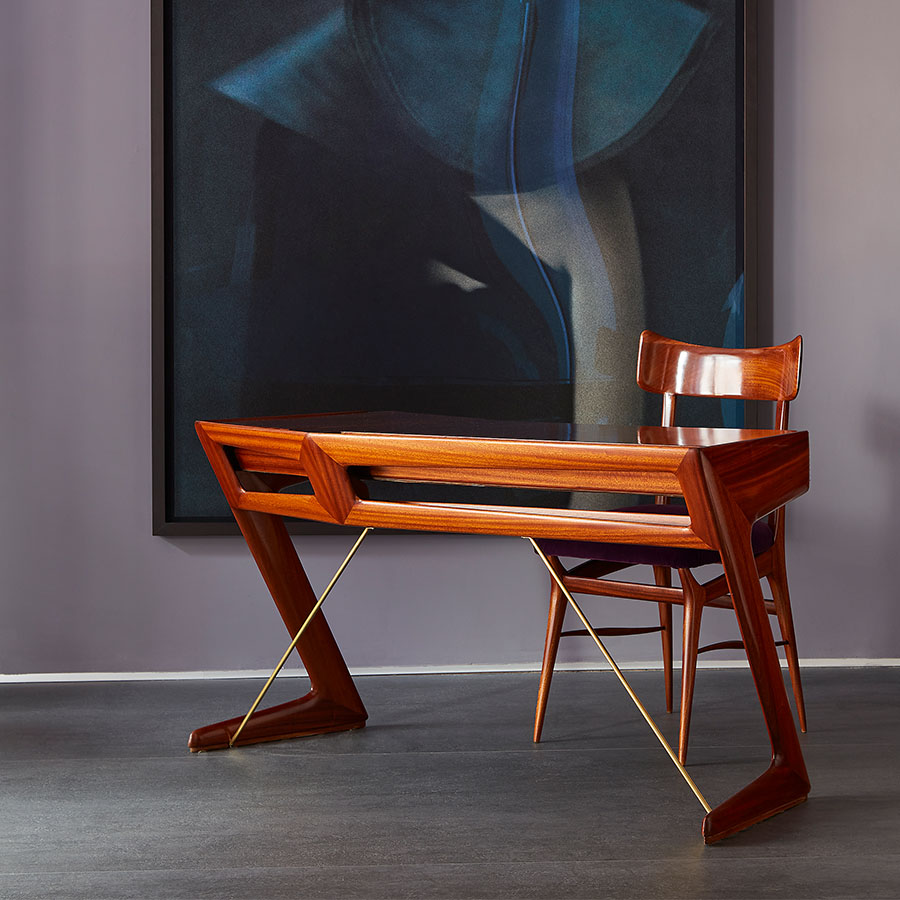
Both visual links and deliberate contrasts are part of the pleasure of this fair. In just a few steps, you can move from a piece of furniture from the 1930s to one finished this spring. Sometimes the link is explicit. At Galerie SCÈNE OUVERTE, the exhibition "Around a Desk: A Contemporary Vision of Decorative Arts" brings together the desk and German silver totem by Studio Lugo, as well as the sofa by Studio KRJST, designed around a one-of-a-kind tapestry. Both works clearly dialogue with the French tradition of decorative arts. Elsewhere, it is the contrast that gives the exhibition its strength. In the gardens, Jean Prouvé’s 1944 prefabricated house stands near a bronze swing by Irene Cattaneo, created this year.
New exhibitors are also broadening the debate geographically. The A/P Room gallery, based in Dubai, presents mid-century Brazilian works by Joaquim Tenreiro, Abraham Palatnik, and Branco e Preto, alongside "Originform," a new series of sculptural lighting by Rogan Gregory, as well as objects by Lebanese architect and ceramicist Zein Daouk. The connections are established more through form and material than by date, and historical and contemporary pieces occupy an equal footing.
Whether the focus is on modern or contemporary design, does the architectural setting of the Hôtel de Maisons influence your artistic selection in any way?
Absolutely. This is our fourth edition at the Hôtel de Maisons, and the setting matters. The venue is a home, not an exhibition hall. Furniture and objects are therefore discovered on a domestic scale, in rooms bathed in natural light and steeped in history. Many galleries adapt their presentations to suit the house. Galleria Rossella Colombari, for example, evokes the atmosphere of a typical Italian home.
Outside, the courtyard and gardens provide the space we need for "Design at Large," our program of large-scale works that could not be exhibited indoors. Cyryl Zakrzewski designed his birch plywood bench for the Craftica Gallery specifically for this outdoor environment, and Abel Macias, a former SCAD student, created a padded floor covering for the house's original 18th-century staircase.
Among the new talents featured in this issue, could you name one or two who you think might stand out in the coming years?
As organizers, it is not our place to pick favorites, but I invite visitors to discover Galerie SCÈNE OUVERTE, where Adélie Ducasse is exhibiting her first Murano glass lamp, as well as Studio Lugo, which is presenting a desk and bookcase in German silver in a limited edition of eight, the result of a first collaboration with the gallery. Both belong to a generation of designers deeply committed to materials and the tradition of the decorative arts.
I would also recommend that visitors check out the four designers selected for "Designers of Tomorrow," our program in partnership with Apple. This year's theme, "Design for Presence," explores how design can help us slow down and create connections. Their creations will be unveiled during the fair.
Below, visuals from the A/P Room gallery: Arte Viva bookcase and Upholstered floor lamp
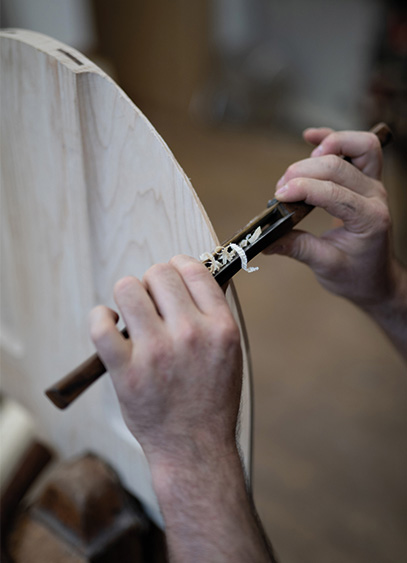
For its 27th edition, the Liliane Bettencourt Prize for the Intelligence of the Hand® has honored four individuals who are sustaining and renewing fine crafts through innovative and demanding design.
While beauty is expressed through an object and its design, it is primarily expressed through the gesture. For 27 years, the Liliane Bettencourt Prize for the Intelligence of the Hand has celebrated this alliance between technical mastery and creativity. Since 1999, 139 fine craft artisans have been honored, reflecting the diversity of disciplines and the vitality of the expertise held by contemporary creators. For this edition, the Bettencourt Schueller Foundation, under the presidency of Françoise Bettencourt Meyers, has rewarded three laureates, each receiving a grant of 50,000 euros. Selected by a jury chaired by Laurence des Cars, these individuals embody, through varied projects and design approaches, a shared spirit of research that reflects a concern for the environment and the diversity of our regions.
One prize, three categories
The Exceptional Talents category, which recognizes an artisan's technical mastery and their ability to evolve their expertise, was awarded to Sébastien Desplat for his work Dans les bois,designed in collaboration with Fanette Mellier.The engraver and intaglio printer reinterprets moku-hanga, a traditional Japanese woodblock printing technique.

The Dialogue category, dedicated to the meeting between an artisan and a designer, rewarded chair maker Louis Monier and designer Edgar Jayet. Their chair reinvents a historical craft by providing a contemporary interpretation. It demonstrates a creative process based on constructive innovation and adaptation to new uses.

Finally, the Career category, which acknowledges an individual's commitment to the development and promotion of fine crafts, was awarded to the Réseau Excellence EPV (Living Heritage Companies). Led by Tristan de Witte, this initiative brings together French companies that possess exceptional expertise and develops regional networks, thereby strengthening economic exchanges and the visibility of these stakeholders.

Applications for the 2027 edition are now open in the Exceptional Talents and Dialogue categories. Registration, which can be completed on the Bettencourt Schueller Foundationwebsite, will close on March 10. The jury will be announced in the spring. So, don't wait!
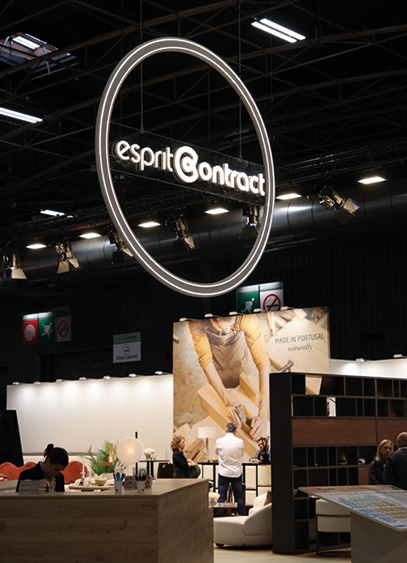
From November 21 to 24, EspritContract returns to Paris, Porte de Versailles, alongside the EspritMeuble trade show. For this fourth edition, the event dedicated to interior design and contract professionals is evolving its format with a program combining networking, exhibitions, and conferences to highlight the industry's expertise and key challenges.
Designed as a hub for exchange and networking between key market players, the EspritContract trade show continues to grow with an edition aimed at strengthening synergies between brands, architects, specifiers, and project owners. Located at the heart of EspritMeuble, the space will bring together a selection of French and international brands with complementary expertise, ranging from furniture and lighting to coverings, surfaces, and—new this year—fit-outs. It is an opportunity to showcase industrial, semi-industrial, and artisanal craftsmanship while fostering collaboration on design projects.
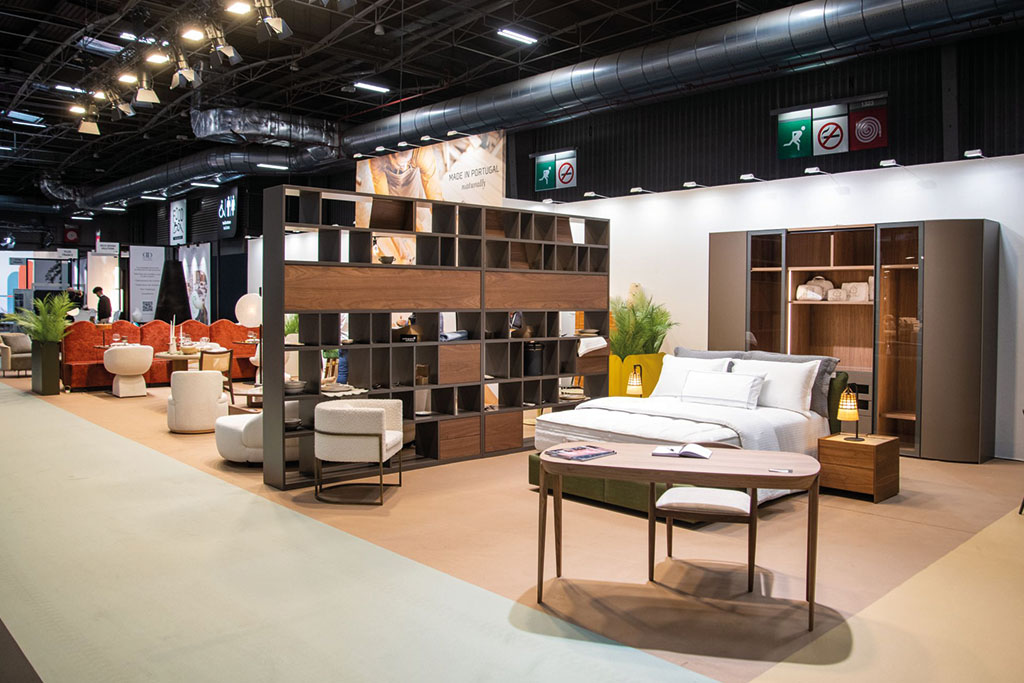
Networking to foster collaboration
Among the main new features this year, EspritContract is launching a qualified business meeting format, organized on the mornings of November 23 and 24. Designed to facilitate interaction between suppliers, buyers, specifiers, and project owners, these meetings will allow brands to present their expertise and position themselves for current or upcoming projects. This initiative reflects the show's commitment to strengthening its professional focus while promoting targeted discussions and new collaboration opportunities.
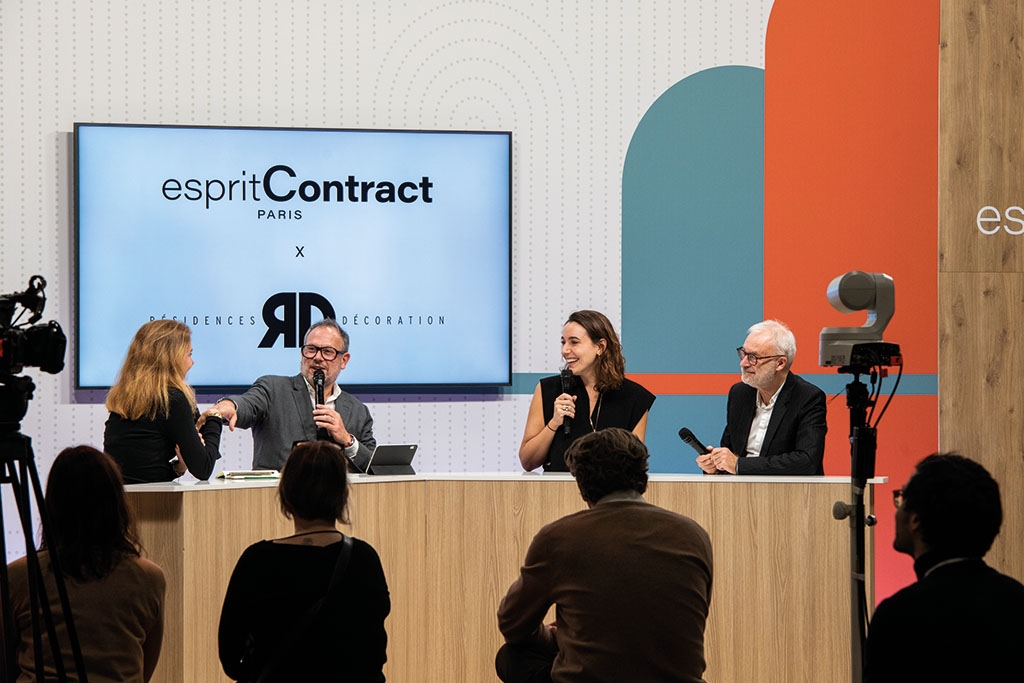
In parallel, a series of conferences organized in partnership with Intramuros will give industry professionals a platform to decode market trends, examine current practices, and share their experiences.
A program blending creativity and experimentation
In addition to professional networking, EspritContract will offer unique experiences and exhibitions. Among them is "La chambre qui déraille" (The Room Gone Wrong), a project conceived by Figurz, Studio CHHO, and Malvaux Interior. Through a deliberately quirky staging of a hotel room filled with design flaws, the three partners aim to highlight—with a touch of humor—the issues that both guests and hotel staff may face. A selection of furniture pieces designed by interior architects and designers will also be showcased throughout the event, demonstrating the diversity of approaches and the creative richness of the sector.
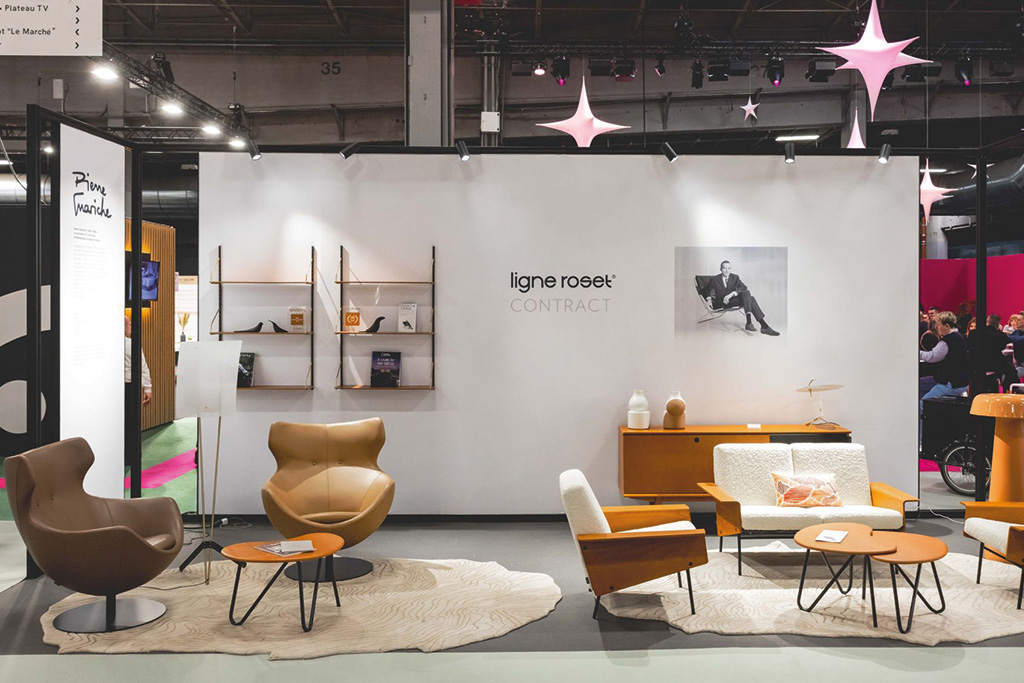
With this new edition, EspritContract confirms its ambition to bring together the various design professions around a common goal: fostering dialogue between experts, encouraging collaboration, and putting craftsmanship at the service of the projects of tomorrow.
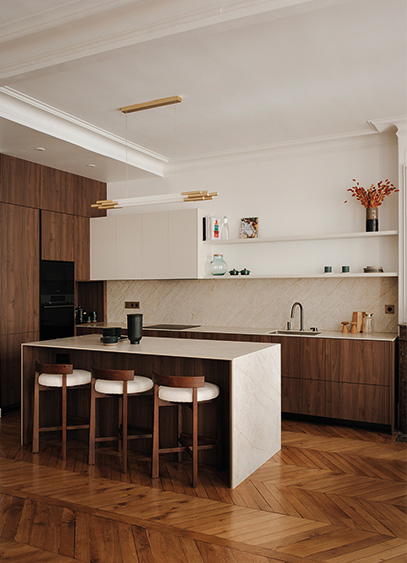
In the 9th arrondissement of Paris, eba has designed a bespoke kitchen within a fully renovated Haussmann-style apartment. A 9 m² project where materials, contemporary lines, and functionality engage in a dialogue with the charm of the past.
How can you successfully integrate a contemporary kitchen into a Haussmann-style apartment without compromising its character? This was the core challenge of this project carried out by eba in the heart of the capital. Designed for a young couple, this apartment underwent a complete renovation with the goal of creating an open, bright, and functional living space while preserving the original architecture as much as possible. Moldings, herringbone parquet flooring, a marble fireplace, and high ceilings set the stage for a kitchen defined by clean, minimalist lines.
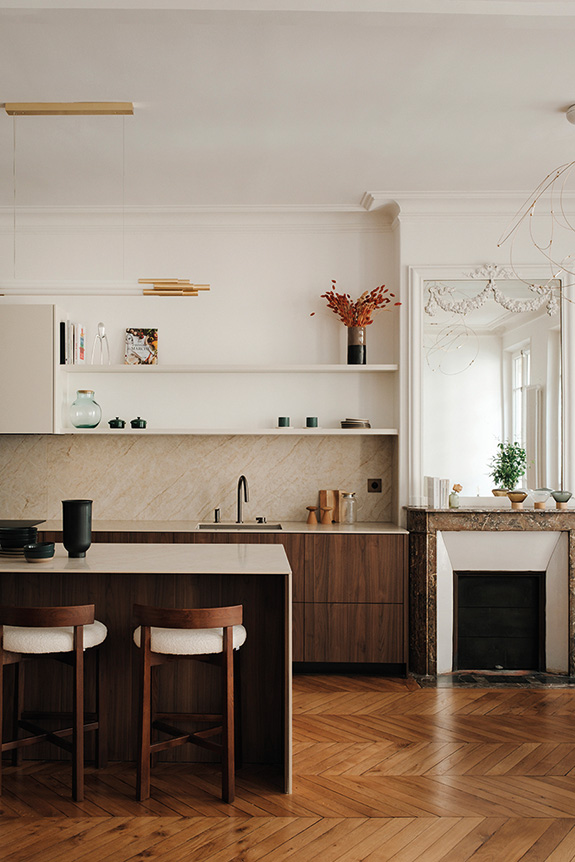
A dialogue between materials and architecture
With a surface area of only 9 m², the kitchen is organized around an L-shaped layout, complemented by a central island. This configuration optimizes the space while maintaining an open flow to the living and dining rooms. To ensure visual continuity with the existing architecture, a palette of understated, warm materials and tones was chosen. The fronts from the Santos FINE collection in Vertical Earth Walnut and Silk Pearl White create a contrast between the wood and the light surfaces, while the countertop and backsplash, made of Xtone Taj Mahal Silk ceramic, add a mineral touch to the ensemble. As the true focal point of the kitchen, the central island becomes a space for sharing and socializing. Featuring a dining area that can accommodate three people, it provides a transition between the different living areas while preserving the apartment's sightlines.
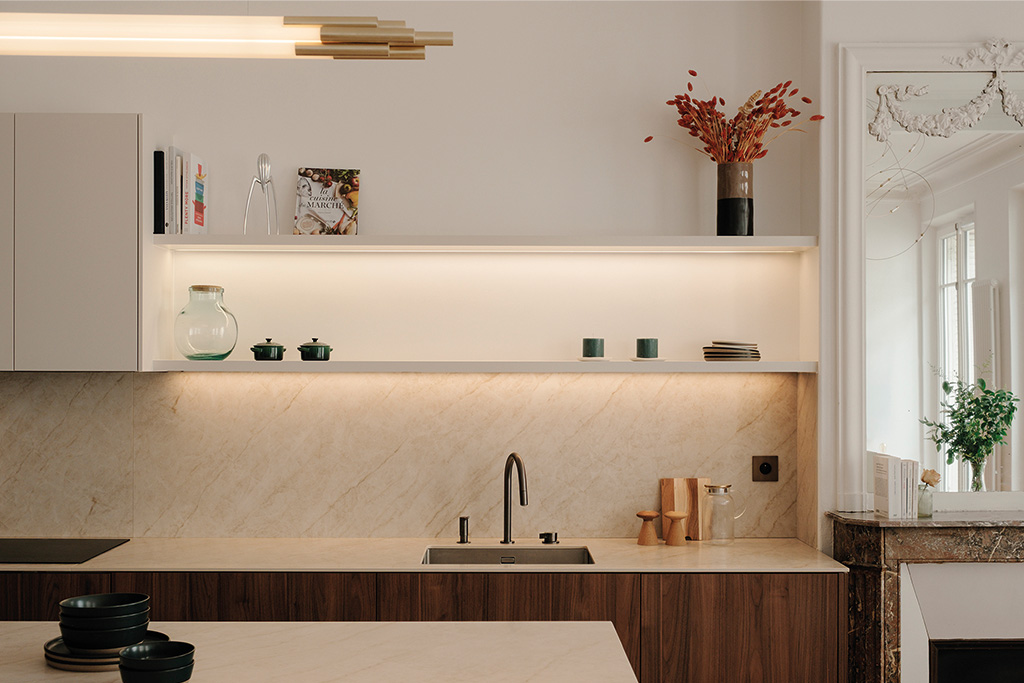
Maximizing space
Functionality is all the more important here, as it plays a central role in the layout. The ample storage, discreet integration of appliances, and wall-mounted shelves help to visually declutter the space while facilitating daily use.
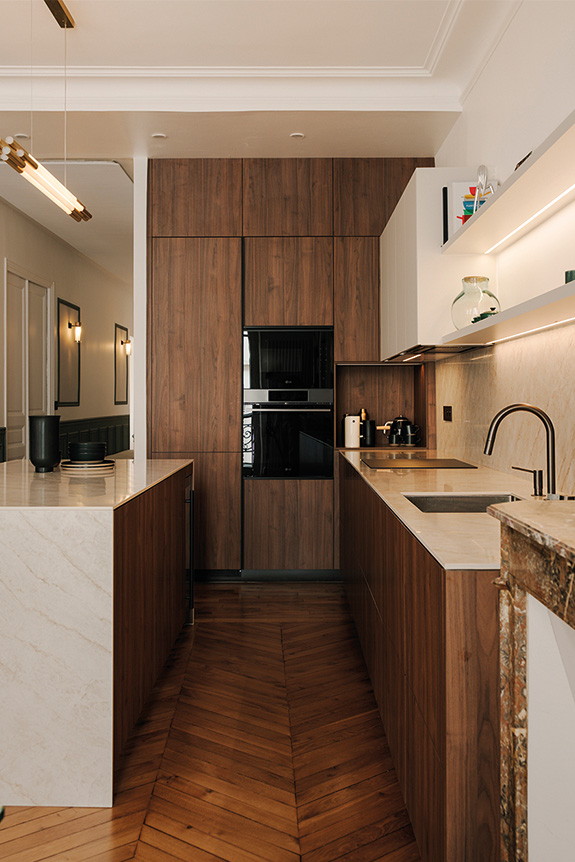
Through this project, eba demonstrates how a kitchen can be integrated into a strong architectural setting without erasing its identity. It is an approach where volume optimization, material selection, and functional equipment make the kitchen a true extension of the living area.
Find more information about eba HERE. And to start a project, click this link.





Subscriptions
2 year subscription
You save 65.20 euros by subscribing
1-year student subscription
You save 48.60 euros by subscribing


