Conférence, l'émergence de nouveaux marchés

Conférence, l'émergence de nouveaux marchés

Acheter du mobilier en leasing ou trouver une seconde vie aux produits, de nouvelles voies sont explorées pour répondre aux aspirations des consommateurs, et définissent de nouveaux marchés.


‍

Intervenants :
Catherine Colin fondatrice et PDG de Made in Design
Monica Born, cofondatrice de Superfront
Franck Mallez, co-fondateur de Yourse.co
Modération : Cléa Daridan, historienne de l’art, de l’architecture et du design, collaboratrice d’Intramuros

‍

Une conférence donnée le dimanche 12 septembre, à l’Intramuros Café, dans le cadre de la Paris Design Week 2021. Les échanges réunissaient les expertises de Made in Design, qui développe un nouveau marché de la seconde main et valorise les engagements dans la circularité, de Yourse.Co qui multiplie les propositions sur le marché en proposant des clés d’accès au design diversifiées ( leasing, seconde vie…) dans un modèle économique très novateur, et Superfront qui s’est positionné sur un marché de seconde vie très engagé.

‍

Rédigé par 

Vous aimerez aussi

Temps de lecture
4/9/2026
Paris Design Week: the Intramuros Guide

Paris Design Week returns to the capital from September 10 to 19 to celebrate design in all its forms. Here is a look at the must-see exhibitions for this year's edition. 

‍

September 5-7 : Shoppe Object Paris Trade Show, Paris Expo Porte de Versailles, 75015 Paris

September 8-27 : "Contrepoint" exhibition by Anthony Guerrée, Musée Bourdelle, 16, rue Antoine-Bourdelle, 75015 Paris

September 9 and 10 : "Trames" exhibition by Heju Studio at Tarkett, 43 Rue de Saintonge, 75003 Paris

September 9-13 : "The Light Library" exhibition by Studio Meaningful, Ideal Place Gallery, 38, rue des Gravilliers, 75003 Paris

September 9-19 : "Sotto Voce" exhibition, 3 rue Paul Bert, 75011 Paris

featuring: Clément Pasquier, Justine Ménard, Florie Berger, Mélissa Wago-Lala, Mathilde Martin and Sòler Paris

September 9-20 : The "Re-prise de la Bastille" by studio 5.5, Place de la Bastille, 75004 Paris

September 10-13 : "Trois Pièces" exhibition with Polimair, Lucas Zito and Tapicheri, 52 rue Charlot, 75003 Paris 

September 11-13 : "Take one just in case" exhibition, 10 rue Tesson, 75010 Paris initiated by Pierre Castignola and Alexandre Delasalle 

featuring: Augustin Puzio, Atelier Burrata, made by ASTRONAUTS, Lana Arih, Jules Barton, Tin Alaya, Pierre Castignola, Laura Casañas Maya, Alice Clermont, Alexandre Delasalle, Laura Dominici x Basil Schu, Lewis Duckworth, e8 Tableware, Tim Teven, Diego Faivre, Lucas Muñoz Muñoz, Helene Falgayrette, Olga Flor, Lino Gasparitch, LS Gomma, Ebba Studio, Flora Lechner, Anna McAllister, Mark Malecki, Johanna Pichlbauer, Jovien Panné, Sacha Lefèvre, Sigurd Schelde, Marie Verdeil

September 10-14 : Paris Design Week Factory:

Espace Commines: 17, rue Commines, 75003 Paris 

Galerie Joseph: 116, rue de Turenne, 75003 Paris 

Galerie Joseph: 16, rue des Minimes, 75003 Paris 

Galerie Ellia: 10, rue de Turenne, 75003 Paris

September 11 and 12 : IKEA "Home of the Year", 4 rue François Miron, 75004 Paris

September 10 to 19 : PICNIC installation by Cluzel / Pluchon, Hôtel d’Albret, 31 rue des Francs Bourgeois, 75004 Paris 

September 10 to 19 : "Bar Stool" Exhibition, Espace Brownstone, 26 rue Saint-Gilles, 75003 Paris, initiated by Athime de Crécy and Quentin Frichet 

featuring: AC/AL, Antonin Fassio, Arthur Desmet, CPRV, Athime de Crécy, Camille Donias, Claire Lavabre, Cluzel & Pluchon, Denise Merlette, Formel Studio, François Lafortune, Guillaume Bloget, Guillaume Gindrat, Gini Moynier, Giuseppe Formica, Hugo Chaffiotte, Marine Quéré, Meta, Paul Tubiana, Quentin Frichet, Romain Sillon & Clara Ormières, Sacha Parent & Valentine Tiraboschi, Sara Decampos, Théo Leclercq & Camille Viallet, Thelonious Goupil, Tobias Brunner, and Wint Design Lab.

September 10 to 19 : Frgmnt Design Week at Heureux les curieux, 23 rue du Pont aux Choux, 75003 Paris 

featuring: Alexandre Veillon, Alicia Bonnard, Amalgame Studio, Ariane Ronot, Atelier Anova, Atelier Apara, Atelier Perret, Benoit Porte-Proust, Claire Buet, Clémence Birot, Clémence Lucchini, Clément Thevenot, Céline Proust, David Jacquinot, Emma Batsheva Cohen, Faustine Perret, Florence Boujnah, Judith Chauvel-Levy, Kr.Atelier, Louis Daigre, Mahée Billères, Marine Gaillard, Marion Gaudino, Maxime Wan Meenen, Mickaël Gayet, Mileno Guillorel-Obregón, Nessim Kaufmann, Nicolas Guillamot, Olive®, Post Industrial Crafts, Richard Rondelez, Sarah Remy, Studio CoPain, Studio Évaporer, Studio Jumel, Tancrède de Beaumont, Théo Laverne, Valentin Bony, Vincent Cassat, Yohan Thomas in collaboration with Etnisi, La Tête Dans Les Nuages, La Fabrique Materia, Matériaux Urbains, NaturLoop, Pierre Plume, Reed Material, Renature Materials and Tissium

September 10 to 27 : Paris Design Week at BHV Marais, 52 rue de Rivoli, 75004 Paris

featuring: Jean-Baptiste Durand and Simon Geringer, Théo Charasse with Vous pouvez dormir dans la grange, Gaspard Fleury-Dugy, Laure Philippe with studio BrichetZiegler, Gregory Lacoua and BehaghelFoiny

September 10 to October 3 : "Multiples" Exhibition, Galerie des Ateliers de Paris, 30 rue du Faubourg Saint-Antoine, 75012 Paris 

featuring: Camille Viallet & Théo Leclercq, Cluzel / Pluchon, CPRV, Jules Levasseur, Julie Richoz, Kevin Lebouvier - Klaes studio, Laure Philippe, Lila Guédin, Lucien Icard, Nicolas Verschaeve, Selah Creative Office, Studio Poirier Bailay, Valentine Tiraboschi & Sacha Parent, Thelonious Goupil and Unknown Untitled

September 10 to October 4 : "La Tempête" Exhibition by Jérémy Pradier-Jeauneau with Fermob, Arc de Triomphe, Place Charles de Gaulle, 75008 Paris

September 10 to October 10 : "Under Pressure" Exhibition by Marie and Alexandre, Galerie Signé, 33 Rue Bonaparte, 75006 Paris 

September 11 to October 31 : "Petals" exhibition by Patrick Jouin, Galerie de Sèvres, 4 place André Malraux, 75001 Paris

Temps de lecture
3/9/2026
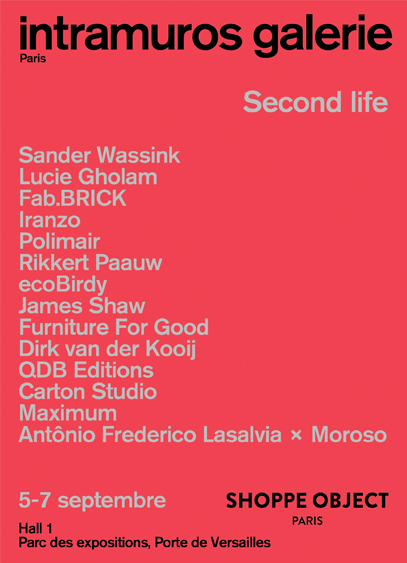
Intramuros presents "Second Life" at Shoppe Object Paris

‍‍For this second edition of Shoppe Object Paris, Intramuros invites you to discover the "Second Life" exhibition and the work of the designers featured in the pages of our latest issue, now available on newsstands.

‍For its second French edition, Shoppe Object Paris returns to the Porte de Versailles from September 5 to 7, 2026. Dedicated to the home, design, and lifestyle sectors, this year's fair aligns with the overarching theme of Who's Next: The Dinner. Designed in harmony with this concept, the scenography will center around a large display table featuring over 80 brands, including Michie Studio, Tiptoe, and Rikke Falkow.

Intramuros at the heart of the event

Echoing the fair's curatorial focus, Intramuros will take part in the event by unveiling the "Second Life" exhibition, showcasing the work of designers featured in our September issue. More than just a timely topic, we wanted to highlight concrete and innovative perspectives. Convinced that current challenges should not lead us to stop producing, but rather to open up new creative horizons by revealing the potential of materials, this theme aims to celebrate the ingenuity of a sector that is reinventing its processes and methods. These are the practices that repair, transform, reuse, recondition, and repurpose what we, as consumers, would otherwise discard. Certain that circularity should not come at the expense of desirability, our selection brings together fourteen stories that the editorial team invites you to discover through Monday at Shoppe Object Paris:

- Sander Wassink

- Lucie Gholam

- Fab.BRICK

- Iranzo

- Polimair

- Rikkert Paauw

- ecoBirdy

- James Shaw

- Furniture For Good

- Dirk van der Kooij

- QDB Editions

- Carton Studio

- Maximum

- Antônio Frederico Lasalvia × Moroso

Temps de lecture
16/4/2026
For Maria Porro, the 2026 Salone del Mobile, between "economic and cultural infrastructure"

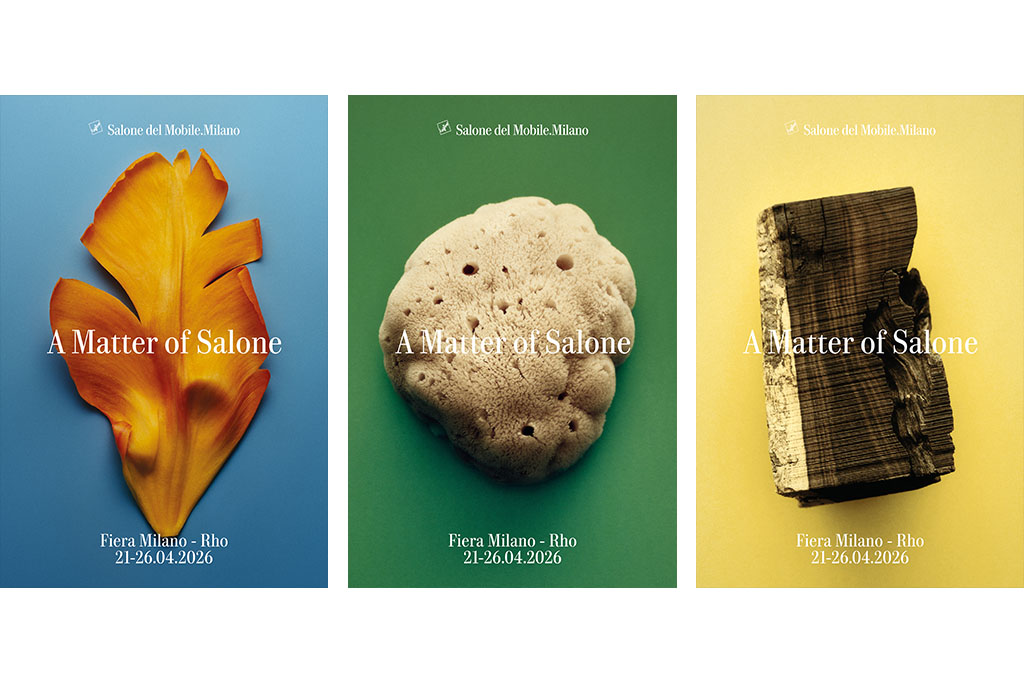
For its 64th edition, Salone del Mobile.Milano is reaching a decisive milestone. As a market infrastructure, cultural platform, and laboratory for experiences, the event is redefining its role on the international stage. Its president, Maria Porro, breaks down this transformation for us.

From April 21 to 26, 2026, Salone del Mobile will bring its latest creations to the Lombard capital, gathering over 1,900 exhibitors across the vast aisles of Europe’s largest exhibition center. Beyond the sheer scale of this major event, the 64th edition stands out for its embrace of new paradigms. In a shifting geopolitical and economic landscape, the event is recalibrating its position as a global player. With the launch of Salone Contract, developed with OMA, the introduction of Salone Raritas dedicated to collectible design, and the immersive Aurea experience, the Salone is broadening its scope and strengthening its transdisciplinary approach. At the intersection of economic, cultural, and experiential challenges, the Salone has established itself as a convergence point for industry, design, and emerging markets—a strategic vision championed by its president, Maria Porro.

‍

To start, could you explain the Salone’s new positioning?

The Salone was founded over sixty years ago. Compared to the market of that era, we are living in a completely different context today, marked by the shock of COVID and the acceleration of transformations that were already underway. One of the major shifts is in furniture retail. In the past, few companies had single-brand showrooms, whereas today, it is an increasingly common trend. More generally, the brand and its communication have become central. At the same time, the contract sector is playing an increasingly important role in business development. Geographic regions that were not accustomed to residential contract projects are now getting involved. It is a massive sector in terms of revenue and is highly international. The Salone is transforming to remain a stable and reliable platform. It is becoming more of an economic and cultural infrastructure, and these two dimensions are closely linked.

FTK Salone del Mobile.Milano 2024 ©Diego Ravier

‍

And regarding design, how is it evolving? We are seeing a significant shift between industrial design and collectible design, particularly with Salone Raritas.

Yes, we are seeing a growing demand for bespoke interiors. At the extreme end of this demand is the collectible market, with increased attention on artisanal techniques and the rediscovery of ancient craftsmanship. This is accompanied by an interest in production in locations far from industrial hubs. I would also add that there is a global craze for iconic or vintage pieces. That is why we are launching Salone Raritas. This sector is not on the fringes of the Salone; it truly complements industrial production. If you take the example of a large hotel, industrial production meets all the practical needs, such as the rooms and common areas, but there is always a set of specific pieces designed especially for that space. In the contract world, the strong collaboration between industrial production and unique, one-off pieces is nothing new. This dialogue has always existed, as seen with figures like Andrea Branzi or William Morris, who felt the need to combine industry with craftsmanship.

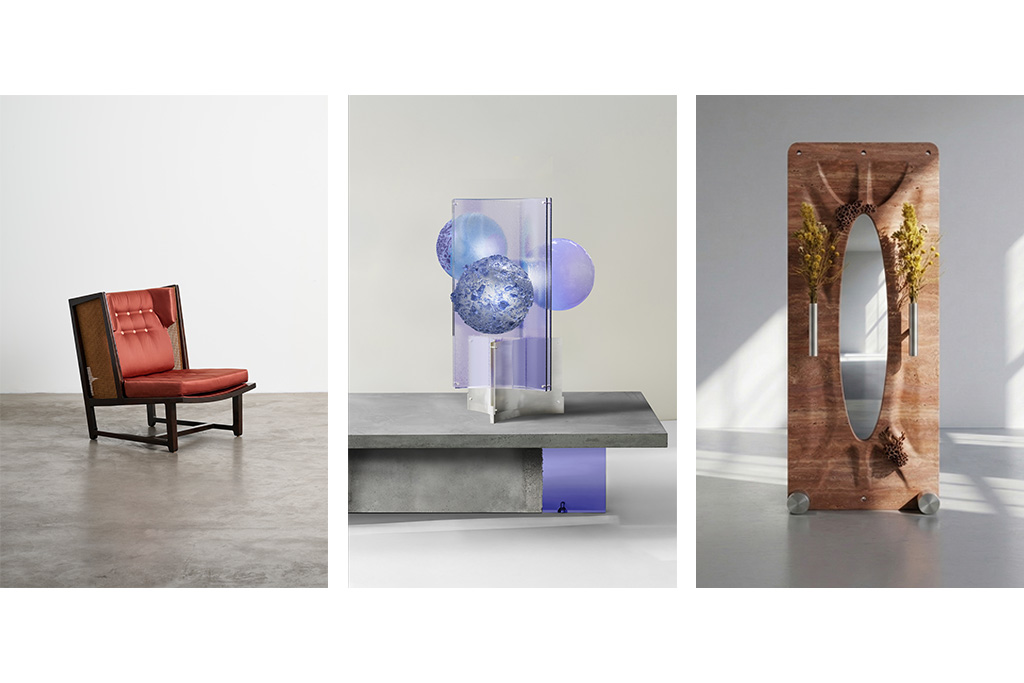
NILUFAR Edward J Wormley © FILIPPO PINCOLINI, Soffio Lamp Salviati x Draga & Aurel, Panel two flower Parasite 2.0 x Bianco67

‍

At the same time, you are offering Aurea, an immersive experience centered on luxury, created by Oscar Lucien Ono. Can we say that with contract, B2C, and hospitality, the Salone is becoming a global platform?

We have nearly two thousand exhibitors, all very diverse in terms of aesthetics, price, techniques, and materials. But our audience is also interested in broader experiences. Companies are effectively building architectures and environments. This is not a fair centered on the product, but on the project. With Aurea, just as with Pierre-Yves Rochon last year, we are creating immersive experiences where the architect utilizes the full range of what the Salone has to offer. There is a coherence to our approach, but it also involves speaking out and fostering dialogue between different players. Visitors can discover companies, live immersive experiences, participate in moments of exchange, or listen to a master of architecture like Rem Koolhaas. It is a complete experience for professionals. We haven't forgotten students either, with the Satellite, which is essential because they represent the players of tomorrow.

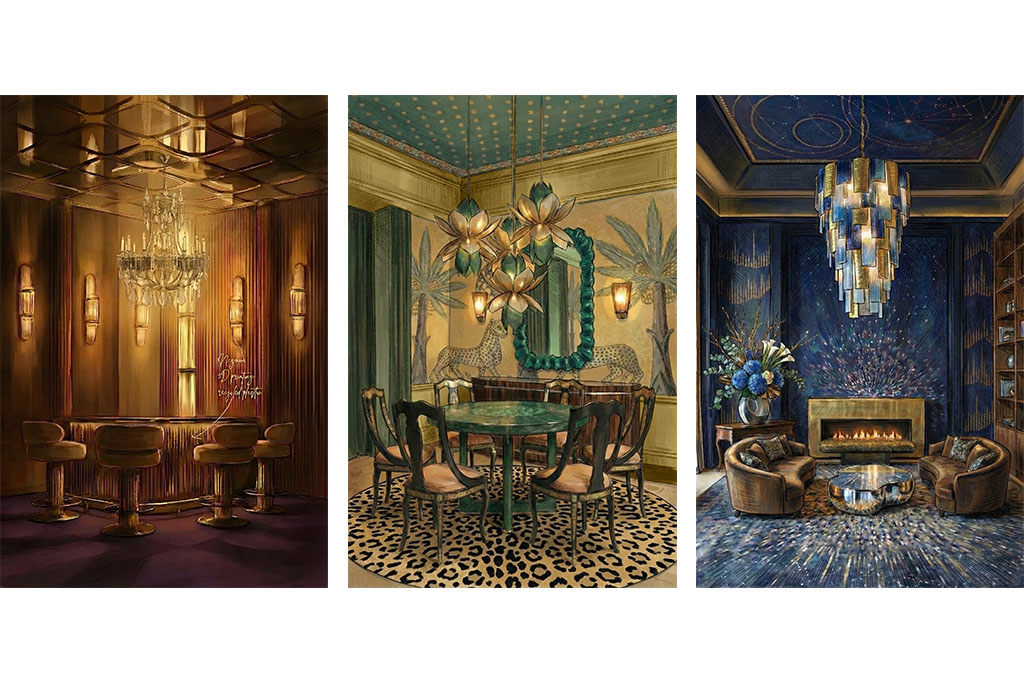
Aurea an Architectural Fiction for the Salone del Mobile 2026. Project Maison Numéro 20 ©Maison Numéro 20

‍

Speaking of which, you are hosting about 700 young designers under 35. Do you think you can still discover the next Patrick Jouin or the Bouroullec brothers, as Marva Griffin’s Satellite did years ago?

Yes, that is very important. There is also the fact that these young designers are in direct contact with the industry, which is fundamental. That is why, this year, we are organizing a day where several entrepreneurs will visit the Satellite, meet with students and young creatives, and share their experience. We want to encourage these face-to-face exchanges. I was a young designer myself, and sending projects by email often leads to no response. On the other hand, presenting a prototype in person creates a different dialogue and captures the attention of entrepreneurs. That is essential for us.

‍

Today, is the diversification of the Salone also a way to reinvent itself in the face of other fairs like Collectible in Brussels or 3daysofdesign in Copenhagen?

This is not a competitive strategy. Companies are already combining industrial production, retail, contract work, and sometimes experimental pieces. This diversity reflects a natural evolution of the market. Collectible design fairs primarily target collectors, whereas the Salone offers galleries a different audience, such as developers, hotel chains, and distributors. We act as an accelerator. Similarly, events dedicated to the contract sector are often highly technical. Our goal is to offer an event centered on projects and relationships, with a focus on how we live. In today’s world, there is no room for two identical events. We are therefore seeking to offer a different approach, without overlapping with what already exists.

©Salone del Mobile
Temps de lecture
17/3/2026
Not(es) for later, un bureau manifeste en plein Bruxelles

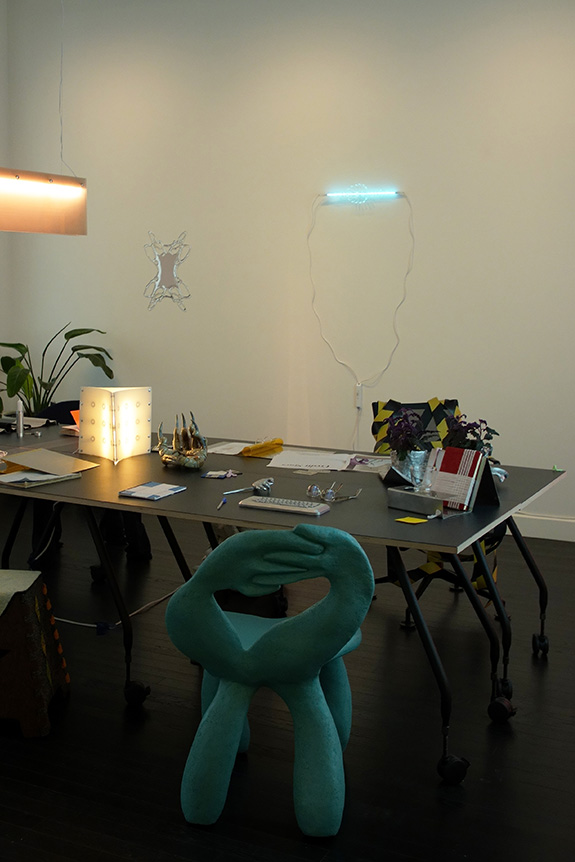
À l’occasion de Collectible Brussels, Fannie Tomas et Manon Viratelle présentaient un bureau pas comme les autres. Imaginé comme un espace de travail figé, l’espace regroupait les travaux de 33 designers réunies pour bousculer les codes du monde du travail.

« Ici, nous sommes dans un monde matriarcal dans lequel les minorités sont surreprésentées et les métiers du care sont non seulement mis en avant, mais également les plus rémunérateurs », annonce Fannie Tomas, co-curatrice de l’exposition Not(es) for later, aux côtés de Manon Viratelle. Effectivement, la proposition semble quelque peu utopique, mais c’est pourtant bien l’idée matérialisée à l’occasion de la Collectible Fair de Bruxelles. Réunissant 33 femmes artistes, reconnues et émergentes, les deux curatrices ont investi Cloud Seven. Créé en plein cœur de la ville par Frédéric de Goldschmidt, ce lieu hybride, à la fois espace d’exposition et lieu de coworking, a, pour l’occasion, fusionné ses usages pour devenir un lieu immersif. Ici, pas de cimaises blanches ni de passages dégagés. Au contraire, les tasses de café à moitié vides traînent çà et là, éparpillées entre les carnets de notes et les écrans allumés sur lesquels défilent les messages d’un monde nouveau. Un espace d’exposition dans lequel le visiteur est invité à déambuler, regarder et découvrir progressivement les 46 créations alternatives imaginées en écho aux notions de pouvoir, de hiérarchies, de dangers et d’invisibilisation.

‍

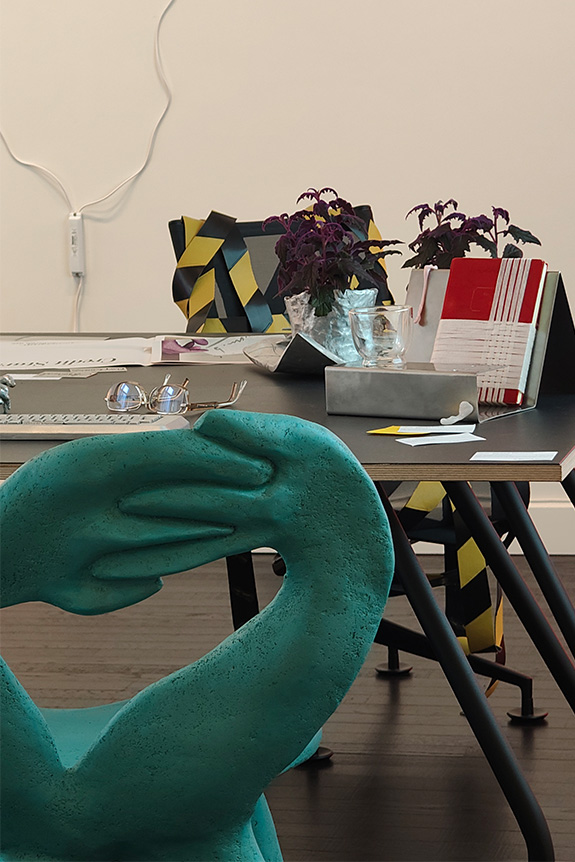
Au premier plan le siège Duties of Laziness par Barbora Zilinskaité, sur la table le porte documents first things in the morning de Naomi Elser et les lunettes Blooming of a face #1 de Clara Besnard ©Juliette Amigues

‍

Le détournement comme mot de désordre

Ici, tous les objets sont connus, mais rarement sous la forme présentée. Véritable lieu manifeste, l'endroit est peuplé de d'éléments de bureautique détournés, puisés parmi les créations des designers sollicitées pour ce projet. « Lorsque l’on demande à quelqu’un ce qu’il fait dans la vie, la réponse est généralement son métier. Aujourd’hui, le travail est une partie constituante de notre individualité, et c’est ce que nous voulions interroger par le biais du design en reconstituant un monde décalé », explique la commissaire Fannie Tomas, également chercheuse sur les questions de travail au centre d’art de l’ISELP à Bruxelles. C’est dans cette optique que l’exposition donne à voir des pièces surprenantes, à l’image de la souris d’ordinateur tissée par Josefine Dransfeld. « Cette designer allemande a mis au point un logiciel permettant de retranscrire une image en schéma que l’on peut ensuite réaliser en dentelle. L’association entre artisanat et design lui est venue car c’est un art typique du village de sa belle-famille, et cette découverte a inspiré son oeuvre. » Une réappropriation contemporaine d’une pratique, elle, plus ancienne, qui se retrouve également dans le travail de la designer Pauline Pastry. « Son père a longtemps travaillé en fonderie, et Pauline a été influencée par les vapeurs toxiques qu’il a inspirées et par cette notion de danger liée à son activité. Elle a donc imaginé un clavier en fonte d’aluminium brute sur lequel subsistent uniquement sept lettres : work die. » Une vision brutale du monde du travail à laquelle font écho le fauteuil de bureau de Lola Mayeras, recouvert de textile selon les codes du tailoring pour interroger les rapports hiérarchiques, mais aussi le tabouret d’Emma Cogné, recouvert de chutes de moquette caractéristiques des bureaux. Autant de propositions issues des vécus des artistes. Mêlant des regards très différents sur notre rapport au labeur, l’événement ne se revendique pas tant comme une exposition de design qu’un univers immersif alternatif et décalé. « Le ton employé est volontairement humoristique, mais c’est une manière de critiquer en creux les structures de travail de notre société », confie Fannie Tomas.

Un cadre amusant, certes, mais qui pourrait, à l’occasion, donner quelques bonnes idées…

‍

‍

Ci-dessous à gauche ©Luciana L.Schutz

Sur la table : lampe Optimus de laurence x marion, ciseaux de Olga Flor, suspension Lamp 01 de Zora Beyeler, tissage Weaving Code par Amandine David, bougie Emerging Absurdity de Yeonsu.

Sur le mur sculpture murale Mecane script de Maud Rondot, photographies Control room et Untilted de Luciana Schutz

Ci-dessous à droite ©Luciana L.Schutz

De gauche à droite : Lampadaire Radiante #2 de Honorine Pardon, Morph lamp de Prisca Razafindrakoto et sculpture Dots de Sophia Taillet

Inscrivez-vous à notre newsletter pour recevoir chaque semaine l’actualité du design.