Exposition : Notre-Dame, un chantier au-delà du normal
« Notre-Dame de Paris, des bâtisseurs aux restaurateurs » fait désormais partie du parcours permanent de la Cité de l’Architecture et du Patrimoine. Cette exposition met en lumière les travaux exceptionnels d’artisans, de restaurateurs ou encore d’archéologues impliqués tant dans la construction que dans la réhabilitation de ce chef-d’œuvre de l’architecture gothique.
À la suite du mémorable incendie qui a dévasté la cathédrale le 15 avril 2019, un chantier d’une envergure rarement vue a été mis en place non seulement in situ, mais aussi dans de nombreux ateliers disséminés sur le territoire.
Une mobilisation nationale
Compagnons, chercheurs, archéologues, ingénieurs et architectes se sont mobilisés pour assurer sa restauration, notamment dans le respect des matériaux. Si des experts se penchent sur le sujet pour proposer des solutions, d’autres en profitent pour comprendre des maîtrises d’œuvre aujourd’hui totalement inconnues.
Construite au XIIe siècle, reconstruite au XIIIe siècle, modifiée au XVIIIe siècle, avant d’être restaurée au XIXe siècle. De nombreux architectes ont collaboré aux modifications de l’édifice aux cours des siècles. De Jean de Chelles à Jean-Baptiste-Antoine Lassus, c’est le nom de Viollet-le-Duc que l’on retient pour sa contribution à la fameuse flèche qui causera tant de dégâts.
La Cité de l’Architecture et du patrimoine propose un voyage dans le temps pour mieux comprendre l’architecture gothique et ses techniques de construction, tout en mettant en lumière le savoir-faire de passionnés qui mettent tout en œuvre pour que ce symbole patrimonial puisse renaître de ses cendres.
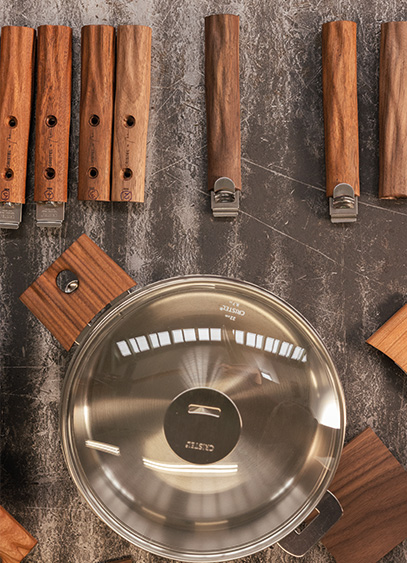
À l’occasion de ses 200 ans, Cristel s’associe pour la première fois à un designer. Avec Noé Duchaufour-Lawrance, la marque revisite son emblématique poignée amovible dans une édition limitée en bois, intitulée Racines.
Depuis sa création, en 1826, la manufacture française Cristel a bâti sa réputation sur un savoir-faire et des innovations qui la caractérisent, à l’image du système de poignées amovibles Cook & Serve imaginé par Paul Dodane en 1984. Si jusqu’ici, l’élaboration d’aucun produit n’avait jamais été confiée à un designer extérieur, cet anniversaire est l’occasion pour la marque d’ouvrir un nouveau chapitre en faisant appel à Noé Duchaufour-Lawrance, dont le travail explore depuis de nombreuses années les liens entre territoire, artisanat et matériaux.
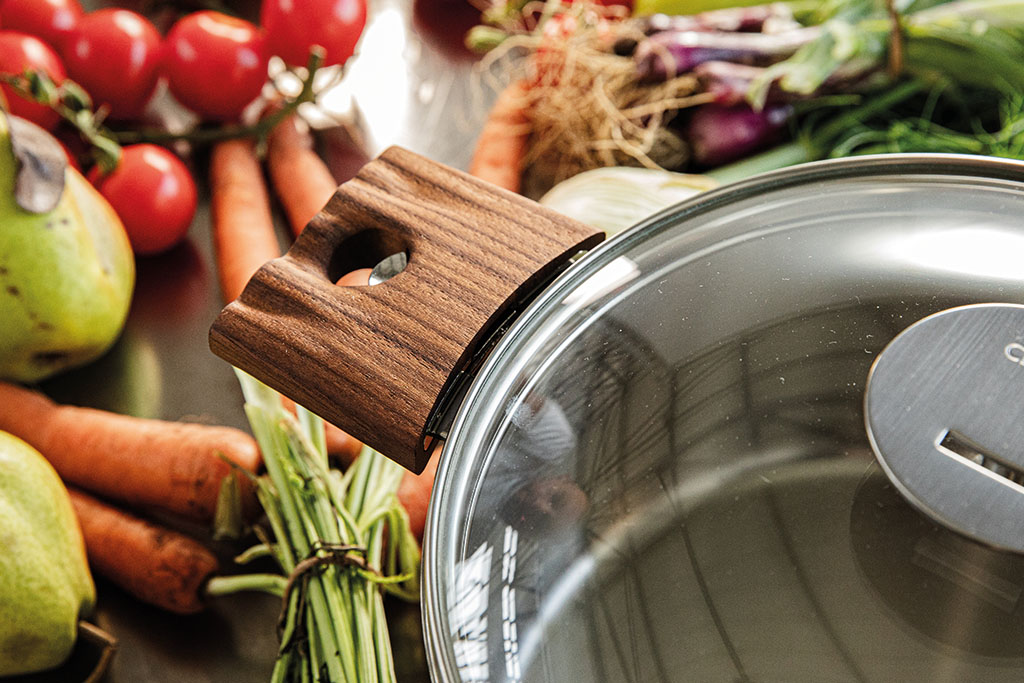
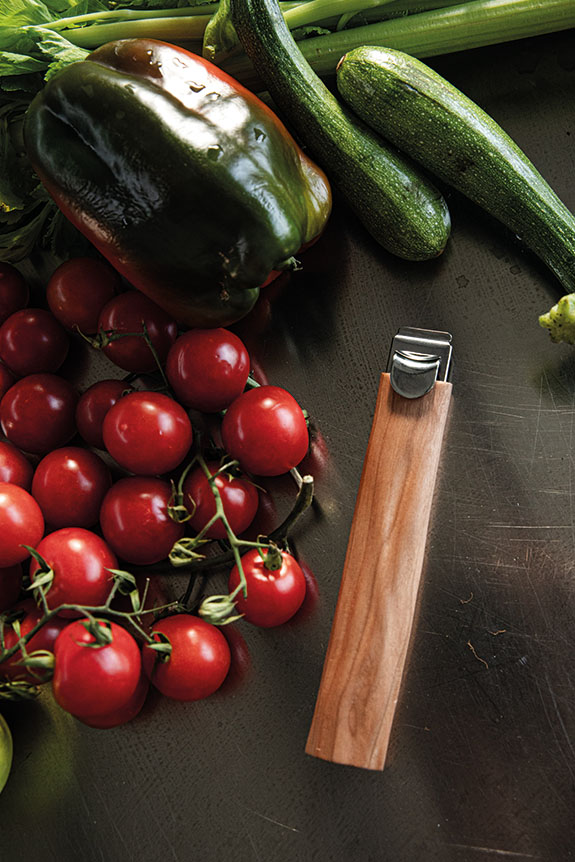
Baptisée Racines, cette nouvelle poignée ne cherche pas à réinventer le système imaginé par Cristel mais à lui offrir une nouvelle expression. Réalisée en bois et éditée en série limitée, sa forme s’inspire directement de l’écorce des arbres. Son veinage sculpté en relief confère à l’objet une dimension à la fois tactile et sensible, comme un rappel du lien instinctif à la matière brute. « Cuisiner, c’est transformer une matière brute. La poignée est l’interface entre la main et cette transformation. À travers cette poignée, j’ai cherché à exprimer la rencontre entre nature et usage », raconte Noé Duchaufour-Lawrance.
Au-delà de l’objet, cette collaboration confronte pour la première fois le savoir-faire industriel de Cristel à la vision d’un designer, sans pour autant renoncer à l’identité qui fait son succès depuis deux siècles. « Racines s’inscrit dans l’univers amovible qui a fait la réputation de Cristel, tout en marquant une étape inédite : celle d’une grande maison qui s’ouvre à un regard extérieur. Noé Duchaufour-Lawrance nous a semblé proche de nos valeurs et être celui qui pouvait apporter de l’émotion à notre savoir-faire », confie Damien Dodane, directeur général délégué de Cristel. Une manière de célébrer deux cents ans d’innovation en rappelant que le design peut aussi raconter une histoire, celle du lien entre l’homme, la matière et l’usage.
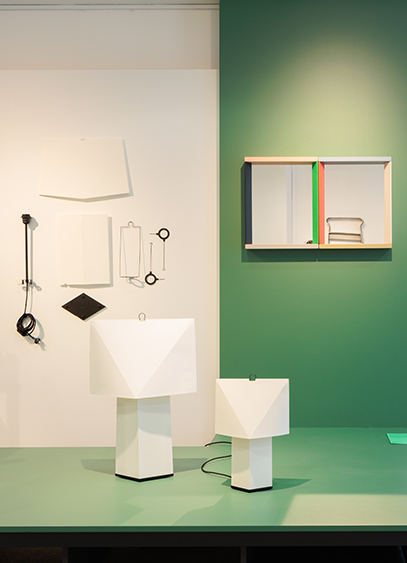
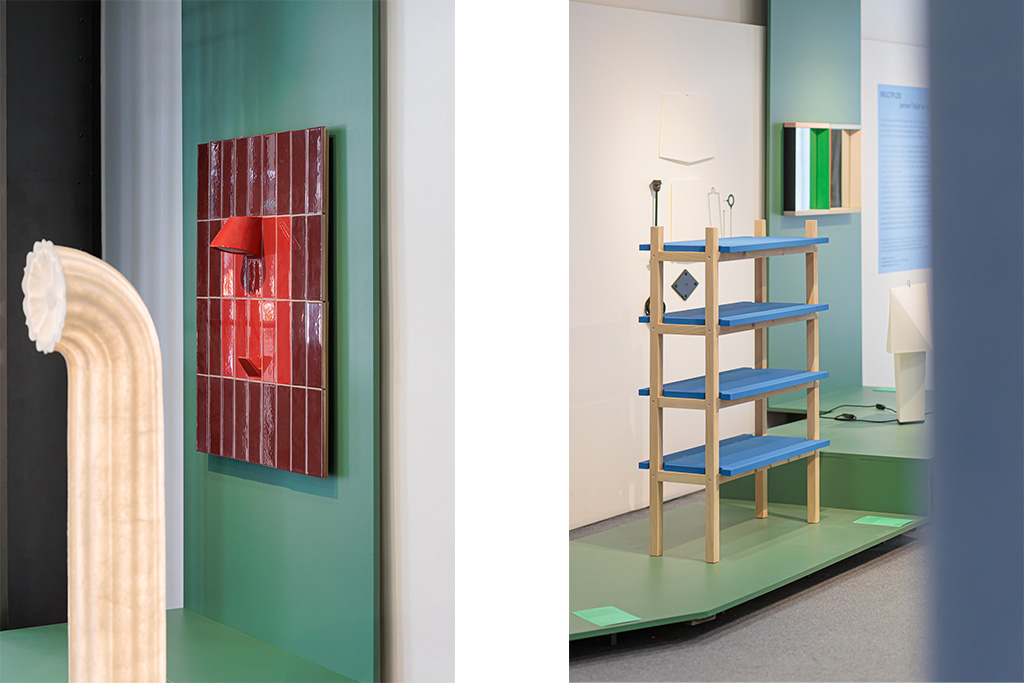
Through October 3, the Bureau de la Mode, des Métiers d’Art et du Design (BDMMA) is presenting the "Multiples" exhibition. A range of projects celebrating industrial design and the new relationships between designers and industry.
As we reflect on September's Paris Design Week, one thing is clear: collectible design seems to reign supreme. Yet, the less "Instagrammable" world of industrial design has not disappeared. To reaffirm its presence and offer a counterpoint to the current trend, the Bureau de la Mode, des Métiers d’Art et du Design (BDMMA) presents "Multiples." Conceived as a return to basics, the exhibition is not "a status report on the sector", but rather aims to "provide an overview of research and textures centered on mass production", explains Frédéric Bouchet, deputy director of the institution. This diversity is reaffirmed through thirteen studios whose utilitarian and aesthetic objects celebrate production. Through this, the focus is not on creating for the sake of creating, but on the intelligence of replicable and viable systems.
A new relationship with industry, but the same idea of design
If the sector is experiencing "a change of state", it is partly due to the upheaval that has occurred in industrial production. "The relationship with industry has changed completely, requiring designers to shift their stance and be less passive regarding production. They are now encouraged to take hold of processes themselves or repurpose production methods to engage in self-publishing", analyzes Frédéric Bouchet. These new alternative paths are prompting some designers to question the challenges related to resources and how the materials used serve their intended purpose. "It seems to me that this concern is increasingly rooted in the local fabric, as seen in the work of Jules Levasseur. He convinced a company in Burgundy, where he is based, to take an interest in his project, and together they developed 'Projet S,' made from corrugated metal sheets. His challenge today is to channel production at his own scale to produce just the right number of furniture pieces." Beyond the challenge of economic adaptability, there is the issue of formal and technical reinterpretation. "How can one avoid being beholden to traditional publishing? How can I bring local industry into my own territory while generating value? These are the two major questions that emerge in the exhibition, notably through the work of Lila Guédin, who used industrial assembly techniques to create chairs, and Nicolas Verschaeve, who uses tool handles to create small interior objects like hooks and coat racks." These captures and reinterpretations of pre-existing industrial matrices open up new aesthetic and technical doors. Whether published or not, the projects selected by curators and exhibitors Lucien Icard and Kevin Lebouvier shed different lights on these new relationships with industry, favoring "a certain stylistic purity based primarily on assembly".
An exhibition to discover at the Bureau de la Mode, des Métiers d’Art et du Design, 30 rue du Faubourg Saint-Antoine, in the 12th arrondissement of Paris, until October 3rd.
Since 1993, the City of Paris Grand Prix for Creation has supported new generations of designers in the fields of fashion, design, and fine crafts. Here are the eight winners of this 33rd edition.
Established thirty-three years ago, the Grand Prix for Creation is part of the City of Paris's policy to support the fashion, design, and fine crafts sectors. Organized by the Bureau of Design, Fashion and Fine Crafts (BDMMA), this year’s awards recognize eight professionals, each receiving a grant of 18,000 euros. It is a modest contribution considering the 350 applications received by the juries, chaired this year by Ionna Vautrin for design, Lisa Gachet for fashion, and Jeremy Maxwell Wintrebert for fine crafts.
Design Revelation Award: behagelfoiny
Antoine Behaghel and Alexis Foiny met while studying at the Arts Déco. Gradually inspired by the ready-made, they began developing projects centered on exploring the materials at their disposal. This approach led them to found their studio in 2020, based on a practice inspired by neo-craftsmanship. "We act as a connection point between different trades, which allows us to reclaim the creation and production of objects by implementing innovative methods. This is our DNA, even as we expand our expertise into other fields like scenography. This approach leads us to address issues related to environmental awareness and childhood." Their approach has already caught the attention of galleries and institutions, such as Le French Design, which included them in its FD100 list, and the Mobilier National, which acquired their Alupié bookcase in 2026.
Represented by the Signé gallery on Rue Jacob in Paris, Marie and Alexandre are currently presenting "Under Pressure," an exhibition of objects shaped by pressure. The project effectively summarizes their work, which began five years ago after meeting at the Villa Noailles during the Design Parade. Marie, who studied at HEAD in Geneva and ECAL in Lausanne, and Alexandre, who trained at ENSCI – Les Ateliers and later at the California College of the Arts in San Francisco during a university exchange, share a curiosity for craftsmanship that drives them to adopt an itinerant practice. Between factory visits and field experiments, the duo collaborates with brands such as Glas Italia, Dryade, and Petite Friture. "Our creations for galleries allow us to conduct free research, which we then use as a foundation for more industrial projects."
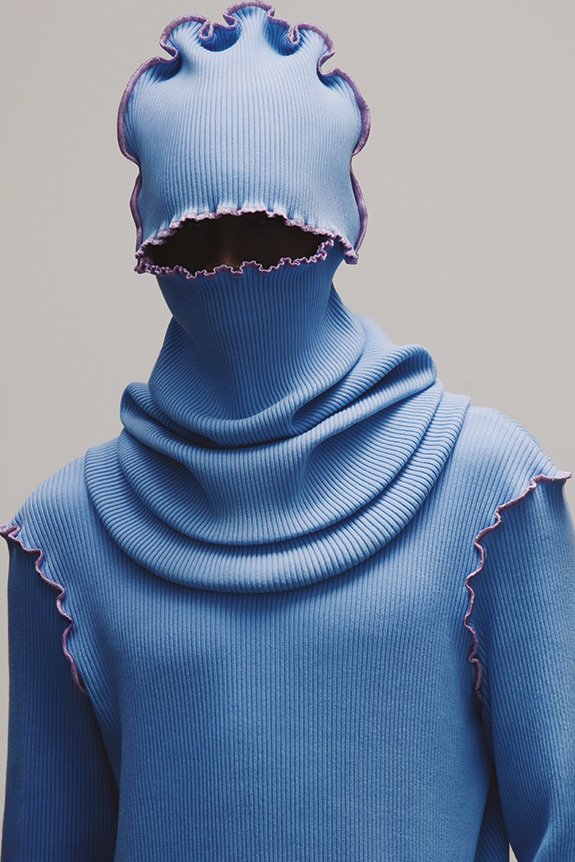
Sewing. An activity that has occupied Anthony Calydon’s mind for twelve years. He started by making his own clothes, had a brief stint at ESMOD, and then decided to continue as a self-taught designer. His career began quietly thanks to Instagram. Alongside his work dressing artists, he works as a pattern maker for emerging labels. But he is in no rush to move too quickly until he has found his style—one that will be recognizable at a single glance. "I have always been inspired by Japanese designers. I wanted to offer something strong, without a logo. I wanted people to see my pieces and think: that’s Anthony Calydon. And, little by little, I made ribbing and overlock stitching my signature." A world and a body of work rooted in their time, driven by a deep attention to craftsmanship.
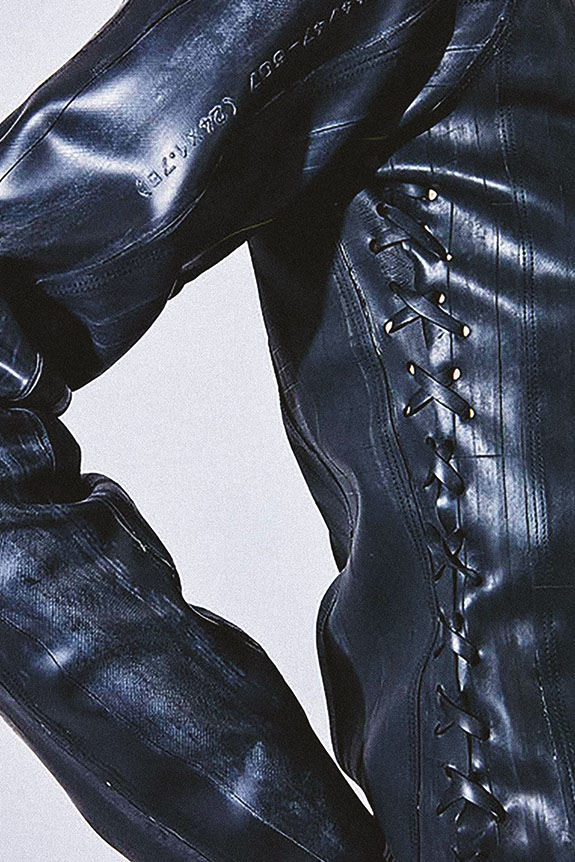
A chemical engineer from INSA with a master’s degree from HEC, Samia Boukbir spent five years in marketing and international makeup development before joining a collective dedicated to upcycled fashion. Her professional path then transformed into a journey. "In 2016, I went to Cuba and my professional life changed forever," recalls Samia Boukbir. I discovered a company entirely based on reclamation, having spent nearly seven years in the industry at L’Oréal and Dior. It really made me question things. When I returned, I quit my job… and ended up at the Saint-Ouen flea market!” It was in this historic cradle of the circular economy in Paris that Samia established Collectivo, which officially launched in 2022. The collective has since collaborated with 22 designers. Each new collection is an opportunity to open the circle to new talent through open calls for projects. “Everything starts with our selection of materials to upcycle: we build the plans for our three collections around them, focusing on reinvented officewear, sports, and innovation.”
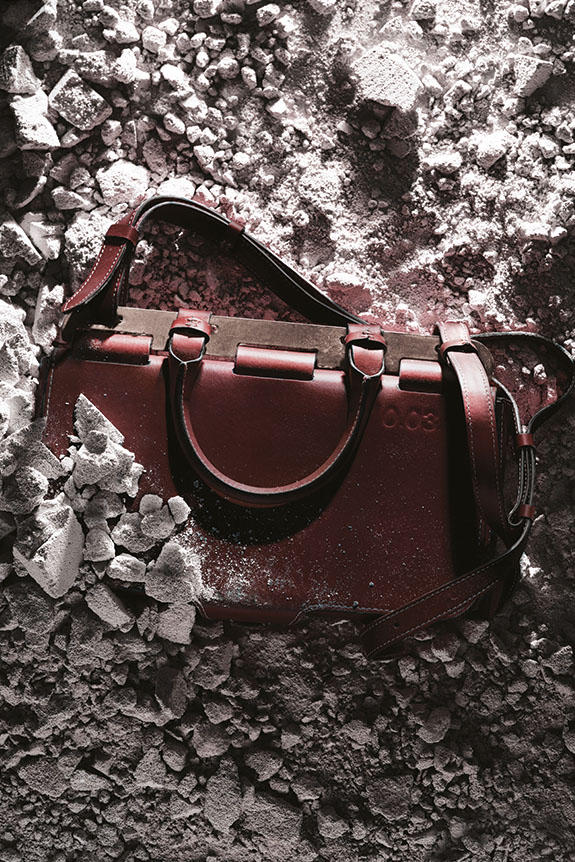
The story begins with the purchase of a huge orange bag. That first purchase sparked a realization. “It was an act of emancipation. For my dad, a bag was a forbidden object for a man. But I was fascinated by it!” However, it would be a while before Luca Colosimo dedicated himself to this accessory. After studying industrial pattern-making for ready-to-wear—which he hated—receiving a scholarship to train in leather goods prototyping, and gaining experience at Gucci, Isabel Marant, and Paco Rabanne, he had a breakthrough in 2020. He then launched his own brand, naming it after his father’s birth date: 10.03.53. From there, he began creating sensual designs with classic shapes, with a particular interest in innovative materials. “Today, we make bags out of paper, reinforced concrete, untreated leather… We’re having fun!”
Fashion Jewelry Accessories Award: Sarah Madeleine Bru
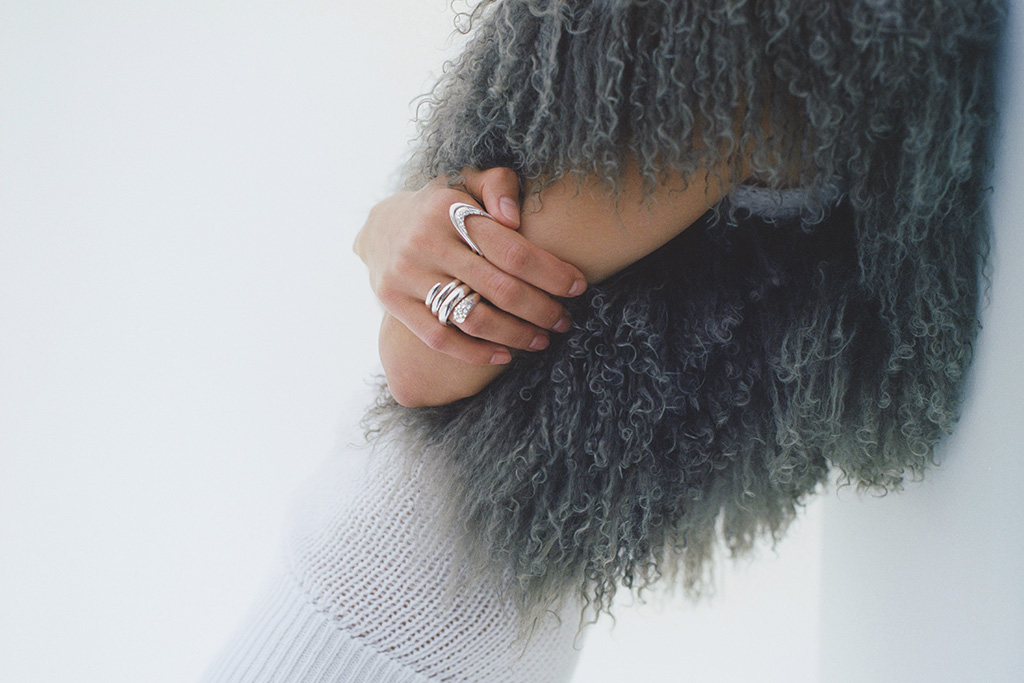
Trained at a design school in Nantes, Sarah Madeleine Bru quickly realized she was passionate about craftsmanship. She took on numerous internships and freelance assignments while still a student, before joining the Creative Academy, the Richemont Group’s school in Milan, which provides training in design for the jewelry, watchmaking, and accessories sectors. “That allowed me to join the brand Dunhill, which is little-known in France but is a bit like the Hermès of menswear.” She stayed there for a year, during the time Kim Jones was the artistic director, before being scouted by Louis Vuitton. Then, in 2012, she went solo. “At the beginning, I mainly sold my silver jewelry to my friends. Then I got some press, I was recognized, and I evolved my designs. Today, high jewelry and custom orders have taken over.”
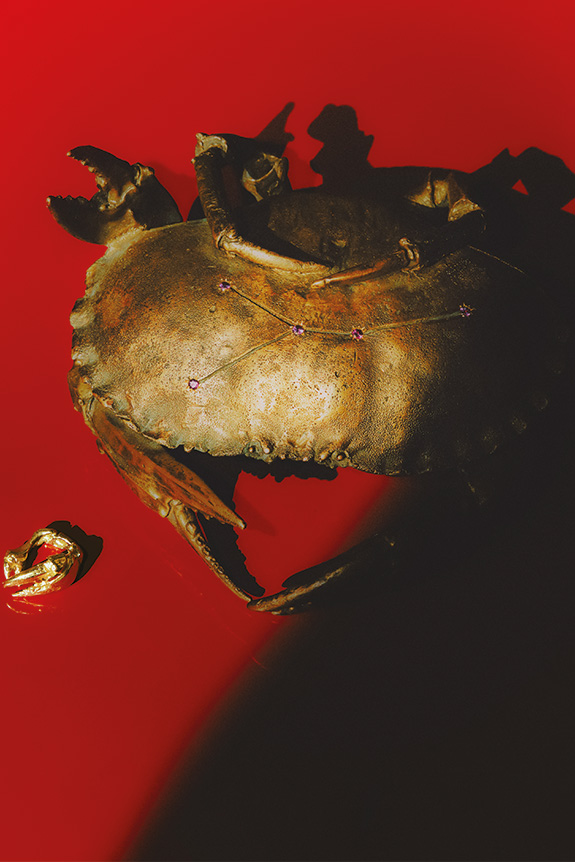
A sculptor, bronze caster, and jeweler, Chloé Valorso discovered the lost-wax casting technique during her studies in London, first at Central Saint Martins and then at the Royal College of Art. “I wanted to learn the technique from A to Z. Normally, artists go to outside foundries or learn just a few steps. I wanted to master everything so I could innovate.” Inspired by anthropology seminars and works on new materialism and eco-feminism, the designer works through collage, giving birth to objects akin to "exquisite corpses of stories and mythologies", opening up the imagination. "I mostly work with materials imbued with life: snakeskins transmuted into bronze, flowers I immortalize using a direct casting technique I developed. I just finished some candle holders, combining roots, snake vertebrae, and flowers gathered from Parisian gardens."
Craftsmanship Commitment Award: Les Ateliers Victor Bert
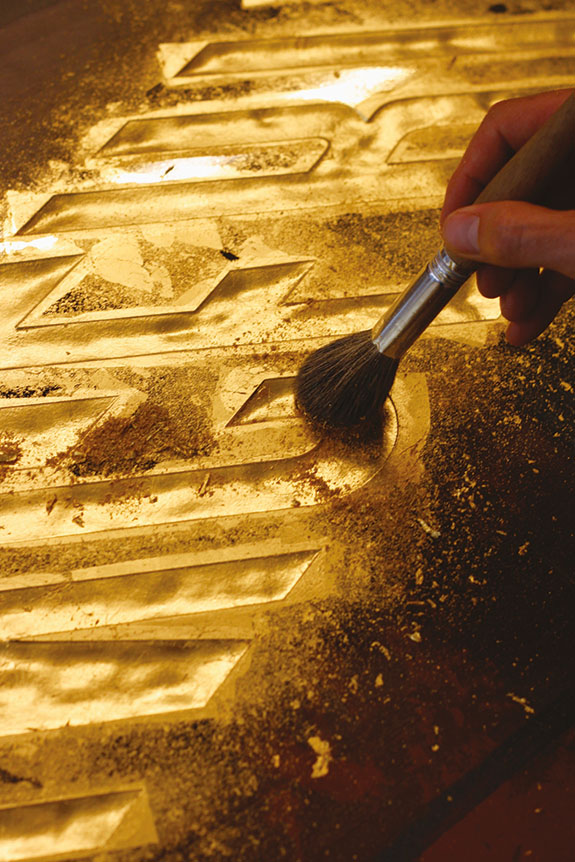
Giving visibility to an endangered craft: this is what drove Victor Bert, a sign painter, to enter the City of Paris Grands Prix de la Création. Always fascinated by historical monuments, Victor trained as a stonemason in Amiens. It was there that he discovered stone engraving and quickly developed a passion for lettering. With his vocational certificate in hand, he moved to Paris, working while supplementing his training with courses in typography and calligraphy. "I always knew that lettering went beyond stone carving, that I needed to explore a multitude of mediums. I have never stopped enriching my practice. That’s how I discovered a documentary on American sign painting in 2015 and decided to get started."
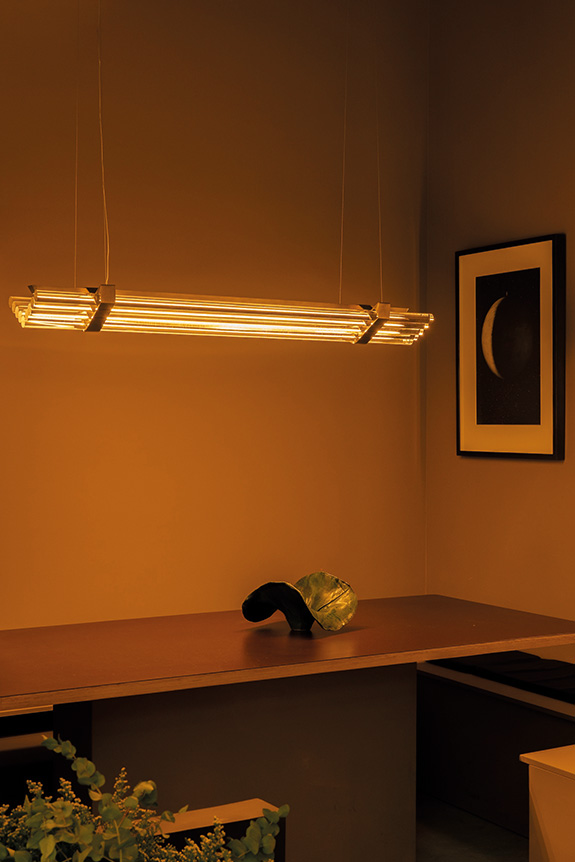
Conceived by Thierry Dreyfus for DCW éditions, the Seagull collection is expanding with a new 160 cm pendant lamp. A change in scale that maintains the luminaire's founding principle: to reveal the light rather than the lamp itself.
Making light a presence without letting the fixture dominate the space: this is the philosophy behind Seagull, imagined by Thierry Dreyfus. To design it, the designer drew inspiration from Frank Lloyd Wright's Johnson Wax Building, built in the late 1930s, where glass tubes diffuse exterior light into the interior. Thierry Dreyfus transposes this sensation to a domestic scale through a succession of horizontally arranged light tubes, in a composition with Art Deco accents.
Seagull pendant lamp, design: Thierry Dreyfus
New proportions, new possibilities
Already available in a 120 cm version, Seagull now comes in a 160 cm format, designed to complement larger tables. Ideally suspended between 80 cm and 1 m above the tabletop, the fixture stretches the light rather than concentrating it, creating a "roof of light," to use the words of Frédéric Winkler, president and founder of DCW éditions. A new scale that also opens Seagull up to other uses, because more than just a simple light source, the pendant can become a true line in space, capable of following architecture and guiding the eye. An approach that extends the research of Thierry Dreyfus, known for his light installations and collaborations with Comme des Garçons, Raf Simons, and Peter Marino. The goal is to stage the light, here in a version designed for everyday life.
Newsletter
Chaque semaine, recevez toute l’actualité du design avec la newsletter Intramuros.



.svg)


.svg)