Rockstone par Jean-Michel Wilmotte : l’imperfection comme pierre angulaire
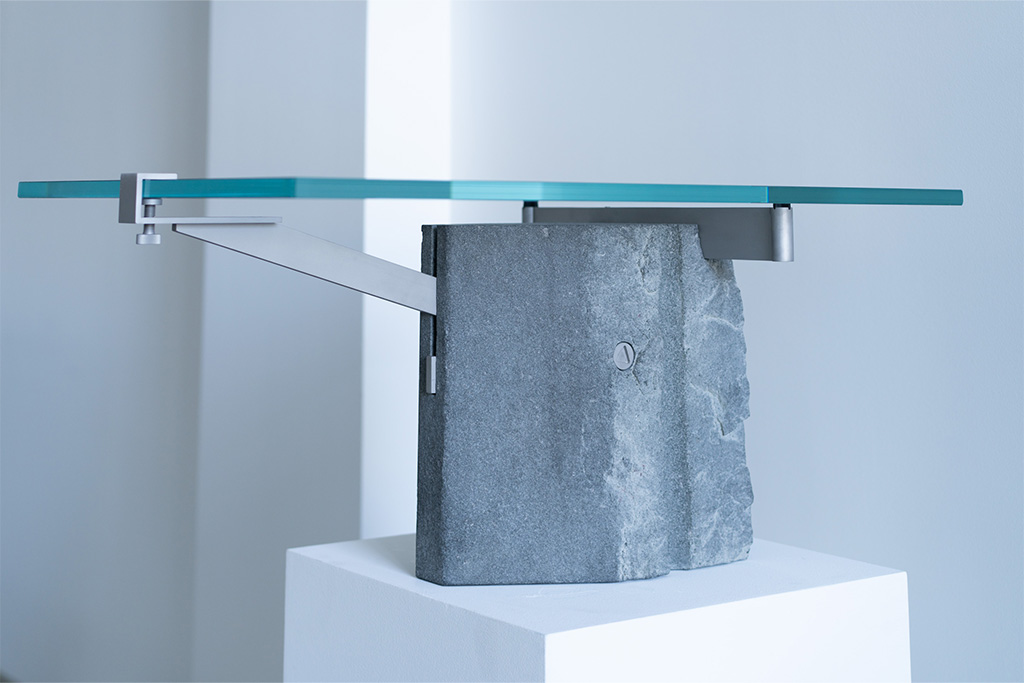
Jean-Michel Wilmotte et la galerie Dutko exposent Rockstone jusqu’au 31 mai. Une collection dans laquelle le verre et l’acier soulignent l’imperfection des pierres destinées au rebut.
« Dans les années 80, je me rendais régulièrement à Carrare pour visiter et explorer les carrières de marbre ainsi que les dépôts ou s’entassent des pierres du monde entier » raconte Jean-Michel Wilmotte. Un contact avec la matière qui a largement influencé l’architecte connu pour ses projets caractérisés par la clarté du dessin. Pour sa nouvelle collection, Rockstone, l’architecte - qui a longtemps préféré la simplicité des pierres lisses et peu veinées dans ses projets - pose un regard plus brutaliste sur la matière. Présentées au sein de la galerie Dutko, les quinze pièces ont été dessinées comme autant de supports aux singularités des roches. Choisies parmi les rebuts des carrières de Carrare - qui ont donné leurs noms aux pièces - les différentes typologies de mobilier se déclinent en marbre, granit et pierres calcaires. Fendues, sciées, percées ou plus grossièrement arrachées d’un autre bloc, les pierres portent les stigmates de leur exploitation. Plus que le veinage ou la granulométrie de la roche, ce sont les conséquences de l'extraction qui servent de point de départ à l'architecte qui adapte son dessin aux accidents d’origine humaine. « Je conçois et découpe les blocs pour mettre en exergue les parties les plus brutales. » Des aspérités dans les masses que l’architecte encadre ou souligne avec « l’exactitude et la finesse de l’acier microsablé et du verre ». Une recherche d’équilibre née de la confrontation des matériaux et de leur association, par vissage ou encastrement. Si la collection a été réalisée « comme un hobby, pour penser à autre chose », elle fait évidemment écho aux principes constructifs utilisés par l'architecte dans certains projets. Et parmi eux, une future usine aéronautique prochainement livrée par l’agence à Toulouse confie Jean-Michel Wilmotte.
Initiée conjointement par le galeriste Jean-Jacques Dutko et Jean-Michel Wilmotte, la collection, ode à l’imperfection des masses naturelles et à la précision des lignes manufacturées, s’inscrit en résonance avec l'œuvre de Jean-Pierre Pincemin. Contemporain de l’architecte qui le collectionne, le peintre se distingue par un travail des trames et des aplats nuancés. Une approche de la peinture moderne qui entre donc naturellement en dialogue avec Rockstone. Deux manières de concevoir les volumes, mais un même goût pour la création et ses déclinaisons. Forme d’évolution libre et intuitive de sa précédente exposition, Doppia V, la collection présentée jusqu'au 31 mai par l’architecte est avant tout le fruit d’une démarche prospective et intuitive de la matière. Une forme de cycle que Jean-Michel Wilmotte envisage de compléter avec une dernière collection dédiée à la roche et la couleur.
Exposition Rockstone by Jean-Michel Wilmotte à découvrir jusqu'au 31 mai 2026 à la Galerie Dutko, 17 quai Voltaire, 75007 Paris.
Jusqu’au 6 février 2027, Muller Van Severen investit la Tim Van Laere Gallery de Rome avec « Pianos », une exposition réunissant sept pièces uniques à mi-chemin entre mobilier et sculpture, où l'instrument de musique se réinvente à travers de nouveaux usages.
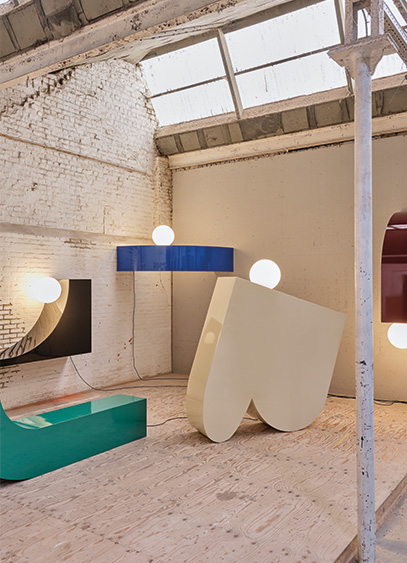
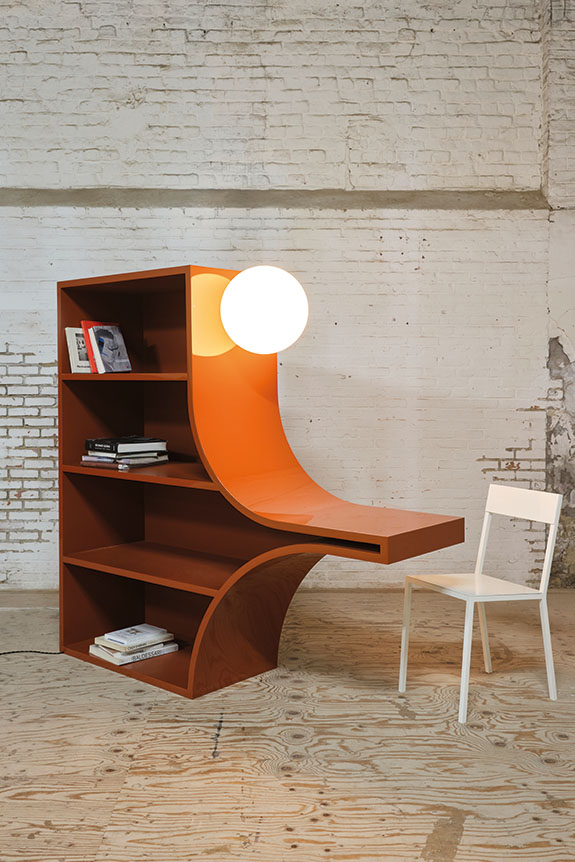
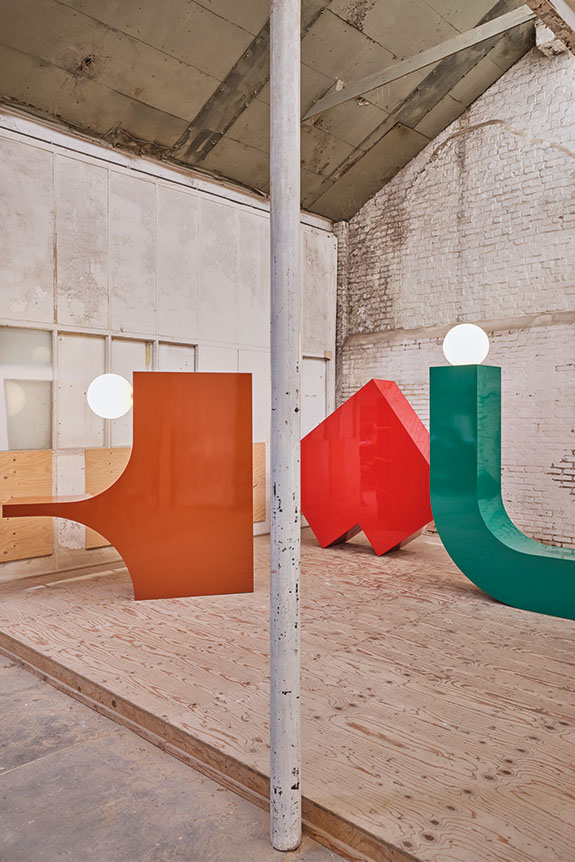
Et si le piano devenait un objet fonctionnel, accessible même à ceux qui ne savent pas en jouer ? C’est le point de départ de « Pianos », la nouvelle exposition du duo de designers Muller Van Severen, composé de Fien Muller et Hannes Van Severen. Fascinés par la présence architecturale du piano, ses lignes et ses surfaces laquées, les designers ont imaginé sept pièces uniques qui reprennent les codes esthétiques de l'instrument, tout en le détournant de sa fonction première. Déconstruites et recomposées, les silhouettes se transforment ainsi en tables, bancs, armoires ou sculptures murales, conservant une identité familière malgré leur nouvelle fonction.
Avec « Pianos », le duo belge poursuit son exploration des frontières entre art et design, en jouant sur les volumes, les matières et les usages. Le titre de l'exposition fait également référence au terme italien piano, qui désigne un plan ou un niveau, en écho aux différentes surfaces horizontales qui composent ces petites architectures.
Autre particularité : six des sept pièces sont surmontées d'une sphère lumineuse en verre opalin, remplaçant symboliquement le son par la lumière. Une transformation qui confère aux créations une dimension presque onirique, évoquant notamment l'univers surréaliste de René Magritte. Entre surfaces brillantes, jeux de lumière et silhouettes sculpturales, l'ensemble compose une atmosphère feutrée, inspirée des clubs de jazz, où le piano, désormais silencieux, conserve toute sa présence.
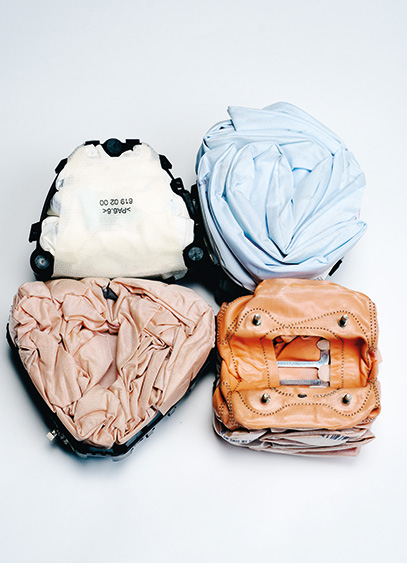
With Third Line, the French group GPA, specializing in automotive recycling, is launching a new design prize aimed at exploring the creative potential of materials sourced from end-of-life vehicles. For this inaugural edition, artists and designers are invited to imagine new uses for an unexpected material: the airbag. The call for entries is open until January 31, 2027.
What happens to automotive materials when they can no longer be recycled? This is the question the GPA group, a family-owned business based in the Drôme region specializing in automotive recycling, aims to answer with the launch of Third Line. Conceived as a biennial event, this new prize intends to foster a dialogue between contemporary creation and industrial expertise by inviting artists and designers to rethink the uses of materials that are currently underutilized. Each year, GPA processes more than 45,000 vehicles and manages to recycle and recover an average of 99.7% of their mass. However, certain materials, such as foams, leathers, and airbags, remain difficult to recycle. It is precisely these materials that Third Line seeks to view through a new lens, turning design into a true field of experimentation.
The airbag as a creative material
For this first edition, the focus is on the airbag, a technical polyamide textile known for its lightness and mechanical strength, but which currently lacks any suitable recycling stream. Prize applicants are invited to explore its properties to imagine a piece of contemporary, functional furniture intended for corporate spaces.
A prize bridging research and production
Open to artists and designers, the Third Line prize includes a €10,000 award and offers support that goes beyond mere financial reward. The winner, to be announced in the spring of 2027, will be hosted at GPA starting in September 2027 for a research and production residency. They will be able to develop their project in collaboration with the company's teams, as well as local artisans and technical partners, through to completion. Ultimately, the goal of each edition will be to explore a different material, gradually building a collection born from this encounter between creation and industry.
For the launch of the first edition of the Trophées du Meuble, Dantès Presse—publisher of Le Courrier du Meuble, Cuisines & Bains magazine, and Concept Bains—has partnered with Intramuros magazine and Maison&Objet. This collaboration will include a major awards ceremony held at the trade show on January 14, 2027. Frédéric Marty, General Manager of Dantès Presse and Editor-in-Chief of Intramuros, and Vincent Lhoste, General Manager of Safi, discuss the ins and outs of this new event.
In 2026, Dantès Presse and Intramuros are launching the first edition of the Trophées du Meuble. What does this event entail, and what is the motivation behind this initiative?
Frédéric Marty: The positioning of our various magazines—Le Courrier du Meuble, the historic B2B publication for the furniture industry; Cuisines & Bains magazine and Concept Bains, which are leaders in the kitchen and bathroom sector; and Intramuros, the reference for design—gives us a comprehensive view of the furniture market. We realized that while these different fields, all centered on home furnishings and interior architecture, have their own competitions and awards, they lack connections and bridges between them. The main idea behind the Trophées du Meuble is to fill a gap in the market by creating a cross-disciplinary competition that rewards the excellence and expertise of all these companies—industrial or artisanal—without which designers' creations could never come to life.
How have market players responded, and where do we stand with the schedule as of early November?
Frédéric Marty: We received a very positive response right away, which encouraged us to see this project through. Today, there is a lot of talk about collectible design, limited editions, and exclusive creations, but not enough about industrial design or the expertise of manufacturers and artisans—which is remarkable in France and Europe and forms the foundation for the quality and large-scale distribution of our products. We must pay tribute to and support all these companies that invest, innovate, and take risks. To fulfill this role, the Trophées du Meuble are divided into 11 categories—such as living room, outdoor furniture, eco-furniture, contract, etc.—with three awards in each (First Prize, Jury’s Special Prize, and Public Prize, totaling 33 awards). These will be decided by an independent jury composed of experts from each sector to eliminate any risk of bias or insularity. Regarding the schedule, entries are open until December 15, 2026, which will allow the juries to deliberate before the end of the year, leading up to the awards ceremony on January 14, 2027, at Maison&Objet.
Maison&Objet is a major event in our sector that needs no introduction, but the concept has evolved significantly in recent editions. Could you give us an overview of its main features?
Vincent Lhoste: Today, Maison&Objet is much more than just a trade show. It is an ecosystem that supports professionals throughout the year through our physical meetings, our digital platform MOM, and the events that bring design to life in Paris: Paris Design Week in September and In the City in January. Our ambition remains the same: to create meaningful connections between brands, specifiers, distributors, and buyers, and to provide them with the means to launch new projects. Our two Parisian events have complementary identities. In September, Maison&Objet Pulse focuses on movement, innovation, and new ways of living and creating. It is a time for exploration, open to trends and possible futures. In January, Maison&Objet Premier asserts a more premium dimension, with a particular focus on excellence, craftsmanship, and exceptional signatures. This edition also broadens the perspective from the object to the space and new uses, particularly in high-end decoration and the Contract sector.
The partnership between Maison&Objet and the furniture industry has a long history. What is the profile of the furniture brands that exhibit at the show, and why is this event valuable to them?
Vincent Lhoste: The show brings together a diverse range of profiles: established houses as well as newer brands, publishers, manufacturers, and designers. They share the same high standards for design, quality, and differentiation, with offerings ranging from furniture to interior design solutions and projects for the hospitality or Contract sectors. For these brands, Maison&Objet is a place for visibility and commercial development. They can present their collections, meet international buyers, distributors, and specifiers, and also test their proposals against market trends. The show creates the conditions for exchanges that can lead to concrete projects, listings, and orders.
Frédéric Marty, General Manager of Dantès Presse and Editor-in-Chief of Intramuros
The first Trophées du Meuble awards ceremony will take place next January at Maison&Objet Premier, which runs from January 14 to 18. Why did you choose this event?
Frédéric Marty: From the moment we launched our competition, Maison&Objet expressed its desire to be our partner, and our teams met to work together on developing the best possible project. Maison&Objet is indeed the ideal partner because of its cross-disciplinary view of the market: the show covers almost all sectors of the home, hosting numerous furniture profiles for both residential and contract use, which are covered by our various magazines. Our publications and the show are complementary: the winners of the Trophées du Meuble, as well as all participants, will benefit from editorial coverage in our columns, but also from the resonance of Maison&Objet and all the media coverage of the event by French and international print and web publications. Our goal is to give the widest possible audience to the creativity and expertise of the players in our markets.
Why is Maison&Objet Premier, which will hold its first edition in January, the right venue to host the Trophées du Meuble?
Vincent Lhoste: Maison&Objet Premier is a particularly fitting setting to host these Trophées because it highlights the excellence, innovation, and expertise that drive the industry forward. Furniture has always held an important place in the history of our show, and the new Maison&Objet Premier concept, held in January, offers furniture brands a prime platform for expression. The Trophées du Meuble, organized by Le Courrier du Meuble with Intramuros, Cuisines & Bains Magazine, and Concept Bain, recognize companies, innovations, and expertise in the worlds of furnishing, design, and Contract. Their presence at Maison&Objet Premier gives visibility to those who are advancing these sectors. It also reflects our desire to foster dialogue between the different trades of interior design and to celebrate the initiatives that contribute to their transformation.
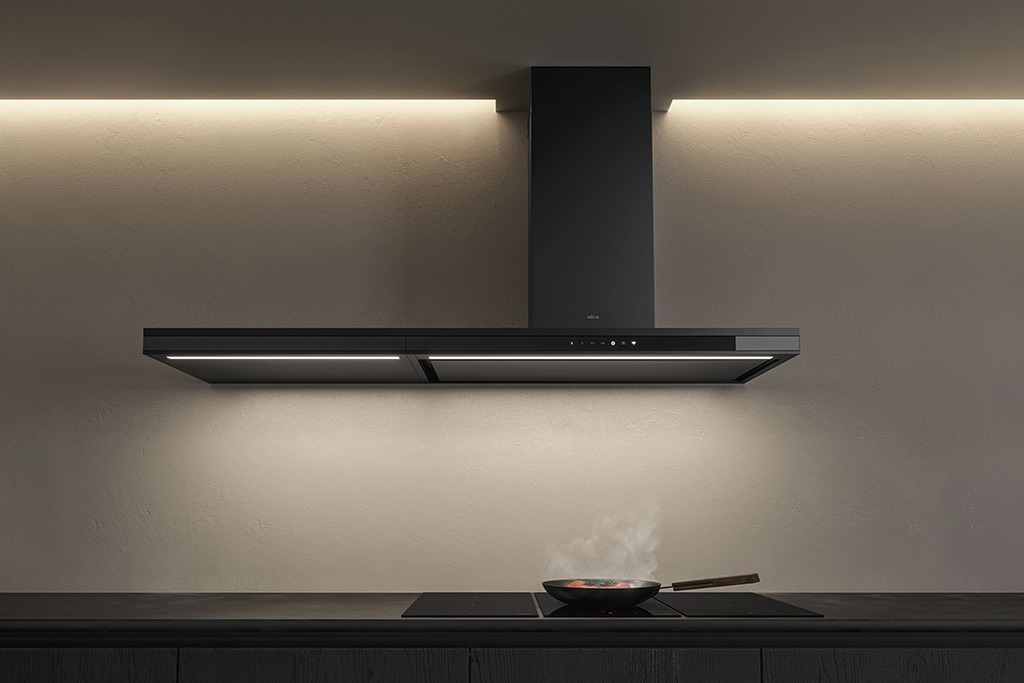
With its Matte Black and Raw finishes, Elica explores the aesthetic and technical possibilities of matte black in the kitchen. From hoods and cooktops to ovens and lighting, the Italian brand is developing a shared design language where style, innovation, and functionality meet.
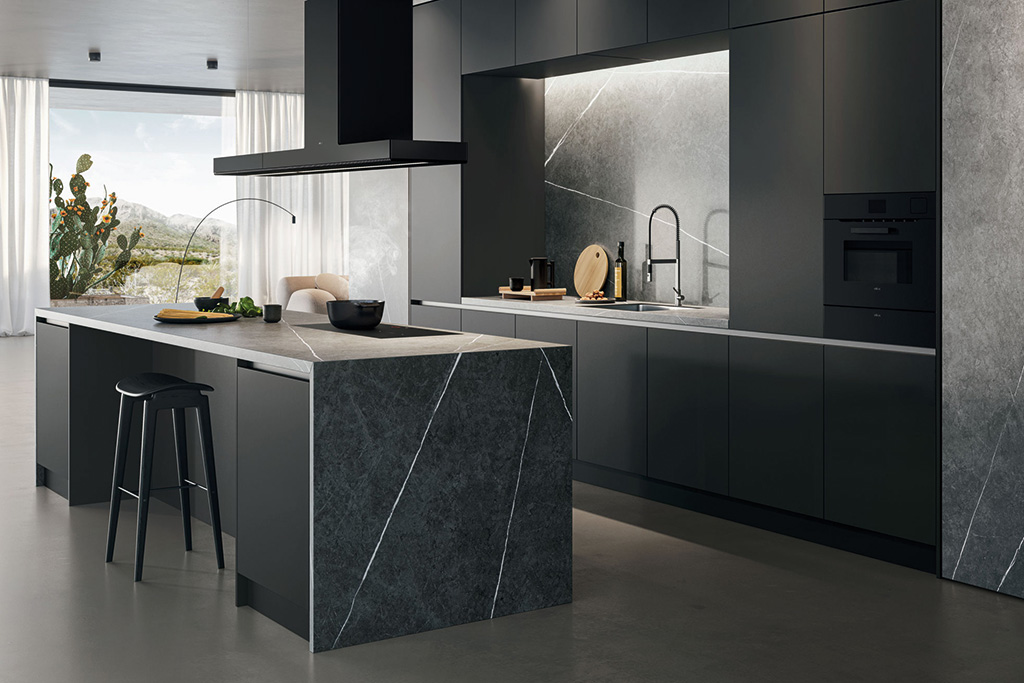
Long favored for its elegance and understated appeal, matte black has established itself as a definitive finish in the world of kitchen design. Elica embraces this trend through two complementary offerings: Matte Black and Raw. Designed as a cohesive aesthetic thread, these finishes adorn various product types—from hoods and ovens to the Luna lamp—allowing for visual continuity across appliances. This approach reflects the evolution of the kitchen, now viewed as a true living space where technical equipment plays an integral role in interior design.
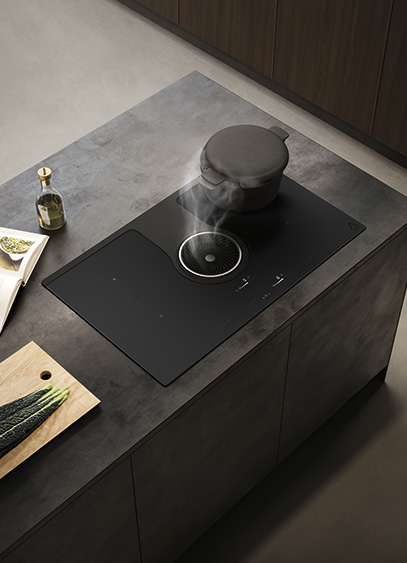
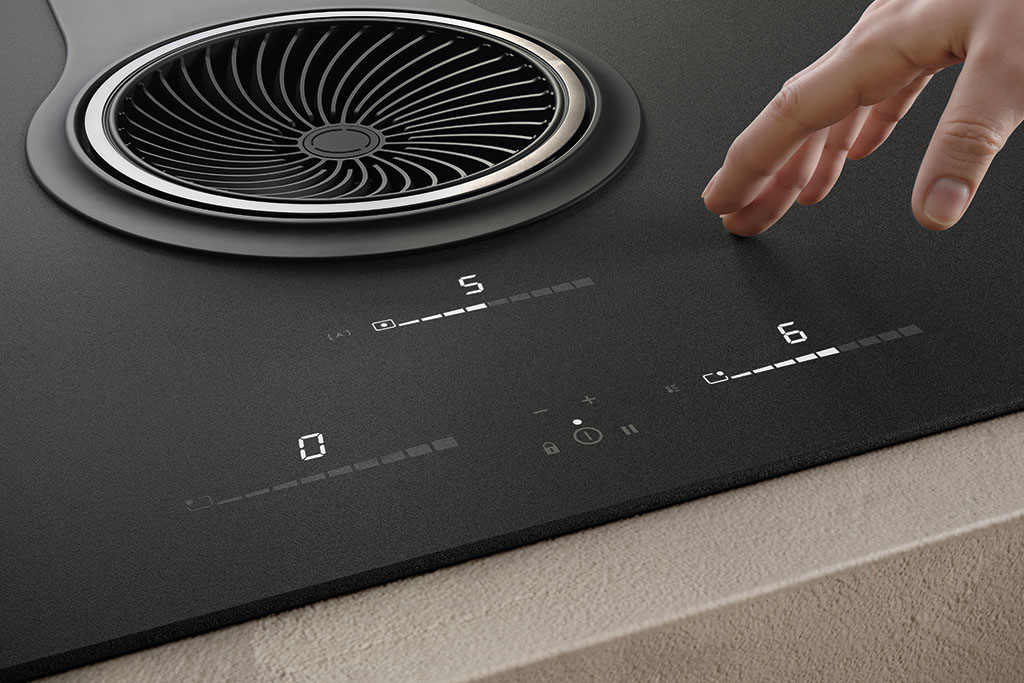
Beyond its aesthetic qualities, matte black has become a playground for innovation at Elica. With Raw, the brand has developed a matte black glass finish that combines material research with practicality. Applied notably to NikolaTesla aspiration hobs, induction cooktops, and the Lhov cooking system, this finish stands out for its textured look and technical properties. Designed to withstand the rigors of daily use, the sophisticated Raw finish makes cleaning and maintenance significantly easier: its surface is resistant to scratches from pots and utensils, as well as fingerprints. The Matte Black surface also offers effortless daily cleaning.
Through Matte Black and Raw, Elica moves beyond the simple question of color to treat finish as a fundamental element of kitchen design. It is a way of rethinking appliances, where the material no longer just covers the object, but actively contributes to its function and identity.