


Milan Design Week
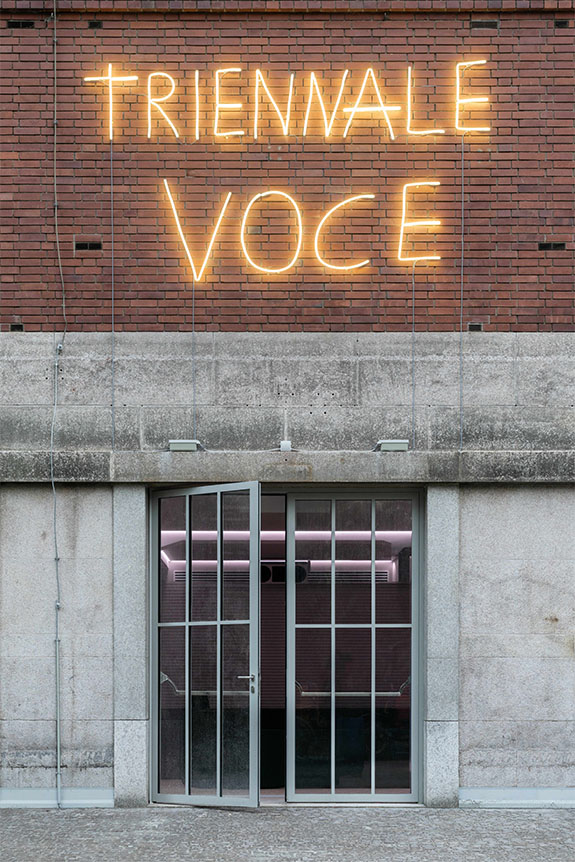
Once again this year, the Triennale hosted some wonderful events as part of Milan Design Week 2026. But more than just an exhibition venue, this essential landmark of the Lombard capital is, above all, a place steeped in history where design continues to come to life through a dense and varied program.
Milano Design Week 2026 marks a turning point. Faced with a sometimes overwhelming visual inflation, the city seems to be returning to its fundamentals, embracing a culture of design memory inherited from the 20th century. Objects are never conceived in isolation, but as the culmination of a global project blending architecture, utility, aesthetics, and social vision. Some cities tell their stories through their monuments; Milan tells its story through its archives as well. Whether drawings, models, photographs, notes, or prototypes, these archives reveal everything that precedes the finished work and preserve its potential. The Triennale di Milano fully embodies this movement.
But what exactly is the Triennale?
More than just an exhibition center, the Palazzo dell’Arte (Triennale di Milano) is a modernist building designed in 1933 by Giovanni Muzio as a true multifunctional and transdisciplinary cultural hub. From the very beginning, it brought together exhibition halls, a theater, a restaurant, a bar, an archive center, and even a nightclub.
Since 2019, the venue has been reimagined under the leadership of Stefano Boeri, President of the Triennale, Carla Morogallo, Director General, and Luca Cipelletti, Director of Architecture.
Back in 2024, this cultural space inaugurated the "Cuore – Research, Study and Archives Center," a space dedicated to research, memory, and innovation. Located on the ground floor of the Palazzo dell’Arte, this 400 m² area to the left of the main hall welcomes researchers, students, visitors, foundations, and universities. Free to access, Cuore places the research work that fuels the Triennale's entire program back at the center. With decades of national and international exhibitions, it has become a major documentary and heritage center. Its collections include books and journals, graphic, photographic, and audiovisual archives, as well as nearly 2,900 architectural pieces such as drawings, plans, models, and other documents related to projects carried out at the Palazzo dell’Arte and throughout Milan since 1933. The institution also preserves the archives of major figures in Italian design, such as Andrea Branzi, Alessandro Mendini, and Ettore Sottsass, to name but a few.
A discreet yet exemplary rehabilitation
The renovation of the Palazzo dell’Arte supports this new direction. The goal is to modernize the building while rediscovering the original spirit envisioned by Giovanni Muzio in 1933.
Three pillars structure this transformation: recovering the spirit and preserving the heritage of 1930s Italian rationalism, improving energy performance, and ensuring the spaces are more accessible, flexible, and contemporary.
The restoration highlights the architectural qualities of the site, for example by reopening perspectives (notably the view of Muzio’s helical staircase in the Cuore space), streamlining technical elements, restoring zenithal lighting by uncovering the glass-brick roof, and reintegrating the original window frames. The new, nearly invisible technical installations (insulation, heating) significantly improve the clarity and flow of the space.
In 2025, the venue opened up to new uses. Notable additions include the return of the café and restaurant (Cucina) to their historic location on the park side, as well as the opening of Voce—a space dedicated to music and performing arts—and Gioco, a creative space for children.
Through this transformation, the Triennale also reminds us that Milan’s creative uniqueness lies in its ability to foster a dialogue between rationalism, modernist heritage, and poetic postmodernism.
Through the quality of its exhibitions, spatial design, and architectural restructuring, the Triennale presents itself more as a living, evolving, hybrid building than a static monument. It brings design to life by recounting the trajectories of those who create it, questioning its uses, its critical reach, its social dimension, and the daily joy it can still provide. The simple, human, and elegant names chosen to characterize the various sectors prove this: Cuore, Cucina, Gioco, and Voce.
So, the Triennale di Milano? A must-see, again and again!
2026 Exhibitions
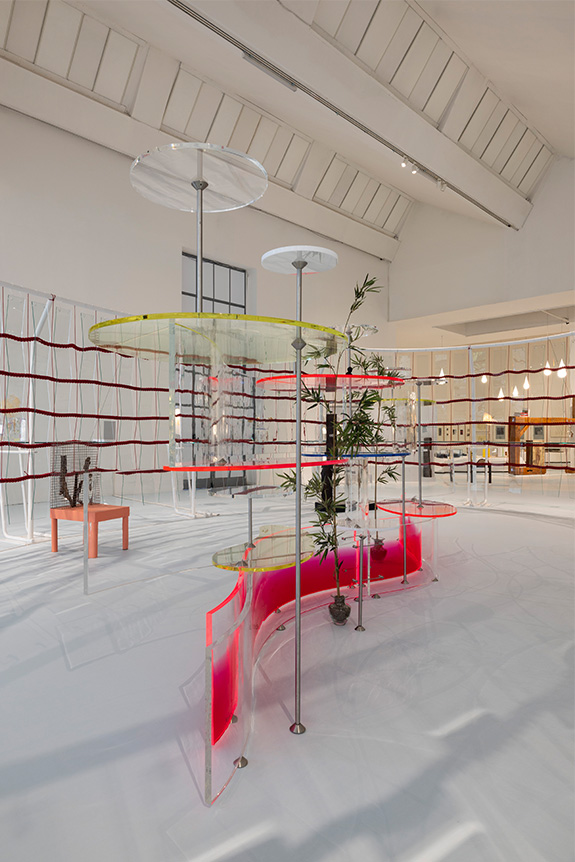
Andrea Branzi — Continuous Present
Exhibition design: Toyo Ito
Through October 4, 2026
One of the major exhibitions of this edition is dedicated to Andrea Branzi, a thinker, poet, unclassifiable designer, and central figure of Italian Radical Design. He was a tireless advocate for a way of "living poetically in the world," rooted in tolerance and critical fiction.
Conceived as a tribute by Toyo Ito—a close friend and fellow thinker—the exhibition explores Branzi’s critical and deeply humanistic vision. Titled Continuous Present, it expresses his opposition to a mechanical, rationalized, and uniform modernity.
The exhibition revisits the major themes that run through his work: architecture without walls, the hybridization of nature and the city, constant transformation, encounter and adaptability, and the rejection of rigid systems.
For Branzi, deconstruction is never nihilistic. On the contrary, it opens up a space for wonder. His idea of the "continuous present" evokes a city and a world in perpetual evolution, where joy and optimism are a moral and social duty. A lesson worth remembering!
Toyo Ito’s fluid and almost organic spatial design perfectly extends this philosophy.
Lella and Massimo Vignelli. A Language of Clarity
Exhibition design: Jasper Morrison
Through September 6, 2026
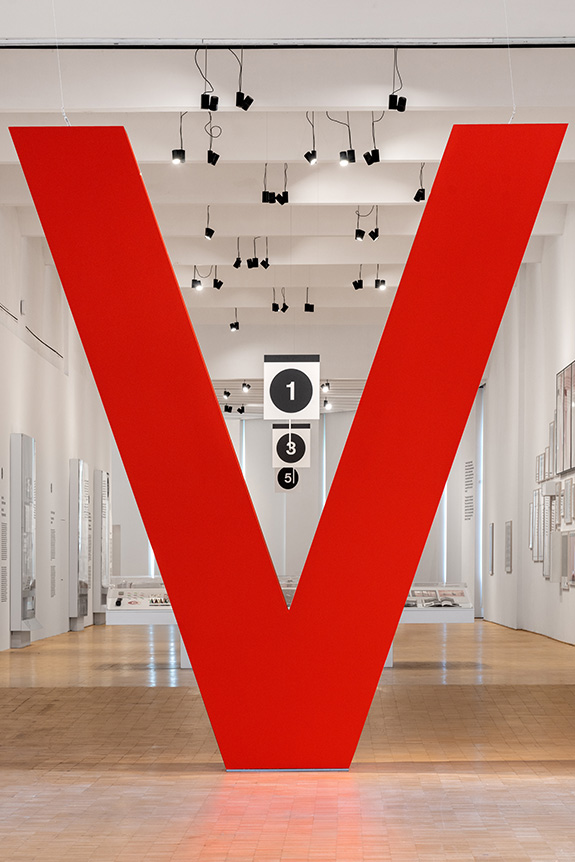
As a counterpoint to Branzi’s critical post-modern design, yet equally joyful and optimistic, the Triennale presents a major retrospective dedicated to Lella and Massimo Vignelli.
Known for their rigorous interpretation of Swiss-inspired modernist rationalism, the Vignellis left a profound mark on international graphic and industrial design between Milan and New York from the 1960s through the turn of the 21st century.
The exhibition, designed by Studio Jasper Morrison, brings together a large collection of iconic pieces. It demonstrates how their work always sought to reveal a clear, colorful, and universal logic, whether in a subway map, a book, a piece of furniture, or jewelry.
Their work serves as a reminder that beyond style, design can above all constitute a language of clarity, capable of reaching an extremely broad audience, far removed from any elitist vision.
The Eames Houses - Launch of the Eames Pavilion System
In partnership with Kettal
Until May 10, 2026
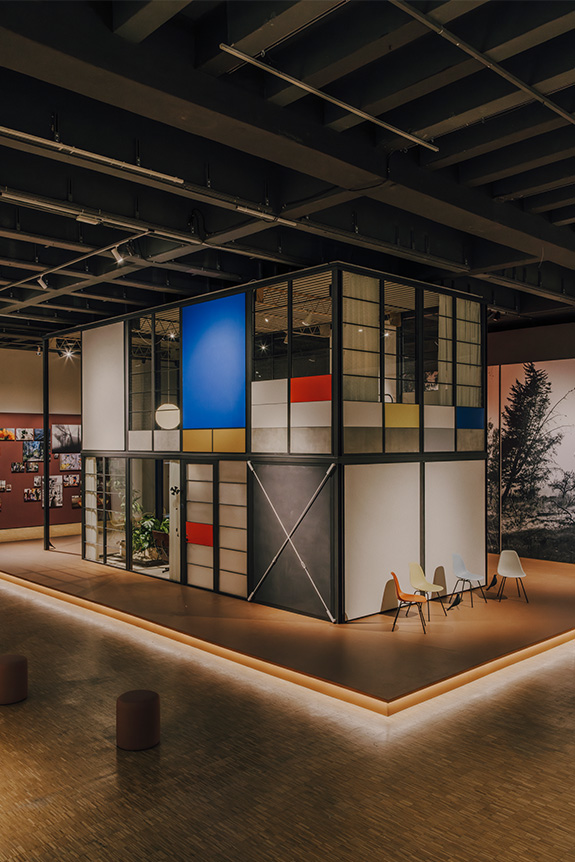
The Eames Houses exhibition is based on extensive archival research into the residential projects of Ray and Charles Eames, both built and unbuilt. It presents a vision of modular, prefabricated, and deeply human architecture, supported by a vast body of documentation.
For the Eameses, a house was never a static object, but an adaptable system capable of bridging daily life, modularity, and industrial production. Their architecture developed a unique synthesis of modernist rationalism, functional prefabrication, and an organic sensibility inspired by Japanese aesthetics. This is particularly evident in the fluid relationship between interior and exterior, designed to suit the Californian climate and landscape.
This reflection continues today with the launch of the Eames Pavilion System, developed with Kettal under the direction of Eckart Maise, a long-time collaborator of the Eames Office. The system is based on repetitive structural modules combined with various roof and facade options, allowing for multiple configurations, from a small pavilion to a complete house.
The project thus reactivates one of the Eameses' fundamental ideas: to conceive of architecture as an evolving system rather than a definitive form.
Alphabet — The design of Edward Barber & Jay Osgerby
Until September 6, 2026
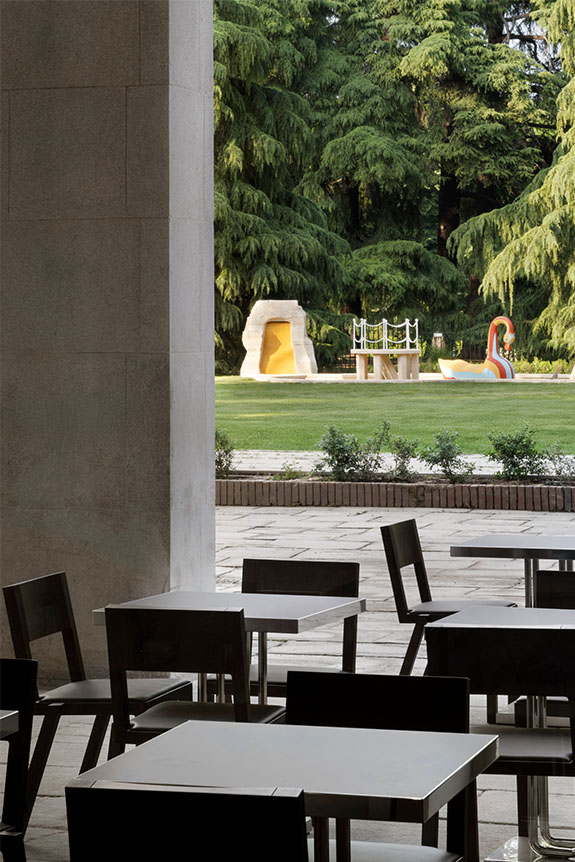
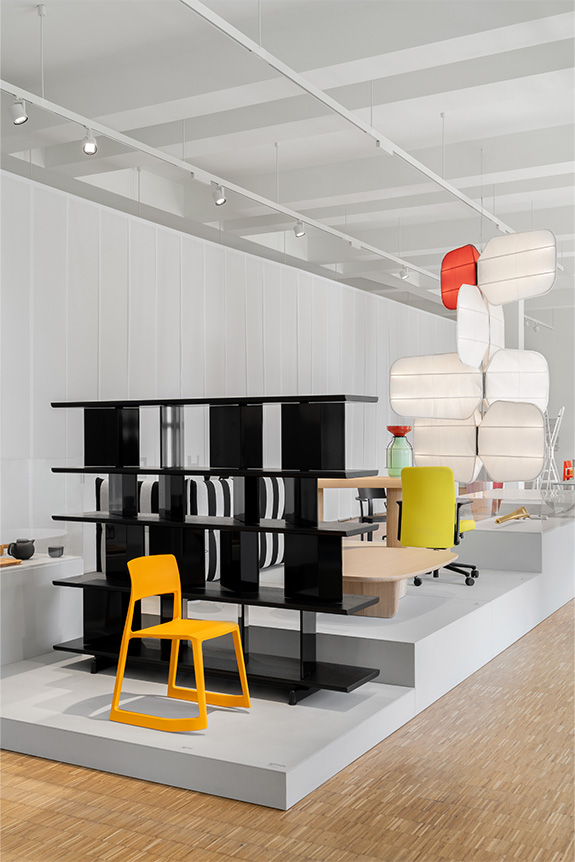
The exhibition occupies the beautiful Design Platform space, which, following the major architectural and functional renovation of the Palazzo dell’Arte, is now located in the large area opening onto the garden, previously—and unfortunately—occupied by the Triennale café.
The exhibition’s chronological path highlights the gradual evolution of their "stylistic alphabet" from the mid-1990s to the present day. It showcases a rigorous approach to color, technical curves, angular geometries, and constructive precision.
Key pieces on display include the London 2012 Olympic torch, the Iris tables for Established & Sons, the Tab lamp for Flos, and several special commissions and experimental projects. Through these works, the exhibition demonstrates how their practice combines industrial rigor and artisanal mastery with increasing technical sophistication.
Once again this year, the Milan Design Week Off-program delivered a series of remarkable and noteworthy installations throughout the city. Here is a look back at the ones that were worth the detour.
An alternative space by Capsule Globale
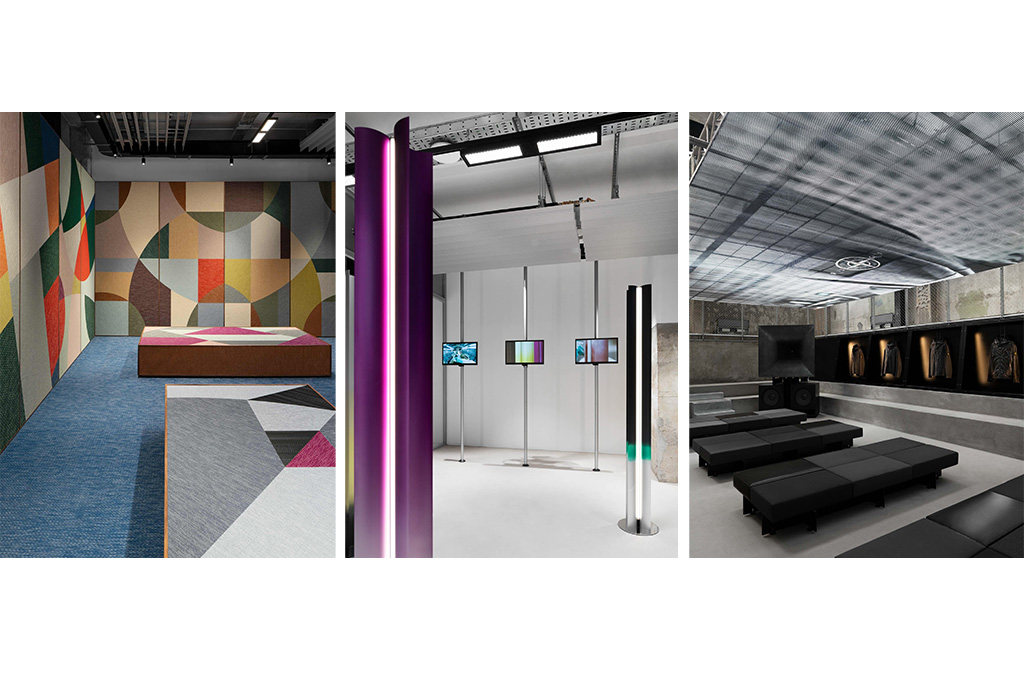
Conceived as a hybrid between a fair, a group exhibition, and a cultural platform, Capsule Plaza 2026 took over a former Art Deco gymnasium and swimming pool renovated by ASA Office on Via Achille Maiocchi. Under the direction of Alessio Ascari, the "Design State of Mind" exhibition brought together design, fashion, technology, and craftsmanship in industrial-style rooms, enhanced by a scenography designed by the Milanese agency NM3. Highlights of this fifth edition included the immersive "No Seasons" installation by Stone Island with NM3, research by Karimoku Research with Waka Waka, Devon Turnbull, and Postalco, olfactory experiments by AEIR and Websessions, and the NEO domestic robot by 1X Technologies. Each of these was an event in its own right, adding to a program already rich in talks and workshops, and marked this year by the launch of the fifth issue of Capsule magazine.
The Muller Van Severen anniversary exhibition
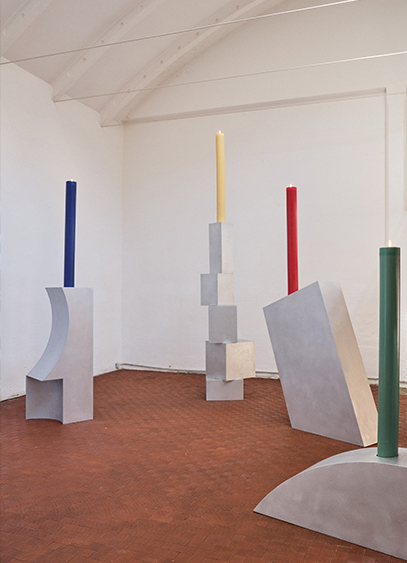
To celebrate 15 years of their studio, the Belgian duo Muller Van Severen partnered with Apartamento to present an anniversary exhibition during Design Week titled "Silhouettes: Celebrating 15 Years ". Produced in partnership with the Tim Van Laere Gallery, this exhibition featured fifteen unique, monumental chandeliers, all crafted from aluminum. Each one served as a reinterpretation of recurring motifs and shapes found in the duo's work. The installation offered a collection of pieces that, while distinct in form, remained entirely cohesive. Each chandelier was also topped with a large, colorful candle that burned down gradually, symbolizing the passage of time—the fifteen years that have passed, but also, and above all, those yet to come.

The Issey Miyake paper installation
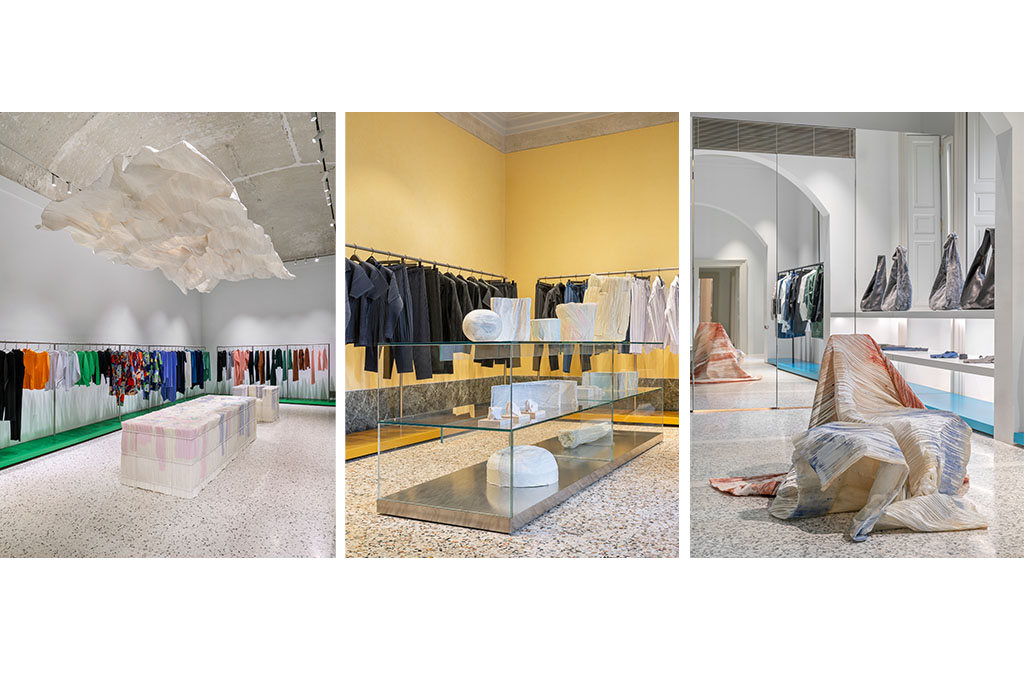
In its Milan showroom during Design Week, the house of Issey Miyake presented the experimental project The Paper Log: Shell and Core, conceived by designer Satoshi Kondo of the MIYAKE DESIGN STUDIO and developed in collaboration with the Spanish architecture firm Ensamble Studio. The project consisted of an installation of memory objects (Shell) and furniture prototypes (Core, created by repurposing compressed paper rolls known as Paper Logs—a byproduct of the brand’s signature pleated garments, an iconic Issey Miyake technology. Within the space, the installation featured two complementary series derived from the Paper Log, with displays that contrasted opposing qualities: ephemeral and concrete, delicate and robust. The works conceived by Ensamble Studio, titled Shell, took the form of a series of paper objects seemingly frozen in time, while the in-house design team presented Core, a collection of furniture prototypes including chairs, tables, and stools, treated in various ways to fully explore their materiality.
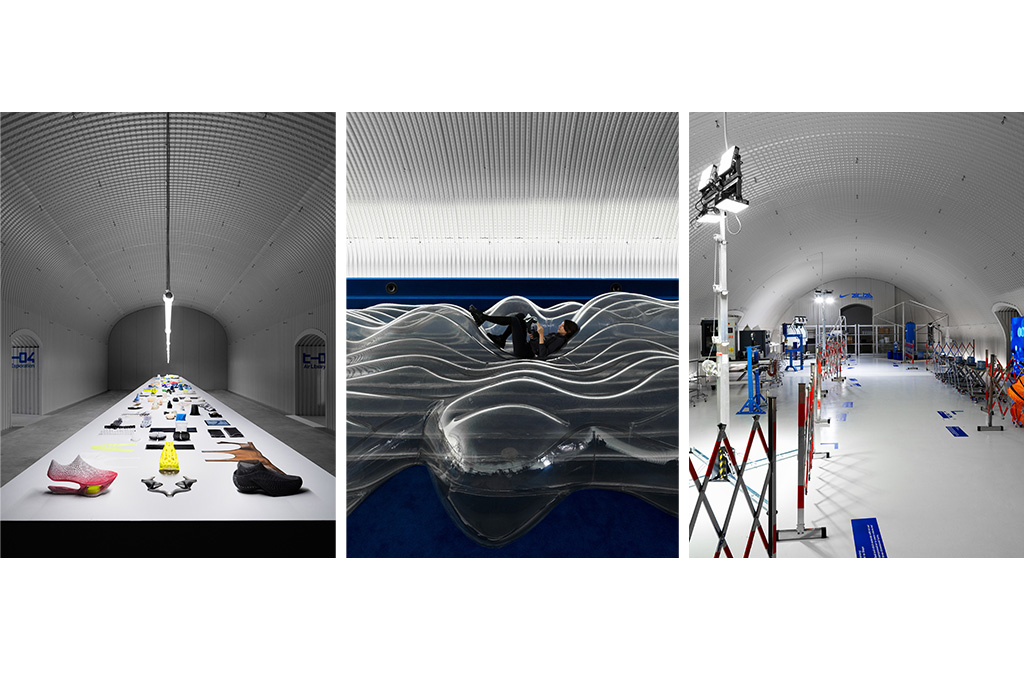
NikeAir_Lab, a place to run and see innovation
Conceived in collaboration with the new Milanese center Dropcity, NikeAir_Lab offered a deep dive into the world of Nike Air through the brand’s archives, select prototypes, and experimental workshops set up in the industrial tunnels of Via Sammartini. Open throughout the week, the lab unveiled nearly 100 never-before-seen prototypes. Visitors were able to explore research into the Air Liquid Max, FlyWeb and Radical AirFlow materials, and even the Therma-FIT Air Milano jacket. These ultra-technical creations were showcased across eight workstations equipped with robotic arms, pneumatic systems, and thermoforming tools. Beyond new products, the sportswear brand also revealed archives from aeronautical engineer Frank Rudy, as well as developments related to the Alphafly NEXT% and Faith Kipyegon’s Breaking4 suit. Halfway between a research lab and an immersive installation focused on innovation, the NikeAir_Lab was a must-see destination for any fan of technical design, fashion, and sports.

With over 1,900 exhibitors this year, Salone del Mobile.Milano 2026 has once again delivered its share of new releases. The Intramuros editorial team shares the ones that caught our eye.
For this new edition, Salone del Mobile.Milano 2026 brought together more than 316,000 visitors to discover new products and reissues. Bringing together both major international firms and young brands, this Milanese event—slightly less dense than in previous years—remained rich in offerings. New materialities, an increased focus on real-world usage, the hybridization of functions... In a fragile but rapidly changing ecosystem—much like the fair itself, which inaugurated new spaces this year—the Intramuros team spotted some great leads. An intuitive and diverse panorama that we invite you to discover.
Kettal
Among all the new products presented by the Spanish brand, which continues to assert its position in the design sector, two stood out. First, Grosso by Patricia Urquiola: a sofa with sculptural forms that invites us to think of comfort as an art form. It reveals itself as a piece with bold yet spontaneous curves, appearing almost in motion. A model designed for both indoor and outdoor use, capable of seating up to three people. In a completely different register, the Atlantic collection by Jasper Morrison combines structure, rhythm, and continuity. This aluminum range with clean lines consists of a lounge chair, a chair with armrests, and a stackable chair. Designed for comfort and daily use, it adapts just as well to a private terrace as it does to a hotel or urban space.

Bitossi Ceramiche
The Italian ceramic brand Bitossi Ceramiche presented several pieces at its stand, including the Dittico vase collection by Martino Gamper. A project that pits the designer's formal research against the identity of a manufacturer with over 150 years of history. Created using white clay slip casting, the collection reveals pieces with organic, almost architectural curves to be appreciated from every angle. The Belgian duo Muller Van Severen—who celebrated their 15th anniversary during this Design Week—presented an extension of their 2024 Onda collection, titled Onda II. This new version revisits the shapes imagined in the first iteration by reworking them based on the principle of inversion. The pieces thus offer a renewed perception of the objects without altering their primary identity. The vases are all available in three colors: vermilion red, dark blue, and pastel gray.

Campeggi
Known for the intelligent design of its transformable objects, Campeggi unveiled "Bienvenue" this year. Conceived by designer Thélonious Goupil, this inflatable mattress is housed in a compact, portable wooden chest. With a simple opening, it provides a portable bed and a foldable, self-supporting headboard that can also serve as a room divider. A compact and colorful set for sleeping wherever you please.

Glas Italia
A sort of tribute to the great names of design, the 2026 collection brought together Piero Lissoni, Philippe Starck, and Patricia Urquiola, to whom we owe, among other things, Glacier. Entirely made of glass, this range of tables plays on the layering of different colored sheets. A reflection on strata reminiscent of glaciers, filtering light through layers of irregular materials. But the brand's presence at the Salone was also an opportunity to introduce Hlynur Atlason, who presented Akur. Behind the desire to challenge the rigidity and linearity of the medium, the designer focused on the meeting of curves and rectilinear grids. Slightly satin-finished, the textured surfaces of the tabletops offer an unusual reading of the material.

Blå Station
The result of a Scandinavian spirit and the desire to create furniture that is pleasant to live with, Blå Station presented the Frankfurter chair by designer Johan Ansander. Simple and classic in appearance, the seat was rethought with new proportions to offer a unique feel. Closer to the body and deeper, the chair is inspired by the shape of a forearm—a form subsequently materialized in bent beech wood. In addition to this new release, the brand also diversified by expanding its Able range, designed by Bernstrand & Borselius, with high tables and a desk. Two new typologies are immediately identifiable thanks to the die-cast zinc nodes combined with steel tubes. A construction that also recalls the wire-frame aesthetic of the Villhem range—designed by Lindau and Bernstrand & Borselius—launched last year and expanded in 2026 with a lower-back chair, an ottoman, and a coffee table.

NII
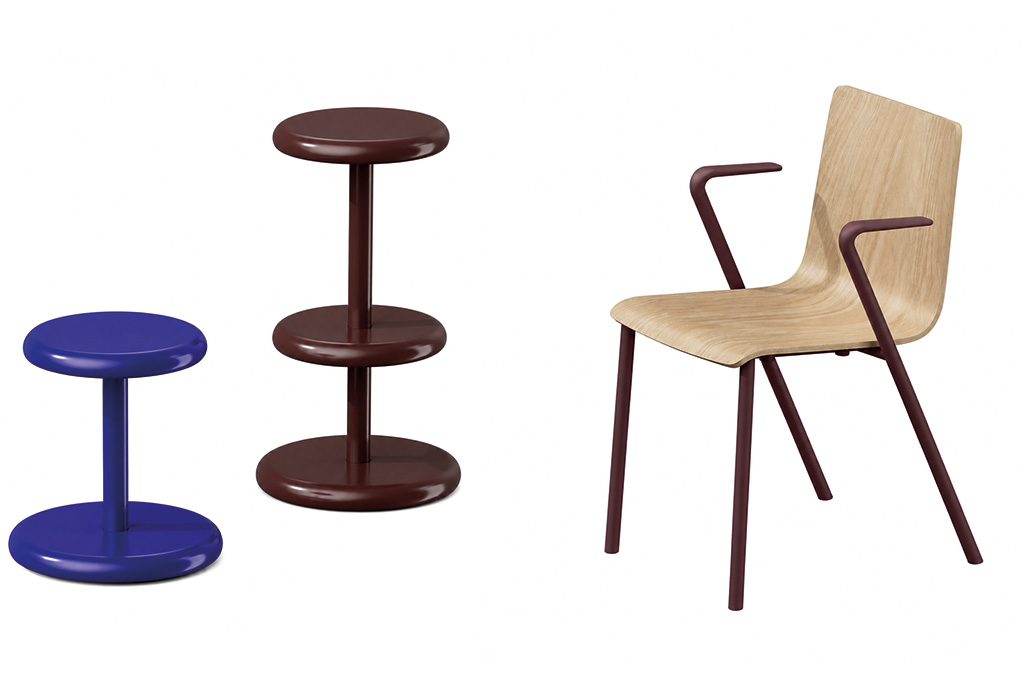
The Japanese brand NII, a member of the Itoki group, unveiled itself outside of Japan for the first time, choosing the Salone del Mobile for its international debut. For this first appearance, NII presented its latest innovations, including the Allround stool by designer Hirotaka Tako and the Hakusan chair by the studio Industrial Facility. The Allround stool stands out for its rounded lines and simple structure, defined by a single central column, resulting in a minimalist product that fits perfectly into any space. As for the Hakusan chair, it asserts its character while remaining subtle and universal. Made of aluminum and steel, it contrasts the solidity of its structure with a certain visual lightness, creating a perfectly balanced result.
B&B Italia
After a twenty-five-year absence (save for a 2019 appearance), B&B Italia made a notable return with a stand designed by Formafantasma. Among the new releases, the Moore lounge chair by Vincent Van Duysen stands out with its woven rattan supported by a frame with continuous curves. Evoking a slightly deformed ring, this fluid design enhances the piece's legibility and highlights its structure. In the same pursuit of formal clarity, Michael Anastassiades presents Metric, a chair crafted from thin sections of solid oak. Its rectilinear construction, reinforced by a crossbar, contrasts with the softness of the slightly curved backrest. Available with or without armrests, it can also be offered in an upholstered version covered in saddle leather. Finally, Ronan Bouroullec completes this selection with the Abaco table, where the object's architecture relies on an entirely visible construction. The precision of the joints and the dialogue between materials—lacquer, cement, or leather—give each configuration a unique identity, leaving the user free to compose as they wish.

Kartell
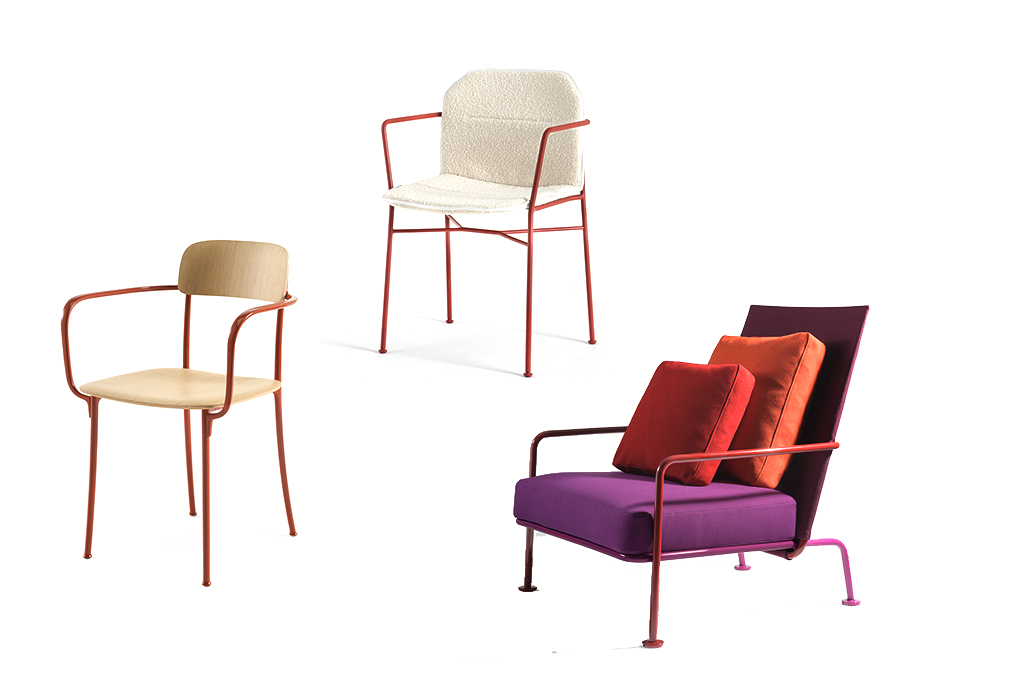
This year, Kartell made a strong impression, both in terms of its offerings and its collaborations. For the first time in several years, the Italian manufacturer expanded its field of experimentation by inviting the British duo Barber & Osgerby to collaborate. They exclusively presented the Savoia chair: an elegant, customizable aluminum piece offered with a seat in recycled plastic, wood, or leather, and available in several colors. It comes with or without armrests and is suitable for both indoor and outdoor use. Eight years after Papyrus, designer Erwan Bouroullec exhibited the Snik chair—a compact, minimalist model in recycled technopolymer with a steel frame, available with or without armrests. A nice bonus: it can be personalized to your liking with interchangeable covers that protect and transform it, ensuring you never tire of it. Meanwhile, Piero Lissoni revealed Yve’s, a minimalist armchair whose tubular structure is defined by a single curved line. Suitable for both indoor and outdoor use thanks to independent covers and cushions, Yve’s is available in various colors and fabrics, resulting in a generous product with a refined aesthetic.
Vergés
Spanish chair manufacturer Vergés was also present at this Milan edition to showcase its latest novelties. Among them is the Trek armchair, designed by the Norwegian duo Andersen & Voll. For this meticulous seat, the designers combined two noble materials—solid wood and leather—for a result that blends flexibility and robustness. Technically, the backrest and seat are covered in a single piece of leather, while the horseshoe-shaped rear crossbar gives Trek a unique character. The London-based studio Mentsen—founded by Japanese designers Risa Sano and Yasuyuki Sakurai—presented the Ensemble bench, inspired by church pews. It is a piece with a simple structure, faithful to Japanese craftsmanship, yet robust and versatile. It will be available with or without a backrest and, for added modularity, can be accompanied by a pivoting side table.

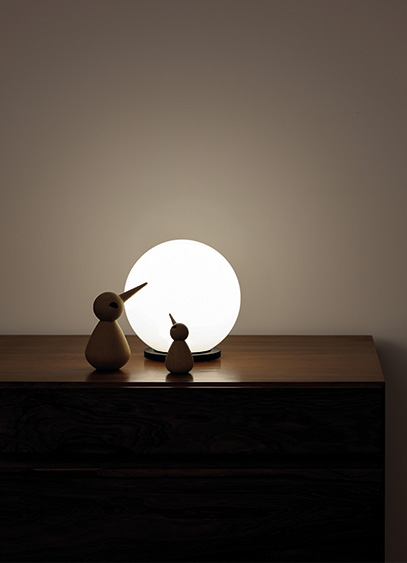
At Milan Design Week, Davide Groppi unveiled new pieces that continue a long-standing pursuit: making light a sensitive presence capable of transforming a space without ever imposing itself. At its Milan showroom on Via Manzoni, the lighting brand presented six notable new designs centered on movement, illusion, and structure.
Umasi: light in motion
For the delicate Umasi pendant lamp, Davide Groppi explores a new dimension of domestic lighting: mobility. With a shade that slides along a cable, it can move from ceiling to floor in a single motion. The light, filtered through several layers, diffuses without ever appearing directly, creating an enveloping atmosphere.

Vera: the art of disappearing
Encased in a borosilicate glass volume, the lamp reveals a light source that seems to float in a void when switched on, only to disappear completely when turned off. The optical device, based on refraction, produces light that is simultaneously direct, indirect, and diffused, all while keeping its mechanics hidden.

Calma S & Calma T: the essential form
With the Calma range designed by Alberto Zattin, the collection is completed by a universal figure: the luminous sphere. Available as a pendant—Calma S—and a table lamp—Calma T—it features triple-layered blown opal glass that diffuses a soft, uniform light. In the pendant version, the sphere appears to float with lightness, while as a table lamp, it becomes a luminous, almost domestic anchor point.

Carroponte: structuring light
The Carroponte system offers a more architectural take on lighting. This modular composition transforms the electrical track into a spatial path. Positioned freely, it traverses the space wherever light is needed for specific tasks. It becomes a compositional tool, as most Davide Groppi pendants and small lights can be adapted to create custom arrangements as desired.

IPE and OcchiOlinO: two new outdoor designs
For its outdoor lighting, Davide Groppi extends its philosophy with products that are both technical and sensitive. First is OcchiOlinO, where light takes the form of an insect perched on an almost invisible stem, casting a delicate presence across the landscape. Conversely, the IPE collection, designed by Alberto Zattin and available as a Bollard or P wall lamp, asserts a more architectural language, combining robustness and precision through its adjustable spotlights and anodized aluminum finishes. These two complementary approaches reflect a desire to integrate light into the environment without dominating it.
Captions: IPE Bollard outdoor light, designed by Alberto Zattin, and OcchiOlinO © Davide Groppi
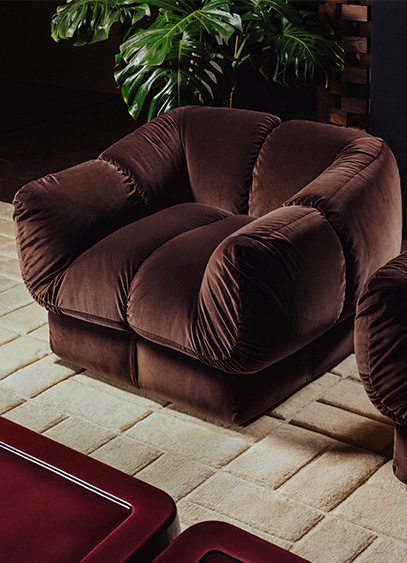
To celebrate this year's Design Week in style, Cassina reimagined its showroom around the concept of "the intelligence of matter." This vision inspired a contemporary setting, defined by bold colors and a wealth of new releases.
For this season, Cassina transformed its flagship store on Via Durini under the creative direction of Mikal Harrsen. Enhanced by warm, vibrant colors—which also appeared on a large screen in the entrance area—the space was designed to be immersive. It was in this setting that the Italian brand showcased its latest creations. Whether it be new colorways for the Plana table by Charlotte Perriand and the 780/783 coffee tables by Gianfranco Frattini, or brand-new contemporary designs, the collection unfolded along a single, open-plan path. Driven by a bold color palette, the installations created a fluid narrative that extended to the terrace, which was transformed into an outdoor sanctuary for the occasion. It was the perfect backdrop to celebrate the collaboration between the brand and Persol, illustrating the dialogue between heritage and innovation at the heart of "The Cassina Perspective."

Seating for every space
From the moment visitors entered the showroom, Cassina aimed to immerse them in a radical world by showcasing the Ardys system designed by Patricia Urquiola. Upholstered in a technical fabric, this modular sofa with its generous proportions evokes a sense of softness in an ultra-contemporary style. This feeling is created by the highly visual technical fabric, which sits somewhere between velvet and the quilted look of a puffer jacket. In contrast, the Plintea armchair by Chiara Andreatti brings a more understated elegance with its protective shell and asymmetrical base, making it equally well-suited for residential and contract environments. In a more rigorous vein, Cassina is reissuing the CH66 chair by Nicos Zographos, developed with Karakter, reaffirming the timelessness of the Bauhaus movement through a continuous steel frame. This aesthetic engages in a dialogue with the more experimental Peacock Chair by Verner Panton, currently celebrating its centenary. A bold piece with free-flowing forms and a lightweight metal structure, it is brought to life by modular, colorful cushions that give the seat a playful look. Finally, the Hotte by Philippe Starck evokes the memory of rural gestures and craftsmanship through meticulous wicker weaving.
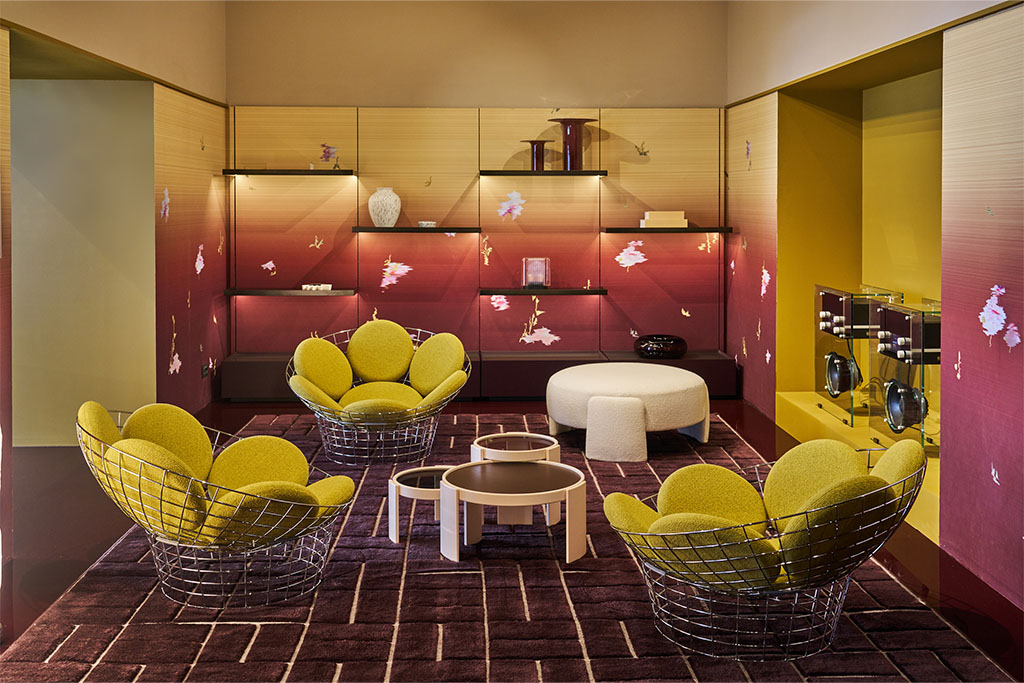
A collection of bright ideas
In terms of lighting, Cassina continues its exploration with designer Linde Freya Tangelder — who is also heading "The Cassina Perspective" this year — and her lamp Fluid Joinery Light. A true luminous sculpture, it utilizes multi-layered blown glass that acts as a lens, diffusing a soft glow. Building on the aesthetic research initiated with a series of coffee tables, this piece skillfully combines density and transparency. Taking a more naturalistic approach, the duo Neri & Hu presents Samambu , a luminous landscape inspired by bamboo groves, where slender metal stems support opal glass diffusers. Conversely, Dot Pattern Light, designed by Charles & Ray Eames, vertically transposes the graphic pattern of luminous spheres. Finally, the Accelsa pendant lamp by Angelo Mangiarotti revisits an icon from the 1980s by elevating blown Venetian glass. Simply by being inverted, the original piece offers a new interpretation. Whether through sculpted volumes, lines inspired by nature, or graphic compositions, these creations ensure that Via Durini, 16, remains a landmark for every design lover.
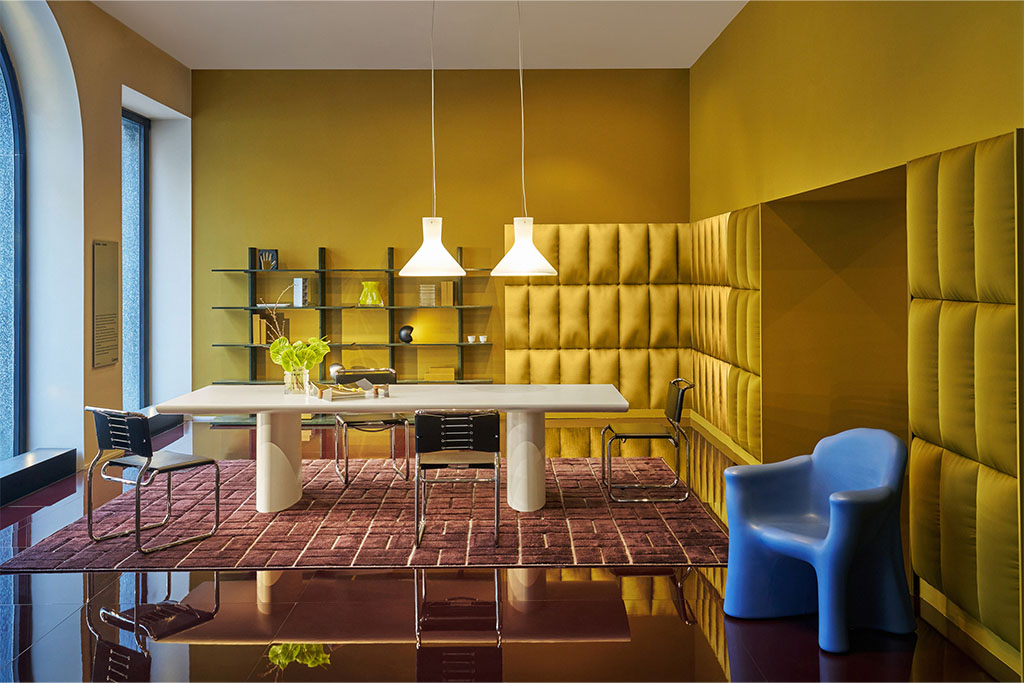

During Milan Design Week, Seletti partnered with Eternoo to transform its store into a conceptual construction site featuring the Tools collection.
Following the launch of the BIC lamp by Mario Paroli in January, Seletti explored a new creative realm during Milan Design Week. In collaboration with Eternoo, a leading Italian building materials distributor, the brand turned its Italian retail space into a hardware store. Adorned with a faux blue brick facade that subverts classic aesthetics, the space was renamed Building Design LTD—a concept designed to serve as the backdrop for the Tools collection. Hammers, shovels, trowels, and wheelbarrows were showcased, reconfigured as decorative yet fully functional design objects. A pop-art transformation achieved through unexpected gold and fluorescent finishes. By "hacking" the world of Eternoo, Seletti sought to challenge the symbolic value of the tool and its narrative potential. More than just a formal exercise, this experimental collaboration introduced a fresh, humorous dialogue between industry and design. It was Seletti’s way of shifting the focus toward typologies often excluded from the decorative field, all while maintaining its signature offbeat identity.
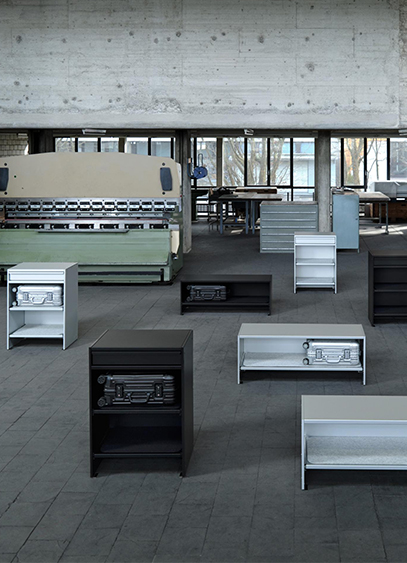
For Milan Design Week 2026, RIMOWA and Lehni unveil a unique collaboration that brings the travel object into the home. Blending industrial precision with minimalist elegance, two limited-edition pieces redefine storage as a design statement.
Presented in Milan from April 21 to 24, the RIMOWA Lehni collaboration marks the meeting of two century-old houses united by a shared culture of materials. On one side, RIMOWA, whose aluminum suitcases have accompanied travelers for decades; on the other, Lehni, the Swiss benchmark for modernist furniture and modular systems. Together, they have designed a bench and a drawer unit to house carry-on luggage, creating two solutions tailored for the home. Crafted in black or silver anodized aluminum and handmade in Zurich, these pieces strike a precise balance between utility and display. The bench can hold up to two suitcases, showcased side-by-side in an open structure. The drawer unit offers more compact storage, featuring a stacked composition and a closed compartment for everyday items. In both cases, every detail matters. The shelves are lined with a custom-developed, matte, scratch-resistant felt—discreet yet essential—which protects surfaces while adding a touch of softness.
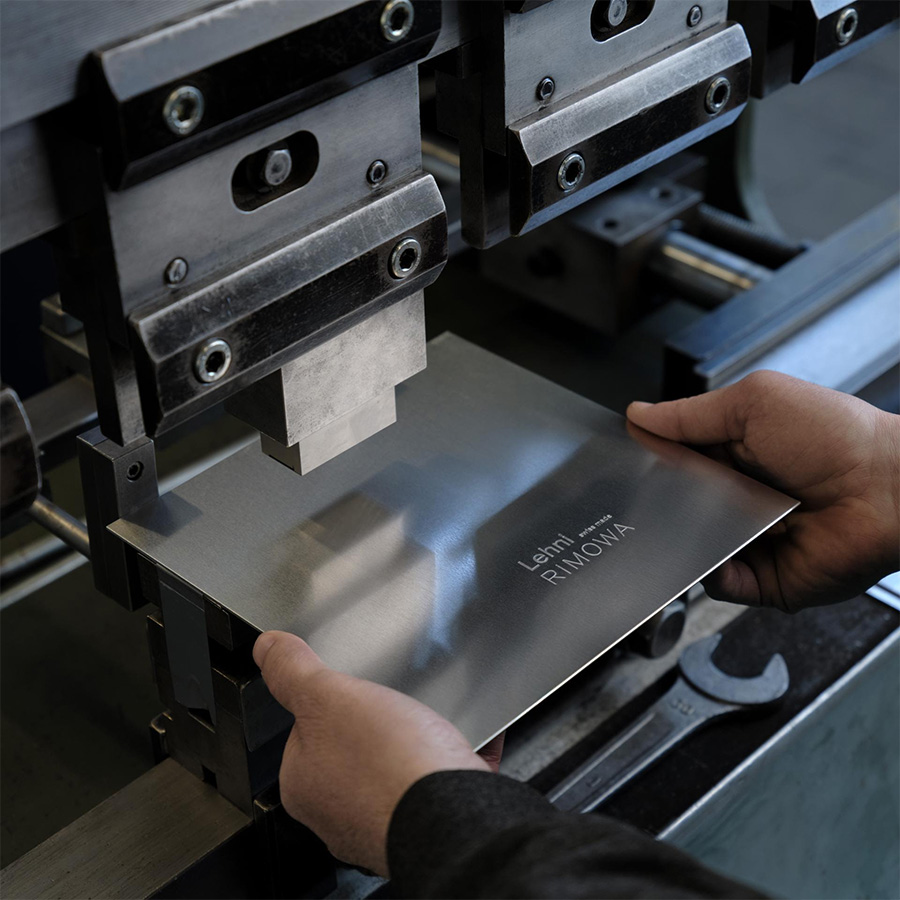
Two industrial legacies, one shared material
This collaboration is a natural continuation of both houses' trajectories. Founded in 1898, RIMOWA established itself as a leader in premium luggage by incorporating aviation-inspired aluminum as early as the 1920s—a material that has since become its signature. Now part of the LVMH group, the company continues to evolve its products through a blend of technical innovation and durability, as evidenced by the introduction of polycarbonate in the early 2000s and, more recently, its lifetime guarantee. Meanwhile, Lehni, founded in 1922 in Zurich, built its reputation on precise metalworking expertise, nurtured by collaborations with modernist icons and the development of iconic modular systems. By adapting its formal language to RIMOWA suitcases, the Swiss brand extends this tradition into a new context. The RIMOWA Lehni project serves as a convergence point for two industrial histories, where technical precision and durability remain the guiding principles.
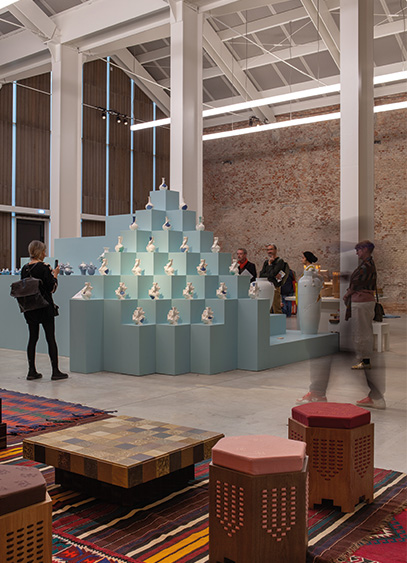
From April 20 to 26, for Milan Design Week, the 5VIE district returns for its 13th edition with the theme "QoT, Qualia of Things," which places humans and emotions at the center of everything. We get the details from Ernesta Del Cogliano, co-founder of the event.
How did the 5VIE project begin?
The project started 13 years ago. Originally, there was a desire to revitalize Milan's historic center, which was somewhat neglected during Design Week, as is often the case in many historic districts. We looked at all creative sectors: fashion, art, gastronomy... but art and design quickly took the lead. The name 5VIE is quite anecdotal: it simply comes from a street sign at the intersection of several streets. It wasn't even indexed on Google at the start; the district's popularity grew over the years thanks to our work.
The theme chosen for this edition is "QoT, Qualia of Things." What does it mean?
Qualia, in Italian, refers to every personal experience we live, perceive, and feel when faced with something. It is highly subjective and deeply individual. It felt important to us to put the individual and the human being back at the center, rather than artificial intelligence, which is being talked about so much right now. We wanted to focus above all on sensations and emotions. Along with my co-founder, Emmanuel Tessarolo, we attended many conferences and read a lot of books on the subject.
Would you say there is a form of opposition between humans, emotions, and digital technology or AI?
It’s not really an opposition, but rather a matter of perspective. We believe that human perception, thought, and sensitivity are more essential than the Internet of Things and digital technology, in a way. We simply want to put humans and emotions back at the center, while technology should remain a support, a tool, without ever replacing the human. It’s a fairly holistic vision.
A few words about the participants in this 13th edition?
More than 90 artists and designers are expected, while in parallel, we will be exhibiting 5VIE productions, which bring together pieces specifically designed for the event. It is important for us to show that 5VIE is not just an exhibition space or a district, but also a producer committed to supporting designers. Among them are Tadeas Podracky, Marco Guazzini, Danny Candotto, Elisabeth Lewis, and Noe Kuremoto. And every year, several creators close to the project join us, like Richard Yasmine from Lebanon, to whom we offer space and support to exhibit his work. We are also presenting a major project with the studio mo man tai, who were already present last year at Cesare Correnti. We asked them to design the entrance to the Cavallerizze, which is a long, brutalist-style corridor, by creating an installation specific to the space.
Where will the event take place?
Three main venues will host the program: the apartment at 14 Corso Magenta, which will feature between 20 and 25 designers; the Cavallerizze at the National Museum of Science and Technology at 4 Via Olona, a 1,600 m² space that will host about twenty installations; and finally, the SIAM at 18 Via Santa Marta, the headquarters of 5VIE. Beyond these locations, the entire 5VIE district will be filled with exhibitions.
How does the selection process work?
Many participants come directly to us because they identify with our identity and our DNA. For the productions, I work on a long-term basis: I discover designers throughout the year and then invite them to participate. Sometimes, they come to me. It is above all a question of sensitivity. We also have the help of curators, as is the case with Maria Cristina Didero and Anna Karnik, with whom we have been collaborating for a long time; they know our vision perfectly and are thus able to propose new designers every year.
What are your expectations for this edition?
I want people to enjoy themselves. There are currently many tragedies in the world, and this edition is here to soothe and do some good. We don't claim to solve these issues, but just to offer a moment of joy. The goal is not to show objects intended for sale, but rather to offer visions and suggestions, with the main desire to spark emotion. The message I would most like to convey is to encourage everyone to think in a more human and less technological way, so that hearts can connect.

La marque de mobilier français Philippe Hurel a dévoilé « Angle de vue » lors de le Design Week de Milan. Une collection entièrement repensée par le designer Tristan Auer.
C'est dans une mise en scène haut en couleur que la marque de mobilier, Philippe Hurel, a décidé d'implanter sa dernière collection, Angle de vue, lors de la Design Week de Milan. Pour marquer sa première participation à cette grand-messe du design, la marque française a présenté douze pièces. Initialement dessinées par Philippe Hurel, toutes sont le fruit d'une réinterprétation de Tristan Auer. Le designer à qui les clés de la création ont été confiées, offre un panel de pièces éclectiques réparties en quatre saynètes colorées. Rouge,orange, jaune et vert, chaque décor semble avoir été pensé comme des photographies surnaturelles et décalées. De quoi offrir un« Angle de vue » en marge de l'habituel et de la sobriété.

Une collection hétéroclite
Du bronze, du bois, des laques, des cuirs et des textiles en tout genre signés Dedar. Si la collection imaginée par Tristan Auer ne semble pas avoir de ligne directrice de ce côté-là, elle incarne cependant l'esthétique initiale de Philippe Hurel. Des lignes relativement épaisse, des formes bourgeoises et une qualité d'exécution qui se ressent à l'œil.Portée par l'ambition de constituer un ensemble « versatile et intemporel », cette collection paraît surtout dessinée pour laisser son empreinte dans les intérieurs. Une impression due à la générosité et à la rondeur omniprésente dans les volumes, mais aussi aux choix colorimétriques des pièces qui entrent en résonance avec les couleurs des espaces. En résulte quatre camaïeux dont la composition semble figée dans le temps. Ici, la conjugaison des lignes droites et courbes se répond silencieusement tandis que les matériaux, généralement laqués et source de reflets, réveillent une certaine dissonance.
Pour agrémenter ces scénographies, Tristan Auer à incorporé des œuvres de l'artiste contemporain Bastian Ogel. Avec une peinture fantaisiste et des formes torturées, l'artiste intègre un travail pictural dans des espaces très mis en scène. Une sorte de mise en abyme de ces deux arts ayant pour ligne commune, l'importance de la forme et de la couleur.

Pendant la Design Week de Milan du 16 au 21 avril dernier, les pendules étaient réglées à l’heure brésilienne. Avec un espace dédié au Salone del Mobile et une hyper présence au sein du off à travers le Brazilian Furniture Project, le pays transatlantique a su confirmer son positionnement et son envie de s’exporter au-delà du continent américain. Décryptage.
Entre son stand grand de plusieurs centaines de mètres carrés, l’ouverture de showrooms et les diverses expositions dans la ville, il était compliqué de ne pas s’intéresser au design brésilien cette année. Fort de son industrialisation, le Brésil, qui s’avère être le 6e plus grand producteur de mobilier dans le monde, était désireux de confirmer sa position et ainsi s’étendre au niveau mondial.
Une hyper-présence au Salone Del Mobile
Confortablement installé au sein du hall 3 du Salone Del Mobile, le stand « Brazil », était difficile à rater. Erigé avec le soutien d’Abimóvel et d’Apex Brasil, le Brazilian Furniture Project avait pour objectif de faire valoir à la fois le design brésilien et ses savoir-faire. Ce programme d’internationalisation, a été lancé dans le but de faire connaître ses valeurs, ses designers et ses marques. Un stand qui regroupait d'une part le travail de 22 entreprises présentants 41 nouveautés réalisées en collaboration avec des designers prometteurs au Brésil. On peut notamment citer Roberta Rampazzano qui présentait le Sofa Amigos designé pour Modalle, Dimitri Lociks avec son fauteuil Laélia pour Udra Móveis et sa collection Giro pour Multimoveis ou encore le auteuil Musa pensé par Tiago Curioni pour Zeea. .


Un concentré de talents, donc, mis en parallèle avec les 9 autres marques exposées cette année à savoir Century, Sao Marcos, Green House, Modalle, St.James, Zen, Sollos et Jaderalmeida. Et le terme de « sélection » a justement son importance car ces pièces et marques n’ont pas été choisies au hasard. « La durabilité et l’environnement sont les motivations principales et font partie des critères de sélection pour prendre part au programme. Notre design est considéré comme l’un des meilleurs du monde et nous avons conscience de notre diversité et nos savoir-faire » déclarait notamment Floriano Pesaro, représentant d’Apex Brasil durant le salon.

Plusieurs happening remarqués au sein du off
Toujours en partenariat avec le Brazilian Furniture Project, l’Université de Milan présentait pendant toute la durée de la Design Week et jusqu’au 28 avril, une exposition de design intitulée « Coccoloba », mettant en perspective le travail de 53 jeunes designers réalisé en collaboration avec des entreprises locales. Prenant part au programme « Cross Vision » du magazine Interni, qui regroupe une sélection d’expositions au sein du Fuorisalone, cette présentation était l’une des plus importantes de l’édition. Sous la curration de Bruno Simões, l’exposition était présentée par ce dernier comme étant un hommage au modernisme brésilien. « L’idée était de mixer l’approche du fait main et du savoir-faire avec l’industrie et l’innovation actuelle, en gardant toujours l’idée d’avoir une approche durable du design » expliquait-il.

En ville, deux showroom ont retenu l’attention. D’abord, la marque Ornare, créée en 1986, qui se dévoilait pour la première fois durant la Design Week au sein de son nouveau showroom milanais, qui s’avère être le premier espace européen de la marque. Elle y présentait sa nouvelle collection Timeless, qui comme son nom l’indique, semble ne pas avoir d’âge et a été pensé de manière à pouvoir évoluer facilement avec le temps et les années. Dans le quartier de Brebra, le showroom de la galerie Etel Carmona proposait de découvrir le travail du designer Percival Lafer à qui une tribune était accordée. Le travail de plusieurs autres designers notables était également présenté, à l’instar du studio MK27 ou encore Patricia Urquiola avec la collection Naturalia, seconde collaboration de la designeuse avec la marque après Raiz and Cascas en 2020. Une collection décrite par Lissa Carmona, fille d’Etel Carmona et directrice de la galerie, comme « intense et ancré dans la nature. Quelque chose d’ancestral. »

Autre installation intéressante à découvrir dans la ville, l’exposition « Piloto », curatée par le journaliste Ricardo Gaioso et présentée au sein du studio/appartement AINT via Giovanni Mayr,. Une exposition pensée comme une « expérience » présentant le travail de designers, tous brésiliens, à savoir Guilherme Wentz, Juliana Vasconcellos, Leo Lague, Melina Romano, Paolo Vilas, Patricia Anastassiadis et Ronald Sasson.

Une semaine riche en propositions et nouveautés ayant permis une belle plongée dans la matérialité et le savoir-faire brésilien en termes de design. Le Brésil a su montrer sa détermination, confirmant que la création brésilienne a de très belles années devant elle !

Du 15 au 21 avril, à l’occasion de la Design Week de Milan, le collectif territorial 5VIE propose une série d’expositions et d’événements à découvrir tout au long de la semaine. Voici un premier aperçu du programme.
Pour sa 11e édition, 5VIE Design Week est de retour avec un nouveau thème principal : Unlimited Design Orchestra. Pensé en lien avec le thème Design for Good, également important à 5VIE, cette thématique a été imaginée afin de faire écho à un design qui fonctionne comme un outil permettant de favoriser la création de liens humains tournés vers le partage, avec une volonté de les faire durer dans le temps, comme pour les membres d’un orchestre.
Un riche programme d’expositions
Pour cette nouvelle édition, 5VIE produira une série de 8 expositions qui seront à découvrir au sein de son district. Au programme : le projet « Indian Tiny Mega Store », de Gunjan Gupta, sous la curation de MC Didero ; le projet « Salvage », de Jay Sae Jung Oh ; « Shadows & Poems » d’Eliurpi, curatée par Mr.Lawrence ; et « Prendete e Mangiate », mené par Linda Zanolla. Des présentations de Kostas Lambridis, d’Anna Carnick et de Sara Ricciardi sont également attendues.

De nombreux invités
En plus de ces productions exclusives, de nombreuses marques, artistes et designers prendront place au sein de showrooms et d’espaces dédiés. De fait, parmi les participants de cette édition, nous pouvons d’ores et déjà citer la présence de Luce di Carrara, du Mobilier national, d’AM.PM, d’Artemest, de Fornace Brioni, qui présentera un projet signé Cristina Celestino, de Maugoust & Chénais et Galerie B, de Giopato & Coombes et de Volker Haug Studio. Le rendez-vous est pris !

À l’occasion de la Design Week de Milan, la marque turque Parla présentera sa nouvelle collection Loop, designée par le studio new-yorkais Goodrich.
C’est au sein de l’appartement Archiproducts, Via Tortona, que Parla posera ses valises pendant la Design Week de Milan du 15 au 21 avril prochain pour y présenter Loop, sa nouvelle collection imaginée par Hines Fischer et Matthew Goodrich du studio Goodrich. Une seconde collaboration pour le studio qui avait présenté en janvier une première collection de meubles rembourrés baptisée Hew, lors de l’IMM de Cologne.
Une collection technique et affective
Grâce à leur connaissance du secteur de l’hôtellerie pour lequel le studio a beaucoup œuvré, l’idée de Loop était de repenser les espaces communs des hôtels en proposant une collection aux formes enveloppantes et affectives. Un rapprochement avec un design plus émotionnel et « comme à la maison », de plus en plus recherché par les clients au sein des hôtels. La collection, composée d’un fauteuil et d’un canapé, propose un large choix de revêtement en cuir ou en tissu, mettant en valeur les lignes arrondies et volumineuses des produits.
Pour arriver à ce rendu et atteindre ce confort, le studio de design a dû penser un cadre en bois incurvé qui serait à la fois souple et confortable et permettrait d’optimiser le confort. Un défi technique et design qui a demandé de combiner les savoir-faire de Parla pour atteindre le résultat escompté. Ainsi, Loop est une collection qui incite à investir davantage les lieux collectifs, pour favoriser les liens sociaux et apporter une nouvelle dynamique à ces espaces, souvent délaissés.

La plateforme de promotion du design contemporain Alcova était de retour pour sa 5e édition pendant la Milan Design Week, du 17 au 23 avril. Un condensé de la jeune création bien éclectique, entre pièces uniques et séries limitées, recherche formelle et innovation matériaux.
C’est au sein des espaces de l’Ex-Macello di Porta Vittoria, ravivés pour l’occasion, que 90 projets de design contemporain ont été présentés pour cette nouvelle édition d’Alcova. Plateforme créée pour les designers et les entreprises qui étudient l’avenir du design et de la fabrication, Alcova a été fondée en 2018 par Joseph Grima (Space Caviar) et Valentina Ciuffi (Studio Vedèt). Chaque année, pendant la Milan Design Week, Alcova fait en sorte de rassembler acteurs et institutions qui définissent le design d’aujourd’hui en présentant des travaux novateurs sur les environnements de vie, les produits, les systèmes et les matériaux.

@agnesebedini piercarloquecchia dslstudio_
Un programme riche dans un lieu atypique
Au cours des cinq dernières années, ils sont plus de 300 designers, entreprises, galeries et institutions culturelles de tous les continents à avoir pris part au projet Alcova. L’événement, qui est devenu l’un des plus visités au monde dans le domaine du design, a continué cette année son ascension avec un programme très riche, conjuguant expositions immersives, installations spécifiques et conférences.

Les visiteurs ont ainsi par exemple découvert une scénographie immersive et dans le monde la matière coordonnée par Jan Boelen pour l’Atelier LUMA ou encore l’installation de la plateforme finlandaise, Habita rematerials, organisée par Nemo Architects, où les visiteurs exploraient une encyclopédie à grande échelle d’échantillons de matériaux nouveaux et respectueux de l’environnement. D’autres expositions en liens avec le développement durable ont été également présentés avec des projets de la start-up Chair 1:1, du duo californien PROWL ou encore de STACKLAB.


Qu’il s’agisse de designers, de galeries, de musées, d’écoles ou d’entreprises, les recherches et créations proposées dans les différents bâtiments d’Alcova dressaient un panorama vivant de la jeune création actuelle, comme une vitrine tangible de ce que l’on peut consulter rapidement sur les réseaux sociaux. Et au regard de la foule qui se pressait dès l’ouverture – sans se soucier des aléas de la météo !– , ces découvertes sont les plus attendues du « off » de Milan.


À l’occasion de la Milan Design Week, le projet LABÒ, dédié à la recherche sur le design et l’art, a exposé le travail de 40 professionnels : une première édition très réussie, notamment par les synergies proposées sur l’expérimentation comme source d’inspiration.
C’est un fait, c’est loin, mais le déplacement en valait largement la peine : c’est dans le quartier de Barona, au sein de l’immeuble SPA – Società Prodotti Antibiotici -, que les créations de 40 designers, entreprises et galeries d’arts internationales ont exposées dans le cadre du projet LABÒ. Un évènement promu par la Fondation Rodolfo Ferrari, sous la commission de The Design Blender composé par Elsa Lemarignier and François Leblanc of Cicilia, et d’Alisée Matta, présidente d’SPA et de la fondation.
Un laboratoire du design
En pleine synergie avec le lieu, jusqu’alors dédié à la recherche dans le domaine médical depuis sa fondation en 1947, le projet LABÒ un laboratoire d’idées créatives et de recherche : un processus d’expérimentation qui part d’une idée ou d’un concept pour devenir un produit ou une œuvre d’art. « L’altérité des formes et les sensations transmises par ce lieu exceptionnel ont été les principales sources d’inspiration de ce projet. La recherche devient source de création dans un parcours d’innovation entre hier et demain, entre art et savoir-faire, où le designer est au centre du processus » expliquaient les curateurs Elsa Lemarignier et François Leblanc de Cicilia.

Un lieu de transmission et d’expositions
L’expérience LABÒ proposait de découvrir le travail et le savoir-faire de designers, artisans d’art, entreprises et galeries d’art. Une suite d’expositions successives qui dévoilaient différents champs du design. La visite s’ouvrait avec l’exposition « Studio of Colors » qui abordait le thème de la couleur à travers la production de quinze designers et artisans.Ensuite, au sein des espaces qui accueillaient auparavant des investigations pharmaceutiques, étaient présentées des recherches sur les processus de transformation des matières premières dans une optique d’éco-responsabilité et d’utilisation de l’énergie. Cela concernait des pièces de mobilier, de verre, de bijoux et d’objets du quotidien. Autour de la recherche de matières ou de techniques, on y découvrait notamment les recherches spécifiques de Caroline Besse sur la couleur, lauréate des Grands Prix de la Création de la ville de Paris, les expérimentations autour du bois de Steven Leprizé, et le transfert de technique d’heliogravure de Marie Levoyet.

Plus loin, les espaces Relax et Elettrico, initialement destinés au club de loisirs des employés de l’entreprise et au stockage des matières premières et à la production pharmaceutique, accueillent quant à eux une sélection de créations haut de gamme et de collections, ainsi que des éditions limitées et pièces uniques. Parmi les exposants, en bel exemple des synergies art et design, la maison d’édition ColAAb offrait une proposition intéressante de son travail avec des artistes contemporains, parmi lesquels on retrouvait Mounir Fatmi, Morgane Tschiember et Nicolas Momein.


L’Elettrico présentait également une exposition consacrée aux travaux de design de l’artiste surréaliste Roberto Matta. Enfin, la visite se terminait par un espace dédié au design de collection. Ici, de nombreuses entreprises spécialisées dans la conception et la production de meubles et d’accessoires étaient exposées. On y retrouvait aussi des pièces récemment acquises récemment par le Mobilier national dans son soutien à la jeune création. Pour cette première édition, ils ont été nombreux à répondre présents. On peut citer par exemple la présence de Carbone 14, Matière Grise, Samuel Accoceberry Studio, Reda Amalou, Sollen ou encore Veronese.


Dans le cadre de la Milan Design Week, du 17 au 23 avril, Atelier Sedap prend pour la première fois ses quartiers chez Zeus Noto. L’occasion de présenter les produits de son dernier catalogue Nuances et matières, imaginé en collaboration avec Normal Studio.
Créé en 1968, Atelier Sedap a pour ambition d’explorer le plâtre sous toutes ses formes en poussant au maximum les techniques de sa mise en œuvre. Un savoir-faire artisanal transmis de génération en génération dont l’héritage fut récompensé en 2014 par l’attribution du label EPV, Entreprise du Patrimoine Vivant.
Revisite de collections historiques
Afin de faire valoir le potentiel inégalé du plâtre matériau noble, les direteurs artistiques de la marque, Jean-François Dingjian et Eloi Chafaï ont décidé de revisiter ses collections historiques avec la sélection « Nuances et Matières ». Le plâtre fait partie de ces matériaux sains, solides et durable, idéal pour concevoir tout type de pièces d’ornement, de luminaires et autres objets. Ils réinterprêtent ainsi des produits emblématiques de la marque : appliques, plafonniers, suspensions… Ils sont par ailleurs parvenus à révéler le potentiel créatif de la texture du plâtre ; une démarche d’innovation propre à Normal Studio, agence de création industrielle avec qui ils collaborent.
Cette expérimentation sur des produits façonnés à la main permet de générer une écriture craft, qui donne aux produits finis davantage d’aspérités, de brillance et de reflets.


Conçue à partir d’une combinaison de teintes et d’inclusions minérales, la sélection Nuances et Matières se singularise donc par ses textures et ses teintes inédites puisqu’elle se décline en quatre couleurs – Gypse, Grès, Argile, Tuf – et en trois inclusions de matières premières minérales biosourcées ou recyclées : Marin (coquilles de moule), Émeraude (verre vert pilé), Corail (concassé de Cristobalite).


À l’occasion de la Milan Design Week en juin, le cabinet d’architectes hollandais MVDRV et la marque de luminaires Delta Light présenteront la collection High Profile. Un projet qui se veut architectural mais aussi et surtout écoresponsable.
Du 6 au 12 juin prochain à Milan sera dévoilée la collection High Profile par MVRDV et Delta Light. Une série de luminaires dont le fil conducteur a été l’utilisation du surplus de profilés en aluminium des luminaires Delta Light. L’occasion pour les architectes de MVRDV de poser un regard critique sur le processus de fabrication des produits quotidiens et de mettre en valeur ces chutes de profilés, généralement peu revalorisées. Ainsi, pour ce projet, les pièces métalliques deviennent justement l’élément central.

Une collection, trois modèles
La série High Profile, dont chaque luminaire est fabriqué à la main, se compose de trois modèles : une suspension en forme de cube, une applique murale en forme d’arche et un modèle autoportant composé de profilés placés côte à côte, puis empilés. Les coloris choisis pour ces réalisations s’alignent sur une gamme chromatique autour du rose, de l’ocre, du vert clair et du bleu pâle, et qui viennent s’ajouter à la gamme classique blanc, noir et or connue chez Delta Light.


Sensibiliser et questionner sur le réemploi
Avec cette collection, l’idée était de réfléchir à l’importance de la réutilisation des matériaux et au concept de durabilité. En effet, réutiliser ce qui existe déjà, permet notamment de réduire l’impact environnemental puisqu’aucun trajet n’est effectué pour aller se procurer de nouvelles pièces en aluminium neuves. Aussi, les lampes étant démontables, cela permettra de réutiliser les matières par la suite.

.svg)


.svg)