À TEFAF Maastricht, Formafantasma planchait sur un ensemble moderne
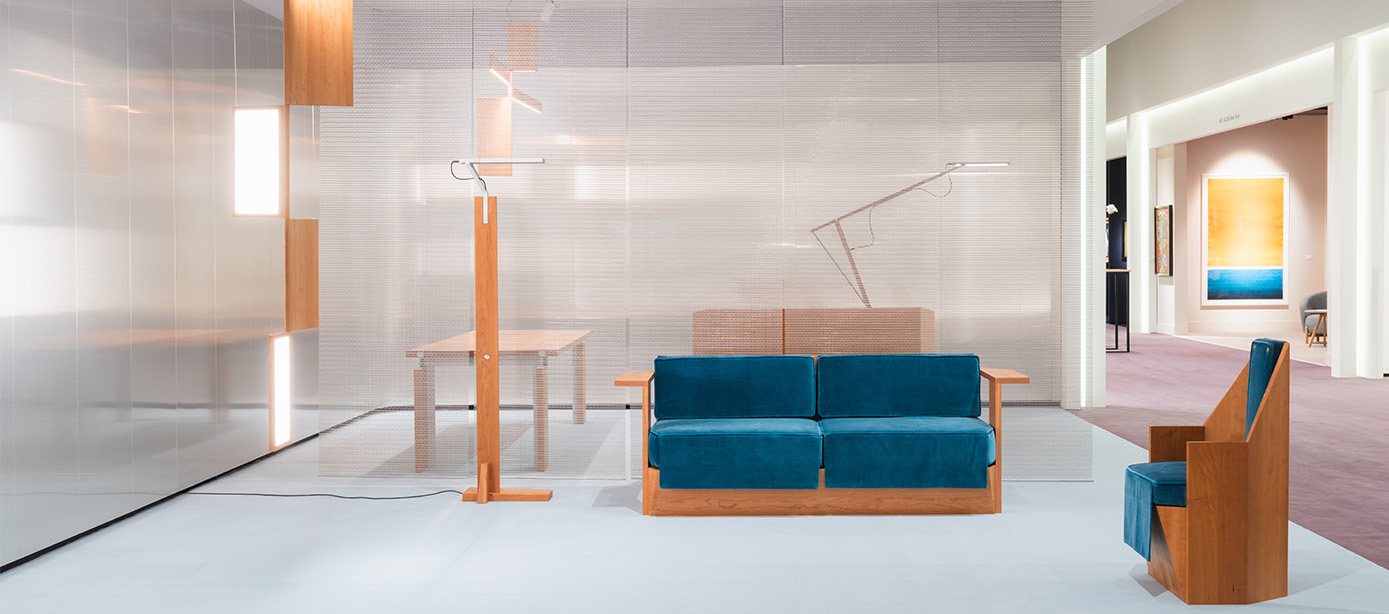
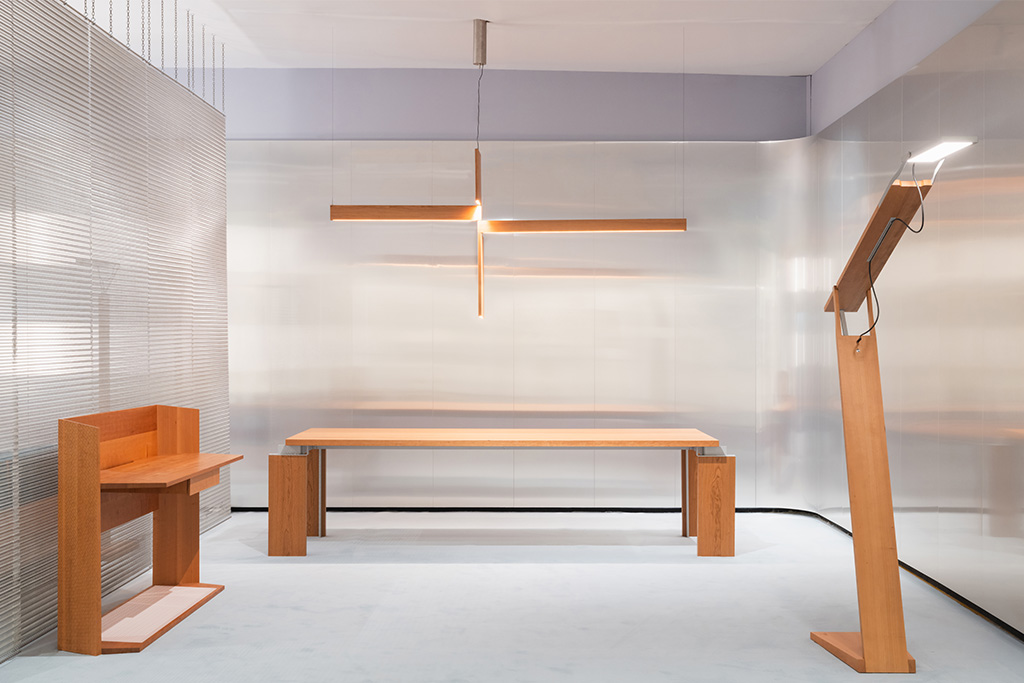
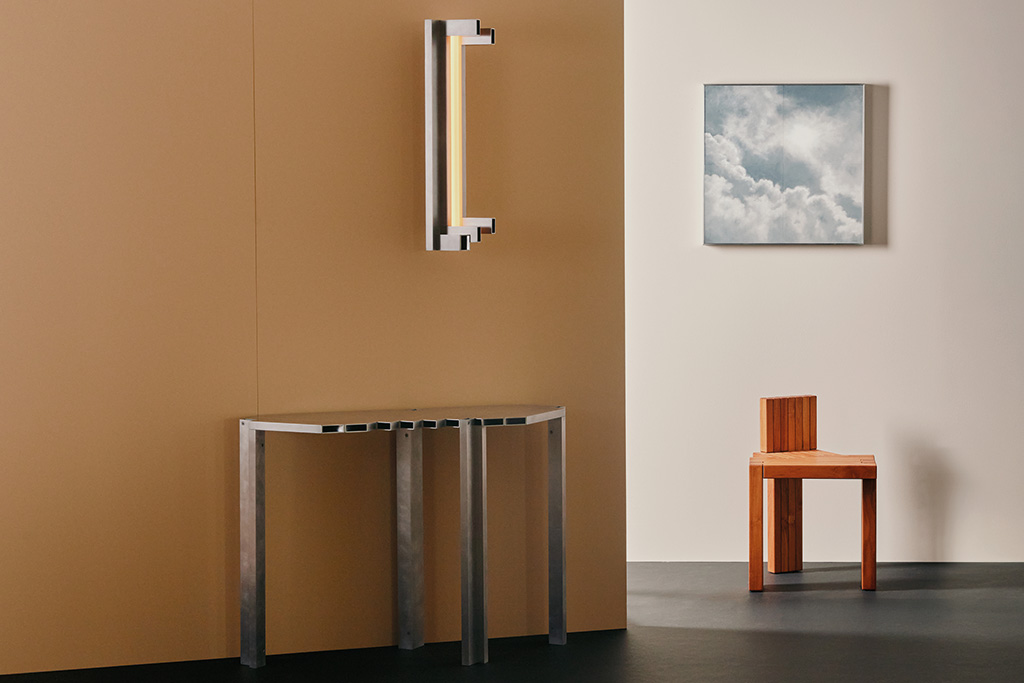
Avec Formation, le studio Formafantasma présentait à TEFAF Maastricht une collection contemporaine imaginée autour de la planche. Une approche en lien avec un certain goût pour le moderniste et la sobriété.
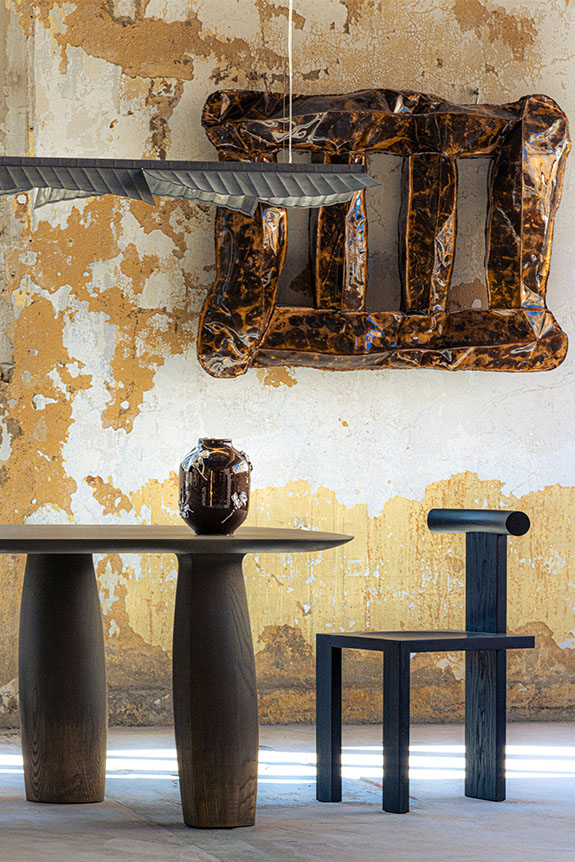
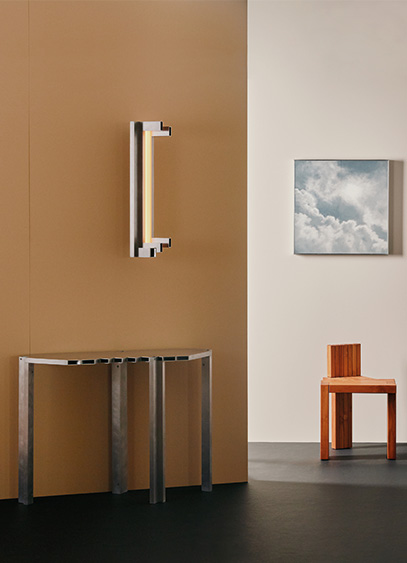
Qualifiant eux-mêmes leur esthétique de « restreinte », Andrea Trimarchi et Simone Farresin, fondateurs de Formafantasma, présentaient Formation à TEFAF Maastricht. Conçue pour la galerie Friedman Benda, la collection s’inscrit dans la continuité de leurs recherches sur les archétypes du mobilier et l’évolution de notre rapport aux objets domestiques. Cette fois-ci, le studio s’est attaché à la planche comme forme primaire, presque indissociable du mobilier lui-même. Plutôt que de la transformer, les designers ont choisi de l’utiliser telle quelle pour devenir table, assise ou rangement, sans jamais perdre son identité initiale. Ce parti pris donne lieu à un jeu géométrique rigoureux, enrichi par l’introduction d’aluminium brossé et de panneaux LED. Ces derniers, par leurs proportions, évoquent les écrans contemporains, inscrivant le projet dans son époque malgré une logique d’assemblage très classique. Tout l’enjeu réside alors dans cet équilibre temporel. Une démarche nourrie par des figures comme Frank Lloyd Wright, pour sa capacité à conjuguer artisanat et technologie, ou George Nakashima, pour sa vision du bois comme matière vivante.
Avec Formation, Formafantasma revendique ainsi une sobriété expressive. La collection, réduite à une sophistication assez minimale (bien que rehaussée de touches plus contemporaines), propose un salon hors du temps, mais à cheval sur les époques.
Pensée par Thierry Dreyfus pour DCW éditions, la collection Seagull s’agrandit avec une nouvelle suspension de 160 cm. Un changement d’échelle qui conserve le principe fondateur du luminaire : donner à voir la lumière plutôt que la lampe.
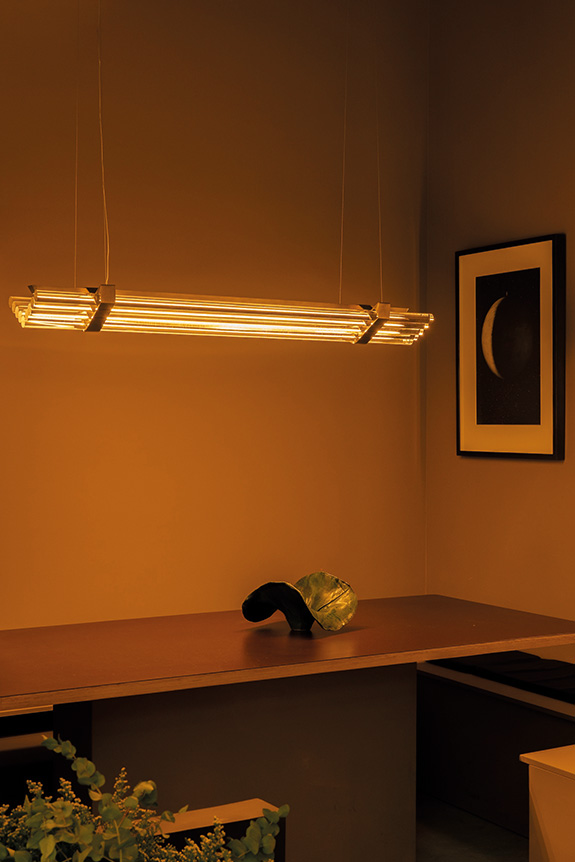
Faire de la lumière une présence sans laisser le luminaire s’imposer dans l’espace : c’est le parti pris de Seagull, imaginée par Thierry Dreyfus. Pour la dessiner, le designer s’est inspiré du Johnson Wax Building de Frank Lloyd Wright, construit à la fin des années 1930, dont les tubes de verre diffusent la lumière extérieure vers l’intérieur. Une sensation que Thierry Dreyfus transpose à l’échelle domestique à travers une succession de tubes lumineux disposés horizontalement, dans une composition aux accents Art déco.
Suspension Seagull, design : Thierry Dreyfus
Nouvelles proportions, nouvelles possibilités
Déjà proposée dans une version de 120 cm, Seagull se décline désormais dans un format de 160 cm, pensé pour accompagner des tables plus grandes. Suspendu idéalement entre 80 cm et 1 m au-dessus du plateau, le luminaire étire la lumière plutôt que de la concentrer, dessinant un « toit de lumière », pour reprendre les mots de Frédéric Winkler, président et fondateur de DCW éditions Une nouvelle échelle qui ouvre également Seagull à d’autres usages car plus qu’un simple point lumineux, la suspension peut devenir un véritable trait dans l’espace, capable d’accompagner l’architecture et de guider le regard. Une approche qui prolonge les recherches de Thierry Dreyfus, connu pour ses installations lumineuses et ses collaborations avec Comme des Garçons, Raf Simons ou encore Peter Marino. L’objectif étant de mettre la lumière en scène, ici dans une version pensée pour le quotidien.
For this new edition of Paris Design Week, the Intramuros team slipped through the capital's arteries to discover the season's latest exhibitions and new releases. Here is a look back at the ones you shouldn't have missed.
From September 10th to 19th, design once again took over the streets of Paris, much to our delight! Whether industrial or collectible, the creative sector made headlines again, both through new collections and new gatherings. It was an opportunity to rediscover certain profiles and meet new minds driven by innovative concepts. Among all the installations we discovered, here are the ones that particularly caught our attention.
Picnic by Cluzel / Pluchon: an invitation to lunch
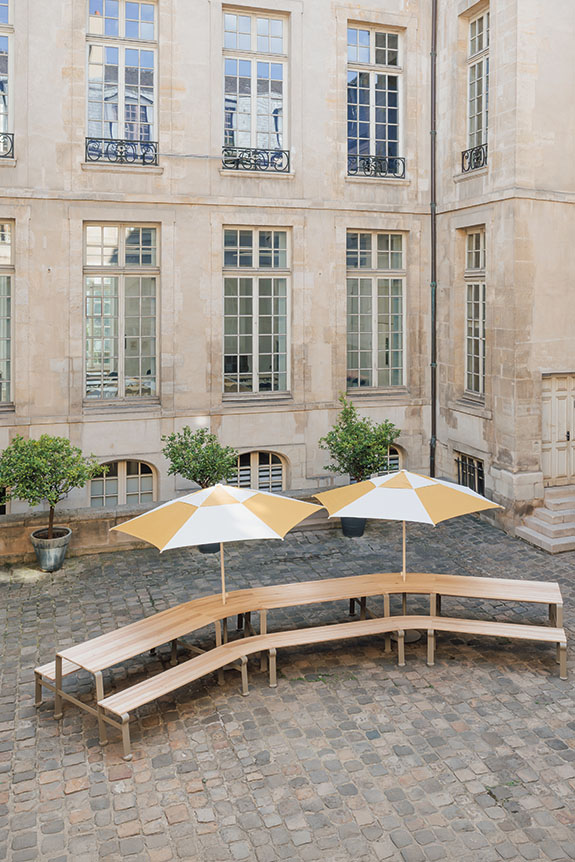
Following Marianna Ladreyt last year, designers Cluzel / Pluchon took over the courtyard of the Hôtel d’Albret to present the Picnic installation, created in collaboration with manufacturer Guyon Mobilier Urbain. Conceived as an invitation to share and wander, Picnic was unveiled as a life-sized picnic table over seven meters long. Continuing the Gier duo's well-known collection, it combined locust wood slats with a powder-coated steel structure, drawing a generous curve to create a dialogue between urban furniture and conviviality.
GOOD SELECTION by Lucas Zito and Marika Caputo: new scenes
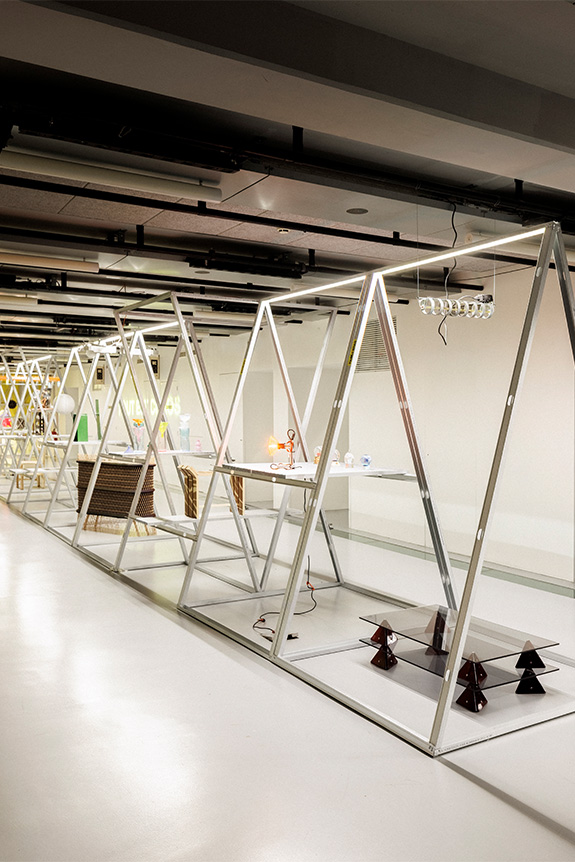
Organized by Lucas Zito and Marika Caputo, the second edition of GOOD SELECTION was held this year in the heart of the Fondation Fiminco in Romainville. Now disused, the former pharmaceutical factory—reminiscent of some of the most surprising Milanese venues chosen by Alcova—was taken over for the occasion by 47 international designers. Favoring dialogue between creations rather than formal classification, the exhibition offered various living spaces. A combination of styles and atmospheres provided visitors with a new, more embodied perspective on this so-called "collectible" design.
Volt Face by Studio 5.5 and Schneider Electric: high-voltage collection
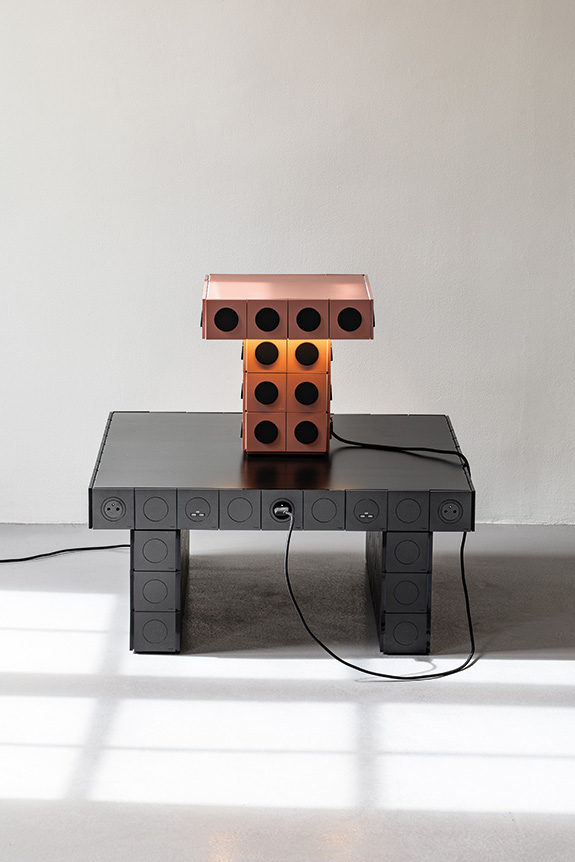
Studio 5.5 teamed up with Schneider Electric to imagine the Volt Face lighting and furniture collection, designed using the Odace range and presented at the Galerie Joseph on Rue des Minimes. Faithful to their taste for repurposing everyday objects, Vincent Baranger and Anthony Lebossé chose to make the socket and switch the main element of their creation, rather than an afterthought. Developed as wall lights, pendants, lamps, tables, and even nightstands, each piece plays with the repetition and assembly of the modules. Conceived as a true creative palette, the Odace range thus becomes a material to be composed, but also to be touched and operated, making these pieces playful and offering a fresh look at these familiar yet often undervalued objects.
Tout est Chaos by PLI Office: ordering the desirable
After initiating "Pour que tu m’aimes encore" in 2024 and "Design Disco Club" the following year, Christopher Dessus returned this year with "Tout est chaos." Presented at the Gaîté Lyrique, the exhibition brought together a body of work that acts as a vector for surprise. A feeling conveyed by the material or the form, but also and above all by a freer consideration of usage. It is a counterpoint to modernist design, which is generally serial and fundamentally utilitarian, here abandoned in favor of narrative. It was an opportunity to see very personal research collide, such as the non-linear or even random work of the series, the reinterpretation of industrial archetypes reworked by hand, or new explorations blending industry and craftsmanship. Driven by a nearly free participation, the 66 selected designers delivered a specific idea of design, claimed by 10 of them through installations and even a projection imagined as a manifesto.
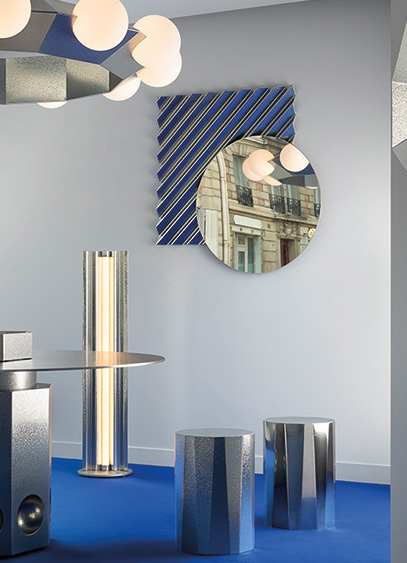
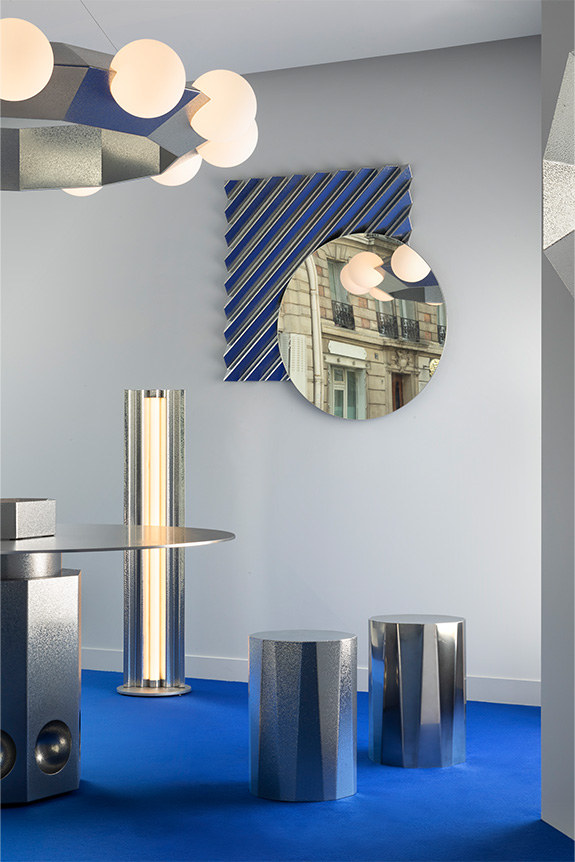
For this year's Paris Design Week, Victoria Wilmotte unveiled nearly a dozen pieces. Whether brand new or reimagined existing typologies, this collection continues to explore a world defined by geometry and a distinct industrial spirit. Crafted from stainless steel—sometimes featuring textures that evoke the technique of hammering—the various objects diffused light, along with the signature blue hue championed by the designer.
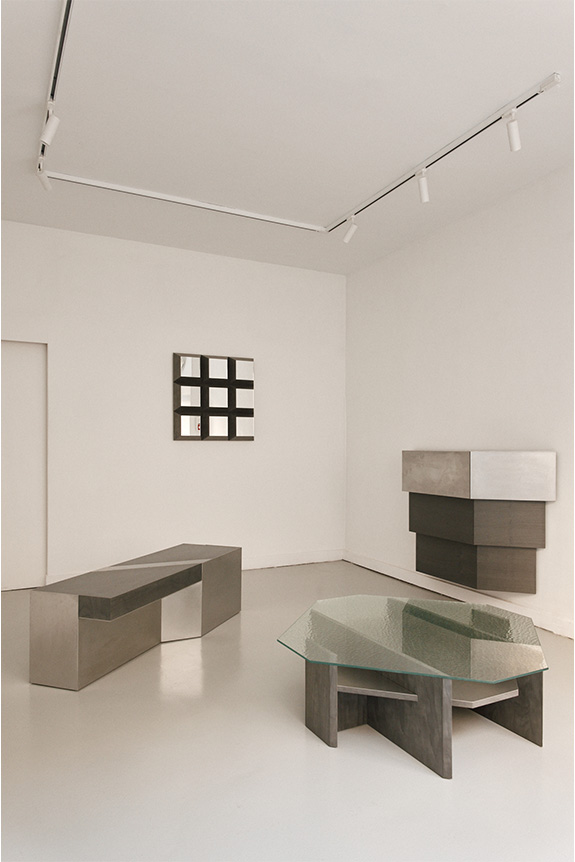
Launched a decade ago, the interior architecture firm Hoch unveiled Studio CHHO, the creative force behind Opus. This debut furniture collection, whose name suggests both a first chapter and a technical term for stone masonry, consists of five pieces. Developed over a year and a half, it highlights taut lines and 90° and 45° angles, delivering a bold aesthetic language with generous forms. Enhanced by a restrained palette of three materials—stained birch veneer, hammered glass, and vibrated stainless steel—the pieces were conceived as "objects of presence." This term, unique to the studio, reflects creations made in the south of France that embody the firm's sober yet characterful DNA.
"The Light Library" by Studio Meaningfull: Coloring Light
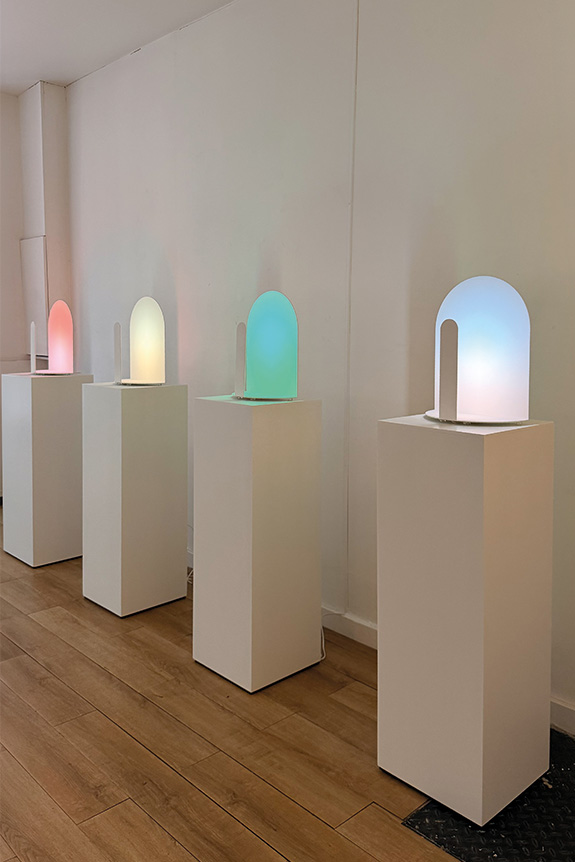
Continuing their research into color, which began with the Agora du Design grant they won in 2021, Studio Meaningfull—comprising Marine Rouit-Leduc, Galilée Al Rifaï, and Nicolas Rouit-Leduc—presented "The Light Library" at Galerie Ideal Place. The exhibition showcased nearly four years of experimentation with the color of light, conceived not as a material, but as a means of interaction. Each shade was developed with reference to natural phenomena, such as the aurora borealis, dawn, and twilight, to achieve a realistic and natural effect. The trio displayed several light-based objects and sculptures, including the Milan lamp, which recently joined the Mobilier National collections. The exhibition was designed to engage the senses and emotions while establishing new chromatic references for light, through an approach that is both sculptural and architectural.
"The Light Library" exhibition, Studio Meaningfull
Following an initial event in June, Frgmnt decided to repeat the experience for Paris Design Week by presenting its first exhibition, titled "Edition 01." On view until September 19, the show aims to put "the materials no one looks at" in the spotlight.
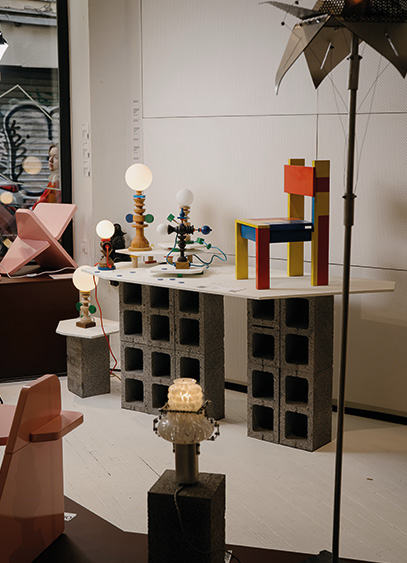
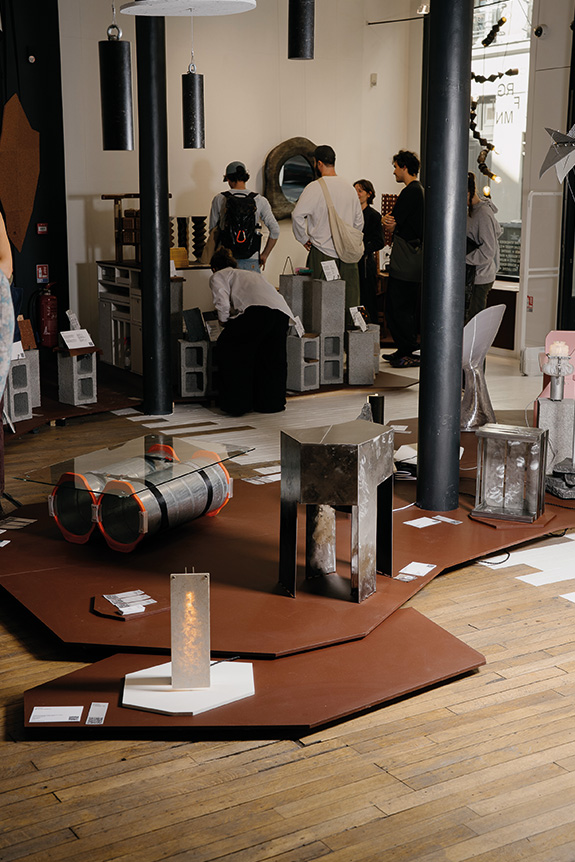
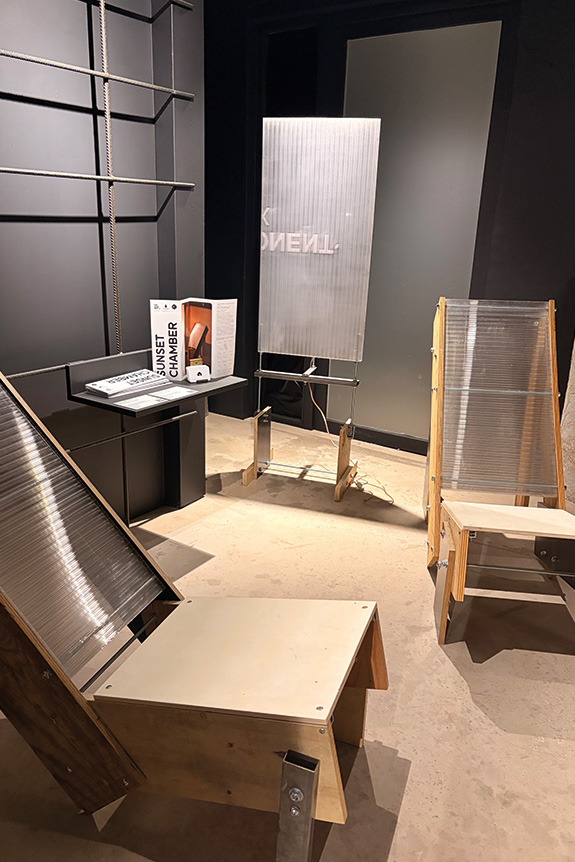
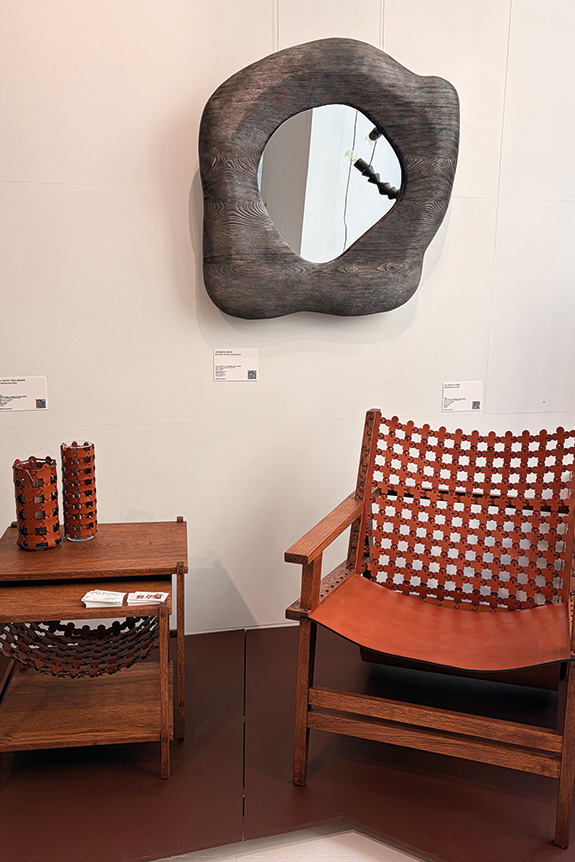
For its first participation in Paris Design Week, Frgmnt selected 43 designers and 11 material manufacturers, brought together to showcase a process and pieces imagined from forgotten or discarded industrial materials, scraps, and waste. Initiated by Meryl Benitah, the Frgmnt project began as a creative challenge launched last June. Over 48 hours, groups of designers, paired up for the occasion, imagined pieces using mediums often considered "undesirable". From wood to metal, the project also incorporated new materials, such as the one designed by Etnisi from windshields, or the Tissium developed by the company Maximum. "It was a bit like a hackathon format, but dedicated to design. We started with materials that were either salvaged or upcycled to show that reuse or even a second life can be desirable. Even though the participants didn't know each other, a certain creative synergy quickly emerged, and groups formed rapidly, managing to produce pieces in just two days", says Meryl Benitah.
This initiative caught the attention of Sabrina Piperno, manager of the Heureux les Curieux space, who wanted to support the project by inviting Frgmnt to exhibit during Paris Design Week in September. "For this edition, the idea was to invite other material manufacturer partners to create, on one hand, this material library, and on the other, to bring in designers with the same approach. Whether through the material itself or the design manufacturing process", continues Meryl Benitah.
Spread over two floors, the exhibition presents unique worlds, united by a single ambition: to create from what already exists or to explore the potential of new materials. "There are many ways to make a well-designed object that meets market needs. Some use reuse, others respond through the material, while some do it through function. But they all tell a story through a piece, always asking how to create objects that are desirable in the long term." This inquiry led designers to partner with manufacturers, such as hors-studio, whose Caretta Caretta lamp was made from Celullio, a material developed in collaboration with Matériaux Urbains. The latter is also the creator of Paperio, a new medium that Atelier Alcova used to bring Tecto to life. Meanwhile, other creators are presenting original pieces born from their own unique processes. Notable examples include Atelier Perret, creator of the Séléné pendant light made from coffee grounds; the T65 vase designed from bread by studio Copain; and Emma Batsheva Cohen’s concept focused on optimizing vegetable leather.
These diverse profiles and explored avenues aim to demonstrate that materials, initially overlooked, can become desirable once design takes hold of them. "My personal goal is to foster this link between manufacturers, designers, and specifiers by creating a beautiful ecosystem that will encourage them to collaborate and allow these pieces to find their way into hotels, restaurants, and support their development on a larger scale." With this exhibition, Meryl Benitah intends to build new bridges between key sectors of the design industry.
Triode recently opened 28, a new Parisian space designed as a creative playground for designers. To kick things off, Jean and Oliver Pelle, founders of the American studio Pelle, are presenting "Metallic Reverie," an exhibition featuring ten original pieces centered on metal and light.
Neither a gallery nor a showroom, 28—located at 28 rue Jacob in the 6th arrondissement—aims to offer a new exhibition format. Conceived by Jacques Barret, founder of Triode, this new space invites the designers represented by the firm to go beyond simply showcasing their collections. For each exhibition, they are given carte blanche to reveal a more personal side of their creative world. For this inaugural invitation, Triode reunites with Jean & Oliver Pelle, four years after their first joint exhibition in Paris.
Light Objects collection by Oliver Pelle
Two perspectives on material and light
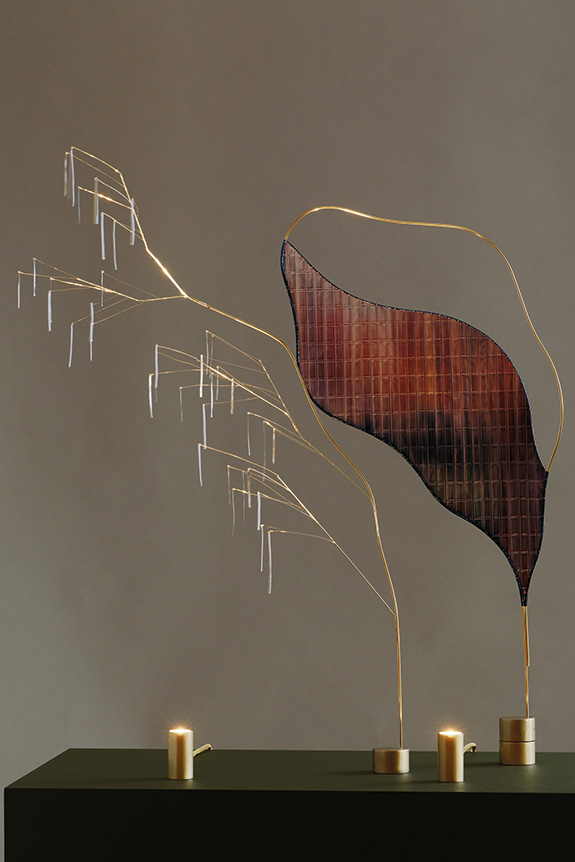
Architects by training and based in Brooklyn, Jean and Oliver Pelle have developed a practice that sits at the intersection of architecture, craftsmanship, and experimentation. For the "Metallic Reverie "exhibition, the duo created ten works specifically for 28, all united by a single material: metal. Jean Pelle presents her Fountain lighting series, inspired by memories and landscapes observed in Korea and along the American coast, while Oliver Pelle explores the intersection of light, material, and space through his Light Objects. Two distinct styles, yet united by a shared focus on materiality. It is a fitting way to inaugurate 28 by showcasing exactly what this new venue aims to reveal: the intimate personality of the designers.
Cityscape light, Fountain collection by Jean Pelle
Newsletter
Chaque semaine, recevez toute l’actualité du design avec la newsletter Intramuros.





.svg)


.svg)