Conférence France Design Week

Conférence France Design Week

Initiée lors des Assises du design en 2019, France Design Week lance sa seconde édition au mois de septembre 2021. Une vitrine engagée du design à l’échelle nationale, voire internationale ?


‍

Intervenants :

Lucile Montagne, Conservatrice du patrimoine, chargée des collections contemporaines, Mobilier national,
Dominique Sciamma, Président de l’APCI, coordination nationale France Design Week
Franck Millot, Directeur de Paris Design Week
Avec la participation vidéo de Linda Marchetti, Directrice de l’Institut Français à Milan, et de Philippe Nigro, Designer.

Modération : Frédéric Marty, directeur général Intramuros Group

‍

Une conférence donnée le mercredi 8 septembre, à l’Intramuros Café, dans le cadre de la Paris Design Week 2021.

‍

Rédigé par 

Vous aimerez aussi

Temps de lecture
25/9/2026
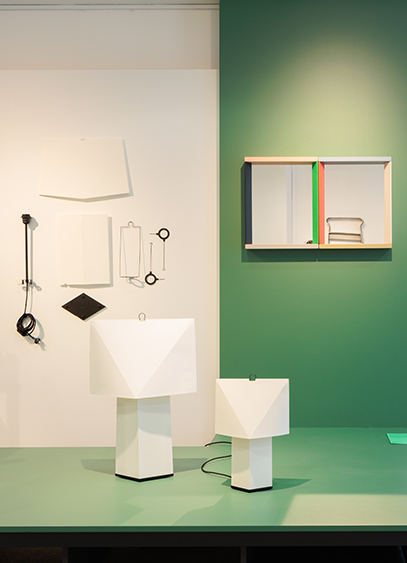
"Multiples": an exhibition on series production at the BDMMA

Through October 3, the Bureau de la Mode, des Métiers d’Art et du Design (BDMMA) is presenting the "Multiples" exhibition. A range of projects celebrating industrial design and the new relationships between designers and industry.

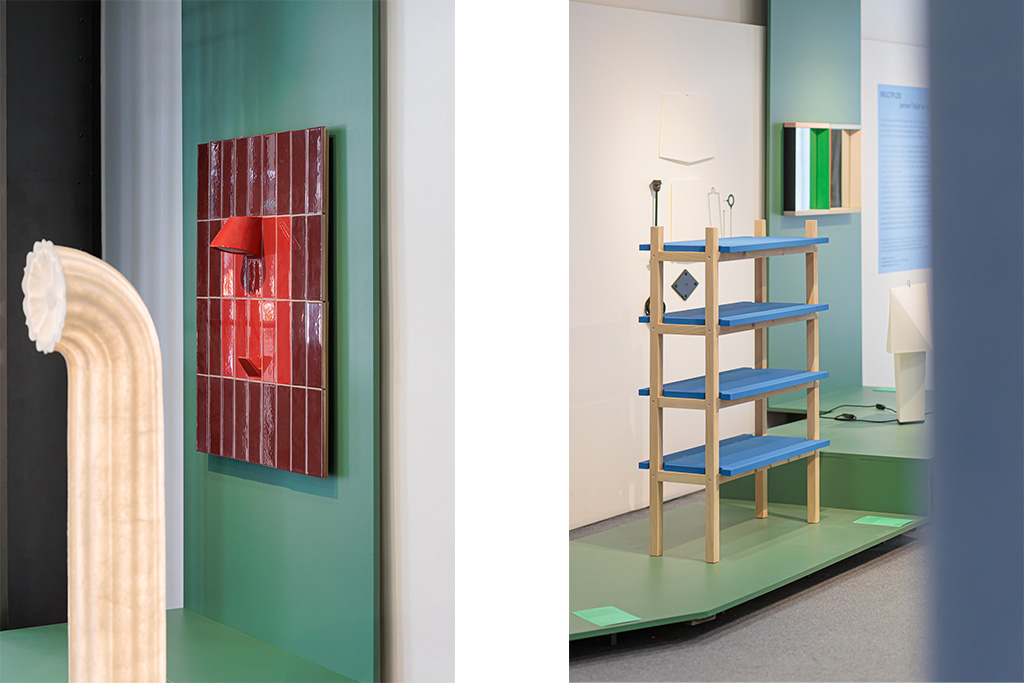
As we reflect on September's Paris Design Week, one thing is clear: collectible design seems to reign supreme. Yet, the less "Instagrammable" world of industrial design has not disappeared. To reaffirm its presence and offer a counterpoint to the current trend, the Bureau de la Mode, des Métiers d’Art et du Design (BDMMA) presents "Multiples." Conceived as a return to basics, the exhibition is not "a status report on the sector", but rather aims to "provide an overview of research and textures centered on mass production", explains Frédéric Bouchet, deputy director of the institution. This diversity is reaffirmed through thirteen studios whose utilitarian and aesthetic objects celebrate production. Through this, the focus is not on creating for the sake of creating, but on the intelligence of replicable and viable systems.

©BDMMA

‍

A new relationship with industry, but the same idea of design

If the sector is experiencing "a change of state", it is partly due to the upheaval that has occurred in industrial production. "The relationship with industry has changed completely, requiring designers to shift their stance and be less passive regarding production. They are now encouraged to take hold of processes themselves or repurpose production methods to engage in self-publishing", analyzes Frédéric Bouchet. These new alternative paths are prompting some designers to question the challenges related to resources and how the materials used serve their intended purpose. "It seems to me that this concern is increasingly rooted in the local fabric, as seen in the work of Jules Levasseur. He convinced a company in Burgundy, where he is based, to take an interest in his project, and together they developed 'Projet S,' made from corrugated metal sheets. His challenge today is to channel production at his own scale to produce just the right number of furniture pieces." Beyond the challenge of economic adaptability, there is the issue of formal and technical reinterpretation. "How can one avoid being beholden to traditional publishing? How can I bring local industry into my own territory while generating value? These are the two major questions that emerge in the exhibition, notably through the work of Lila Guédin, who used industrial assembly techniques to create chairs, and Nicolas Verschaeve, who uses tool handles to create small interior objects like hooks and coat racks." These captures and reinterpretations of pre-existing industrial matrices open up new aesthetic and technical doors. Whether published or not, the projects selected by curators and exhibitors Lucien Icard and Kevin Lebouvier shed different lights on these new relationships with industry, favoring "a certain stylistic purity based primarily on assembly".

An exhibition to discover at the Bureau de la Mode, des Métiers d’Art et du Design, 30 rue du Faubourg Saint-Antoine, in the 12th arrondissement of Paris, until October 3rd.

©BDMMA
Temps de lecture
22/9/2026
Astre Mobile on the road to fine craftsmanship

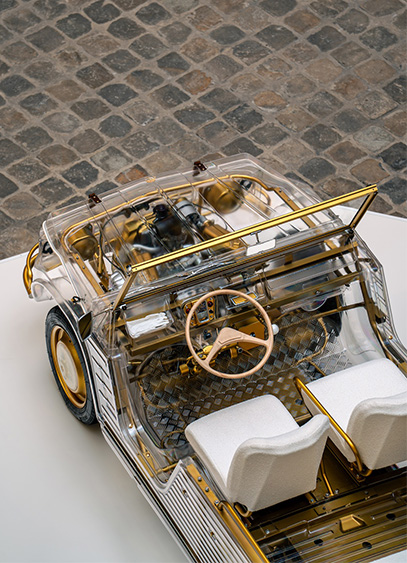
For Paris Design Week, and running until October 4, the Hôtel de la Marine is hosting a Méhari. This lunar-inspired hybrid vehicle was reimagined by Maison Lacmé as a tribute to fine craftsmanship.

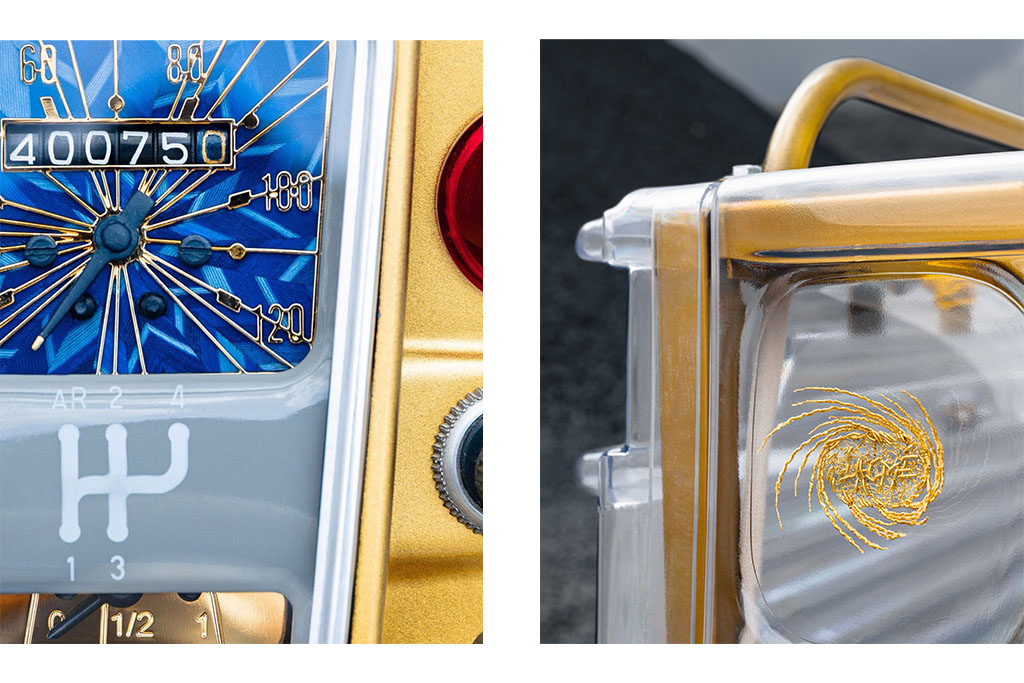
While the Hôtel de la Marine has established itself as a key venue for Paris Design Week, this year’s bold choice is sure to surprise. A curious car is parked right in the center of the courtyard, its odometer—fresh from the workshop—seemingly stuck at 40,075 kilometers. A malfunction? No, a clue. Because behind this familiar silhouette, that of the Citroën-produced Méhari, lies a true design manifesto and a tribute to the decorative arts.

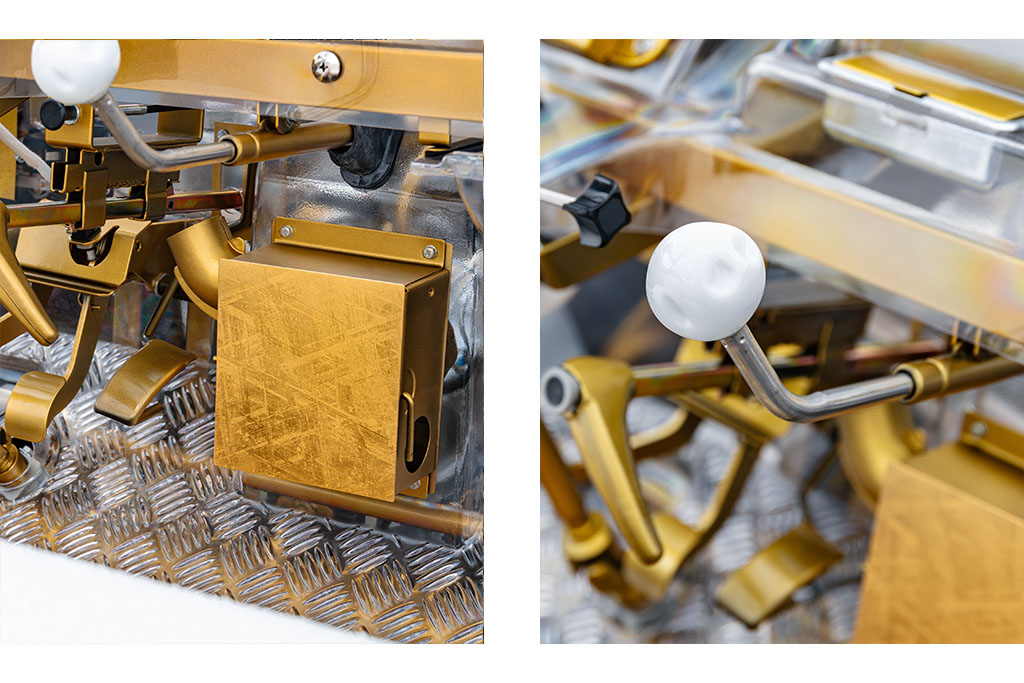
The heater control plate created using heliogravure by Fanny Boucher & Lise Richardot and the gear shift in Limoges porcelain by Ateliers Arquié ©Maison Lacmé

‍

A collision between industry and craftsmanship

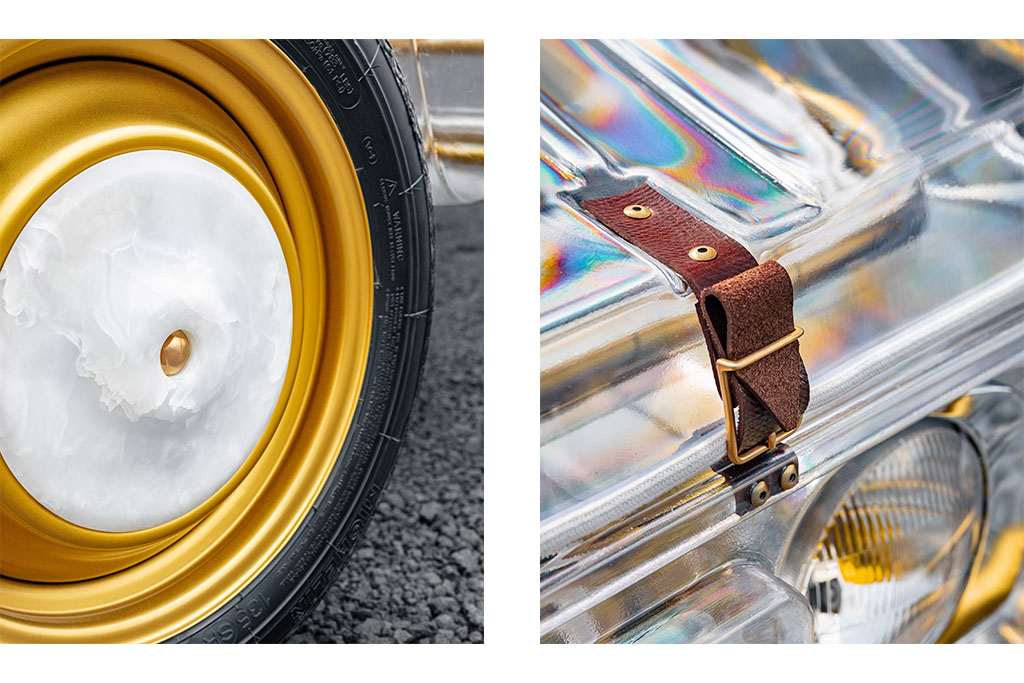
Behind this project are Cécile and Antoine Tauvel, the founders of Maison Lacmé, established two years ago. Their goal: to create functional works of art from everyday objects. This ambition led the two vintage car enthusiasts to explore the potential of the Méhari. "For many French people, it evokes the 60s or memories of seaside vacations. But for me, it was also the lunar aspect that spoke to me, reminding me of the covers of certain Tintin albums. So our role was to reveal the symbolism and the sense of wonder that were already there," explains Antoine Tauvel. The couple then designed the frame. It would be gold, echoing French decorative arts and art history, applied in touches to a transparent chassis. "What we found interesting was creating a certain balance between industry and fine craftsmanship by playing with contrasts." This aesthetic research was conducted with a French manufacturer to rethink the polymer composition and prevent the chassis from yellowing, after which a layer of transparent ceramic was applied. "The challenge was to transform this purely industrial typology into an art object without giving it the status of a luxury item. We first had to spark formal curiosity to then draw the eye to the smaller elements," details Cécile Tauvel. A quest for storytelling where the automobile conveys the imagination.

The onyx hubcaps by Hervé Obligi and the Russian leather straps by Elise Blouet ©Maison Lacmé

‍

A concentration of expertise

Who said a hubcap and a lamp, or an automotive logo and a brooch, don't belong to the same world? Certainly not Maison Lacmé, whose project is centered on the ambivalence of objects. Each of the twelve elements created by master artisans has a practical function. "This car is a Trojan horse, a mobile cabinet of curiosities that hides things within itself," summarizes Antoine Tauvel, who originated these dual functions. "This idea is central. We did all the preparatory drawings and aesthetic choices in-house, then presented them to the artisans." From then on, the project became collaborative, and the sketches were adjusted for aesthetic coherence. The steering wheel, crafted from driftwood, and the seashell-embroidered upholstery open up a maritime horizon, while the feather-marquetry odometer—stuck at the Earth's circumference—can be removed and used as a desk clock. Beyond their utility, the techniques used recall those of the golden age of French decorative arts. Among them is the trompe-l’œil technique, used to replace the stone hubcaps with painted versions when the vehicle is in motion.

A true "poetic travel tool," the Maison Lacmé Méhari will be on display in the courtyard of the Hôtel de la Marine until Sunday, October 4.

The feather-marquetry odometer by Maison Vermeulen and the embroidered logo by Marie Archambaud ©Maison Lacmé
Temps de lecture
17/9/2026
Alki revisits Kuskoa with Kuskoa M

Fifteen years after the launch of Kuskoa, Alki and Iratzoki Studio are evolving this iconic collection with Kuskoa M.

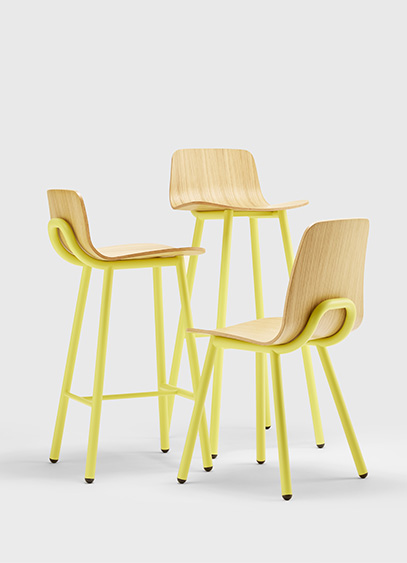
Created by Iratzoki Studio in 2011, Kuskoa established itself as one of Alki’s best-sellers with its oak shell design set on a solid wood trestle. During Paris Design Week, the brand unveiled Kuskoa M. Comprising a chair, two stools of different heights, and a bench, the collection was designed for restaurants, bars, canteens, and kitchens alike. With its various heights and typologies, this set can offer multiple configurations within a single space.
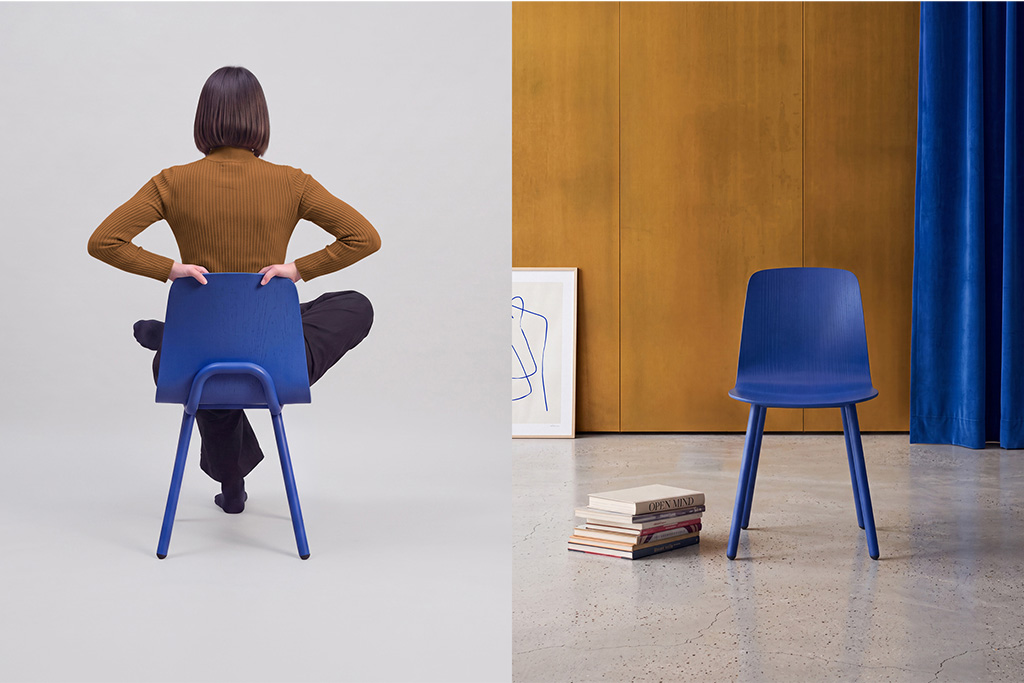
Featuring a powder-coated tubular steel frame, the seat develops a new graphic expression. Available in several finishes, it offers everyone the opportunity to compose their own piece, celebrating monochrome or, conversely, contrasts between metal, wood, and textile. Note that the shell can be upholstered in its entirety or only on the front.

Alki
Temps de lecture
16/9/2026
Bar stool: Design with a purpose

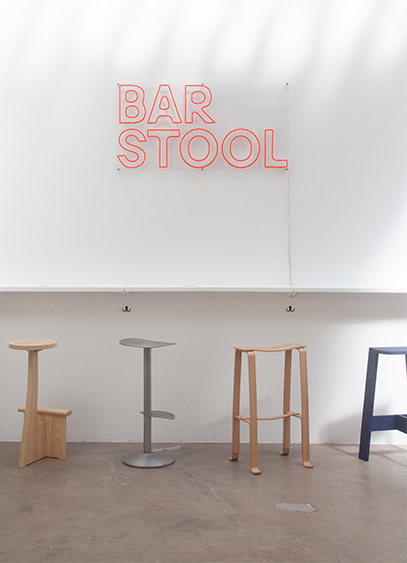
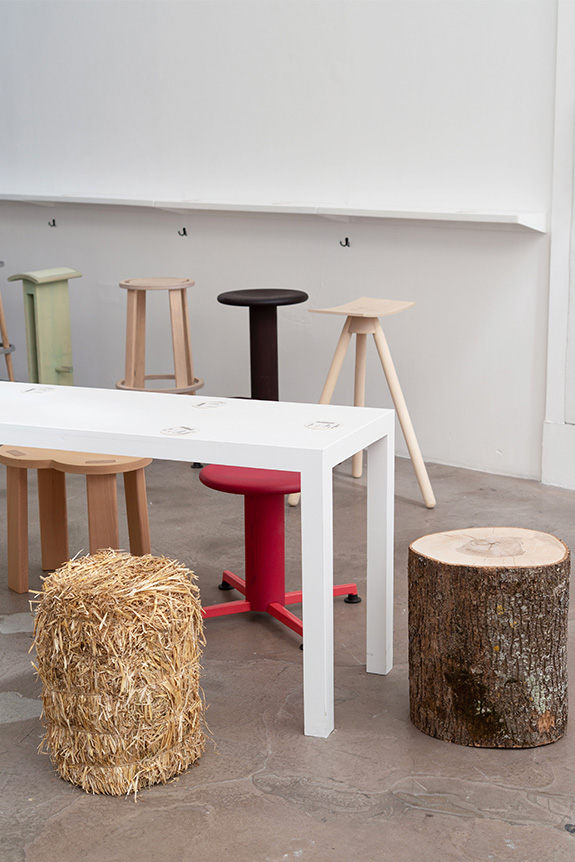
For their first joint exhibition, Athime de Crécy and Quentin Frichet have invited 35 designers to each create a stool. This free-spirited and convivial initiative, centered on utilitarian design, is on view at Espace Brownstone in Paris until September 19.

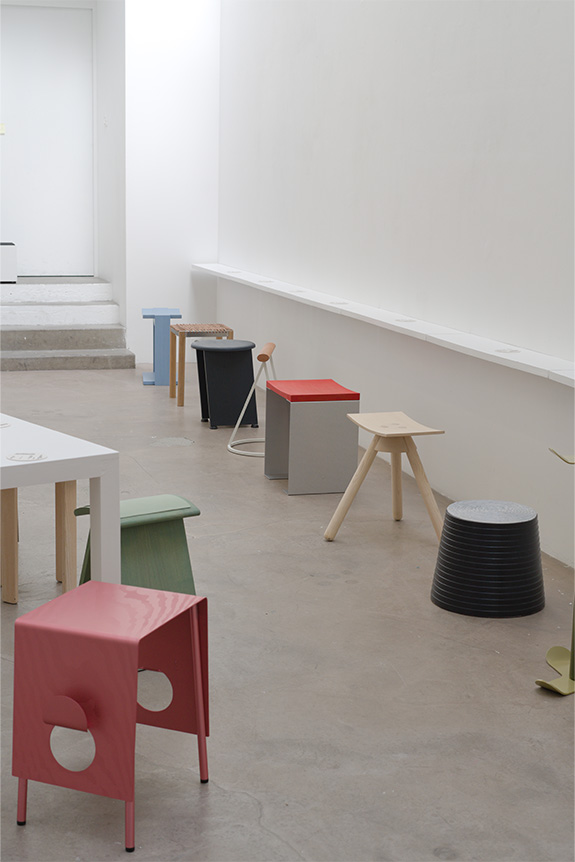
It is a sentiment some might find overused, but design, beyond its commercial and aesthetic dimensions, must be utilitarian. This philosophy, often challenged in the context of collectible design and shifting trends, is shared by Athime de Crécy and Quentin Frichet. Both ECAL graduates, having trained under Philippe Starck and Erwan Bouroullec respectively, the two young designers have taken over Espace Brownstone in Paris until September 19. It is a white-box space where 35 stools are displayed—not for visitors to look at, but for users to experience. "We had wanted to create a self-service exhibition for a long time. We initially thought about doing it in a bar, but in the end, the typology of the object took precedence over the venue," explains Athime de Crécy. Here, behavior is not dictated by the decor—which is nonexistent, save for a central table and drink storage at the entrance—but by the very nature of the pieces themselves. Presented without pedestals or labels, the seats invite everyone to pick them up, move them around, and sit down, effectively transforming the gallery into a living space. "We believe that a design exhibition that separates objects from the public invariably loses an essential aspect of what makes the discipline so powerful." The social dimension is an imperative here, carried by the stool and its characteristically lighthearted tone.

©Laura Koelman

‍

A shared idea expressed in every form

If a single object can spark different visions from one mind to another, *Bar stool* is the perfect illustration. A true synthesis of forms and materials, the exhibition is an ode to creativity. From the technical mastery of molded wood by Arthur Desmet to the high-tech 3D-printed stainless steel by the German studio Wint, the exhibition reveals a paradoxical coherence driven by the balance of diverse ambitions. "We didn't have to look far to find the designers. They are friends with whom we share a common sensibility for utilitarian and expressive design. We simply gave them total creative freedom, without even imagining that the projects might end up looking alike." A curation that gives this ephemeral refreshment bar its unique character and connects the aesthetic experience with everyday life. "It’s an approach that, in our view, draws the maximum amount of meaning from the minimum amount of resources."

©Laura Koelman
Inscrivez-vous à notre newsletter pour recevoir chaque semaine l’actualité du design.