GETA, la collection japonisante d’Atome Associés
Collection Geta par Atome Associés ©Atome Associés

GETA, la collection japonisante d’Atome Associés

‍Agence spécialisée dans l'architecture autant que dans l'ameublement, Atome Associés présente GETA, sa première collection de mobilier auto-édité à destination du grand public.

Habituée à l'exercice de la conception architecturale et à l’aménagement de ses espaces, Natacha Froger livre une collection personnelle en dehors des codes habituels d’Atome Associés. Imaginée avec Aurèle Duhart, également architecte, GETA est la première collection auto-éditée de l’agence. Un projet de dix-huit mois où se retrouve l'esprit luxueux et design présent dans les réalisations passées. Portée par sa forme imposante et son allure sereine, GETA est surtout un hommage au pays du soleil levant, nation de savoir-faire et d'inspiration pour Natacha Froger. Décliné en six pièces, cet ensemble, faisant la jonction entre l'identité d'Atome Associés et la culture japonaise, est à découvrir à la maison Jean-Marc Hervier à Saint-Ouen.

Le tabouret et la table de la collection GETA font écho à l'œuvre de Bénédicte Gérin ©Atome Associés

‍

Une inspiration entre archives et bout du monde

Passionnée par le Japon pour ses grands noms de l'architecture, Natacha Froger l'est également pour « le grand écart entre l'aspect visionnaire et contemporain du pays mêlé à son côté ancestral guidé par le goût du perfectionnisme. » Pourtant, lorsqu'elle décide de concevoir une nouvelle collection, l'idée n'est pas nécessairement de suivre cette destination. « Au départ, le leitmotiv était de savoir quel objet nous voudrions sortir en premier à destination du public » précise la conceptrice. Une réflexion qui la mène à fouiller avec son équipe dans les archives de l'agence fondée en 2005. « Rapidement GETA s'est imposée car cette pièce reflétait l'ADN de l'agence, à savoir un travail artisanal et une certaine esthétique japonisante que nous aimions tous. » Pourtant, GETA est alors très différente de la collection actuelle, puisqu'il s'agit d'un lave-mains dessiné pour le Château de la Forêt, un projet réalisé quelques années auparavant. « Nous avions dessiné cet élément en forme d'abreuvoir en raison de la localisation du monument sur un territoire agricole, et nous l'avions réalisé en bois brûlé – technique japonaise du Shou sugi ban – en référence aux toitures noires de l'édifice et aux denses espaces boisés qui l'entourent. » Une première allusion indirecte au Japon, mise par la suite en exergue. « De la forme initiale nous est apparue celle de la geta, le soulier japonais porté quotidiennement jusque dans les années 60. C'est donc un élément encore fortement ancré dans la culture locale, que nous avons décidé de réinterpréter. » Une démarche qui a poussé la créatrice jusqu'à Sakae, berceau de ces chaussures.

Sortes de modules déclinés dans différents formats, les éléments de la collection GETA se combinent et se répondent pour former des ensembles colorés et japonisants ©Atome Associés

‍

Une collection dans l'esprit de l'agence

« Chacun de nos projets architecturaux s'imprègne de la culture locale, car nous pensons que construire ou designer pour l'Homme est avant tout sociologique, biologique... bref humain. Avec GETA, nous avons donc souhaité remonter le fil d'Ariane de l'histoire et de la culture du pays » évoque Natacha Froger. À ce titre, la collection propose un condensé du Japon. Bien que fabriquée dans le nord du Portugal, elle reprend les codes esthétiques propres aux pas des geishas. À l'image de la pluralité des types de getas portées historiquement par la noblesse comme par les ouvriers, les piétements monolithiques et tout en rondeurs varient d'un module à l'autre, rappelant outre l'attribut vestimentaire, tantôt des torii, tantôt des lettres de l'alphabet nippon. La conjugaison du bois de noyer et de la laque, proposée dans des coloris récurrents sur le territoire, est également un hommage aux savoir-faire locaux. Les formes, les matériaux ou les couleurs sont donc autant de traits d'union entre le design et l'humain caractérisés par l'idée du « dessin à dessein », portée par l'agence. Au-delà de l'homophonie, c'est une certaine approche de la création basée la cohérence entre source d'inspiration et pouvoir visuel de l'objet qui est mise en avant.

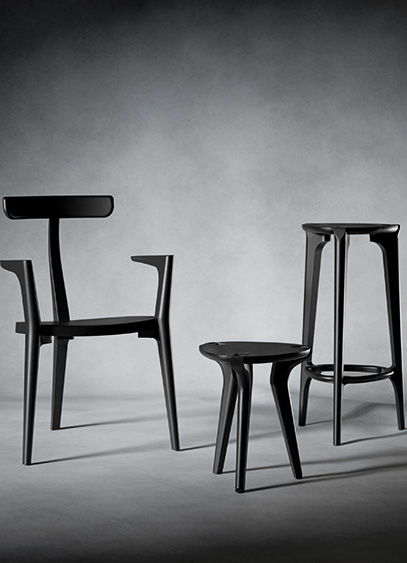
Selon l'angle de vue choisi, la laque disparaît au profit du piètement travaillé comme un hommage aux chaussures typiques du Japon ©Atome Associés
Rédigé par 
Tom Dufreix

Vous aimerez aussi

Temps de lecture
17/11/2026
Appel à projets : Polimair lance « l’Adresse »

Avec « L’Adresse », Polimair lance son premier appel à projets destiné aux professionnels de l’hospitalité et aux lieux culturels, en leur proposant d’équiper leur futur espace en mobilier à prix coûtant. Les candidatures sont ouvertes jusqu’au 31 décembre.

‍

Après deux ans consacrées à l’élaboration de ses collections, Polimair franchit une nouvelle étape de son développement avec « L’Adresse », un appel à projets destiné aux hôtels, restaurants, cafés, bars et autres lieux culturels. Ouvert aux exploitants comme aux architectes et designers, ce dernier vise à sélectionner un projet situé en France métropolitaine, dont la livraison est prévue entre avril et décembre 2027, et intégrant au minimum 20 assises de la marque.

Un projet pour valoriser l’écoconception

Le lauréat - qui sera dévoilé le 31 janvier 2027 -, pourra bénéficier de mobilier Polimair à prix coûtant, ainsi que d’un reportage photo et vidéo professionnel financé par la marque. Jusqu’à deux mentions spéciales pourront également être attribuées, donnant accès à des remises sur le mobilier. Les projets distingués profiteront par ailleurs d’un accompagnement autour de leur démarche d’écoconception. Le jury de cet appel à projets sera présidé par Arthur Gaudenz, cofondateur et directeur artistique de Polimair et réunira Natacha Froger (atOme associés), Grégoire Gérard (Eco Impact), Frédéric Marty (Intramuros) et Léo Gaudenz (Polimair).

Plus globalement, cet appel à projets permettra également de mettre en avant les trois modèles de la marque : la chaise Beluga, le tabouret modulable Baiji et le nouveau Baiji Bar, proposé en deux hauteurs. « Avec L’Adresse, nous voulons voir notre gamme prendre vie dans un lieu exigeant, où chaque choix de conception compte », explique Arthur Gaudenz. Fabriquées en France à partir de plastique 100 % recyclé, ces assises sont personnalisables et garanties à vie.

Informations et inscription ici : ladresse-polimair.netlify.app

Temps de lecture
16/11/2026
Muller Van Severen : le piano réinventé

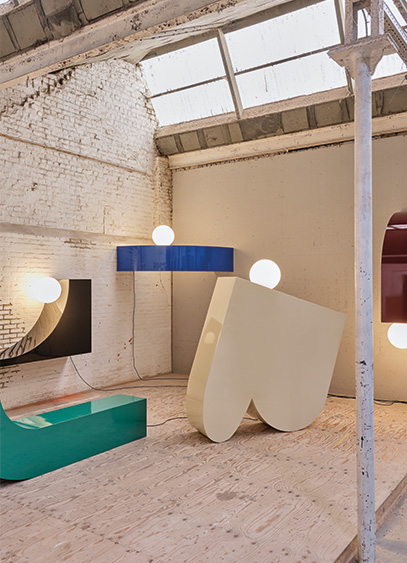
Jusqu’au 6 février 2027, Muller Van Severen investit la Tim Van Laere Gallery de Rome avec « Pianos », une exposition réunissant sept pièces uniques à mi-chemin entre mobilier et sculpture, où l'instrument de musique se réinvente à travers de nouveaux usages.

‍

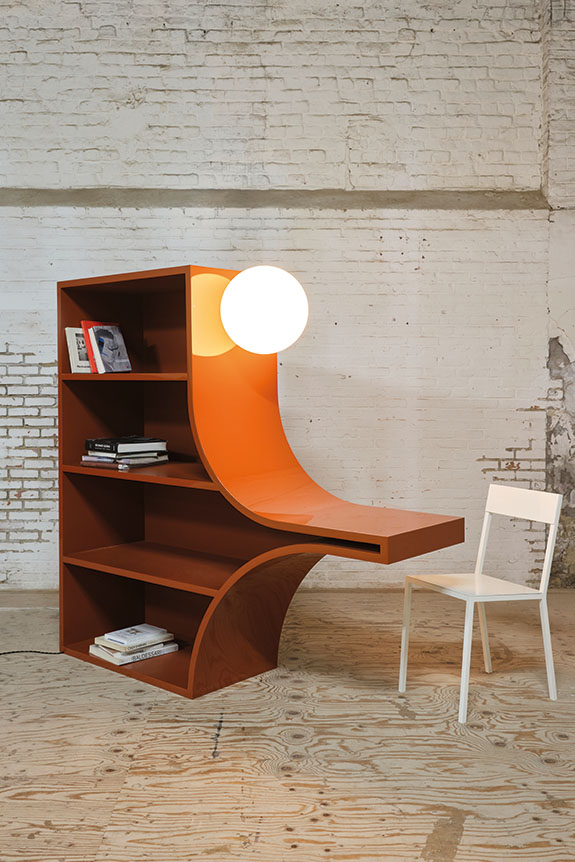
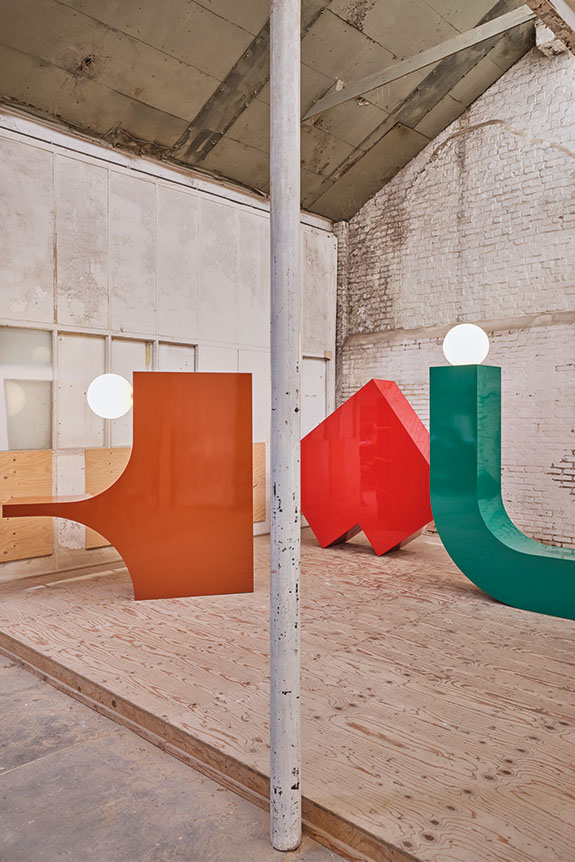
Et si le piano devenait un objet fonctionnel, accessible même à ceux qui ne savent pas en jouer ? C’est le point de départ de « Pianos », la nouvelle exposition du duo de designers Muller Van Severen, composé de Fien Muller et Hannes Van Severen. Fascinés par la présence architecturale du piano, ses lignes et ses surfaces laquées, les designers ont imaginé sept pièces uniques qui reprennent les codes esthétiques de l'instrument, tout en le détournant de sa fonction première. Déconstruites et recomposées, les silhouettes se transforment ainsi en tables, bancs, armoires ou sculptures murales, conservant une identité familière malgré leur nouvelle fonction.

Exposition "Pianos", Tim Van Laere Gallery, Rome © Frederik Vercruysse

Du son à la lumière

Avec « Pianos », le duo belge poursuit son exploration des frontières entre art et design, en jouant sur les volumes, les matières et les usages. Le titre de l'exposition fait également référence au terme italien piano, qui désigne un plan ou un niveau, en écho aux différentes surfaces horizontales qui composent ces petites architectures.

Exposition "Pianos", Tim Van Laere Gallery, Rome © Frederik Vercruysse

Autre particularité : six des sept pièces sont surmontées d'une sphère lumineuse en verre opalin, remplaçant symboliquement le son par la lumière. Une transformation qui confère aux créations une dimension presque onirique, évoquant notamment l'univers surréaliste de René Magritte. Entre surfaces brillantes, jeux de lumière et silhouettes sculpturales, l'ensemble compose une atmosphère feutrée, inspirée des clubs de jazz, où le piano, désormais silencieux, conserve toute sa présence.

Temps de lecture
12/11/2026
Third Line: A prize to reinvent materials

With Third Line, the French group GPA, specializing in automotive recycling, is launching a new design prize aimed at exploring the creative potential of materials sourced from end-of-life vehicles. For this inaugural edition, artists and designers are invited to imagine new uses for an unexpected material: the airbag. The call for entries is open until January 31, 2027.

‍

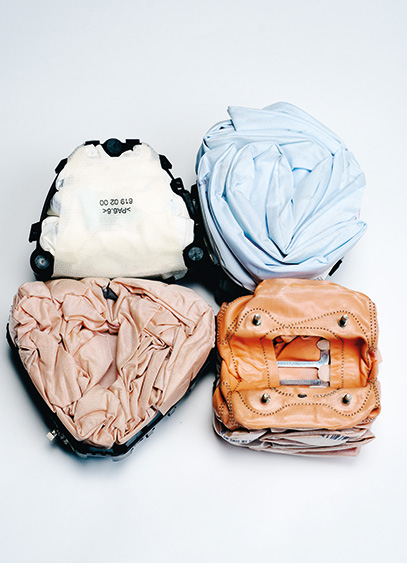
What happens to automotive materials when they can no longer be recycled? This is the question the GPA group, a family-owned business based in the Drôme region specializing in automotive recycling, aims to answer with the launch of Third Line. Conceived as a biennial event, this new prize intends to foster a dialogue between contemporary creation and industrial expertise by inviting artists and designers to rethink the uses of materials that are currently underutilized. Each year, GPA processes more than 45,000 vehicles and manages to recycle and recover an average of 99.7% of their mass. However, certain materials, such as foams, leathers, and airbags, remain difficult to recycle. It is precisely these materials that Third Line seeks to view through a new lens, turning design into a true field of experimentation.

The airbag as a creative material

For this first edition, the focus is on the airbag, a technical polyamide textile known for its lightness and mechanical strength, but which currently lacks any suitable recycling stream. Prize applicants are invited to explore its properties to imagine a piece of contemporary, functional furniture intended for corporate spaces.

A prize bridging research and production

Open to artists and designers, the Third Line prize includes a €10,000 award and offers support that goes beyond mere financial reward. The winner, to be announced in the spring of 2027, will be hosted at GPA starting in September 2027 for a research and production residency. They will be able to develop their project in collaboration with the company's teams, as well as local artisans and technical partners, through to completion. Ultimately, the goal of each edition will be to explore a different material, gradually building a collection born from this encounter between creation and industry.

More information and registration here: https://www.groupe-gpa.fr/third-line-prix-du-design/

Temps de lecture
10/11/2026
The Trophées du Meuble: "Rewarding expertise, and making it known"

For the launch of the first edition of the Trophées du Meuble, Dantès Presse—publisher of Le Courrier du Meuble, Cuisines & Bains magazine, and Concept Bains—has partnered with Intramuros magazine and Maison&Objet. This collaboration will include a major awards ceremony held at the trade show on January 14, 2027. Frédéric Marty, General Manager of Dantès Presse and Editor-in-Chief of Intramuros, and Vincent Lhoste, General Manager of Safi, discuss the ins and outs of this new event.

‍

In 2026, Dantès Presse and Intramuros are launching the first edition of the Trophées du Meuble. What does this event entail, and what is the motivation behind this initiative?

Frédéric Marty: The positioning of our various magazines—Le Courrier du Meuble, the historic B2B publication for the furniture industry; Cuisines & Bains magazine and Concept Bains, which are leaders in the kitchen and bathroom sector; and Intramuros, the reference for design—gives us a comprehensive view of the furniture market. We realized that while these different fields, all centered on home furnishings and interior architecture, have their own competitions and awards, they lack connections and bridges between them. The main idea behind the Trophées du Meuble is to fill a gap in the market by creating a cross-disciplinary competition that rewards the excellence and expertise of all these companies—industrial or artisanal—without which designers' creations could never come to life.

How have market players responded, and where do we stand with the schedule as of early November?

Frédéric Marty: We received a very positive response right away, which encouraged us to see this project through. Today, there is a lot of talk about collectible design, limited editions, and exclusive creations, but not enough about industrial design or the expertise of manufacturers and artisans—which is remarkable in France and Europe and forms the foundation for the quality and large-scale distribution of our products. We must pay tribute to and support all these companies that invest, innovate, and take risks. To fulfill this role, the Trophées du Meuble are divided into 11 categories—such as living room, outdoor furniture, eco-furniture, contract, etc.—with three awards in each (First Prize, Jury’s Special Prize, and Public Prize, totaling 33 awards). These will be decided by an independent jury composed of experts from each sector to eliminate any risk of bias or insularity. Regarding the schedule, entries are open until December 15, 2026, which will allow the juries to deliberate before the end of the year, leading up to the awards ceremony on January 14, 2027, at Maison&Objet.

Vincent Lhoste, President of Safi © Anne-Emmanuelle Thion

Maison&Objet is a major event in our sector that needs no introduction, but the concept has evolved significantly in recent editions. Could you give us an overview of its main features?

Vincent Lhoste: Today, Maison&Objet is much more than just a trade show. It is an ecosystem that supports professionals throughout the year through our physical meetings, our digital platform MOM, and the events that bring design to life in Paris: Paris Design Week in September and In the City in January. Our ambition remains the same: to create meaningful connections between brands, specifiers, distributors, and buyers, and to provide them with the means to launch new projects. Our two Parisian events have complementary identities. In September, Maison&Objet Pulse focuses on movement, innovation, and new ways of living and creating. It is a time for exploration, open to trends and possible futures. In January, Maison&Objet Premier asserts a more premium dimension, with a particular focus on excellence, craftsmanship, and exceptional signatures. This edition also broadens the perspective from the object to the space and new uses, particularly in high-end decoration and the Contract sector.

The partnership between Maison&Objet and the furniture industry has a long history. What is the profile of the furniture brands that exhibit at the show, and why is this event valuable to them?

Vincent Lhoste: The show brings together a diverse range of profiles: established houses as well as newer brands, publishers, manufacturers, and designers. They share the same high standards for design, quality, and differentiation, with offerings ranging from furniture to interior design solutions and projects for the hospitality or Contract sectors. For these brands, Maison&Objet is a place for visibility and commercial development. They can present their collections, meet international buyers, distributors, and specifiers, and also test their proposals against market trends. The show creates the conditions for exchanges that can lead to concrete projects, listings, and orders.

Frédéric Marty, General Manager of Dantès Presse and Editor-in-Chief of Intramuros

‍The first Trophées du Meuble awards ceremony will take place next January at Maison&Objet Premier, which runs from January 14 to 18. Why did you choose this event?

Frédéric Marty: From the moment we launched our competition, Maison&Objet expressed its desire to be our partner, and our teams met to work together on developing the best possible project. Maison&Objet is indeed the ideal partner because of its cross-disciplinary view of the market: the show covers almost all sectors of the home, hosting numerous furniture profiles for both residential and contract use, which are covered by our various magazines. Our publications and the show are complementary: the winners of the Trophées du Meuble, as well as all participants, will benefit from editorial coverage in our columns, but also from the resonance of Maison&Objet and all the media coverage of the event by French and international print and web publications. Our goal is to give the widest possible audience to the creativity and expertise of the players in our markets.

Why is Maison&Objet Premier, which will hold its first edition in January, the right venue to host the Trophées du Meuble?

Vincent Lhoste: Maison&Objet Premier is a particularly fitting setting to host these Trophées because it highlights the excellence, innovation, and expertise that drive the industry forward. Furniture has always held an important place in the history of our show, and the new Maison&Objet Premier concept, held in January, offers furniture brands a prime platform for expression. The Trophées du Meuble, organized by Le Courrier du Meuble with Intramuros, Cuisines & Bains Magazine, and Concept Bain, recognize companies, innovations, and expertise in the worlds of furnishing, design, and Contract. Their presence at Maison&Objet Premier gives visibility to those who are advancing these sectors. It also reflects our desire to foster dialogue between the different trades of interior design and to celebrate the initiatives that contribute to their transformation.

Information and registration:https://lestropheesdumeuble.fr/

Inscrivez-vous à notre newsletter pour recevoir chaque semaine l’actualité du design.