


Actualités
Paris Design Week returns to the capital from September 10 to 19 to celebrate design in all its forms. Here is a look at the must-see exhibitions for this year's edition.
September 5-7 : Shoppe Object Paris Trade Show, Paris Expo Porte de Versailles, 75015 Paris
September 8-27 : "Contrepoint" exhibition by Anthony Guerrée, Musée Bourdelle, 16, rue Antoine-Bourdelle, 75015 Paris
September 9 and 10 : "Trames" exhibition by Heju Studio at Tarkett, 43 Rue de Saintonge, 75003 Paris
September 9-13 : "The Light Library" exhibition by Studio Meaningful, Ideal Place Gallery, 38, rue des Gravilliers, 75003 Paris
September 9-19 : "Sotto Voce" exhibition, 3 rue Paul Bert, 75011 Paris
featuring: Clément Pasquier, Justine Ménard, Florie Berger, Mélissa Wago-Lala, Mathilde Martin and Sòler Paris
September 9-20 : The "Re-prise de la Bastille" by studio 5.5, Place de la Bastille, 75004 Paris
September 10-13 : "Trois Pièces" exhibition with Polimair, Lucas Zito and Tapicheri, 52 rue Charlot, 75003 Paris
September 11-13 : "Take one just in case" exhibition, 10 rue Tesson, 75010 Paris initiated by Pierre Castignola and Alexandre Delasalle
featuring: Augustin Puzio, Atelier Burrata, made by ASTRONAUTS, Lana Arih, Jules Barton, Tin Alaya, Pierre Castignola, Laura Casañas Maya, Alice Clermont, Alexandre Delasalle, Laura Dominici x Basil Schu, Lewis Duckworth, e8 Tableware, Tim Teven, Diego Faivre, Lucas Muñoz Muñoz, Helene Falgayrette, Olga Flor, Lino Gasparitch, LS Gomma, Ebba Studio, Flora Lechner, Anna McAllister, Mark Malecki, Johanna Pichlbauer, Jovien Panné, Sacha Lefèvre, Sigurd Schelde, Marie Verdeil
September 10-14 : Paris Design Week Factory:
Espace Commines: 17, rue Commines, 75003 Paris
Galerie Joseph: 116, rue de Turenne, 75003 Paris
Galerie Joseph: 16, rue des Minimes, 75003 Paris
Galerie Ellia: 10, rue de Turenne, 75003 Paris
September 11 and 12 : IKEA "Home of the Year", 4 rue François Miron, 75004 Paris
September 10 to 19 : PICNIC installation by Cluzel / Pluchon, Hôtel d’Albret, 31 rue des Francs Bourgeois, 75004 Paris
September 10 to 19 : "Bar Stool" Exhibition, Espace Brownstone, 26 rue Saint-Gilles, 75003 Paris, initiated by Athime de Crécy and Quentin Frichet
featuring: AC/AL, Antonin Fassio, Arthur Desmet, CPRV, Athime de Crécy, Camille Donias, Claire Lavabre, Cluzel & Pluchon, Denise Merlette, Formel Studio, François Lafortune, Guillaume Bloget, Guillaume Gindrat, Gini Moynier, Giuseppe Formica, Hugo Chaffiotte, Marine Quéré, Meta, Paul Tubiana, Quentin Frichet, Romain Sillon & Clara Ormières, Sacha Parent & Valentine Tiraboschi, Sara Decampos, Théo Leclercq & Camille Viallet, Thelonious Goupil, Tobias Brunner, and Wint Design Lab.
September 10 to 19 : Frgmnt Design Week at Heureux les curieux, 23 rue du Pont aux Choux, 75003 Paris
featuring: Alexandre Veillon, Alicia Bonnard, Amalgame Studio, Ariane Ronot, Atelier Anova, Atelier Apara, Atelier Perret, Benoit Porte-Proust, Claire Buet, Clémence Birot, Clémence Lucchini, Clément Thevenot, Céline Proust, David Jacquinot, Emma Batsheva Cohen, Faustine Perret, Florence Boujnah, Judith Chauvel-Levy, Kr.Atelier, Louis Daigre, Mahée Billères, Marine Gaillard, Marion Gaudino, Maxime Wan Meenen, Mickaël Gayet, Mileno Guillorel-Obregón, Nessim Kaufmann, Nicolas Guillamot, Olive®, Post Industrial Crafts, Richard Rondelez, Sarah Remy, Studio CoPain, Studio Évaporer, Studio Jumel, Tancrède de Beaumont, Théo Laverne, Valentin Bony, Vincent Cassat, Yohan Thomas in collaboration with Etnisi, La Tête Dans Les Nuages, La Fabrique Materia, Matériaux Urbains, NaturLoop, Pierre Plume, Reed Material, Renature Materials and Tissium
September 10 to 27 : Paris Design Week at BHV Marais, 52 rue de Rivoli, 75004 Paris
featuring: Jean-Baptiste Durand and Simon Geringer, Théo Charasse with Vous pouvez dormir dans la grange, Gaspard Fleury-Dugy, Laure Philippe with studio BrichetZiegler, Gregory Lacoua and BehaghelFoiny
September 10 to October 3 : "Multiples" Exhibition, Galerie des Ateliers de Paris, 30 rue du Faubourg Saint-Antoine, 75012 Paris
featuring: Camille Viallet & Théo Leclercq, Cluzel / Pluchon, CPRV, Jules Levasseur, Julie Richoz, Kevin Lebouvier - Klaes studio, Laure Philippe, Lila Guédin, Lucien Icard, Nicolas Verschaeve, Selah Creative Office, Studio Poirier Bailay, Valentine Tiraboschi & Sacha Parent, Thelonious Goupil and Unknown Untitled
September 10 to October 4 : "La Tempête" Exhibition by Jérémy Pradier-Jeauneau with Fermob, Arc de Triomphe, Place Charles de Gaulle, 75008 Paris
September 10 to October 10 : "Under Pressure" Exhibition by Marie and Alexandre, Galerie Signé, 33 Rue Bonaparte, 75006 Paris
September 11 to October 31 : "Petals" exhibition by Patrick Jouin, Galerie de Sèvres, 4 place André Malraux, 75001 Paris
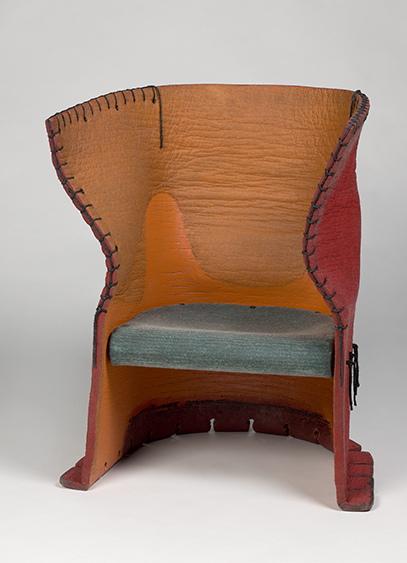
Textiles, now a matrix for space, are being celebrated at the Hôtel des Arts in Toulon. Through a hundred works, the exhibition "Follow the Thread! Design & Textile" weaves a history of creation driven by innovative designers.
Long relegated to the status of domestic ornament, textiles have now established themselves as a medium of the moment. A key player in structural and aesthetic revolutions, the medium is being showcased at the Hôtel des Arts in Toulon until October 31. The exhibition "Follow the Thread! Design & Textile" offers a historical deep dive through a hundred works from prestigious collections such as those of the Centre Pompidou and the Mobilier National. Opening with pioneering figures like Sonia Delaunay and Élise Djo-Bourgeois, the exhibition highlights the dialogue initiated between different sectors such as furniture, fashion, and architecture. It is an opportunity to recall not only the role women have played in the history of textiles but also the beginnings of a modernity where pattern and weave become one with space.
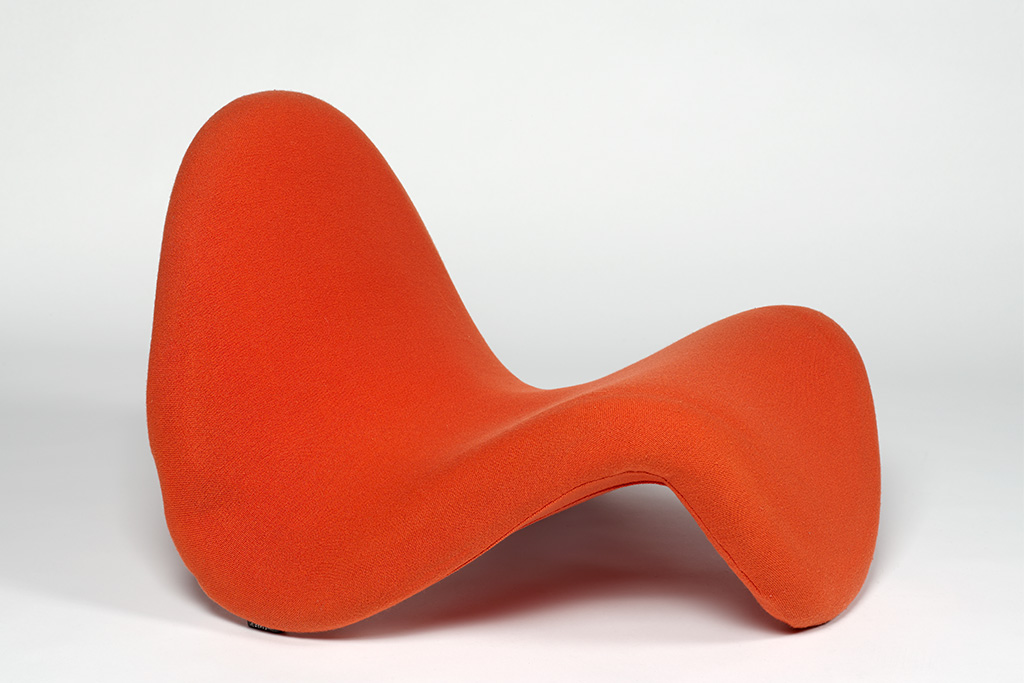
An intimate history is followed by the more impersonal yet universal story of synthetic fibers. The 1960s saw the birth of jersey, and stretch fabrics broke free from their frames to embrace the shapes of the body as well as structural armatures, driven by designers like Pierre Paulin and Olivier Mourgue. From then on, textiles became a tool for industrial innovation. At the same time, artists and creators like Sheila Hicks and Simone Prouvé explored the porous boundaries between art, structure, and habitat.
Textiles: A Flexible Universe
The exhibition also highlights the creative repurposing of materials. From the radical proposals of Gaetano Pesce or the Droog Design collective in the 1990s, to the sculptural metal meshes of Dominique Perrault, Gaëlle Lauriot-Prévost, or Muller Van Severen, the thread sheds its flexibility to become a rigid architectural language. This evolution opens new horizons for a new generation embracing these fibers in an era of high technology and environmental responsibility. From the hybrid pieces of Hella Jongerius and Jeanne Goutelle, which blend digital weaving with ancestral craftsmanship, to the modular acoustic walls of Ronan and Erwan Bouroullec, this exhibition invites you to trace the thread of a sector that is omnipresent in our lives.
Left: Pauline Esparon Arso Armchair, 2024 ©Adagp, Paris, 2026 © Les Arts Décoratifs / Christophe Dellière
Right: Marcel Wanders Knotted Chair, 1996 © Gaetano Pesce © Centre Pompidou, MNAM-CCI/Bertrand Prévost/Dist. GrandPalaisRmn
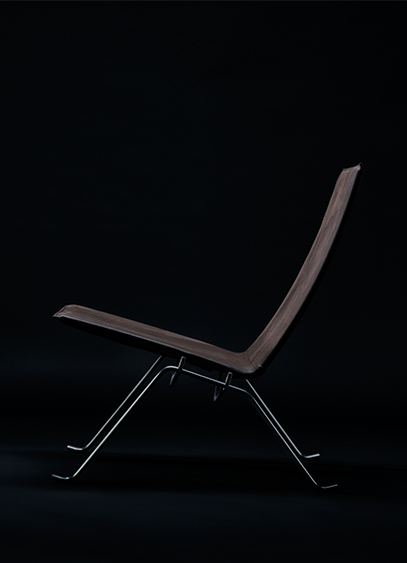
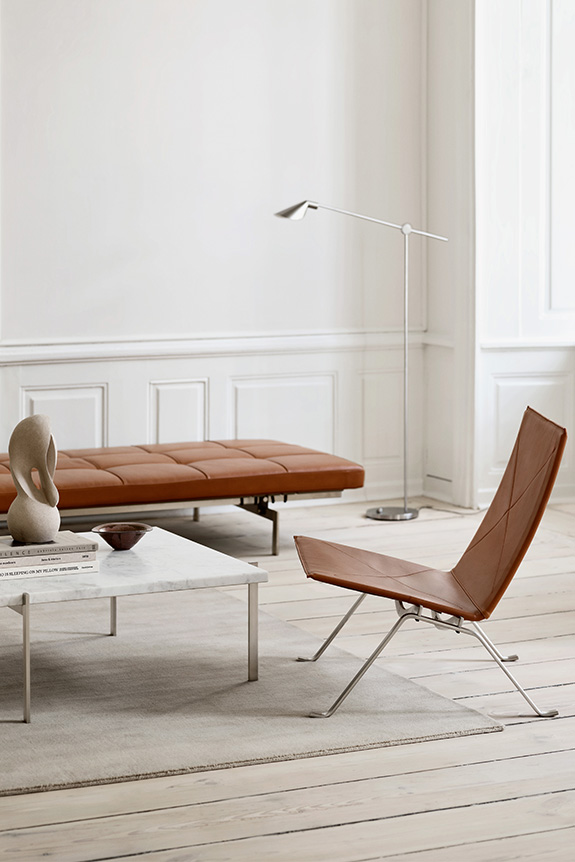
Designed by Danish designer Poul Kjærholm, the PK22 lounge chair celebrates its 70th anniversary this year. As a gift, Fritz Hansen is launching a new leather option and expanding its collection by releasing another piece by the designer.
"We are celebrating one of the most precocious designers of the 20th century this year" says Stéphane Legue, Sales Director for France at Fritz Hansen. A central and iconic figure for the brand, Poul Kjærholm is being honored on the 70th anniversary of his PK22 chair. It is an iconic piece of the Scandinavian modernist movement so dear to the creator, whose collaboration with the Danish manufacturer began with The Element—since renamed the PK25—an innovative graduation project he completed at age 21.
Structure in the service of thought
A Danish cousin to Mies van der Rohe’s Barcelona chair, the PK22, designed in 1956, embodies a vision of design that was resolutely modern for its time. "Poul Kjærholm’s approach to design was stripped back. He didn't want upholstery, the metal wasn't supposed to reflect light, and because he believed that even perfect welds would always be imperfect, he incorporated Allen screws into his pieces—fasteners previously reserved for the aeronautics industry." The designer also distinguished this ingenious design through the use of flat metal. "Kjærholm was a socialist at heart, and for him, metal was a way to ensure consistency in the industrial process. But unlike Breuer, who had imagined a tubular structure inspired by a bicycle frame, he favored flat uprights that offered different structural possibilities." This attention to detail meant the PK22 would never become a mass-market chair due to its production costs. Regardless, the model was awarded the Grand Prix at the Milan Triennale in 1957, bringing its creator international acclaim.
Simplicity as a collection aesthetic
Over the course of his sixteen-year collaboration with Fritz Hansen, Poul Kjærholm developed a particularly rich body of work. Showcasing a wide variety of materials (steel, leather, canvas, granite, wood, rope, etc.), the collection champions a discreet and balanced aesthetic, favoring pieces that use no more than three different mediums. " He was very inspired by what he saw outdoors and often said, 'There are no blue or red cows in the fields, so I only want natural colors.' This approach is still evident today", says Stephen Legue.
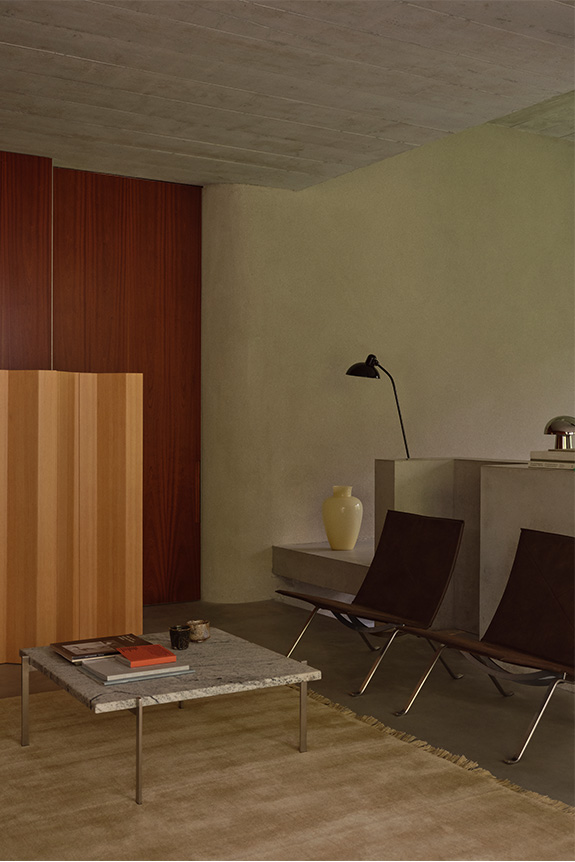
Unchanged for over half a century—with the exception of the steel, originally nickel-plated chrome, which became stainless steel in the early 2000s—the furniture designed by the designer has nonetheless evolved with the times. For its anniversary, the PK22 is enhanced with a new, exceptional leather called Haze, with a lightly sanded surface. At the same time, Fritz Hansen is introducing a new grey-white polished granite for the top of the PK61 table, whose geometry echoes the work of Piet Mondrian, and is producing the PK111 screen for the first time. Composed of clip-on Douglas fir plywood panels, this new 140 cm high typology was designed to provide a sense of privacy while seated at a table, while offering an unobstructed view of the room when standing; a design directly linked to Poul Kjærholm’s home, which opens onto the outdoors. Both pieces testify, each in their own way, to his interest in the principles of modernism and his search for a balance between functionality, architecture, and space. A lineage extended by the PK3 chair, reissued since late 2025, and the PK23 lounge chair, unveiled during 3daysofdesign 2026. Recognizable by their split backrests, the seats were cut to achieve a 3D backrest at a time when only two-dimensional bending was possible. More than just an anniversary, it is above all a tribute to the ingenuity of a mind that the Danish brand honors.
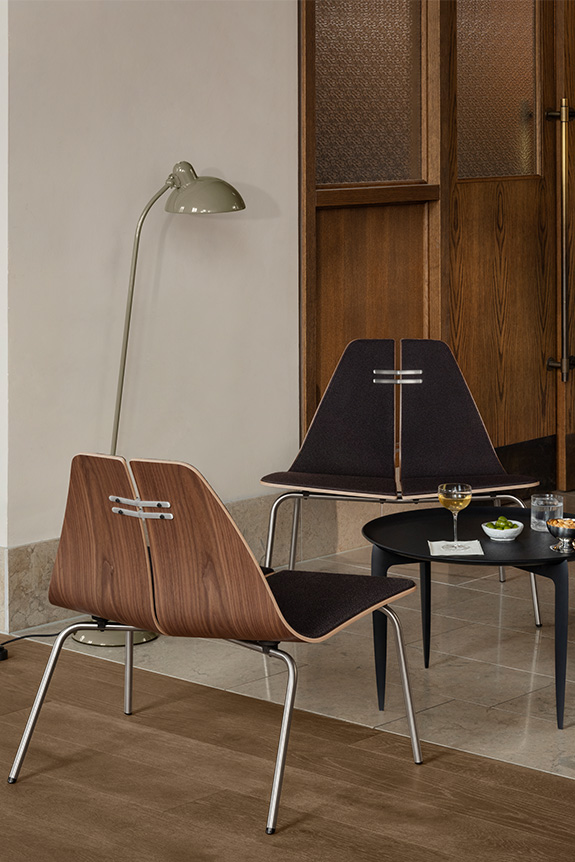
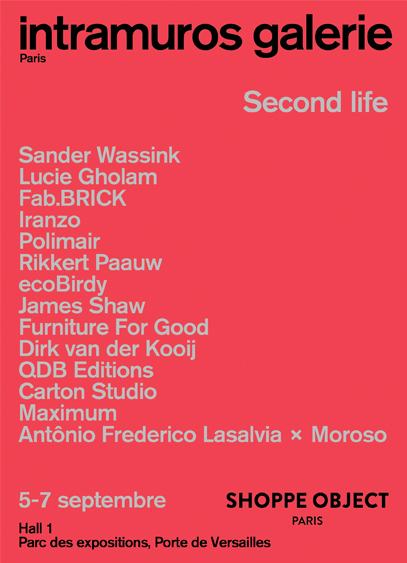
For this second edition of Shoppe Object Paris, Intramuros invites you to discover the "Second Life" exhibition and the work of the designers featured in the pages of our latest issue, now available on newsstands.
For its second French edition, Shoppe Object Paris returns to the Porte de Versailles from September 5 to 7, 2026. Dedicated to the home, design, and lifestyle sectors, this year's fair aligns with the overarching theme of Who's Next: The Dinner. Designed in harmony with this concept, the scenography will center around a large display table featuring over 80 brands, including Michie Studio, Tiptoe, and Rikke Falkow.
Intramuros at the heart of the event
Echoing the fair's curatorial focus, Intramuros will take part in the event by unveiling the "Second Life" exhibition, showcasing the work of designers featured in our September issue. More than just a timely topic, we wanted to highlight concrete and innovative perspectives. Convinced that current challenges should not lead us to stop producing, but rather to open up new creative horizons by revealing the potential of materials, this theme aims to celebrate the ingenuity of a sector that is reinventing its processes and methods. These are the practices that repair, transform, reuse, recondition, and repurpose what we, as consumers, would otherwise discard. Certain that circularity should not come at the expense of desirability, our selection brings together fourteen stories that the editorial team invites you to discover through Monday at Shoppe Object Paris:
- Sander Wassink
- Lucie Gholam
- Fab.BRICK
- Iranzo
- Polimair
- Rikkert Paauw
- ecoBirdy
- James Shaw
- Furniture For Good
- Dirk van der Kooij
- QDB Editions
- Carton Studio
- Maximum
- Antônio Frederico Lasalvia × Moroso
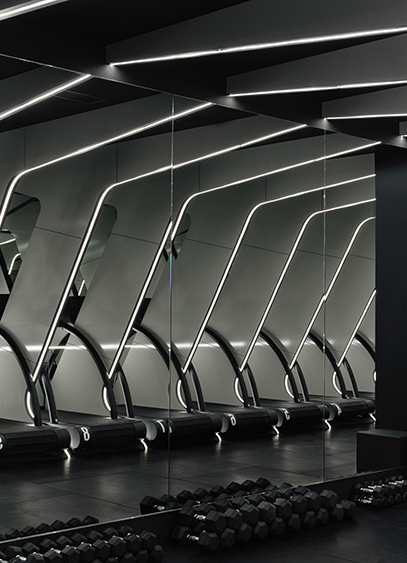
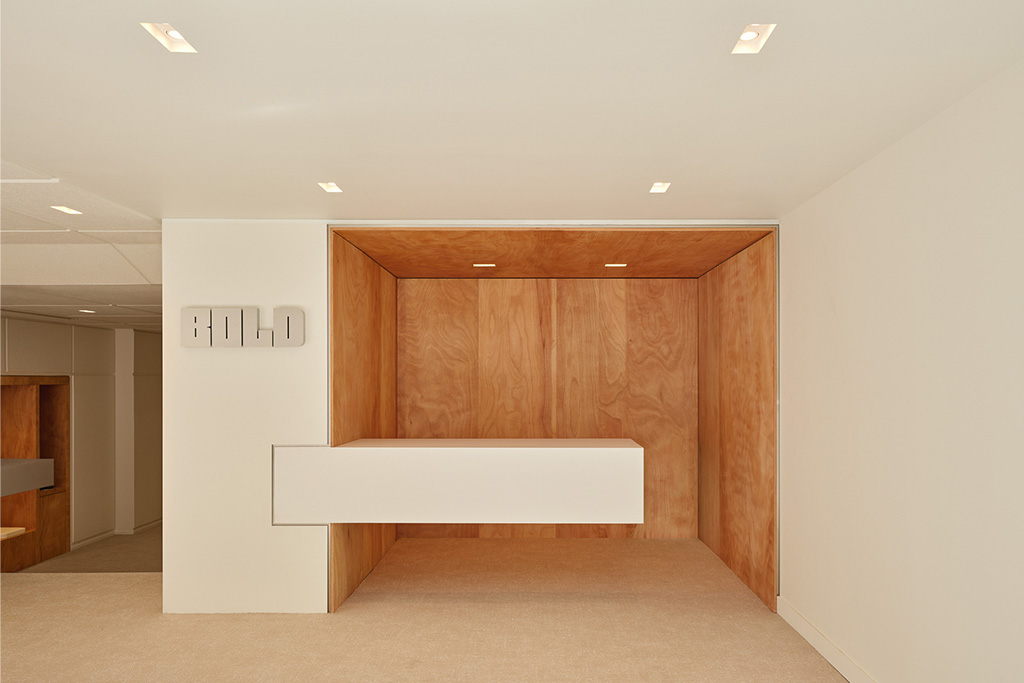
In Paris, Rudy Guénaire has designed a high-end fitness studio for BOLD, dedicated to running and strength training. Conceived as a two-part sensory experience, the space contrasts the luminous softness of the Club House with the immersive intensity of the Train and Run rooms.
Located at 22 rue Croix des Petits Champs, BOLD offers a new way to experience fitness. Conceived by Rudy Guénaire, this premier high-end sports studio dedicated to running and strength training builds its identity on a principle of contrast. The journey begins in a Club House that is intentionally soft and bright. Within this white space, American cherry wood panels add warmth and texture, while bold geometric patterns and cantilevered elements structure the architecture and provide depth.
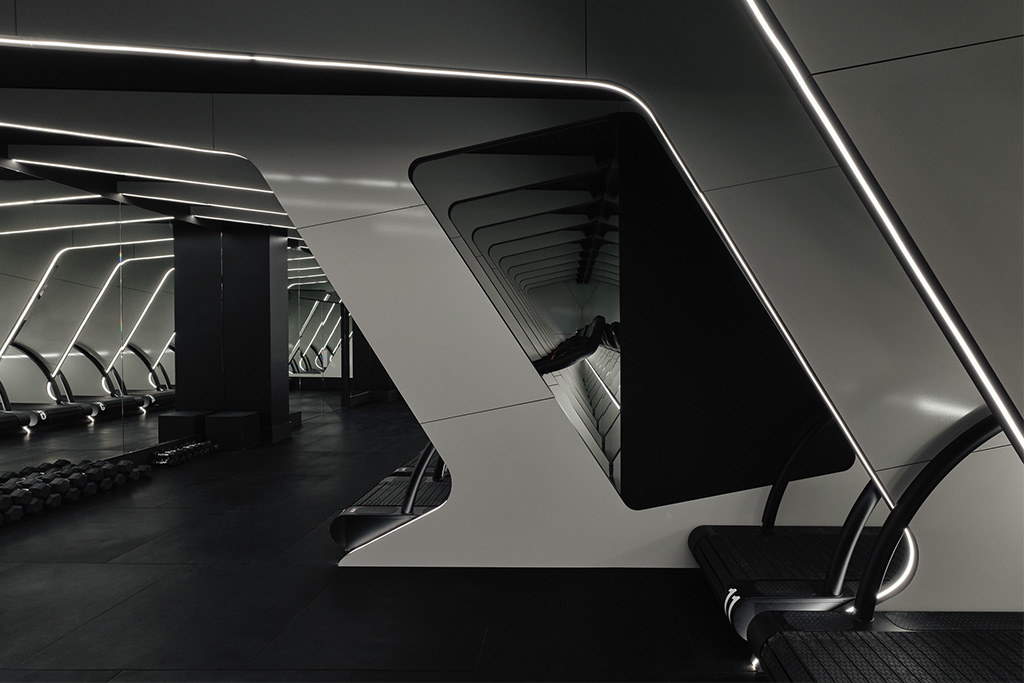
Then, the atmosphere shifts. In the Train room, a long, programmable luminous ceiling reacts to the music and extends into a mirrored wall. Light, sound, and movement create an immersive environment where the architecture directly mirrors the intensity of the workout. The Run room adopts a more graphic aesthetic. Walls with futuristic curves segment the space, organizing the running stations into alcove-like areas. The atmosphere here is more radical, almost cinematic, driven by a focus on evolving lighting systems.
For Rudy Guénaire, when the heart races, consciousness narrows, bringing the individual into a new state. BOLD seeks to materialize this moment. An "Out There" experience, as American athletes call it, which the architecture translates here through light, sound, and material.
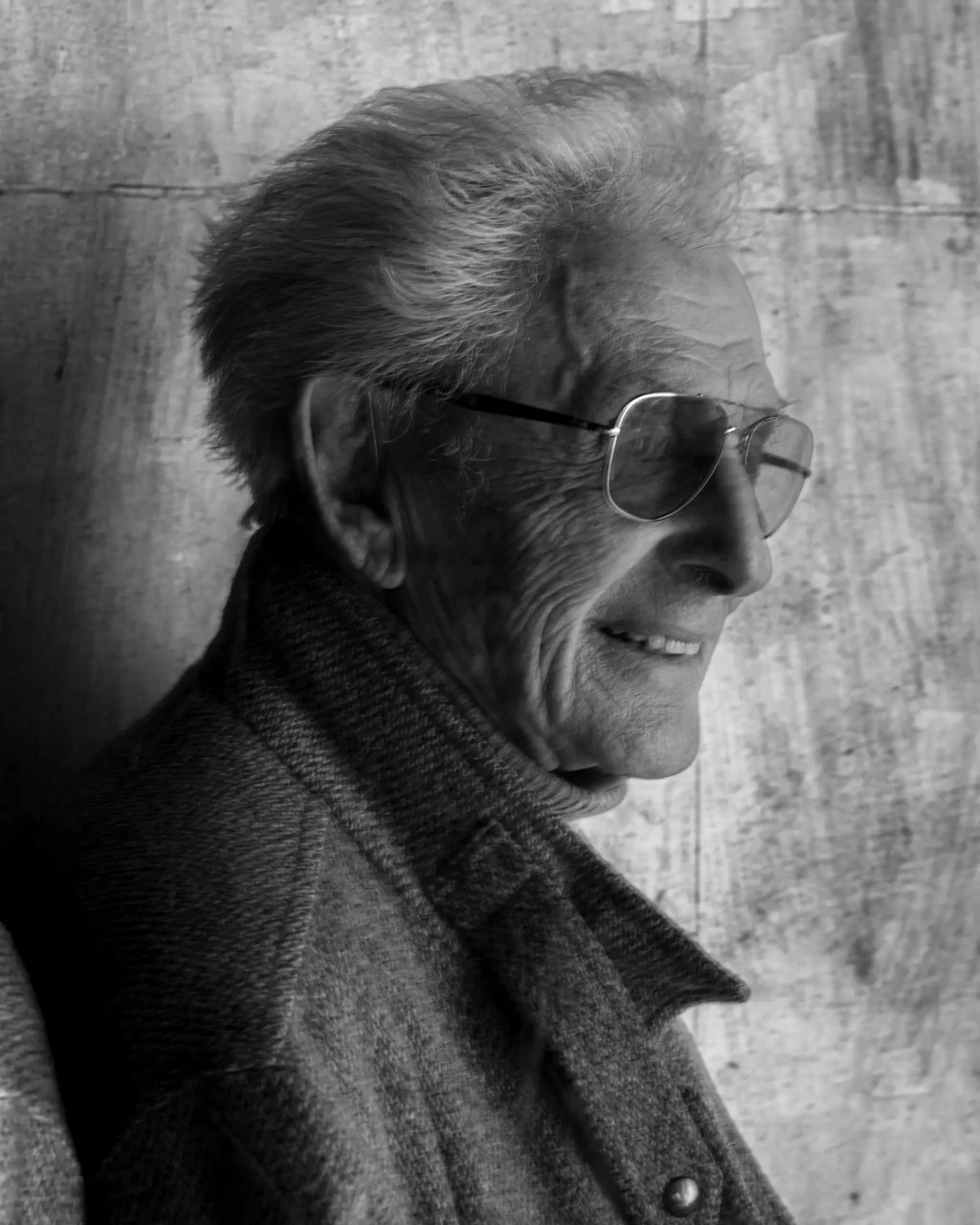
Designer, architect, and photographer Marc Held passed away on July 27 at the age of 93. His passing marks the loss of one of the most unique figures in post-war French design—a creator whose work, long kept out of the spotlight, has steadily gained recognition over the decades.
A self-taught talent, Marc Held never sought to align himself with any specific school or movement. His perspective was shaped at the intersection of photography, architecture, and industrial design, driven by a singular standard: to harmonize functional intelligence, formal freedom, and the poetry of everyday life. This approach gave rise to several iconic pieces, most notably the famous Culbuto chair (1967), whose playful silhouette and rocking motion continue to inspire generations of designers.
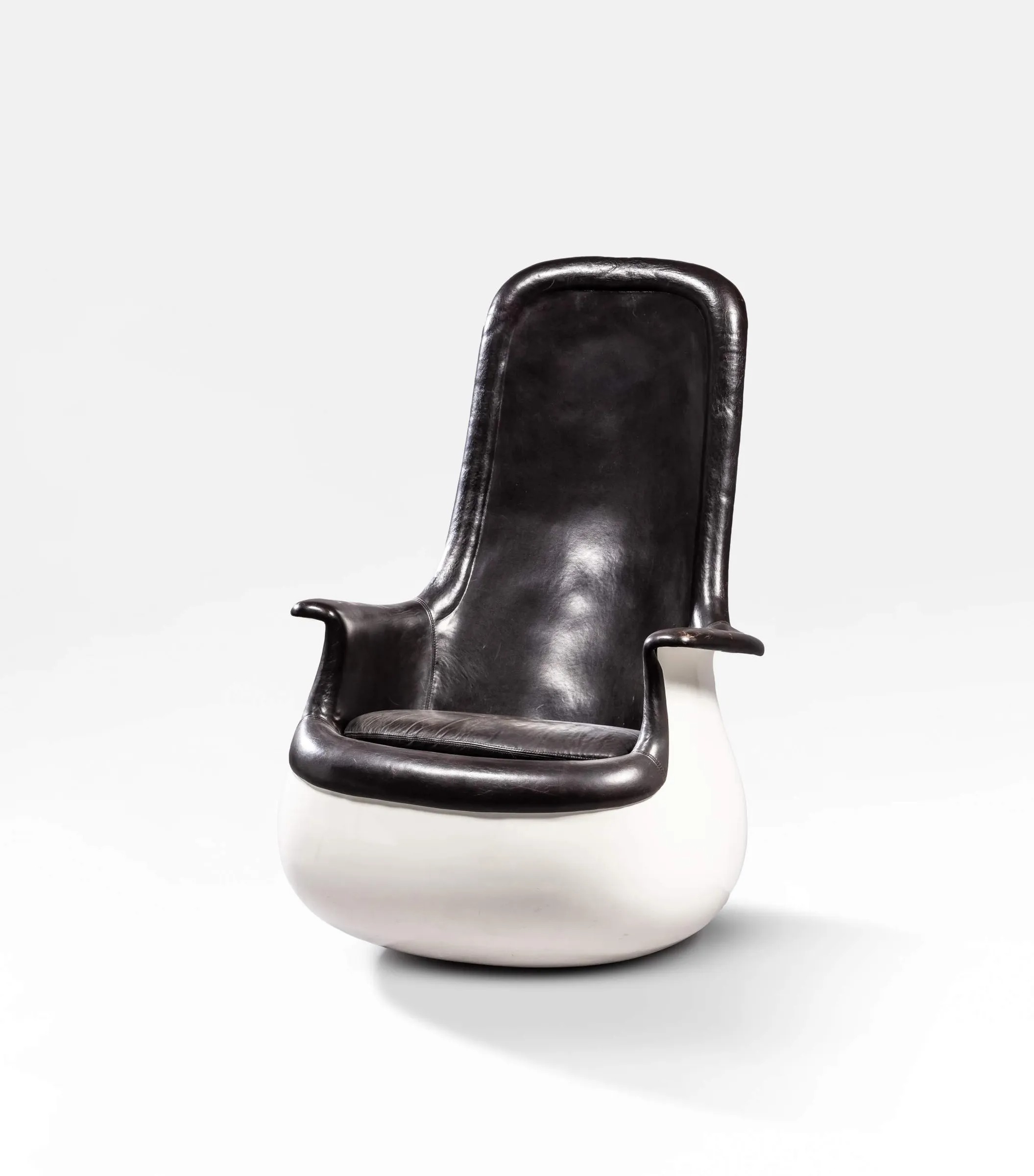
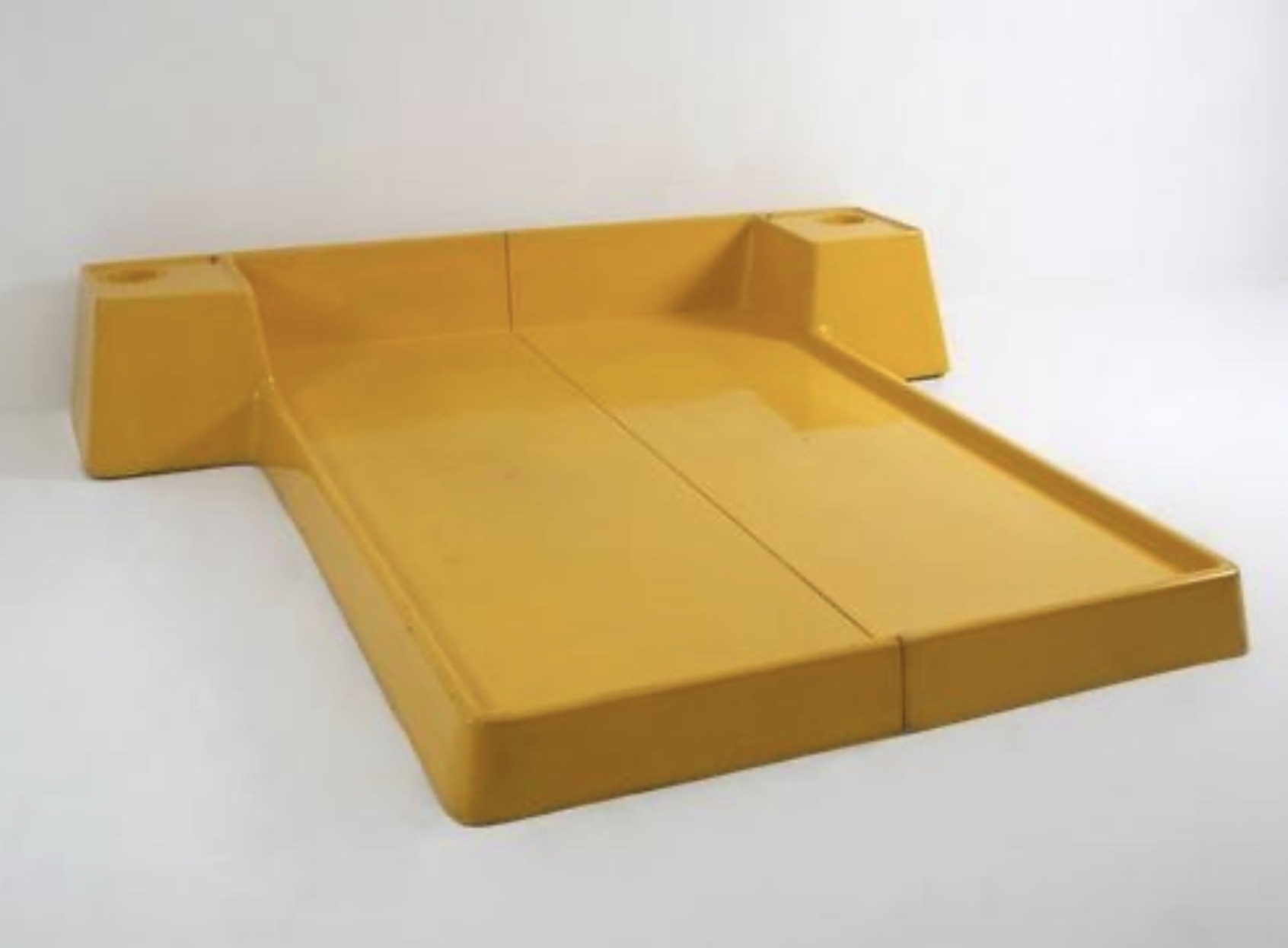
This desire to bring modernity into daily life found one of its most powerful expressions in his 1966 collaboration with Prisunic. For the retailer, Marc Held designed a collection of fiberglass furniture—beds, tables, desks, and chairs—featuring enveloping and strikingly new forms. Beyond their aesthetic, which is now emblematic of the 1960s, these pieces carried a deeply political ambition: to make contemporary furniture, previously reserved for a select few, accessible to the masses. Marc Held himself summarized this promise with a famous phrase: offering "beauty at the price of the ugly." It was an industrial utopia that did not achieve the widespread distribution hoped for, but it remains a major chapter in the story of Prisunic and the democratization of design in France.
However, to reduce Marc Held to the Culbuto and his Prisunic creations would be to overlook the breadth of his career. Spanning furniture, architecture, photography, and urban planning, his work reflects a rare curiosity and a constant drive to rethink lifestyles as much as forms. This intellectual freedom was likely rooted in his extraordinary personal journey: a hidden child during the Second World War who joined the Resistance at a very young age, he maintained an uncommon independence of thought throughout his life.

Long celebrated more by connoisseurs than the general public, Marc Held ultimately saw his work reclaim its rightful place. Reissues, exhibitions, publications, and renewed interest from collectors have confirmed the relevance of a body of work that never chased trends, preferring the intelligence of utility over stylistic posturing.
The editorial team at Intramuros extends its deepest sympathies to his family, friends, and all those whose paths he crossed.
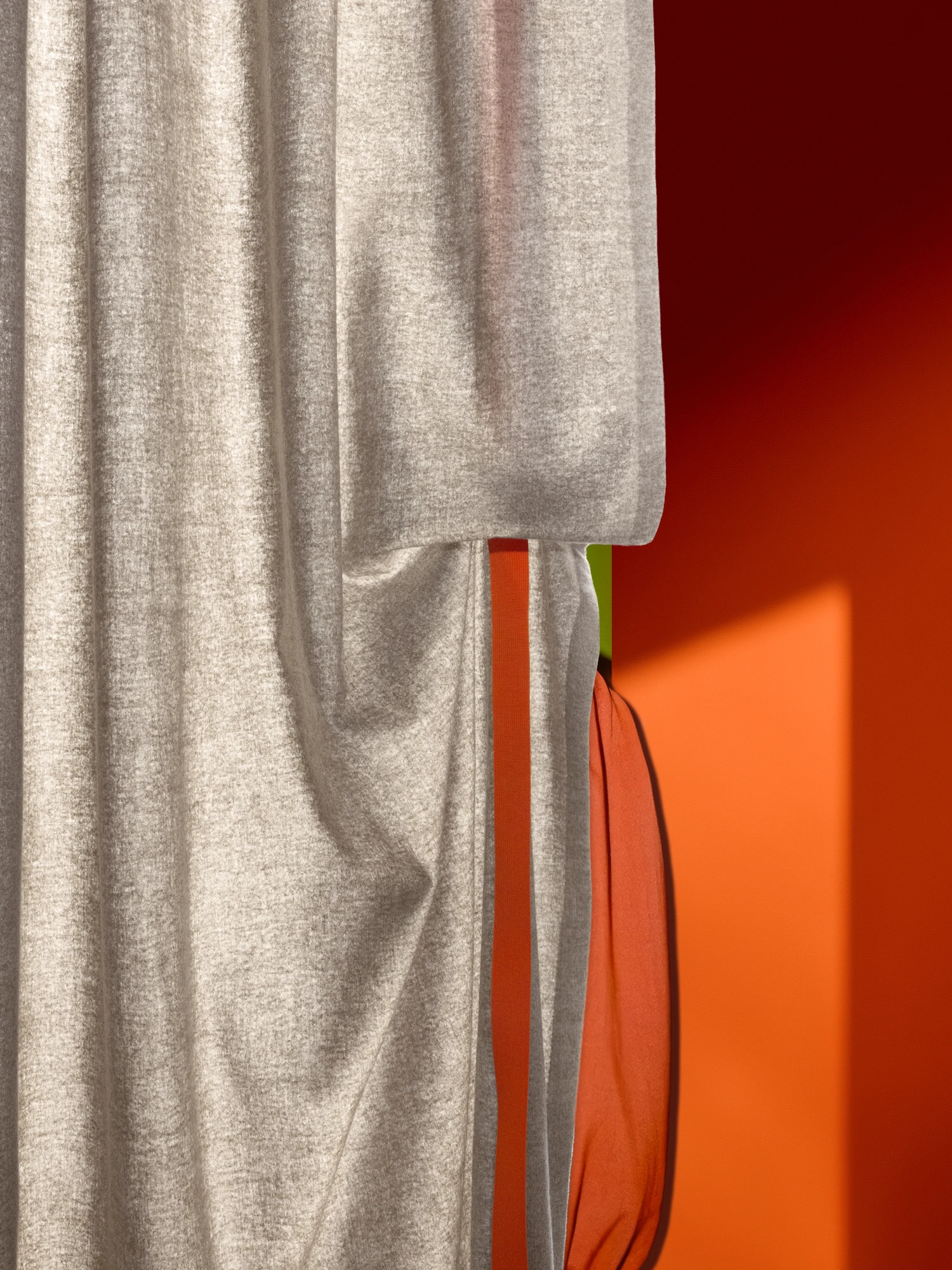
With THREE, its new residential curtain collection, and Loux, a series of lyocell rugs, Kvadrat continues a mission it began over half a century ago: transforming textiles from mere architectural accents into materials capable of reshaping architecture itself.
At Kvadrat, a curtain is never just a curtain. It filters light, alters the perception of a volume, and defines a boundary without enclosing it. It can even become a form—almost a presence. The Danish brand could have rested on the comfortable reputation it has built since its founding in 1968, thanks to the quality of its textiles, the precision of its colors, and its collaborations with some of the greatest names in contemporary design. Instead, it has chosen to treat every new collection as a field for research.
At Kvadrat, technique does not follow an idea to give it substance; it participates in its birth. It is an intention. And even a form. Isa Glink, Design Director at Kvadrat Residential, summarizes this method, where design, fiber, weaving, surface treatments, color, light, performance, and circularity all belong to the same process. What she calls "material intelligence" is precisely the act of looking at a textile deeply enough to understand what it can still become.
FROM SURFACE TO VOLUME
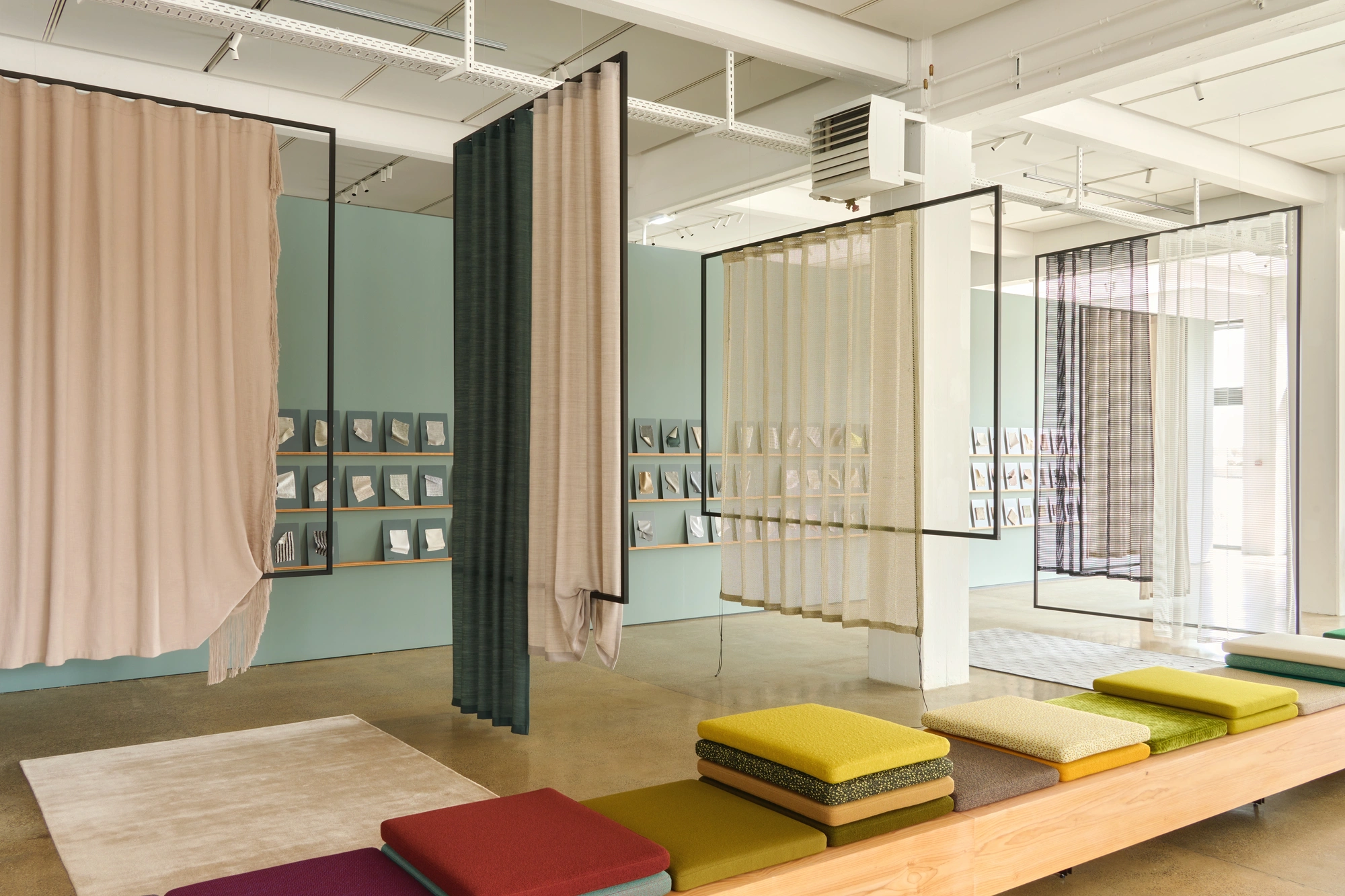
Presented in Copenhagen during 3daysofdesign 2026, the THREE collection carries this approach right into its title. Its starting point is a surface; its true subject is how that surface acquires a third dimension. Draped, folded, stretched, or framed, the curtains are not displayed as mere samples, but as flexible sculptures capable of defining and activating space. The collection explores hemp, wool, organic cotton, and linen, as well as technical fibers chosen for their performance, by drawing out the inherent qualities of each material rather than trying to conceal them.
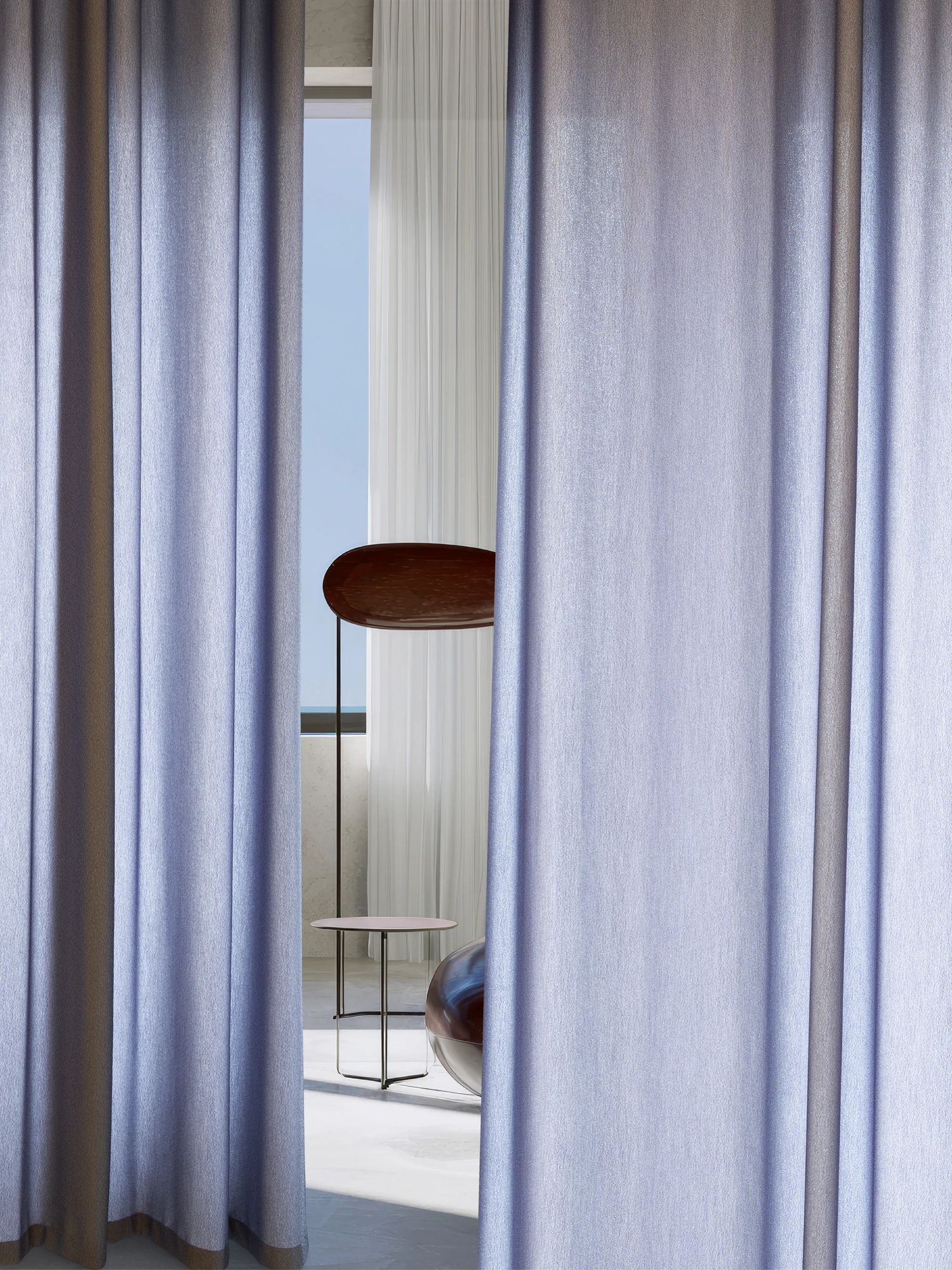
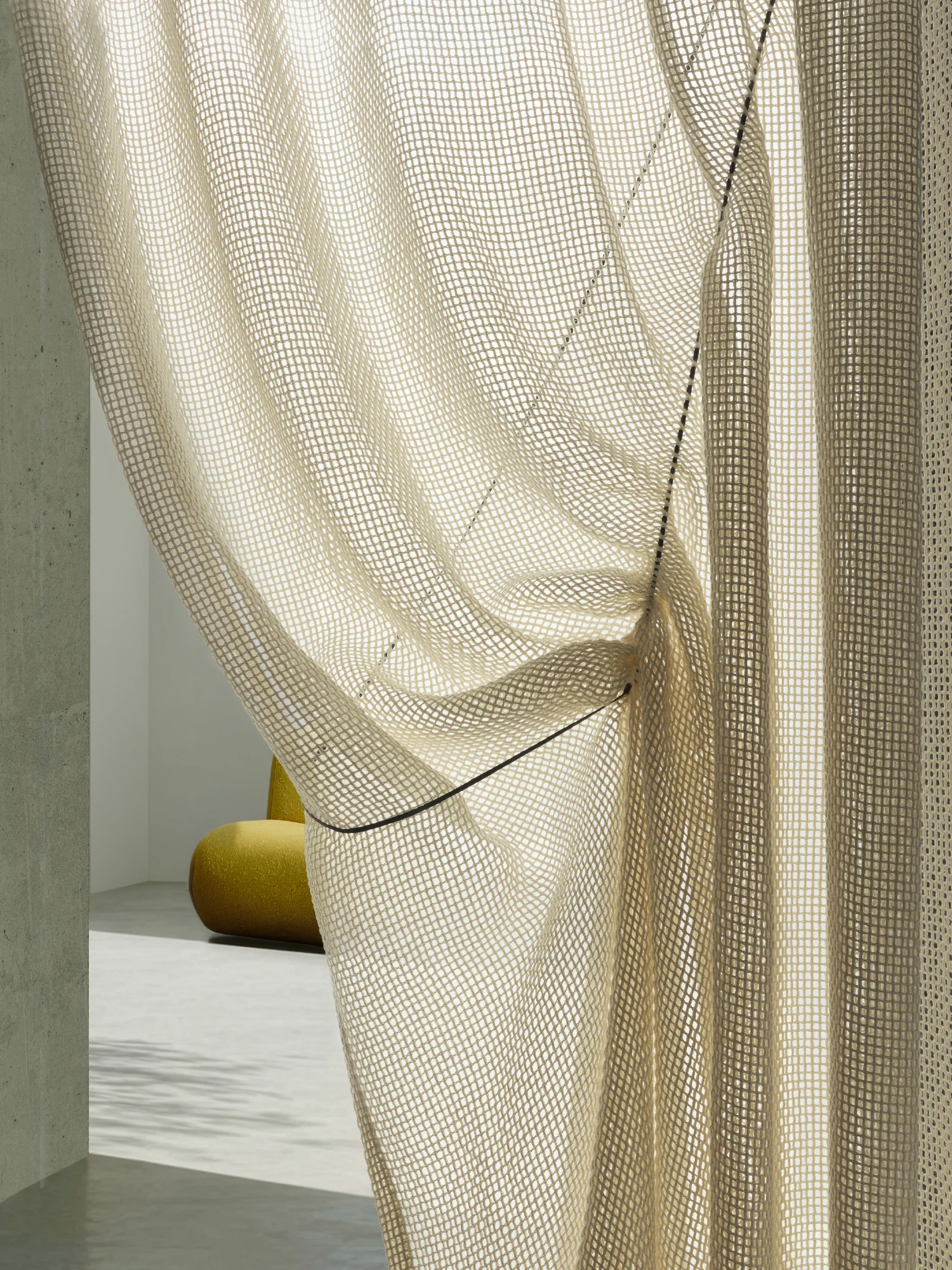
The craftsmanship involved is celebrated and showcased rather than hidden. A traditional fold is scaled up until it becomes an architectural feature. A topstitch, a fastening, or a tension point is no longer a decorative detail, but a way to build rhythm, depth, and a new way of suspending fabric. The influence of fashion is perceptible, yet Kvadrat avoids its seasonal, ephemeral logic. The goal is not to produce an effect destined to be replaced, but to invent a vocabulary meant to last.
This research is evident in Tetra, whose open-weave structure and densely felted wool yarns create a form that is both airy and three-dimensional. It is also present in Sky Cloud, a blend of hemp, cotton, and wool with a texture reminiscent of paper. Or in Kajak and Stream Line, which translate the movement of water and the intermittent appearance of lines under the influence of light. The palette itself oscillates between mineral tones (salt, driftwood, volcanic rock) and bolder, almost electric colors. Color is never applied to the material; it is born with it.
CRAFTSMANSHIP WITHOUT OSTENTATION
With Loux, Kvadrat approaches flooring with a different logic, yet with the same attention to the relationship between material, light, and movement. The six rugs in the series are made entirely of lyocell, a regenerated cellulose fiber with a fineness that evokes silk. Their density (2.7 million threads per square meter) creates a remarkably soft surface, with reflections that shift depending on the viewing angle. Three constructions are offered: a uniform cut pile, a linear alternation of loops and pile, and a hand-sculpted relief. Luxury here lies not in patterns or excess, but in the richness of the tactile experience.
This way of starting from the material rather than the image says a great deal about Kvadrat’s philosophy. Circularity is not treated as a recognizable aesthetic, nor as a virtuous add-on applied after the product is designed. It becomes a design parameter like any other: choosing mono-materials whenever possible, re-engineering existing references, using recycled materials, and focusing on repairability and extended product lifespans. The brand’s strategy thus combines environmental innovation, maintenance, and service models designed to keep products in use for longer.
Because a sustainable textile is not just one with a reassuring composition. It is also a textile that one desires to keep. Because it possesses a presence, an intelligence, and an ability to continue a dialogue with its space. In this, Kvadrat defends a rare position: that of a deeply technical company that never separates performance from emotion, research from usage, or material from design.
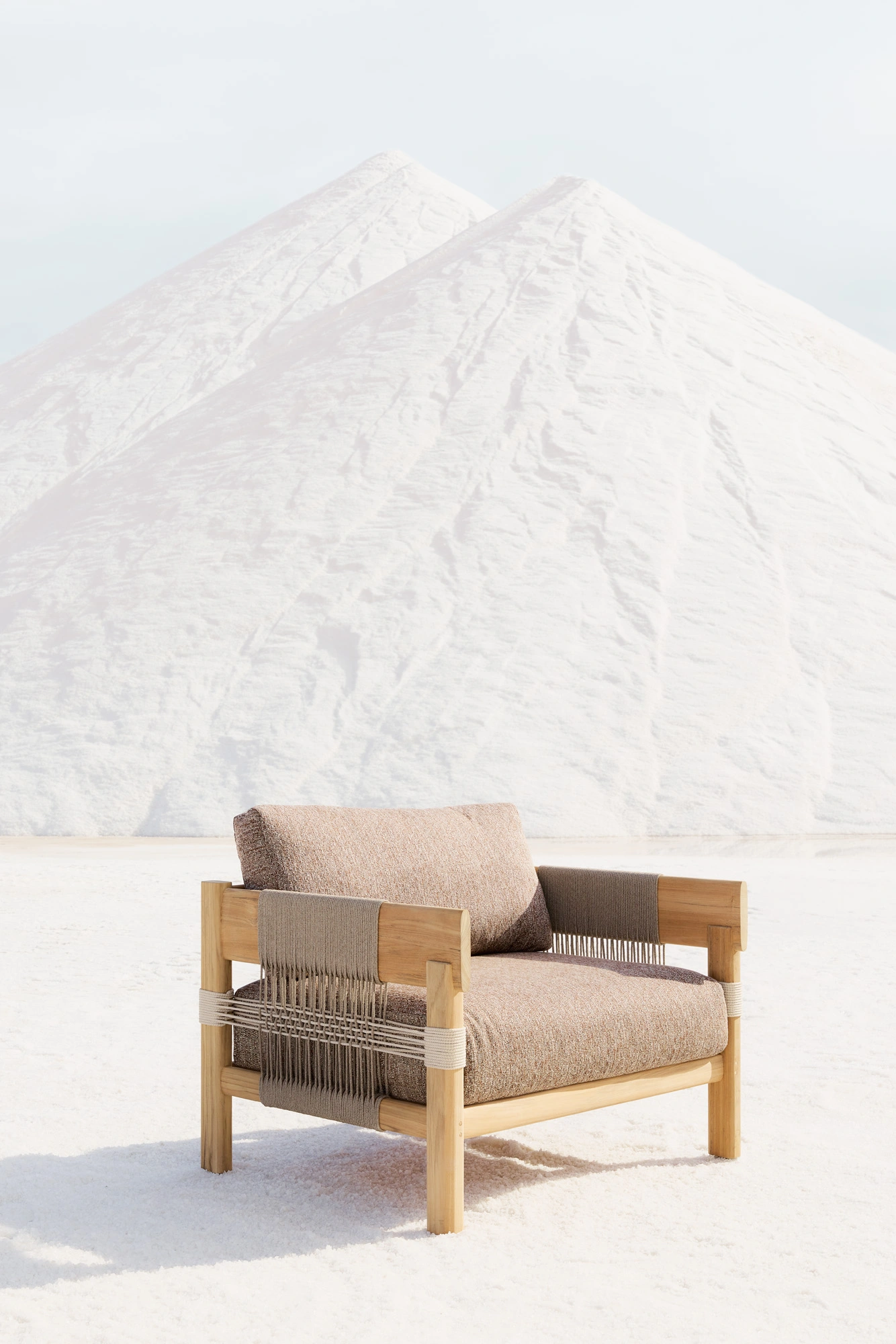
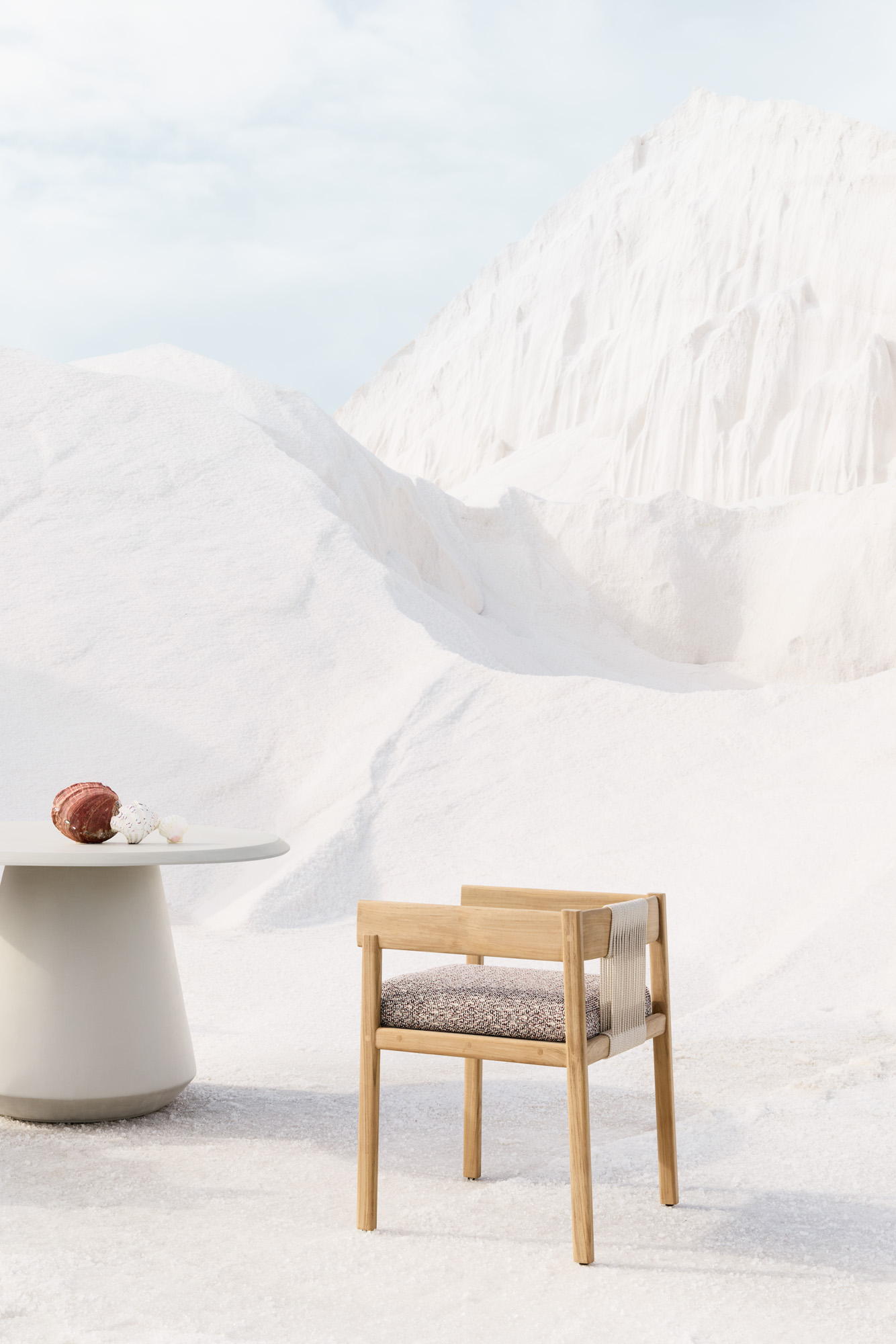
Unveiled in Milan at the latest Salone del Mobile, CORA marks the first collaboration between Unopiù and Federica Biasi. It is a complete collection where teak, rope, and generous volumes create a domestic landscape designed to slow down time.
In Milan, outdoor furniture once again sought to blur the lines between the home and the garden. With CORA, however, Unopiù does not simply transpose indoor living room codes to the outdoors. The Italian brand prefers to view the terrace as a fully-fledged living space, with its own materials, uses, and unique relationship with time.
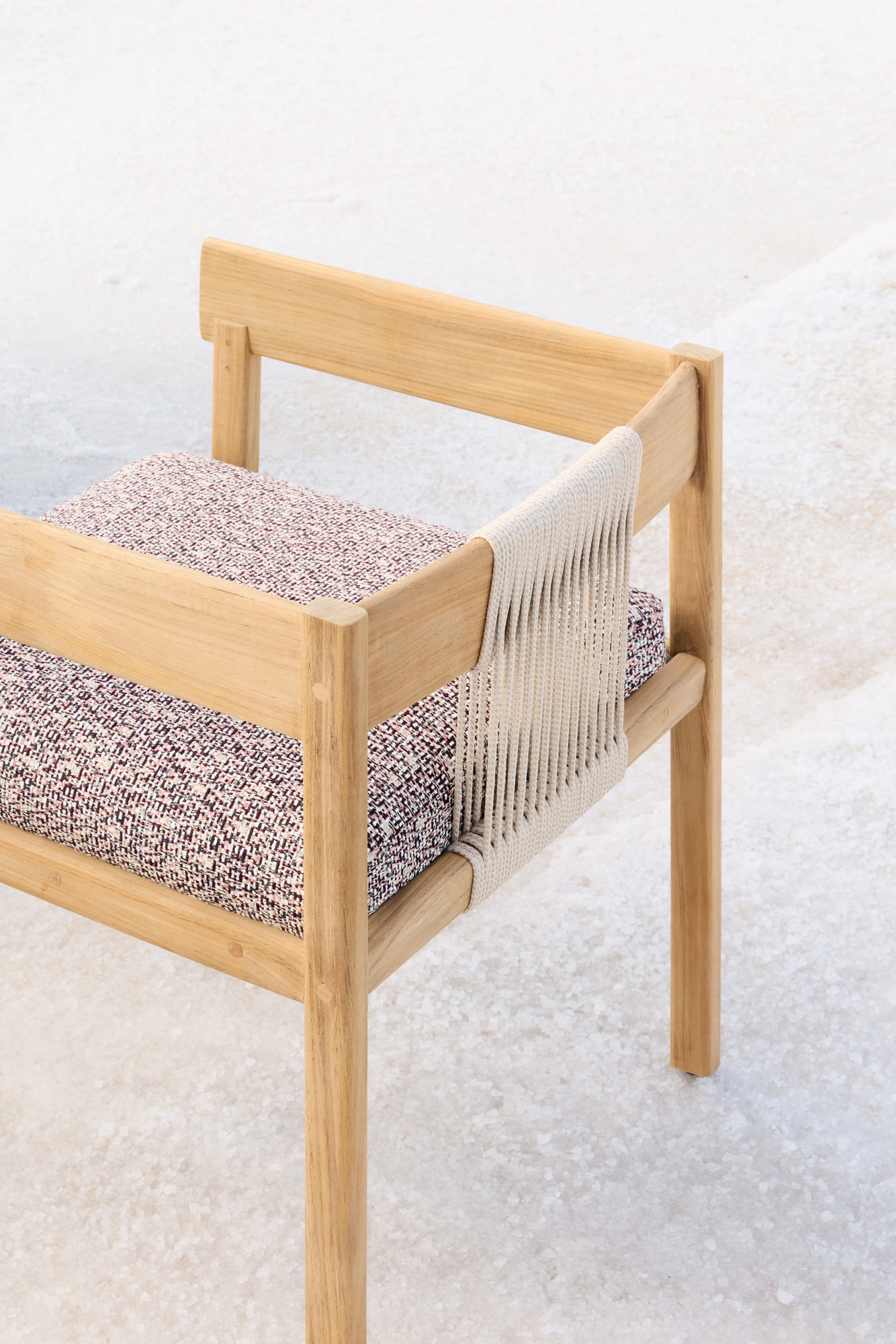
Entrusted to Federica Biasi, the new collection is based on a balance the designer has cultivated since her debut: combining the precision of industrial production with the sensitivity of artisanal craftsmanship. The teak structure creates a sober, almost understated architecture, while the polypropylene rope weaving softens the lines. One builds, the other connects. Their meeting gives rise to a collection whose identity lies less in a formal effect than in the accuracy of its proportions.
THE FABRIC OF COMFORT
The merit of CORA is precisely that it does not confuse generosity with heaviness. Armchairs and sofas feature deep seats, accompanied by cushions in natural tones, yet they retain a certain visual lightness. The weaving allows for breathability within the structure, while the horizontal lines establish a calm presence in the landscape.
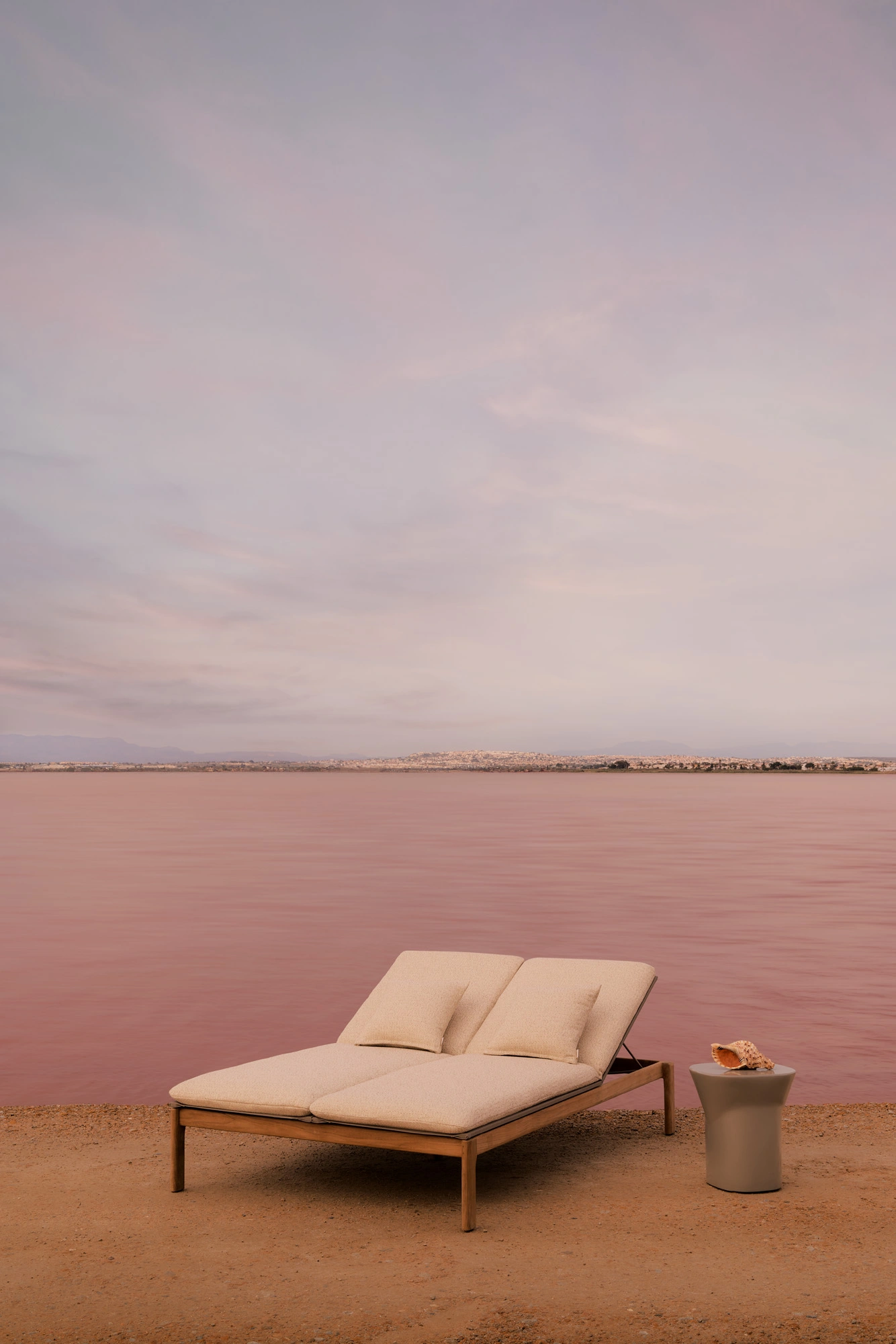
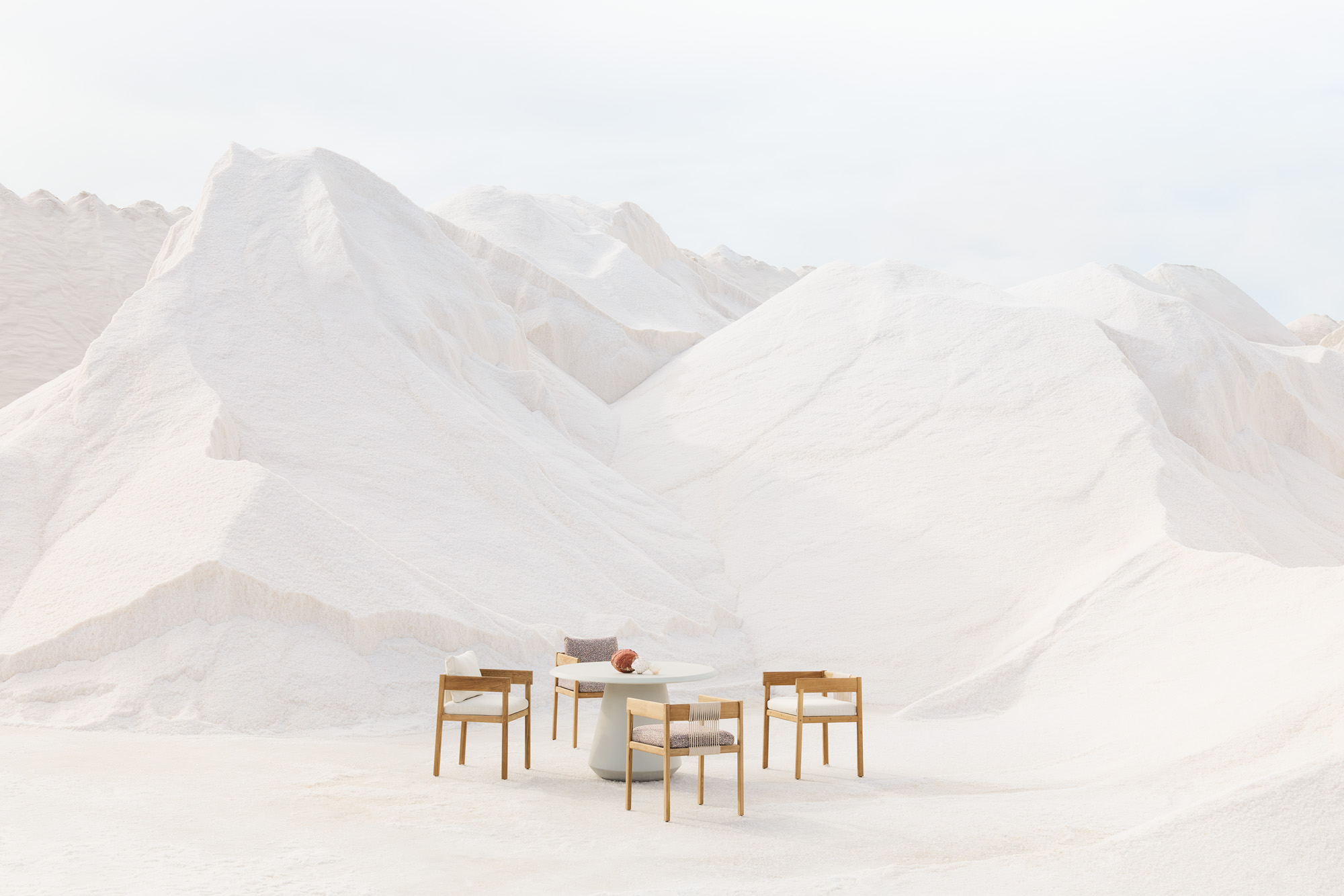
This pursuit of enveloping comfort is expressed through a chair and a round table for dining, an armchair, a two-seater sofa, a single or double sun lounger, and a sunbathing island. More than just a succession of typologies, CORA composes a true vocabulary for accompanying the different moments of the day: eating, entertaining, reading, or simply doing nothing. The collection is thus aimed at both residential spaces and hospitality projects, where outdoor furniture must now combine hospitality, durability, and architectural coherence.
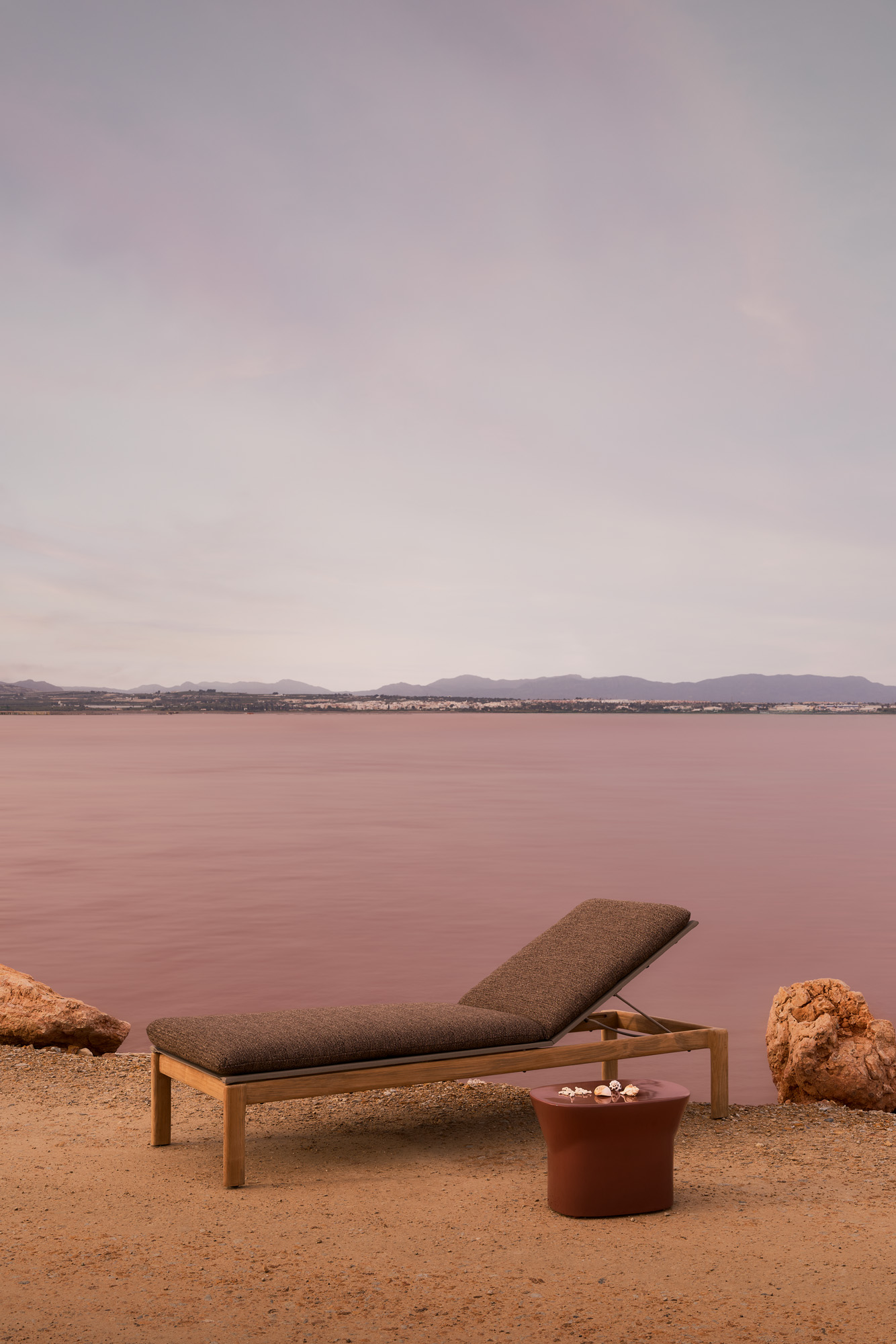
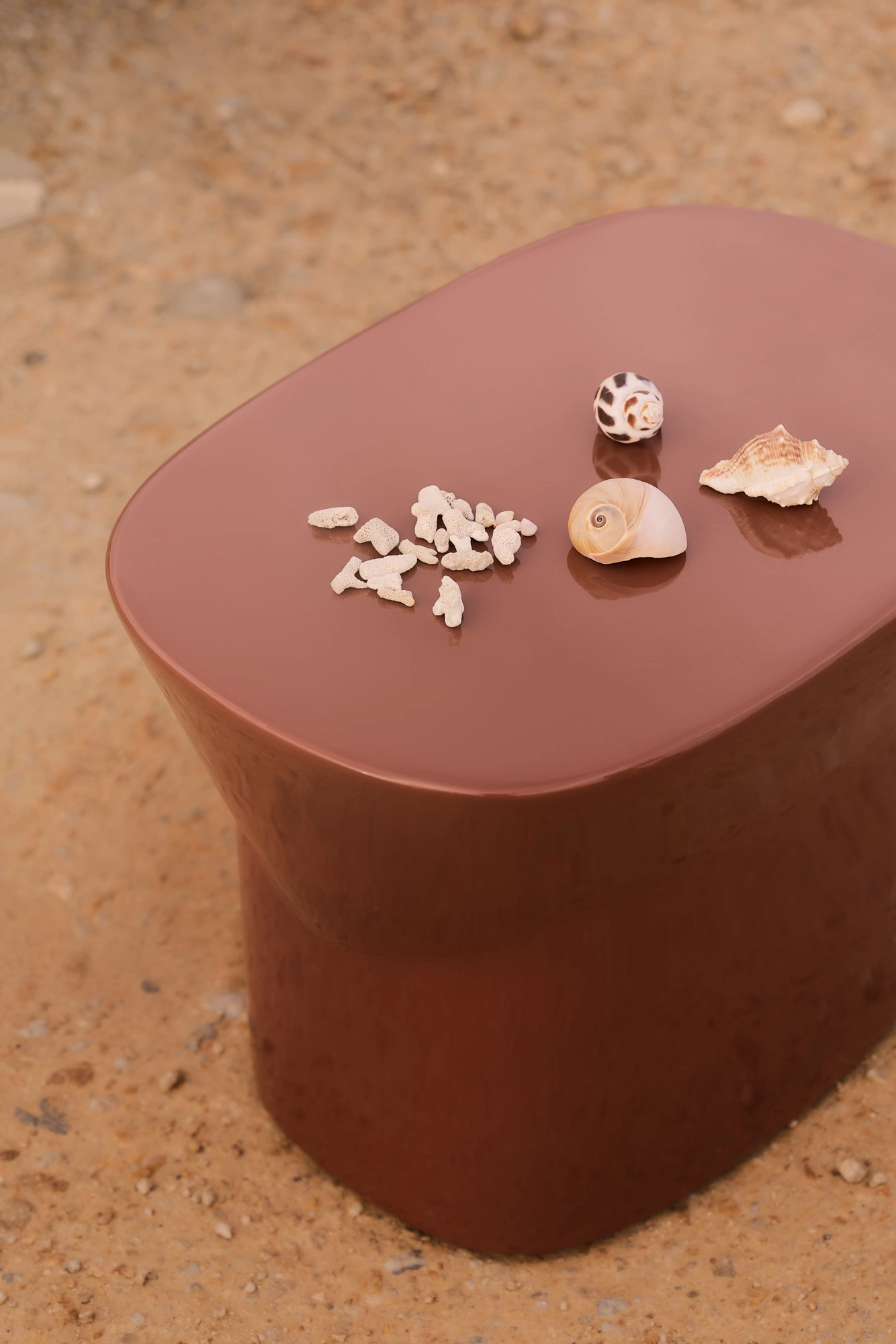
CORA is part of a broader collective project presented by Unopiù in Milan, conceived as a "Travel Journal" in which several designers are invited to take a personal look at the publisher's heritage. Federica Biasi delivers a restrained and tactile interpretation, faithful to her taste for vernacular craftsmanship as well as the brand's Mediterranean culture. It is a way of reminding us that outdoor furniture does not necessarily need to impose itself to take its place in the landscape.


In La Baule, nothing is ever quite neutral. Over time, the villas, institutions, and customs have created such a powerful image that any attempt to evoke it risks overdoing it. Giving a new hotel a local identity without disguising it as an old seaside house is, in essence, the challenge that Dorothée Delaye has met with intelligence and subtlety.
In La Baule-les-Pins, Les Cimes Bleues has just opened in a seven-story contemporary building with curved facades designed by ASA Gimbert, an agency founded in 1982 by Joël Gimbert. As the first address for La French Collection, the hotel brand of Groupe Giboire, the establishment features 101 rooms, a spa, a bar, and the Scapa restaurant. It is a scale large enough that the decor cannot rely on mere gimmicks.
Dorothée Delaye is not from La Baule. This is undoubtedly what allowed her to observe the resort with the right amount of distance, avoiding both postcard clichés and indifference to the location. She focuses less on its most obvious signs and more on what truly structures its lifestyle: sports, clubs, show jumping, sailing, tennis, and golf. These are codes familiar to both locals and visitors, transformed into a vocabulary rather than decorative accessories. "Sport chic" serves as the project's common thread, yet each space offers its own interpretation.
La Baule in the background

In the lobby, the social heart of Les Cimes Bleues, the interior designer creates the atmosphere of a contemporary La Baule clubhouse. The plant-filled atrium softens the height of the space, while the curves of the furniture, leather-wrapped columns, stone, glass paste, and bronze tables, and Pierre Frey and Élitis textiles compose a dense, yet never ostentatious, landscape. Golf ball motifs, stripes, and a few marine evocations (including a monumental chandelier punctuated with mooring buoys) are present enough to tell the story of La Baule, yet quirky enough to never mimic it.
This same grammar changes its accent at Scapa. Originally conceived as an extension of the clubhouse, the restaurant took on a more Italian tone as its menu was finalized. Dorothée Delaye envisioned a sort of Milanese-Bauloise brasserie, inspired by the Italy of the 1970s and Carlo Scarpa. Terracotta, chocolate tones, wood, ceramic, and almost kinetic patterns warm up a building that could have felt cold due to its large windows. The space is enveloping, fragmented into different perspectives and banquettes, so that one quickly forgets its actual dimensions.

In the rooms, the sports theme becomes more graphic. Wimbledon green, Atlantic blue, and clay-court orange distinguish the different atmospheres. The headboards, lighting, tables, and storage units were all designed specifically for the project. The closet doors evoke the lines of a tennis court, while some shelves freely mimic the shape of greens. The process could have become systematic, yet it remains light, held together by a subtly charming palette and the precision of custom craftsmanship.

Because almost everything here was designed specifically for the space. Dorothée Delaye relies on three designers within her studio to draw chairs, banquettes, headboards, and lampshades. This dedicated production certainly meets the economic realities of the hotel industry, but above all, it serves as a tool for uniqueness: the pieces created for Les Cimes Bleues will not be moved to another address six months later.
Finally, at the Alaena spa, the narrative moves away from sports fields to reconnect with nature. Inspired by the "golden hour," the space combines stone, natural fibers, bronze, golden yellow, and pink in intentionally flattering light. Here, Dorothée Delaye takes the opposite approach to the clinical white spa, creating a transition zone—a warm bubble where the experience begins even before the treatment.

While Les Cimes Bleues will welcome vacationers, families, and seminar groups all year round, as well as locals coming for a drink or dinner, its main strength is that it never presents this hybrid nature as a forced program. The hotel already feels lived-in.
By giving each space its own story without ever over-explaining the scenario, Dorothée Delaye succeeds in anchoring a new building in local culture. Not by reconstructing La Baule, but by giving it a new, must-visit address.


From September 18 to 30, the seventh edition of France Design Week will take place across the country under the theme "D for Design, D for Defi" (Challenge). Hundreds of events will showcase how design can go beyond the mere aesthetics of an object to support the major transformations of our time.
The "D" for design is perhaps only meaningful today if it accepts the challenge it faces. Whether climatic, technological, demographic, or social, our era is not lacking in problems to solve or systems to rethink. Faced with their complexity, design can no longer be considered the final aesthetic layer added to a finished product. It now intervenes upstream, where uses, services, spaces, and, more broadly, the conditions of our collective life are defined.
It is precisely this evolution that the seventh edition of France Design Week, organized from September 18 to 30 around the theme "D for Design, D for Challenge," aims to highlight. Exhibitions, conferences, workshops, installations, tours, and meetings will make up a program widely accessible to the public, driven by designers, as well as companies, schools, local authorities, cultural institutions, and research stakeholders. Design as a method
Ecological transition, artificial intelligence, health, an aging population, inclusion, the evolution of work, or the transformation of territories: design is now venturing far beyond the historical scope of the object. Not that it is abandoning form, material, or beauty—these remain the means by which a solution becomes understandable, accessible, and desirable—but because it embeds them in a broader reflection.
Designing a public service, a patient's experience, a user's journey, a recycling system, or a neighborhood requires looking simultaneously at technical constraints, behaviors, the project's economics, and its long-term consequences. The designer no longer just draws what we use: they help organize the way we live.
This ambition will be a recurring theme throughout the 2026 edition. In Chalon-sur-Saône, a foresight workshop will imagine the patient experience in 2040 in a hospital where artificial intelligence is omnipresent. In Marseille, the design of technologies that influence our behavior will be the subject of critical reflection. Elsewhere, projects will address well-being, education, biomaterials, reuse, circular design, and the transformation of public space. The France of designs
One of the strengths of France Design Week lies precisely in its decentralized organization. French design is not limited to Paris. It is fueled by the industrial, cultural, and geographical realities specific to each region.
From Grenoble to Mont-Saint-Michel, from Nantes to Marseille, the program draws a new map of French creation. Near Grenoble, the UGA Design Factory will show how design, research, and local action can support ecological and social transitions. At Mont-Saint-Michel, a monumental exhibition will examine changing landscapes. Other initiatives will focus on local resources, expertise, the graphic identities of cities, or new forms of creative entrepreneurship. Here, the territory is no longer just a backdrop for design; it becomes its raw material: a set of constraints, resources, narratives, and uses from which to imagine necessarily localized solutions.
Ionna Vautrin, design at the service of the user
As the patron of this edition, Ionna Vautrin perfectly embodies this concept of design that is sensitive, accessible, and useful.
The tour organized at Notre-Dame de Paris, featuring the new furniture she helped create, will be one of the highlights of the national opening on September 18. Within the cathedral, the design cannot simply be the work of an individual author. It must harmonize with heritage, ritual, daily use, the presence of millions of visitors, and the integration of pieces into a timeline that far exceeds that of an industrial product. It is a perfect demonstration of what it means to design under constraint—and how that constraint can become fruitful. Measuring impact
September 18 will also host the ceremony for the second France Design Impact Award. As the only French prize entirely dedicated to positive-impact design projects, it recognizes initiatives that provide concrete solutions to environmental, social, economic, or territorial challenges.
The forty finalist projects will be presented beforehand from September 10 to 14 at Maison&Objet. Whether products, services, collective systems, digital tools, or new organizational models, their diversity serves as a reminder that the impact of design cannot be reduced to choosing a more virtuous material. It is also measured by transformed habits, saved resources, created activities, and a project's ability to sustainably improve the lives of those it serves. The winners will be announced on September 18 in Paris. Through this seventh edition, France Design Week does not just seek to celebrate a discipline; it intends to demonstrate its necessity. For while design cannot solve all contemporary challenges on its own, it possesses a quality that has become rare: the ability to connect vision to reality, innovation to use, and transformation to desire. In other words, to make change not only possible but livable.

From September 18 to 30, the seventh edition of France Design Week will take place across the country with a program driven by design professionals. Centered on the theme "D for Design, D for Defi" (Challenge), this new edition aims to highlight the role of design in addressing environmental, social, industrial, and technological transitions.
From September 18 to 30, the seventh edition of France Design Week will take place across the country with a program driven by design professionals. Centered on the theme "D for Design, D for Defi" (Challenge), this new edition aims to highlight the role of design in addressing environmental, social, industrial, and technological transitions. Coordinated by the APCI (Agency for the Promotion of Design), France Design Week continues its mission to unite the entire French design ecosystem around a shared highlight. Exhibitions, conferences, studio tours, open houses, workshops, and networking events will fill two weeks of programming across the country. Following a 2025 edition that brought together over 322,000 visitors for 700 events, the festival aims to scale up for this seventh edition.

A patron in tune with the theme
This year, the APCI has chosen industrial designer Ionna Vautrin as its patron. A graduate of ENSCI – Les Ateliers, the designer has made a name for herself through a practice attentive to user needs, developed for industry, public facilities, and heritage projects alike—from TGV train lighting to the liturgical furniture of Notre-Dame de Paris, as featured in issue 218 of Intramuros. Her career path resonates with the annual theme, "D for Design, D for Defi" (Challenge), and invites designers, agencies, schools, companies, institutions, and local authorities to present projects that address contemporary issues. These include ecological transition, inclusion, health, and education, as well as topics frequently brought to the table, such as an aging population and artificial intelligence. "The way people view design is often biased. Behind design, there is a community of people who think and conceive solutions in very different fields," the designer emphasizes.

A national event that asserts the importance of design
France Design Week was born in the wake of the 2019 National Design Conference and has gradually established itself as the sector's primary unifying event. For the third consecutive year, the event is held under the High Patronage of the President of the Republic. In his editorial, Emmanuel Thouan, President of the APCI, notes that this recognition should primarily serve as an opportunity to reaffirm the role of design in public policy and organizational transformation strategies. According to him, design is now a strategic skill capable of supporting economic, industrial, social, and democratic changes.
The national launch will take place on September 18 in Paris, with a program organized in conjunction with Paris Design Week, including a visit to Notre-Dame de Paris and the presentation of the France Design Impact Award. The closing ceremony will be held on September 30 in Saint-Étienne, at the new National Design Gallery inaugurated this year, where the results of this edition and the festival's future prospects will be presented. In the meantime, here is a sample of events we have selected for you:
Auvergne-Rhône-Alpes - Saint Martin d’Hères
Exhibition: Design facing the challenge of ecological and social transitions
At a time when ecological and social issues are redefining our lifestyles, how can design help imagine concrete and sustainable solutions? Through this exhibition and discussion event, the UGA Design Factory unveils the projects, methods, and experiments it is deploying in the Grenoble area to support these transitions. Combining a conference with a guided tour, the public will discover how design, research, and local action contribute to supporting ecological and social transitions.
Bourgogne-Franche-Comté - Chalon-sur-Saône
Workshop: HEALTH: Caring for the patient experience in 2040
What might the patient experience look like in 2040 in a hospital where artificial intelligence is omnipresent? Through this workshop, participants are invited to explore possible futures for healthcare by embodying different stakeholders in the health system. Between technological innovation, ethical issues, and human relationships, the discussions will question the role of AI in patient care and identify what must remain deeply human in the care experience, despite the changes to come.
Brittany - Brest
Flexible Territories — Textile design in Brittany
At the crossroads of design, art, and craftsmanship, the "Flexible Territories" exhibition explores the connections between materials, expertise, and the Breton region. Through collective textile works created from local resources, it reveals a sensitive map of Brittany, shaped by gestures, landscapes, and encounters. Monumental felting, documentary video, and collaborative weaving bear witness to an approach where creation, knowledge transfer, and regional roots are woven together.
Centre-Val de Loire - Tours
Training: DESIGN & CCI: How to get started as an entrepreneur?
Do you want to turn a creative idea into an entrepreneurial project? This webinar offers students, recent graduates, and project leaders the chance to discover the first steps toward starting a business in the cultural and creative industries. In 90 minutes, participants will explore the challenges, opportunities, and key resources needed to structure their business and bring their professional ambitions in the design sector to life.
Grand Est - Meisenthal
Exhibition: IMPRESSION
Through "Impression," Brazilian designers TomaziCabral explore a unique encounter between the tradition of vegetable fiber weaving and the glassmaking art of Meisenthal. Used as molds for glassblowing, the baskets sometimes burn away under the heat, leaving their patterns and textures imprinted in the material. Between experimentation, craftsmanship, and intercultural dialogue, the exhibition reveals the poetry of a process where disappearance becomes creation.
Hauts-de-France - Lens
Conference: When a brand becomes a destination
Why do some brands become places that people want to visit, recommend, and remember? In this conference, Mariia Kulichkova explores the links between branding, hospitality, and experience to understand how a company can become a true destination. By blending the codes of design, tourism, and hospitality, this meeting examines the role of design in creating memorable experiences and enhancing the appeal of both brands and territories.
Île-de-France - Saint-Denis
Workshop: R for... roots, records, relationships
How can design foster dialogue and strengthen social cohesion in a region so rich in diversity? Through a day of exchange, discovery, and collective creation, the Innovation Laboratory of the Seine-Saint-Denis Departmental Council invites the public to explore the links between identities, memories, and collective action. Featuring inspiring projects and a participatory graphic workshop, this event offers a chance to share perspectives and imagine new ways of living together as a society.
Reunion Island - Étang-Salé
Conference: When design moves the city
Discover how public space planning becomes a tool for inclusion, attractiveness, and revitalization through active design. Over the course of a morning, the 5 key principles of active design will be explored through concrete examples identified on the island. Active design challenges us to get every city and the entire island moving.
Martinique
Conference: Why circular design?
Faced with environmental challenges and resource scarcity, circular design has become an essential approach. This conference explores its principles, practical applications, and the opportunities it offers organizations. Join us to understand how design can help imagine more sustainable products, services, and systems by rethinking production, usage, and reuse cycles.
Normandy - Rouen
Workshop: Design and its applications in education
How has design shaped the evolution of educational practices over time? Through an exclusive tour of its archives, the National Museum of Education invites the public to discover a selection of school furniture and objects from its collections. Dive into the history of design applied to learning and see how forms, uses, and educational spaces have evolved across generations.
Nouvelle-Aquitaine - Saint-Maixent-l’École
Workshop: Challenge your comms: what if your materials were more effective?
What if a few simple adjustments could make your communication clearer, more consistent, and more effective? In this participatory workshop, merchants, artisans, freelancers, and business owners are invited to take a fresh look at their everyday communication materials. Business cards, flyers, quotes, storefronts, or websites will serve as a starting point to identify strengths, spot areas for improvement, and leave with practical tips to increase your impact with customers.
Occitanie - Montpellier
Festivities: Orange Night
For one evening, the Musée Fabre invites the public to discover the "Design according to Pierre Paulin" exhibition in a festive and immersive setting. Guided tours, workshops, performances, and dance will highlight this Orange Night, designed as a friendly celebration of design. It’s a chance to experience the museum in a new way with family or friends and gain a fresh perspective on the work of one of France's greatest designers.
Pays de la Loire - Le Mans
Workshop: Introduction to Risography and Graphic Design
How can you create graphic compositions that are structured, free, and original all at once? This introductory workshop on graphic design and risography invites participants to explore the composition grid—a fundamental layout tool—through an experimental and creative approach. In connection with Macula Nigra’s "The Yellow Grid" exhibition, everyone will have the opportunity to design and then print their own creations using risography, an artisanal technique known for its unique, vibrant results.
Provence-Alpes-Côte d’Azur - Marseille
Lecture: Who designs the machines that shape us?
Who decides the form of the technologies that influence our daily behavior? In this lecture, Anthony Masure offers a critical reflection on artificial intelligence systems and the logic guiding their design. By exploring their impact on our habits, attention, and relationships, he will demonstrate how design can serve as a tool for analysis and action to imagine digital environments that are more conscious, responsible, and human-centered.
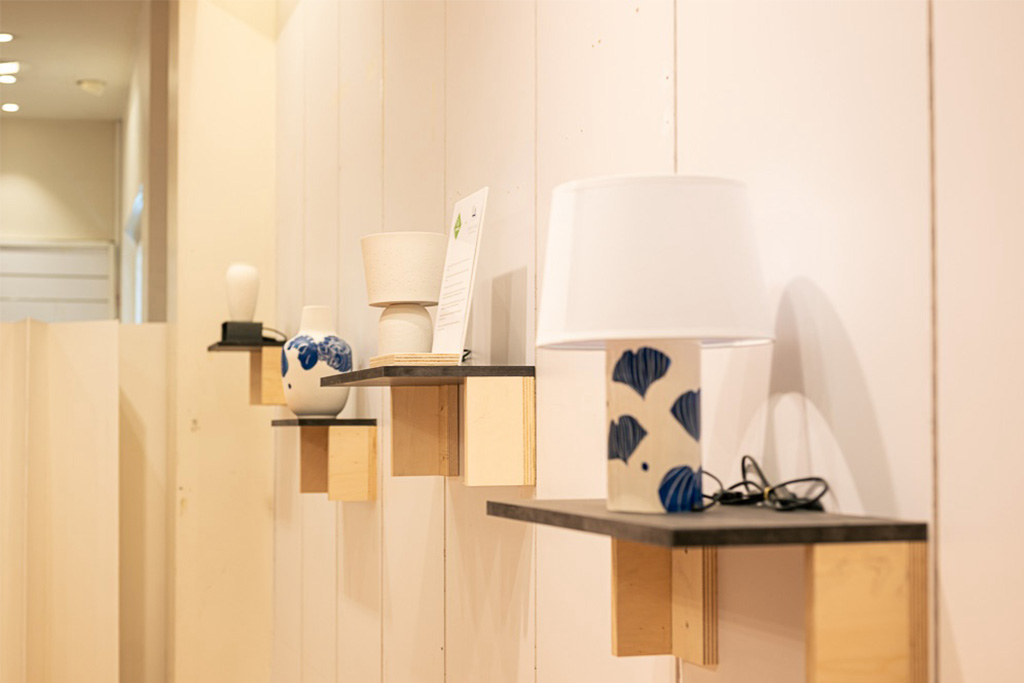
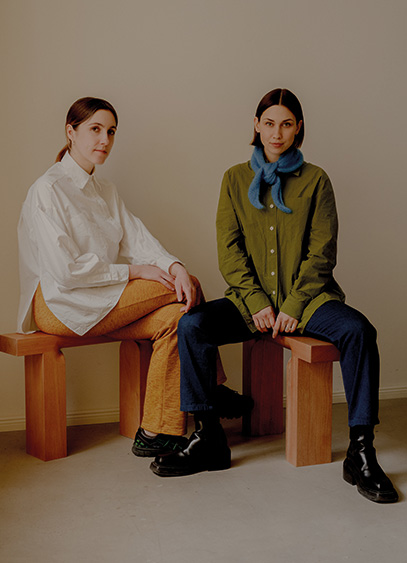
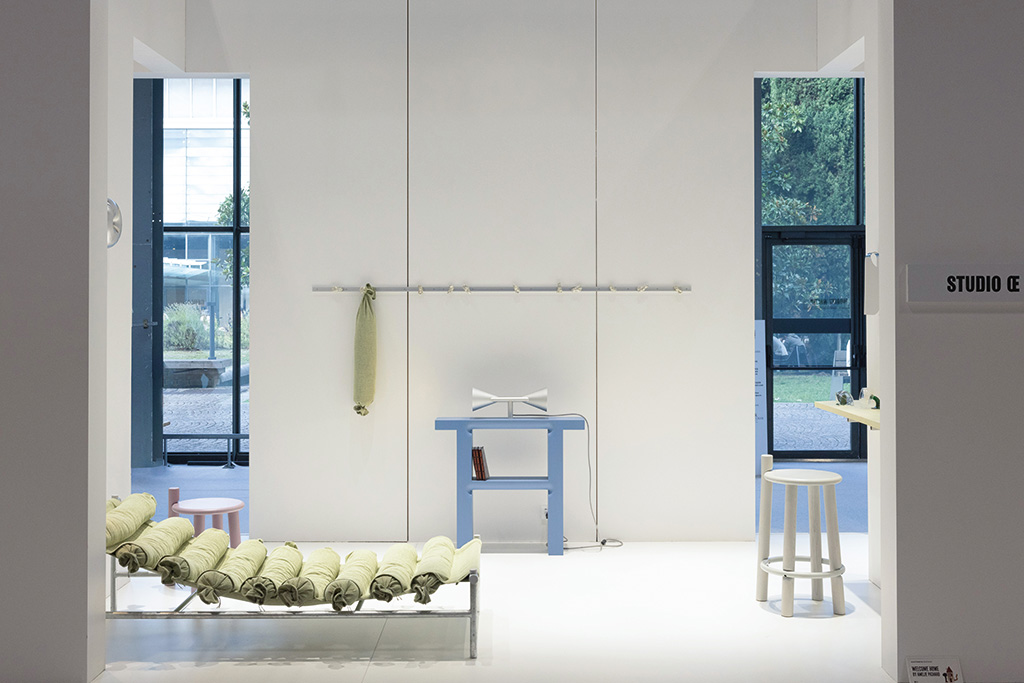
Studio Πwas founded in 2021 by German designers Lisa Ertel and Anne-Sophie Oberkrome. They describe the studio as a shared space for expression and exploration, where the projects they design interact with the space and social context in which they are placed.
Lisa Ertel and Anne-Sophie Oberkrome met while studying product design at the Karlsruhe University of Arts and Design in Germany, where they began collaborating regularly. Establishing their studio—named Œ after the first letters of their respective surnames—felt like a natural progression. "It was more like giving a name to something that already existed and symbolizing how two perspectives can work in unison."
Drawing inspiration from everyday life
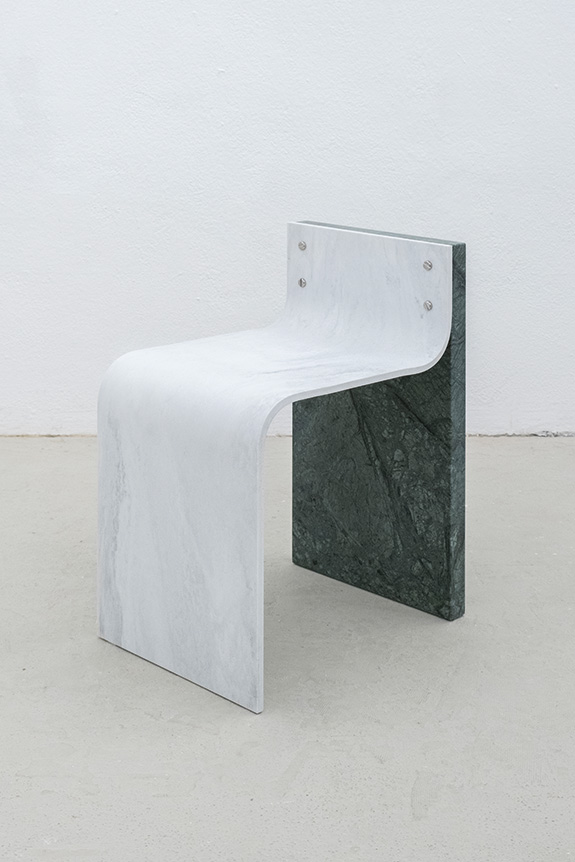
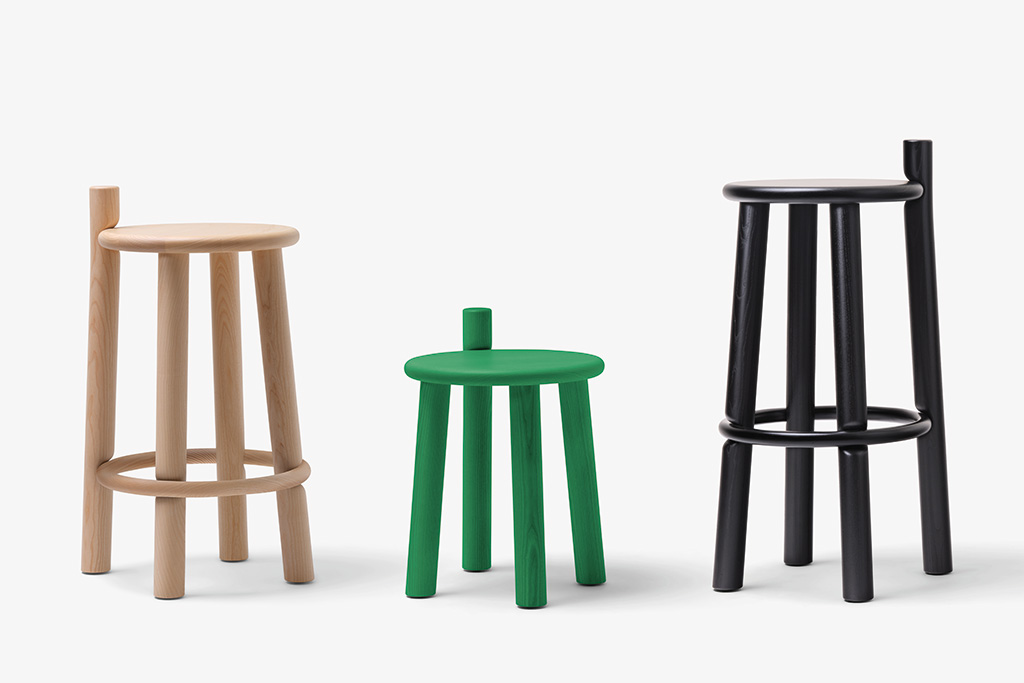
They don't follow a rigid process for their projects; instead, they draw inspiration from various scenes of daily life. "We pay close attention to how objects live with people, in spaces, and over time. Our goal is to listen to the space where they are placed, without trying to control it." In practice, Œ often works on several projects simultaneously, ranging from collaborations with manufacturers to independent research and specific commissions. "Our work is truly rooted in diversity, and we are convinced that our signature lies in the conversation between our different projects." Notable collaborations include the Cove mirror for Danish brand Our Society in 2022, the Oto (2023) and Dopo (2024) collections for Italian manufacturer Mattiazzi, and the Tandem shelf for 1×1 Systems in 2024.
Exploring to design better
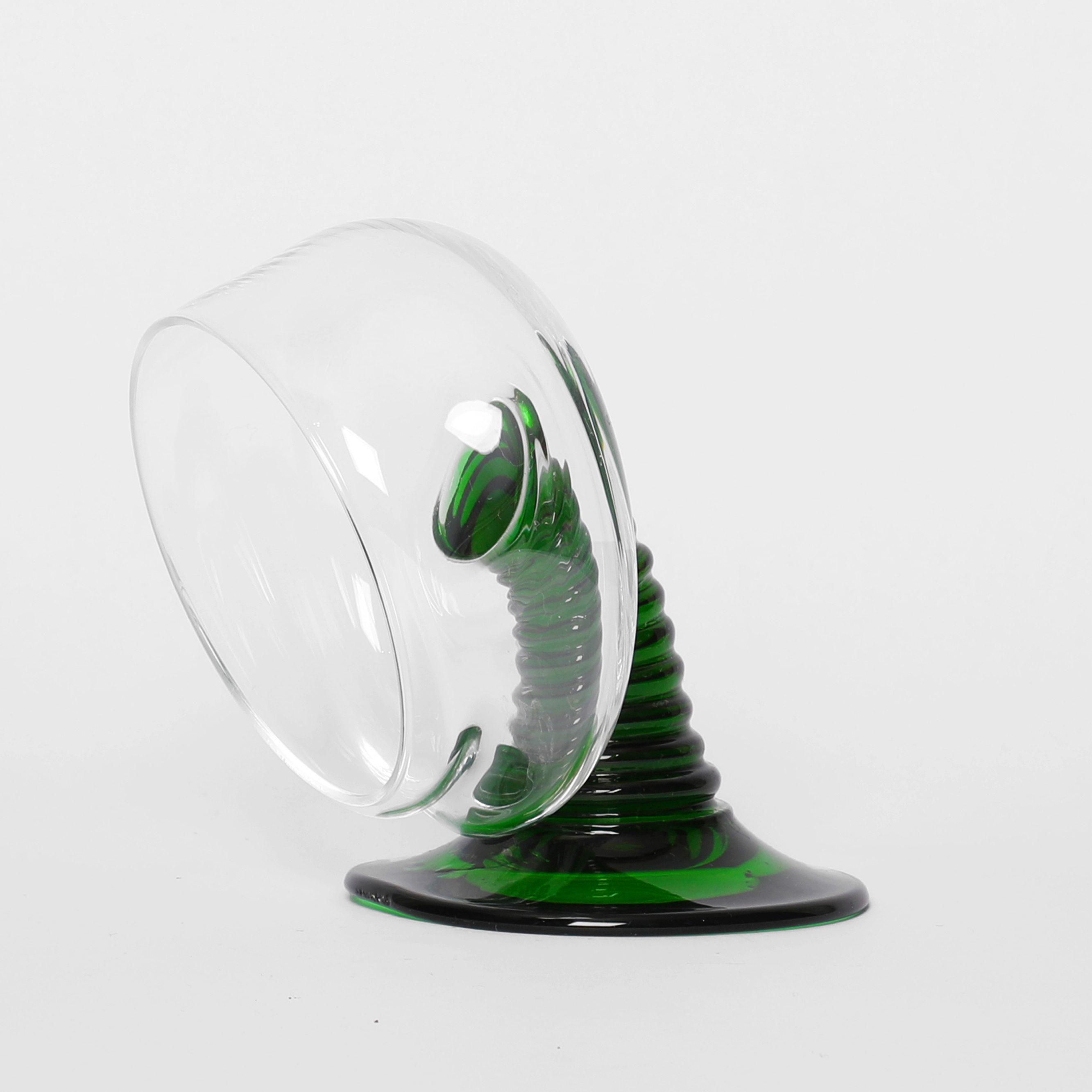
Alongside their commercial work, they are members of several collectives, including FAN Collective, launched with university friends after graduation; Farm Group, born from a desire to reconnect with the land by starting from a place rather than a market to create; and Many-to-Many, a group of female designers from across Europe. This exploratory work is essential to their overall process and has led to the development of ideas such as the Romer glassware collection, the Silo seating series, and the Moving Stool, to name a few. "These collectives are like ecosystems where we can explore themes of our own choosing and test alternative working methods. They allow us to set our own pace and venture into more experimental territory." Fascinated by materials, the two friends enjoy observing their behavior and evolution to fuel their ideas. "We love the texture, structure, and color of materials. Generally, most of our projects begin with very practical steps: cutting, sanding, folding... And it is often the material itself that tells us if we are on the right track."
Looking ahead to 2026
Following a notable appearance at the Maison&Objet fair in September as winners of the Rising Talent Awards, which focused on German design, 2026 promises to be an equally flourishing year for the studio.
One of the major upcoming highlights for the studio is its presence in Frankfurt, the designated World Design Capital for 2026. Continuing their exploration and research into materials, the designers will present a collaborative project with the Danish studio Form22 and the regional stonemason Freymadl. In June, during 3daysofdesign in Copenhagen, the duo exclusively unveiled their first collaboration with Vitra: the Bascule chair. This model combines technical innovation with recyclability—two concepts they consider inseparable. "Bascule invites us to sit however we like, depending on how we feel. It’s not just a comfortable chair; there is a context that forms around it, like an aura."
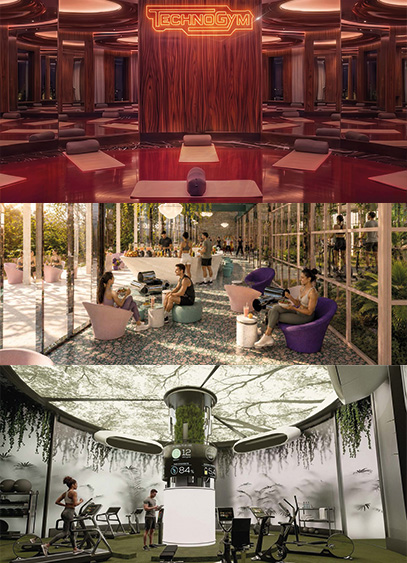
To celebrate the 40th anniversary of its Unica product, Technogym launched a creative call titled "UNICA-MENTE | Back to the 80s" in partnership with Intramuros. The awards ceremony took place on July 1st, honoring three projects for their creativity and vision of wellness.
Targeting designers and architects, the "UNICA-MENTE | Back to the 80s" creative call invited participants to imagine immersive wellness spaces that blend 1980s heritage with contemporary visions. Among the many projects submitted and evaluated by a jury chaired by Borina Andrieu—also including Olivier Bon, Verena Lasvigne, and Frédéric Marty—three proposals stood out for their creativity, coherence, and realism.
First prize: Saule with Unica Mente
Conceived by Saule, the project Unica Mente places usage at the heart of its design. "We designed the space to position La Palestra as the beating heart of our proposal, a central core of energy from which different facets of the wellness experience radiate. Orchestrated like a theatrical sequence, from the Recezione to the hushed serenity of L'Alcova, and through the openness of La Terrazza, each space celebrates wellness in its own way." A generous proposal that pays tribute to Italy, Technogym's home country, while showcasing the brand's equipment with finesse and elegance.
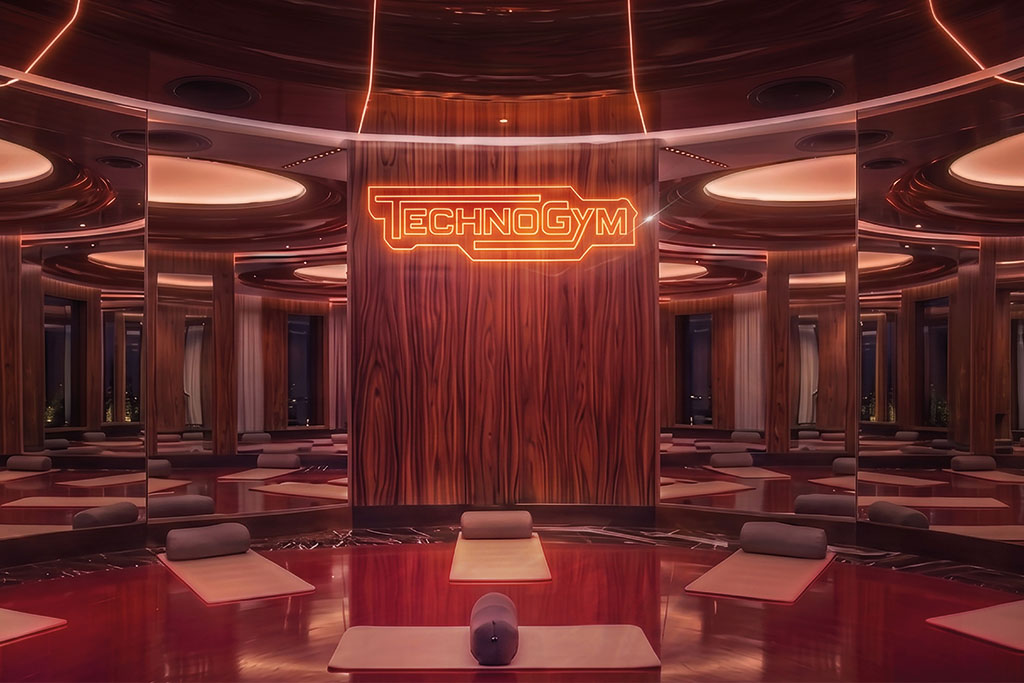
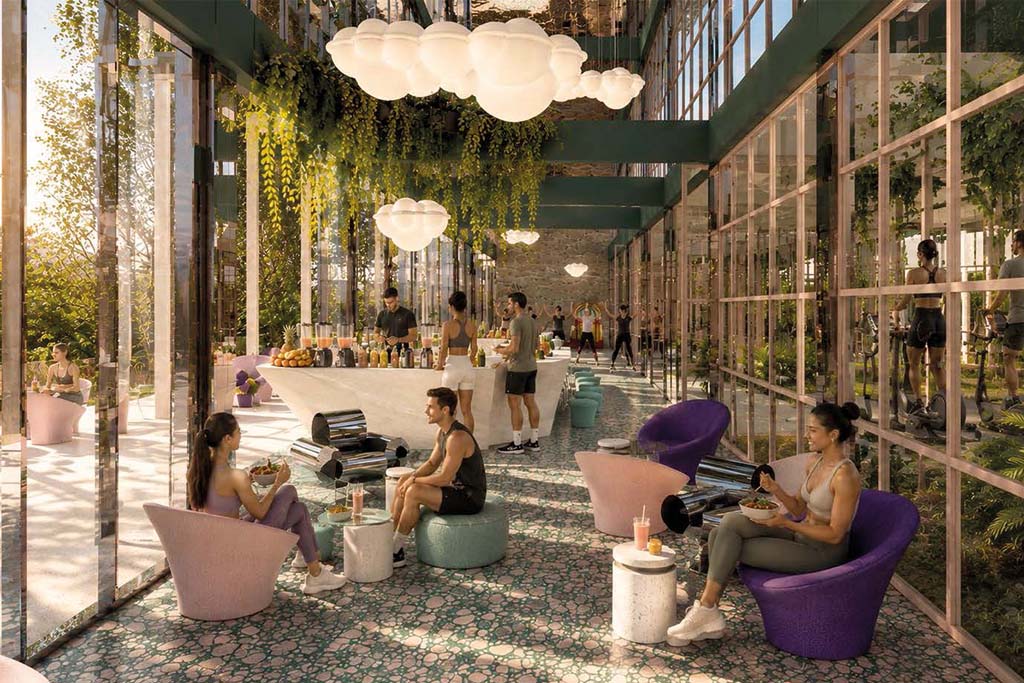
Second prize: Osé Architecture with Unica Oasis
The agency Osé Architecture designed Unica Oasis around a central question: how can we reintegrate wellness into our contemporary lifestyles? In response, the studio proposes a space where movement flows freely and finds its place naturally. "The open layout of the spaces invites everyone to build their own journey through a succession of atmospheres blending effort, contemplation, and relaxation. Inspired by the optimism of the 1980s, the project combines innovation, nature, and quality of life. Technogym equipment is staged as landmarks within the interior landscape, while a palette of natural materials, colorful accents, and immersive soundscapes enhances the sensory experience." A project praised for its balance between aesthetics and functionality, as well as the richness of its references to 1980s design.
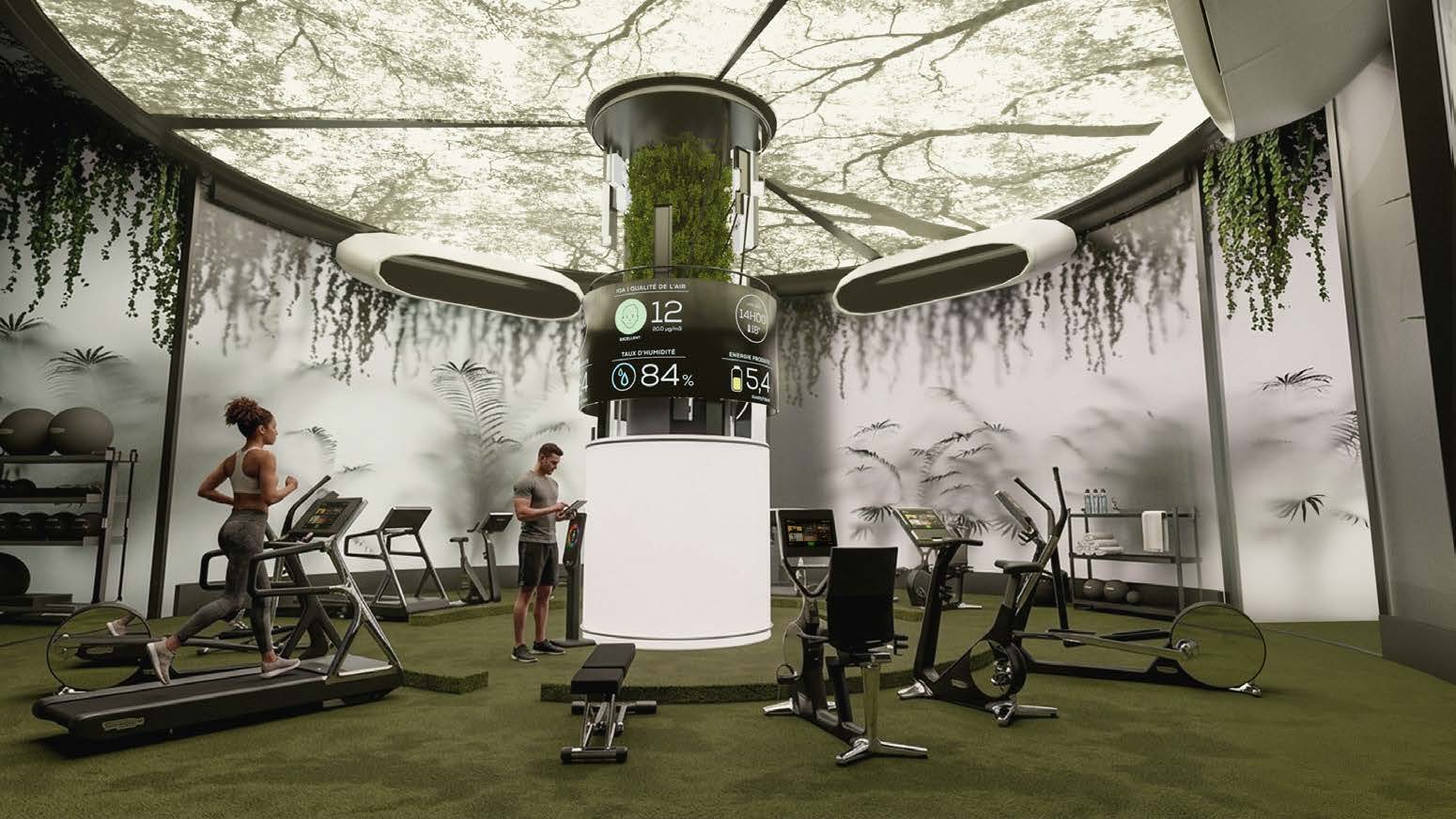
Third prize: Charles Hantz with Symbiose
Conceived by Charles Hantz, the Symbiose project explores the relationship between living things, space, and machines. Inspired by 1980s science fiction aesthetics while remaining firmly rooted in contemporary issues, it transforms physical exertion into a source of energy. "By capturing the kinetic energy produced on the machines, the space powers a plant ecosystem that purifies the air and regulates the atmosphere in real time. The athlete is no longer just training: they become an active participant in a virtuous cycle where their movement nourishes the space." Between past and future, Symbiose revisits the imagery of the 1980s while offering a modern vision of connected wellness.
Jury's Choice: Sesto Studio with Human Performance Lab
In addition to the three main prizes awarded, the jury wished to recognize the work of Sesto Studio for their Human Performance Lab project, featuring a 1983-2083 concept that offers an original vision of the future as imagined from the 80s.
Celebrating the innovations that will shape the market of tomorrow: this is the primary ambition of the major "Furniture Awards" event, the first edition of which will be held in early December. Through 30 awards across 10 categories, representing the product families and key themes of the furniture and home sectors, Le Courrier du Meuble - in partnership with Intramuros, Cuisines & Bains Magazine and Concept Bain - aims to recognize the companies, concepts, and initiatives that are contributing to the sustainable evolution of the furniture, design, and contract sectors.
Presented in early December, the Furniture Awards will grant 30 prizes across 10 categories: Craftsmanship Award, Furniture Award, Living Room Award, Bedding Award, Contract Award, Innovation Award, Eco-Furniture Award, Design Award, Kitchen Award, and Bathroom Award.
Why this event? Above all, for Le Courrier du Meuble and the 3 partner magazines, it is about celebrating and bringing people together, specifically to:
- Highlight the innovations and trends shaping the market of tomorrow;
- Promote the excellence of the sector's industrial, artisanal, and creative expertise;
- Offer participating companies high visibility among industry decision-makers;
- Foster synergies between manufacturers, brands, distributors, and specifiers;
- Unite the entire industry around a premium event with high added value.
An opportunity for recognition
The process for the inaugural Furniture Awards is designed to be rigorous, transparent, and inclusive, starting with the call for entries, which is now open: manufacturers, brands, and design professionals looking to showcase their innovations, projects, and expertise are invited to contact us [see below]. Why participate? The Furniture Awards offer every candidate a unique opportunity to reinforce their market position at a major event that brings together key industry decision-makers, specifically to:
- Strengthen your brand image and industry credibility;
- Highlight your innovations and expertise to a qualified audience;
- Increase your visibility among manufacturers, distributors, and specifiers;
- Generate new business opportunities and partnerships;
- Join an event destined to become an industry benchmark.
This year, Design Parade celebrates its 20th anniversary at Villa Noailles and its 10th edition in Toulon. Open since June 25th and running until August 30th, both events have delivered their usual share of surprises in the fields of object and interior design. Here is a look back at the seven winners of the 2026 edition.
Born from a desire to discover, share, and promote design over the course of a summer, Design Parade has become an essential event for revealing new talent to a wide audience. For this anniversary edition, marking 20 years in Hyères and 10 years of its Toulon branch, seven creators were rewarded for the inventiveness they displayed at the heart of Villa Noailles. The design jury, chaired this year by Sofia Lagerkvist and Anna Lindgren, included Anne-France Berthelon, Stanislas Colodiet, Clara Krzentowski, Hervé Lemoine, and Simon Dupety, who won last year’s Grand Prix du Jury for objects. Meanwhile, Laura Gonzalez led a second jury—composed of Stéphane Parmentier, Rodolphe Parente, Raphaella Pron, Anne-Sophie von Claer, and Thomas Takada—tasked with selecting the winners for interior design projects. Here is a look at the 2026 award winners.
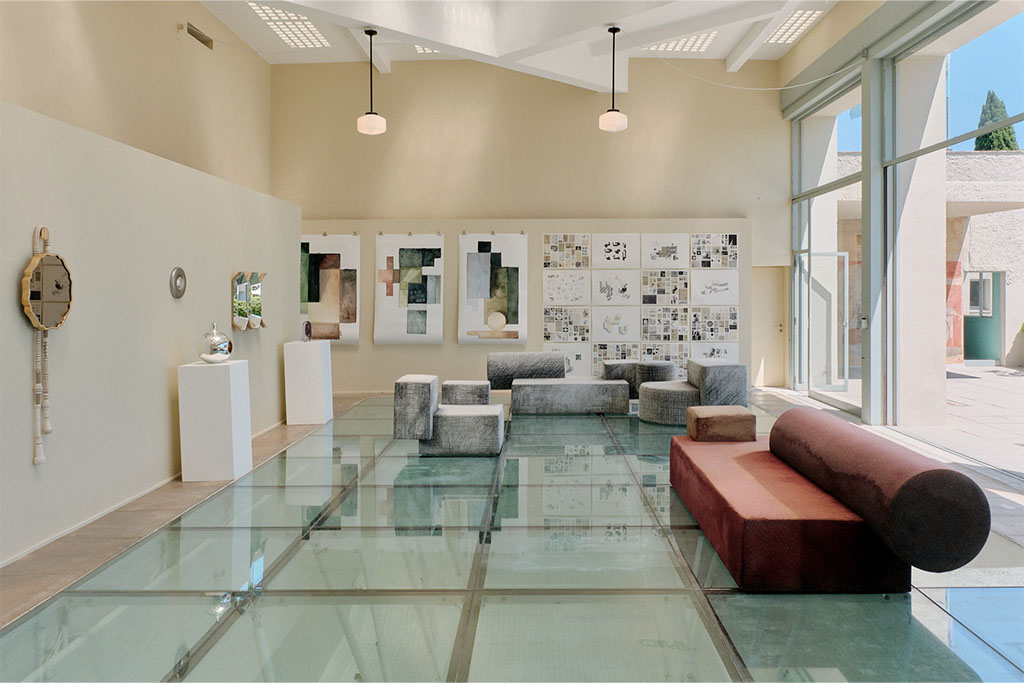
Object Finalists
The National Manufactures Prize - Mobilier National: Lundja Medjoub & Matisse Vrignaud
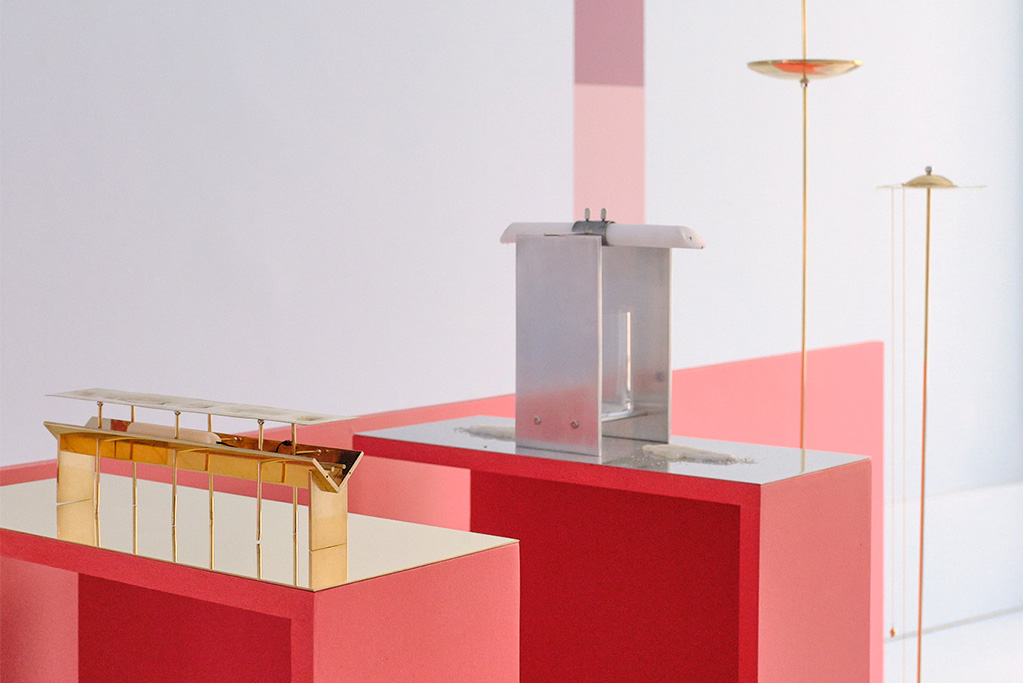
With Les Horloges à Feu (Fire Clocks), Lundja Medjoub and Matisse Vrignaud explore the concept of time by reinterpreting medieval measuring instruments. "It seemed to us that time was a notion too rarely explored in design, even though it is an essential concept in our contemporary societies. Returning to the foundations of how it is measured felt indispensable to us," the duo explains. Centered on three iconic measuring objects, the designers link their practice to the notions of time, sound, and movement. "These three objects embody three ways of considering time through three sonic principles: the gong depicts a singular, punctual event; the hourglass symbolizes duration; the metronome refers to repetition and cyclicity. In their presence, it is their sound that materializes time and brings it back to our attention." The three pieces are made of brass, sourced from scraps from a brass foundry. A material chosen as much for its link to watchmaking as for its acoustic qualities, particularly its musicality.
The Design Parade Grand Prix du Jury: Tin Ayala
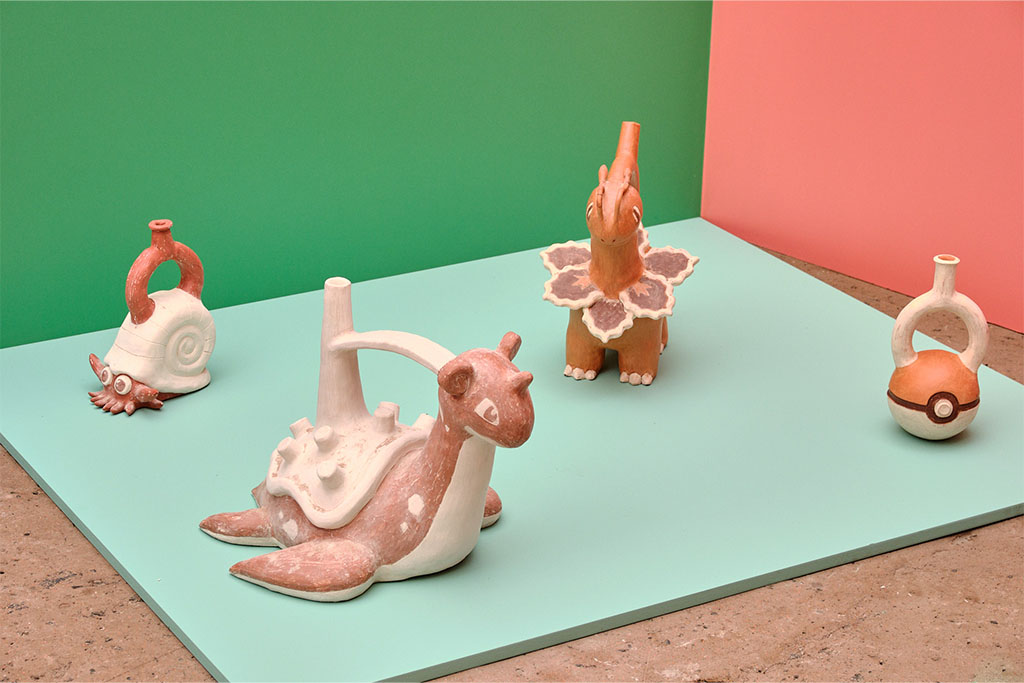
Huacos is a project based on the coexistence of cultural references that are often opposed, yet here brought together within a single object. "The series of ceramics I am presenting at Villa Noailles is conceived as a superposition of ancestry and globalization, archaeological past and contemporary pop culture, pre-colonial local knowledge and capitalist market products," explains Tin Ayala. Taking the form of ceramics similar to those created by the Moche, Nazca, Chimú, or Inca societies, the Ecuadorian designer also questions the "extirpation of idolatries" implemented during the Spanish colonization of the Andes. "This erasure from the past leads us today to conceive of pre-colonial material culture as something incomplete, missing, and broken, which we must restore with the help of archaeological studies and academic knowledge." Inspired by a 2023 residency at the Larco Archaeological Museum in Lima, the creator places mixtures, fusions, and combinations at the heart of his practice. "That is why, while studying design in the Netherlands, I place pre-Columbian art and contemporary design on the same cultural level." Beyond aesthetics, these hybridizations question colonial binaries: ancestral and contemporary, local and global, or nature and culture. The result of a design methodology known as "Abigarramiento" (variegated), the objects superimpose heterogeneous temporalities and epistemologies. "I do not believe in the myth of the tabula rasa (creating from nothing). As designers, we are always part of a social context, and it is important to create from these realities and work with these references." This work was carried out during a residency at the Fondation d’entreprise Martell in Cognac between November 2025 and January 2026.
Public Prize: Edouardo Altamirano
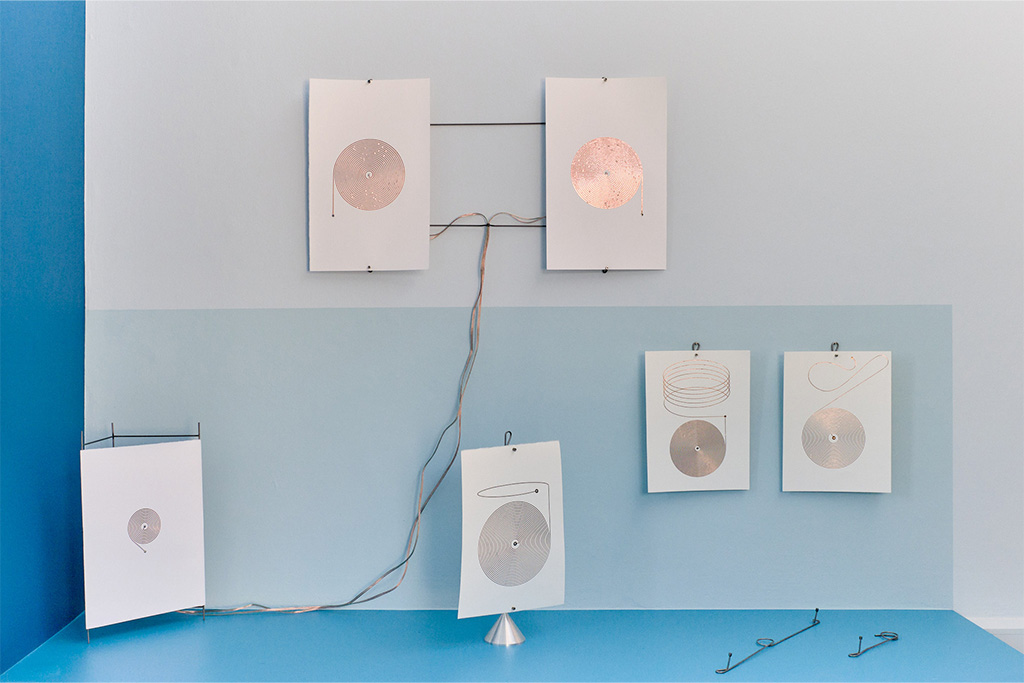
Edouardo Altamirano’s project, titled Sonido Material, explores sound as a physical phenomenon. “This project was born from an interest in exploring our relationship with sound and the objects that produce it. It challenges technology-based products, such as speakers, by asking whether they can become more raw, more open, and more experience-oriented.” For this project, the designer deconstructed the speaker down to its most essential components, thereby questioning the conventional boundaries between object, material, and sound. “I am exploring the possibility of rethinking the speaker as an open system. The object is no longer constrained by a physical boundary or enclosed in a casing: it becomes visible and exposed. This challenges our preconceived notions about materials by proposing a solution that uses something as simple as paper, a material not typically associated with sound.” This project is notably influenced by drawing, which holds a central place in his practice. It allows him to explore a graphic language and use it as a means of expression. “Drawing directly influences the sound quality, resonance, and overall functionality of the work, thus introducing a particularly interesting experimental dimension”, he concludes.
Architect Finalists
Visual Merchandising Prize awarded by Chanel: Blanche Mijonnet
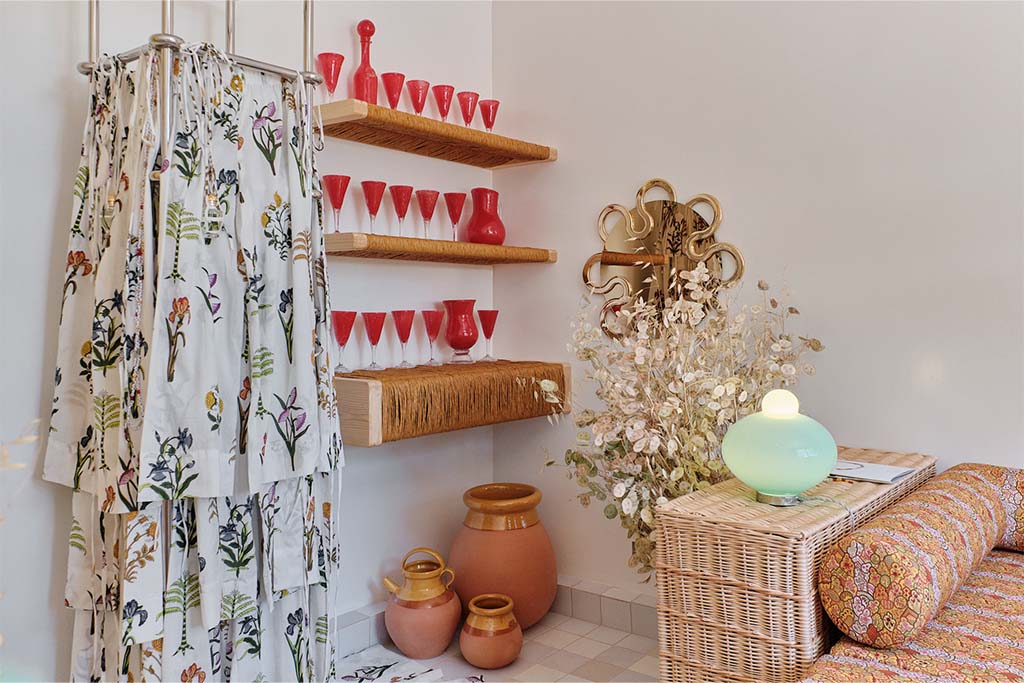
Alongside her spatial project titled Pyjama Party, which examines Provençal identity, the award-winning project Soleil Soleil deeply questions material, color, and the very notion of a window display. “Everything stems from the material and immerses us in its texture. The light is not hidden: it emanates from its core and invites us to look closer. Soleil Soleil reinterprets the light of the South of France, drawing inspiration from the boldness of Coco Chanel, who elevated yellow to the status of luxury. In a quest for the absolute yellow, the most ordinary flower of all reveals its magic by drawing on the delicate craftsmanship of the plumassiers at Maison Lemarié: the dandelion. This flower regains its poetry by revealing its two states in a delicate, luminous diorama.” An ambitious achievement that notably required sixteen hours of petal picking to compose the sun and its shades. More broadly, this project allows the designer to explore material and gesture in an intuitive and experimental way, in order to reveal all their poetry.
Public Prize: Simon Searle and Victoire Lesthevenon
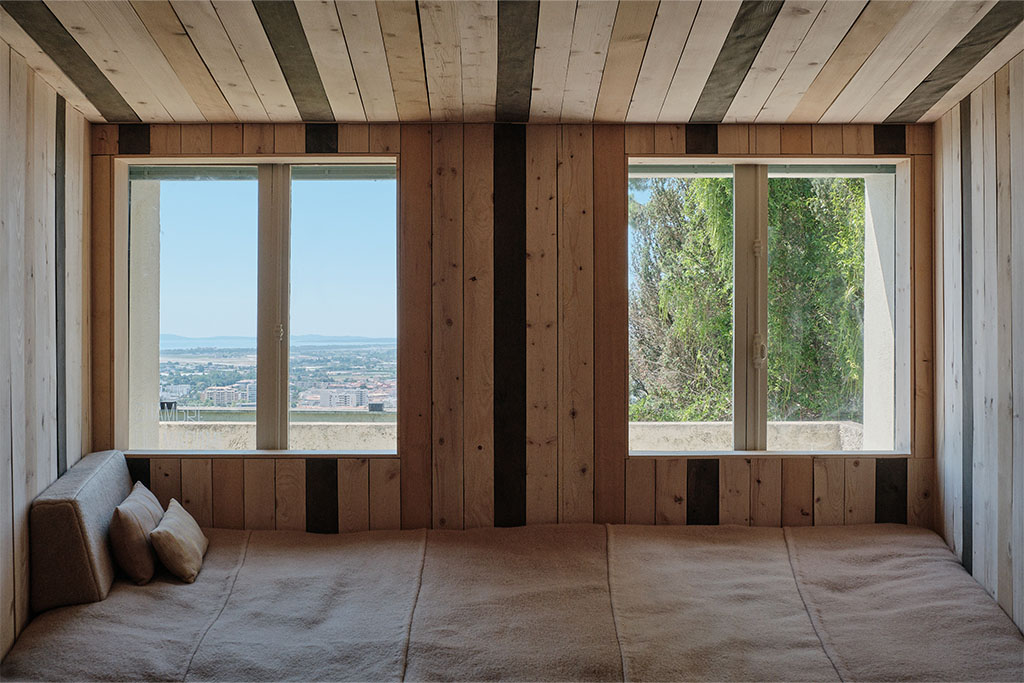
TheObservatory by Simon Searle and Victoire Lesthevenon, opening onto the Villa Noailles, blurs the boundaries between interior and exterior. "We designed this space to draw the eye outward. The floor is raised, and the wooden structure enhances the perspective toward the windows, providing a better vantage point of the landscape. Materials like cork insulate the space, allowing for total immersion in the sounds of nature. We wanted to create a place outside of time, away from distractions, and that is how we define comfort." The choice of materials and colors is rooted in the palette of the Var region, while evolving over time and with the light. "We developed all the colors ourselves using local plants, which will change when exposed to light. This allows us to establish a different relationship with these objects and embrace their transformation." Designed to the scale of the Villa Noailles, the project takes this logic to its proportions, which were determined using geographical and meteorological data from the Var. It is a way to further strengthen its connection to the landscape that hosts it.
The Design Parade Van Cleef & Arpels Grand Prix: Valentin Bayoud
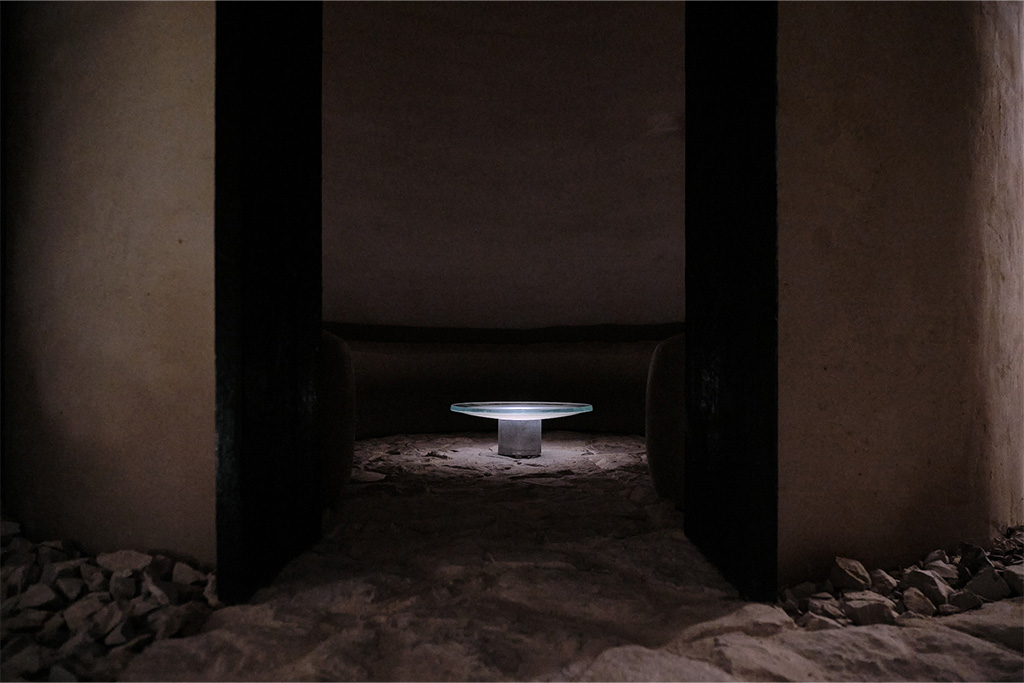
"Fire has long accompanied the rise of humanity. Today, more than ever, it has been replaced by another precious resource at the heart of many challenges: water." It is around this element that designer and architect Valentin Bayoud has built his world. "Through Aqua primitiva, I sought to create spatial experiences that put visitors in the right frame of mind to engage in dialogue and reflect on contemporary issues." Echoing gatherings around a fire, the designer imagined a circular form that invites everyone to position themselves at an equal distance from the resource. "I am interested in spatial archetypes—those forms and structures that transcend cultures and eras because they meet fundamental needs. It is not about reproducing the past, but about confronting it with the present." A temporal shift that results in timeless spaces. Rooted in a phenomenological approach, the project engages the senses and invites the public to take a reflective pause. It is an experience anchored in the context of Hyères and highlighted by traditional craftsmanship and natural materials such as charred wood, undyed linen, thermoformed and molded glass, recycled cast aluminum, and dry-laid stone from the Var.
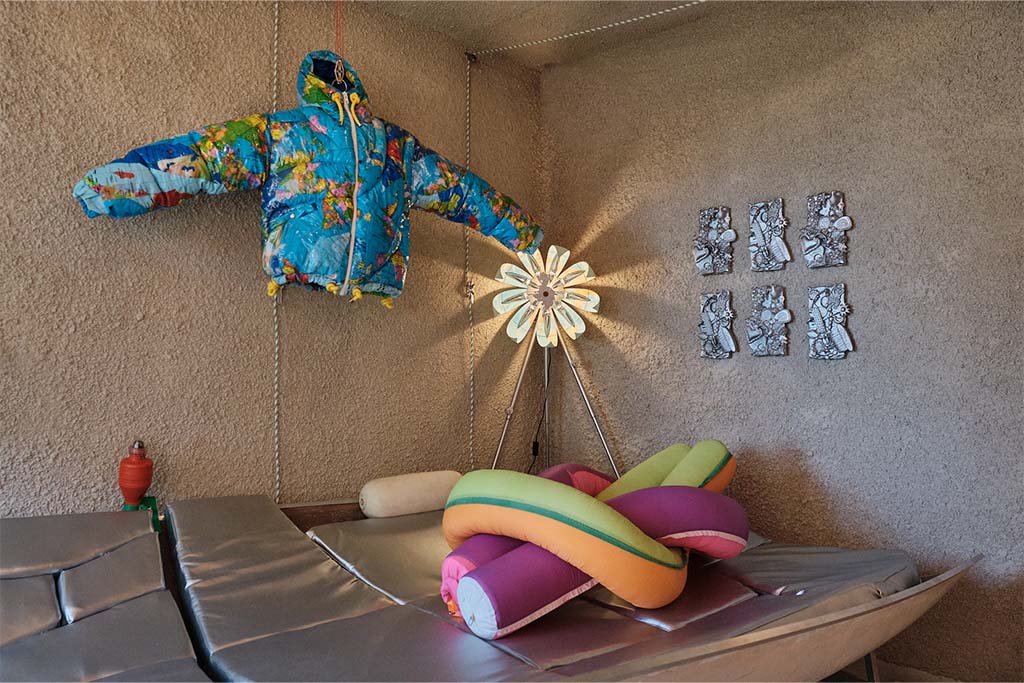
The Manufactures Nationales - Mobilier National Prize: Carlotta Lagazzi & Yohann Hubert
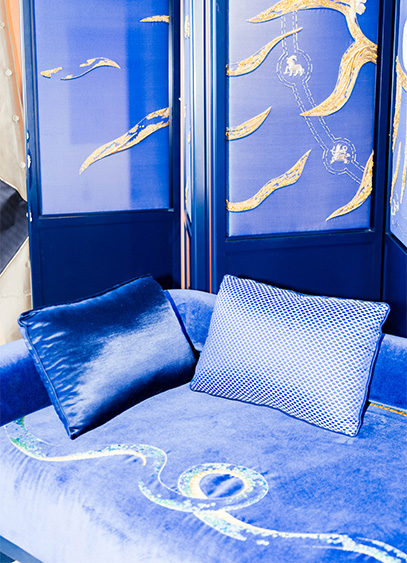
A lounge area on the Mallet-Stevens ocean liner. Conceived from the waste stream of recreational boating, the installation by Carlotta Lagazzi and Yohann Hubert is rooted in the idea of creating without generating new objects. "A conceptual as well as ecological gesture, challenging the linear logic of production and consumption." Based on upcycling, Overflowed reinterprets a number of materials that already carry a history. "We have long been drawn to Roland Barthes' idea that an object is much more than a simple functional entity; it is charged with memory, symbols, and cultural associations." Committed to the idea of creating new meanings, the duo views mediums "as constantly evolving rather than as fixed or immutable entities ." A philosophy and sense of value that generally results in a form of ambiguity. "We like that it is sometimes difficult to tell whether things are natural or artificial, animate or inanimate. " It is in this sense that the designers have cut up and dismantled the hulls and parts of abandoned boats to reassemble them into forms that are "softer, more organic, and curiously more familiar," evoking the imagination. A transformation through which a symbolic shift occurs, from maritime object to living room piece. On the reimagined daybed and beneath the ceiling light made of luminous scales, only the assembly techniques (knots, fittings, tension and restraint systems, textures, and technical textiles) serve as a bridge between two worlds.
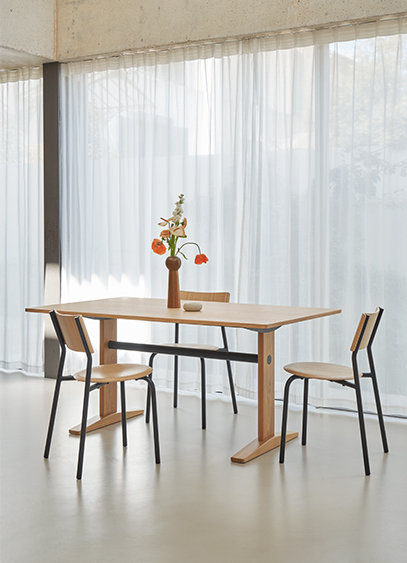
At the end of June, Tiptoe unveiled a table designed by French-Japanese designer Jun Yasumoto. A simple, robust creation designed to fit easily into our homes.
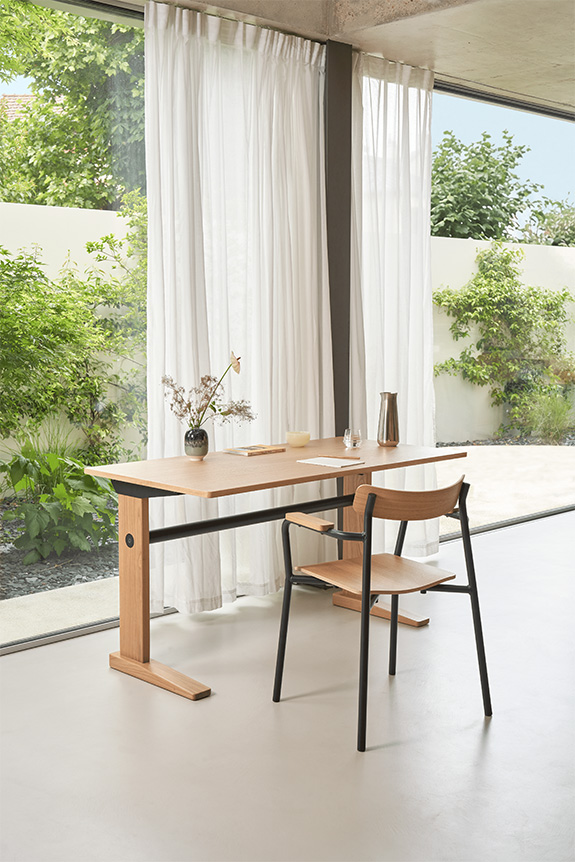
"I feel that in a home, the dining table is the meeting point for all family members. It’s around this table that I share the most moments with my children,"says Jun Yasumoto. Accustomed to creating seating characterized by efficient lines rather than a search for a distinct style, the designer teamed up with the brand Tiptoe to create Post. The name refers to the central steel tube that supports and defines the object's balance. More than just a detail, this construction principle was the starting point for the project. "To be honest, when Matthieu Bourgeaux contacted me two years ago, I quickly proposed the idea of a table with a 'T' base. What I liked about this idea was its graphic presence, which adds character without making the furniture look cluttered. It’s a base that knows how to blend into the background." An aesthetic choice, but also a functional one, as the table's construction—ranging from 120 cm to 240 cm—clears the central space and the sides, allowing for greater freedom in seating.
A new direction
Known primarily for its table legs and shelves that use a clamp system, Tiptoe offers a completely different approach with Post, one that moves away from that principle. "You shouldn't see this absence as a deliberate choice on my part, but it seems to me that Tiptoe didn't want to be confined to that particular typology either." Less guided by the brand's identity than by the form he envisioned, Jun Yasumoto explains that he wanted to design an object with a very rational construction. "My table is delivered flat-packed, it's easy to assemble, the structure is robust, and the materials are high-quality. When I design a product, I am always very careful not to sacrifice functionality for visuals. That’s why we worked in close collaboration with Tiptoe’s technical development team." The result of this partnership is a piece that is open to interpretation, made for both dining and working.


