Actualités

With Royal Pop, Audemars Piguet and Swatch reinvent the pocket watch through a collection of colorful bioceramic timepieces inspired by Pop Art and the iconic Royal Oak.
Fine watchmaking is breaking free. With Royal Pop, Audemars Piguet and Swatch have created a capsule collection of eight pocket watches that subverts traditional timepiece conventions. Inspired by the 1972 Royal Oak and the Swatch POP watches of the 1980s, this bioceramic series transforms the watch into a nomadic accessory. It can now be worn around the neck, clipped to a bag, slipped into a pocket, or displayed on a desk using a detachable stand. Bridging the gap between fashion statement and wearable micro-architecture, Royal Pop offers a new way to wear and showcase time. Available in eight models—from the minimalist Huit Blanc to the highly graphic Ocho Negro, and the vibrant palettes of Green Eight, Blaue Acht, and Otto Rosso—the collection ensures each piece has a bold, distinct identity.

The pop movement
The collection fully embraces its Pop Art heritage with bold colors, graphic contrasts, and a playful spirit. The aesthetic codes of the Royal Oak—the octagonal bezel, hexagonal screws, and "Petite Tapisserie" pattern—are reinterpreted here with a more experimental flair. The Huit Blanc model, featuring eight differently colored screws, directly evokes the world of Andy Warhol, while the Orenji Hachi and Otg Roz models push chromatic play even further. Yet, behind this visual energy lies genuine technical sophistication: bio-sourced bioceramic cases, a fully automated SISTEM51 mechanical movement, and a 90-hour power reserve. With Royal Pop, Audemars Piguet and Swatch demonstrate that contemporary luxury can now combine industrial excellence, popular culture, and creative freedom.

Until June 6, the Scène Ouverte gallery, located on Rue Bonaparte in the 6th arrondissement, is showcasing seven talents from its mentorship program titled Young Scène Ouverte.
Launched in 2025, the Young Scène Ouverte (YSO) mentorship program, initiated by the Scène Ouverte gallery—founded and directed by Laurence Bonnel since 2016—aims to provide visibility to young contemporary creators, both in the market and on financial and creative levels. Around thirty individuals are part of the program, where they typically remain for one year, and where each designer and creator has the opportunity to test and experiment with materials in all their forms to create original pieces.
More broadly, this program seeks to encourage these young artists to refine their creative universe, sometimes even revealing new vocations. "The goal is to guide their expertise, craftsmanship, and the materials used toward something more noble, and to move toward greater rigor in execution and mechanics. This is all the more important for these young designers: removing constraints allows them to break free from the limits they might normally face." For this edition, seven artists with very different, yet coherent, visions are on display at the gallery until early June.
Julia Chehikian
Based in Marseille, Julia Chehikian designs and crafts her pieces in her studio. Her creations are strongly inspired by Provence—its warmth, colors, and the sea—which the designer aims to keep locally rooted. She collaborates with regional artisans and an upholsterer to design pieces with clean, minimalist lines, imagined in materials built to stand the test of time.

Apolline Morel
A resident at BBDMA, Apolline Morel first trained in glass at HEAR in Reims before pursuing a master’s degree in design and luxury craftsmanship at ECAL. She established her studio in 2024 and decided to explore glass paste and its properties. At the gallery, she presents lighting fixtures that play with transparency, offering light effects that bring the object to life differently depending on where you stand in the space.

Orre Studio
Founded by Jules and Sarah, who trained in fine art painting and cabinetmaking respectively, Orre Studio offers pieces at the crossroads of design and decorative arts. Together, they conceive creations from A to Z, notably reviving ancient artisanal techniques related to tile making. Balancing a search for more contemporary forms with material exploration, Orre Studio presents two mirrors and a console that are particularly refined and accomplished.

Rinke Joosten
A graduate of the Willem de Kooning Academy in the Netherlands, ceramicist Rinke Joosten founded her studio in 2018. It was during her studies that she explored materialities, particularly the link between ceramics and blown glass, which has become central to her work. More broadly, she places special importance on the artisanal production process of her pieces. Her Momentum project bridges the gap between materials and human gesture, resulting in pieces with a unique finish.

Clémence Mars
After studying design at the Duperré School and training in scenography at the École des Arts Décoratifs, Clémence Mars is one of those designers who loves to explore the full extent of her creativity. She developed a particular passion for the transparency of glass, especially through her work with layering pieces. After experimenting with resin, she turned to glass with the gallery's support, resulting in elegant, architectural works.

Faustine de Longueuil
At the crossroads of craftsmanship, graphic design, and contemporary art, Faustine de Longueuil’s work draws inspiration from figures like Mario Botta and Étienne Robial. Working exclusively with 100% French wool from the Fonty spinning mill, the textile artist chooses sustainable materials to create pieces that combine a strong graphic aesthetic with a play on symmetry and geometric shapes.

Bérénice Gentil
An architect and ceramicist by trade, Bérénice Gentil has developed an ornamental practice where ceramics become a language. She creates sculptural pieces that seem to transcend time, adopting this craft in a contemporary way to offer creations that embrace the spaces they inhabit.

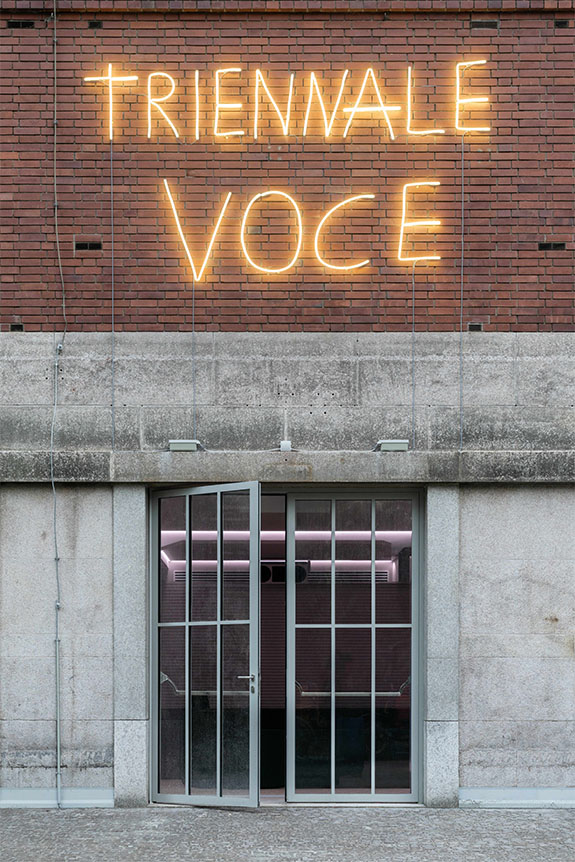
Once again this year, the Triennale hosted some wonderful events as part of Milan Design Week 2026. But more than just an exhibition venue, this essential landmark of the Lombard capital is, above all, a place steeped in history where design continues to come to life through a dense and varied program.
Milano Design Week 2026 marks a turning point. Faced with a sometimes overwhelming visual inflation, the city seems to be returning to its fundamentals, embracing a culture of design memory inherited from the 20th century. Objects are never conceived in isolation, but as the culmination of a global project blending architecture, utility, aesthetics, and social vision. Some cities tell their stories through their monuments; Milan tells its story through its archives as well. Whether drawings, models, photographs, notes, or prototypes, these archives reveal everything that precedes the finished work and preserve its potential. The Triennale di Milano fully embodies this movement.
But what exactly is the Triennale?
More than just an exhibition center, the Palazzo dell’Arte (Triennale di Milano) is a modernist building designed in 1933 by Giovanni Muzio as a true multifunctional and transdisciplinary cultural hub. From the very beginning, it brought together exhibition halls, a theater, a restaurant, a bar, an archive center, and even a nightclub.
Since 2019, the venue has been reimagined under the leadership of Stefano Boeri, President of the Triennale, Carla Morogallo, Director General, and Luca Cipelletti, Director of Architecture.
Back in 2024, this cultural space inaugurated the "Cuore – Research, Study and Archives Center," a space dedicated to research, memory, and innovation. Located on the ground floor of the Palazzo dell’Arte, this 400 m² area to the left of the main hall welcomes researchers, students, visitors, foundations, and universities. Free to access, Cuore places the research work that fuels the Triennale's entire program back at the center. With decades of national and international exhibitions, it has become a major documentary and heritage center. Its collections include books and journals, graphic, photographic, and audiovisual archives, as well as nearly 2,900 architectural pieces such as drawings, plans, models, and other documents related to projects carried out at the Palazzo dell’Arte and throughout Milan since 1933. The institution also preserves the archives of major figures in Italian design, such as Andrea Branzi, Alessandro Mendini, and Ettore Sottsass, to name but a few.
A discreet yet exemplary rehabilitation
The renovation of the Palazzo dell’Arte supports this new direction. The goal is to modernize the building while rediscovering the original spirit envisioned by Giovanni Muzio in 1933.
Three pillars structure this transformation: recovering the spirit and preserving the heritage of 1930s Italian rationalism, improving energy performance, and ensuring the spaces are more accessible, flexible, and contemporary.
The restoration highlights the architectural qualities of the site, for example by reopening perspectives (notably the view of Muzio’s helical staircase in the Cuore space), streamlining technical elements, restoring zenithal lighting by uncovering the glass-brick roof, and reintegrating the original window frames. The new, nearly invisible technical installations (insulation, heating) significantly improve the clarity and flow of the space.
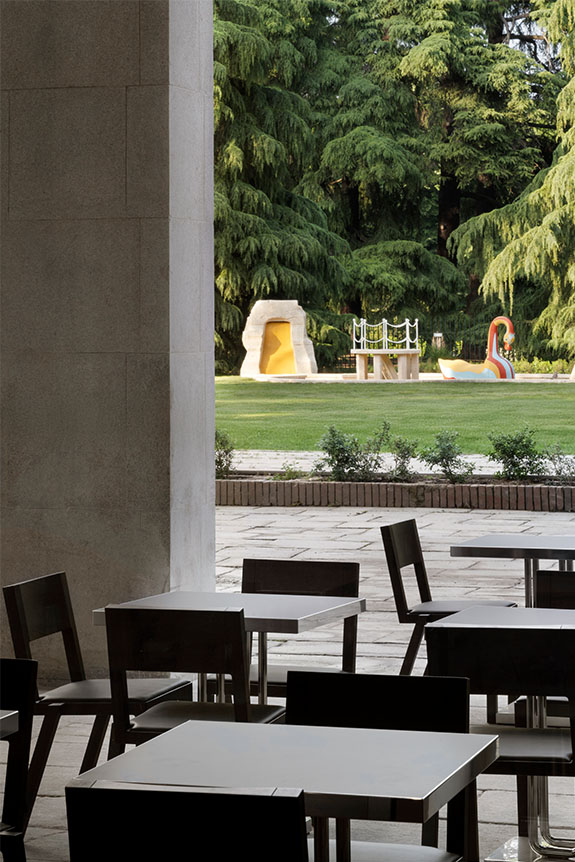
In 2025, the venue opened up to new uses. Notable additions include the return of the café and restaurant (Cucina) to their historic location on the park side, as well as the opening of Voce—a space dedicated to music and performing arts—and Gioco, a creative space for children.
Through this transformation, the Triennale also reminds us that Milan’s creative uniqueness lies in its ability to foster a dialogue between rationalism, modernist heritage, and poetic postmodernism.
Through the quality of its exhibitions, spatial design, and architectural restructuring, the Triennale presents itself more as a living, evolving, hybrid building than a static monument. It brings design to life by recounting the trajectories of those who create it, questioning its uses, its critical reach, its social dimension, and the daily joy it can still provide. The simple, human, and elegant names chosen to characterize the various sectors prove this: Cuore, Cucina, Gioco, and Voce.
So, the Triennale di Milano? A must-see, again and again!
2026 Exhibitions
Andrea Branzi — Continuous Present
Exhibition design: Toyo Ito
Through October 4, 2026
One of the major exhibitions of this edition is dedicated to Andrea Branzi, a thinker, poet, unclassifiable designer, and central figure of Italian Radical Design. He was a tireless advocate for a way of "living poetically in the world," rooted in tolerance and critical fiction.
Conceived as a tribute by Toyo Ito—a close friend and fellow thinker—the exhibition explores Branzi’s critical and deeply humanistic vision. Titled Continuous Present, it expresses his opposition to a mechanical, rationalized, and uniform modernity.
The exhibition revisits the major themes that run through his work: architecture without walls, the hybridization of nature and the city, constant transformation, encounter and adaptability, and the rejection of rigid systems.
For Branzi, deconstruction is never nihilistic. On the contrary, it opens up a space for wonder. His idea of the "continuous present" evokes a city and a world in perpetual evolution, where joy and optimism are a moral and social duty. A lesson worth remembering!
Toyo Ito’s fluid and almost organic spatial design perfectly extends this philosophy.
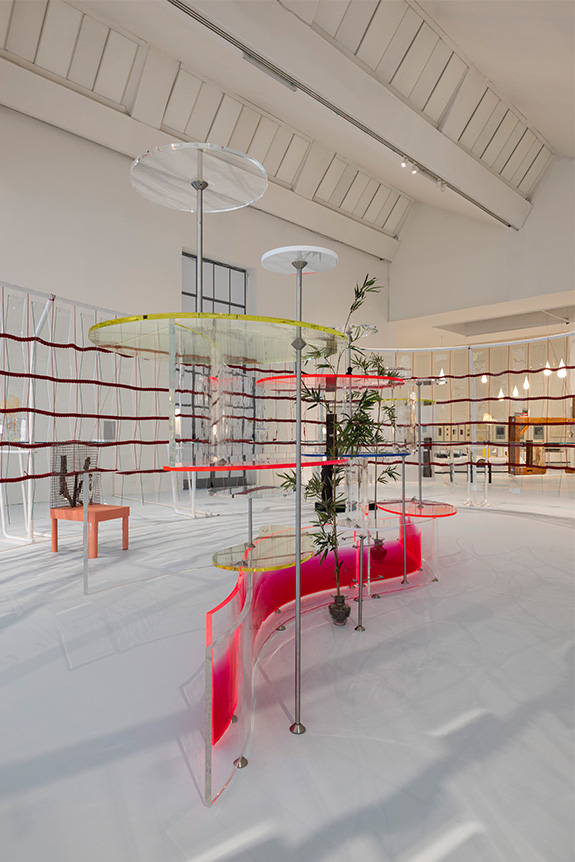
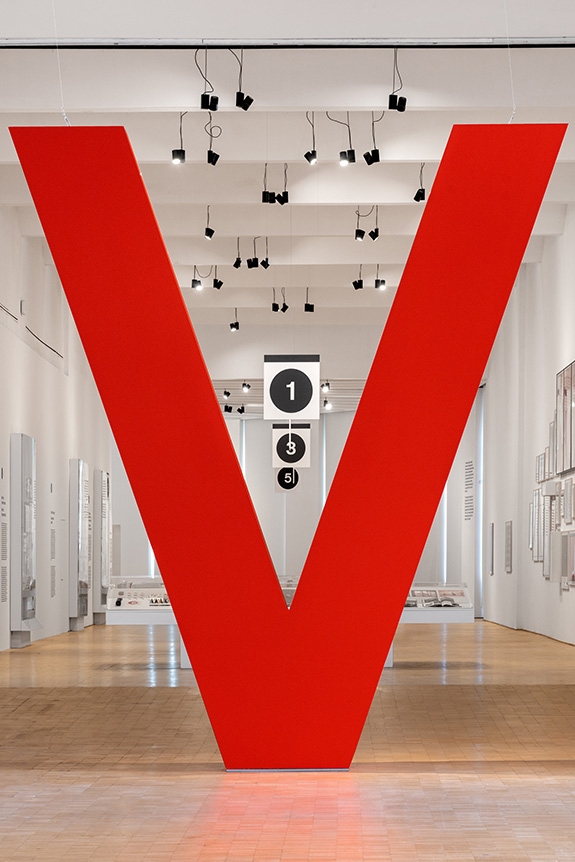
Lella and Massimo Vignelli. A Language of Clarity
Exhibition design: Jasper Morrison
Through September 6, 2026
As a counterpoint to Branzi’s critical post-modern design, yet equally joyful and optimistic, the Triennale presents a major retrospective dedicated to Lella and Massimo Vignelli.
Known for their rigorous interpretation of Swiss-inspired modernist rationalism, the Vignellis left a profound mark on international graphic and industrial design between Milan and New York from the 1960s through the turn of the 21st century.
The exhibition, designed by Studio Jasper Morrison, brings together a large collection of iconic pieces. It demonstrates how their work always sought to reveal a clear, colorful, and universal logic, whether in a subway map, a book, a piece of furniture, or jewelry.
Their work serves as a reminder that beyond style, design can above all constitute a language of clarity, capable of reaching an extremely broad audience, far removed from any elitist vision.
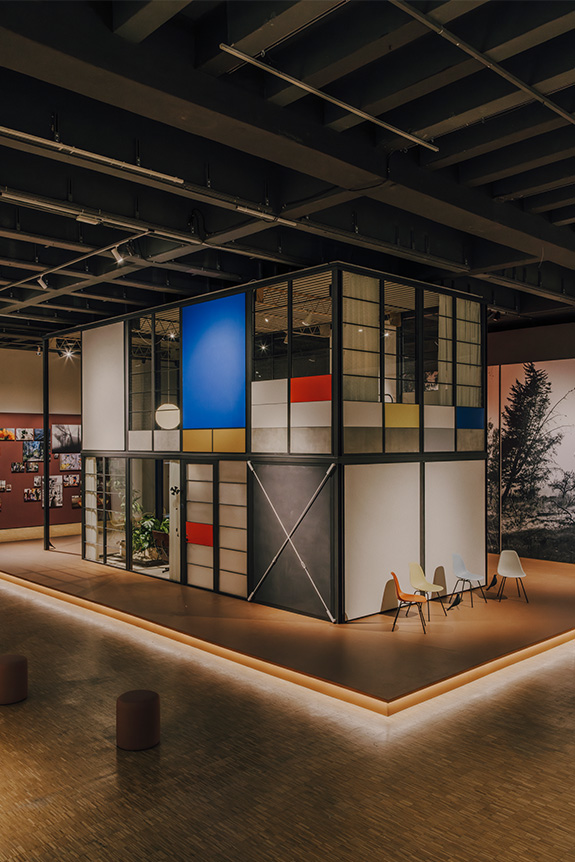
The Eames Houses - Launch of the Eames Pavilion System
In partnership with Kettal
Until May 10, 2026
The Eames Houses exhibition is based on extensive archival research into the residential projects of Ray and Charles Eames, both built and unbuilt. It presents a vision of modular, prefabricated, and deeply human architecture, supported by a vast body of documentation.
For the Eameses, a house was never a static object, but an adaptable system capable of bridging daily life, modularity, and industrial production. Their architecture developed a unique synthesis of modernist rationalism, functional prefabrication, and an organic sensibility inspired by Japanese aesthetics. This is particularly evident in the fluid relationship between interior and exterior, designed to suit the Californian climate and landscape.
This reflection continues today with the launch of the Eames Pavilion System, developed with Kettal under the direction of Eckart Maise, a long-time collaborator of the Eames Office. The system is based on repetitive structural modules combined with various roof and facade options, allowing for multiple configurations, from a small pavilion to a complete house.
The project thus reactivates one of the Eameses' fundamental ideas: to conceive of architecture as an evolving system rather than a definitive form.
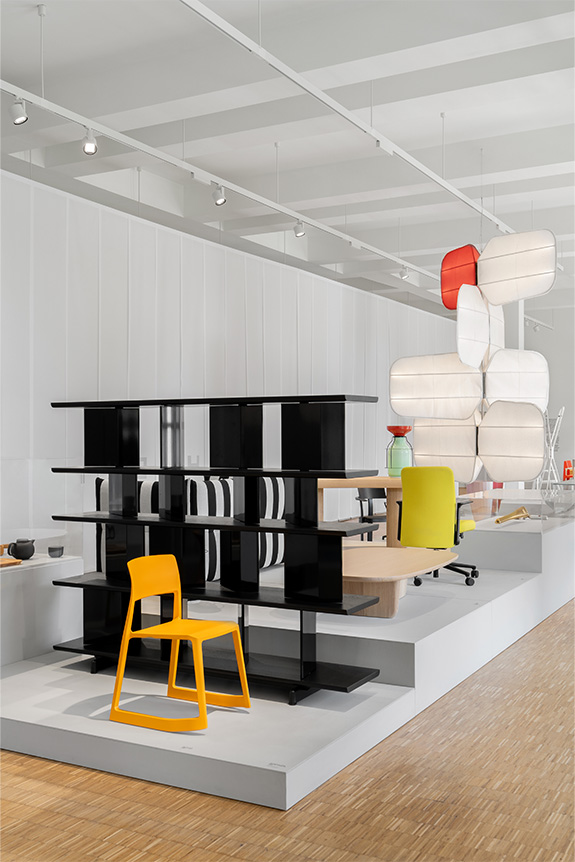
Alphabet — The design of Edward Barber & Jay Osgerby
Until September 6, 2026
The exhibition occupies the beautiful Design Platform space, which, following the major architectural and functional renovation of the Palazzo dell’Arte, is now located in the large area opening onto the garden, previously—and unfortunately—occupied by the Triennale café.
The exhibition’s chronological path highlights the gradual evolution of their "stylistic alphabet" from the mid-1990s to the present day. It showcases a rigorous approach to color, technical curves, angular geometries, and constructive precision.
Key pieces on display include the London 2012 Olympic torch, the Iris tables for Established & Sons, the Tab lamp for Flos, and several special commissions and experimental projects. Through these works, the exhibition demonstrates how their practice combines industrial rigor and artisanal mastery with increasing technical sophistication.
Once again this year, the Milan Design Week Off-program delivered a series of remarkable and noteworthy installations throughout the city. Here is a look back at the ones that were worth the detour.
An alternative space by Capsule Globale
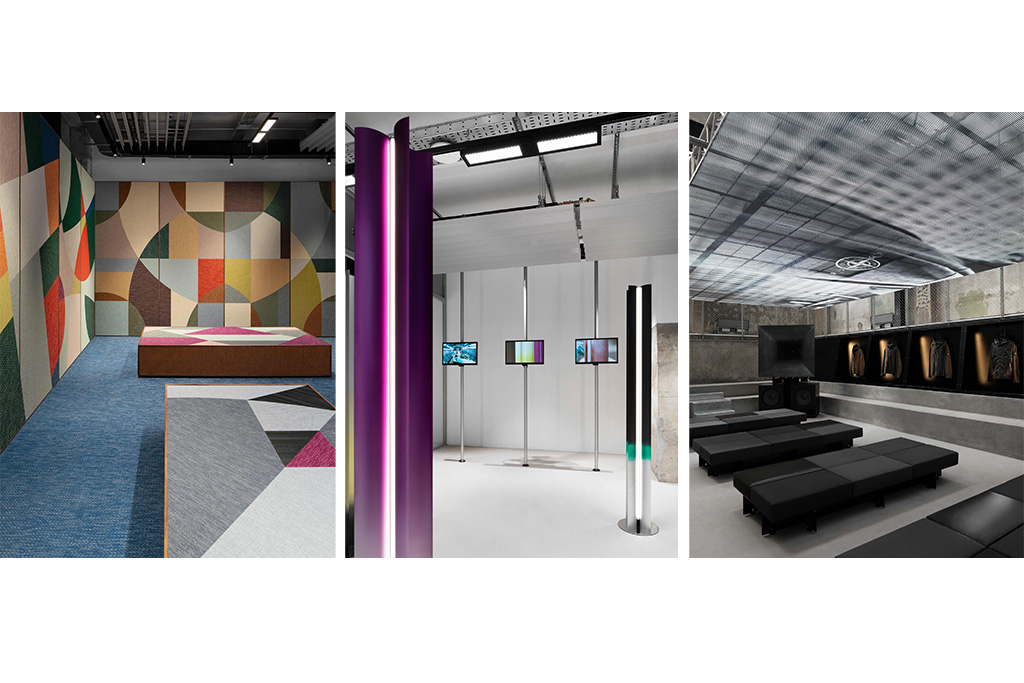
Conceived as a hybrid between a fair, a group exhibition, and a cultural platform, Capsule Plaza 2026 took over a former Art Deco gymnasium and swimming pool renovated by ASA Office on Via Achille Maiocchi. Under the direction of Alessio Ascari, the "Design State of Mind" exhibition brought together design, fashion, technology, and craftsmanship in industrial-style rooms, enhanced by a scenography designed by the Milanese agency NM3. Highlights of this fifth edition included the immersive "No Seasons" installation by Stone Island with NM3, research by Karimoku Research with Waka Waka, Devon Turnbull, and Postalco, olfactory experiments by AEIR and Websessions, and the NEO domestic robot by 1X Technologies. Each of these was an event in its own right, adding to a program already rich in talks and workshops, and marked this year by the launch of the fifth issue of Capsule magazine.
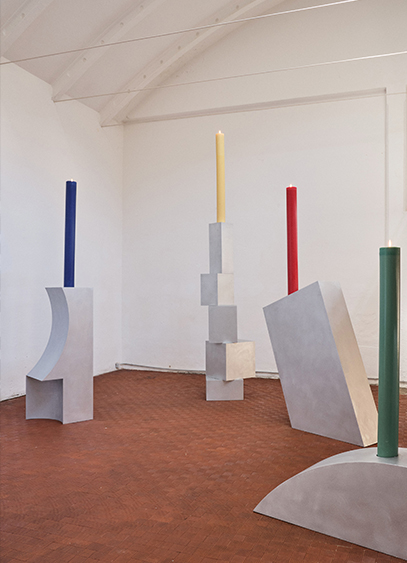
The Muller Van Severen anniversary exhibition
To celebrate 15 years of their studio, the Belgian duo Muller Van Severen partnered with Apartamento to present an anniversary exhibition during Design Week titled "Silhouettes: Celebrating 15 Years ". Produced in partnership with the Tim Van Laere Gallery, this exhibition featured fifteen unique, monumental chandeliers, all crafted from aluminum. Each one served as a reinterpretation of recurring motifs and shapes found in the duo's work. The installation offered a collection of pieces that, while distinct in form, remained entirely cohesive. Each chandelier was also topped with a large, colorful candle that burned down gradually, symbolizing the passage of time—the fifteen years that have passed, but also, and above all, those yet to come.

The Issey Miyake paper installation
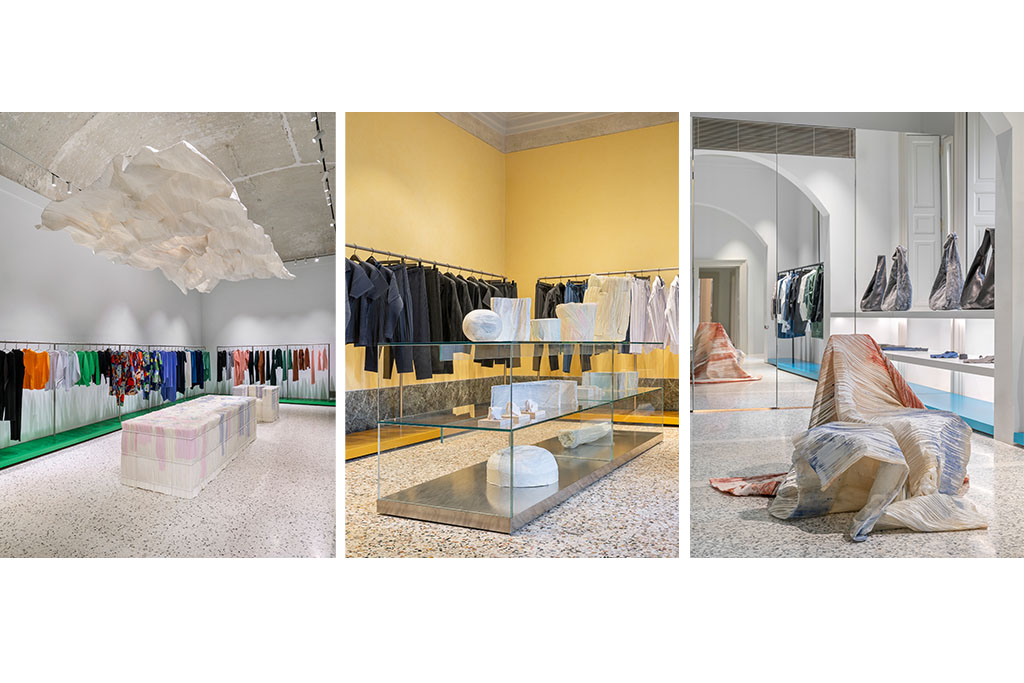
In its Milan showroom during Design Week, the house of Issey Miyake presented the experimental project The Paper Log: Shell and Core, conceived by designer Satoshi Kondo of the MIYAKE DESIGN STUDIO and developed in collaboration with the Spanish architecture firm Ensamble Studio. The project consisted of an installation of memory objects (Shell) and furniture prototypes (Core, created by repurposing compressed paper rolls known as Paper Logs—a byproduct of the brand’s signature pleated garments, an iconic Issey Miyake technology. Within the space, the installation featured two complementary series derived from the Paper Log, with displays that contrasted opposing qualities: ephemeral and concrete, delicate and robust. The works conceived by Ensamble Studio, titled Shell, took the form of a series of paper objects seemingly frozen in time, while the in-house design team presented Core, a collection of furniture prototypes including chairs, tables, and stools, treated in various ways to fully explore their materiality.
NikeAir_Lab, a place to run and see innovation
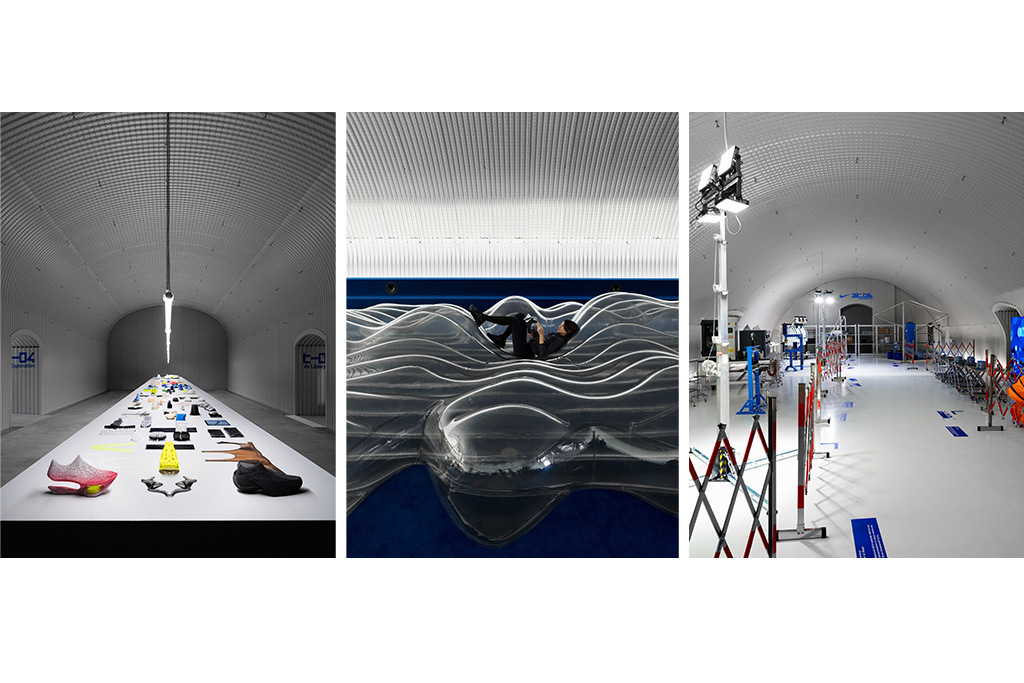
Conceived in collaboration with the new Milanese center Dropcity, NikeAir_Lab offered a deep dive into the world of Nike Air through the brand’s archives, select prototypes, and experimental workshops set up in the industrial tunnels of Via Sammartini. Open throughout the week, the lab unveiled nearly 100 never-before-seen prototypes. Visitors were able to explore research into the Air Liquid Max, FlyWeb and Radical AirFlow materials, and even the Therma-FIT Air Milano jacket. These ultra-technical creations were showcased across eight workstations equipped with robotic arms, pneumatic systems, and thermoforming tools. Beyond new products, the sportswear brand also revealed archives from aeronautical engineer Frank Rudy, as well as developments related to the Alphafly NEXT% and Faith Kipyegon’s Breaking4 suit. Halfway between a research lab and an immersive installation focused on innovation, the NikeAir_Lab was a must-see destination for any fan of technical design, fashion, and sports.

Passage obligé du Salone del Mobile, le SaloneSatellite était de retour pour sa 27e édition, révélant son lot de jeunes designers à suivre. Découvrez les coups de cœur Intramuros de l’édition 2026.
Sous la houlette de Marva Griffin Wilshire depuis sa création en 1998, le Salone Satellite, rendez-vous incontournable de la jeune garde du design à Milan, se dévoilait cette année sous le thème « Skilled Craftsmanship + Innovation ». Ils étaient plus de 700 designers, âgés de moins de 35 ans et venus de 39 pays, à avoir répondu à l’appel. Un panel de jeunes créateurs aux univers singuliers, venus défendre le design sous toutes ses formes, parmi lesquels la rédaction dévoile les huit talents qui ont retenu son attention.
JÜNGERKÜHN
Le studio berlinois JÜNGERKÜHN a été fondé en 2023 par les designers Konrad Jünger et Verena Kühn, rencontrés lors de leurs études en design produit. C’est durant cette période qu’ils développent un intérêt commun pour le numérique, la robotique et le comportement des matériaux analogiques, qui fera par ailleurs naître leur devise : « work in process ». JÜNGERKÜHN établit un lien « entre design industriel et artisanat numérique, avec une attention particulière portée aux matériaux ». Porté par le Digital Craft, le projet Soft Touch - système de sculpture sur mesure destiné au travail par soustraction sur céramique - présenté lors du SaloneSatellite, est très représentatif de leur démarche, qui allie outils numériques et matières. « Selon des facteurs tels que le degré de séchage ou l’épaisseur, le matériau réagit différemment. Le processus est défini, mais le résultat émerge de l’interaction entre la machine et le matériau. Cela reflète notre approche, qui consiste à concevoir des systèmes permettant une variation, plutôt qu’une reproduction à l’identique. » Un projet pour lequel le studio a par ailleurs été récompensé du troisième prix des Satellite Awards.

Liu Dong
Originaire de Pékin, en Chine, Liu Dong s’est formé à l’Université des arts de Berlin, dont il sort diplômé en 2019. Après des expériences dans différents studios de design, elle fonde son studio éponyme en 2025. Guidé par la créativité, il cherche avant tout à éviter la répétition : « Je ne recherche pas un contrôle absolu ; au contraire, j’accueille l’imprévu qui peut émerger. Je suis également attiré par une certaine forme de chaos. Mes projets embrassent l’imperfection et le hasard, tout en conservant un potentiel de production en série. » Inspiré d’un concept chinois contemporain qui dit « bien que façonné par l’homme, comme formé par la nature », il cherche à créer un équilibre entre machine, nature et intervention humaine. En témoigne la lampe TG-01, présentée au Salone, conçue comme une sorte de « lampe à récolter ». Celle-ci nécessite de l’utilisateur qu’il participe au processus de création, puisque ce dernier doit collecter des branches afin de créer une structure fonctionnelle à la lampe. « Il n’existe pas de configuration unique, ce qui rend chaque lampe singulière. Le processus favorise une reconnexion à la nature, où chaque branche devient un élément essentiel. »

Taran Neckelmann
Designer norvégienne-allemande basée à Bergen, en Norvège, Taran Neckelmann définit son univers comme étant marqué par l’exploration du temps et de la longévité. « Je pense que nous avons la responsabilité de créer des objets qui durent. Mais il n’existe pas de réponse simple à cette question, et je m’intéresse aux mécanismes et aux stratégies qui permettent une résonance esthétique sur le long terme. » Son travail, inscrit dans la tradition scandinave, propose des objets cohérents qui introduisent de la répétition, de la géométrie et des jeux de matérialité. Pour le projet de tabourets Cooper, Taran Neckelmann explore la manière dont les techniques ancestrales et les motifs culturels peuvent conférer à un objet une forme de familiarité narrative. « J’ai grandi sur la côte ouest de la Norvège, dans une ville avec une forte tradition maritime. La fabrication de tonneaux y occupe une place importante dans la culture matérielle. C’est un savoir-faire présent dans de nombreuses régions du monde, ce qui le rend universellement reconnaissable. » Un projet qui s’inspire de plusieurs techniques norvégiennes, telles que le « lagging », mais également de l’artisanat japonais du « kioke ».

Birk Manum Bjerkan
Intéressé par le dialogue entre design et artisanat comme par la manière dont les matériaux « pensent » et se comportant entre eux, Birk Manum Bjerkan dispense une approche basée sur la construction. « En fonction du médium, j’essaie de créer des objets dotés d’une logique claire et d’un caractère cohérent. » Une approche qui rappelle celle de Jean Prouvé, l’un de ses maîtres à penser. Formé à la NTNU, en Norvège, et à l'Académie des Beaux-Arts de Brera, à Milan, le designer a lancé son propre atelier spécialisé dans le mobilier et la décoration intérieure, en 2024. « Un prolongement logique du design de mobilier » pour celui qui pratique également la peinture comme une autre manière de comprendre et de percevoir les matériaux à leur juste valeur. « C’est cette réflexion sur la valeur des éléments qui m’a notamment amené à travailler un fauteuil en bois de bouleau lamellé. C’est une essence norvégienne généralement utilisée à des fins de chauffage alors même que ce matériau est très polyvalent et jouit d’une longue tradition d’utilisation dans les pays nordiques en raison de sa bonne résistance au cintrage. »

Masaya Kawamoto
« Je pense que ma singularité réside dans la manière dont j'applique les techniques de travail du métal. » Basée à Tokyo où elle a fondé son studio en 2024, Masaya Kawamoto explore le lien entre les héritages traditionnels et la technologie moderne. Un pont que la designer illustrait cette année en présentant une chaise entièrement réalisée en métal selon les plans d’une pièce historiquement réalisée en bois, ou encore la lampe Bicone « inspirée de détails issus de luminaires emblématiques du passé ». Deux pièces à travers lesquelles la créatrice dévoile son intérêt pour la transformation et la réinterprétation des classiques modernistes par le biais du métal. Un univers diversifié en écho au passé de la créatrice - issue de l’École supérieure d’art de l’université Nihon - qui a débuté sa carrière chez un grand fabricant de mobilier de bureau puis au sein d”un cabinet de design lui ayant permis de toucher aux univers des équipements publics et de l’électroménager. « Bien que ma formation soit en design industriel pour la production de masse, je m'engage également à explorer des expressions expérimentales. Je cherche à équilibrer avec une beauté qui doit leur permettre d’exister en tant qu’objets de collection. » Une complémentarité qui lui avait valu d’exposer sa série PF à Alcova l’année dernière.

Hojo Akira
« Je pars de la structure plutôt que de la forme. L'apparence n'est pas le but, mais le résultat de la fonction, de la logique et de la fabricabilité. Dans cette approche, je recherche une condition où tous les éléments s'articulent de manière cohérente, sans complexité inutile » explique Akira Hojo. Une approche que le designer, installé à Tokyo, estime influencée par son expérience initiale comme designer interne pour des meubles de série. « Pour moi, l'industrie n'est pas une contrainte, mais un point de départ. Je construis des structures basées sur des procédés de fabrication tels que l'extrusion et les systèmes modulaires, en intégrant la production dès les premières étapes de la conception. » C’est notamment cette réflexion sur le processus qui a amené le designer à s'intéresser à la maille souple. Un matériau à l’origine de la chaise modulaire. « L’idée est que la structure n’impose pas de forme d’assise, mais qu’elle s’adapte au corps de l’utilisateur. Et le tout avec une grande stabilité, mais l’utilisation d’un minimum d’éléments. » Une application qui illustre correctement le rapprochement entre concept et réalité tout en veillant à « ce que la production, la structure et l’utilisation demeurent alignées. »

PLASMA-f
Fondé par Alberto Smaldone, le studio PLASMA-f entend ramener l’attention sur les procédés pour mettre en lumière la durabilité qui en découle. Ici, « chaque projet commence par une étude spécifique d’un matériau ou d’une technique de construction, plutôt que par une intention formelle prédéfinie ». Une approche qui confère généralement aux pièces du studio une forte géométrie. « La simplicité est le résultat d’un processus de réduction. En supprimant le superflu, l’objet peut atteindre un état où sa structure, sa logique et sa présence apparaissent clairement. C’est une manière de rendre les choses plus lisibles. » Un travail créatif tout autant qu’expressif, porté sur la proportion et l’équilibre à l’image de la pièce emblématique du studio : MIRACH. Réalisée entièrement en chutes de marbres issus des résidus de production, celle-ci évoque un certain goût pour l’efficience structurelle. « La structure est simplement composée d’éléments en forme de L maintenus ensemble uniquement par des tiges filetées tendues, configurées en une poutre précontrainte assemblée sans aucune colle, comme dans un pont. »

Bryce Lim
À mi-chemin entre objets domestiques et objets de collection, les créations de Bryce Lim naissent dans un univers ni complètement étranger ni réellement familier. Diplômé d’une licence en design industriel (avec une spécialité innovation produit) à l'Université nationale de Singapour (NUS) en 2025, le designer s’intéresse « aux moments où la reconnaissance attire l’attention, mais où de subtils écarts commencent à déstabiliser la perception ». Un sentiment qui s’explique notamment par l’utilisation de matériaux inhabituels à l’image de la collection Squishy Vase réalisés en mousse de polyuréthane (PU). Une enveloppe étonnante, suggérant un certain poids et une certaine solidité pourtant déformable sous la pression. Façonnée à l’aide de moules imprimés en 3D, cette collection reflète l'intérêt du designer pour le potentiel expressif des matériaux et des procédés de fabrication, abordés à travers un prisme situé entre la production industrielle et l’artisanat. « Plutôt que de partir d’un résultat prédéfini, je laisse souvent le comportement des matériaux et des procédés guider mon travail. Et je pense que l’aspect futuriste que l’on peut voir dans mes objets ne vient pas de l’imagination de matériaux ou de formes entièrement nouveaux, mais d’une remise en question de ce qui existe déjà. »


With over 1,900 exhibitors this year, Salone del Mobile.Milano 2026 has once again delivered its share of new releases. The Intramuros editorial team shares the ones that caught our eye.
For this new edition, Salone del Mobile.Milano 2026 brought together more than 316,000 visitors to discover new products and reissues. Bringing together both major international firms and young brands, this Milanese event—slightly less dense than in previous years—remained rich in offerings. New materialities, an increased focus on real-world usage, the hybridization of functions... In a fragile but rapidly changing ecosystem—much like the fair itself, which inaugurated new spaces this year—the Intramuros team spotted some great leads. An intuitive and diverse panorama that we invite you to discover.
Kettal
Among all the new products presented by the Spanish brand, which continues to assert its position in the design sector, two stood out. First, Grosso by Patricia Urquiola: a sofa with sculptural forms that invites us to think of comfort as an art form. It reveals itself as a piece with bold yet spontaneous curves, appearing almost in motion. A model designed for both indoor and outdoor use, capable of seating up to three people. In a completely different register, the Atlantic collection by Jasper Morrison combines structure, rhythm, and continuity. This aluminum range with clean lines consists of a lounge chair, a chair with armrests, and a stackable chair. Designed for comfort and daily use, it adapts just as well to a private terrace as it does to a hotel or urban space.

Bitossi Ceramiche
The Italian ceramic brand Bitossi Ceramiche presented several pieces at its stand, including the Dittico vase collection by Martino Gamper. A project that pits the designer's formal research against the identity of a manufacturer with over 150 years of history. Created using white clay slip casting, the collection reveals pieces with organic, almost architectural curves to be appreciated from every angle. The Belgian duo Muller Van Severen—who celebrated their 15th anniversary during this Design Week—presented an extension of their 2024 Onda collection, titled Onda II. This new version revisits the shapes imagined in the first iteration by reworking them based on the principle of inversion. The pieces thus offer a renewed perception of the objects without altering their primary identity. The vases are all available in three colors: vermilion red, dark blue, and pastel gray.

Campeggi
Known for the intelligent design of its transformable objects, Campeggi unveiled "Bienvenue" this year. Conceived by designer Thélonious Goupil, this inflatable mattress is housed in a compact, portable wooden chest. With a simple opening, it provides a portable bed and a foldable, self-supporting headboard that can also serve as a room divider. A compact and colorful set for sleeping wherever you please.

Glas Italia
A sort of tribute to the great names of design, the 2026 collection brought together Piero Lissoni, Philippe Starck, and Patricia Urquiola, to whom we owe, among other things, Glacier. Entirely made of glass, this range of tables plays on the layering of different colored sheets. A reflection on strata reminiscent of glaciers, filtering light through layers of irregular materials. But the brand's presence at the Salone was also an opportunity to introduce Hlynur Atlason, who presented Akur. Behind the desire to challenge the rigidity and linearity of the medium, the designer focused on the meeting of curves and rectilinear grids. Slightly satin-finished, the textured surfaces of the tabletops offer an unusual reading of the material.

Blå Station
The result of a Scandinavian spirit and the desire to create furniture that is pleasant to live with, Blå Station presented the Frankfurter chair by designer Johan Ansander. Simple and classic in appearance, the seat was rethought with new proportions to offer a unique feel. Closer to the body and deeper, the chair is inspired by the shape of a forearm—a form subsequently materialized in bent beech wood. In addition to this new release, the brand also diversified by expanding its Able range, designed by Bernstrand & Borselius, with high tables and a desk. Two new typologies are immediately identifiable thanks to the die-cast zinc nodes combined with steel tubes. A construction that also recalls the wire-frame aesthetic of the Villhem range—designed by Lindau and Bernstrand & Borselius—launched last year and expanded in 2026 with a lower-back chair, an ottoman, and a coffee table.

NII
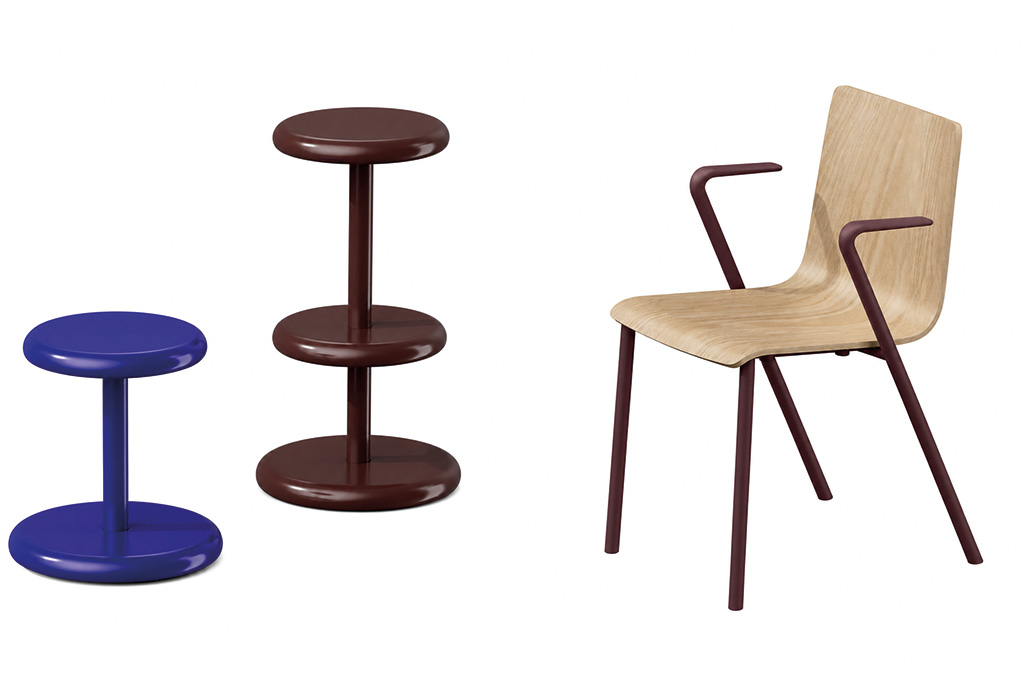
The Japanese brand NII, a member of the Itoki group, unveiled itself outside of Japan for the first time, choosing the Salone del Mobile for its international debut. For this first appearance, NII presented its latest innovations, including the Allround stool by designer Hirotaka Tako and the Hakusan chair by the studio Industrial Facility. The Allround stool stands out for its rounded lines and simple structure, defined by a single central column, resulting in a minimalist product that fits perfectly into any space. As for the Hakusan chair, it asserts its character while remaining subtle and universal. Made of aluminum and steel, it contrasts the solidity of its structure with a certain visual lightness, creating a perfectly balanced result.
B&B Italia
After a twenty-five-year absence (save for a 2019 appearance), B&B Italia made a notable return with a stand designed by Formafantasma. Among the new releases, the Moore lounge chair by Vincent Van Duysen stands out with its woven rattan supported by a frame with continuous curves. Evoking a slightly deformed ring, this fluid design enhances the piece's legibility and highlights its structure. In the same pursuit of formal clarity, Michael Anastassiades presents Metric, a chair crafted from thin sections of solid oak. Its rectilinear construction, reinforced by a crossbar, contrasts with the softness of the slightly curved backrest. Available with or without armrests, it can also be offered in an upholstered version covered in saddle leather. Finally, Ronan Bouroullec completes this selection with the Abaco table, where the object's architecture relies on an entirely visible construction. The precision of the joints and the dialogue between materials—lacquer, cement, or leather—give each configuration a unique identity, leaving the user free to compose as they wish.

Kartell
This year, Kartell made a strong impression, both in terms of its offerings and its collaborations. For the first time in several years, the Italian manufacturer expanded its field of experimentation by inviting the British duo Barber & Osgerby to collaborate. They exclusively presented the Savoia chair: an elegant, customizable aluminum piece offered with a seat in recycled plastic, wood, or leather, and available in several colors. It comes with or without armrests and is suitable for both indoor and outdoor use. Eight years after Papyrus, designer Erwan Bouroullec exhibited the Snik chair—a compact, minimalist model in recycled technopolymer with a steel frame, available with or without armrests. A nice bonus: it can be personalized to your liking with interchangeable covers that protect and transform it, ensuring you never tire of it. Meanwhile, Piero Lissoni revealed Yve’s, a minimalist armchair whose tubular structure is defined by a single curved line. Suitable for both indoor and outdoor use thanks to independent covers and cushions, Yve’s is available in various colors and fabrics, resulting in a generous product with a refined aesthetic.
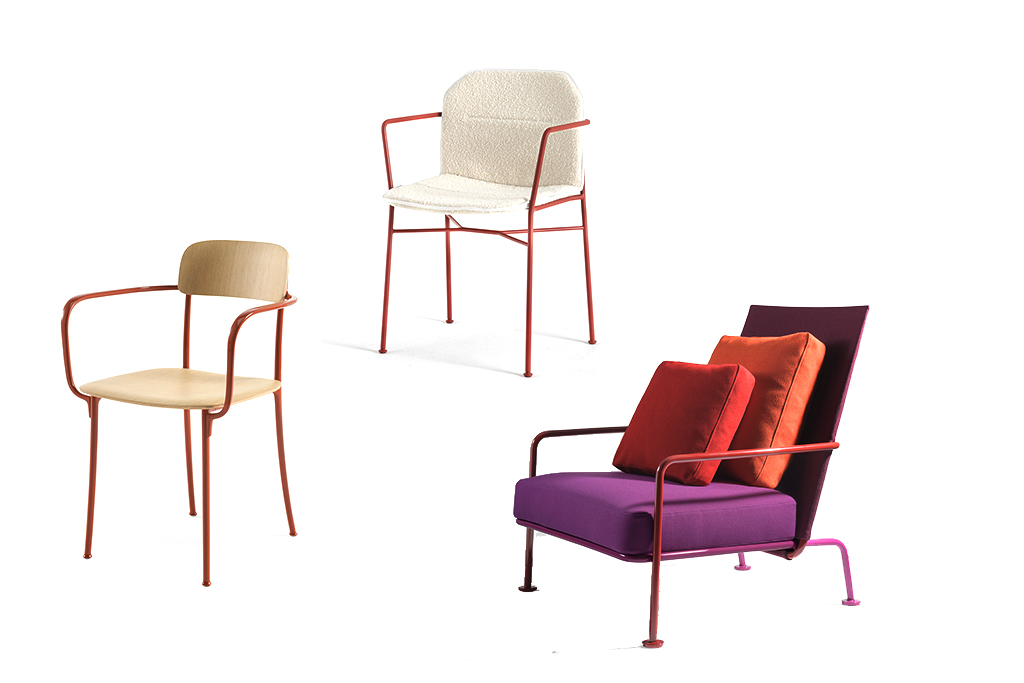
Vergés
Spanish chair manufacturer Vergés was also present at this Milan edition to showcase its latest novelties. Among them is the Trek armchair, designed by the Norwegian duo Andersen & Voll. For this meticulous seat, the designers combined two noble materials—solid wood and leather—for a result that blends flexibility and robustness. Technically, the backrest and seat are covered in a single piece of leather, while the horseshoe-shaped rear crossbar gives Trek a unique character. The London-based studio Mentsen—founded by Japanese designers Risa Sano and Yasuyuki Sakurai—presented the Ensemble bench, inspired by church pews. It is a piece with a simple structure, faithful to Japanese craftsmanship, yet robust and versatile. It will be available with or without a backrest and, for added modularity, can be accompanied by a pivoting side table.

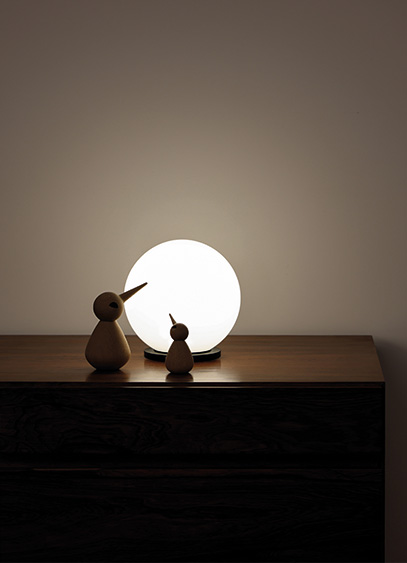
At Milan Design Week, Davide Groppi unveiled new pieces that continue a long-standing pursuit: making light a sensitive presence capable of transforming a space without ever imposing itself. At its Milan showroom on Via Manzoni, the lighting brand presented six notable new designs centered on movement, illusion, and structure.
Umasi: light in motion
For the delicate Umasi pendant lamp, Davide Groppi explores a new dimension of domestic lighting: mobility. With a shade that slides along a cable, it can move from ceiling to floor in a single motion. The light, filtered through several layers, diffuses without ever appearing directly, creating an enveloping atmosphere.

Vera: the art of disappearing
Encased in a borosilicate glass volume, the lamp reveals a light source that seems to float in a void when switched on, only to disappear completely when turned off. The optical device, based on refraction, produces light that is simultaneously direct, indirect, and diffused, all while keeping its mechanics hidden.

Calma S & Calma T: the essential form
With the Calma range designed by Alberto Zattin, the collection is completed by a universal figure: the luminous sphere. Available as a pendant—Calma S—and a table lamp—Calma T—it features triple-layered blown opal glass that diffuses a soft, uniform light. In the pendant version, the sphere appears to float with lightness, while as a table lamp, it becomes a luminous, almost domestic anchor point.

Carroponte: structuring light
The Carroponte system offers a more architectural take on lighting. This modular composition transforms the electrical track into a spatial path. Positioned freely, it traverses the space wherever light is needed for specific tasks. It becomes a compositional tool, as most Davide Groppi pendants and small lights can be adapted to create custom arrangements as desired.

IPE and OcchiOlinO: two new outdoor designs
For its outdoor lighting, Davide Groppi extends its philosophy with products that are both technical and sensitive. First is OcchiOlinO, where light takes the form of an insect perched on an almost invisible stem, casting a delicate presence across the landscape. Conversely, the IPE collection, designed by Alberto Zattin and available as a Bollard or P wall lamp, asserts a more architectural language, combining robustness and precision through its adjustable spotlights and anodized aluminum finishes. These two complementary approaches reflect a desire to integrate light into the environment without dominating it.
Captions: IPE Bollard outdoor light, designed by Alberto Zattin, and OcchiOlinO © Davide Groppi
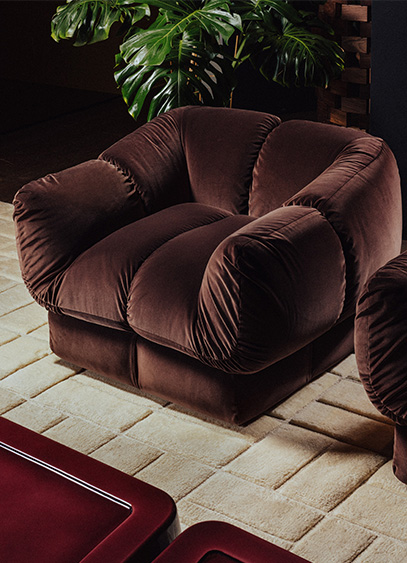
To celebrate this year's Design Week in style, Cassina reimagined its showroom around the concept of "the intelligence of matter." This vision inspired a contemporary setting, defined by bold colors and a wealth of new releases.
For this season, Cassina transformed its flagship store on Via Durini under the creative direction of Mikal Harrsen. Enhanced by warm, vibrant colors—which also appeared on a large screen in the entrance area—the space was designed to be immersive. It was in this setting that the Italian brand showcased its latest creations. Whether it be new colorways for the Plana table by Charlotte Perriand and the 780/783 coffee tables by Gianfranco Frattini, or brand-new contemporary designs, the collection unfolded along a single, open-plan path. Driven by a bold color palette, the installations created a fluid narrative that extended to the terrace, which was transformed into an outdoor sanctuary for the occasion. It was the perfect backdrop to celebrate the collaboration between the brand and Persol, illustrating the dialogue between heritage and innovation at the heart of "The Cassina Perspective."

Seating for every space
From the moment visitors entered the showroom, Cassina aimed to immerse them in a radical world by showcasing the Ardys system designed by Patricia Urquiola. Upholstered in a technical fabric, this modular sofa with its generous proportions evokes a sense of softness in an ultra-contemporary style. This feeling is created by the highly visual technical fabric, which sits somewhere between velvet and the quilted look of a puffer jacket. In contrast, the Plintea armchair by Chiara Andreatti brings a more understated elegance with its protective shell and asymmetrical base, making it equally well-suited for residential and contract environments. In a more rigorous vein, Cassina is reissuing the CH66 chair by Nicos Zographos, developed with Karakter, reaffirming the timelessness of the Bauhaus movement through a continuous steel frame. This aesthetic engages in a dialogue with the more experimental Peacock Chair by Verner Panton, currently celebrating its centenary. A bold piece with free-flowing forms and a lightweight metal structure, it is brought to life by modular, colorful cushions that give the seat a playful look. Finally, the Hotte by Philippe Starck evokes the memory of rural gestures and craftsmanship through meticulous wicker weaving.
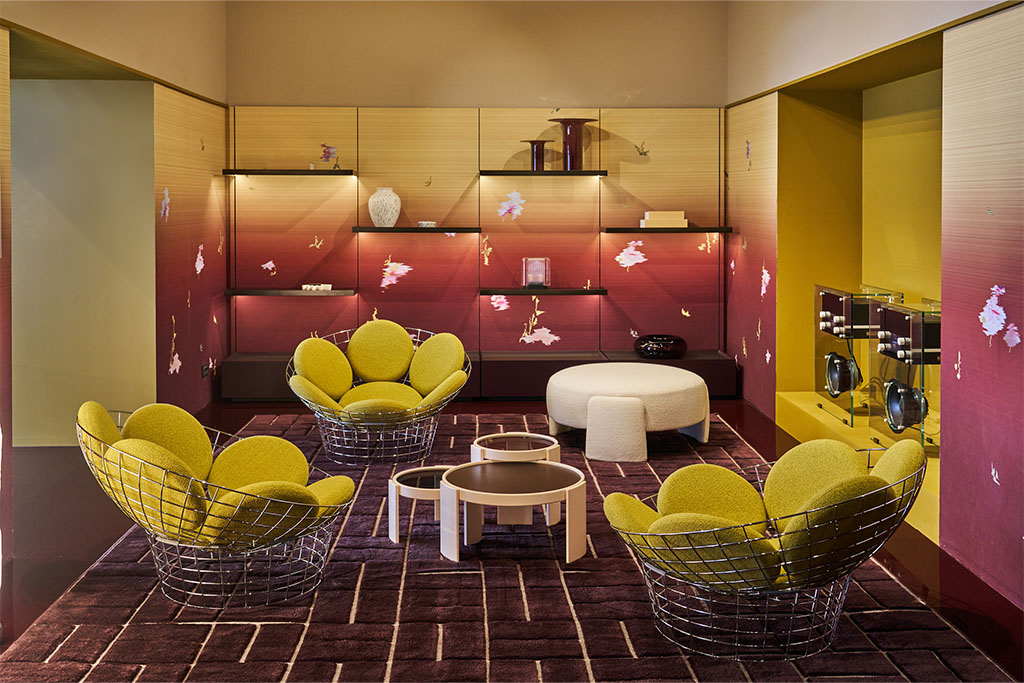
A collection of bright ideas
In terms of lighting, Cassina continues its exploration with designer Linde Freya Tangelder — who is also heading "The Cassina Perspective" this year — and her lamp Fluid Joinery Light. A true luminous sculpture, it utilizes multi-layered blown glass that acts as a lens, diffusing a soft glow. Building on the aesthetic research initiated with a series of coffee tables, this piece skillfully combines density and transparency. Taking a more naturalistic approach, the duo Neri & Hu presents Samambu , a luminous landscape inspired by bamboo groves, where slender metal stems support opal glass diffusers. Conversely, Dot Pattern Light, designed by Charles & Ray Eames, vertically transposes the graphic pattern of luminous spheres. Finally, the Accelsa pendant lamp by Angelo Mangiarotti revisits an icon from the 1980s by elevating blown Venetian glass. Simply by being inverted, the original piece offers a new interpretation. Whether through sculpted volumes, lines inspired by nature, or graphic compositions, these creations ensure that Via Durini, 16, remains a landmark for every design lover.
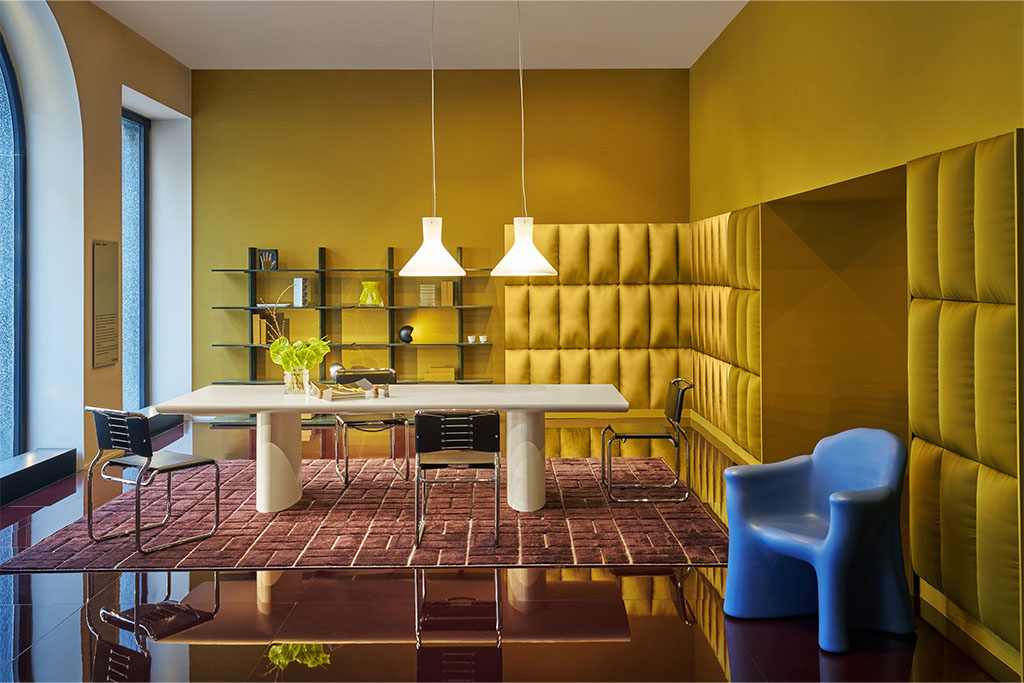

During Milan Design Week 2026, Zanotta unveiled a bold ecosystem at its Via Durini flagship, bringing together vibrant new editions and pieces designed by Carlo Mollino, produced for the first time. It was a stylistic and temporal confrontation that felt perfectly at home with the Italian manufacturer.
In Milan, Zanotta presented a space entirely reimagined by the Calvi Brambilla studio, where a palette dominated by coffee tones engaged with geometric patterns, a nod to the historic Quaderna collection. It was a refreshed setting where color took center stage, whether in standout pieces introduced last year or new arrivals from long-standing collaborations. Among them is the partnership with Vincent Van Duysen, who expands the Fedrigo sofa system with new curved and asymmetrical modules, while also introducing the Campa dining line. Comprising a chair and a table, this range, defined by its fluid lines, is available in light or black-stained wood, paired with leather or smoked glass tops.
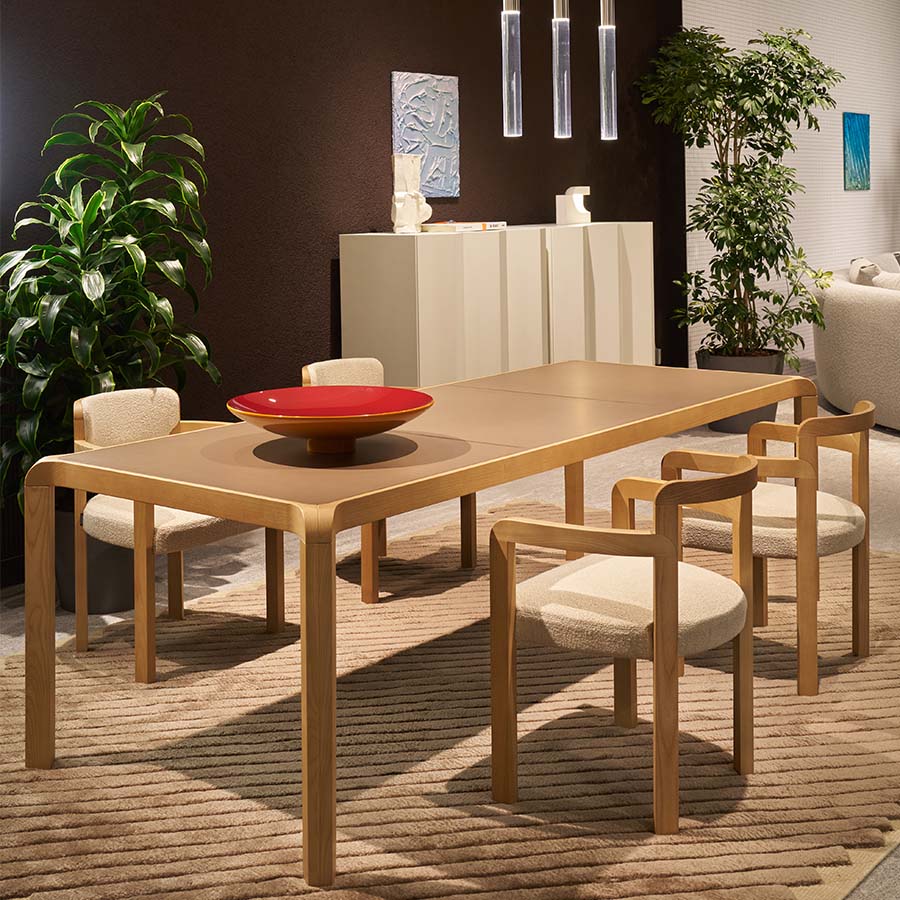
Meanwhile, Palomba Serafini Associati has evolved the Pianoalto sofa with more sinuous forms, while Monica Armani designed the Rond(e)vu loveseat—also available as an armchair—which sits alongside the Alfàrè tables. It is a classic formal approach, renewed by a concrete treatment that evokes the materiality of wood. Furthermore, the manufacturer’s ecosystem is enriched by new signatures, such as Brogliato Traverso, creators of the architectural Binata chair, and Studiopepe, behind the Slice Me Nice tables that play on the contrast between colored lines and metallic surfaces. This design is in tune with the times, complemented by the Low Bol tables designed by Zaven. The collection is rounded out by pieces from Pierre Charpin and a bed by Simone Bonanni, marking his first collaboration with Zanotta.

Radically modern (re)editions
At the heart of this 2026 presentation, Zanotta dedicated a central space to Carlo Mollino. Initially conceived for specific projects and later reinterpreted throughout his career, the works of this architect—renowned for his zoomorphic forms and sinuous lines—are now part of the Italian manufacturer's catalog. This initiative, supported by the Italian state and legally guided by Rositani Suckert, marks a significant milestone. Displayed throughout the showroom, these creations illustrate the multifaceted work of Carlo Mollino, a professor at the Politecnico di Torino and a major figure in 20th-century aesthetics. His vision is embodied in the debut presentation of the Tavolo Vertebra table, whose wooden structure, weighing about twelve kilos, supports a glass top of nearly 90 kilos.

Surrounding this signature piece, Zanotta brings together several iconic reissues, including the Fenis chair, the Arabesco coffee table, the Milo mirror, and the Gilda and Ardea armchairs. These pieces serve as testaments to the richness of a body of work preserved in Turin, consisting of thousands of drawings, archives, and photographs. Through this editorial work, Zanotta confirms its role as an interpreter and conduit of a modernity that remains ever-contemporary.

During Milan Design Week, Seletti partnered with Eternoo to transform its store into a conceptual construction site featuring the Tools collection.
Following the launch of the BIC lamp by Mario Paroli in January, Seletti explored a new creative realm during Milan Design Week. In collaboration with Eternoo, a leading Italian building materials distributor, the brand turned its Italian retail space into a hardware store. Adorned with a faux blue brick facade that subverts classic aesthetics, the space was renamed Building Design LTD—a concept designed to serve as the backdrop for the Tools collection. Hammers, shovels, trowels, and wheelbarrows were showcased, reconfigured as decorative yet fully functional design objects. A pop-art transformation achieved through unexpected gold and fluorescent finishes. By "hacking" the world of Eternoo, Seletti sought to challenge the symbolic value of the tool and its narrative potential. More than just a formal exercise, this experimental collaboration introduced a fresh, humorous dialogue between industry and design. It was Seletti’s way of shifting the focus toward typologies often excluded from the decorative field, all while maintaining its signature offbeat identity.

During Milan Design Week, Modulnova unveiled its manifesto project Artistry, where material becomes language and interior architecture becomes a sensory experience.
With its new Artistry project, Modulnova goes beyond furniture design to offer a holistic vision of the home. Far from being a simple collection, the project stands as a complete architectural reflection, where every element contributes to a cohesive composition. Fueled by technological research and a strong artistic sensibility, this approach reflects a desire to create continuous spaces that are deeply rooted in their environment.

A grammar of materials
At the heart of Artistry, material becomes the primary vehicle for expression, notably through the omnipresent Titanium Travertine, which structures the volumes. Around it, wood, metal, and glass engage in a dialogue: textures respond to one another while various matte, polished, or reflective finishes enrich perception and create visual continuity between spaces. This principle is confirmed by the Twenty Lab kitchen, with its monolithic stone blocks extended by suspended oak elements, playing on the tension between mass and lightness.

Space as a continuous system
Thanks to the Atelier system, Modulnova takes this logic of integration even further, as the woodwork transforms into an architectural tool capable of structuring space, concealing passageways, or orchestrating circulation. With great freedom of composition, surfaces become active, defining perspectives and modulating volumes. This approach is deployed throughout the home, from the kitchen to the living room and into the bathroom, where materials and forms extend without interruption.

Through Artistry, Modulnova offers a vision of design as a global language, where technical precision and aesthetic research converge toward a single ambition: to make the home a territory of experimentation that is both sensitive and coherent.
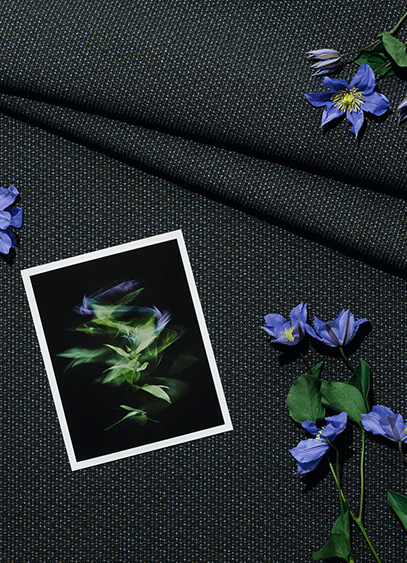
For its participation in Milan Design Week 2026, Kvadrat is unveiling two exhibitions this year: one paying tribute to designer Frans Dijkmeijer, and the second dedicated to the new Twisted Flowers collection, reimagined by Giulio Ridolfo. It is an opportunity for the latter—regularly hailed as a master of color—to discuss his work and his approach.
A key figure in the world of textile design, Giulio Ridolfo has been collaborating with Kvadrat since 2007. Coming from the fashion world, the man who now dresses furniture is the creative force behind several of the Danish brand’s bestsellers, including Canvas 2, Remix, Steelcut, and Zulu. With an approach rooted in color but deeply connected to the technical dimensions of yarn, the designer develops a vibrant, lively, and resolutely contemporary language where innovation takes center stage. His creative process is often described as a blend of intuition, anthropology, and a form of self-taught botany. It was precisely this floral inspiration that led him to explore an archive by Frans Dijkmeijer, which he has reimagined and expanded into 21 colorways. Giulio Ridolfo discusses this technical and stylistic endeavor on the occasion of the "In Rainbows" exhibition. To discover the collection as staged by architect Lorenzo Bini, visit the Kvadrat showroom in Milan at Corso Monforte 15.
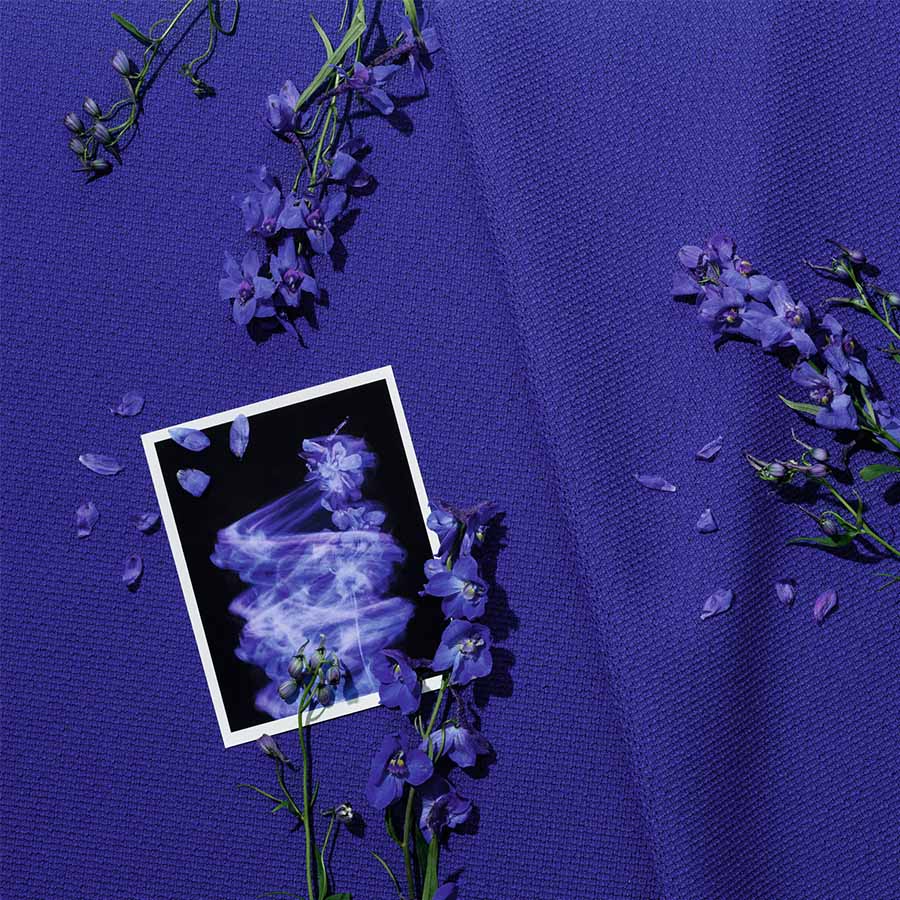
For Milan Design Week, Kvadrat is presenting the "In Rainbows" exhibition, where visitors can discover the Twisted Flowers collection. What is it all about?
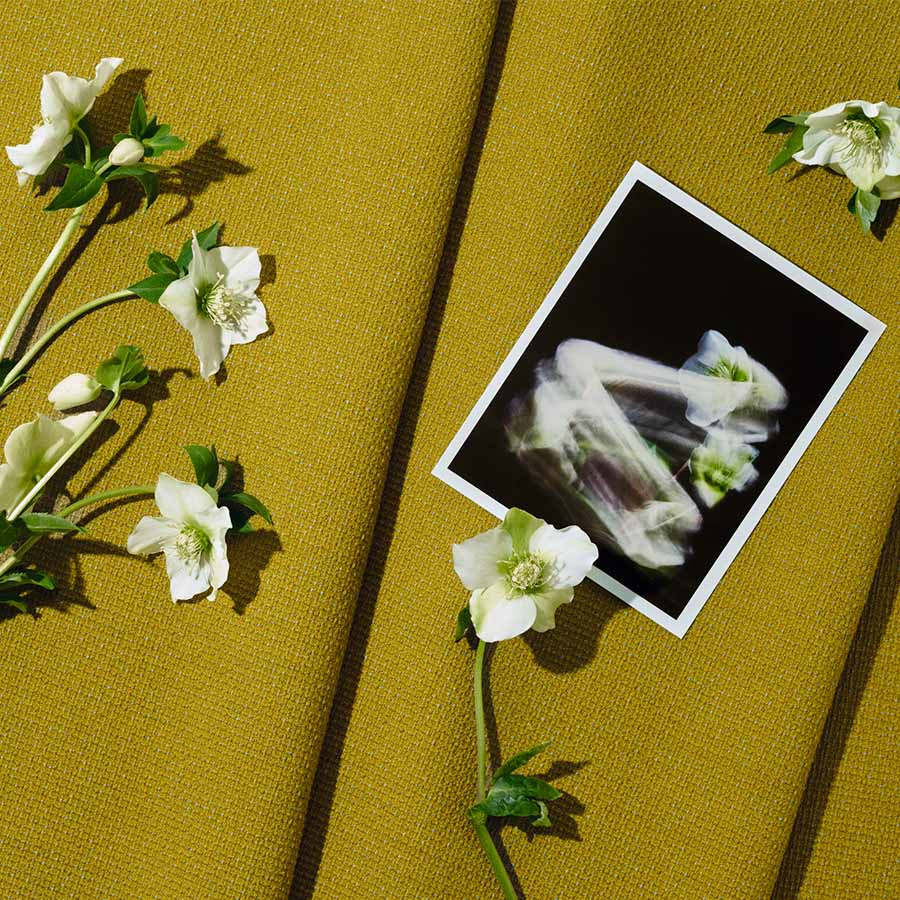
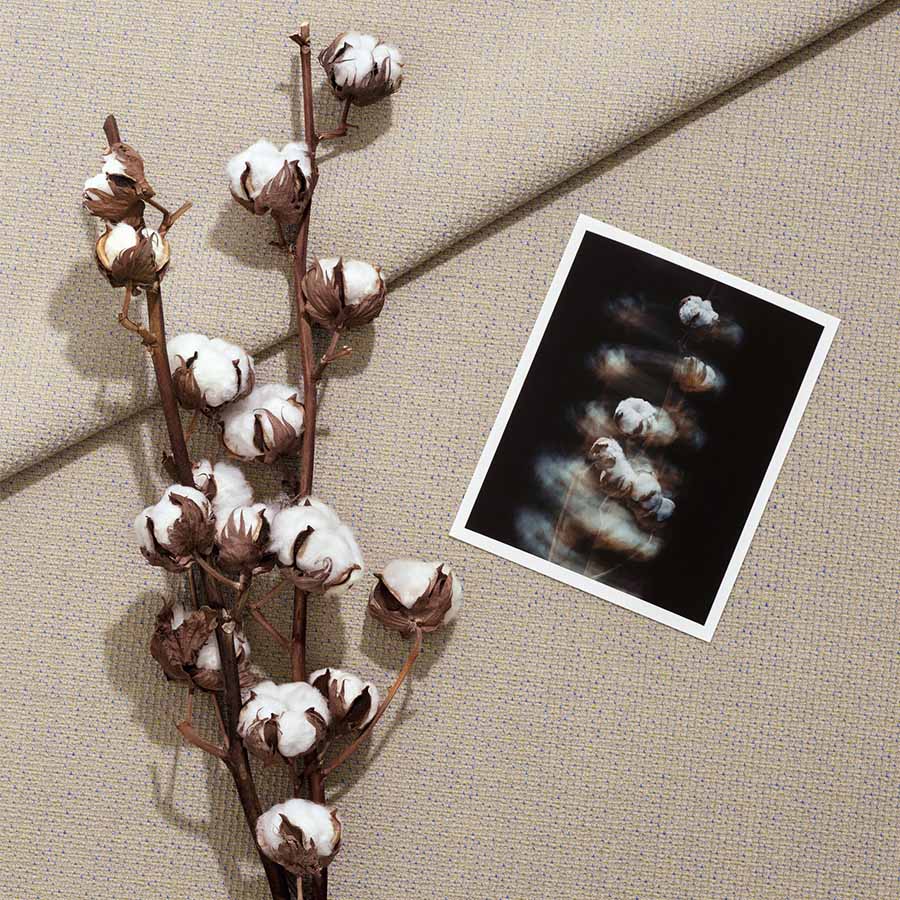
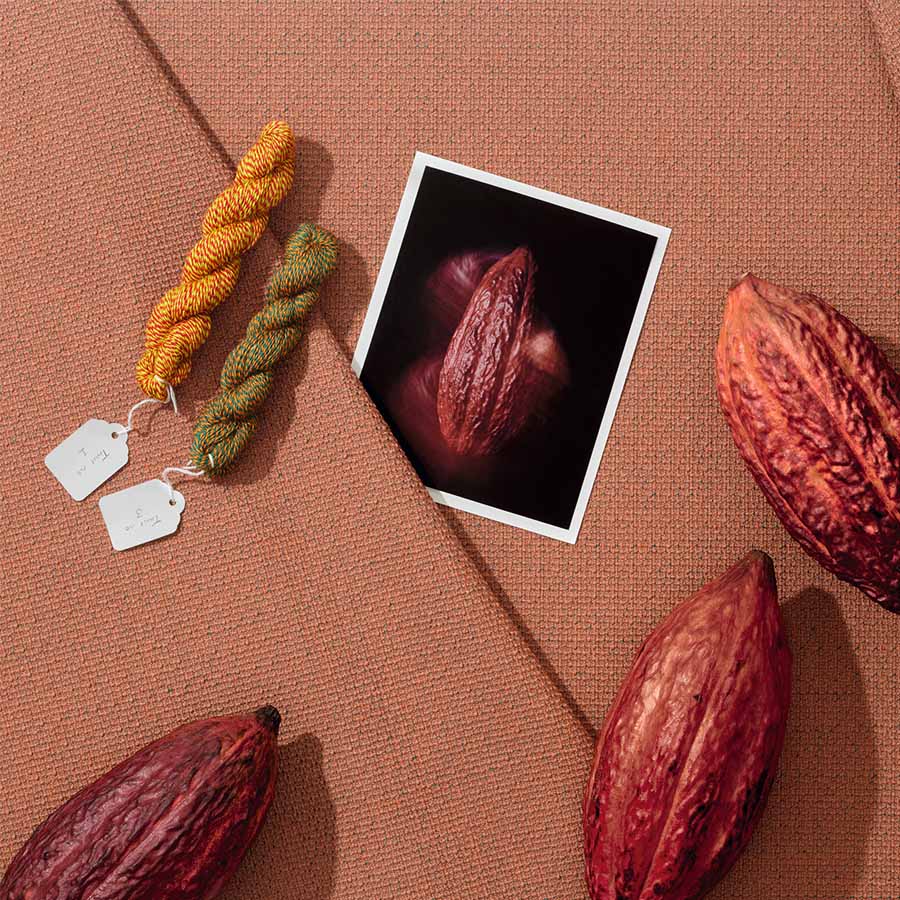
Twisted Flowers is a story of composition between my work and that of Frans Dijkmeijer. This collection is a revival of a weave by the designer—who passed away in 2011—which we have reimagined with a real focus on the tactile and visual experience. As is often the case, and it was a shared passion with Frans, I worked with color by drawing inspiration from flowers. We collaborated with a company to select seasonal plants—not exotic ones, but those linked to our environment. For example, you can find the red of the Fritillaria imperialis, the blue of the Ceanothus thyrsiflorus, and the yellow of the Gossypium, which together almost form a bouquet. I sought to translate the very experience of picking flowers into color, by observing them closely and immersing myself in floral paintings like The Dream by Odilon Redon, which I saw in Bern years ago. I was struck by a sense of suspension. It wasn’t exactly dreamlike, but suspended, with undefined colors and a meditative figure. Of course, what we have done is not a literal translation; the blue is not simply blue, and the red is not just red. It’s not like using a Pantone swatch book, which I don’t like at all. Instead, we selected colors capable of creating a kind of interference, a beautiful vibration, a pixelation of the object’s skin.
And you are presenting this in a unique setting…
Absolutely. The showroom area is usually reserved for sales, but not here. At first, I thought about hiring a florist, but I ultimately preferred to work with the structure itself, thanks to Milanese architect Lorenzo Bini. The idea was to invade the space and transform it with a more whimsical, almost magical effect. I didn’t want a clean, minimal space; I wanted to create a pleasant passage where people can linger and appreciate the quality of the colors. In this "hut," there is also furniture—ranging from standard contemporary Danish and Italian designs to pieces by great names like Carlo Scarpa, Cecilie Manz, Finn Juhl, and Jean Nouvel. And since I am very drawn to music, I collaborated with a music programmer in Milan. We have planned four performances based on vibration, intuition, and phasing, which is a technique used by Steve Reich. In fact, this installation is almost a manifesto.
You previously mentioned the work of Frans Dijkmeijer, to whom Kvadrat is dedicating a biographical exhibition at the Triennale. What was your relationship with him like?
The relationship with Frans began with great mutual respect. He thought in black and white to reveal the flaws and beauty of construction, while I worked freely with color. That was the starting point of our relationship. I originally come from the fashion industry, where I was used to handling textiles for dresses, and for the past fifteen years, I have been working on furniture pieces. I gradually became a colorist through long practice in selecting shades, textiles, and materials for companies in the furniture sector. In a way, my primary occupation was to help a project be seen, from the prototype to the industrial solution, which is what I did with Vitra and Moroso, where I started. When I was offered the chance to work with the brand, I knew textile design, but I didn’t want to become a textile designer. However, I was happy to intervene on color, provided I could establish a dialogue with the creator—and as it happens, that creator was Frans Dijkmeijer. One of my first exercises alongside him was to color a fabric with a very pronounced grain, a pinpoint which looks like grains of rice. That is how Steelcut was born; its name comes from "Cut Steel," a Victorian-era technique where iron was cut into diamond shapes to mimic the sparkle of precious stones. It was a foundational project that defined my position.
You are a colorist, but your perspective on textiles is also deeply technical, particularly regarding three-thread weaving, isn't it?
The idea that I work with three threads has become famous, but in reality, I can work with five, six, or just one. It all depends on the situation. I am very drawn to the gouache work of 20th-century artists like Paul Klee, or to a certain musicality, like that of Sibelius. For me, the complexity of a construction adds an extra quality to the color. I once saw Frans use one white thread with two black ones to reveal potential errors in the weave and understand the disruptive element. It was an artisanal way of enriching his creations. But at the same time, working with Kvadrat taught me great rigor. Their textiles must last, be reproducible, and the approach is almost scientific. You cannot have uncontrolled variations. In this context, the idea of working with three colors was born as an intuition. I wanted to understand what vibration might emerge by adding a third thread. When we developed Steelcut Trio, the results were astonishing because there was an iridescent effect, like in silk or taffeta, but with an essential difference. Where taffeta has two sides, this has three. It creates depth, a relationship between light and shadow, a kind of perspective. We continued this research, drawing inspiration from different textiles, until we created a thread composed of three distinct colors. Each thread itself became a complex blend. Two threads constructed this way give an impression of infinity where the color is never fixed. It is this technical expertise that gave rise to Remix, and which we continue to develop today.
The vibration of colors, the notion of instability, of movement… there is a living quality that almost brings to mind fashion, isn't there?
Movement is inherent to fashion because textiles are on bodies and they move. You have a kind of third dimension that must be taken into account. When I work with a textile for furniture, it is more sculptural. You can walk around it. And then, furniture has the particularity of being able to be equipped with accessories or additions that can modify impressions and feelings. Fabric is one of them. With certain fibers like those from Kvadrat, the structure must be robust, but the fabric can give another impression, of lightness for example. That is specific to furniture.
From that point of view, do you consider textile to be a kind of filter?
If you are referring to semiology like Roland Barthes, then yes, it is a filter. But in reality, it is not. Fabric is the first thing you touch; it is the skin of an object. And in that sense, it is very sensual, because when you see a piece of furniture, you touch it first, then you say "what a beautiful sofa," "what a beautiful object"... It is, let's say, in synchrony with the form of the object. The filter comes into play when you filter information, when you start considering whether it is the right textile, the right sofa for a given use, or the right color... at least, that is how it seems to me. But I am a colorist, and being a colorist means starting with the thread, not the final coloring.

Spearheaded by French Living in Motion, the Design Défilé, with scenography by the agency JAKOB+MACFARLANE, showcases 53 French creations, each illustrating the challenges currently facing the furniture industry. The event brings together brands and design houses committed to "Made in France" and sustainability under a shared ambition.
In the heart of Brera, a fashion show unlike any other is taking place. Initiated by French Living in Motion, the event brings together 53 French creations, including 38 pieces of furniture, through April 26. Among them, 28 brands have mobilized to champion a collection rooted in contemporary sustainability issues. "It is important to understand that the 'French Living' label is an alliance between the French furniture industry, which brings together several brands to support them in the transformation of society, and French design, which aims to drive innovation in the furniture sector through the lens of design. In other words, this union, initiated in 2024, aims to promote French furniture sustainably. That is the whole meaning of 'In Motion,' which embodies this spirit of dynamism.", explains Catherine Vereecke, Director of Communication and Markets for L’Ameublement français.

The collective has drawn from a wide range of SMEs and mid-sized companies active in both the hospitality and residential sectors. The selection is displayed across two spaces. Conceived as an initial glimpse into design creation, the French Design section presents 15 indoor and outdoor furniture pieces, notably by Andrée Putman, Elliott Barnes, and OUD Architecture, and produced by French manufacturers such as Airborne, Atelier Sumbiosis, Maison Pouenat, and Siegeair. This selection is complemented by a second, highlighting 13 French houses—both heritage and contemporary—each presenting three pieces emblematic of their identity. It is a way for houses like Franck Genser, Mercœur Édition, and Sokoa to showcase the breadth of their expertise and the creativity that defines them. According to Catherine Vereecke, "beyond the heritage dimension, this selection was primarily designed to view furniture as a creation in motion, in connection with the body, movement, and time."

A Fashionable Scenography
As the true common thread of the event, the sustainability of the pieces—as well as that of the companies and their processes—prompted the project's initiators to once again call upon the agency JAKOB+MACFARLANE. Having collaborated with French Design on numerous occasions, the agency is this time reinterpreting the codes of fashion. By adopting the concept of a birch-wood runway and playing with light, the duo focused primarily on the fundamental notion of the collective: movement. "The idea that guided us for this scenography was the desire to question design. How do people perceive it, what do they take away from it, and what do they expect from it in a complex world of polycrisis? But the challenge was also one of evolution." Considering that furniture is much more than functional and that it also influences its environment, the designers chose to stage the power of furniture over space and people. Visitors are invited to walk along the runway, which traverses the space from the outdoor courtyard to the interior. "Nothing is partitioned here. The idea is to experience the space as the elements dictate, giving free rein to the expression of craftsmanship." It is a way to create a dialogue between pieces and expertise—some of which has not changed since the 18th century—that finds itself in the spotlight more than ever today, at a time when local sourcing matters just as much, if not more, than traditional techniques.

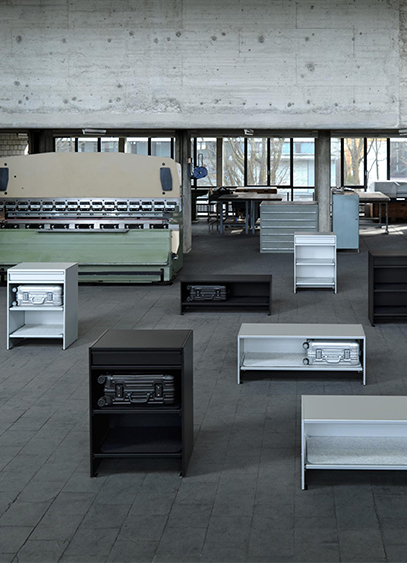
For Milan Design Week 2026, RIMOWA and Lehni unveil a unique collaboration that brings the travel object into the home. Blending industrial precision with minimalist elegance, two limited-edition pieces redefine storage as a design statement.
Presented in Milan from April 21 to 24, the RIMOWA Lehni collaboration marks the meeting of two century-old houses united by a shared culture of materials. On one side, RIMOWA, whose aluminum suitcases have accompanied travelers for decades; on the other, Lehni, the Swiss benchmark for modernist furniture and modular systems. Together, they have designed a bench and a drawer unit to house carry-on luggage, creating two solutions tailored for the home. Crafted in black or silver anodized aluminum and handmade in Zurich, these pieces strike a precise balance between utility and display. The bench can hold up to two suitcases, showcased side-by-side in an open structure. The drawer unit offers more compact storage, featuring a stacked composition and a closed compartment for everyday items. In both cases, every detail matters. The shelves are lined with a custom-developed, matte, scratch-resistant felt—discreet yet essential—which protects surfaces while adding a touch of softness.
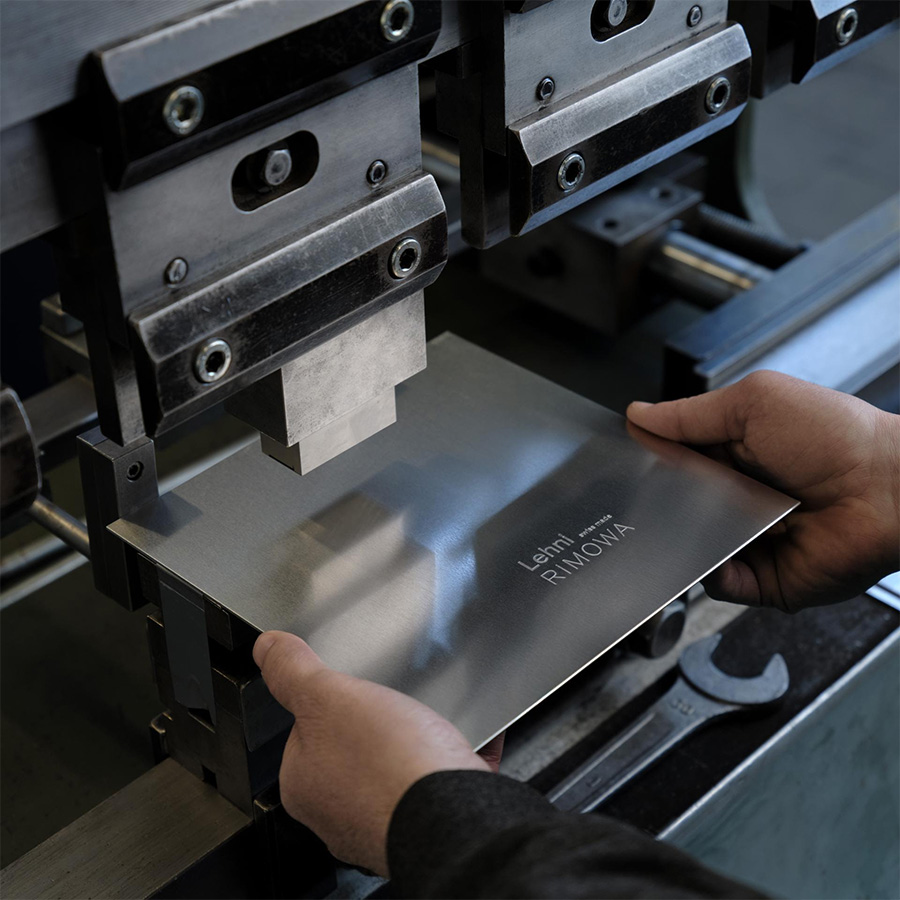
Two industrial legacies, one shared material
This collaboration is a natural continuation of both houses' trajectories. Founded in 1898, RIMOWA established itself as a leader in premium luggage by incorporating aviation-inspired aluminum as early as the 1920s—a material that has since become its signature. Now part of the LVMH group, the company continues to evolve its products through a blend of technical innovation and durability, as evidenced by the introduction of polycarbonate in the early 2000s and, more recently, its lifetime guarantee. Meanwhile, Lehni, founded in 1922 in Zurich, built its reputation on precise metalworking expertise, nurtured by collaborations with modernist icons and the development of iconic modular systems. By adapting its formal language to RIMOWA suitcases, the Swiss brand extends this tradition into a new context. The RIMOWA Lehni project serves as a convergence point for two industrial histories, where technical precision and durability remain the guiding principles.

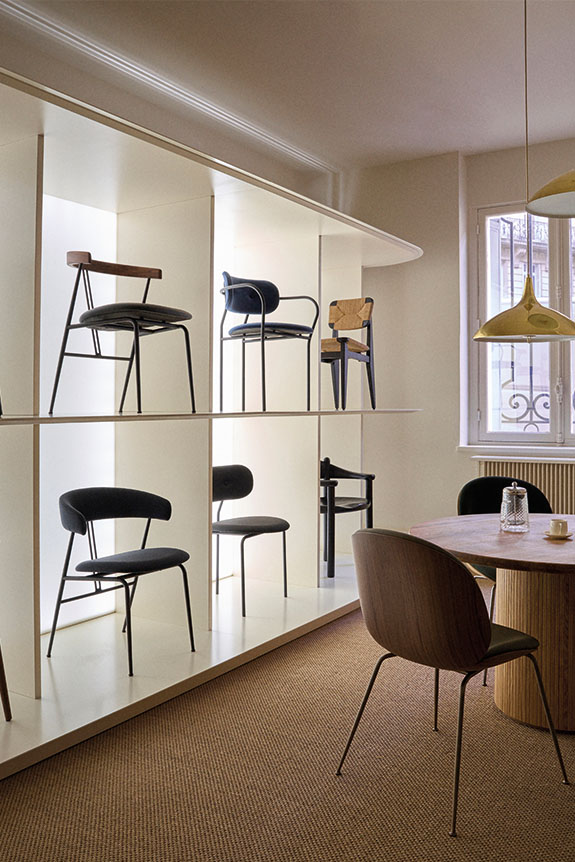
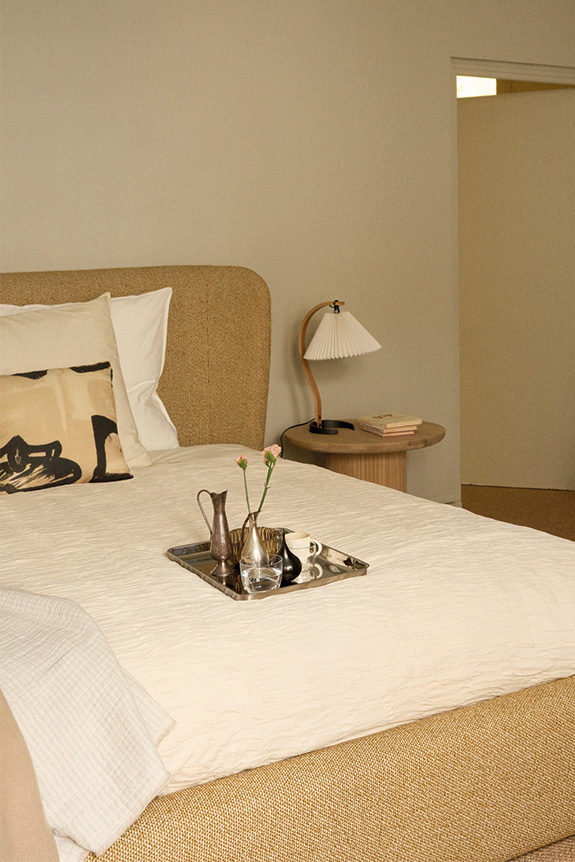
Following successful openings in Copenhagen and London, GUBI has just inaugurated its Parisian GUBI House, located in a quintessential city apartment. The space is designed as a true living environment, where products blend seamlessly into their surroundings to offer an experience that goes far beyond a traditional showroom.
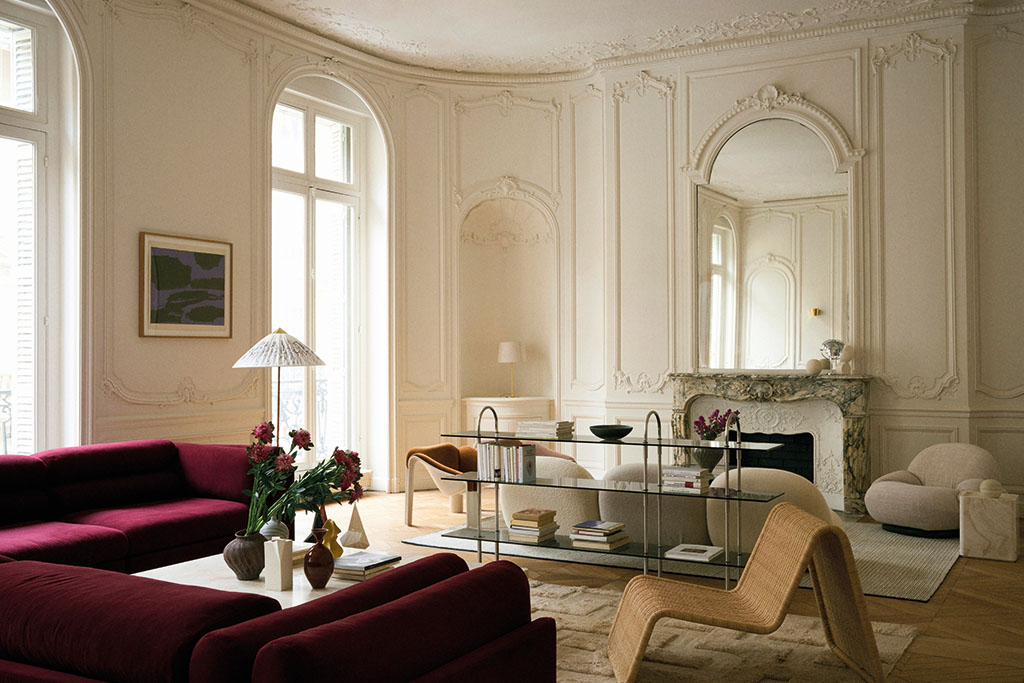
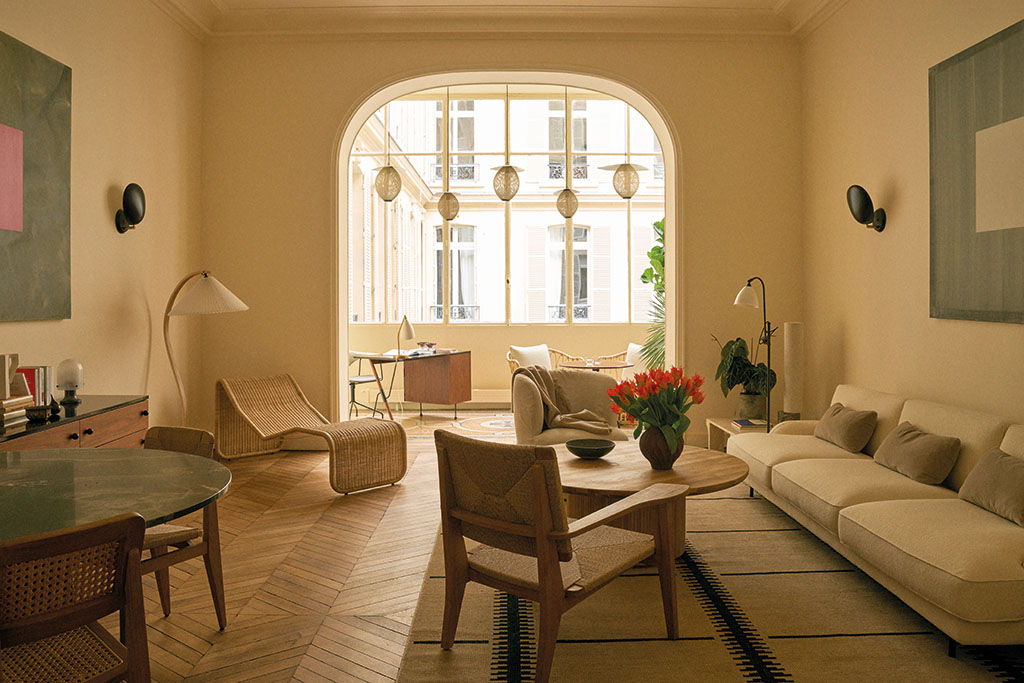
Located in the heart of the 8th arrondissement, just steps from Parc Monceau, the third GUBI House has taken up residence in a 300-square-meter apartment with the primary goal of strengthening the brand's European presence. It is a unique space that reflects the city and its cultural heritage, and Marie-Kristine Schmidt, the brand's CEO, shared her vision for the project with us in greater detail.
Could you tell us more about the DNA of the GUBI Houses?
The GUBI Houses were born from a desire to move beyond simple product presentation toward a true experience. Rather than displaying objects in isolation, we create environments where design is understood in relation to life. Each House is shaped by its context, but all share the same intention: to reflect how the collection fits into everyday life. It is, above all, a dialogue between pieces, eras, and people. In this sense, the "House" is less of a format and more of a mindset. It allows us to present design as something you live with, rather than just something you look at.
This is your first opening in France. Why was it important for the brand to establish a presence in Paris?
Paris holds a unique place in the global design landscape. It is not just an influential city; it is a deeply interconnected hub. Architecture, fashion, art, and interior design constantly feed off one another to create a cultural rhythm that is both historical and contemporary. Establishing a permanent home in Paris allows us to participate more directly in this dialogue between the past and the present.
What makes the Parisian GUBI House unique?
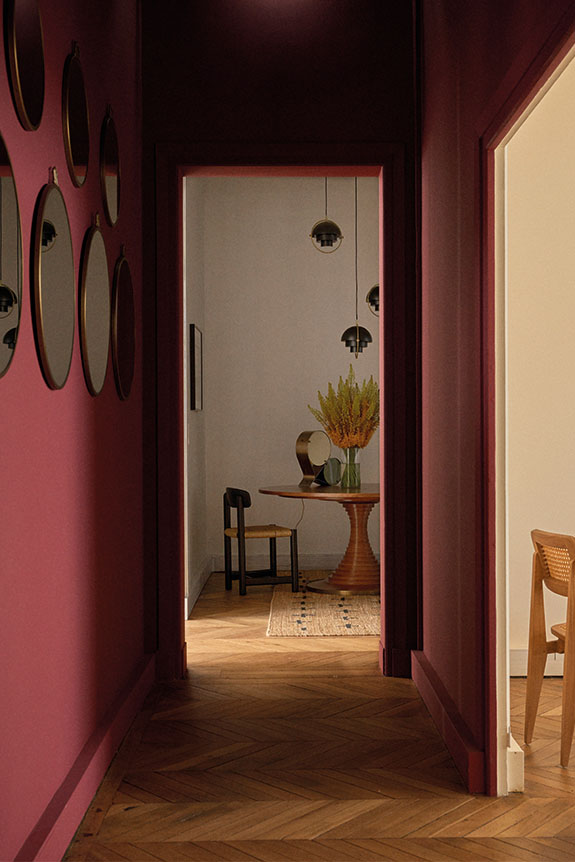
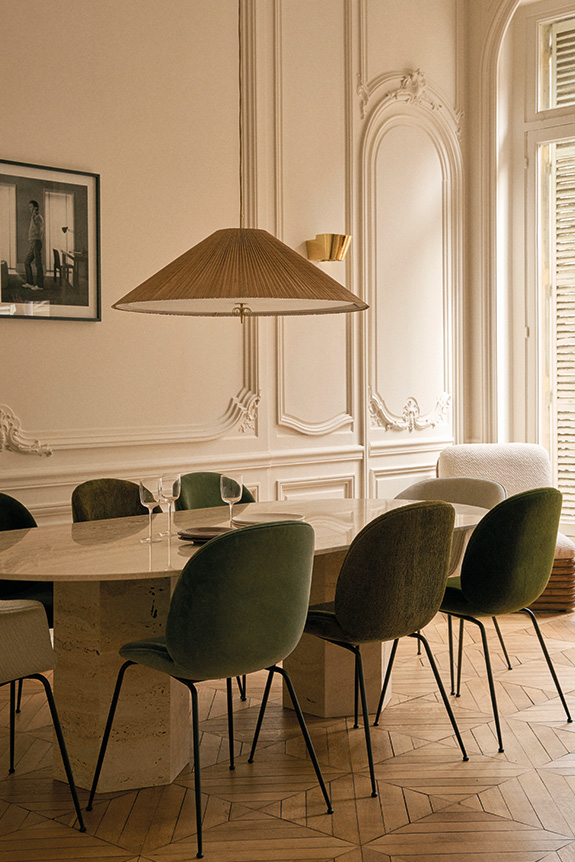
What sets GUBI House Paris apart is the intimacy of the space. It is a real apartment, with a strong identity defined by moldings, fireplaces, and architectural details. We didn't impose a concept on the space; we worked with what was already there, and the result integrates naturally into the city's context. The collection isn't staged; it is embedded in a lifestyle specific to Paris. The way the rooms flow into one another offers a more emotional and sensory experience, making it feel less like visiting a showroom and more like stepping into a private home.
What are your long-term ambitions for this space?
We envision GUBI House Paris as an evolving platform rather than a static space. It will continuously transform through new installations, product launches, and collaborations, ensuring that every visit offers a different perspective. At the same time, we want to make it a place for exchange, where we host dinners and gatherings that bring together designers, architects, and creatives from various disciplines. Ultimately, our ambition is for the House to become a part of the city's cultural fabric—a place where we share ideas, not just objects.
Beyond this major opening, are there other projects in development, new launches, special projects, or upcoming collaborations?
GUBI is a brand in constant evolution, both in its collections and in how they are presented. Alongside new creations and reissues from the archives, collaborations remain essential to broadening our perspective. A recent example is our partnership with Bonacina 1889, with whom we reissued Tito Agnoli’s P3 lounge chair and P3S chaise longue. This collaboration combines over a century of Italian rattan craftsmanship with GUBI’s contemporary vision, reflecting our shared commitment to material integrity and sustainable design.
Are other GUBI Houses in the works?
Our approach with these GUBI Houses is to grow with discernment. Each location is based on the same concept, yet shaped by its specific context. Together, these spaces form a network of venues that interpret our collections through different cultural lenses. Moving forward, we will continue to explore new locations where there is a strong alignment, with the same intention: to create authentic, unique spaces that are deeply rooted in their environment.

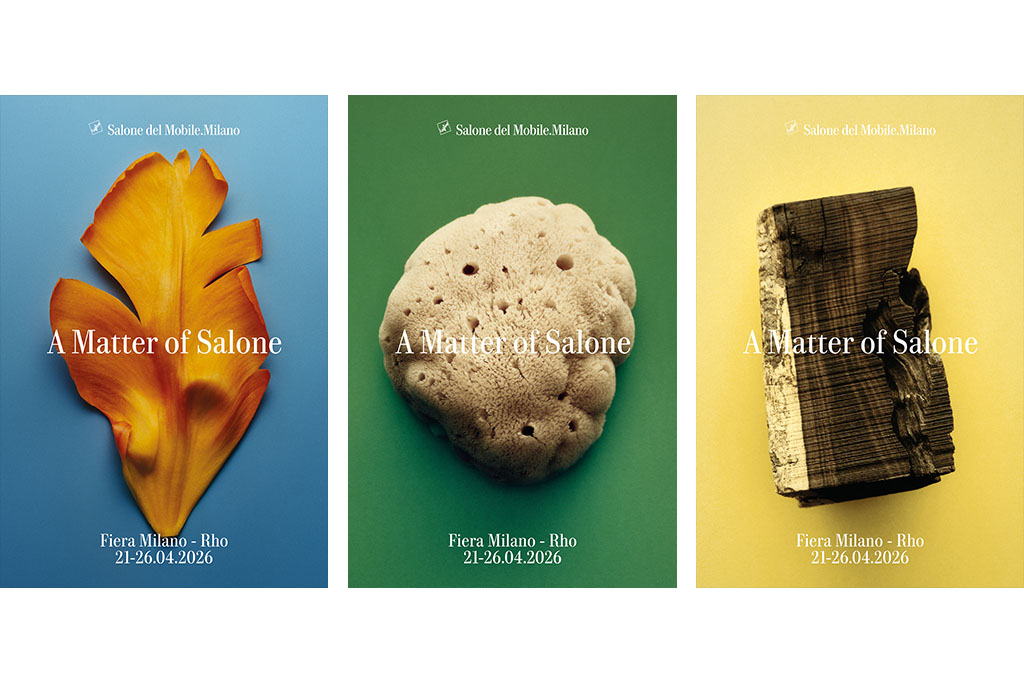
For its 64th edition, Salone del Mobile.Milano is reaching a decisive milestone. As a market infrastructure, cultural platform, and laboratory for experiences, the event is redefining its role on the international stage. Its president, Maria Porro, breaks down this transformation for us.
From April 21 to 26, 2026, Salone del Mobile will bring its latest creations to the Lombard capital, gathering over 1,900 exhibitors across the vast aisles of Europe’s largest exhibition center. Beyond the sheer scale of this major event, the 64th edition stands out for its embrace of new paradigms. In a shifting geopolitical and economic landscape, the event is recalibrating its position as a global player. With the launch of Salone Contract, developed with OMA, the introduction of Salone Raritas dedicated to collectible design, and the immersive Aurea experience, the Salone is broadening its scope and strengthening its transdisciplinary approach. At the intersection of economic, cultural, and experiential challenges, the Salone has established itself as a convergence point for industry, design, and emerging markets—a strategic vision championed by its president, Maria Porro.
To start, could you explain the Salone’s new positioning?
The Salone was founded over sixty years ago. Compared to the market of that era, we are living in a completely different context today, marked by the shock of COVID and the acceleration of transformations that were already underway. One of the major shifts is in furniture retail. In the past, few companies had single-brand showrooms, whereas today, it is an increasingly common trend. More generally, the brand and its communication have become central. At the same time, the contract sector is playing an increasingly important role in business development. Geographic regions that were not accustomed to residential contract projects are now getting involved. It is a massive sector in terms of revenue and is highly international. The Salone is transforming to remain a stable and reliable platform. It is becoming more of an economic and cultural infrastructure, and these two dimensions are closely linked.
And regarding design, how is it evolving? We are seeing a significant shift between industrial design and collectible design, particularly with Salone Raritas.
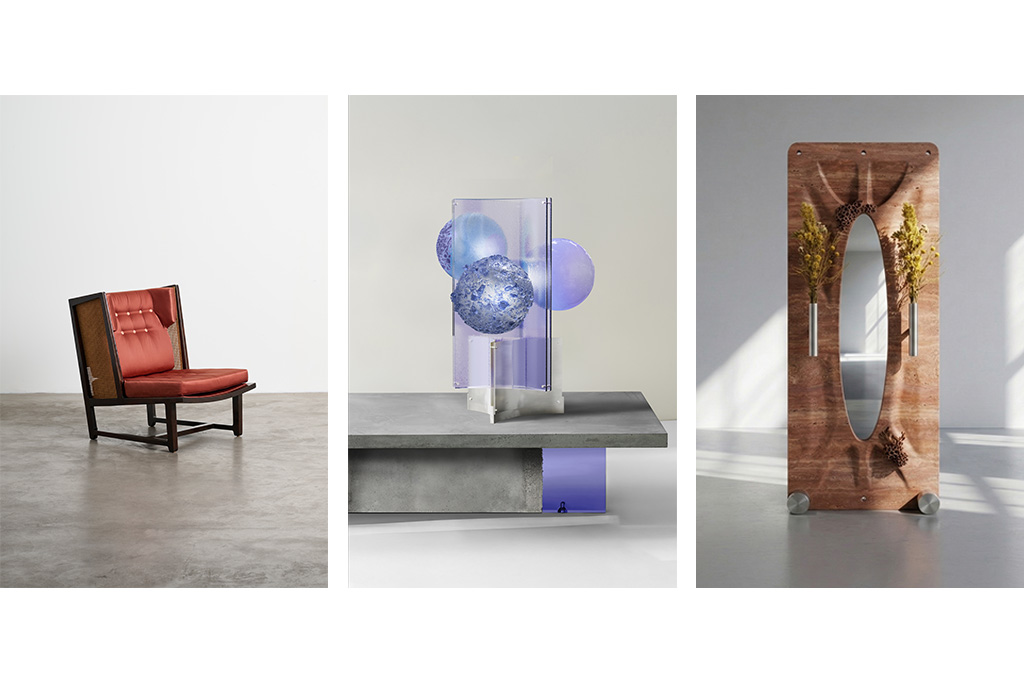
Yes, we are seeing a growing demand for bespoke interiors. At the extreme end of this demand is the collectible market, with increased attention on artisanal techniques and the rediscovery of ancient craftsmanship. This is accompanied by an interest in production in locations far from industrial hubs. I would also add that there is a global craze for iconic or vintage pieces. That is why we are launching Salone Raritas. This sector is not on the fringes of the Salone; it truly complements industrial production. If you take the example of a large hotel, industrial production meets all the practical needs, such as the rooms and common areas, but there is always a set of specific pieces designed especially for that space. In the contract world, the strong collaboration between industrial production and unique, one-off pieces is nothing new. This dialogue has always existed, as seen with figures like Andrea Branzi or William Morris, who felt the need to combine industry with craftsmanship.
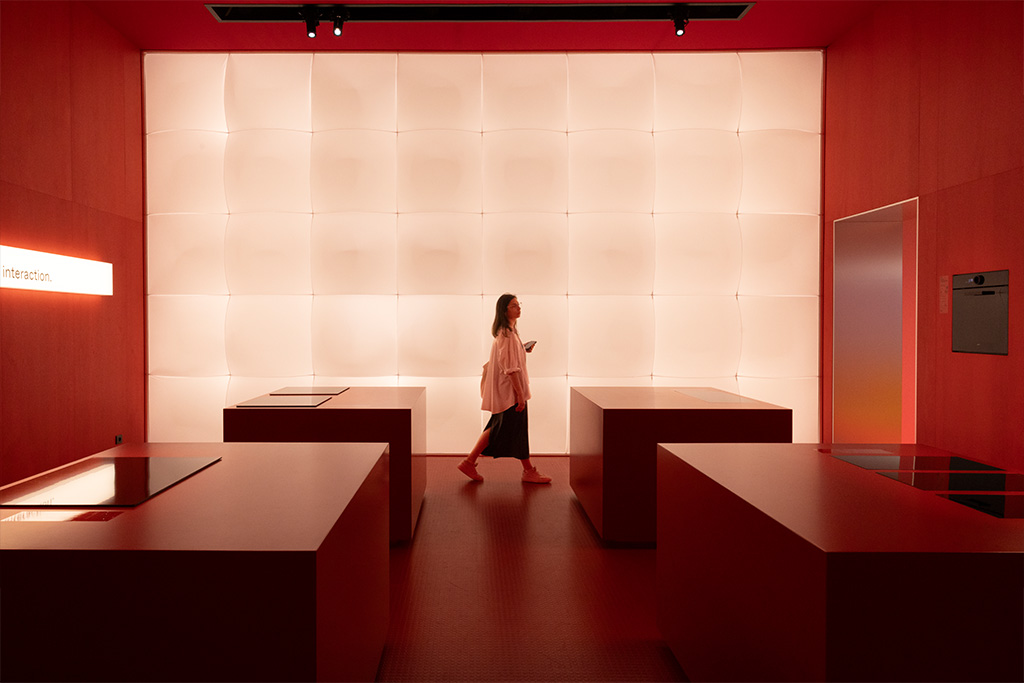
At the same time, you are offering Aurea, an immersive experience centered on luxury, created by Oscar Lucien Ono. Can we say that with contract, B2C, and hospitality, the Salone is becoming a global platform?
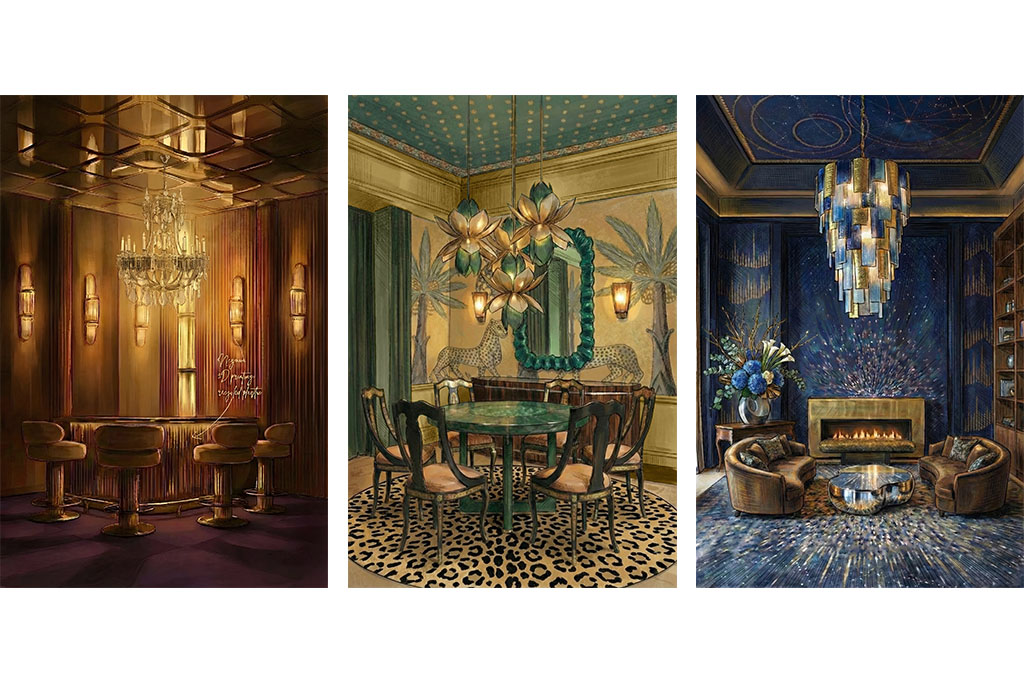
We have nearly two thousand exhibitors, all very diverse in terms of aesthetics, price, techniques, and materials. But our audience is also interested in broader experiences. Companies are effectively building architectures and environments. This is not a fair centered on the product, but on the project. With Aurea, just as with Pierre-Yves Rochon last year, we are creating immersive experiences where the architect utilizes the full range of what the Salone has to offer. There is a coherence to our approach, but it also involves speaking out and fostering dialogue between different players. Visitors can discover companies, live immersive experiences, participate in moments of exchange, or listen to a master of architecture like Rem Koolhaas. It is a complete experience for professionals. We haven't forgotten students either, with the Satellite, which is essential because they represent the players of tomorrow.
Speaking of which, you are hosting about 700 young designers under 35. Do you think you can still discover the next Patrick Jouin or the Bouroullec brothers, as Marva Griffin’s Satellite did years ago?
Yes, that is very important. There is also the fact that these young designers are in direct contact with the industry, which is fundamental. That is why, this year, we are organizing a day where several entrepreneurs will visit the Satellite, meet with students and young creatives, and share their experience. We want to encourage these face-to-face exchanges. I was a young designer myself, and sending projects by email often leads to no response. On the other hand, presenting a prototype in person creates a different dialogue and captures the attention of entrepreneurs. That is essential for us.
Today, is the diversification of the Salone also a way to reinvent itself in the face of other fairs like Collectible in Brussels or 3daysofdesign in Copenhagen?
This is not a competitive strategy. Companies are already combining industrial production, retail, contract work, and sometimes experimental pieces. This diversity reflects a natural evolution of the market. Collectible design fairs primarily target collectors, whereas the Salone offers galleries a different audience, such as developers, hotel chains, and distributors. We act as an accelerator. Similarly, events dedicated to the contract sector are often highly technical. Our goal is to offer an event centered on projects and relationships, with a focus on how we live. In today’s world, there is no room for two identical events. We are therefore seeking to offer a different approach, without overlapping with what already exists.