Paris Design Week : une présence affirmée du Mobilier national

Paris Design Week : une présence affirmée du Mobilier national

Le Mobilier national assume sa mission de promotion de la création – sans oublier les jeunes – avec une présence forte à la Paris Design Week. Au programme, deux expos, “Métal et design” à la Tour Eiffel, et ” Le Mobilier du XXIe siècle” à la Galerie des Gobelins, ainsi qu’une présentation de la première coédition de l’institution au Concept Store d’Intramuros.

“MOBILIER DU XXIE SIÈCLE”

‍

mobilierXXI © Mobilier national - Intramuros

‍

À la Galerie des Gobelins, à côté d’une sélection de pièces du XXIe siècle, le Mobilier national présente la jeune création qui a eu la charge de réinventer la table du Conseil des Ministres. Le public va ainsi découvrir les 22 propositions et les 5 lauréats de ce concours, le tout dans un écrin entièrement dédié aux designers qui ont créé les formes d’hier en collaboration avec l’Atelier de Recherche et les jeunes talents qui auront la charge de concevoir le mobilier de demain.

Ce concours était exclusivement réservé aux étudiants du Campus des métiers d’art et du design : porté par l’ENSAAMA, sous l’égide de l’Académie de Paris et de la Région Ile-de-France, le campus regroupe 29 établissements, dont 16 lycées professionnels et techniques, 5 écoles supérieures d’arts appliqués, des établissements privés, des institutions du Ministère de la Culture et des établissements d’enseignement supérieur, un CFA et un GRETA.

Ce concours a porté sur la réalisation des éléments suivants :
Mobilier :
– Une table de réunion, d’une capacité minimale de 22 places et de 40 places dans sa version maximale.
– Des petits bureaux plats assortis pouvant éventuellement former des consoles de la pièce lorsque le Conseil est achevé.
– Un modèle de chaise assorti à l’ensemble
– Un modèle de fauteuil pour le Président de la République et le Premier Ministre
– Un modèle de meuble casier destiné à déposer les téléphones portables des ministres dont l’usage est proscrit pendant la durée du Conseil
Luminaires :
– Un modèle de lampadaire
– Un modèle de lampe de bureau
– Un modèle de lustre contemporain

‍

« Mobilier du XXIe siècle » , du 3 au 12 septembre, Galerie des Gobelins, 42 avenue des Gobelins, 75013 Paris – Entrée libre

‍

Fauteuil PierrePaulin© Isabelle Bideau

‍

Table Richard Peduzzi © Isabelle Bideau

‍

“MÉTAL ET DESIGN”

‍

Au premier étage de la tour Eiffel, le Mobilier national présente une vingtaine de pièces de mobilier exceptionnelles en métal, conçues dans son Atelier de Recherche et de Création depuis 1964, date de sa création. Réalisées en collaboration avec de grands noms du design, ces œuvres en métal jouent de toutes les possibilités du matériau, faisant ainsi résonnance à l’écrin de la Dame de fer qui les accueille.

Le travail d’une vingtaine de designers iconiques des 50 dernières années sera ainsi présenté, mettant à l’honneur le savoir-faire d’exception du Mobilier national et la vitalité de la création artistique contemporaine, de Roger Fatus à François-Xavier Lalanne, en passant par Isabelle Serre, Éric Gizard ou Salomé de Fontainieu.

“Métal et design ”, du 3 au 8 septembre, au premier étage de la Tour Eiffel – Entrée libre

‍

Olivier Vedrine © Mobilier national

‍

Edouard Albert ©Mobilier national

‍

‍

CONCEPT STORE INTRAMUROS

Durant la Paris Design Week, au concept store Intramuros, retrouvez la coédition Ligne Roset et Mobilier national – une première pour l’institution ! – autour de la collection Hémicycle imaginée par le designer Philippe Nigro. Ligne Roset a prototypé les éléments industriels, l’atelier de métal du Mobilier national, lui, a travaillé sur les formes plus difficiles, comme le confident et le côte-à-côte. Puis un compromis technique a permis de pousser le projet jusqu’au terme de ce que voulait le designer, avec une collection complète et des formes spécifiques. « Ligne Roset n’aurait pas pu prendre le risque d’investir autant en matière de prototypage », explique Hervé Lemoine.
Une sorte de révolution pour l’institution ? Car depuis sa mise en place en 1964 à l’initiative d’André Malraux, l’ARC est jusqu’à présent pensé comme un outil mis à la disposition des designers pour les aider à créer, à l’instar d’un mécénat sous forme de résidences créatives. Selon Hervé Lemoine : « Cinquante ans plus tard, ce n’est plus possible de ne pas s’intéresser à l’édition – en réalité, à la diffusion – de ce qui est créé. »

‍

Collection Hémicycle, coédition Ligne Roset / Mobilier national

‍

Concept Store Intramuros, du 3 au 8 septembre, 5 rue Saint-Merri, 75004. Entrée libre
Rédigé par 
Nathalie Degardin

Vous aimerez aussi

Temps de lecture
17/9/2026
Alki revisits Kuskoa with Kuskoa M

Fifteen years after the launch of Kuskoa, Alki and Iratzoki Studio are evolving this iconic collection with Kuskoa M.

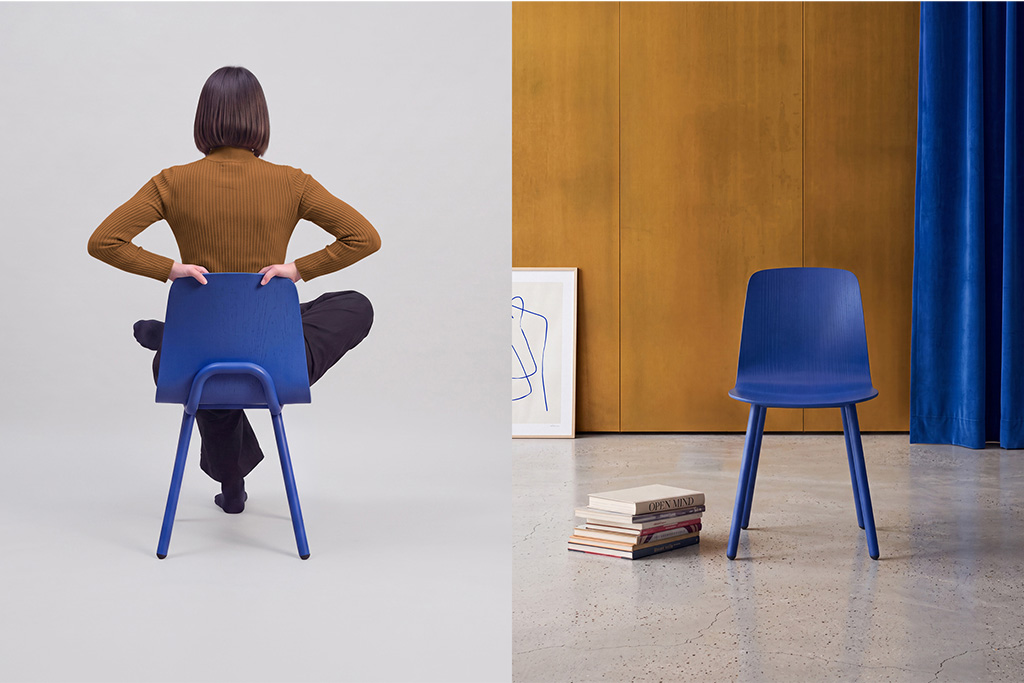
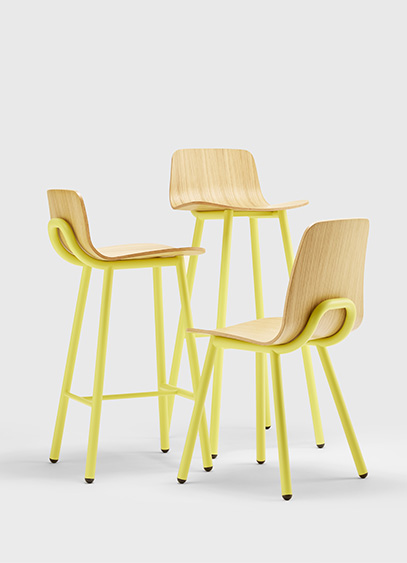
Created by Iratzoki Studio in 2011, Kuskoa established itself as one of Alki’s best-sellers with its oak shell design set on a solid wood trestle. During Paris Design Week, the brand unveiled Kuskoa M. Comprising a chair, two stools of different heights, and a bench, the collection was designed for restaurants, bars, canteens, and kitchens alike. With its various heights and typologies, this set can offer multiple configurations within a single space.
Featuring a powder-coated tubular steel frame, the seat develops a new graphic expression. Available in several finishes, it offers everyone the opportunity to compose their own piece, celebrating monochrome or, conversely, contrasts between metal, wood, and textile. Note that the shell can be upholstered in its entirety or only on the front.

Alki
Temps de lecture
16/9/2026
Bar stool: Design with a purpose

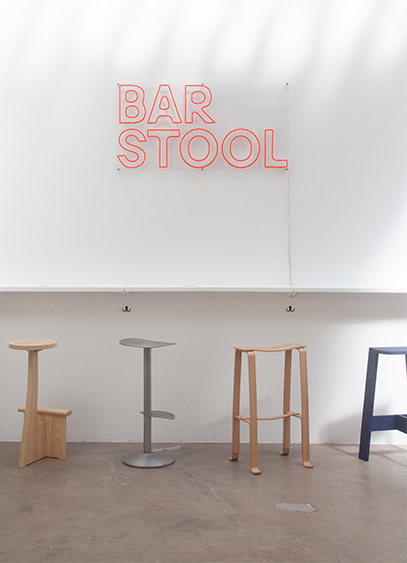
For their first joint exhibition, Athime de Crécy and Quentin Frichet have invited 35 designers to each create a stool. This free-spirited and convivial initiative, centered on utilitarian design, is on view at Espace Brownstone in Paris until September 19.

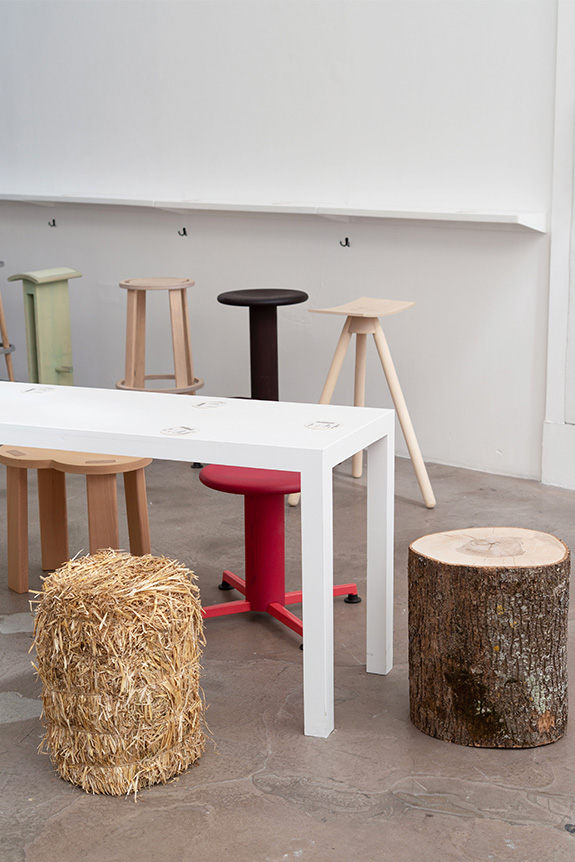
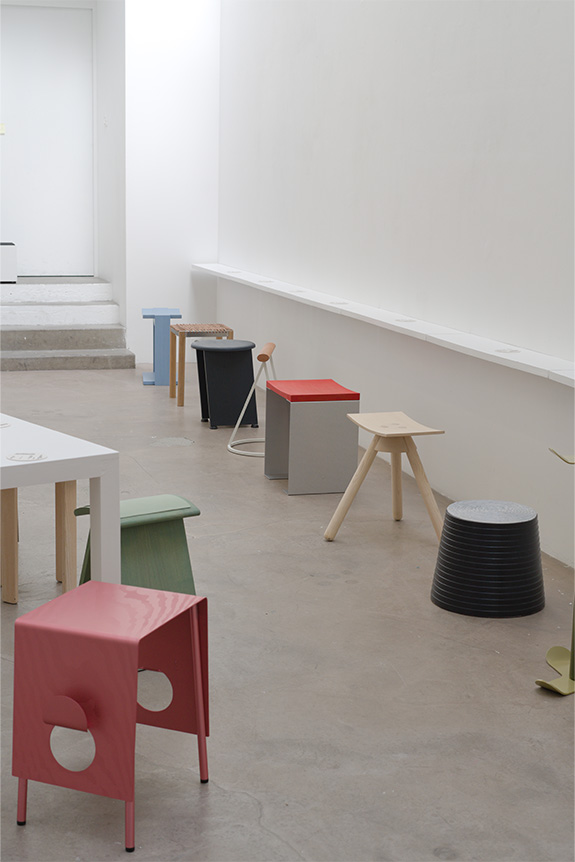
It is a sentiment some might find overused, but design, beyond its commercial and aesthetic dimensions, must be utilitarian. This philosophy, often challenged in the context of collectible design and shifting trends, is shared by Athime de Crécy and Quentin Frichet. Both ECAL graduates, having trained under Philippe Starck and Erwan Bouroullec respectively, the two young designers have taken over Espace Brownstone in Paris until September 19. It is a white-box space where 35 stools are displayed—not for visitors to look at, but for users to experience. "We had wanted to create a self-service exhibition for a long time. We initially thought about doing it in a bar, but in the end, the typology of the object took precedence over the venue," explains Athime de Crécy. Here, behavior is not dictated by the decor—which is nonexistent, save for a central table and drink storage at the entrance—but by the very nature of the pieces themselves. Presented without pedestals or labels, the seats invite everyone to pick them up, move them around, and sit down, effectively transforming the gallery into a living space. "We believe that a design exhibition that separates objects from the public invariably loses an essential aspect of what makes the discipline so powerful." The social dimension is an imperative here, carried by the stool and its characteristically lighthearted tone.

©Laura Koelman

‍

A shared idea expressed in every form

If a single object can spark different visions from one mind to another, *Bar stool* is the perfect illustration. A true synthesis of forms and materials, the exhibition is an ode to creativity. From the technical mastery of molded wood by Arthur Desmet to the high-tech 3D-printed stainless steel by the German studio Wint, the exhibition reveals a paradoxical coherence driven by the balance of diverse ambitions. "We didn't have to look far to find the designers. They are friends with whom we share a common sensibility for utilitarian and expressive design. We simply gave them total creative freedom, without even imagining that the projects might end up looking alike." A curation that gives this ephemeral refreshment bar its unique character and connects the aesthetic experience with everyday life. "It’s an approach that, in our view, draws the maximum amount of meaning from the minimum amount of resources."

©Laura Koelman
Temps de lecture
8/9/2026
Hall Haus heads back to school at Monoprix

For the new season, Monoprix has invited Hall Haus to design a collection of furniture and decorative objects with an industrial aesthetic. We sat down with Sammy Bernoussi, co-founder of the Parisian studio, to discuss the collaboration.

Drawing on a world of hip-hop and sports influences, Hall Haus presents its collaboration with Monoprix. As the studio's first large-scale project, the collection brings a trendy industrial style to a wide range of home furniture and accessories. We spoke with Sammy Bernoussi, one of the collective's four co-founders, about this contemporary approach.

‍

Hall Haus is often associated with an industrial aesthetic featuring perforated steel plates. Why did you choose to maintain this signature look for this collection?

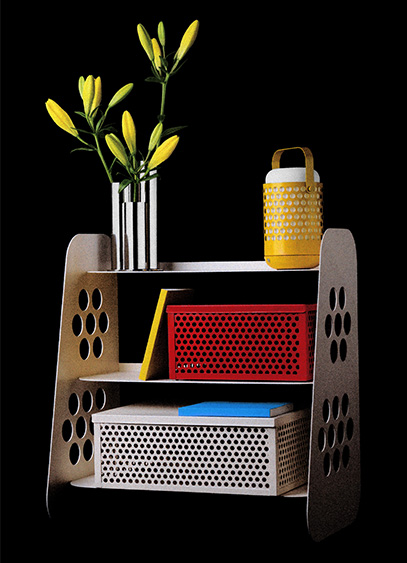
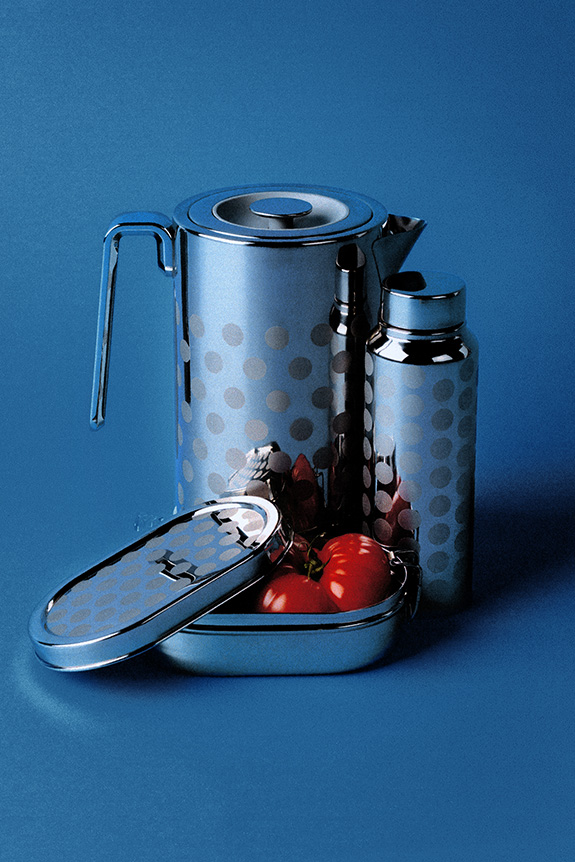
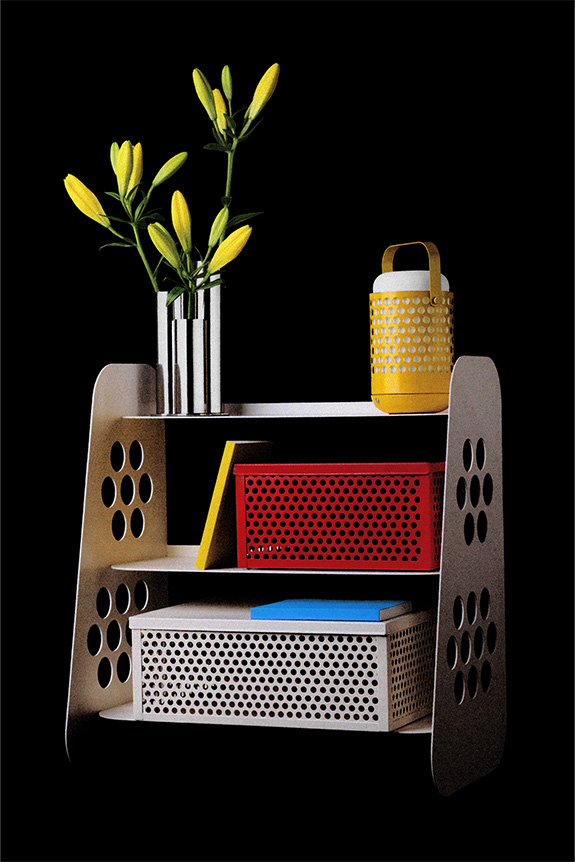
While you do see plates with holes, I think we’ve moved away from that slightly by building a bridge to Prisunic, specifically through the use of bent tubing. We had experimented with this technique before, but it was difficult for us due to our small production volumes. The collaboration with Monoprix opened new doors in terms of form and materials—like chrome, which is prohibitively expensive for small runs. Furthermore, working with Monoprix gave us the opportunity to create a truly comprehensive range. Aesthetically, we wanted it to reflect our past work while also realizing ideas we hadn't had the chance to bring to life yet. There’s a lot of talk about Bauhaus these days, so we had fun blending Breuer’s tubular structures with our own DNA. This collection is a mix of history and our own language, particularly when it comes to color. As a reminder, "Hall" comes from apartment building lobbies and the sense of community those spaces evoke, while the second part of our name is a nod to our affinity for the modernist Bauhaus movement.

Monoprix - Hall Haus

‍

The collection stands out for its wide variety of typologies. Why is that?

We were given total creative freedom. The initial idea was to offer back-to-school essentials since we were launching in early September. We wanted a student to be able to furnish their new apartment with something beautiful and affordable—maybe spending just 10 euros more to get a customized piece. We started by designing over 45 objects and ended up manufacturing 27. We selected accessible typologies, but we also decided to hybridize others. For example, we removed the dryer, but added bars to the room divider to give it a new function as a drying rack. It resulted in a really interesting piece for small apartments. I’m convinced that everyone can find something useful for their home in this collection.

Collectors are used to seeing color in your previous work. Yet, the collection you’re offering now seems to favor sobriety.

It’s true that the studio’s creations are often customizable in bright colors, but for our collaboration with Monoprix, we had to rationalize. We removed the pink, kept blue only for the shopping cart, and opted for yellow and beige—a neutral tone that remains in high demand. Then, we simply accented the collection with a touch of red as a nod to Monoprix. With the modernist chrome base, we had a lot of freedom in our color choices, so it all felt very natural.

Monoprix - Hall Haus
Temps de lecture
11/9/2026
"take one just in case": rethinking the bazaar

For Paris Design Week, Pierre Castignola and Alexandre Delasalle have brought together the work of 27 designers for the exhibition "take one just in case." It is a tribute to forgotten, sometimes incongruous typologies and unexpected styles.

While Paris Design Week is keen to celebrate design in all its diversity, the field remains a relatively closed concept. It was based on this observation that Alexandre Delasalle and Pierre Castignola conceived an exhibition for this September edition to celebrate alternative typologies. "Over the years and editions, we were frustrated to see that the pieces presented were generally the same, ranging from chairs to tables to mirrors. Yet, my pop-culture aesthetic and Pierre’s very classic, everyday objects don’t fit into the codes of postmodern design.", analyzes Alexandre Delasalle. Convinced that the sector is more abundant than it lets on, the duo created an exhibition celebrating neglected objects.

A heterogeneous gathering

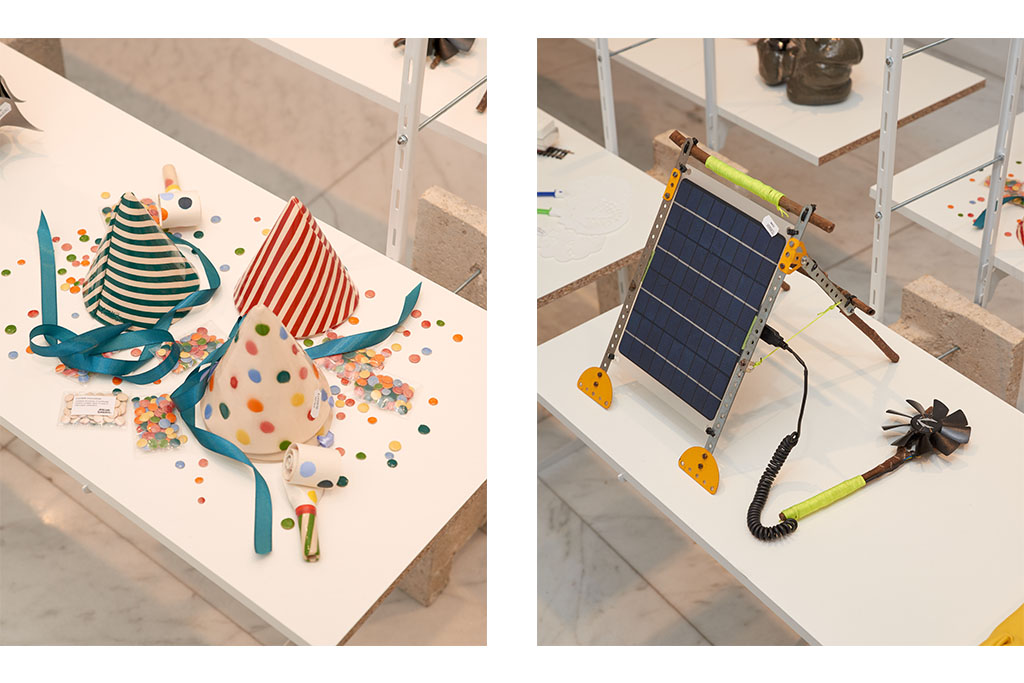
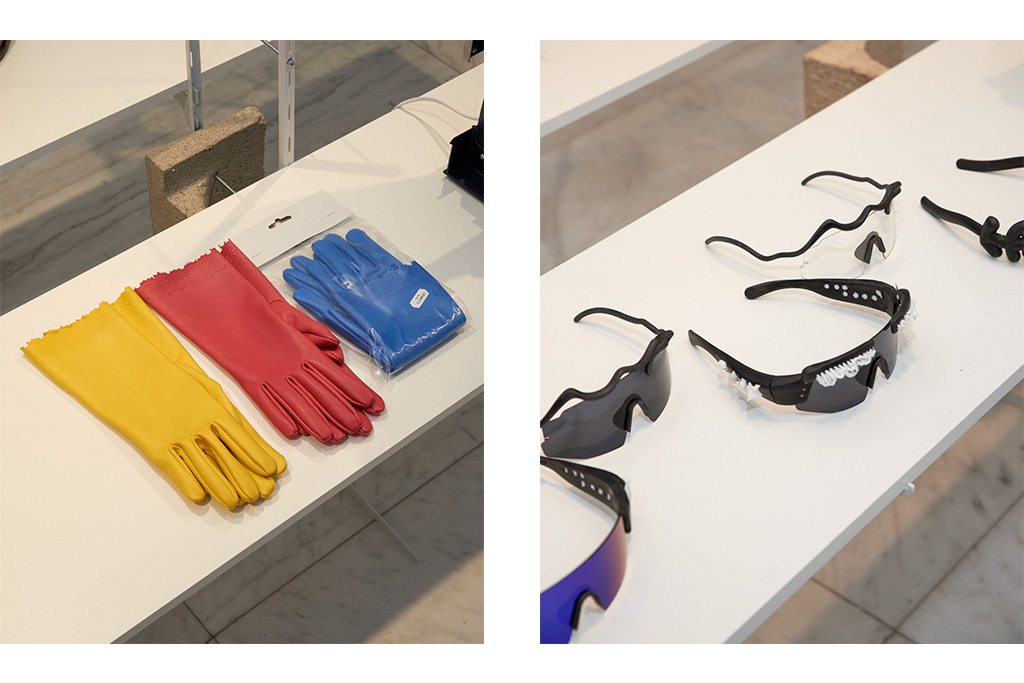
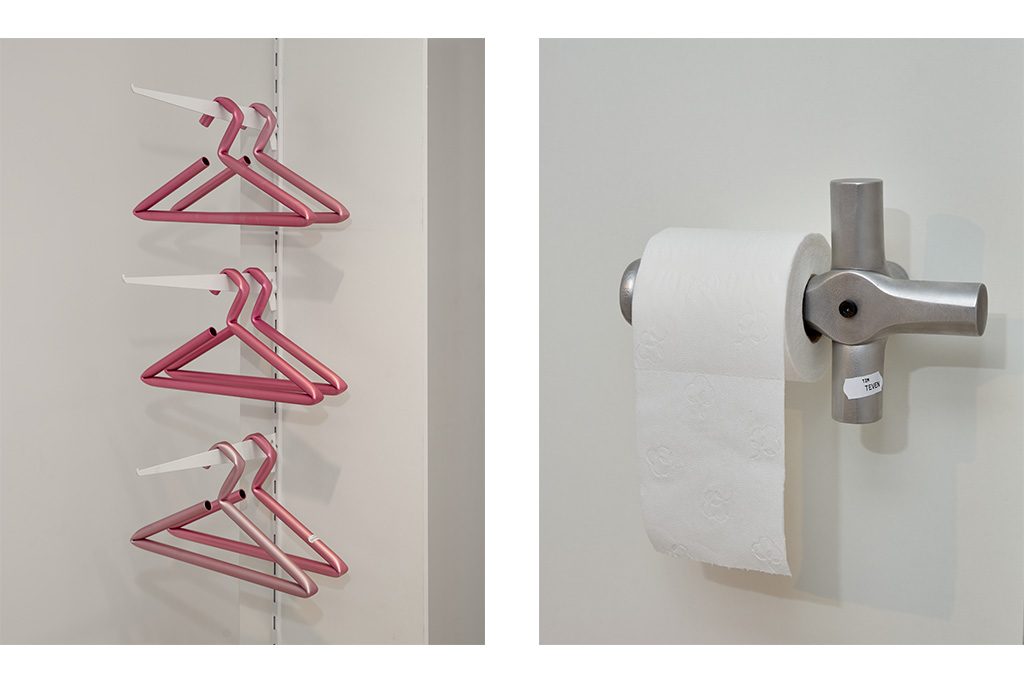
To help illustrate this diversity, the two friends invited 27 different profiles—designers and artists alike—to rework object archetypes. "Originally, Pierre and I thought of objects like a pizza cutter or a bucket, because these are objects that don't have a name in design. The former is usually inhabited by something else, like a superhero shape or an offbeat color, while the latter is so forgotten it becomes the zero degree of writing." Two opposing approaches—one loud and one silent—quickly expanded by the unique visions of the other creators. From the leather dishwashing gloves by Alice Clermont to the industrial toilet paper dispenser by Tim Teven, and the ceramic box topped with a spiked collar by visual artist Sacha Lefèvre, the approaches, sometimes very literal or more embodied, intertwine within the exhibition. "What seemed most important to us was to establish a corpus capable of surprising us. Overall, we knew all the profiles to varying degrees, but our discussions and reflections now allow us to exhibit very different objects, whether they were designed specifically for the event or not."

A creative bazaar

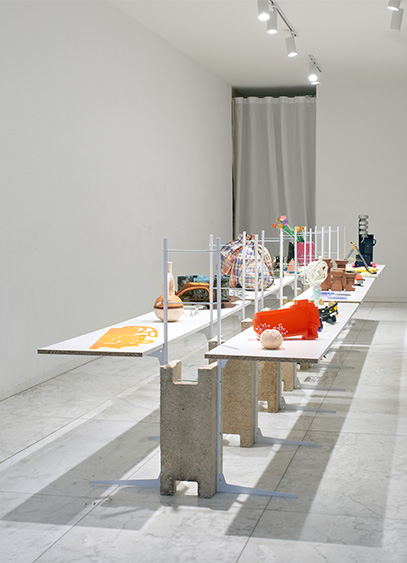
Inspired by the multitude of invisible objects that inhabit our storage spaces, Alexandre Delasalle and Pierre Castignola took an interest in bazaars. "These are spaces that bring together very contradictory elements, ranging from classics that can last a lifetime, like a frying pan, to very striking but sometimes very ephemeral things, like slippers." Drawing on the idea of these markets, the exhibition space, formerly a garage, has been shaped into a long, narrow layout. "What was interesting is that the notion of a bazaar isn't the same from one country to another. I have the one in Belleville in mind, but for other creators, it might be chain stores like Action. However, the idea of a small storefront with longitudinal aisles is common. We wanted to capture that feeling of entering the space.", explains Alexandre Delasalle. In keeping with this vision, the exhibition space features a long central shelf where a neo-futuristic hand brush and a baroque mini-fan straight out of a Disney movie engage in dialogue. "The scenography is DIY, using cinder blocks and storage racks, but it serves the concept. It’s the accumulation of a certain number of objects that gives the bazaar its spirit, not the other way around. And it’s this idea that gives 'take one just in case' a polyphonic quality," concludes the designer.

Inscrivez-vous à notre newsletter pour recevoir chaque semaine l’actualité du design.