


Triennale de Milan
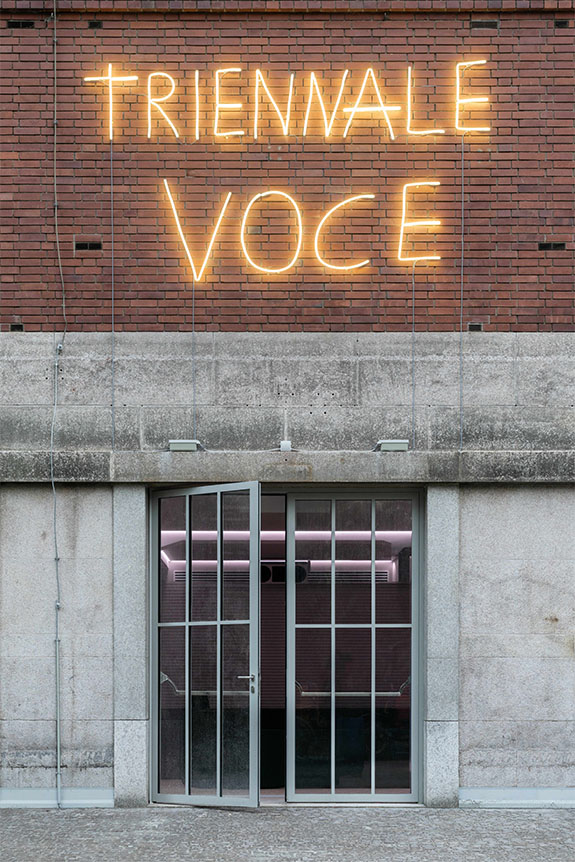
Once again this year, the Triennale hosted some wonderful events as part of Milan Design Week 2026. But more than just an exhibition venue, this essential landmark of the Lombard capital is, above all, a place steeped in history where design continues to come to life through a dense and varied program.
Milano Design Week 2026 marks a turning point. Faced with a sometimes overwhelming visual inflation, the city seems to be returning to its fundamentals, embracing a culture of design memory inherited from the 20th century. Objects are never conceived in isolation, but as the culmination of a global project blending architecture, utility, aesthetics, and social vision. Some cities tell their stories through their monuments; Milan tells its story through its archives as well. Whether drawings, models, photographs, notes, or prototypes, these archives reveal everything that precedes the finished work and preserve its potential. The Triennale di Milano fully embodies this movement.
But what exactly is the Triennale?
More than just an exhibition center, the Palazzo dell’Arte (Triennale di Milano) is a modernist building designed in 1933 by Giovanni Muzio as a true multifunctional and transdisciplinary cultural hub. From the very beginning, it brought together exhibition halls, a theater, a restaurant, a bar, an archive center, and even a nightclub.
Since 2019, the venue has been reimagined under the leadership of Stefano Boeri, President of the Triennale, Carla Morogallo, Director General, and Luca Cipelletti, Director of Architecture.
Back in 2024, this cultural space inaugurated the "Cuore – Research, Study and Archives Center," a space dedicated to research, memory, and innovation. Located on the ground floor of the Palazzo dell’Arte, this 400 m² area to the left of the main hall welcomes researchers, students, visitors, foundations, and universities. Free to access, Cuore places the research work that fuels the Triennale's entire program back at the center. With decades of national and international exhibitions, it has become a major documentary and heritage center. Its collections include books and journals, graphic, photographic, and audiovisual archives, as well as nearly 2,900 architectural pieces such as drawings, plans, models, and other documents related to projects carried out at the Palazzo dell’Arte and throughout Milan since 1933. The institution also preserves the archives of major figures in Italian design, such as Andrea Branzi, Alessandro Mendini, and Ettore Sottsass, to name but a few.
A discreet yet exemplary rehabilitation
The renovation of the Palazzo dell’Arte supports this new direction. The goal is to modernize the building while rediscovering the original spirit envisioned by Giovanni Muzio in 1933.
Three pillars structure this transformation: recovering the spirit and preserving the heritage of 1930s Italian rationalism, improving energy performance, and ensuring the spaces are more accessible, flexible, and contemporary.
The restoration highlights the architectural qualities of the site, for example by reopening perspectives (notably the view of Muzio’s helical staircase in the Cuore space), streamlining technical elements, restoring zenithal lighting by uncovering the glass-brick roof, and reintegrating the original window frames. The new, nearly invisible technical installations (insulation, heating) significantly improve the clarity and flow of the space.
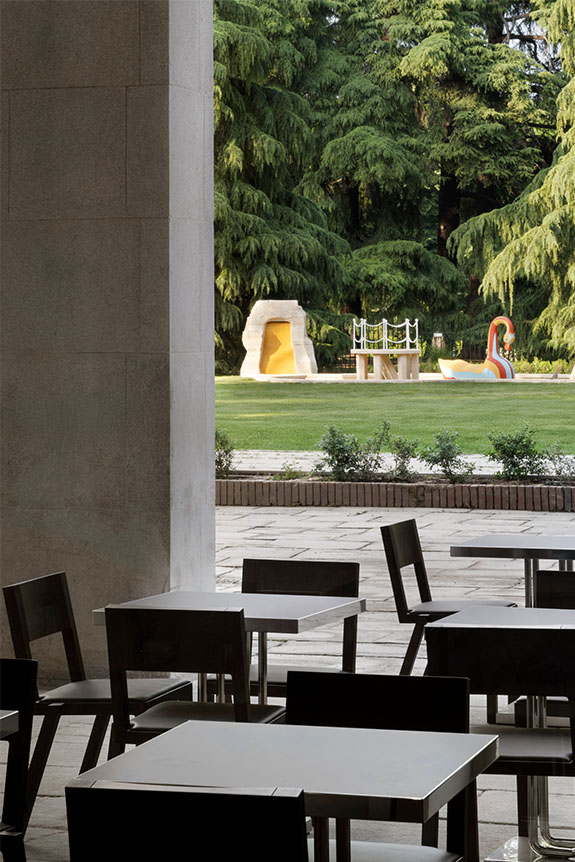
In 2025, the venue opened up to new uses. Notable additions include the return of the café and restaurant (Cucina) to their historic location on the park side, as well as the opening of Voce—a space dedicated to music and performing arts—and Gioco, a creative space for children.
Through this transformation, the Triennale also reminds us that Milan’s creative uniqueness lies in its ability to foster a dialogue between rationalism, modernist heritage, and poetic postmodernism.
Through the quality of its exhibitions, spatial design, and architectural restructuring, the Triennale presents itself more as a living, evolving, hybrid building than a static monument. It brings design to life by recounting the trajectories of those who create it, questioning its uses, its critical reach, its social dimension, and the daily joy it can still provide. The simple, human, and elegant names chosen to characterize the various sectors prove this: Cuore, Cucina, Gioco, and Voce.
So, the Triennale di Milano? A must-see, again and again!
2026 Exhibitions
Andrea Branzi — Continuous Present
Exhibition design: Toyo Ito
Through October 4, 2026
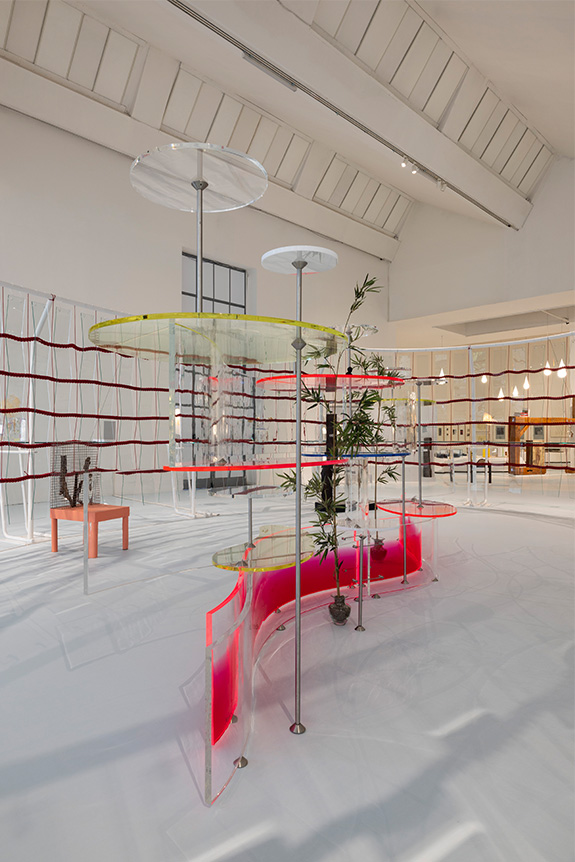
One of the major exhibitions of this edition is dedicated to Andrea Branzi, a thinker, poet, unclassifiable designer, and central figure of Italian Radical Design. He was a tireless advocate for a way of "living poetically in the world," rooted in tolerance and critical fiction.
Conceived as a tribute by Toyo Ito—a close friend and fellow thinker—the exhibition explores Branzi’s critical and deeply humanistic vision. Titled Continuous Present, it expresses his opposition to a mechanical, rationalized, and uniform modernity.
The exhibition revisits the major themes that run through his work: architecture without walls, the hybridization of nature and the city, constant transformation, encounter and adaptability, and the rejection of rigid systems.
For Branzi, deconstruction is never nihilistic. On the contrary, it opens up a space for wonder. His idea of the "continuous present" evokes a city and a world in perpetual evolution, where joy and optimism are a moral and social duty. A lesson worth remembering!
Toyo Ito’s fluid and almost organic spatial design perfectly extends this philosophy.
Lella and Massimo Vignelli. A Language of Clarity
Exhibition design: Jasper Morrison
Through September 6, 2026
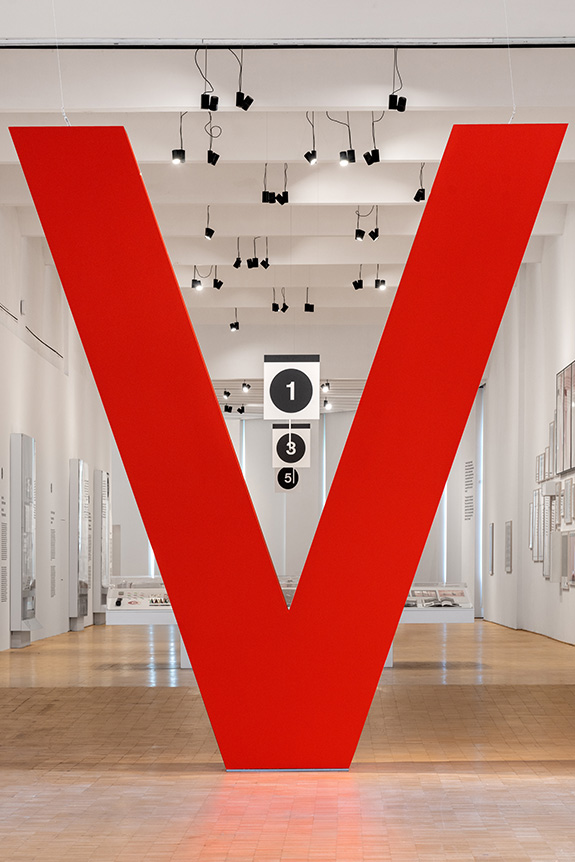
As a counterpoint to Branzi’s critical post-modern design, yet equally joyful and optimistic, the Triennale presents a major retrospective dedicated to Lella and Massimo Vignelli.
Known for their rigorous interpretation of Swiss-inspired modernist rationalism, the Vignellis left a profound mark on international graphic and industrial design between Milan and New York from the 1960s through the turn of the 21st century.
The exhibition, designed by Studio Jasper Morrison, brings together a large collection of iconic pieces. It demonstrates how their work always sought to reveal a clear, colorful, and universal logic, whether in a subway map, a book, a piece of furniture, or jewelry.
Their work serves as a reminder that beyond style, design can above all constitute a language of clarity, capable of reaching an extremely broad audience, far removed from any elitist vision.
The Eames Houses - Launch of the Eames Pavilion System
In partnership with Kettal
Until May 10, 2026
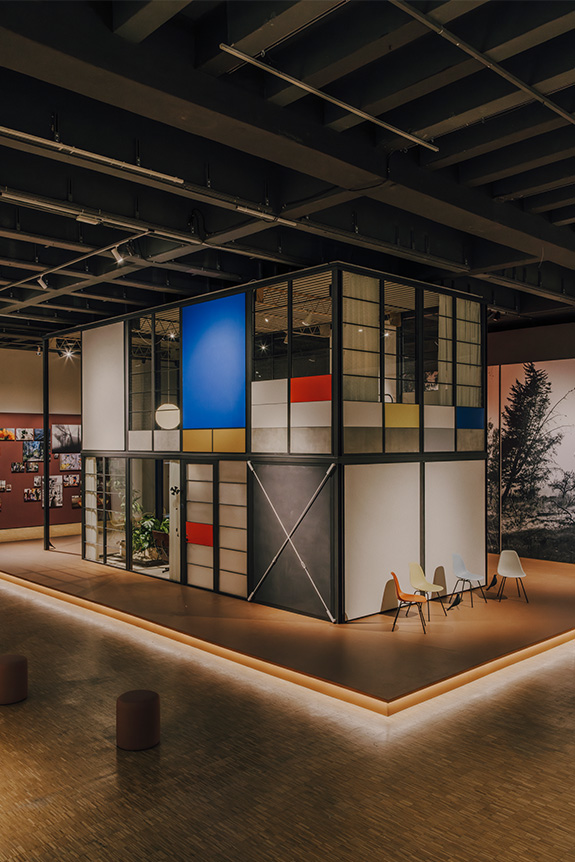
The Eames Houses exhibition is based on extensive archival research into the residential projects of Ray and Charles Eames, both built and unbuilt. It presents a vision of modular, prefabricated, and deeply human architecture, supported by a vast body of documentation.
For the Eameses, a house was never a static object, but an adaptable system capable of bridging daily life, modularity, and industrial production. Their architecture developed a unique synthesis of modernist rationalism, functional prefabrication, and an organic sensibility inspired by Japanese aesthetics. This is particularly evident in the fluid relationship between interior and exterior, designed to suit the Californian climate and landscape.
This reflection continues today with the launch of the Eames Pavilion System, developed with Kettal under the direction of Eckart Maise, a long-time collaborator of the Eames Office. The system is based on repetitive structural modules combined with various roof and facade options, allowing for multiple configurations, from a small pavilion to a complete house.
The project thus reactivates one of the Eameses' fundamental ideas: to conceive of architecture as an evolving system rather than a definitive form.
Alphabet — The design of Edward Barber & Jay Osgerby
Until September 6, 2026
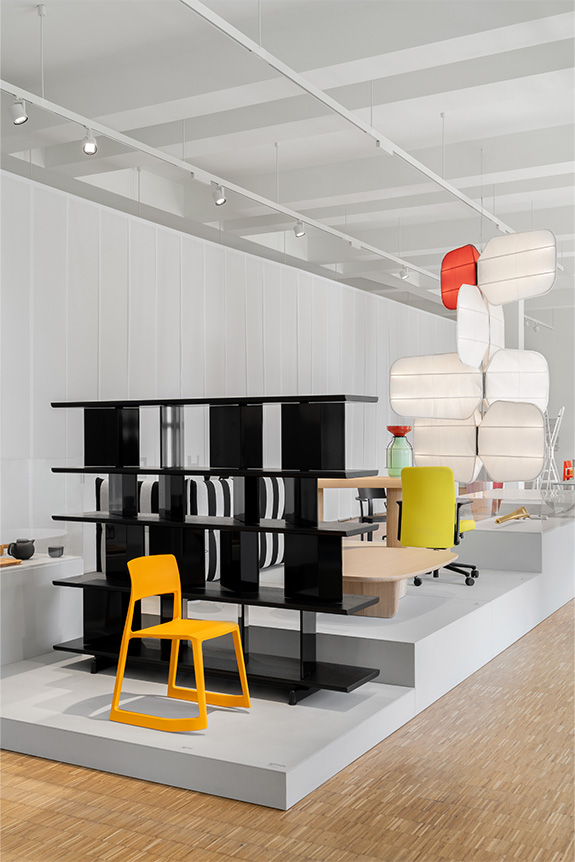
The exhibition occupies the beautiful Design Platform space, which, following the major architectural and functional renovation of the Palazzo dell’Arte, is now located in the large area opening onto the garden, previously—and unfortunately—occupied by the Triennale café.
The exhibition’s chronological path highlights the gradual evolution of their "stylistic alphabet" from the mid-1990s to the present day. It showcases a rigorous approach to color, technical curves, angular geometries, and constructive precision.
Key pieces on display include the London 2012 Olympic torch, the Iris tables for Established & Sons, the Tab lamp for Flos, and several special commissions and experimental projects. Through these works, the exhibition demonstrates how their practice combines industrial rigor and artisanal mastery with increasing technical sophistication.

La 23e Triennale de Milan aura lieu du 15 juillet au 11 décembre 2022 sous le titre « Unknown Unknowns ». Un choix de titre et une thématique qui posent la question de l’inconnu et sur lesquels Stefano Boeri, directeur de la Fondation, s’est exprimé afin d’éclaircir certains points.
Architecte de formation, l’italien Stefano Boeri est le directeur de la Triennale de Milan depuis 2018. Après un premier mandat de quatre ans durant lequel il dirige la 22e édition qui s’intitulait « Broken Nature », il a été réélu le 5 avril dernier, aux côtés d’Elena Vasco comme vice-présidente. Pour cette 23e édition nommée « Unknown Unknowns », le sujet principal est l’inconnu, dans tout ce qu’il peut représenter. Fortement inspirée par les événements qui ont touché le monde ces deux dernières années et particulièrement la crise sanitaire, cette édition devrait être celle de l’exploration.

Quelle est l’origine du nom « Unknown Unknowns » ?
Lors de notre première réunion d’organisation le 1er mars 2020, soit quelques jours avant le confinement en Italie, nous avions senti que quelque chose était en train de se passer autour de nous, sans que nous sachions vraiment de quoi il s’agissait. C’est donc à partir de là que cette dimension d’inconnu a commencé à se faire une place dans nos échanges. Pour ce qui est du nom « Unknown Unknowns », nous nous sommes inspirés d’une phrase prononcée par l’ancien secrétaire d’Etat américain, Donald Rumsfeld. Il avait tenu un discours à la suite des événements de septembre 2001 durant lequel il essayait de convaincre le Sénat de ne pas entrer en guerre avec l’Irak. Au cours de cette allocution, il avait expliqué que malgré la puissance du pays, certains territoires restaient inconnus. Il prononcera donc cette phrase : « What we don’t know, we don’t know » (En français : « Ce que nous ne savons pas, nous ne le savons pas » ). Une double négation qui s’est révélée intéressante à utiliser dans notre exploration de l’inconnu.
Se sont ensuite ajoutés les événements de ces deux dernières années qui ont considérablement perturbé nos vies. Le virus a amené de nouvelles problématiques liées au fait qu’il n’y avait plus aucune barrière entre l’humain et le reste. En résumé, cette dimension d’inconnu se présente à tous mais se manifeste juste différemment.
Quelles sont les expositions prévues pour cette 23e Triennale ?
Pour cette édition, nous sommes partis d’une l’idée commune, l’inconnu, et nous en avons exploré le champ des possibles. Nous ne voulions pas nous baser uniquement sur l’architecture, le design ou l’art, nous avons souhaité imaginer une sorte de constellation d’expositions et de recherches. Nous proposons ainsi plusieurs installations réparties selon plusieurs thématiques dans le but de créer un espace de débats et d’échanges. On pourra y trouver des représentations théâtrales orchestrées entre autres par Roméo Castelluci, des expositions d’art contemporains menées par des spécialistes tels que l’historien Giacobbe Giusti, mais également des expositions qui abordent la question du silence ou de la physique, telle que l’organise Ersilia Vaudo, astrophysicienne et directrice de la diversité à l’agence spatiale européenne. Nous exposons également une série d’oeuvres artistes ukrainiens en soutien de la situation actuelle.
Au total, nous proposons une trentaine d’espaces et événements regroupés au sein des espaces du Palais dell’Arte, avec des artistes originaires d’une quarantaine de pays différents. Cette multiplicité d’origines culturelles et corps de métiers est une idée que nous avons développée il y a déjà plusieurs années et à laquelle nous tenons car elle permet d’apporter des visions diversifiées sur un même thème.
Quelles sont vos attentes concernant cette édition ?
Il n’y a pas vraiment de résultats tangibles attendus, notre objectif est plutôt de réussir à stimuler, créer des intérêts et des réactions de la part du public. Il est difficile d’avoir des certitudes sur ce que vont penser les visiteurs et c’est toujours la grande question avant chaque représentation. Il y a certaines certitudes que l’on pense avoir mais qui risquent d’évoluer ou de changer au fur et à mesure. Je suis assez curieux de voir le rendu et les débats qui vont pouvoir en découler durant ces cinq mois.

.svg)


.svg)